
Tags
Bible, circumstances, constancy of God, David, God, Jesus, Martin Rinkart, praise, praise the LORD, Prayer, Psalms, sacrifice of praise, sing praise, worship, worship amid suffering
The LORD has established his throne in the heavens,
and his kingdom rules over all.
Praise the LORD you his angels,
you mighty ones who do his bidding,
who obey his word.
Praise the LORD all his heavenly hosts,
you his servants who do his will.
Praise the LORD, all his works everywhere in his dominion.
Praise the LORD, O my soul.
Psalm 103 is a sandwich, or if you prefer, a big beefy hamburger. By that I mean this psalm begins with a personal call to praise the LORD, and it ends, as we see from the passage above, with what amounts to a universal call to praise the LORD. Between these calls to worship, we find a great big helping of God’s goodness. In between we discover the why—the reasons why—we should be overflowing with praise to the LORD.
David experienced God’s saving grace, goodness, love and forgiveness over and over again. Consequently, his heart was full to bursting with praise. Herein is the why of praise; the reason for praise rests in God, not in us, or our circumstances.
But Psalm 103 is not just a beefy hamburger. It is also an express train—a big steam locomotive. There is a distinct momentum to this psalm, which can be missed by breaking it into sections. It begins with David addressing his soul. It would appear, at the start, to be a sluggish soul that is somewhat reluctant to praise God. But this reluctance begins to melt away as David recounts the LORD’s great goodness. One by one David declares the character qualities of the LORD. As each attribute is portrayed, David’s sense of awe and his desire to praise God picks up momentum. By the end of this psalm, David’s praise has become an express train, loaded with divine purpose and headed full speed for glory!

Shinkansen (bullet train) photo by David Kitz
His final call to worship in the above stanza is a great cry for all to get aboard this express train of praise. Now with a full head of steam, in exultant praise, I can hear him shouting, “Hop on board, one and all. Praise the LORD! We are heaven bound!”
Many see praise and worship as a purely cathartic response to the manifest goodness of God. Something good happens to us. Unexpectedly, we get a thousand-dollar payment in the mail. Quite naturally our response is praise to God.
For many people, praise to God never progresses beyond this natural, cathartic level. If God does not bless, no praise is forthcoming. Our praise for the LORD becomes or simply remains circumstance dependent. But that was not the case with David. His praise extended beyond simple catharsis. He taught his soul to praise the LORD in all circumstances. True biblical praise and worship is after all a spiritual exercise, a discipline we grow in, just as we grow in the discipline of prayer.
The LORD, the object of our praise, does not change with our circumstances. He is forever the same. Jesus Christ is the same yesterday and today and forever (Hebrews 13:8). He is constant, hence our praise and worship of him should be constant, unaffected by weather conditions, world events, the gyrations of the stock market, our swings of mood or our personal situation.
Of course, this constancy in praise is something the natural man simply rebels against. Our world needs to be right in order for us to praise God aright, or so we reason. The only problem with this logic is that the world has never been right since the Fall. Death, disease, war and misery have been raining down on the children of Adam, since wilful disobedience to God first took root among us. And this is one weather forecast, for all humanity, that is not about to change—not until Christ returns.
If we are waiting for a perfect world before we lift our voice in praise to God, we will never praise Him. In fact, if our eyes are on the world, or on ourselves, there will always be grounds to withhold our praise. But then, the whole purpose of praise and worship is to lift up our eyes. We desperately need to get our eyes off ourselves, off the world, and onto God our Maker.

Photo by Thirdman on Pexels.com
Martin Rinkart was a man who could be forgiven for cursing God. But rather than cursing his Creator, or withholding worship, he composed the ageless hymn of praise, Now Thank we all our God. Pastor Rinkart (1586-1649) was caught up in the horrors of the Thirty Years’ War. For a full year his hometown, Eilenburg in Saxony, was besieged as war raged round about. The triple scourge of war, disease and famine ravaged the community. Death was everywhere. The walled city was swamped by destitute refugees. Three times it was overrun by pillaging armies. As the crisis worsened, Rinkart’s pastoral colleagues succumbed to the plague; only he was left to conduct the funerals. In that horrific year, 1637, he conducted more than 4,000 funerals, as many as fifty in a single day. One of those funerals was for his own dear wife.
Yet it was this man, Martin Rinkart, who composed these words of praise:
Now thank we all our God
With heart and hands and voices
Who wondrous things hath done
In whom this world rejoices;
Who from our mothers’ arms
Hath blessed us on the way
With countless gifts of love
And still is ours today.
Martin Rinkart did not live in a perfect world. But his eyes saw beyond the death and destruction that lay before him. He lifted his eyes above the world, and beyond himself. And when he did, he beheld God. He saw Him as LORD over all, and a God to be thanked and praised for countless gifts of love. Amid the most desperate situation imaginable, Pastor Rinkart fixed his gaze on the LORD his Maker. Then this humble pastor did a most remarkable thing—a Spirit-directed thing. He raised his voice in praise to God.
In a world run amok, the first casualty all too often is our faith in God. The chaos of disaster leads us to question the very existence of God. The god of order and control would not—should not—unleash tsunamis of war and disease on this world. We reason, “What kind of god is this? Why would an all-powerful god permit this? Why would he not spare those dear to me?”

Photo by Pixabay on Pexels.com
But Martin Rinkart the hymnist, and David the psalmist, knew the true God, a god who exists beyond our narrow definitions of order and control. Both these men knew the LORD of all the earth. Here in Psalm 103, David declared, “The LORD has established his throne in the heavens, and his kingdom rules over all.”
That divine rule, and that eternal kingdom, truly encompasses all, including disasters. Yes, He is LORD over disasters too, over war, over hurricanes, over floods and droughts, over both feasts and famines, joys and sorrows. He is LORD of all.
This declaration of God’s kingdom rule collides head on with my own preconceived notions of how the world should be. In my world death should never steal a friend away. In my world abundance should be a preordained right. In my world sickness should have no foothold, cancer should hold no sway. In my world all stories should have happy endings.
I want an ideal world like that. I want the real world to conform to my desired ends. And when God does not meekly comply, by granting me my ideal vision of the world, I stamp my foot and shake my fist at Him. In reality, when I do that, I am announcing that I want to be God. I want to be LORD. A refusal to bow in worship before God, is a declaration of my desire to be the sole ruler of my life, and the Creator my own world apart from God.
In a world run amok, Martin Rinkart did not stamp his foot and shake his fist at God; he lifted his voice in praise. Praise to God in the midst of tragedy aligns us afresh with the LORD of the universe. It re-establishes and reasserts his direct rule over us. Along with David we declared, “The LORD has established his throne in the heavens, and his kingdom rules over all.”
God in His wisdom has not given me my ideal world. He has given me His world—the real world—where sorrow mingles with joy, where the curse and the blessing of Eden coexist, where life and death dance nimbly together.

Man praying to God.
Prayer is my attempt before God to change this present world. And this world is in desperate need of change. God and I are in agreement on that point. That’s why He sent His Son. The world can be changed by God through prayer. What an astonishing truth! My prayers can change the world. God can as a consequence of my prayers, intervene and stunningly alter the natural course of events. I have seen Him do astonishing miracles. He is after all, who says He is. He is LORD.
But if God does not intervene, if my prayers are not answered, if no miracle comes, He is still LORD. He is still to be praised. This inalterable fact remains, “The LORD has established his throne in the heavens, and his kingdom rules over all.”
After 4,000 funerals, after his hopes and dreams lay buried, for Martin Rinkart, God was still God. He was still LORD over all. He was still worthy of all praise and so he wrote:
O may this bounteous God
Through all our life be near us,
With ever joyful hearts
And blessed peace to cheer us;
And keep us in his grace,
And guide us when perplexed,
And free us from all ills
In this world and the next.[1]
How shallow is your praise? Do you believe your world needs to be right before you praise God? Lift up your eyes for a moment. Lift them to the One, who was lifted up for you. Lift your eyes to the Father, who did not spare His Son, but sent him into a messed-up world to die upon a cross. Fix your eyes on Him, the bloodied fount of redemption. Fix your eyes on the one who said, “I am the way, the truth and the life” (John 14:6).
Then, lift your voice in praise to God.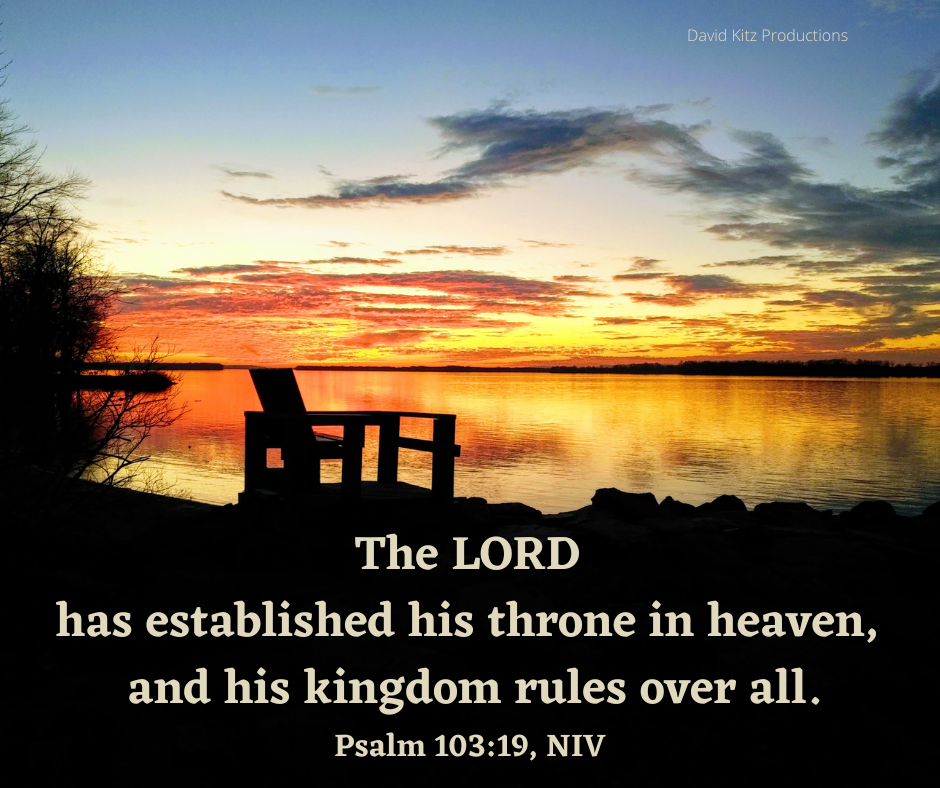
How shallow is your praise? Do you believe you need to feel right in order to praise right? After all, wouldn’t we be hypocritical if we were outwardly exuberant in praise to God, but our heart was not in it? Now in this instance, when we are speaking of our heart, we really mean our feelings. But if we see praise as a biblical command, our feelings are inconsequential. We are to praise God regardless of our feelings. Feelings come and go, but the goodness of God stands secure and unchanging.
As residents of North America, we are a pampered lot. We live in affluence, materially rich, but mired in deep spiritual poverty. Gratification must be instant. Personal comfort trumps all other considerations. What do we know of hardship? In this sheltered atmosphere, praise for God grows like a spindly hothouse plant. Untested by hardship or the cold winds of adversity, our faith lacks depth. Our worship remains shallow.
If the music isn’t right on Sunday, we are incapable of praise. What an outrageous affront to God! True worship is so much more than a lip-synced ditty. It goes deeper. It flows higher. It breaks through our emotional indifference and reaches the heart of God.
The deepest praise is sacrificial. It floats heavenward on a sea of suffering. It confounds all logic and rises above whim or emotion.
Through Jesus, therefore, let us continually offer to God a sacrifice of praise—the fruit of lips that confess his name (Hebrews 13:15).
True worship is born of the Spirit. Along with David, it invites all of heaven—all of creation to join in the chorus of praise.
Praise the LORD you his angels, you mighty ones who do his bidding, who obey his word. Praise the LORD all his heavenly hosts, you his servants who do his will. Praise the LORD, all his works everywhere in his dominion. Praise the LORD, O my soul!
Bringing Life to the Psalms
- What does it mean to offer a sacrifice of praise? Have you faced times of hardship when you found it difficult to praise God? Were you able to offer praise?
- Read a biographical portrait of Martin Rinkart. There are several internet sites that provide a closer look at this man who knew how to praise God through adversity.
- Read or sing Rinkart’s great hymn, Now Thank we all our God. It’s a wonderful way to set free the wellspring of praise within you.
- Reread Psalm 103. Is it a hamburger, an express train, or both? Can you think of another metaphor that helps our minds to capture the magnificence of this psalm? What is God saying to you as you read this psalm?
[1] Now Thank We All Our God, words by Martin Rinkart (1586-1649), 1636. Translated by Catherine Winkworth (1827-1878), 1858 MIDI: Nun danket alle Gott (later form of melody by Johann Cruger, (1598-1662).
Today’s post is Chapter 17 from the book Psalms Alive! Connecting Heaven & Earth by David Kitz. To find out more or purchase click here.



 I love the Psalms