• Home
  • About
  • DavidKitz.ca
  • Youtube Videos
  • Books by David
  • Books on Amazon.com

I love the Psalms

~ Connecting daily with God through the Psalms

I love the Psalms

Category Archives: Psalms

Schadenfreude

14 Monday Jun 2021

Posted by davidkitz in Psalms, Psalms 365: Develop a Life of Worship and Prayer

≈ 1 Comment

Tags

compassion, grace of God, mercy, Schadenfreude

Today’s quote and prayer from
“Psalms 365: Develop a Life of Worship and Prayer”
by David Kitz
365 Schadenfreude 137b

Psalms 137:7-9

LORD God,
at times I have been guilty of schadenfreude*.
Help me to show compassion
rather than smug indifference
when I see others experience loss.
Thank you for your ongoing mercy.

Amen.

*rejoicing in someone else’s suffering or loss

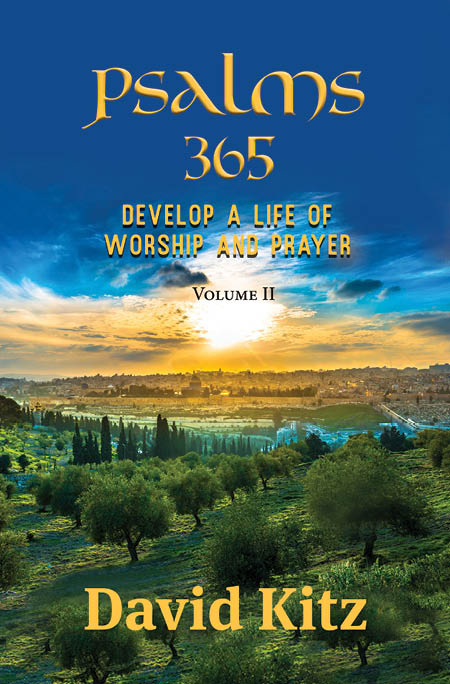
Volume II of Psalms 365: Develop a Life of Worship and Prayer by award-winning author David Kitz is available now. For a closer look at this #1 new release click here. For a look back at Volume I click here.

Rejoicing in Someone’s Suffering

14 Monday Jun 2021

Posted by davidkitz in Psalm 137, Psalms

≈ 7 Comments

Tags

calamity, grace of God, pride, Schadenfreude

Reading: Psalm 137:7-9
Remember, LORD, what the Edomites did
on the day Jerusalem fell.
“Tear it down,” they cried,
“tear it down to its foundations!”
Daughter Babylon, doomed to destruction,
happy is the one who repays you
according to what you have done to us.
Happy is the one who seizes your infants
and dashes them against the rocks
(NIV).*

img_20210606_2018437

Sunset glow — photo by David Kitz

Reflection
German is a fascinating language. It’s a language that seems to specializes in compound words—short words that are combined to form longer words. Some English language examples of compound words are homerun, overcoat and windshield.

Schadenfreude is a compound German word. Actually, it’s such a useful and descriptive word that it has migrated into the English language and it can be found in any quality English dictionary. Schaden means harm or damage. Freude means joy. Simply put schadenfreude means joy experienced at another person’s expense—rejoicing in someone else’s suffering or loss.

Today’s reading from Psalm 137 is all about schadenfreude. The Edomites celebrated the destruction of Jerusalem. Rather than mourn over their neighbor’s calamity, they joined in calling for the destruction of the Jewish capital.

This manifestation of schadenfreude was rooted in centuries of fraternal rivalry and envy. The Edomites were the descendants of Esau, while the people of Jerusalem were the descendants of Jacob. These two people groups were linked by heredity, language and culture, and yet generation after generation they continued this brothers’ feud.

This psalm is not the only biblical counsel for us to avoid rejoicing in other people’s harm: Do not gloat when your enemy falls; when they stumble do not let your heart rejoice, or the LORD will see and disapprove and turn his wrath away from them (Proverbs 24:17-18).

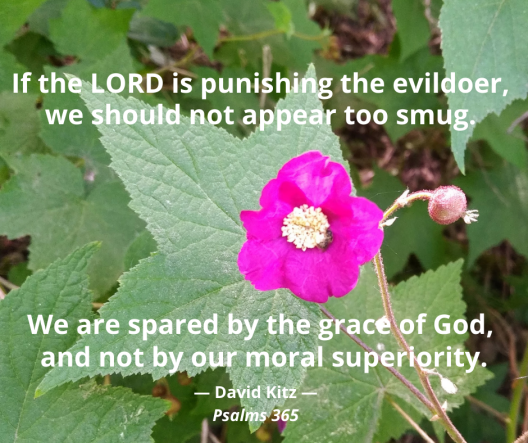
If the LORD is punishing the evildoer, we should not appear too smug. We are spared by the grace of God and not by our moral superiority. The self-righteous suffer from delusions of pride. It’s best not to identify with that camp. The opposite response is called for. Rather than crowing over someone else’s misfortune, we should be offering help or drawing lessons on how to avoid a similar calamity.

When I see others experiencing calamity, I need to replace my schadenfreude with the genuine joy found in extending mercy, grace and compassion.

Response: LORD God, at times I have been guilty of schadenfreude. Help me to show compassion rather than smug indifference when I see others experience loss. Thank you for your ongoing mercy. Amen.

Your Turn: Have you experienced schadenfreude? How do you keep it in check?

* NEW INTERNATIONAL VERSION, COPYRIGHT ©1973, 1978, 1984, 2011 BY BIBLICA

Volume II of Psalms 365: Develop a Life of Worship and Prayer by award-winning author David Kitz is available now. For a closer look at Volumes I and II click here.

Wise Words from Phil Callaway

11 Friday Jun 2021

Posted by davidkitz in Psalms, Psalms 365: Develop a Life of Worship and Prayer

≈ 3 Comments

Tags

David Kitz, peace with God, Phil Callaway, Psalms, Psalms 365

Here are some wise words from author, Phil Callaway:

I’m not certain I’d be alive without the Psalms. While my wife was losing her family to Huntington’s disease we lived in its inspiring pages. We still do. David’s devotional is a welcome companion on this journey, particularly for those needing a fresh shot of hope.

Phil Callaway
award-winning author & Christian humorist, www.laughagain.org

And here is a look at Volume II of the devotional series Phil is talking about.
RGB72PsalmsVol2

For nearly 3,000 years people have been getting in touch with God through the sacred literature of the Psalms. Generation after generation has drawn strength, comfort and inspiration from the words of the psalmist.  

Psalms 365: Develop a Life of Worship and Prayer is a devotional study that takes you through all of the Psalms during the course of a full year. The author’s goal is to help the reader interact with each psalm and connect with God in a fresh and living way.

In times of calamity the psalms bring peace. When storms rage within, a psalm can provide a haven of rest. When anger erupts, a psalm can act as a release valve. When God seems distant, the psalms bring us near.

There is something surprisingly practical about the psalms. They are meant to be lived. The Bible is in fact a living document that must be applied to life to be effective. This should not surprise us since, “The word of God is living and active” (Hebrews 4:12a). Author David Kitz draws from a range of biblical sources and real life experiences to make the psalms come alive. 

Volume II of Psalms 365: Develop a Life of Worship and Prayer by award-winning author David Kitz is available now. For a closer look at Volumes I and II click here.
Please pray for peace to return to Israel, Gaza, Lebanon, and Ukraine!

Volume I of Psalms 365: Develop a Life of Worship and Prayer won the Best Book of the Year Award from The Word Guild and Volume II has won the Best Devotional of the Year Award. For those who love God’s word, this three-book series is an ideal way to daily meet with the Lord. To purchase or for a closer look click here.
RGB300Kitz2AWARD

For those who love historical fiction a gripping read from David Kitz. An ideal Christmas gift.
4485 SHARABLE-2

To purchase or for a closer look click here.


Harsh Judgment Brought Change

11 Friday Jun 2021

Posted by davidkitz in Psalm 137, Psalms

≈ 7 Comments

Tags

Babylon, idolatry, judgment, King Solomon, repentance

Reading: Psalm 137:1-6
By the rivers of Babylon we sat and wept
when we remembered Zion.
There on the poplars we hung our harps,
 for there our captors asked us for songs,
our tormentors demanded songs of joy;
they said, “Sing us one of the songs of Zion!”
How can we sing the songs of the LORD
while in a foreign land?
If I forget you, Jerusalem,
may my right hand forget its skill.
May my tongue cling to the roof of my mouth
if I do not remember you,
if I do not consider Jerusalem my highest joy
(NIV)*

D Adam 8

Photo courtesy of Donald Adam

Reflection
It’s difficult to pinpoint the time in history when many of the Psalms were written. Many scholars believe that the Old Testament was compiled over a period of about 900 to 1,000 years. As for the Book of Psalms, there is considerable evidence to suggest that psalms were collected from three distinct periods: the reign of King David (1 Chronicles 23:5), the rule of Hezekiah (2 Chronicles 29:30), and during the leadership of Ezra and Nehemiah (Nehemiah 12:24).[1]

Psalm 137 is distinct, because we can tell from its content that this psalm was written early during the period of the Babylonian exile. Memories of Nebuchadnezzar’s destruction of Jerusalem in 586 BC were still fresh—etched with bitterness and pain in the mind of the author.

There are two great pivot points in the history of Old Testament Israel. The first is the liberation of Israel from Egypt and the subsequent conquest of the holy land. The second is the destruction of Jerusalem and the temple, which was followed by the seventy-year exile in Babylon. The mercy and power of God brought about the first pivotal event. The disobedience and idolatry of man set in motion the catastrophe of the second event.

From its inception the Jewish nation flirted with idolatry. While Moses was receiving the Ten Commandments, the people were reveling before a golden calf. King Solomon set up idols in Jerusalem so his foreign wives could worship their gods. See 1 Kings 11:1-8. This duplicity continued generation after generation until the Babylonians swept in and destroyed Jerusalem. Harsh judgment brought change. Will harsh judgment bring change in us, or will the mercy of God bring us to repentance?

Response: Father God, I don’t want to learn things the hard way. I want to be quick to obey you. Help me to learn from the lessons of history. You are the one, true God. I worship you. Amen.

Your Turn: How faithful are you to the LORD? Do other interests draw you away?

[1] K.R. “Dick” Iverson, Spirit Filled Life Bible, New King James Version, Jack W. Hayford, General Editor, Thomas Nelson Publishers, Nashville, TN, 1991, p. 750.

* NEW INTERNATIONAL VERSION, COPYRIGHT ©1973, 1978, 1984, 2011 BY BIBLICA

Volume II of Psalms 365: Develop a Life of Worship and Prayer by award-winning author David Kitz is available now. For a closer look at Volumes I and II click here.
In Our Low Estate

10 Thursday Jun 2021

Posted by davidkitz in Psalm 136, Psalms

≈ 7 Comments

Tags

addictions, rescue, salvation

Reading: Psalm 136:17-26
to him who struck down great kings,
His love endures forever.
and killed mighty kings—
His love endures forever.
Sihon king of the Amorites
His love endures forever.
and Og king of Bashan—
His love endures forever.
and gave their land as an inheritance,
His love endures forever.
an inheritance to his servant Israel.
His love endures forever.
He remembered us in our low estate
His love endures forever.
and freed us from our enemies.
His love endures forever.
He gives food to every creature.
His love endures forever.
Give thanks to the God of heaven.
His love endures forever (NIV).*

img_20210531_1612557

Wetlands — photo by David Kitz

Reflection
In recent months I have transitioned from attending an established church to involvement in a new church plant. In many respects the change has been refreshing. This new church has a clear focus on reaching the lost in our city, specifically those who are trapped in addictions. Almost weekly new converts are coming forward to put their trust in Christ. The church itself is a place of transition, as deadly habits are broken, and the healing power of Jesus is applied to long festering inner wounds.

So how does this connect with our reading from Psalm 136? In his description of Israel, the psalmist makes this statement: He remembered us in our low estate… and freed us from our enemies.

We serve a God who rescues us at our lowest point, in our low estate. In our foolish pride, we would never turn to God. But when we hit bottom—when there is no way forward, but up—then we turn to the Lord. You see, Christ has been patiently waiting for us to acknowledge our need. But Jesus doesn’t rescue the proud. He doesn’t save those who see no need for salvation. He only comes to the humble—those who admit they need a lift from the hole they find themselves in.

Sadly, there are many who sit in fine churches that have never discovered their low estate. Actually, they have become experts at hiding it. We all have a secret addiction to sin. Even St. Paul wrote, “For I do not do the good I want to do, but the evil I do not want to do—this I keep on doing” (Romans 7:19). The only one who can turn us around is Jesus, our Savior. See Romans 7:25.

Response: Father God, I admit my need for Jesus, your Son, my Savior. His love endures forever. Amen.

Your Turn: Why do we hide our sins rather than confess them? Does pride hold you back or are there other factors?

* NEW INTERNATIONAL VERSION, COPYRIGHT ©1973, 1978, 1984, 2011 BY BIBLICA

Volume II of Psalms 365: Develop a Life of Worship and Prayer by award-winning author David Kitz is available now. For a closer look at Volumes I and II click here.

The Wonders of Redemption

09 Wednesday Jun 2021

Posted by davidkitz in Psalm 136, Psalms

≈ 1 Comment

Tags

forgiveness of sins, Kingdom of God, Passover Lamb, redemption

Reading: Psalm 136:10-16
to him who struck down the firstborn of Egypt
His love endures forever.
and brought Israel out from among them
His love endures forever.
with a mighty hand and outstretched arm;
His love endures forever.
to him who divided the Red Sea asunder
His love endures forever.
and brought Israel through the midst of it,
His love endures forever.
but swept Pharaoh and his army into the Red Sea;
His love endures forever.
to him who led his people through the wilderness;
His love endures forever (NIV).*

img_20210531_1100093

A local version of “crossing over the Jordon” — photo by David Kitz

Reflection
Because of the responsive pattern employed by the psalmist, today’s reading from Psalm 136 begins as an incomplete sentence. When combined with yesterday’s reading, the full sentence reads: Give thanks to the Lord of lords, to him who struck down the firstborn of Egypt, and brought Israel out from among them with a mighty hand and outstretched arm.

Whereas yesterday’s reading from Psalm 136 celebrates the wonders of God’s creation, today’s reading celebrates the wonders of God’s redemption of Israel. The LORD delivered the captive souls of Israel from hard labor and slavery in Egypt. Though the eldest child of the Egyptians perished, the Hebrew children were spared from the Angel of Death, because the blood of the Passover lamb was applied to the doorposts of their home. See Exodus 12.

At a grim Passover celebration 2,000 years ago, Jesus suffered and died on the cross as our Passover Lamb. When we place our faith in his sacrificial blood, we too are spared from death. Jesus tasted death on our behalf, so that we can live eternally with him.  As believers we can rejoice and draw comfort from these words. “Where, O death, is your victory? Where, O death, is your sting?” The sting of death is sin, and the power of sin is the law. But thanks be to God! He gives us the victory through our Lord Jesus Christ (1 Corinthians 15:55-57).

Through the blood of Christ the power of Satan is broken and we are brought into the dominion of the Son of God. For he has rescued us from the dominion of darkness and brought us into the kingdom of the Son he loves, in whom we have redemption, the forgiveness of sins (Colossians 1:13-14).

Surely as redeemed children of God—children personally redeemed by the Son of God—we have this testimony: His love endures forever.

Response: Father God, I thank you for redeeming me with the sacred blood of Jesus. I have been adopted into your family. You are my heavenly Father. I can never thank you enough. Amen.

Your Turn: Are you living in a new kingdom, under a new king—King Jesus? How is the rule of Christ becoming evident in your daily life?

* NEW INTERNATIONAL VERSION, COPYRIGHT ©1973, 1978, 1984, 2011 BY BIBLICA

Volume II of Psalms 365: Develop a Life of Worship and Prayer by award-winning author David Kitz is available now. For a closer look at Volumes I and II click here.

A Beautiful, Wonder-filled World

08 Tuesday Jun 2021

Posted by davidkitz in Psalm 136, Psalms

≈ 9 Comments

Tags

Creator, God's creation, nature, wonders

Reading: Psalm 136:1-9
Give thanks to the LORD, for he is good.
His love endures forever.
Give thanks to the God of gods.
His love endures forever.
Give thanks to the Lord of lords:
His love endures forever.
to him who alone does great wonders,
His love endures forever.
who by his understanding made the heavens,
His love endures forever.
who spread out the earth upon the waters,
His love endures forever.
who made the great lights—
His love endures forever.
the sun to govern the day,
His love endures forever.
the moon and stars to govern the night;
His love endures forever
(NIV).*

img_20210531_1608564

Wild flowers — photo by David Kitz

Reflection
Here are some straightforward facts about me. I love nature. I enjoy all four seasons. I love getting out of the house and hiking through the woods or riding my bicycle along nature trails. I am fascinated by the wildlife I encounter on these excursions. I like planting a backyard garden in spring, and harvesting the produce from it through the summer and fall. I feel knitted to the land and its seasons.

My love for God’s creation underpins my love for God. A God who created such a beautiful, wonder-filled world must be truly awesome—awesome beyond measure—because the universe He created is awesome beyond measure.

Psalm 136 extols the virtues of this awesome limitless God. His love endures forever. For a total of twenty-six verses the psalmist expounds on the goodness of the LORD. In response His people reply, “His love endures forever.”

Today’s reading lays the foundation for our worship. That foundation rests on the wonder of God’s creation. We are to give thanks to God because He alone does great wonders. By his understanding, [He] made the heavens, and spread out the earth upon the waters.

As you go through your day do you find moments where you give God thanks for the wonders of His creation? In an urban, man-made environment we can lose touch with nature and our Creator. We lose something precious—something fundamental to our well-being—when that happens.

Response: LORD God, help me to appreciate the wonder of your creation every day. Give me opportunities to see the beauty in it, because it’s a reflection of your magnificent character. Amen.

Your Turn: Do you enjoy nature? Does that appreciation of nature translate into love for God?

* NEW INTERNATIONAL VERSION, COPYRIGHT ©1973, 1978, 1984, 2011 BY BIBLICA

Volume II of Psalms 365: Develop a Life of Worship and Prayer by award-winning author David Kitz is available now. For a closer look at Volumes I and II click here.

The Almighty Dollar

07 Monday Jun 2021

Posted by davidkitz in Psalms

≈ 11 Comments

Reading: Psalm 135:15-21
The idols of the nations are silver and gold,
made by human hands.
They have mouths, but cannot speak,
eyes, but cannot see.
They have ears, but cannot hear,
nor is there breath in their mouths.
Those who make them will be like them,
and so will all who trust in them.
All you Israelites, praise the LORD;
house of Aaron, praise the L
ORD;
house of Levi, praise the L
ORD;
you who fear him, praise the L
ORD.
Praise be to the L
ORD from Zion,
to him who dwells in Jerusalem.
Praise the LORD (NIV).*

img_20210531_1130599

The Ottawa River — photo by David Kitz

Reflection
Though it may not be obvious, there is something timeless about the first sentence from today’s reading: The idols of the nations are silver and gold, made by human hands.

In today’s world shaping silver or gold into an idol may be unusual, but it still occurs. India and the nations of Southeast Asia have plenty of gold and silver idols. This is not a dying worship form. Many have been cast in recent years.

In the western world we frown on such openly idolatrous displays of wealth and worship. Or do we? Gold and silver represent wealth. In reality, we have simply transformed our worship of wealth from bulky commodities like silver and gold to more transferable assets like securities and paper currency. We are still guilty of bowing before silver and gold, but it comes with a different name. Now we call it the almighty dollar.

The almighty dollar, or more broadly speaking, the market, determines the ebb and flow of commerce, and by extension impacts every aspect of our daily lives. It is not an exaggeration to say we are caught up in financial system that is deeply idolatrous. Our society has taken the worship of wealth (Mammon) to new heights. We elect our political leaders not on the basis of morality or personal integrity, but rather can they deliver a higher level of GDP—put more money in our pockets.

Into this corrupt world, St. Peter speaks these words to those who have been called to follow Christ:  For you know that it was not with perishable things such as silver or gold that you were redeemed from the empty way of life handed down to you from your ancestors, but with the precious blood of Christ, a lamb without blemish or defect (1 Peter 1:18-19).

Response: Father God, I need the right perspective on wealth and finances. Your precious blood is worth more than all the silver and gold this world has to offer. I bow before you as my Almighty Savior. Amen.

Your Turn: Is Jesus the Lord of your finances? Is your Redeemer more important than wealth?

* NEW INTERNATIONAL VERSION, COPYRIGHT ©1973, 1978, 1984, 2011 BY BIBLICA

Volume II of Psalms 365: Develop a Life of Worship and Prayer by award-winning author David Kitz is available now. For a closer look at Volumes I and II click here.

Lessons From A Wren

06 Sunday Jun 2021

Posted by davidkitz in Psalms

≈ 12 Comments

Tags

birds, birdwatching, witnesses

Today’s guest post comes courtesy of Alan Kearns of Scotland. Alan’s devotional posts have blessed my heart. I’m sure they will bless and encourage you too. They can be found at Devotional Treasures – Christian devotional reading. Bible discoveries. Gems from the Word of God for everyday life. (wordpress.com)

Look at the birds of the air,
that they do not sow,
nor reap nor gather into barns,
and yet your heavenly Father feeds them.
Are you not worth much more than they?
Matthew 6:26 (NASB)

Wren

A UK Wren, (Troglodytes)

In the 1970s, my dad introduced me to the life long delight of birdwatching. He had purchased me a RSPB (Royal Society for the Protection of Birds) pocket book about garden birdwatching from a newspaper advertisement. To me a bird was just a thing with feathers, but as I read about the many species and their intricacies I was hooked. I looked at our front and back gardens with new excitement; it was a haven for birds with trees and the many shrubs dad had planted. My first bird was the Blackbird that nested in the privet hedge in our front garden, but the Wren I saw in the back garden one morning was a new find. It wasn’t that Wrens are rare but rather I had never seen one before, I had never looked for them before.

The Wren was famously depicted on the back of the farthings that we had in old Marvel tins, mixed with old pennies and thruppences. The Wren is the most common UK breeding bird. It is a tiny brown bird. It is almost rounded, with a fine bill, quite long legs, very short round wings and a short, narrow tail which is sometimes cocked up vertically. For such a small bird it has a remarkably loud voice.

You might be asking, “Alan, why the ornithology lesson?” The reason is that I believe that there are things that we can learn from the humble Wren, that we can apply to our spiritual walk. The first thing is its relative obscurity. These birds are tiny fast moving brown specks in the undergrowth and usually go unnoticed by most folk. In this world obsessed with media and perception Christians are very much like Wrens. They go unnoticed in the ‘undergrowth’ of life. The second thing about Wrens is that for a tiny bird they have a very loud voice; it is a musical sequence in short sweet bursts. When I first heard a Wren on a wildlife television program, I realized I had heard them singing before I knew what they were. In this we have a challenge to our walk with God, we may be relatively obscure like the Wren but are we heard? Is our testimony like the Wren’s voice, attractive and impossible to ignore? Another thing about Wrens is their alertness, we too need to be forever alert to our surroundings. Our enemy, Satan stalks us every day, just as the neighbourhood moggy stalks the Wren.

Dear reader, we are called to be witnesses for Jesus in our homes and communities, (Mark 16:15).  We have a duty to proclaim the gospel, in words and in good deeds. Let us sing like a Wren, our own beautiful melodies of our Saviour. While we do this, let us endeavour to be heard, staying constantly alert of danger from our Enemy just like the Wren.

Click on the link for a recording of a house wren’s call: 

ML107408 House Wren (Northern) Macaulay Library


Power Belongs God

05 Saturday Jun 2021

Posted by davidkitz in Psalm 62, Psalms

≈ 1 Comment

Tags

power of God, riches, unfailing love

I will praise the LORD!

Perce2

He is my mighty rock, my refuge — Perce, Quebec — photo by David Kitz

Surely the lowborn are but a breath,
    the highborn are but a lie.
If weighed on a balance, they are nothing;
    together they are only a breath.
Do not trust in extortion
    or put vain hope in stolen goods;
though your riches increase,
    do not set your heart on them.

One thing God has spoken,
    two things I have heard:
“Power belongs to you, God,
and with you, Lord, is unfailing love”;
and, “You reward everyone
    according to what they have done.”

(Psalm 62:9-12, NIV)*

* New International Version, Copyright ©1973, 1978, 1984, 2011 by Biblica

Volume II of Psalms 365: Develop a Life of Worship and Prayer by award-winning author David Kitz is available now. For a closer look at Volumes I and II click here.

← Older posts
Newer posts →

Psalms 365: Develop a Life of Worship & Prayer

Psalms 365 Volume II

Psalms 365 vol 3
— Psalms 365 Volume III

Now available:

Psalms

Recent posts

  • Let the Redeemed Tell their Story October 14, 2026
  • Warning Against the Teachers of the Law October 13, 2026
  • God Remains Merciful October 13, 2026
  • Whose Son Is the Messiah? October 12, 2026
  • Yoked to Idols October 12, 2026
  • A Devotional Journey through the Epistle of James October 11, 2026
  • Who Can Fully Declare His Praise? October 10, 2026

Calendar

October 2026
M T W T F S S
 1234
567891011
12131415161718
19202122232425
262728293031  
« Sep    

Blog Posts

Enter your email address to follow this blog and receive notifications of new posts by email.

Comments

  • The Greatest Commandment – GospelChats.Com on The Greatest Commandment
  • Eileen Guyadeen on Divorce
  • davidkitz on Divorce

Blog at WordPress.com.

Privacy & Cookies: This site uses cookies. By continuing to use this website, you agree to their use.
To find out more, including how to control cookies, see here: Cookie Policy
  • Subscribe Subscribed
    I love the Psalms
    Join 1,369 other subscribers

    Have a WordPress.com account? Log in now.

  • I love the Psalms
    View site in Reader
    Manage subscriptionsSign upLog in
    Report this content
    Collapse this bar
Loading Comments...