Tags
I will praise Him!
-
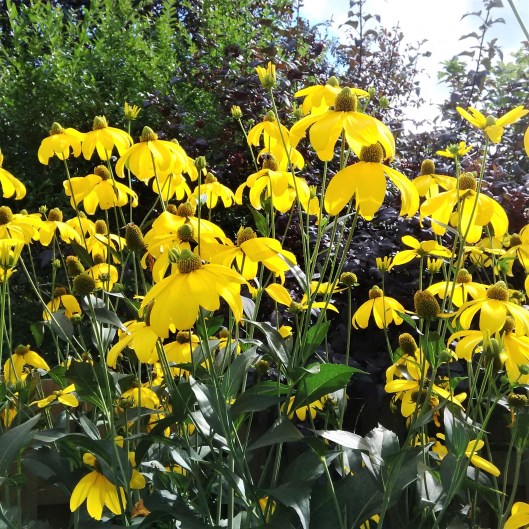
God’s goodness in nature — photo by David Kitz

05 Sunday Mar 2017
Posted in Psalms, Sunday's Psalm
Tags
God’s goodness in nature — photo by David Kitz
04 Saturday Mar 2017
Posted in Psalms, Saturday's Psalm
Tags
city, city of God, fortress, God, Jerusalem, Mount Zion, Psalm 48, the LORD
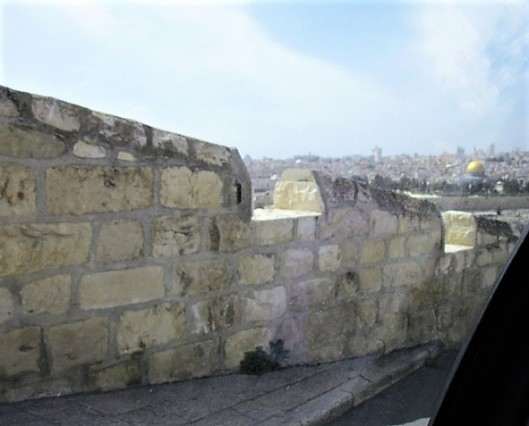
Via-Dolorosa in Jerusalem — photo courtesy of Lois Morrow
16 Thursday Feb 2017
Tags
David, Grey Nuns Park, Jesus, Mount Zion, Ottawa, pray, Prayer, Psalms of Ascent, self-denial, Songs of Ascent, stronholds, surrender, the LORD, Zion
Reading: Psalm 132
A song of ascents.
(Verses 1-5)
LORD, remember David
and all his self-denial.
He swore an oath to the LORD,
he made a vow to the Mighty One of Jacob:
“I will not enter my house or go to my bed,
I will allow no sleep to my eyes
or slumber to my eyelids,
till I find a place for the LORD,
a dwelling for the Mighty One of Jacob” (NIV).
Reflection
This is the thirteenth psalm in the Songs of Ascent series. With this psalm, the author returns to a familiar theme—the glory of God’s presence in Zion. It is what has drawn the pilgrims to this holy place. They have come to worship and meet with God.

Icy sunset, Grey Nuns Park, Ottawa, ON — photo by David Kitz
But this psalm has a different approach. It recounts the history of Zion and how this particular place was chosen as the site for Israel to worship God. It all began with David. At the prompting of the LORD, David chose Mount Zion to set up the Tabernacle of the LORD. But before Mount Zion could become a place of worship the stronghold of Zion had to be conquered. It was in enemy hands. Nevertheless, David captured the fortress of Zion—which is the City of David (2 Samuel 5:7).
In this psalm we hear of David’s vow. “I will not enter my house or go to my bed, I will allow no sleep to my eyes or slumber to my eyelids, till I find a place for the LORD, a dwelling for the Mighty One of Jacob”
In David’s case, finding a place for the LORD required self-denial. It involved a physical battle. There is a spiritual battle that we too need to fight so the LORD can occupy His rightful place in our lives. The enemy does not leave the strongholds in our mind without a fight. We must take action to evict him.
We live in a world where self-denial is rare, and often frowned upon. Our society pushes the easy life—the comfortable life—the path of least resistance. Self-denial in pursuit of a relationship with God is a foreign concept. In many churches fasting and prayer is a lost discipline.
Jesus encountered the same problem with his own disciples. While he was praying fervently in the Garden of Gethsemane, his disciples were fast asleep. “Simon,” he said to Peter, “are you asleep? Couldn’t you keep watch for one hour?” See Mark 14:32-42.
This inability to pray for an hour is an indicator that at our core we have not surrendered fully to God. Other things are more important. There is no self-denial. That TV show is more important. The game is more important. Perhaps our Zion is still occupied by the enemy and the LORD is not enthroned there.
Response: LORD God, help me to change. I want to put you first in my life. Come and occupy the throne of my life. I want my thoughts, words and actions to be governed by you, Lord Jesus. Amen.
Your Turn: Do you find self-denial difficult? Do you practice a variety of spiritual disciplines?
06 Monday Feb 2017
Tags
Hopewell Rocks, immovable, Mount Zion, mountains, peace, permanence, Psalms of Ascent, Songs of Ascent, steadfast, surrounded, the LORD, trust, trust in God
Reading: Psalm 125
A song of ascents.
Those who trust in the LORD are like Mount Zion,
which cannot be shaken but endures forever.
As the mountains surround Jerusalem,
so the LORD surrounds his people
both now and forevermore.
The scepter of the wicked will not remain
over the land allotted to the righteous,
for then the righteous might use
their hands to do evil.
LORD, do good to those who are good,
to those who are upright in heart.
But those who turn to crooked ways
the LORD will banish with the evildoers.
Peace be on Israel (NIV).
Reflection
If someone compared you to a mountain, would you take it as a compliment, or would you be offended? Your answer to that question may depend on your gender. I suspect very few women would like being compared to a mountain. Though I am a male, becoming a mountain of a man has never been one of my ambitions. Nevertheless, Psalm 125 begins by comparing those who trust in the LORD to Mount Zion. Those who trust in the LORD are like Mount Zion, which cannot be shaken but endures forever.

Hopewell Rocks, New Brunswick — photo by David Kitz
This is the sixth psalm in the Songs of Ascent series, and clearly the psalmist is inspired by his surroundings. He beholds the beauty of Jerusalem, its citadels and the mountains around it. There is something reassuring about a mountain. Mountains have stood the test of time. They have endured when human endeavors have come and gone. In a world of transition, the mountains remain; they stand firm.
Are you like a mountain—solid and immovable? You ask—how can I be? Without the LORD, this is truly impossible. But the psalmist provides us with this assurance: As the mountains surround Jerusalem, so the LORD surrounds his people both now and forevermore.
We only have permanence because of the LORD. He has you surrounded. Are you going through hell and high water? He has you surrounded. Are you facing opposition? He has you surrounded. Is there trouble on every side? He has you surrounded. As the mountains surround Jerusalem, so the LORD surrounds his people both now and forevermore.
Again this psalm reassures us that the LORD is on our side. He is working on our behalf. The scepter of the wicked will not remain over the land allotted to the righteous, for then the righteous might use their hands to do evil.
Response: Father God, I trust in you. I trust that you are working on my behalf. Help me to become steadfast, immovable, always abounding in the work of the Lord (1 Corinthians 15:58, NKJV). Amen.
Your Turn: Are you becoming steadfast? Do you have enduring faith?
26 Thursday May 2016
Posted in Psalms, Thursday's Thought
Tags

Koranke, Japan — a place of peace — photo by David Kitz
Reflection
This week’s I Love the Psalms theme is cities.
Do you dwell in a city of peace? Cities can be places of violence and crime. But we all want peace and security. Today’s verse from the Psalms speaks about God’s city of peace.
Where God is there is peace. If you and I have been reconciled with God, we have the peace of Christ in our hearts. And the peace of God, which transcends all understanding, will guard your hearts and your minds in Christ Jesus (Philippians 4:7, NIV).
God’s city of peace is more than a geographic location where there is no conflict. We can experience the peace of God because Jesus has brought us peace with God by wiping away our sins. Jesus’ peace surpasses anything the world has to offer because it comes from beyond this world.
Will you take some time today to bask in that peace?
Response: LORD God, I thank you today for the peace that Jesus purchased for me on the cross. I can be at rest because my guilt is gone and my eternity is secure in your city of peace. Amen.
Your Turn: What do you do to maintain the peace of Christ in your life?
14 Tuesday Apr 2015
Tags
cities, David Kitz, Edomonton, God, God's presence, Jerusalem, Mount Zion, New York, Ottawa, Psalm 48, Psalms, Saskatchewan, Tokyo
Reading: Psalm 48
A song. A psalm of the Sons of Korah.
(Verses 1-8)
Great is the LORD, and most worthy of praise, in the city of our God, his holy mountain.
Beautiful in its loftiness, the joy of the whole earth, like the heights of Zaphon is Mount Zion, the city of the Great King.
God is in her citadels; he has shown himself to be her fortress.
When the kings joined forces, when they advanced together, they saw her and were astounded; they fled in terror.
Trembling seized them there, pain like that of a woman in labor. You destroyed them like ships of Tarshish shattered by an east wind.
As we have heard, so we have seen in the city of the LORD Almighty, in the city of our God: God makes her secure forever (NIV).
Reflection
I grew up on a farm in wide open rural Saskatchewan. It was a cross-country mile to the nearest neighbour, but if you stood at the right spot in our farmyard, you could see our neighbour’s house. I loved growing up on the farm and I still love visiting. Who wouldn’t? I was living in God’s country surrounded by the wild beauty of nature in all its varied, changing forms.

Easter Sunrise –David Kitz
But I have spent the last forty years living in the city—actually three rather large cities with populations of more than a million. Is the God of the open country the God of the city too? The psalmist seemed to think so. He begins Psalm 48 with this declaration: Great is the LORD, and most worthy of praise, in the city of our God, his holy mountain.
Of course the sons of Korah were referring to biblical Jerusalem, more specifically Mount Zion, the fortified citadel within the walls of Israel’s capital. God was within her. During the reign of David the Ark of the Covenant—the seat of the LORD’s rule—was housed in the sacred tabernacle on Mount Zion. This was where God dwelt.
Where does God dwell today? As partakers of the new covenant, through the blood of Christ we are the temples of God. Paul, the apostle, asks, “Don’t you know that you yourselves are God’s temple and that God’s Spirit dwells in your midst?” (1 Corinthians 3:16). God dwells in the city too—your city. Whether it’s Edmonton, Ottawa, New York or Tokyo, God is within her because His redeemed people live there.
Response: LORD, I thank you because you live within us! Help me to let my light shine in my city. Amen.
Your Turn: How would you characterize your city? How is God revealing His presence there?
18 Wednesday Dec 2013
Tags
Reading: Psalm 15
A psalm of David.
LORD, who may dwell in your sacred tent?
Who may live on your holy mountain?
The one whose walk is blameless,
who does what is righteous,
who speaks the truth from their heart;
whose tongue utters no slander,
who does no wrong to a neighbor,
and casts no slur on others;
who despises a vile person
but honors those who fear the LORD;
who keeps an oath even when it hurts,
and does not change their mind;
who lends money to the poor without interest;
who does not accept a bribe against the innocent.
Whoever does these things
will never be shaken. (NIV)
Reflection
Where are you living? Please note, I did not ask, “What is your address?”
For the Old Testament believer, God had an address. He lived in the Tent of Meeting on Mount Zion in Jerusalem. Later this was the location of the great temple built by Solomon. But this entire psalm is based on the premise that we can live in the presence of God. Why else would David ask, “LORD, who may dwell in your sacred tent? Who may live on your holy mountain?”
It would appear that wherever we are, it is possible to live one’s life in the conscious presence of the LORD. What an awesome privilege. But how is that possible? On an intellectual level, this is a no brainer. God is present everywhere. We are continually living our lives in full view of an omnipresent God.
Am I always aware of His presence? No, not always.
What can I do to change that? The psalmist lists some requirements for living in the LORD’s presence. Apparently, God is vitally concerned with the way we walk out our life of faith—the words we speak, and our interactions with neighbours and friends. The list of requirements is all about practical day to day living, being true to our word, loving our neighbour, being generous to those in need.
The day is coming when I will meet the LORD face to face. Do I see Him in the face of my neighbour?
Response: Heavenly Father, I don’t want to come for an occasional visit. I want to live in your presence now and in eternity. Today help me interact with others with the knowledge that you are watching every thought, word and action. I’m living with you. Amen.
Your Turn: When are you most conscious of God’s presence in your life?
 I love the Psalms