
• Home
  • About
  • DavidKitz.ca
  • Youtube Videos
  • Books by David
  • Books on Amazon.com

I love the Psalms

~ Connecting daily with God through the Psalms

I love the Psalms

Tag Archives: pilgrim

A Lamp for My Feet

27 Tuesday Apr 2021

Posted by davidkitz in Psalm 119, Psalms

≈ 10 Comments

Tags

God's word, mind of Christ, pilgrim, Psalm 119, snakes

Reading: Psalm 119
נ Nun
(Verses 105-112)
Your word is a lamp for my feet,
    a light on my path.
I have taken an oath and confirmed it,
    that I will follow your righteous laws.
I have suffered much;
    preserve my life, LORD, according to your word.
Accept, LORD, the willing praise of my mouth,
    and teach me your laws.
Though I constantly take my life in my hands,
    I will not forget your law.
The wicked have set a snare for me,
    but I have not strayed from your precepts.
Your statutes are my heritage forever;
    they are the joy of my heart.
My heart is set on keeping your decrees
    to the very end (NIV).*

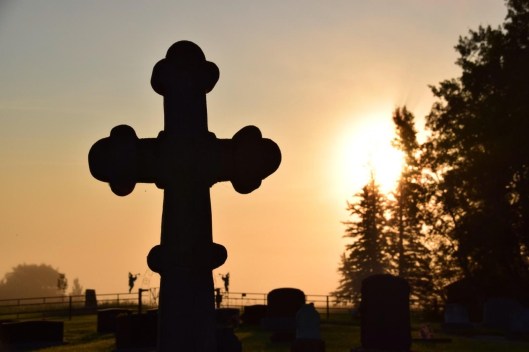
img_20210418_1903345

A light on my path — photo by David Kitz

Reflection
Some stories that you read are memorable. They stick with you. You identify with the character or the event, and as a result, on a certain level their experience becomes your own.

Several years back, I read a story in Guideposts Magazine about a boy in Florida who went rambling through a field on his grandparents’ farm. On this adventurous excursion, he jumped across an irrigation ditch only to land on a deadly snake—a water moccasin—which instantly bit him. It was only through the miraculous intervention of God that this young fellow made it back to the farm house and survived. In this situation the old proverb, look before you leap, definitely applied.

We too are pilgrims traveling through a field—a dark and dangerous world. That’s why we need the light of God’s word. The psalmist says it best. Your word is a lamp for my feet, a light on my path.

We need a light—the light of God’s word—on our path because there are venomous snakes in the grass. Actually, the psalmist uses a different analogy; he speaks of snares. But the net result is the same. On this path we are walking, our very life is in grave danger. We must see clearly to avoid disaster. The wicked have set a snare for me, but I have not strayed from your precepts.

We need to know the precepts—the principles of God’s word—if we are going to walk in His ways. This goes beyond a fixed set of rules. It involves an understanding of the reason for God’s commands. For this we need the Spirit and the mind of Christ. We are not just walking to avoid pitfalls; we are walking toward a goal. That goal is Christ Jesus, the author and finisher of our faith (Hebrews 12:2, NKJV).

Response: LORD God, shine the light of your word on the path of life you have ordained for me to walk. I am not on this path by accident, but through your will and purpose. Guide me home. Amen.

Your Turn: Have you encountered snares or snakes in the grass? Are you on the right path?

* New International Version, Copyright ©1973, 1978, 1984, 2011 by Biblica

Volume II of Psalms 365: Develop a Life of Worship and Prayer by award-winning author David Kitz is available now. For a closer look at this #1 new release click here. For a look back at Volume I click here.

                                                                      

Lift Up your Hands

22 Wednesday Feb 2017

Posted by davidkitz in Psalm 134, Psalms

≈ 10 Comments

Tags

Creator, identity, Jesus, Ottawa ON, pilgrim, pilgrimage, pilgrims, praise, Rideau Canal, Rideau Canal Skateway, the LORD, worship

Reading:                                        Psalm 134

A song of ascents.

Praise the LORD, all you servants of the LORD
who minister by night in the house of the L
ORD.
Lift up your hands in the sanctuary
and praise the L
ORD.

May the LORD bless you from Zion,
he who is the Maker of heaven and earth
(NIV).

Reflection

This is the fifteenth and final psalm in the Songs of Ascent series. In reality, this psalm is the pilgrims’ farewell offering of worship to the LORD.  After a week or more in Jerusalem, the time has arrived for the pilgrims to return to their homes. But on the evening before they set out on the return journey, they make one last visit to Mount Zion and the great Temple of the LORD. There they lift their hands in praise to the God of Israel. Early next morning, they will begin the arduous journey back home. But for now, it’s time to bless the LORD and offer thanks.

img_20170218_084630

Skaters on the Rideau Canal, Ottawa, ON — photo by David Kitz

It is likely that the twelve-year-old Jesus sang this psalm with his parents on the final evening of their Passover pilgrimage to Jerusalem. On the following day the family departed for Nazareth where Joseph would resume his trade as a carpenter. When they left the next morning, they assumed Jesus was traveling with them in the large company of other pilgrims from their hometown. See Luke 2:41-52.

Typically, we read this account of the lost twelve-year-old Jesus from the viewpoint of a parent. We identify with the stress of losing a child in a big city. We would title this story, “Mary and Joseph find lost Jesus.” But the story reads quite differently, when we view it from the perspective of a child trying to discover who he really is. Viewed from Jesus’ perspective the title of the story might well be, “Lost Boy finds Himself” or “Lost Boy Discovers His Divinity.”

How did Jesus discover he was the son of God? Some believers might well reason that the answer is obvious. Jesus is God; therefore, he is omniscient. The all-knowing Jesus would surely know that he was God’s son. But many theologians would beg to differ. They view the humanity of Christ as all pervasive. Jesus was 100% human and as such he needed to learn and discover his identity even as any child does.

If through the incarnation Jesus fully took on humanity, then the boy Jesus needed to discover his divine identity. It may have been written into every fibre of his being, but he still needed to discover it, just as any young musical prodigy needs to explore and discover his or her gift. All divine gifts must be discovered and developed to reach their maximum potential.

How do we discover our true identity? From the account in Luke, it would appear that the boy Jesus discovered his true identity in the House of God. Perhaps it began as he lifted his hands in worship. We cannot fully discover who we are until we discover who God is. We must know our Creator to know ourselves. Self-understanding begins with knowing whose we are. You and I belong to the Father.

Response: Father God, I thank you for loving me and inviting me into your family. Lord Jesus, thank you for purchasing my redemption. Holy Spirit, I thank you for the confirmation that I am your child. Amen.

Your Turn: Do you know who you are? How is God the Father shaping your identity?

The House of the LORD

01 Wednesday Feb 2017

Posted by davidkitz in Psalm 122, Psalms

≈ 5 Comments

Tags

Israel, Jerusalem, Landestreu, peace, pilgrim, pilgrimage, prosperity, Psalms of Ascent, shalom, the LORD

Reading:                                       Psalm 122

A song of ascents. Of David.

I rejoiced with those who said to me,
“Let us go to the house of the L
ORD.”
Our feet are standing in your gates, Jerusalem.

Jerusalem is built like a city
that is closely compacted together.
That is where the tribes go up—
the tribes of the L
ORD—
to praise the name of the L
ORD
according to the statute given to Israel.
 There stand the thrones for judgment,
the thrones of the house of David.

Pray for the peace of Jerusalem:
“May those who love you be secure.
May there be peace within your walls
and security within your citadels.”
For the sake of my family and friends,
I will say, “Peace be within you.”
For the sake of the house of the L
ORD our God,
I will seek your prosperity
(NIV).

Reflection

This third psalm in the Song of Ascents series is a psalm of arrival. The pilgrims have arrived at Jerusalem the destination of their pilgrimage. The following statement makes it clear that the weary travelers have arrived: Our feet are standing in your gates, Jerusalem. Jerusalem is built like a city that is closely compacted together. That is where the tribes go up—the tribes of the LORD—to praise the name of the LORD according to the statute given to Israel.

d-adam-4

Landestreu sunrise — photo courtesy of Donald Adam

It should be noted that this pilgrimage to Jerusalem was not merely an event for the occasional tourist. As the psalmist states, he came to praise the name of the LORD according to the statute given to Israel. In fact, this pilgrimage to the holy city was required according to the Law of Moses. Three times a year all your men are to appear before the Sovereign Lord, the God of Israel. I will drive out nations before you and enlarge your territory, and no one will covet your land when you go up three times each year to appear before the Lord your God (Deuteronomy 34-23-24).

Our Lord and Savior, Jesus Christ, frequently made this journey to fulfill the requirements of the Law. The first reference to this pilgrimage is found in the account of the twelve-year-old Jesus remaining in the city after his parents had left to return to Galilee (Luke 2:41-50). His last pilgrimage to celebrate the Passover ended with his crucifixion and resurrection.

With the psalmist we join in praying for the peace of Jerusalem, and peace within the church of God.

Response: Father God, we pray for your peace—the shalom of God. May your peace come to Jerusalem, and to all of Israel, and especially to all the followers of your dear son, Jesus. Amen.

Your Turn: Do you regularly pray for peace in the house of the LORD our God?

I Lift Up my Eyes

31 Tuesday Jan 2017

Posted by davidkitz in Psalm 121, Psalm 41, Psalms

≈ 3 Comments

Tags

Dead Sea, Jericho, Jerusalem, journey, pilgrim, pilgrimage, Psalms, Psalms of Ascent, Songs of Ascent, stamina, strength, weary

Reading:                                        Psalm 121

A song of ascents.

I lift up my eyes to the mountains—
where does my help come from?
My help comes from the L
ORD,
the Maker of heaven and earth.

He will not let your foot slip—
he who watches over you will not slumber;
indeed, he who watches over Israel
will neither slumber nor sleep.

The LORD watches over you—
the L
ORD is your shade at your right hand;
 the sun will not harm you by day, nor the moon by night.

The LORD will keep you from all harm—
he will watch over your life;
the L
ORD will watch over your coming and going
both now and forevermore
(NIV).

Reflection

Psalm 121 is the second Song of Ascents, and as such it was a psalm, which was intended for use by pilgrims as they journeyed to Jerusalem. This particular psalm was most often sung or chanted as the pilgrims set out from Jericho. As they lifted up their eyes, the sharply rising hill country of Judah stretched off into the distance. Hill after hill rose up before them. Jesus often made this journey.

CIMG3309

Chapel of the Transfiguration, Grand Teton National Park — Photo courtesy of Matthew Taylor

This final portion of the pilgrimage was truly an ascent. From the Dead Sea plain the road to Jerusalem climbs nearly five thousand feet—1600 meters. This is truly an ascent—an ascent from the Dead Sea plain, the lowest point on earth’s surface, to the heights of Mount Zion.

For the bone-weary pilgrims, who had already walked more than one hundred kilometers (60 miles) from Galilee, the sight of those distant hills must have brought a measure of aching discouragement. Here was a looming challenge. Could they make this final ascent? The opening question of this psalm was not a matter of poetic whimsy. It was spoken in earnest. I lift up my eyes to the mountains—where does my help come from?

The weary pilgrim may well be asking, “Having come this far, can I complete this journey? Do I have enough energy—enough stamina to climb those hills? Will I be able to reach Zion? I am exhausted now—before I even start the ascent. I can’t do this on my own. Where does my help come from?”

The psalmist’s answer resounds off those ancient hills. Even today, it echoes down through the ages and reverberates through the chambers of the heart. My help comes from the LORD, the Maker of heaven and earth.

Response: Father God, I am on a lifelong journey—a pilgrimage to the heavenly Jerusalem. When I become weary, give me strength.  I know my strength comes from you, LORD. Amen.

Your Turn: Do you need strength? Have you become weary at times in serving the Lord?

I Am for Peace

30 Monday Jan 2017

Posted by davidkitz in Psalm 120, Psalms

≈ 3 Comments

Tags

God, lament, peace, peace with God, pilgrim, pilgrimage, prodigal, Psalms, Psalms of Ascent, Savior

Reading:                                        Psalm 120

A song of ascents.

I call on the LORD in my distress,
and he answers me.
Save me, L
ORD, from lying lips
and from deceitful tongues.

What will he do to you,
and what more besides,
you deceitful tongue?
He will punish you with a warrior’s sharp arrows,
with burning coals of the broom bush.

 Woe to me that I dwell in Meshek,
that I live among the tents of Kedar!
Too long have I lived
among those who hate peace.
I am for peace;
but when I speak, they are for war
(NIV).

Reflection

Psalm 120 is the first in a series of fourteen psalms that are called Songs of Ascent. Each psalm begins with this statement or title: A Song of Ascents. Some of the psalms also add this phrase: Of David.

bike-in-woods-2014-07-21

The pilgrim’s journey — photo by David Kitz

Of course, this title begs the question, what are the Songs of Ascent? And furthermore, to what are we ascending? This compilation of fourteen psalms was composed for the use of pilgrims who were making their way to worship at the temple in Jerusalem. These are psalms of pilgrimage. They are called Songs of Ascent, or Psalms of Ascent, because Jerusalem is built on a high point in the land of Israel. Specifically, the temple compound was constructed at the summit of Mount Zion, so pilgrims were literally and figuratively ascending to worship at the House of God.

This first psalm in the series is really a lament. The psalmist is living in a distant place—a place far from God. All of us begin our pilgrimage—our journey to God—from a distant place. Just like the prodigal we find ourselves in a distant land, a land where there is no peace. Sin has its fleeting pleasures, but it brings no lasting peace, no deep contentment. We have wandered far from the Father’s warm embrace. The psalmist laments, “Woe to me that I dwell in Meshek, that I live among the tents of Kedar!”

The Songs of Ascent are all about drawing near to God. They are about going to the heart of worship and finding peace—true peace in the arms of God. But first we must recognize where we are. We are dwelling in Meshek—in a world far from the LORD. We need to acknowledge our true condition. Change happens when we recognize the truth about ourselves and our need for a Savior. Only then can we begin our journey toward peace.

Have faith in this promise. I call on the LORD in my distress, and he answers me.

Response: Father God, today I am continuing my journey toward you. Lord Jesus, I need you as my Savior. Help me set aside those things that hinder my journey to intimacy with you. Amen.

Your Turn: Are you living in Meshek? Have you begun your pilgrimage to arms of the Father?

Psalms 365: Develop a Life of Worship and Prayer

Psalms 365 Volume II

Psalms 365 vol 3
— Psalms 365 Volume III

Psalms

Recent posts

  • A Horn of Salvation December 19, 2025
  • Ready for the King of Glory December 19, 2025
  • My Spirit Rejoices in God My Savior December 18, 2025
  • Joining the Generation That Seeks God December 18, 2025
  • Why Am I So Favored December 17, 2025
  • How Can You Find the Good Life? December 17, 2025
  • The Power of the Most High December 16, 2025

Calendar

December 2025
M T W T F S S
1234567
891011121314
15161718192021
22232425262728
293031  
« Nov    

Blog Posts

Comments

  • davidkitz on Joining the Generation That Seeks God
  • cjsmissionaryminister on God Sent His Son
  • cjsmissionaryminister on The God of the Broken

Blog at WordPress.com.

Privacy & Cookies: This site uses cookies. By continuing to use this website, you agree to their use.
To find out more, including how to control cookies, see here: Cookie Policy
  • Subscribe Subscribed
    • I love the Psalms
    • Join 1,377 other subscribers
    • Already have a WordPress.com account? Log in now.
    • I love the Psalms
    • Subscribe Subscribed
    • Sign up
    • Log in
    • Report this content
    • View site in Reader
    • Manage subscriptions
    • Collapse this bar
 

Loading Comments...