
We Wait in Hope
12 Friday Jun 2020

12 Friday Jun 2020
12 Friday Jun 2020
Tags
Reading: Psalm 33
(Verses 16-22)
No king is saved by the size of his army;
no warrior escapes by his great strength.
A horse is a vain hope for deliverance;
despite all its great strength it cannot save.
But the eyes of the LORD are on those who fear him,
on those whose hope is in his unfailing love,
to deliver them from death
and keep them alive in famine.
We wait in hope for the LORD;
he is our help and our shield.
In him our hearts rejoice,
for we trust in his holy name.
May your unfailing love be with us, LORD,
even as we put our hope in you (NIV).*

The eyes of the LORD are on those who fear him — photo by David Kitz
Reflection
This final portion of Psalm 33 is all about hope. Life is all about hope. From the first breath we take until our last gasp, life is all about hope. Life has no meaning or purpose if we lose hope.
The essential question we must ask is where do you place your hope? All too often we place our hope in the things of this world, our resources, our ingenuity and the strength of our flesh. But the psalmist reminds us: No king is saved by the size of his army; no warrior escapes by his great strength. A horse is a vain hope for deliverance; despite all its great strength it cannot save.
Time and again throughout history the little guy has won. David defeated Goliath. The Viet Cong ousted the US Army. The Afghan rebels outlasted the armies of the USSR. Victory does not always go to the mighty. So the lament goes up, “How the mighty have fallen! The weapons of war have perished!” (2 Samuel 1:27).
Where is your hope? Where have you put your trust? The psalmist reminds us to put our hope in the LORD. Leaders come and go; nations rise and fall. Human abilities wane. “The grass withers and the flowers fall, but the word of our God endures forever” (Isaiah 40:8).
Our hope and our trust must be in God and in His unfailing word.
When calamity strikes, those who maintain hope survive; those who give up hope perish. In stories of extreme survival over and over again this truth is borne out. Hope sustains the human heart, when food and water run out. When we put our trust in the LORD, we tap into a limitless supply of hope. Therefore: We wait in hope for the LORD; he is our help and our shield. In him our hearts rejoice, for we trust in his holy name.
Response: This is our prayer. May your unfailing love be with us, LORD, even as we put our hope in you. In the name of Jesus—our source of hope—who defeated death, we pray. Amen.
Your Turn: What are some sources of false hope? Why have you put your hope in God?
This post by award-winning author David Kitz will be published in book format later in 2020 by Elk Lake Publishing under the title 365 Days through the Psalms.
11 Thursday Jun 2020
Tags
Reading: Psalm 33
(Verses 10-15)
The LORD foils the plans of the nations;
he thwarts the purposes of the peoples.
But the plans of the LORD stand firm forever,
the purposes of his heart through all generations.
Blessed is the nation whose God is the LORD,
the people he chose for his inheritance.
From heaven the LORD looks down
and sees all mankind;
from his dwelling place he watches
all who live on earth—
he who forms the hearts of all,
who considers everything they do (NIV).*
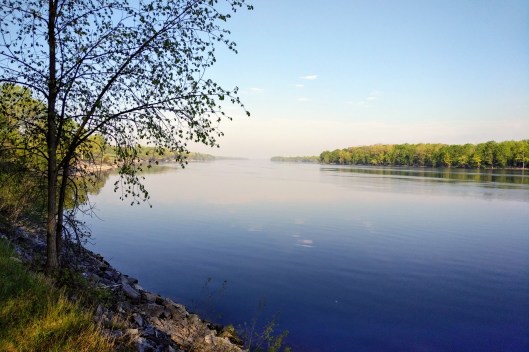
Peace like a river — photo by David Kitz
Reflection
I confess I am a bit of a history buff. I am currently reading The War that Ended Peace by Margaret MacMillan. The subtitle is The Road to 1914. As you might guess, it highlights the causes of World War I. Throughout, the author meticulously points out that war was not inevitable. A change in course by any of the key players in the years leading up to 1914 could have prevented this monumental catastrophe. Each nation had plans and objectives that they considered in their best interest. Quite naturally the pursuit of those plans led to conflict with neighbouring nations with opposing objectives.
What does the psalmist say about national objectives? The LORD foils the plans of the nations; he thwarts the purposes of the peoples. But the plans of the LORD stand firm forever, the purposes of his heart through all generations.
Nations pursue their own perceived national interest. Despite the rhetoric we sometimes hear, they do not pursue the plans and purposes of the LORD. For political leaders national self-interest trumps the purposes of God. In fact, the purposes of God are seldom considered. But the plans of the LORD stand firm forever, the purposes of his heart through all generations.
Was it God’s plan and purpose to have millions of Christian believers go to their slaughter in World War I? Many atheists purport that this is what we believe. Nothing could be further from the truth. We are responsible for our own actions. God does not cause war. Humans cause war and they carry it out. Why should we suddenly blame God for what we have engineered through our own dogged stupidity? Blaming God for our own arrogant idiocy is the pinnacle of irresponsibility, yet we do it all the time, both on a national and a personal level. Most often we are the author of our own disaster. We stubbornly fail to pull back and change course before it’s too late.
Blessed is the nation whose God is the LORD, the people he chose for his inheritance.
Response: LORD God, thank you for choosing me to be to be one of your people. Help me to live a life that is pleasing to you, my Father. You watch over me. You, O LORD are my inheritance, and first and foremost I am a citizen of your eternal Kingdom. Amen.
Your Turn: How does personal conflict escalate? Do you blame God rather than yourself?
This post by award-winning author David Kitz will be published in book format later in 2020 by Elk Lake Publishing under the title 365 Days through the Psalms.
10 Wednesday Jun 2020
Tags
Reading: Psalm 33
(Verses 6-9)
By the word of the LORD the heavens were made,
their starry host by the breath of his mouth.
He gathers the waters of the sea into jars;
he puts the deep into storehouses.
Let all the earth fear the LORD;
let all the people of the world revere him.
For he spoke, and it came to be;
he commanded, and it stood firm (NIV).*

Balanced rocks — photo by David Kitz
Reflection
Have you ever considered the creative power of words? Words change the world. They bring order out of chaos. Words shine the light of day into the darkness of this world. From the very beginning words have been imbued with divine power. The psalmist reminds us, “By the word of the LORD the heavens were made, their starry host by the breath of his mouth.”
But it’s not only God’s words that have this vast power. Our words—human words, whether spoken written or thought have enormous power too. Adam’s first job assignment was to speak words—to name the animals. Now the LORD God had formed out of the ground all the wild animals and all the birds in the sky. He brought them to the man to see what he would name them; and whatever the man called each living creature, that was its name. So the man gave names to all the livestock, the birds in the sky and all the wild animals (Genesis 2: 19-20).
Strangely, God didn’t do what every parent does. He didn’t tell Adam what the animals were called. Adam told God their names. By so doing, God vested mankind with the power of language. Life is what we call it. Our words describe the world and give meaning to it.
Through our words we bring order and make sense of the world around us. As a writer I am continually processing and attempting to make sense of this chaotic thing called life. I do it with words. From the beginning of time, by divine command that’s what we are called to do. We are to speak order into chaos— speak accuracy and clarity into this world’s muddled reality.
With our words we shine the light of truth onto a situation. With words we write laws, administer justice and design government. With words we woo and romance and vow our love to one another. Our words create imaginary realms into which we can travel—words that transport. With our words we have the power to elevate the human spirit, or crush someone to the point of suicide.
Finally, there is something innately prophetic about our words. What we think, speak and write is potent. It has within in it the latent ability to become reality. Therefore, we need to guard our lips. See James 3:1-12. The psalmist reminds us not only of the power of the word of the LORD, but also our own words. For he spoke, and it came to be; he commanded, and it stood firm.
Response: LORD God, help me give careful consideration to my words. Today, may my words, whether written or spoken, be a creative force for good in Jesus’ name. Amen.
Your Turn: How has God used your words for good lately? Are your words bringing life and order out of chaos?
This post by award-winning author David Kitz will be published in book format later in 2020 by Elk Lake Publishing under the title 365 Days through the Psalms.
09 Tuesday Jun 2020
Tags
Reading: Psalm 33
(Verses 1-5)
Sing joyfully to the LORD, you righteous;
it is fitting for the upright to praise him.
Praise the LORD with the harp;
make music to him on the ten-stringed lyre.
Sing to him a new song;
play skillfully, and shout for joy.
For the word of the LORD is right and true;
he is faithful in all he does.
The LORD loves righteousness and justice;
the earth is full of his unfailing love (NIV).*

Photo by Chris F on Pexels.com
Reflection
It’s a good to wake up with a song of praise to the LORD on your lips. How do I know that’s true? I listen to birds. Their joyous songs are new every morning. If they have cause to sing praise to the LORD, surely I do as well.
Jesus said, “Are not two sparrows sold for a penny? Yet not one of them will fall to the ground outside your Father’s care. And even the very hairs of your head are all numbered. So don’t be afraid; you are worth more than many sparrows” (Matthew 10:29:31).
If a sparrow has grounds for praising the LORD each and every day, surely we have more. His constant care sustains us moment by moment. If the Father keeps count of my hair, He must be concerned about even the tiny details of my life. His loving mercy is new every morning; therefore, it is fitting for the upright to praise him.
Here in Psalm 33 we are instructed to: Praise the LORD with the harp; make music to him on the ten-stringed lyre.
Forgive me, LORD. I’m an instrumental disaster. Playing skillfully is nigh unto impossible. But with my voice I will praise you. I can’t compete with robins and cardinals, but I will sing my praise. For the word of the LORD is right and true; he is faithful in all he does.
The steadfast love of the LORD is unchanging. My praise for Him should be just as steadfast—unaffected by my current circumstances. I have heard the birds break into song at sunrise even on a gray rainy morning. At the very least my praise for God should be as constant. Paul and Silas sang praises to God after being severely flogged and imprisoned in Philippi. See Acts chapter 16. Their worship was unaffected by their circumstances. They were obedient to the LORD’s command: Sing joyfully to the LORD, you righteous; it is fitting for the upright to praise him.
Response: Thank you, LORD God, for each day you set before me. Give me a heart of praise for you. You sustain me. Today give me a new song to praise you, O LORD. It’s always good, right and fitting to sing my praise to you. Amen.
Your Turn: Do you love to praise God? Does it lift your spirit when you do? Are there times when the Lord given you a new song to sing?
This post by award-winning author David Kitz will be published in book format later in 2020 by Elk Lake Publishing under the title 365 Days through the Psalms.
08 Monday Jun 2020
Reading: Psalm 32
(Verses 8-11)
I will instruct you and teach you in the way you should go;
I will counsel you and watch over you.
Do not be like the horse or the mule,
which have no understanding
but must be controlled by bit and bridle
or they will not come to you.
Many are the woes of the wicked,
but the LORD’s unfailing love
surrounds the one who trusts in him.
Rejoice in the LORD and be glad, you righteous;
sing, all you who are upright in heart! (NIV)*

Morning mist on the Ottawa River — photo by David Kitz
Reflection
In Psalm 32 God speaks back. David begins this psalm and we clearly can hear his voice addressing us, as he tells how wonderful it is to be forgiven. He then goes on to speak of his own struggle with unconfessed sin. Finally, he tells us of the great relief he experienced as he is pardoned and restored to a place of close fellowship with the LORD. But then abruptly in verse eight, we hear a different voice. God is speaking. The LORD responds to what David has said. Through this psalm David is modelling true prayer. This psalm is two-way communication.
We have heard David’s words; let’s hear God’s words now. I will instruct you and teach you in the way you should go; I will counsel you and watch over you.
Clearly this is not the voice of David. David is not going to counsel and watch over us. This is the work of the LORD. The LORD will teach and guide us. It is His role to shepherd the flock of His pasture.
These words, from verse eight to the end of this psalm are coming from the LORD. David has heard God speak, and now he is passing on this message from the LORD directly to us. In this respect David is fulfilling the role of a prophet. He is acting as God’s spokesperson. In fact in Acts 2:30, Peter asserts that David was a prophet. And what is a prophet? In the simplest terms, it is someone who hears God, and then passes on God’s message to others.
Do you hear God? This is no idle, rhetorical question. It is essential to our Christian faith that we as believers hear the voice of God. I would go so far as to say, that you cannot experience salvation unless you first hear God. Jesus said, “My sheep listen to my voice; I know them, and they follow me. I give them eternal life, and they shall never perish” John 10:27-28a (NIV).
In short, we must be able to hear Jesus in order to follow Him, and it is in following Him that we receive eternal life. Hearing God’s voice is of paramount importance.
Response: LORD God, give me ears to hear what you have to say to me. Please instruct me and teach me in the way I should go. Then give me grace to obey. I put my trust in you, O LORD. Amen.
Your Turn: Do you hear God’s voice? How does He speak to you? Have you heard the Lord’s voice recently? How do you distinguish God’s voice from all the other voices that you hear?
This post by award-winning author David Kitz will be published in book format later in 2020 by Elk Lake Publishing under the title 365 Days through the Psalms.
07 Sunday Jun 2020
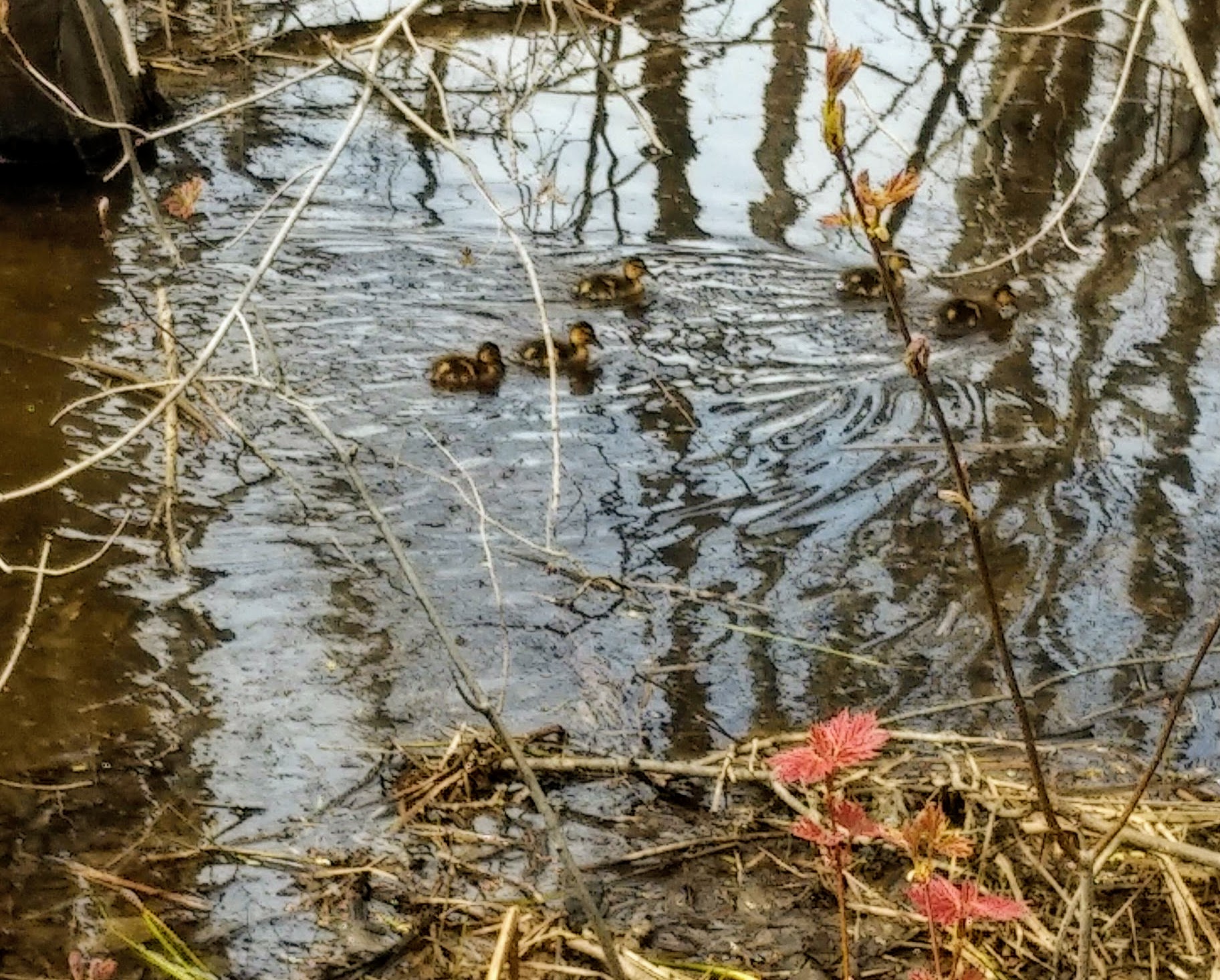
Five ducklings — photo by David Kitz
06 Saturday Jun 2020

Manitoba maple blossoms — photo by David Kitz
05 Friday Jun 2020
Reading: Psalm 32
(Verses 6-7)
Therefore let everyone who is godly pray to you,
while you may be found;
surely when the mighty waters rise,
they will not reach him.
You are my hiding place;
you will protect me from trouble
and surround me with songs of deliverance (NIV).*
Reflection
In the previous stanza of this psalm, David received the amazing dam-busting forgiveness of God. He has just experienced a wonderful release from a load of guilt. But now in his next breath he has some advice for us, and here it is. Therefore let everyone who is godly pray to you, while you may be found.
We are to pray to God while He may be found. This raises some interesting questions. Is God unavailable at times? If God cannot be found, is He hiding? Furthermore, if God is hiding, where does He hide?
At this point I feel like jumping to my feet, like a lawyer pleading a case in the court of reason, and shouting out, “I object! All that David has told us about God so far would lead us to believe that God is always close at hand. Didn’t David testify to this earlier in Psalm twenty-three? He said the following words about the LORD his shepherd: Even though I walk through the valley of the shadow of death, I will fear no evil, for you are with me. And now it seems David is telling us that there are times when God cannot be found. Which is it David? It can’t be both.”
Ah, but it is both. This is one of those great divine paradoxes. The God, who is near, even in my heart, can also be distant—light years away, both in time and space. There exists a perceived distance between us that can vary according to the state of my heart—according to the state of my relationship with God.
The fact remains that we cannot see God though we see evidence of His handiwork all around us. Our infinitely complex human bodies and finely tuned senses are themselves proof of His existence, yet Him we cannot see. He is a hidden God, and when we walk beside Him, we walk by faith and not by sight.
Repeatedly in the scriptures we are commanded to seek after the LORD. I find this to be a rather curious expression. We cannot see God, and yet we are commanded to seek Him, as though He might suddenly appear over the next hill, or around the next bend in the road. Suddenly, in unexpected ways, we may encounter God.
In reality the Psalms are all about encounters with God. Psalm nineteen began that way. Suddenly the starry hosts began talking to David about God, declaring His glory. We may pick up the Bible, and suddenly it speaks to our deepest need—the need of the moment, and we know that this is the voice of God with a word specifically for us today. Even the ungodly people of this world recognize that people encounter God. They use expressions like, “He found God,” to describe someone’s conversion to faith in Christ. The LORD invites us to play the most amazing game: Hide ‘n’ seek with God.
Response: LORD God, I want to seek after you. Show yourself to me today in this grand adventure called life. I want to have an encounter with you. I want to know what it means to be found by you. Amen.
Your Turn: Have you had a recent encounter with God? Do you sense His nearness or distance?
This post by award-winning author David Kitz will be published in book format later in 2020 by Elk Lake Publishing under the title 365 Days through the Psalms.
04 Thursday Jun 2020
Tags
Reading: Psalm 32
Of David. A maskil.
(Verses 1-5)
Blessed is the one
whose transgressions are forgiven,
whose sins are covered.
Blessed is the one
whose sin the LORD does not count against them
and in whose spirit is no deceit.
When I kept silent,
my bones wasted away through my groaning all day long.
For day and night your hand was heavy on me;
my strength was sapped as in the heat of summer.
Then I acknowledged my sin to you
and did not cover up my iniquity.
I said, “I will confess my transgressions to the LORD.”
And you forgave the guilt of my sin (NIV).*

Reflection
A right relationship with God is like a flowing stream. In such a relationship there is a natural giving to God that includes prayer, worship, time spent in His word, and periods of quiet communion. In turn, God by the Holy Spirit pours His peace, love and joy into our lives. And just as trees naturally line a river bank, there is a verdant fruitfulness that comes to the believer as that refreshing current is allowed to flow.
Sin acts like a boulder hindering the flow of God’s Spirit in our lives. As more and more un-repented sin piles up, a dam is formed. Suddenly prayer stops. Worship and thanksgiving that once cascaded so freely from our lips comes to a halt. The word of God becomes boring, and we find other interests. Times of quiet communion with our Maker are replaced by a search for other things like constant entertainment.
This is the state of David’s soul at the start of this psalm. The flow has stopped. Where was the overflowing cup experience of Psalm twenty-three? At this point David’s cup—his soul—is sitting stagnant. And in the natural realm any liquid left unstirred becomes foul as time goes by. David’s spiritual life was turning into a swamp because of unconfessed sin.
But there was a turning point for David: Then I acknowledged my sin to you and did not cover up my iniquity. I said, “I will confess my transgressions to the LORD.”
Confession breaks the dam. David verbally brought his sin out in the open before God. He acknowledged what God knew all along. You see David’s sin and my sin are never hidden from God. Our sin is always in plain sight of the LORD. But praise God! He forgives the guilt of our sin when we break the spiritual dam through confession. Repentance restores the flow.
Response: LORD God, have mercy on me. I acknowledge my sin to you and do not cover up my iniquity. I need your forgiveness. I put my trust in the redeeming sacrifice of your Son, Jesus. Amen.
Your Turn: Has unconfessed sin dammed up the flow of prayer and worship in your life?
This post by award-winning author David Kitz will be published in book format later in 2020 by Elk Lake Publishing under the title 365 Days through the Psalms.
 I love the Psalms