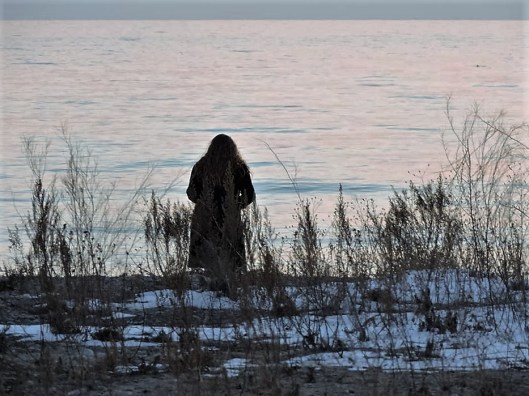
Unknown Faults

Tags

, , , , , ,

None of us know our faults. Forgive me when I sin without knowing it (Psalm 19:12, CEV).

M Taylor Plum blossoms

Plum Blossoms, Nagoya, Japan — Photo courtesy of Matthew Taylor

Reflection

This week’s I Love the Psalms theme is forgiveness.

I can’t see the back of my head. I was reminded of this yesterday when I was getting my haircut. After the hairdresser finished, she held up a mirror so that I could see the back of my head. To my dismay I realized I’m balding back there. The evidence of hair loss was plain to see, but until that moment I was not fully aware.

In the same way we are often blind to our own faults. We are quick to spot the faults in others, but our own character flaws and moral shortcomings go undetected. Today’s verse from the Psalms reminds us of this.

None of us know our faults. Forgive me when I sin without knowing it (Psalm 19:12, CEV).

Even when we discover our faults or sins, we are usually quick to excuse ourselves. The truth is we don’t need excuses; they usually don’t hold water. We need forgiveness—God’s forgiveness. Honest confession to God and forgiveness from God liberates the soul.

Response: LORD God, help me to see my faults—not so I’ll be weighed down by guilt—but so I will be set free by your forgiveness through Jesus your Son. Amen.

Your Turn: Have you been blind to your faults? What do you do when you become aware of them?

Ottawa Christian Writers’ Conference

Tags

, , , , , ,

Here is a guest post from about an upcoming writers’ conference that I am involved in organizing:

Hi from Denyse O’Leary on behalf of the Ottawa Christian Writers’ Fellowship, suggesting you join us April 2 if you are in the area, for all writerly things, at Greenbelt Church. We have a great and highly affordable conference, featuring a noted speaker:

OLYMPUS DIGITAL CAMERA

The Honourable David Kilgour

Plenary speaker: The Honourable David Kilgour who will be speaking on Developing your Platform as a Writer

And a choice of workshops:

A1: Memoir Writing     OR    A2: Dialogue Writing

B1: Article Writing        OR    B2: Editing Fiction

C: Panel Discussion and Q & A

PLUS a special deal on critiques of your work. For $25, a professional editor will look at your work.

This year, OCWF can provide manuscript critiques (for half the usual price). For $25, you can submit the first 5 pages in advance, and book a 15-minute appointment with a professional editor. Don’t miss this opportunity to find the best writer in you! **

That could save you dozens of wasted hours learning the hard way.

Now here I am, yer humble hack, to answer three burning questions people ask about writing in general:

  1. Do I have what it takes to be a writer?

That’s not the right question. Probably half a million people in North America make their living mainly by their ability to write. Whether you could be one of them depends on whether you are willing to accept a position like the ones they have. You must start by finding out what genres of writing are available and whether one would fit you. Newsletters? Fiction? Non-fiction? Screenplays? Devotions? One must research the field to see where one’s skills would fit.

  1. Can I make enough money writing?

Yes. No. I don’t know. I’ve been a freelance editor and writer most of my life, and made enough money. But one needs some business skills to be self-employed, which most writers are at least some of the time. So assuming that you can find a genre that works for you, consider whether you can also be successfully self-employed. Writing is a well-developed business for self-employed persons, but one needs to learn a different skill set from that of finding a job.

  1. Does it matter if I often feel discouraged, as if I am not getting anywhere with my writing?

Sure. It matters in the same way that discouragement matters to doctors, preachers, teachers, restauranteurs, and politicians. In each case, we look to the origin of the problem. Maybe we are not cut out for a writing career of any sort. But then again, maybe we are not approaching it in the right way. Maybe we aren’t dealing effectively with barriers and distractions. The best approach to those kinds of problems is to spend more time with other writers, listening to and learning form their struggles and sharing ours with them. That’s why we have an OCWF and a Word Guild.

See you at the conference,

Denyse

Denyse O’Leary

New Life

Tags

, , , , , , ,

You made me suffer a lot, but you will bring me back from this deep pit and give me new life (Psalm 71:20, CEV).

IMG_20140518_192107

The Waters Edge — photo by David Kitz

Reflection

This week’s I Love the Psalms theme is suffering.

If you look closely at the photo above, you can see new leaves that have emerged on the shrubs. The long winter is over; new life is stirring. It will be another month before we see shrubs at this stage here in Ottawa, Canada, but the great snow melt has begun. The sap is beginning to flow.

We are witnessing a resurrection in nature. We see the same resurrection theme in today’s verse from the Psalms.

You made me suffer a lot, but you will bring me back from this deep pit and give me new life (Psalm 71:20, CEV).

Jesus, our Savior and Lord, suffered a lot. He suffered the penalty of sin that we deserved. But God the Father brought him back from the deep pit of death and gave him new life. Through faith in Jesus, the promise of this verse is ours as well. Whatever state you find yourself in—in suffering or rejoicing—make that promise your own today.

Response: LORD God, through the death and resurrection of Jesus, I receive new life now with the promise of eternal life. A thousand thanks are not enough. Amen.

Your Turn: Have you received new life through Christ?

Through Suffering

Tags

, , , , , ,

The LORD’s people may suffer a lot, but he will always bring them safely through (Psalm 34:19, CEV).

IMG_20140217_152624

Grey Nuns Park, Orleans, ON — photo by David Kitz

Reflection

This week’s I Love the Psalms theme is suffering.

Many believers have wrong expectations of God. We believe that if we choose to follow the Lord, He will be spare us from experiencing pain and suffering. We view our relationship with God as a kind of insurance policy that will protect us from heartache and loss. The truth is no such insurance policy exists. On the contrary, the opposite may be true.

The LORD’s people may suffer a lot, but he will always bring them safely through (Psalm 34:19, CEV).

The people that God chooses often suffer greatly. His chosen people suffered much as slaves in Egypt. When the Lord Jesus arrested Saul/Paul on the way to Damascus, he was told the road ahead would be marked by suffering. Jesus said,  “I will show him [Paul] how much he must suffer for worshiping in my name” (Acts 9:16).

Though the path—your path—may be marked by suffering, we have this promise. The Lord will bring you safely through.

Response: LORD God, I trust you to bring me safely through to the Promised Land. You are my inheritance. Help me to endure hardship as your faithful follower. Amen.

Your Turn: Have you viewed God as your insurance policy against suffering?

Cared For

Tags

, , , , , ,

I celebrate and shout because you are kind. You saw all my suffering, and you cared for me (Psalm 31:7, CEV).

Matthew Taylor Grand Tetons National Park

Grand Tetons National Park — photo by Matthew Taylor

Reflection

This week’s I Love the Psalms theme is suffering.

Suffering is always difficult, but it is especially so when a person suffers alone. Today’s verse reminds us that God sees our suffering. He not only sees and hears our cries, He cares for us. It is God who nurses us back to a point of health, strength and vitality.

I celebrate and shout because you are kind. You saw all my suffering, and you cared for me (Psalm 31:7, CEV).

God’s child is cared for. You are not abandoned by Him during times of suffering. He is right there with you. He brings us through to the other side of suffering—to the place of celebration.

Response: LORD God, thank you for caring for me. It’s more than a promise; it’s a reality. You see how I have suffered and you will always bring me through. I put my trust in you, Lord Jesus. Amen.

Your Turn: Do you have a testimony of God’s care through a time of suffering?

The Conclusion of Solomon’s Prayer

Tags

, , , , , , ,

Reading:                                     Psalm 72

Verses 12-20

For he will deliver the needy who cry out,
the afflicted who have no one to help.
He will take pity on the weak and the needy
and save the needy from death.
He will rescue them from oppression and violence,
for precious is their blood in his sight. Long may he live!
May gold from Sheba be given him.
May people ever pray for him
and bless him all day long.
May grain abound throughout the land;
on the tops of the hills may it sway.
May the crops flourish like Lebanon
and thrive like the grass of the field.
May his name endure forever;
may it continue as long as the sun.

Then all nations will be blessed through him,
and they will call him blessed.

Praise be to the LORD God, the God of Israel,
who alone does marvelous deeds.
Praise be to his glorious name forever;
may the whole earth be filled with his glory. Amen and Amen.

This concludes the prayers of David son of Jesse (NIV).

IMG_20140616_102225

More glorious than Solomon — photo by David Kitz

Reflection

This is the concluding portion of Solomon’s prayer. Many scholars view this as David’s prayer for Solomon, rather than a prayer written by Solomon. In either case, it is a prayer calling for God’s blessing on the king and the nation. This brings us to a question. What is the purpose of God’s blessing? Is it only for personal benefit?

The answer can be found in the first few lines above. The righteous king is blessed and given wealth and authority so that he can be a blessing to others. He will take pity on the weak and the needy and save the needy from death. He will rescue them from oppression and violence, for precious is their blood in his sight.

The great danger for any of us is that when blessings come, we accumulate these blessings for ourselves alone. Along with God’s blessings comes a responsibility to share and identify with those in need within our borders and beyond. We serve a God with a big heart. His love extends far beyond our narrow interests. God blesses His people abundantly, so that we can in turn bless others.

What a privilege we have to reflect the LORD’s character in a hurting world!

Response: LORD God, help me to see my many blessings as a gift from you. Show me today how I can be a blessing to others. You are my source. Amen.

Your Turn: Are you tempted to keep all of God’s blessings for yourself?

The God of Nerve Endings

Tags

, , , , , ,

You listen to the longings of those who suffer. You offer them hope, and you pay attention to their cries for help (Psalm 10:17, CEV).

Eric E. Wright 6

Photo by Eric E. Wright

Reflection

This week’s I Love the Psalms theme is suffering.

We all suffer or have suffered in various ways, whether it’s physical, psychological or emotional pain. To be human is to suffer.

Our God is the God of nerve endings. We were designed to feel both pain and pleasure. The same nerve endings that give us joy and pleasure can scream out in pain and agony.

Have you heard an atheist railing against God because He allows humans to experience joy and pleasant sensations? Of course not, but God is blamed for allowing suffering. The God of nerve endings allows us to experience both pleasure and pain, and I’m so glad He does.

But beyond all this God hears us when we suffer.

You listen to the longings of those who suffer. You offer them hope, and you pay attention to their cries for help (Psalm 10:17, CEV).

God understands our pleasure and our pain because in the body of Jesus, He fully became one of us.

Response: Lord Jesus, I thank you for identifying with our problems, suffering and weakness. I determine in my heart to thank and praise you both in times of joy and in times of pain. Amen.

Your Turn: How do you respond to suffering? Why is it difficult to praise God in hard times?

Standing up for conscience rights

Tags

, , , , , ,

Euthanasia 2

Photo by Robert Stanley | Dollar Photo Club

“This has huge implications for the medical profession and it has huge implications for the people who will select medicine as a career.”

Craig Macartney
Spur Ottawa Writer

While Canadians wait for the Liberals to introduce legislation on physician assisted suicide, numerous Christian organizations are sounding alarm bells about the importance of protecting doctors’ conscience rights. Although the new laws have not yet been tabled, several provincial medical colleges are already demanding their members provide referrals and in some cases actually perform contentious procedures.

At a February 24 press conference on Parliament Hill, the Christian Heritage Party called for clear protection of conscience rights in the upcoming assisted suicide legislation.

“All Canadians, including doctors and other healthcare professionals, deserve the protection of their consciences,” says Rod Taylor, Leader of the Christian Heritage Party. “If we want a citizenry focused on the needs of others, and the rights of others, we must allow those citizens to honourably carry out their duties with a clean conscience.”

The day after the press conference the government committee exploring the issue recommended that the new laws require all doctors to provide referrals for assisted suicide, regardless of their beliefs.

“This has huge implications for the medical profession and it has huge implications for the people who will select medicine as a career, especially in the long term,” says Larry Worthen, Executive Director of the Christian Medical and Dental Society (CMDS). “It’s a question of respect for human rights. Doctors with conscientious objections should be respected by our society, as any other minority.”

“If somehow the courts believe it’s someone’s democratic right to end their lives, under certain circumstances, I don’t feel it’s a doctor’s obligation to fulfill that role.”

Worthen warns that Canadians with conscientious objections will likely avoid medicine if their rights are not respected.

One local doctor shared his concerns with Spur Ottawa.

“Even though I can think of scenarios where physician assisted suicide might be, in some way, defensible, I think it’s a really tiny minority of cases. My big concern about the potential legislation is the harm that can come to thousands of individuals who might feel pressured to make decisions to end their lives.”

The doctor, who declined to be named because of potential of repercussions, says there is so much room for abuse of vulnerable people. One example he gave is for adult children of chronically ill parents to pressure them into ending their lives.

“As physicians, we are trained to protect and help the vulnerable. It doesn’t seem the role of a physician to counsel someone to end their life. If somehow the courts believe it’s someone’s democratic right to end their lives, under certain circumstances, I don’t feel it’s a doctor’s obligation to fulfill that role.”

“We need concerned Christians to express their support.”

Like Worthen, the doctor is also concerned about the impacts this could have on future doctors.

“I would be concerned for the generation of physicians behind me. When the government made it legal to do abortions, initially it was easy for physicians to not refer for abortions. But twenty years down the line, you have scenarios where there can be a lawsuit against the physician for wrongful birth. In the 1980s that wasn’t an issue, but now it’s commonplace.”

Following the Supreme Court decision to allow assisted suicide, CMDS formed a coalition of Christian organizations lobbying parliament and provincial legislatures to protect conscience rights. Worthen says it’s really important that concerned Christians voice their opinions with government officials—and the coalition has made that extremely easy.

“We need concerned Christians to express their support. Our website www.moralconvictions.ca has a platform that allows people to directly contact officials to express their concern about these issues.”

As they wait for the legislation to be tabled, CMDS is also fighting the battle on another front, with what they hope will be a trump card. Last spring they took the Ontario College of Physicians and Surgeons to court, challenging their policy that requires all doctors to refer and sometimes perform abortion and assisted suicide.

“If the legislation does not protect conscience rights, we still have our court challenge. We filed a legal application in the Ontario court on behalf of five doctors who are all concerned about the fact that the Ontario College is taking away their conscience rights.

“There are extreme challenges in the work we are doing. We would really appreciate if people would keep us in their prayers.”

Powerful Hands

Tags

, , , , , ,

Rescue the weak and homeless from the powerful hands of heartless people (Psalm 82:4, CEV).

ID-100388841 (1)

Image courtesy of alex_ugalek at FreeDigitalPhotos.net

Reflection

This week’s I Love the Psalms theme is power.

Today’s verse from the Psalms reminds us that some humans have powerful hands.

Rescue the weak and homeless from the powerful hands of heartless people (Psalm 82:4, CEV).

We are not powerless though the world and the devil would like us to believe that we can’t change anything. The truth is when we work with the Lord, we have tremendous power.

When more than 5,000 hungry people gathered to hear Jesus, he told his disciples, “You give them something to eat” (Matthew 14:16). And that’s exactly what they did. Jesus did the miracle, but their hands distributed the bread and fish.

God does not work alone. He chooses to work through people. Today you can be the hands of Jesus at work in the world.

Response: LORD God, thank you for the opportunity to work with you today. I want to use my hands to work powerfully for you. Amen.

Your Turn: Has God worked through your hands recently?

Power with Purpose

Tags

, , , , , , ,

I will praise you, LORD God, for your mighty deeds and your power to save (Psalm 71:16, CEV).

D Adam 8

Power to Save – photo courtesy of Donald Adam

Reflection

This week’s I Love the Psalms theme is power.

What is power without a purpose? I’m reminded of a young buck revving his engine, so he can pop the clutch, spin his tires and squeal off in a blaze of glory, dust, and bravado. There’s really not much purpose in it, unless I suppose it’s to impress.

At times God will display His power, but unlike the young buck showing off his hot car, the LORD has a meaningful purpose in His display of power. His purpose is our salvation.

I will praise you, LORD God, for your mighty deeds and your power to save (Psalm 71:16, CEV).

In the Old Testament, in a grand display of miraculous power, the LORD rescued his people from slavery in Egypt. Israel was saved by God’s power.

In the New Testament in a grand display of miraculous power, the LORD raised Jesus from the dead, and in doing this He defeated death, our age-old enemy. Jesus rescued us from slavery to sin. Praise God! His power has purpose.

Response: LORD God, I praise you for the grand rescue mission you sent your Son to accomplish. Thank you for resurrection morning and your power to save me. Amen.

Your Turn: Do you appreciate God’s power to save?