• Home
  • About
  • DavidKitz.ca
  • Youtube Videos
  • Books by David
  • Books on Amazon.com

I love the Psalms

~ Connecting daily with God through the Psalms

I love the Psalms

Tag Archives: Psalms

The Repentant Heart

03 Wednesday Jun 2015

Posted by davidkitz in Psalms

≈ 2 Comments

Tags

Bathsheba, David Kitz, Israel, Jonathan, King David, Nathan, Psalm 51, Psalms, repentance, Saul

Reading:                                          Psalm 51

For the director of music. A psalm of David.

When the prophet Nathan came to him after David had committed adultery with Bathsheba.

(Verses 1-9)

Have mercy on me, O God, according to your unfailing love;
according to your great compassion blot out my transgressions.
Wash away all my iniquity and cleanse me from my sin.

For I know my transgressions,
and my sin is always before me.
Against you, you only, have I sinned
and done what is evil in your sight;
so you are right in your verdict and justified when you judge.
Surely I was sinful at birth,
sinful from the time my mother conceived me.
Yet you desired faithfulness even in the womb;
you taught me wisdom in that secret place.

Cleanse me with hyssop, and I will be clean;
wash me, and I will be whiter than snow.
Let me hear joy and gladness;
let the bones you have crushed rejoice.
Hide your face from my sins and blot out all my iniquity
(NIV).

Reflection

Psalm 51 is the great repentance psalm. Nothing matches the deep contrition expressed here by David. There can be little doubt that David was truly remorseful for what he had done. He says it with words, but according to the Scriptures, his actions which followed also revealed a repentant heart. There is no blame shifting here; David takes full responsibility for his actions. Hear his humble plea: For I know my transgressions and my sin is always before me. Against you, you only, have I sinned and done what is evil in your sight; so you are right in your verdict and justified when you judge.

Kanazawa Red Maple -- David Kitz

Kanazawa Red Maple — David Kitz

When Saul and Jonathan were slain in battle by the Philistines, David composed this lament. “Your glory, O Israel, lies slain upon your high places! How the mighty have fallen!” (2 Samuel 1:19 NRSV). David might well have sung this lament for himself. Here he was the vaunted King of Israel, the LORD’s anointed, and he had a fellow soldier murdered to cover up the adulterous affair he was having with this loyal soldier’s wife. This was the conduct of David—the man of God! Yes. “How the mighty have fallen!”

The amazing part of this story is not David’s sin or the depths of his depravity. The amazing part is that he repented—earnestly repented. In our day leader after leader has been caught red-handed in unscrupulous practices. But do they repent? Do they come clean and change their ways? Not likely. Those with absolute power continue to govern ruthlessly. Nathan, the prophet, was fortunate that King David heard the voice of God speaking through a human vessel. David was quick to humble himself and repent. How do you respond when confronted with your sin?

Response: LORD God, grant me a soft heart—a sensitive heart—a repentant heart in Jesus’ name. Amen.

Your Turn: How can we maintain a repentant heart before God?

The Sacrifice of Thanksgiving

19 Tuesday May 2015

Posted by davidkitz in Psalm 50, Psalms

≈ Leave a comment

Tags

Central Park, David Kitz, God, hatred, murder, New York, Psalms, racism, sacrifice, sin, St. Paul, thanksgiving

Reading:                                         Psalm 50

(Verses 7-15)

“Listen, my people, and I will speak;
I will testify against you, Israel:
I am God, your God.
I bring no charges against you concerning your sacrifices
or concerning your burnt offerings, which are ever before me.
I have no need of a bull from your stall
or of goats from your pens,
for every animal of the forest is mine,
and the cattle on a thousand hills.
I know every bird in the mountains,
and the insects in the fields are mine.
If I were hungry I would not tell you,
for the world is mine, and all that is in it.
Do I eat the flesh of bulls or drink the blood of goats?

 “Sacrifice thank offerings to God,
fulfill your vows to the Most High,
and call on me in the day of trouble;
I will deliver you, and you will honor me”
(NIV).

Reflection

What is humanity’s greatest sin? Think about that for a moment. Is it murder? Hatred? Racism? The desecration of the planet? All of these are serious problems—serious sins. But what is the greatest sin?

Central Park, New York, NY - David Kitz

Central Park, New York, NY – David Kitz

Psalm 50 begins with a great summoning of all nations. The LORD is about to enter into judgment. But what charge does He bring against His people? He does not accuse them of heinous crimes, or the desecration of His temple. I bring no charges against you concerning your sacrifices or concerning your burnt offerings, which are ever before me. Instead God calls for thank offerings. The LORD wants His people to have thankful hearts.

There is something rather anticlimactic about this call for thanksgiving. My initial reaction is one of surprise. I thought we had a serious problem here. Why summon the nations to a great gathering unless there is a declaration of some significance. Surely a lack of thanksgiving is an offence of no great significance. Or is it? Apparently in God’s view it is of great importance.

In his epistle to the Romans, St. Paul attributes a lack of thankfulness to the blinding power and deception of sin. For since the creation of the world His invisible attributes are clearly seen, being understood by the things that are made, even His eternal power and Godhead, so that they are without excuse, because, although they knew God, they did not glorify Him as God, nor were thankful, but became futile in their thoughts, and their foolish hearts were darkened (Romans 1:20-21).

Because of its long term consequences, a failure to offer thanks may be the gravest sin of all.

Response: LORD God, I owe my life to you. I have so much to be thankful for. Every day is a gift. Amen.

Your Turn: What are you most thankful for?

The Psalmist Gets it Wrong!

29 Wednesday Apr 2015

Posted by davidkitz in Psalm 49

≈ Leave a comment

Tags

death, faith, Jesus, Psalms, ransom, redeem, sacrifice

Reading:                                          Psalm 49

For the director of music. Of the Sons of Korah. A psalm.

(Verses 1-12)

Hear this, all you peoples;
listen, all who live in this world,
both low and high, rich and poor alike:
My mouth will speak words of wisdom;
the meditation of my heart will give you understanding.
I will turn my ear to a proverb;
with the harp I will expound my riddle:

Why should I fear when evil days come,
when wicked deceivers surround me—

 those who trust in their wealth and boast of their great riches?

No one can redeem the life of another
or give to God a ransom for them—

the ransom for a life is costly, no payment is ever enough—

so that they should live on forever and not see decay.
For all can see that the wise die,
that the foolish and the senseless also perish,
leaving their wealth to others.
Their tombs will remain their houses forever,
their dwellings for endless generations,
though they had named lands after themselves.

People, despite their wealth, do not endure;
they are like the beasts that perish
(NIV).

Reflection

This opening portion of Psalm 49 reminds me of that old maxim: There are only two certainties in this life: death and taxes. The same fate awaits us all; no one is spared. The Grim Reaper cuts down all without exception. The psalmist asserts the obvious: For all can see that the wise die, that the foolish and the senseless also perish, leaving their wealth to others. 

“Where, O death, is your victory? (1 Corinthians 15:55)

“Where, O death, is your victory? (1 Corinthians 15:55)

But the psalmist is not entirely correct. He makes a sweeping statement that fails to account for a most unusual exception. The psalmist states: No one can redeem the life of another or give to God a ransom for them—the ransom for a life is costly, no payment is ever enough—so that they should live on forever and not see decay.

Jesus Christ is that unusual exception. He proves the psalmist wrong. Jesus paid my ransom. He redeemed my life. He went to the cross on my behalf and there he poured out his life blood so that I can live forever. Then to prove that Jesus’ sacrifice was accepted, God the Father raised Him from the dead. Death no longer has dominion over Him. Better still, those who put their trust in Jesus Christ will be raised to life on the last day. Praise be to God, who breaks the bonds of death.

Response: LORD, I thank you for the victory of Jesus! By faith I will live and reign through Him. Amen.

Your Turn: Jesus faced death and overcame. Will you be an overcomer too?

My Cityscape

22 Wednesday Apr 2015

Posted by davidkitz in Psalm 48

≈ Leave a comment

Tags

adversity, Chicago, city, city of God, cityscapes, God, Montreal, Parliament Buildings, Psalm 48, Psalms, Vancouver, Washington DC, Zion

Reading:                                          Psalm 48

(Verses 9-14)

Within your temple, O God,
we meditate on your unfailing love.
Like your name, O God,
your praise reaches to the ends of the earth;
your right hand is filled with righteousness.
Mount Zion rejoices,
the villages of Judah are glad
because of your judgments.

Walk about Zion, go around her,
count her towers,
consider well her ramparts,
view her citadels,
that you may tell of them
to the next generation.

For this God is our God for ever and ever;
he will be our guide even to the end (NIV).

Reflection

Have you watched a television newscast recently? Invariably at some point during that telecast you will see a cityscape—a grand view of the city skyline in all its glory. If experts from Montreal, Vancouver or Chicago are being interviewed, they will appear against the backdrop of a large photo of their city. Routinely, sports telecasts feature brief live shots of the arena and the host city’s downtown.

Parliament of Canada, Ottawa, ON -- David Kitz

Parliament of Canada, Ottawa, ON — David Kitz

Why do broadcasters go to the trouble of filming these cityscapes and providing these skyline backdrops? A good part of the answer is identification. We identify a city by its skyline and by its landmark buildings and towers. Washington, D.C. is intimately linked to pictures of the Capitol, Ottawa with the Parliament Buildings and Toronto with the CN Tower. When the twin towers of the World Trade Center were destroyed, New York mourned not only the loss of lives, but also the loss of its identity—the twin icons of its identity.

Psalm 48 is the Bible’s version of a cityscape telecast. Read the psalmist’s call: Walk about Zion, go around her, count her towers, consider well her ramparts, view her citadels that you may tell of them to the next generation.

What is the psalmist asking us to do? He is asking us to identify with the city of God. What makes Zion unique in the earth is the presence of God within her. The psalmist clearly stated, “God is in her citadels.” Is God within you? Is He reigning in your heart and mind? Is He the master of your affections? Have you had landmark experiences with God that changed the course of your life? Have you climbed towers of prayer? Have you stood guard on the ramparts of your mind? Then with conviction you can say with the psalmist, “For this God is our God forever and ever; he will be our guide even to the end.”

Response: LORD God, reign in me. Establish your capital in my heart. Govern my ways, now and forever more. Amen.

Your Turn: Has Jesus come to rule your heart?

The City of God

14 Tuesday Apr 2015

Posted by davidkitz in Psalm 48, Psalms

≈ Leave a comment

Tags

cities, David Kitz, Edomonton, God, God's presence, Jerusalem, Mount Zion, New York, Ottawa, Psalm 48, Psalms, Saskatchewan, Tokyo

Reading:                                          Psalm 48

A song. A psalm of the Sons of Korah.

(Verses 1-8)

Great is the LORD, and most worthy of praise, in the city of our God, his holy mountain.

Beautiful in its loftiness, the joy of the whole earth, like the heights of Zaphon is Mount Zion, the city of the Great King.

God is in her citadels; he has shown himself to be her fortress.

When the kings joined forces, when they advanced together, they saw her and were astounded; they fled in terror.

Trembling seized them there, pain like that of a woman in labor. You destroyed them like ships of Tarshish shattered by an east wind.

As we have heard, so we have seen in the city of the LORD Almighty, in the city of our God: God makes her secure forever (NIV).

Reflection

I grew up on a farm in wide open rural Saskatchewan. It was a cross-country mile to the nearest neighbour, but if you stood at the right spot in our farmyard, you could see our neighbour’s house. I loved growing up on the farm and I still love visiting. Who wouldn’t? I was living in God’s country surrounded by the wild beauty of nature in all its varied, changing forms.

Easter Sunrise --David Kitz

Easter Sunrise –David Kitz

But I have spent the last forty years living in the city—actually three rather large cities with populations of more than a million. Is the God of the open country the God of the city too? The psalmist seemed to think so. He begins Psalm 48 with this declaration: Great is the LORD, and most worthy of praise, in the city of our God, his holy mountain.

Of course the sons of Korah were referring to biblical Jerusalem, more specifically Mount Zion, the fortified citadel within the walls of Israel’s capital. God was within her. During the reign of David the Ark of the Covenant—the seat of the LORD’s rule—was housed in the sacred tabernacle on Mount Zion. This was where God dwelt.

Where does God dwell today? As partakers of the new covenant, through the blood of Christ we are the temples of God. Paul, the apostle, asks, “Don’t you know that you yourselves are God’s temple and that God’s Spirit dwells in your midst?” (1 Corinthians 3:16). God dwells in the city too—your city. Whether it’s Edmonton, Ottawa, New York or Tokyo, God is within her because His redeemed people live there.

Response: LORD, I thank you because you live within us! Help me to let my light shine in my city. Amen.

Your Turn: How would you characterize your city? How is God revealing His presence there?

Our Refuge and Strength

24 Tuesday Mar 2015

Posted by davidkitz in Psalm 46, Psalm 46, Psalms

≈ Leave a comment

Tags

city of God, confidence, David Kitz, earthquake, God, God is our refuge and strength, Manhattan, Psalm 46, Psalms, trouble, trust

Reading:                                        Psalm 46

For the director of music. Of the Sons of Korah. According to alamoth. A song.

(Verses 1-7)

God is our refuge and strength,
an ever-present help in trouble.
Therefore we will not fear, though the earth give way
and the mountains fall into the heart of the sea,
though its waters roar and foam
and the mountains quake with their surging.

There is a river whose streams make glad the city of God,
the holy place where the Most High dwells.
God is within her, she will not fall;
God will help her at break of day.
Nations are in uproar, kingdoms fall;
he lifts his voice, the earth melts.

The LORD Almighty is with us;
the God of Jacob is our fortress
(NIV).

Manhatten Skyline 2014-11-10Reflection

Why are you confident? Confidence is a key ingredient in the life of any child of God. If we lack confidence, we lack faith. In fact, the word confidence is rooted in faith. Confidence is derived from the Latin word fide, which means faith. It is etymologically linked to words like fidelity and fiduciary—words that stand for trust and true faithfulness. But this faithfulness, fidelity and confidence come as a result of a relationship.

If we have no relationship with someone, how can we trust them? How can we have confidence in them or their actions?

Here in Psalm 46, the psalmist expresses his complete confidence in God. He expresses that confidence despite the evidence around him. Hear his confident assertion: God is our refuge and strength, an ever-present help in trouble. Therefore we will not fear, though the earth give way and the mountains fall into the heart of the sea, though its waters roar and foam and the mountains quake with their surging.

There is nothing quite as unnerving as an earthquake. I know this from personal experience. When the solid ground beneath one’s feet suddenly gives way and rolls and buckles, nerves begin to fray. But the psalmist remains confident because he knows the One who is in control—the One who remains unmoved and unshakable. In times of trouble we can turn to Him.

But we should not turn to God as a last resort. He is the God who is with us. Our confidence grows as we live with Him day by day, in good times and bad. We must experience Him as our rock of refuge and our shelter in the storm. Then we can say, “The LORD Almighty is with us; the God of Jacob is our fortress.”

Response: LORD God, I put my trust in you. In times of trouble you have been my help and my strength. I turn to you in confidence. You are my Savior and my God. Amen.

Your Turn: Has your confidence been shaken recently? Where have you turned for help?

Anointed with the Oil of Joy

10 Tuesday Mar 2015

Posted by davidkitz in Psalm 45, Psalms

≈ Leave a comment

Tags

David Kitz, hate, Hebrews, Jesus, joy, love, Old Orchard Beach, Psalm 45, Psalms, Righteousness, wedding

Reading:                                         Psalm 45

For the director of music. To the tune of “Lilies.” Of the Sons of Korah. A maskil. A wedding song.

(Verses 1-9)

My heart is stirred by a noble theme as I recite my verses for the king;
my tongue is the pen of a skillful writer.

You are the most excellent of men and your lips have been anointed with grace,
since God has blessed you forever.

Gird your sword on your side, you mighty one;
clothe yourself with splendor and majesty.

In your majesty ride forth victoriously
in the cause of truth, humility and justice;
let your right hand achieve awesome deeds.
Let your sharp arrows pierce the hearts of the king’s enemies;
let the nations fall beneath your feet.
Your throne, O God, will last for ever and ever;
a scepter of justice will be the scepter of your kingdom.
You love righteousness and hate wickedness;
therefore God, your God, has set you above your companions
by anointing you with the oil of joy.
All your robes are fragrant with myrrh and aloes and cassia;
from palaces adorned with ivory the music of the strings makes you glad.
Daughters of kings are among your honored women;
at your right hand is the royal bride in gold of Ophir.
(NIV)

Reflection

The introductory words of Psalm 45 describe it as a wedding song, but it is not merely depicting the wedding of a commoner. This is the wedding of a king. No, this is not just a king; He is the King—the King of kings and Lord of lords. There is none like Him in heaven or on earth.

Old Orchard Beach, ME --David Kitz

Old Orchard Beach, ME –David Kitz

The New Testament writer of the Book of Hebrews quotes directly from this psalm: But about the Son he says, “Your throne, O God, will last for ever and ever; a scepter of justice will be the scepter of your kingdom. You have loved righteousness and hated wickedness; therefore God, your God, has set you above your companions by anointing you with the oil of joy” (Hebrews 1:8-9).

Of course, Jesus is the Son that the writer of Hebrews is referring to. The throne of Christ will last for ever and ever; His kingdom reign will never end. But how did Jesus come to occupy this exalted position? Though conceived by the Holy Spirit, He was nevertheless fully human. He was subject to the same frailties and temptations that we face.

This psalm tells us that Jesus was elevated to the highest throne because He loved righteousness and hated wickedness. Can the same be said about you and me? Do we love righteousness? Do we hate what is evil? The same oil of joy is available to those who follow in the footsteps of our Lord.

Response: LORD God, help me to love what you love and hate what you hate. Anoint me with your joy as I seek to follow you in every aspect of my life. I pray in Jesus’ name. Amen.

Your Turn: What do you love? What do you hate? Do some of these things need to change?

Hope for the Downcast Soul

03 Tuesday Feb 2015

Posted by davidkitz in Psalm 42, Psalms

≈ 3 Comments

Tags

cold, David, David Kitz, discouragment, downcast, hope, Psalm 42, Psalms, snow, the LORD

Reading:                                       Psalm 42

 (Verses 6-11)

My soul is downcast within me;     

therefore I will remember you from the land of the Jordan,     

the heights of Hermon—from Mount Mizar.

Deep calls to deep in the roar of your waterfalls;

all your waves and breakers have swept over me.

By day the LORD directs his love,     

at night his song is with me—a prayer to the God of my life.

I say to God my Rock,     

“Why have you forgotten me?

Why must I go about mourning, oppressed by the enemy?”

My bones suffer mortal agony as my foes taunt me,

saying to me all day long, “Where is your God?”

Why, my soul, are you downcast?     

Why so disturbed within me?

Put your hope in God, for I will yet praise him,     

my Savior and my God.  (NIV)

Reflection

Let’s face the truth. We all go through times when we are downcast. A few minutes ago my wife asked me, “Are you grumpy today?”

I was surprised she noticed. I thought I had been hiding my downcast state quite well. After reflecting a moment I answered, “I guess I am.” Then I began to justify my grumpy mood. “It’s cold, windy and snowing. Again! And my face feels numb and puffy from my visit to the dentist.”

Ice Formation-- Ottawa River -- David Kitz

Ice Formation– Ottawa River — David Kitz

What I didn’t say was that I was discouraged about my writing career. My literary agent may drop me as a client. Every news report I read seems to be filled with gloom and dire predictions. I have a backache, probably from shovelling snow. And did I mention that this winter feels interminable? Along with the psalmist, David, I can say, “My soul is downcast within me.”

But David didn’t stay wallowing in his pity party. He rallied through songs of worship and prayer. Hear his words, “By day the LORD directs his love, at night his song is with me—a prayer to the God of my life.”

When I am discouraged—when you are discouraged—we can both do the same. We can turn to the LORD in song. I can pray to the God of my life—the God who knew me in my mother’s womb—the God who left His throne to rescue me. Why should I be downcast when Jesus cast himself down on my behalf?

Response: LORD God, I thank you for Jesus. I am thankful that he willingly laid down his life so that I could be forgiven and experience new life. I put my hope in my Savior and my God. Hallelujah! Amen.

Your Turn: What do you do when times of discouragement come?

From Betrayal to Triumph

20 Tuesday Jan 2015

Posted by davidkitz in Psalm 41, Psalms

≈ Leave a comment

Tags

Absalom, betrayal, Central Park, David, David Kitz, Jesus, Judas, Peter, Psalm 41, Psalms

Reading:                                      Psalm 41

 (Verses 7-13)

All my enemies whisper together against me;     

they imagine the worst for me, saying,

“A vile disease has afflicted him;     

he will never get up from the place where he lies.”

Even my close friend, someone I trusted,

one who shared my bread, has turned against me.

But may you have mercy on me, LORD;     

raise me up, that I may repay them.

I know that you are pleased with me,     

for my enemy does not triumph over me.  

Because of my integrity you uphold me     

and set me in your presence forever.

Praise be to the LORD, the God of Israel,     

from everlasting to everlasting.

Amen and Amen. (NIV)

Reflection

This concluding portion of Psalm 41 comes with a prophetic twist. You need not take my word for it. As he sat with his disciples at the Last Supper, Jesus himself said he was fulfilling the words of this psalm.

“I am not referring to all of you; I know those I have chosen. But this is to fulfill this passage of Scripture: ‘He who shared my bread has turned against me.’ I am telling you now before it happens, so that when it does happen you will believe that I am who I am. Very truly I tell you, whoever accepts anyone I send accepts me; and whoever accepts me accepts the one who sent me.”

After he had said this, Jesus was troubled in spirit and testified, “Very truly I tell you, one of you is going to betray me” (John 13:18-21).

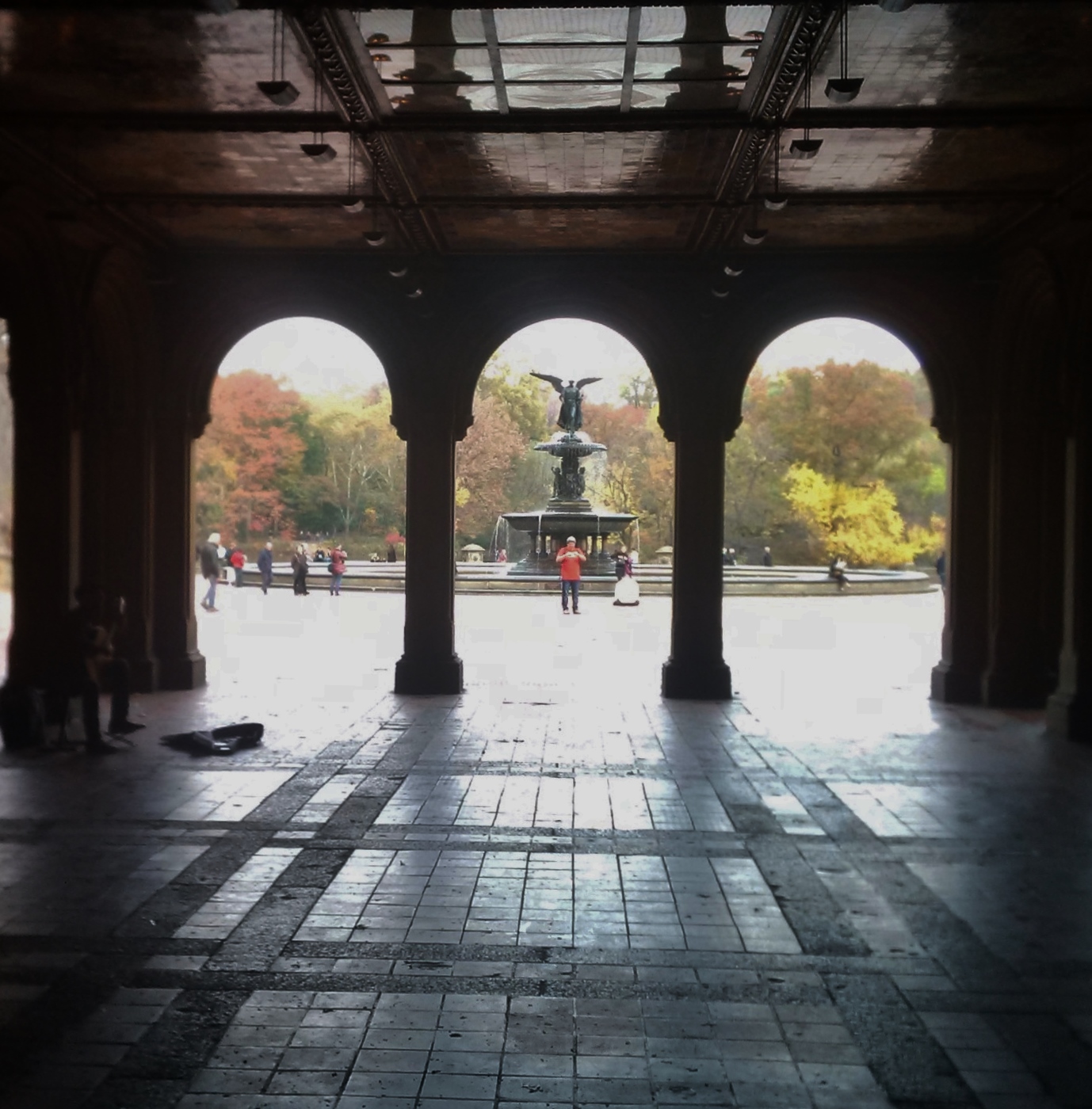
Bethesda, Central Park, NYC -- David Kitz

Bethesda, Central Park, NYC — David Kitz

The psalmist, David experienced the heartbreak of betrayal. It was betrayal of the worst kind. Not only did David’s friends turn on him, but his own son, Absalom, sought to snatch the throne in a bloody coup—an act of open rebellion. See 2 Samuel 15-18.

David was betrayed by his son, Absalom; Jesus was betrayed by his friend and disciple, Judas Iscariot. But Jesus stayed loyal to his heavenly Father. He willingly went to the cross when he could have resisted arrest. He rebuked Peter for using his sword. “Put your sword back in its place,” Jesus said to him, “for all who draw the sword will die by the sword. Do you think I cannot call on my Father, and he will at once put at my disposal more than twelve legions of angels?” (Matthew 26:52-53).

Jesus experienced the resurrection truth of David’s words. Because of my integrity you uphold me and set me in your presence forever. Praise be to the LORD, the God of Israel, from everlasting to everlasting. Amen and Amen.

Response: LORD, I thank you for Jesus. Through Jesus I can overcome all things, even betrayal.  Amen.

Your Turn: Have you experienced betrayal? Has the LORD upheld your cause?

Regard for the Weak

13 Tuesday Jan 2015

Posted by davidkitz in Psalm 41, Psalm 41, Psalms

≈ Leave a comment

Tags

arrogance, compassion, David Kitz, Old Orchard Beach, pride, Psalms, the LORD, the needy, the poor, the weak

Reading:                                    Psalm 41

For the director of music. A psalm of David.

(Verses 1-6)

Blessed are those who have regard for the weak;     

the LORD delivers them in times of trouble.

The LORD protects and preserves them—     

they are counted among the blessed in the land—     

he does not give them over to the desire of their foes.

 The LORD sustains them on their sickbed     

and restores them from their bed of illness.

I said, “Have mercy on me, LORD;     

heal me, for I have sinned against you.”

My enemies say of me in malice,     

“When will he die and his name perish?”

When one of them comes to see me,  

he speaks falsely, while his heart gathers slander;     

then he goes out and spreads it around. (NIV)

Reflection

Psalm 41 reminds us that compassion and empathy are at the core of what it means to be a follower of the LORD. David begins this psalm with this declaration, “Blessed are those who have regard for the weak.”

Old Orchard Beach, ME -- David Kitz

Old Orchard Beach, ME — David Kitz

Social justice and care for the poor are not small matters in eyes of LORD. Ancient Israel was destroyed and went into exile because of their disregard for the poor. The LORD enters into judgment against the elders and leaders of his people: “It is you who have ruined my vineyard; the plunder from the poor is in your houses. What do you mean by crushing my people and grinding the faces of the poor?” declares the LORD, the LORD Almighty (Isaiah 3:14-15).

Why is regard for the weak so pivotal in having a right relationship with God? Lack of care or empathy for the needy is based on a kind of self-deception. In arrogance we see ourselves as better than those who are weak or needy. Yet if we examine ourselves, we have all gone through times when we were weak and needy. Our current state of self-sufficiency can come to an end in a moment.

This morning I very nearly hit a pedestrian as she rushed across the street. I sounded my horn thinking she was in error. A quick glance showed she was crossing with the walk light. I was the one in error. I had completely missed a red light. I was the one in need of correction and forgiveness.

Are you doing well now? Praise God. The day will come when you need His help and protection. Do you see someone in need? Help as you are able. The day will come when you will need forgiveness and the help that you have offered others.

Response: LORD God, forgive me when I have looked down on others in need. Open my eyes to someone I may help today. In Jesus name I pray. Amen.

Your Turn: How do you keep yourself from the deception of pride?

← Older posts
Newer posts →

Psalms 365: Develop a Life of Worship and Prayer

Psalms 365 Volume II

Psalms 365 vol 3
— Psalms 365 Volume III

Psalms

Recent posts

  • Raised Again! April 5, 2026
  • A Journey to the Cross and the Empty Tomb April 5, 2026
  • The Garden Tomb April 4, 2026
  • A Journey through the Psalms to Cross April 3, 2026
  • A Psalm for Good Friday April 3, 2026
  • The Last Supper April 2, 2026
  • Thankful Hearts April 2, 2026

Calendar

April 2026
M T W T F S S
 12345
6789101112
13141516171819
20212223242526
27282930  
« Mar    

Blog Posts

Comments

  • A Journey through the Psalms to Cross – QuietMomentsWithGod on A Journey through the Psalms to Cross
  • My Life in Our Father's World on Raised Again!
  • davidkitz on Jesus Before Pilate

Blog at WordPress.com.

Privacy & Cookies: This site uses cookies. By continuing to use this website, you agree to their use.
To find out more, including how to control cookies, see here: Cookie Policy
  • Subscribe Subscribed
    • I love the Psalms
    • Join 1,382 other subscribers
    • Already have a WordPress.com account? Log in now.
    • I love the Psalms
    • Subscribe Subscribed
    • Sign up
    • Log in
    • Report this content
    • View site in Reader
    • Manage subscriptions
    • Collapse this bar
 

Loading Comments...