• Home
  • About
  • DavidKitz.ca
  • Youtube Videos
  • Books by David
  • Books on Amazon.com

I love the Psalms

~ Connecting daily with God through the Psalms

I love the Psalms

Tag Archives: faith

James the Mediator between Two Camps

31 Sunday May 2026

Posted by davidkitz in Books by David Kitz

≈ Leave a comment

Tags

Bible, Christ, Christianity, church, circumcision, faith, Gentiles, gospel, grace, James, James the brother of Jesus, Jerusalem, Jesus, leadership, legalism, Paul, Peter, Scripture

James: the Lynchpin of Our Faith — Chapter 13

As the leader of the church, James finds himself straddling the gulf between two factions: the Judaizers who insist that male Gentile coverts to Christianity be circumcised and follow the Mosaic Law, and a faith-oriented faction led by Paul that believes in the sufficiency of grace, apart from adherence to the Law. The struggle between these opposing positions informs a considerable portion of New Testament scripture. Paul’s letter to the Galatians focuses almost exclusively on this topic, but this issue or doctrine forms an underlying theme throughout Paul’s writing.

At the Jerusalem Council, James comes down decisively on the side of grace and the expansion of the Christian faith into the Gentile world. His ruling clearly endorsed the position taken by Peter and Paul, and he even tempers his remarks by placing some rather minor restrictions on the Gentile converts. Some may view this as a concession to the hardliners in the Jewish faction.

It is my judgment, therefore, that we should not make it difficult for the Gentiles who are turning to God. Instead we should write to them, telling them to abstain from food polluted by idols, from sexual immorality, from the meat of strangled animals and from blood. For the law of Moses has been preached in every city from the earliest times and is read in the synagogues on every Sabbath. (Acts 15:19–21)
James certainly does not abandon the law entirely. He is not saying, “Believe in Christ and then live as you please.” Neither do any of the apostles. In his letter to the Romans, Paul claims he is falsely accused of promoting this errant doctrine. (See Romans 6:1–3.) Instead, Paul says faith in Christ prompts conformity to the image Christ, who fulfilled the Law (Colossians 3:9–11). Spiritual rebirth initiates and instills life transformation. Believers are changed by their faith in Christ and drawn to obedience to him. Spiritual DNA expresses itself, even as natural DNA does. The child resembles his natural father. Even so, the character and conduct of the born-again believer should increasingly resemble his heavenly Father and his spiritual brother Jesus Christ.

Paul amplifies this thought in his letter to the Romans:

For those God foreknew he also predestined to be conformed to the image of his Son, that he might be the firstborn among many brothers and sisters. (Romans 8:29)

The restrictions or regulations that James places on the Gentile believers appear to be relatively inconsequential, but they had implications for the daily lives of Gentile believers. It was common for meat sold in the Gentile markets to be offered first as an animal sacrifice to idols. This made the Christian consumer of this meat an unwilling participant in pagan idolatry. Clearly this would be offensive to the sensibilities of Jewish believers.

Photo by Sora Shimazaki on Pexels.com

How strictly these regulations were adhered to remains an open question. In the fourteenth chapter of his letter to the Romans Paul discusses this issue of food and abstaining from meat at some length. He also gives these instructions to the believers in Corinth:

Eat anything sold in the meat market without raising questions of conscience, for, “The earth is the Lord’s, and everything in it.”

If an unbeliever invites you to a meal and you want to go, eat whatever is put before you without raising questions of conscience. But if someone says to you, “This has been offered in sacrifice,” then do not eat it, both for the sake of the one who told you and for the sake of conscience. I am referring to the other person’s conscience, not yours. For why is my freedom being judged by another’s conscience? If I take part in the meal with thankfulness, why am I denounced because of something I thank God for?

So whether you eat or drink or whatever you do, do it all for the glory of God. Do not cause anyone to stumble, whether Jews, Greeks or the church of God—even as I try to please everyone in every way. For I am not seeking my own good but the good of many, so that they may be saved. (1 Corinthians 10:25–33)

Similarly, the entire eighth chapter of 1 Corinthians is devoted to this topic. Clearly Paul saw James’ injunction against eating meat offered to idols as an issue of considerable importance, or he would not have addressed this topic in his epistles to the church.

Undoubtedly, the advice cited above was given in keeping with Paul’s understanding of James’ directive in Acts 15. Overall Paul’s concern is chiefly that believers keep their conscience pure. He does not see “food polluted by idols” as a clear black and white issue, but rather as a matter of the heart or the intent of the believer. Paul implies that food is sanctified if it is received with thanksgiving. In so doing, he is providing a practical interpretation of how believers can keep themselves spiritually pure while living in a pagan world.

The injunction against sexual immorality needs little explanation. The Greco-Roman world was awash in sexual immorality, much of it linked to various fertility cults. Abstinence from sexual immorality also involved a rejection of the shrine prostitutes—both male and female—and ritual orgies linked to the worship of these deities. Clearly there was a strong sense that these new Gentile believers must renounce these practices and forms of worship as they embrace a new lifestyle within the body of Christ.

James’ command to abstain “from the meat of strangled animals and from blood” stems directly from Levitical law, where God says:

I will set my face against any Israelite or any foreigner residing among them who eats blood, and I will cut them off from the people. For the life of a creature is in the blood, and I have given it to you to make atonement for yourselves on the altar; it is the blood that makes atonement for one’s life. Therefore I say to the Israelites, “None of you may eat blood, nor may any foreigner residing among you eat blood.” (Leviticus 17:10–12)

This reference to the foreigner, as cited here, has direct relevance as the Jewish believers contemplate welcoming Gentiles into their fellowship. The fellowship meal has particular significance in Middle Eastern culture. For friendship and fellowship to be sealed, the sharing of a meal together was essential. If this overture to the Gentiles was to be significant and meaningful, then Jewish Christian believers and Gentile Christian believers should be able to sit together and eat a fellowship meal together.

But truly the focal point of their fellowship must be Christ—Christ whose redeeming sacrifice was sealed in blood—Christ Jesus who instituted the Eucharist to commemorate the shedding of his blood. By his blood, atonement was made for both Jews and Gentiles. Their fellowship meals included the celebration of the Eucharist. Evidence of this can be found in Paul’s instructions on communion. (See 1 Corinthians 11:17–34.)

Surely the following words had true resonance as James considered the unity of faith between Jews and Gentiles: “it is the blood that makes atonement for one’s life.” His brother’s blood was shed to make that atonement possible. True communion centered around the sacrificial shedding of Jesus’ blood.

Photo by Kaboompics .com on Pexels.com

With James having ruled on this matter, the assembly decided to communicate its decision to those most directly affected—the Gentile churches. Their message also makes it clear that those who caused this doctrinal disturbance were not sent or authorized by the apostolic leadership.

Then the apostles and elders, with the whole church, decided to choose some of their own men and send them to Antioch with Paul and Barnabas. They chose Judas (called Barsabbas) and Silas, men who were leaders among the believers. With them they sent the following letter:

The apostles and elders, your brothers,
To the Gentile believers in Antioch, Syria and Cilicia:

Greetings.

We have heard that some went out from us without our authorization and disturbed you, troubling your minds by what they said. So we all agreed to choose some men and send them to you with our dear friends Barnabas and Paul—men who have risked their lives for the name of our Lord Jesus Christ. Therefore we are sending Judas and Silas to confirm by word of mouth what we are writing. It seemed good to the Holy Spirit and to us not to burden you with anything beyond the following requirements: You are to abstain from food sacrificed to idols, from blood, from the meat of strangled animals and from sexual immorality. You will do well to avoid these things.

Farewell.

So the men were sent off and went down to Antioch, where they gathered the church together and delivered the letter. The people read it and were glad for its encouraging message. (Acts 15:22–31)

James has decisively sided with Peter and Paul on this critical issue. The gospel of grace as opposed to Jewish legalism has triumphed. For the sake of unity, James has added some conditions onto his sweeping welcome of the Gentile believers. Despite this ruling, some Judaizers will persist in trying to force Gentile converts to be circumcised, but they will lack the authority of the church. A certain tension will remain between the proponents of grace and the proponents of legalism. It is a tension that remains in some form between legalistically-inclined and grace-centered believers to this day. Nevertheless, the message is clear: James has ruled in favor of grace.

By welcoming the Gentile believers into the church, James signaled that he fully grasps the significance of the born-again experience. He has come full circle. He has come fully around to his brother’s position, which he so vehemently opposed as a young man—when he gathered the family around him to take charge of Jesus because, by his reasoning, Jesus had gone mad (Mark 3:20–22).

On that occasion with his family waiting at the door, Jesus responded with these words:

“Who are my mother and my brothers?” he asked. Then he looked at those seated in a circle around him and said, “Here are my mother and my brothers! Whoever does God’s will is my brother and sister and mother.” (Mark 3:33–35)

According to Jesus’ reasoning the spiritual family—spiritual genetics—took precedence over the natural family. Though at the time James rejected his brother and his concept of spiritual rebirth, he now finds himself in full agreement with it. His conversion at the appearance of the risen Christ changed everything. (See 1 Corinthians 15:3–9.) What he rejected as heresy before his own rebirth, he now affirms as gospel truth. James now sees the family of believers as his true family—a family that includes even Gentiles.

On a personal level, James was now Jesus’ brother in the Spirit as well as in the flesh.

Furthermore, at the Jerusalem Council, James plays the role his brother would have him play. He institutes his brother’s will by ensuring that the gospel message was available to all throughout the world, regardless of race or gender. James recognizes that those seated before him, eager to hear the gospel message, are his brothers and sisters. He is acting as a doorkeeper to the kingdom of God. In that role, he is guaranteeing that the door is open to all. Anyone can come and enter through repentance and faith in the shed blood of his brother Jesus.

Without question this was a difficult decision to make. By welcoming the Gentiles, James may have sealed the fate of the Jewish church—the church he led. There was a point when it appeared as though Christianity might become the dominant belief system among the Jews. Then severe persecution hindered its advance. Now, with its doors open to the Gentiles, the legalistic members of the Jewish faith could quickly and easily dismiss the Christian faith as an aberrant heresy, unworthy of consideration. As a result, further church growth among the Jewish community was likely stymied.

Did James know that this would be the outcome of his decision to throw the doors open to Gentiles? He probably had some idea of how this would impede the growth of the church among the Jews in their homeland. He knew the ethos of his people. The hardline Pharisaic viewpoint was popular with many Jews, and a fierce, religiously motivated ethnic pride was even more widespread. Generations of religious indoctrination are not easily set aside. Jesus clashed with it; now James does as well.

Despite this, James chose his brother’s will—God’s will—not his own. Perhaps he caught a glimpse of the long view—a view that saw the swift rise to prominence of the church in the Greco-Roman world. Perhaps he simply recognized that this was God’s doing—a work of the Spirit—not simply the work of man. Whatever the reason, James played a pivotal role in promoting the advance of the gospel and in shaping world history for the next two thousand years. Without him Christianity may well have remained an obscure Jewish sect. He was the hinge—the doorkeeper—and he opened the gospel door to the sea of humanity.

But one question remains. How did James come to play such a prominent role in the early church?

New from David Kitz

James—the brother of Jesus—who was this man? What evidence do we have that this “brother of our Lord” even existed?

David Kitz digs deep into archeology, family dynamics, church history, and the biblical texts. What emerges from his research is a portrait of a decisive, pivotal leader who embodied the will and character of Jesus Christ.

But how did James—James the unbeliever—transform to become a leader who changed the course of world history? In these pages you will uncover the answer and rediscover for yourself the life-changing power of the gospel.

To view further details or purchase directly from the author click here.

 

James the Door Hinge for the Gentile World

24 Sunday May 2026

Posted by davidkitz in Books by David Kitz

≈ Leave a comment

Tags

Bible, Christ, Christianity, church, circumcision, faith, Gentiles, gospel, James, James the brother of Jesus, Jerusalem, Jesus, leadership, Paul, Peter, Scripture, speaking in tongues

James: the Lynchpin of Our Faith — Chapter 12 — Part II

Peter’s declaration in favor of grace for the Gentiles rather than the Mosaic Law was followed by the testimony of Paul and Barnabas:

The whole assembly became silent as they listened to Barnabas and Paul telling about the signs and wonders God had done among the Gentiles through them. (Acts 15:12)

Through their testimony, Barnabas and Paul persuasively reinforced the argument Peter had presented. The conversion of the Gentiles was God’s doing. He had initiated it through Peter and now was continuing that work through Barnabas and Paul. The proof of this was in “the signs and wonders God had done.” If God was opposed to the inclusion of the Gentiles in the Christian faith, there would be no signs and wonders as the gospel message was presented. Instead, miraculous signs and wonders accompanied the preaching of the gospel, giving it credence. Large numbers of Gentiles believed the message they heard because they witnessed demonstrations of God’s power.

Signs and wonders were an integral part of the spread of the gospel as recorded in the Book of Acts. (1) Certainly, the apostles viewed these wonders as a natural extension of Jesus’ ministry. According to Mark’s Gospel, after his resurrection Jesus predicted this bursting forth of the miraculous:

Later Jesus appeared to the Eleven as they were eating; he rebuked them for their lack of faith and their stubborn refusal to believe those who had seen him after he had risen. He said to them, “Go into all the world and preach the gospel to all creation. Whoever believes and is baptized will be saved, but whoever does not believe will be condemned. And these signs will accompany those who believe: In my name they will drive out demons; they will speak in new tongues; they will pick up snakes with their hands; and when they drink deadly poison, it will not hurt them at all; they will place their hands on sick people, and they will get well.” (Mark 16:14–18)

Furthermore, Jesus had promised his disciples that they would do even greater things than he had done.

Very truly I tell you, whoever believes in me will do the works I have been doing, and they will do even greater things than these, because I am going to the Father. And I will do whatever you ask in my name, so that the Father may be glorified in the Son. You may ask me for anything in my name, and I will do it. (John14:12–14)

As the apostles heard the testimony of Paul and Barnabas, they undoubtedly harkened back to the words of Jesus. God was at work claiming a people for Himself. The proof of this was in the manifestation of signs and wonders as the gospel was presented to the Gentiles, their positive response to the message, and the demonstrable presence of the Holy Spirit among them.

There are those who see substantial differences between Peter and Paul, but there are none on display here. The core of the gospel message they present is essentially the same: the door to salvation is open to all, Jew and Gentile, by grace through faith alone in the redeeming death and resurrection of Jesus Christ.

Together here at the Jerusalem Council, Peter and Paul present a united front. They act as a tag team delivering the decisive blows that demolished the argument in favor of circumcision and adherence to Mosaic Law. We see them work in cooperation with one another here at the Council and later out on the field.

We know their position carried the day due James’ response:

When they finished, James spoke up. “Brothers,” he said, “listen to me. Simon [Peter] has described to us how God first intervened to choose a people for his name from the Gentiles. The words of the prophets are in agreement with this, as it is written:

“‘After this I will return and rebuild David’s fallen tent. Its ruins I will rebuild, and I will restore it, that the rest of mankind may seek the Lord, even all the Gentiles who bear my name, says the Lord, who does these things’—things known from long ago.'” (See Amos 9:11–12.)

“It is my judgment, therefore, that we should not make it difficult for the Gentiles who are turning to God. Instead we should write to them, telling them to abstain from food polluted by idols, from sexual immorality, from the meat of strangled animals and from blood. For the law of Moses has been preached in every city from the earliest times and is read in the synagogues on every Sabbath.” (Acts 15:13–21)


From this account one clearly has the sense that James is presiding over this gathering or Council. He is providing oversight as the question is framed and opposing arguments are debated. At the conclusion of the debate, James states his position and renders his judgment on the matter. In this regard the Jerusalem Council proceedings resemble a court case with a presiding judge, namely James, pronouncing the final verdict.

There is no indication that this is a democratic assembly where a final vote on the motion is taken. Rather the Council follows the format of a judicial council, where the matter is considered and decided by a judge or overseer. This format was customary in both Jewish and Roman practise during this time and continues in various forms to this day.

In his statement James concurs with Peter’s testimony. In essence, he concludes that this is a decision that God has already made. “Simon has described to us how God first intervened to choose a people for his name from the Gentiles” (Acts 15:14). He then goes on to reinforce his position by quoting from the prophet Amos.

There are several Old Testament scriptures that predict the Gentiles will turn in faith to the God of Israel. Why did James choose to quote this particular passage?

First and foremost, the Amos passage captures the thought that the entry of the Gentiles into God’s kingdom is God’s idea. It is the Lord “who does these things.” What Peter had described was an intervention of God in bringing the Gentiles at the household of Cornelius to faith. Similarly, Paul and Barnabas described God’s intervention by means of signs and wonders as they preached the gospel to the Gentiles on their first missionary journey. So James concludes that the conversion of the Gentiles was God’s idea and indeed God’s doing.

The phrase “David’s fallen tent” also merits some consideration. Jesus was a direct descendant from the kingly line of David. James sees God’s intervention as restoring the rule of the Davidic dynasty through the eternal reign of King Jesus. As the brother of Jesus, James may well have seen himself as part of that Davidic line extending the kingdom of God on the earth. Again, this is God’s doing, and James finds himself in the pivotal role of opening wide the door to the Gentiles.

Having stated his position on the matter, James renders his verdict. “It is my judgment, therefore, that we should not make it difficult for the Gentiles who are turning to God” (Acts 15:19). The Greek word krino is translated here as judgment. In fact, krino is translated as judge or judgment eighty-seven times in the New Testament. (2) Most modern translations render krino as judgment; however, the traditional King James Version translates krino as sentence. “Wherefore my sentence is, that we trouble not them, which from among the Gentiles are turned to God” (Acts 15:19). By translating krino in this way, the King James translators highlight the magisterial role of James at the Council. He has declared his ruling on the matter.

There can be little doubt that James is viewed as the head of the church by all those present. He fulfills the role of chief executive officer. How do we know this? He has the undisputed final word on this crucial matter of faith, practice, and doctrine.

But one gets the sense that James was not heavy handed or dictatorial in reaching his decision. Through the discussion and a full airing of the matter, he was working to reach a consensus within the church. Evidence for this can be found in the actions that follow his ruling.

Then the apostles and elders, with the whole church, decided to choose some of their own men and send them to Antioch with Paul and Barnabas. They chose Judas (called Barsabbas) and Silas, men who were leaders among the believers. (Acts 15:22)

There was agreement among the apostles, the elders, and the whole church on this matter.

With his decision James secured the future of the church. Christianity would not remain as an obscure sect within Judaism. It would spread around the world and become a dominant force in world history through the next two millennia. His decision made possible the unhindered progress of the gospel in the Roman Empire and beyond.

James’ judgment puts truth to these words, which were sung about his brother Jesus and recorded in John’s Revelation:

And they sang a new song, saying:
“You are worthy to take the scroll and to open its seals, because you were slain, and with your blood you purchased for God persons from every
tribe and language and people and nation. You have made them to be a kingdom and priests to serve our God, and they will reign on the earth.”
(Revelation 5:9–10)

(1) See Acts 3:7, Acts 5:5 & 10, Acts 5:15, Acts 9:34, Acts 9:40, Acts 13:11, Acts 14:3, Acts 14:10, Acts 19:11–12, Acts 20:10, Acts 28:5, Acts 28:8.
(2) Robert Young, Analytical Concordance to the Bible, Index-Lexicon to the New Testament, Revised by William B. Stevenson (Eerdmans, 1972), p. 78.

New from David Kitz

James—the brother of Jesus—who was this man? What evidence do we have that this “brother of our Lord” even existed?

David Kitz digs deep into archeology, family dynamics, church history, and the biblical texts. What emerges from his research is a portrait of a decisive, pivotal leader who embodied the will and character of Jesus Christ.

But how did James—James the unbeliever—transform to become a leader who changed the course of world history? In these pages you will uncover the answer and rediscover for yourself the life-changing power of the gospel.

To view further details or purchase directly from the author click here.

 

James the Door Hinge for the Gentile World

17 Sunday May 2026

Posted by Victor Uduh in Books by David Kitz

≈ Leave a comment

Tags

Bible, Christ, church, circumcision, faith, Gentiles, gospel, Holy Spirit, James, James the brother of Jesus, Jerusalem, Jesus, leadership, Paul, Pentecost, Peter, Scripture, speaking in tongues

James: the Lynchpin of Our Faith — Chapter 12 — Part I

At this early point in the history of the church, the city of Antioch served as home base for the Christian faith in the Gentile world. Luke records that “the disciples were called Christians first at Antioch” (Acts 11:26). From here through Paul’s ministry, the gospel spread like wildfire. Antioch was the principal cultural and commercial center in the eastern Mediterranean region. The biblical scholar G. Downey describes Syrian Antioch in these terms:

A Hellenistic city in NW Syria (modern Antakya, Turkey), ranking with Rome and Alexandria as one of the three greatest cities of the Greco-Roman world, and an early center of Christian expansion. (1)

In this great center, Christianity flourished. But the greatest challenge to further growth came from within the Christian community.

Certain people came down from Judea to Antioch and were teaching the believers: “Unless you are circumcised, according to the custom taught by Moses, you cannot be saved.” This brought Paul and Barnabas into sharp dispute and debate with them. So Paul and Barnabas were appointed, along with some other believers, to go up to Jerusalem to see the apostles and elders about this question. (Acts 15:1–2)

This question had enormous ramifications. Were the new Gentile convertsmto the faith required to live in accordance with laws of Moses in order to be saved? Must they be circumcised? In essence, must they become Jews in order to live as Christians? Was faith in Christ’s finished work on the cross sufficient for salvation or were there additional requirements?

Quite rightly, Paul and Barnabas saw this requirement to be circumcised as a direct challenge to their calling and mission, and a threat to the Gentile church. More fundamentally, it undermined the sufficiency of grace, the redemptive power of the cross and the sacrificial atonement through the blood of Jesus. If one is saved through the observance of the law, rather than through faith, why is there any need for Christ’s death on the cross? The cross is stripped of its meaning and power.

Later in his letter to the Galatian church, Paul forcefully argues this very point:

Mark my words! I, Paul, tell you that if you let yourselves be circumcised, Christ will be of no value to you at all. Again I declare to every man who lets himself be circumcised that he is obligated to obey the whole law. You who are trying to be justified by the law have been alienated from Christ; you have fallen away from grace. For through the Spirit we eagerly await by faith the righteousness for which we hope. For in Christ Jesus neither circumcision nor uncircumcision has any value. The only thing that counts is faith expressing itself through love. (Galatians 5:2–6)

Ultimately, this was a question about DNA. The Gentile believers had the wrong DNA. They were not of Abrahamic lineage; therefore, they were outside the divine covenant and by reason of birth alienated from the blessing of God. Circumcision was the means by which believing Gentiles might be incorporated into the family of God. But Paul correctly argues that those who are circumcised are then required to obey the whole Law of Moses. Relying on human effort and obedience to the law nullifies entirely the concept of spiritual rebirth, which comes by faith.

Jesus taught, “You must be born again” (John 3:3–21). This requirement of rebirth applied universally to Jews and Gentiles. Furthermore, rebirth is a work of the Holy Spirit not human effort. Rebirth is experienced through faith. It is a gift from God. (See Ephesians 2:8–9.) Through the miracle of the born-again experience, believers are recipients of divine DNA—eternal DNA—indestructible DNA. Why settle for Abrahamic DNA, when through God’s son we can become transformed repositories of divine DNA—children of the eternal, living God?

At this early stage in the churches’ development, these doctrines maynot have been fully formulated, universally accepted, or understood. But rebirth was certainly occurring as demonstrated by the work of the Holy Spirit. One can study the concept of rebirth at great length, but it can remain nothing more than an academic exercise. A transformed life, and the joy, and peace of the Holy Spirit are true marks of rebirth. In the ministry of Paul and the other apostles, there was ample evidence of changed lives as new believers flooded into the church.

But where was James amid this controversy? Some scholars would have us believe that James was in agreement with the teachers who had arrived in Antioch and were urging the believers to be circumcised. Perhaps, they reason, he had sent them, since Paul’s letter to the Galatians gives credence to this perspective. (See Galatians 2:12.) Those who take this view do so because they see James as a Jewish legalist insisting on conformance to the Laws of Moses. In addition, they see an enormous rift between Paul and James. However, the text of Acts chapter fifteen does not support this view.

What becomes plainly evident in Acts 15 is that James is seen as the leader of the church. One cannot read this chapter without concluding just that. Three observations can be made, which prove this point:

• James provides oversight to the church, the body of Christ.
• The leaders in the church are accountable to him.
• He is the one who renders judgement on this issue of paramount
importance.

On the first point, it is significant that this synod—or council, as it is often called—took place in Jerusalem. New Testament scholars are generally in agreement that this council took place in about 50 AD. (2) Jerusalem would seem like the logical choice since it was the birthplace of the church, and it certainly flourished there in the early years. But the church had grown and spread out geographically from this home base. Some of this dispersion was due to severe persecution in Jerusalem. Peter fled the city for this very reason; however, James remained. (See Acts 12:16–17.)

There is no indication in scripture that Peter returned to reside in Jerusalem. He began what can be described as an itinerant ministry, following in the footsteps of his Lord and Master. Some of that ministry is detailed in the earlier chapters of Acts and from Paul’s letter to the Galatians we also know he traveled to Antioch.

On the other hand, it appears that James’ ministry was centered in Jerusalem. In the writings of several early church fathers, James is identified as the first Bishop of Jerusalem. (3) Similarly, the Eastern Orthodox Church recognizes James as the first Bishop of Jerusalem.

The Clementine Homilies and Clementine Recognitions, which are romances about the life of Clementine (4) dating from the fourth century but partly based on Jewish Christian sources of an earlier time, call James “bishop of bishops.” In these writings Peter and the other apostles are accredited by James. (5)

If James was functioning in his role as bishop, was he providing oversight only to the church in Jerusalem or was he providing general oversight to the whole church? This is a question of considerable importance as we examine Acts chapter fifteen.

If Peter was providing general oversight to the church, then it might logically follow that the church leadership would gather to discuss this important matter at Peter’s current place of ministry, but this is not the case. Peter appears and testifies at the Jerusalem Council as a delegate—a trusted apostolic delegate. He does not have the final say in the matter being discussed. The final decision is left to James.

Though Luke never personally interjects himself into the Acts account, the way in which he frames the events of chapter fifteen leaves the reader with the impression that he may have accompanied Paul and Barnabas on this journey from Antioch to Jerusalem. It certainly is possible that he was appointed as one of the believers sent as delegates to the council. (See Acts 15:3.) Since Doctor Luke was a Gentile, this matter certainly would have a huge bearing on his life and faith, and he records the events in some detail. A close examination of his account is warranted.

The church sent them [Paul, Barnabas and ‘some believers’] on their way, and as they traveled through Phoenicia and Samaria, they told how the Gentiles had been converted. This news made all the believers very glad. When they came to Jerusalem, they were welcomed by the church and the apostles and elders, to whom they reported everything God had done through them. (Acts 15:3–4)

Photo by Sharefaith on Pexels.com

Luke then goes on to clearly delineate the question that the council must decide:

Then some of the believers who belonged to the party of the Pharisees stood up and said, “The Gentiles must be circumcised and required to keep the law of Moses.” The apostles and elders met to consider this question. (Acts15:5–6)

Apparently, some Pharisees had come to faith in Christ despite the frequent clashes that had occurred between them during his earthly ministry. Quite naturally some of these Pharisees continued with their hardline requirements of obedience to every jot and tittle of the Law of Moses. At least on the surface, it appears that their adherence to Mosaic Law took precedence over their allegiance to the law of love introduced by Christ. (See John 13:34–35.)

We are told that after much discussion, Peter addressed the assembled leaders. Undoubtedly, there was rigorous debate on this topic, since it had profound doctrinal implications and had a direct bearing on the outreach mission of the church. Was obedience to the Mosaic Law a requirement for salvation? Was salvation a gift from God received by faith or was it merited through works and religious observances such as circumcision and adherence to sabbath requirements? Were the new Gentile converts genuinely welcome in the church? Was Paul’s mission to the Gentile’s a valid extension of the ongoing mission of Christ on the earth? All these questions were in play as Peter addressed the synod.

“Brothers, you know that some time ago God made a choice among you that the Gentiles might hear from my lips the message of the gospel and believe. God, who knows the heart, showed that he accepted them by giving the Holy Spirit to them, just as he did to us. He did not discriminate between us and them, for he purified their hearts by faith. Now then, why do you try to test God by putting on the necks of Gentiles a yoke that neither we nor our ancestors have been able to bear? No! We believe it is through the grace of our Lord Jesus that we are saved, just as they are.” (Acts 15:7–11)

Peter’s response on this matter is clear and unequivocal. Peter points out that this matter has already been decided—not by man—but by God. God chose to have the message of the gospel preached to the Gentiles. He did so by sending an angel to the home of a Roman centurion named Cornelius. The angel’s instructions were to send for Simon Peter, whose heart was prepared in advance through a vision. The gospel message was proclaimed to the Gentiles because God wanted it preached to the Gentiles. He initiated this whole matter.

Moreover, the Gentiles at Cornelius’ home responded in faith. They believed the message of the gospel. Peter points out that God “purified their hearts by faith” (Acts 15:9). Works or merit based on obedience to the law did not enter into the picture.

Furthermore, God demonstrated that the Gentiles were accepted “by giving the Holy Spirit to them” (Acts 15:8). This was apparent “for they heard them speaking in tongues and praising God” (Acts 10:46). The Pentecostal experience was visited upon these Gentile believers even as it had initially come to the apostles and the hundred and twenty. God revealed that He had accepted the Gentiles into the household of faith without any preconditions. He made no distinction whatsoever between Jews and Gentiles.

In short, Peter was saying that this was entirely God’s doing. God initiated the whole process of bringing the Gentiles into the church, and it was perilous for the church to now place restrictions on the people whom God had so freely and graciously welcomed into the family. Peter calls this testing God. His words bear repeating:

Now then, why do you try to test God by putting on the necks of Gentiles a yoke that neither we nor our ancestors have been able to bear? No! We believe it is through the grace of our Lord Jesus that we are saved, just as they are. (Acts 15:10–11)

With these words Peter echoes the thoughts and sentiments of Jesus—who, during the week of his arrest, excoriated the Pharisees and teachers of the law.

The teachers of the law and the Pharisees sit in Moses’ seat. So you must be careful to do everything they tell you. But do not do what they do, for they do not practice what they preach. They tie up heavy, cumbersome loads and put them on other people’s shoulders, but
they themselves are not willing to lift a finger to move them. (Matthew 23:2–4)

Quite rightly Peter was unwilling to impose a burden on the Gentiles that Jesus had spoken against. (See Luke 11:37–54.) Instead, Peter embraced the grace of God. By doing this he placed Jews and Gentiles on the same footing. Both are saved by the grace of Jesus Christ and not by works of the law.

In his statement before the Jerusalem Council, Peter encapsulates the great truths of the gospel and points the way forward for the church. Decades later, Paul in his Epistle to the Romans expounds at great length on the truths that Peter has succinctly stated here. Peter simply directs the council’s attention to the choices that God has already made. God chose to save both Jews and Gentiles by grace through faith and to pour out His Spirit on them. This was and to this day continues to be His doing and not the work of human effort.

(1) G. Downey, “Antioch (Syrian),” The Interpreter’s Dictionary of the Bible, Volume 1, Edited by George Arthur Buttrick (Abingdon, 1984), p. 145.
(2) Arthur, The International Inductive Study New Testament, p.186.
(3) In the late 2nd century, Clement of Alexandria recorded the following: “For they say that Peter and James and John, after the ascension of our savior, as if also preferred by our Lord, strove not after honor, but chose James the Just as bishop of Jerusalem.” From Eusebius’ Church History, Book 2:1, quoting Clement of Alexandria’s Sixth Hypotyposes, Translated by Arthur Cushman McGiffert. From Nicene and Post-Nicene Fathers, Second Series, Vol. 1, Edited by Philip Schaff and Henry Wace (Christian Literature, 1890), Revised and edited for New Advent by Kevin Knight, www.newadvent.org/fathers/250102.htm.
(4) Clementine of Rome died around 100 AD and is believed to be the second or third bishop of Rome.
(5) W. A. Beardslee, “James,” The Interpreter’s Dictionary of the Bible, Volume 2, Edited by George Arthur Buttrick (Abingdon, 1984), p. 793.


New from David Kitz

James—the brother of Jesus—who was this man? What evidence do we have that this “brother of our Lord” even existed?

David Kitz digs deep into archeology, family dynamics, church history, and the biblical texts. What emerges from his research is a portrait of a decisive, pivotal leader who embodied the will and character of Jesus Christ.

But how did James—James the unbeliever—transform to become a leader who changed the course of world history? In these pages you will uncover the answer and rediscover for yourself the life-changing power of the gospel.

To view further details or purchase directly from the author click here.

 

Book Review: James the Lynchpin of Our Faith

02 Saturday May 2026

Posted by davidkitz in book review

≈ Leave a comment

Tags

Bible, book review, brother of Jesus, David Kitz, faith, history, James, James the brother of Jesus, skepticism, the early church

A Five Star Goodreads Review by David Milmine

James, the Lynchpin of Our Faith by David Kitz is a thoughtful and surprisingly vivid exploration of one of the most overlooked figures in the New Testament—James, the brother of Jesus. What makes this book stand out is how David brings together Scripture, historical context, and imaginative reconstruction to paint James not as a distant theological figure, but as a real man shaped by family tension, doubt, and ultimately transformation. I found the way David traces James’ journey—from skepticism about Jesus to becoming a pillar of the early church—both compelling and spiritually grounding. It feels less like reading a textbook and more like sitting with a seasoned storyteller who wants you to see the humanity behind the history.

What gives the book extra depth is David himself. He isn’t just writing academically—he’s lived this material. As an ordained minister for over 30 years, a Bible dramatist, and someone who has actually performed the role of James, he brings a kind of embodied insight to the narrative. You can sense that in the way scenes unfold and relationships are described, especially the complex dynamic within Jesus’ family. That personal, almost pastoral tone makes the book feel accessible and devotional without losing its intellectual credibility.

Overall, this is a book that invites reflection as much as it informs. It gently challenges you to consider how faith can grow out of doubt, and how God often works through ordinary, even resistant people. I came away with a deeper appreciation not only for James, but for the quiet, steady leadership that helps hold faith communities together—something David clearly believes is still vital.

To view further details or to purchase from Amazon click here.

The High Priest Questions Jesus

30 Monday Mar 2026

Posted by davidkitz in Psalm 49, Psalms

≈ 2 Comments

Tags

Caiaphas, faith, grace, high priest, Jesus, Jesus' sacrifice, Lent, love of Jesus, Prayer, praying, Psalms, sacrifice, synagogues, victory

Today’s quote and prayer from
“Psalms 365: Develop a Life of Worship and Prayer


Today’s Reading: Psalm 49:1-12

Listen to today’s reading by Jonathan Dent:
https://davidkitz.blog/wp-content/uploads/2026/03/ps-491-12-mixfinal.mp3

LORD God,
I thank you
I thank you for the victory of Jesus!
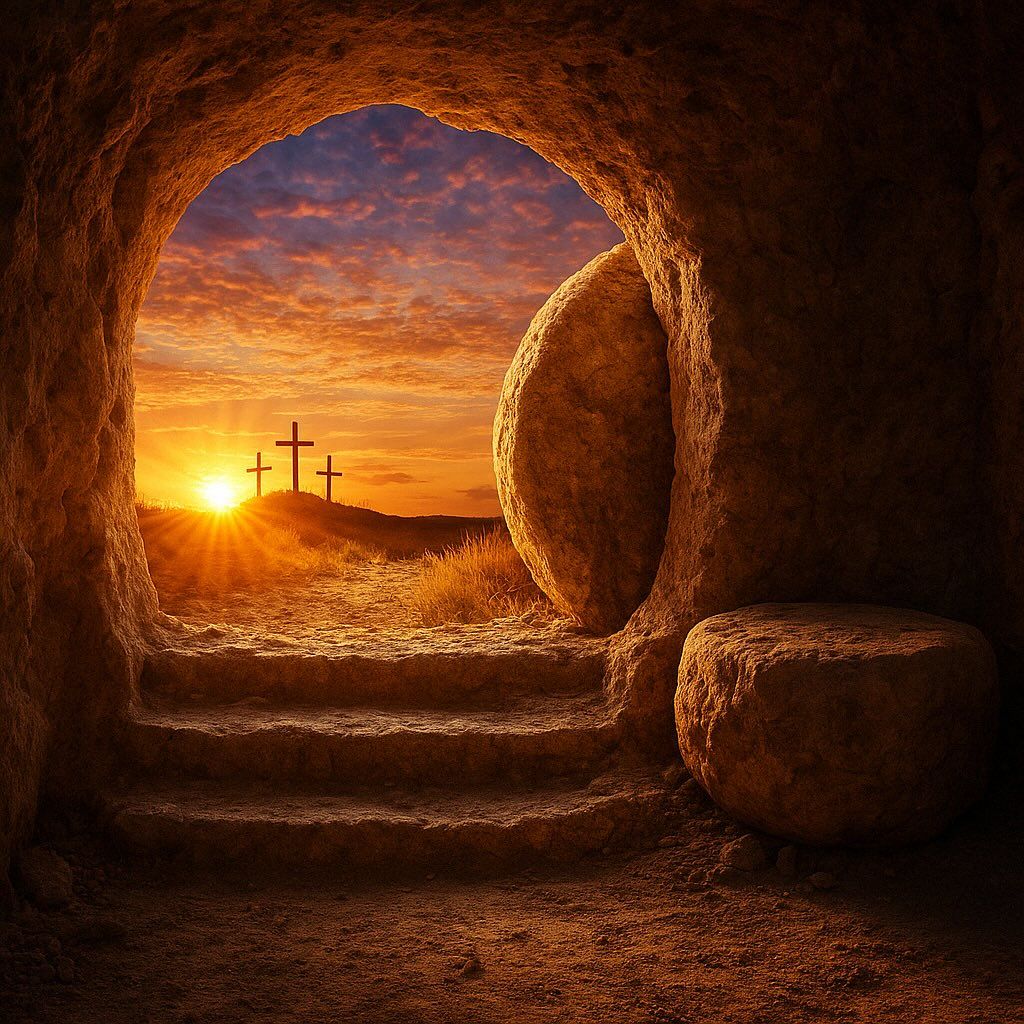
The tomb is empty.
By your grace,
through faith,
I will live and reign through Him.
Amen.

     — — — —


Lent Reading:
The High Priest Questions Jesus

Meanwhile,
the high priest questioned Jesus
about his disciples and his teaching.

“I have spoken openly to the world,”
Jesus replied.
“I always taught in synagogues
or at the temple,
where all the Jews come together.
I said nothing in secret.

Why question me?
Ask those who heard me.
Surely they know what I said.”

When Jesus said this,
one of the officials nearby slapped him in the face.
“Is this the way you answer the high priest?”
he demanded.

“If I said something wrong,”
Jesus replied,
“testify as to what is wrong.
But if I spoke the truth,
why did you strike me?”

Then Annas sent him bound
to Caiaphas the high priest.

(John 18:19-24).

* * *

This is love:
not that we loved God,
but that he loved us and sent his Son
as an atoning sacrifice for our sins.
(1 John 4:10 NIV)

Para la publicación de Salmos 365 de hoy en español haga clic aquí.

bgbg_v4.3_1501818
* NEW INTERNATIONAL VERSION, COPYRIGHT ©1973, 1978, 1984, 2011 BY BIBLICA

Pray for peace in Israel, Iran and the Middle East
and continue to pray for peace to return to Ukraine and Russia!

Volume I of Psalms 365: Develop a Life of Worship and Prayer won the Best Book of the Year Award from The Word Guild and Volume II has won the Best Devotional of the Year Award. For those who love God’s word, this three-book series is an ideal way to daily meet with the Lord. To purchase or for a closer look click here.

Ideal for the Season of Lent


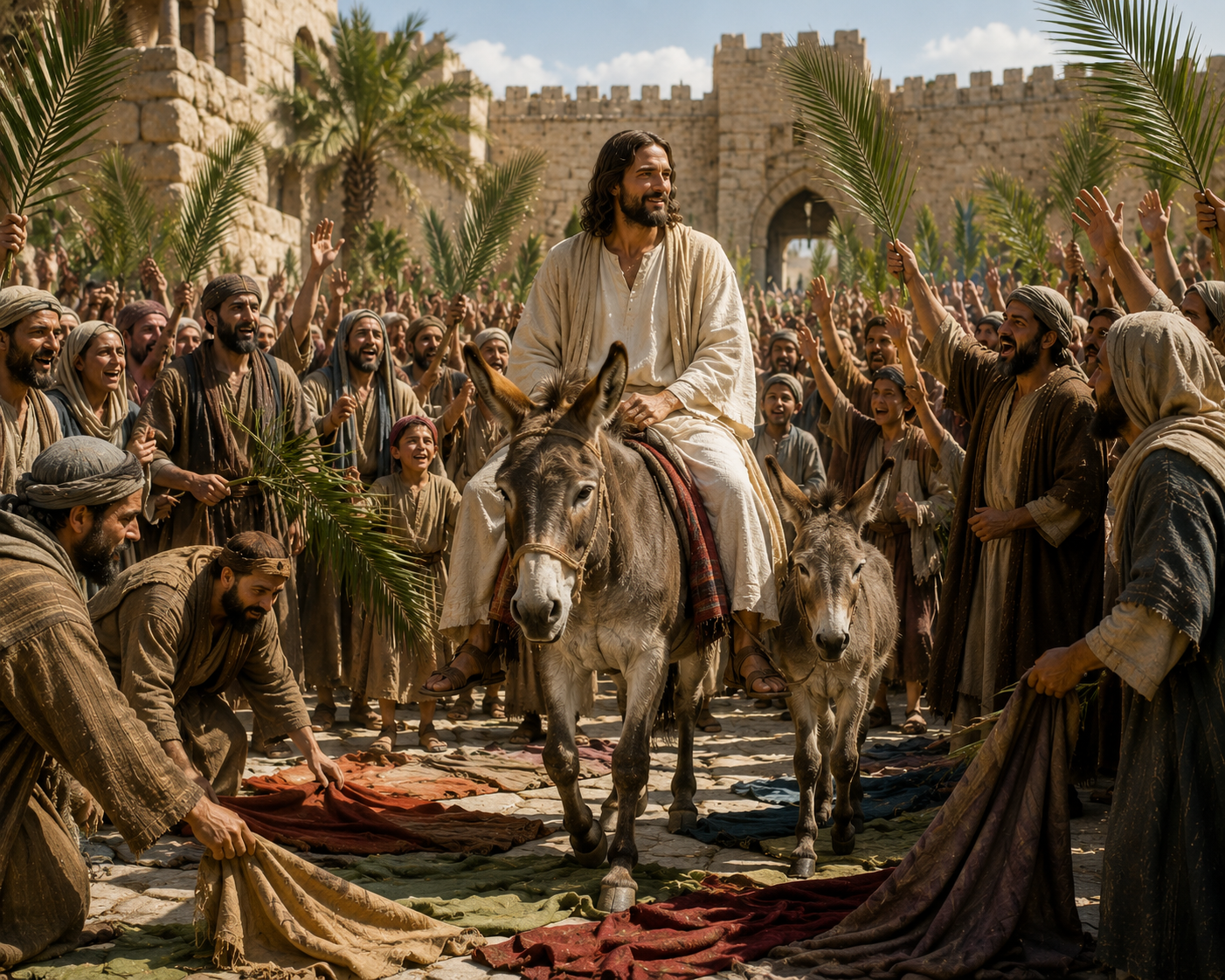
Watch the triumphal entry of the donkey-riding king through the eyes of Marcus Longinus, the centurion charged with keeping the streets from erupting into open rebellion.

Look behind the scenes at the political plotting of King Herod, known as the scheming Fox for his ruthless shrewdness.

Get a front-row seat to the confrontation between the Jewish high priest Caiaphas and the Roman governor Pontius Pilate.

Understand as never before the horror of the decision to save a brutal terrorist in order to condemn the peaceful Jew to death.

If you’ve heard the story of Passion Week so often it’s become stale, now is the time to rediscover the terrible events leading from Jesus’s humble ride into the city to his crucifixion. The Soldier Who Killed a King will stun you afresh with how completely Christ’s resurrection changed history, one life at a time.

To view further details or purchase click here.

The Unshakable One

23 Monday Mar 2026

Posted by Tim K in Psalm 46, Psalms

≈ Leave a comment

Tags

confidence, confidence in God, earthquake, faith, Psalms, rock of refuge, Savior, shelter, the LORD, trust in God

Today’s Devotion from Psalms 365 by David Kitz

Reading: Psalm 46:1-7

Listen to today’s reading by Jonathan Dent:
https://davidkitz.blog/wp-content/uploads/2026/03/ps-461-7-mix1final1.mp3

God is our refuge and strength,
    an ever-present help in trouble.
Therefore we will not fear, though the earth give way
    and the mountains fall into the heart of the sea,
though its waters roar and foam
    and the mountains quake with their surging.
There is a river whose streams make glad the city of God,
    the holy place where the Most High dwells.
God is within her, she will not fall;
    God will help her at break of day.
Nations are in uproar, kingdoms fall;
    he lifts his voice, the earth melts.
The LORD Almighty is with us;
    the God of Jacob is our fortress.
(NIV)*

Reflection

Why are you confident? Confidence is a key ingredient in the life of any child of God. If we lack confidence, we lack faith. In fact, the word confidence is rooted in faith. Confidence is derived from the Latin word fide, which means faith. It is etymologically linked to words like fidelity and fiduciary—words that stand for trust and true faithfulness. But this faithfulness, fidelity and confidence come as a result of a relationship.

If we have no relationship with someone, how can we trust them? How can we have confidence in them or their actions if we don’t know them? 

Here in Psalm 46, the psalmist expresses his complete confidence in God. He expresses confidence despite the evidence around him. Hear his confident assertion: God is our refuge and strength, an ever-present help in trouble. Therefore we will not fear, though the earth give way and the mountains fall into the heart of the sea, though its waters roar and foam and the mountains quake with their surging (vs. 1-3).

There is nothing quite as unnerving as an earthquake. I know this from personal experience. When the solid ground beneath one’s feet suddenly gives way and rolls and buckles, nerves begin to fray. But the psalmist remains confident because he knows the One who is in control—the One who remains unmoved and unshakable. In times of trouble, we can turn to Him.

But we should not turn to God simply as a last resort. He is the God who is with us. Our confidence grows as we live with Him day by day, in good times and bad. Our confidence grows as we experience Him as our rock of refuge and our shelter in the storm. Then we can say, “The LORD Almighty is with us; the God of Jacob is our fortress” (v. 7).

Response
LORD God, I put my trust in you. In times of trouble, you have been my help and my strength. I turn to you in confidence because you are with me. You are my Savior and my God. Amen.

Your Turn
Has your confidence been shaken recently? Where have you turned for help?


Para la publicación de Salmos 365 de hoy en español haga clic aquí.

bgbg_v4.3_1501818
* NEW INTERNATIONAL VERSION, COPYRIGHT ©1973, 1978, 1984, 2011 BY BIBLICA

Pray for peace in Israel, Iran and the Middle East
and continue to pray for peace to return to Ukraine and Russia!

Volume I of Psalms 365: Develop a Life of Worship and Prayer won the Best Book of the Year Award from The Word Guild and Volume II has won the Best Devotional of the Year Award. For those who love God’s word, this three-book series is an ideal way to daily meet with the Lord. To purchase or for a closer look click here.


Ideal for the Season of Lent

A stunning story of Holy Week through the eyes of a Roman centurion.

Watch the triumphal entry of the donkey-riding king through the eyes of Marcus Longinus, the centurion charged with keeping the streets from erupting into open rebellion.

Look behind the scenes at the political plotting of King Herod, known as the scheming Fox for his ruthless shrewdness.

Get a front-row seat to the confrontation between the Jewish high priest Caiaphas and the Roman governor Pontius Pilate.

Understand as never before the horror of the decision to save a brutal terrorist in order to condemn the peaceful Jew to death.

If you’ve heard the story of Passion Week so often it’s become stale, now is the time to rediscover the terrible events leading from Jesus’s humble ride into the city to his crucifixion. The Soldier Who Killed a King will stun you afresh with how completely Christ’s resurrection changed history, one life at a time.

To view further details or purchase click here.

Now We Are Children of God

26 Thursday Feb 2026

Posted by davidkitz in Psalm 38, Psalms

≈ 7 Comments

Tags

children of God, Christ, faith, forgiveness, God's love, Prayer, Psalms, pure, purify, the LORD, trust in God

Today’s quote and prayer from
“Psalms 365: Develop a Life of Worship and Prayer


Today’s
Reading: Psalm 38:9-16

Listen to today’s reading by Jonathan Dent:

https://davidkitz.blog/wp-content/uploads/2026/02/ps-389-16-mix4final.mp3

LORD God,
speak to me when I am downcast.
Lift me when I am in need.
Forgive me when I fail.
You are my help and my strength.
LORD, I wait for you;
you will answer,
LORD my God.

Amen.

     — — — —

Rideau Canal, Ottawa, ON


Children of God

 See what great love
the Father has lavished on us,
that we should be called children of God!
And that is what we are!
The reason the world does not know us
is that it did not know him.
 
Dear friends,
now we are children of God,
and what we will be
has not yet been made known.
But we know that when Christ appears,
we shall be like him,
for we shall see him as he is.
 
All who have this hope in him purify themselves,
just as he is pure.

(
1 John 3:1-3 NIV)*


Whoever does not love does not know God,
because God is love (1 John 4:8 NIV)

Para la publicación de Salmos 365 de hoy en español haga clic aquí.

bgbg_v4.3_1501818
* NEW INTERNATIONAL VERSION, COPYRIGHT ©1973, 1978, 1984, 2011 BY BIBLICA

Pray for enduring peace in Israel and Gaza,
and continue to pray for peace to return to Ukraine and Russia!

Volume I of Psalms 365: Develop a Life of Worship and Prayer won the Best Book of the Year Award from The Word Guild and Volume II has won the Best Devotional of the Year Award. For those who love God’s word, this three-book series is an ideal way to daily meet with the Lord. To purchase or for a closer look click here.

Also available from David KitzIs a return-to-Jesus revival possible in our time?
This book points the way forward.
For details click here.

Three That Testify

25 Wednesday Feb 2026

Posted by davidkitz in Psalm 38, Psalms

≈ Leave a comment

Tags

amazing grace, blood of Christ, Christ, faith, forgiveness, Jesus, Prayer, Psalms, salvation, testimony, the LORD, trust in God

Today’s quote and prayer from
“Psalms 365: Develop a Life of Worship and Prayer


Today’s
Reading: Psalm 38:1-8

Listen to today’s reading by Jonathan Dent:

https://davidkitz.blog/wp-content/uploads/2026/02/ps-381-8-mixfinal.mp3

LORD God,
I thank you for Jesus.
I am thankful I can put my complete trust in you.
You forgive me
and cleanse me from all my sins.
I am saved by your amazing grace
not by my effort.
Amen.

     — — — —

Three That Testify

This is the one who came by water and blood—
Jesus Christ.
He did not come by water only,
but by water and blood.
And it is the Spirit who testifies,
because the Spirit is the truth.
 
For there are three that testify:
 
the Spirit, the water and the blood;
and the three are in agreement.
 
We accept human testimony,
but God’s testimony is greater
because it is the testimony of God,
which he has given about his Son.

(
1 John 5:6-9 NIV)*


Whoever does not love does not know God,
because God is love (1 John 4:8 NIV)

Para la publicación de Salmos 365 de hoy en español haga clic aquí.

bgbg_v4.3_1501818
* NEW INTERNATIONAL VERSION, COPYRIGHT ©1973, 1978, 1984, 2011 BY BIBLICA

Pray for enduring peace in Israel and Gaza,
and continue to pray for peace to return to Ukraine and Russia!

Volume I of Psalms 365: Develop a Life of Worship and Prayer won the Best Book of the Year Award from The Word Guild and Volume II has won the Best Devotional of the Year Award. For those who love God’s word, this three-book series is an ideal way to daily meet with the Lord. To purchase or for a closer look click here.

Also available from David KitzIs a return-to-Jesus revival possible in our time?
This book points the way forward.
For details click here.

The Gift of God

24 Tuesday Feb 2026

Posted by davidkitz in Psalm 37, Psalms

≈ 1 Comment

Tags

amazing grace, Christ, faith, gift of God, grace of God, Jesus, peace, Prayer, Psalms, salvation, the LORD, trust in God

Today’s quote and prayer from
“Psalms 365: Develop a Life of Worship and Prayer


Today’s
Reading: Psalm 37:35-40

Listen to today’s reading by Jonathan Dent:

https://davidkitz.blog/wp-content/uploads/2026/02/ps-3735-40-mix1final.mp3

LORD God,
I thank you for Jesus.
I am thankful I can put my complete trust in you.
I am saved by your amazing grace
not by my effort.
Hallelujah!
Lord Jesus,
you are
“the way, the truth and the life” (John 14:6).
Amen.

     — — — —

The Gift of God

And God raised us up with Christ
and seated us with him
in the heavenly realms in Christ Jesus,

in order that in the coming ages
he might show the incomparable riches of his grace,
expressed in his kindness to us in Christ Jesus.

For it is by grace you have been saved,
through faith—
and this is not from yourselves,
it is the gift of God—

not by works, so that no one can boast.
(Ephesians 2:6-9 NIV)*


Whoever does not love does not know God,
because God is love (1 John 4:8 NIV)

Para la publicación de Salmos 365 de hoy en español haga clic aquí.

bgbg_v4.3_1501818
* NEW INTERNATIONAL VERSION, COPYRIGHT ©1973, 1978, 1984, 2011 BY BIBLICA

Pray for enduring peace in Israel and Gaza,
and continue to pray for peace to return to Ukraine and Russia!

Volume I of Psalms 365: Develop a Life of Worship and Prayer won the Best Book of the Year Award from The Word Guild and Volume II has won the Best Devotional of the Year Award. For those who love God’s word, this three-book series is an ideal way to daily meet with the Lord. To purchase or for a closer look click here.

Also available from David KitzIs a return-to-Jesus revival possible in our time?
This book points the way forward.
For details click here.

A Not So Immaculate Conception

22 Sunday Feb 2026

Posted by davidkitz in Books by David Kitz

≈ 4 Comments

Tags

angel of the Lord, conception, faith, gospel, holy family, Jacob, James, James the brother of Jesus, Jesus, Mary, Mary and Joseph, Nazareth, virgin birth

James: the Lynchpin of Our Faith — Chapter 2

James was conceived in the ordinary way—the way that is common to all humanity. There was no virgin birth for him, no choir of angels trumpeted his arrival, and no star appeared to signal his nativity. He was from what we can surmise, just an ordinary child, born into a very extraordinary family.

Mary Consoles Eve by Sr. Grace Remington

It should be noted that there are three men in the New Testament who bear the name James. Since they have the same name, the identity of these three men is often confused. The most prominent James during Jesus’ earthly ministry was James, the son of Zebedee. He was numbered among the twelve apostles. He was the older brother of the apostleJohn—the John who penned the Gospel that bears his name. Peter and the two sons of Zebedee were part of Jesus’ inner circle. During his ministry, Jesus often called Peter, James, and John apart from the other apostles to privately accompany him.2 But there was a second James within the apostolic circle. This was James, son of Alphaeus. He is sometimes called James the Less. Though he is numbered among the twelve disciples, he did not play a significant role in the New Testament narrative.

In contrast to these two men, James, the brother of Jesus, was never part of the apostolic team. The apostle James, the son of Zebedee was martyred early in the development of the church in Jerusalem (Acts 12:1–2), and we hear nothing further of James, son of Alphaeus, beyond a mention in the gospel accounts. Our purpose here is solely to focus on James, the brother of Jesus.

But was this James really born into this holy family? Roman Catholics revere Mary as a perpetual virgin; hence, they view any teaching that Mary had other children by Joseph as utter heresy. However, other children is precisely what we find when we examine the New Testament scriptures. In fact, we have already touched on a Bible verse that disproves the premise upon which this Catholic doctrine is based. Mary was not a perpetual virgin, not according to the Gospel of Matthew.

When Joseph woke up, he did what the angel of the Lord had commanded him and took Mary home as his wife. But he did not consummate their marriage until she gave birth to a son. And he gave him the name Jesus. (Matthew 1:24–25)

For our purpose, the key words in this passage are did not consummate. In other words, Joseph had no sexual union with Mary until after Jesus was born. It is interesting to look at how other Bible scholars have translated the original Greek of this passage. Here are some examples:

Then Joseph being raised from sleep did as the angel of the Lord had bidden him, and took unto him his wife: And knew her not till she had brought forth her firstborn son: and he called his name Jesus. (King James Version)

So when Joseph woke up, he married Mary, as the angel of the Lord had told him to. But he had no sexual relations with her before she gave birth to her son. And Joseph named him Jesus. (GNT)

And Joseph awoke from his sleep and did as the angel of the Lord commanded him, and took Mary as his wife, but kept her a virgin until she gave birth to a Son; and he called His name Jesus. (NASB)

When Joseph woke up he did what the angel had told him. He married Mary, but had no intercourse with her until she had given birth to a son. Then he gave him the name Jesus. (PHILLIPS)

All five of the translations cited above, while using different words, convey the same meaning. Mary remained a virgin until after the birth of the Christ child. Then after giving birth in due course, Joseph and Mary began normal sexual relations. This is what would be expected of any young married couple.

The King James Version (KJV) gives us the most literal translation of this passage. Matthew uses the Greek verb ginosko, which is translated into English as know, knew or to know. In this case, the verb is a negated progressive past tense, so in the KJV it is translated as knew her not. In the footnote to this passage the New American Standard Version more accurately renders the Greek used here as was not knowing her.

Matthew is using the verb know to convey the idea of carnal knowledge or sexual experience. By using the Greek form of this verb, he is harkening back to the first recorded instance of sexual relations in the Bible. “And Adam knew Eve his wife; and she conceived, and bare Cain, and said, “I have gotten a man from the LORD” (Genesis 4:1, KJV, emphasis added). Matthew’s Jewish readers would immediately understand the biblical reference to this form of knowledge.

Art by Hult –www.biblicalarchaeology.org

The chief point we need to recognize here is that Joseph’s state of not knowing her came to an end. Mary was a virgin until some point after Jesus was born. In Matthew 1:25, the preposition rendered until (NIV) or till (KJV) is of crucial importance. It signals an action or a state of being coming to an end at a fixed point in the future. The Greek word translated as until is heos and it is more literally translated as up to or unto. In other words, Joseph’s state of not knowing his wife Mary lasted up to the birth of Jesus. Thereafter, the marriage was consummated, as the NIV translation states.

Luke gives us further evidence that this marriage was consummated; he even provides a strong clue to the timing. After referring to Jesus’ circumcision on the eighth day following his birth (Luke 2:21), the gospel writer goes on to report on Mary’s purification rites.

When the time came for the purification rites required by the Law of Moses, Joseph and Mary took him [Jesus] to Jerusalem to present him to the Lord (as it is written in the Law of the Lord, “Every firstborn male is to be consecrated to the Lord”), and to offer a sacrifice in keeping with what is said in the Law of the Lord: “a pair of doves or two young pigeons.” (Luke 2:22–24)

Leon Morris, in his commentary on the Gospel of Luke, rightly points out that there are two religious rites recorded in this passage.

Two quite separate ceremonies are involved here, the presentation of the child and the purification of the mother. The Levitical law provided that after the birth of a son a woman would be unclean for seven days leading up to the circumcision and for a further thirty-three she should keep away from all holy things (for a daughter the time was doubled; Leviticus12:1–5).3

After the completion of this purification rite, it was deemed fitting and proper for a Jewish married couple to resume their sexual relationship. Because prior to Jesus’ birth there had been no sexual relations between Mary and Joseph, one can logically conclude that their marriage was consummated shortly after this temple ceremony, most likely on the same day.

While the doctrine of the virgin birth rests on a solid scriptural foundation, there are no scriptural grounds from which one can argue that Mary remained a perpetual virgin. Joseph was instructed by the angel to take Mary home as his wife (Matthew 1:20). No special instructions on abstinence were given. One can then logically assume that normal marital relations ensued. In fact, in Matthew 1:25 we are explicitly told that Joseph knew his wife (consummated the marriage) after the birth of Jesus. Furthermore, Luke provides us with a definitive time frame as to when sexual relations began. Being observant Jews in every way, the Holy Family followed the rites proscribed by the Law. This includes the full rites of marriage.

Photo by Jonathan Borba on Pexels.com

It should then come as no surprise when we read that other children were born to this family. All four gospels refer to Jesus’ brothers; two of the gospels list them by name.

Isn’t this the carpenter’s son? Isn’t his mother’s name Mary, and aren’t his brothers James, Joseph, Simon and Judas? (Matthew 13:55)

“Isn’t this the carpenter? Isn’t this Mary’s son and the brother of James, Joseph, Judas and Simon? Aren’t his sisters here with us?” And they took offense at him. (Mark 6:3)

In the context of the two passages above, Mary is clearly identified as the mother of Jesus and his brothers: James, Joseph, Simon, and Judas. The Judas recorded here should not be confused with Judas Iscariot, the disciple who betrayed Jesus. This Judas—the brother of James and half-brother of Jesus—is widely recognized as the New Testament author of the Book of Jude. Jude is a Greek language variant of Judas. In fact, this brother Judas identifies himself in the opening line of his New Testament epistle with these words: “Jude, a servant of Jesus Christ and a brother of James…” (Jude 1a).

The Mark 6:3 passage is significant because it establishes that there were also daughters born through the union of Mary and Joseph, as well as four sons. The fifth son is Jesus, the firstborn, who, according to scripture and long-established church doctrine, was conceived by the Holy Spirit.

Typically, children are listed according to their birth order. This appears to be precisely what is happening in the above passages. The sons are listed from oldest to youngest, though in Mark’s account Simon and Judas are reversed.

Since this was a patriarchal society, it should come as no great surprise that the daughters’ names are not mentioned. They may have been born after the boys listed here or perhaps interspersed among the boys in birth order. Matthew makes no reference to the sisters, while Mark mentions them but does not provide us with any names.

This passage from Mark is significant for another reason. The townspeople ask, “Isn’t this Mary’s son and the brother of James…?”

In a patriarchal society—one that does not bother to list sisters’ names—why not frame the question this way: “Isn’t this Joseph’s son?” By referring to Mary rather than Joseph, are the townspeople tacitly recognizing that Joseph was not the father of Jesus? This is a culturally unusual way of framing the question of lineage. It is presumed that Joseph died years earlier and that may explain why there is no reference made to him, but nonetheless it is peculiar that his name is not mentioned.

The list of brothers provides another clue about James. James is the anglicized version of the name Jacob, or in Hebrew Ya’aqov. Jacob, the Old Testament patriarch, was the second-born twin son of Isaac and Rebekah. Jacob’s older brother Esau was born with Jacob grasping onto his heel (Genesis 25:21–26).

Ya’aqov or James was a particularly fitting name for a second son in a Jewish family. But the name also suggests a certain character. The original Jacob was continually grasping for more. He was not content with his second-place status in relation to his brother. He provoked Esau into selling his birthright (Genesis 25:27-34) and later he conspired with his mother to cheat Esau out of his father’s blessing (Genesis 27).

If in character and conduct James/Ya’aqov resembled his Old Testament counterpart, then in his formative years Jesus would experience very difficult and challenging times with his brother. As we will see, during Jesus’ ministry James played the role of Jacob, a supplanter or deceptive usurper to great effect.

The list of brothers from Matthew and Mark’s Gospels form part of a description of the same incident—Jesus’ return to his hometown of Nazareth at the height of his public ministry. A closer look at Mark’s account provides us with a fascinating glimpse into this messianic family and the interplay of hometown perceptions and dynamics.

Jesus left there and went to his hometown, accompanied by his disciples. When the Sabbath came, he began to teach in the synagogue, and many who heard him were amazed.

“Where did this man get these things?” they asked. “What’s this wisdom that has been given him? What are these remarkable miracles he is performing? Isn’t this the carpenter? Isn’t this Mary’s son and the brother of James, Joseph, Judas and Simon? Aren’t his sistershere with us?” And they took offense at him.

Jesus said to them, “A prophet is not without honor except in his own town, among his relatives and in his own home.” He could not do any miracles there, except lay his hands on a few sick people and heal them. He was amazed at their lack of faith. (Mark 6:1–6a)

There is a kind of small-town-plausibility to this story that is quite disarming. Local boy leaves home; makes the Big Time, surrounded by adoring crowds and an entourage of followers. Our heroic figure returns home, but rather than adulation, he is greeted by small-minded jealousy and skepticism. This is a situation that in various forms has played itself out a thousand times, in a thousand small towns throughout the ages and in every society. Reading between the lines you can perhaps hear the crowd’s unspoken thoughts. “He’s nothing special. I remember him as a runny-nosed little kid. We know his family. There’s nothing wonderful about them. Who does he think he is?”

Photo by Pixabay on Pexels.com

This outcome was to be expected. They had no faith in him. He was too familiar, too ordinary in their eyes. They were amazed at his wisdom and the reports of miracles, but in their eyes he had committed the sin of overreaching. He had gone well beyond the expected small-town norms. Over achievers must be put in their place, so “they took offence at him” (Matthew 13:57a; Mark 6:3b).

There’s a confounding mix of the ordinary meeting the highly extraordinary in this account—an encounter of the common man with the ultimate superhuman. And Jesus was both: common and supernatural. He was the carpenter turned Savior of the world. This hometown reaction is what you might expect when God takes on flesh and becomes one of us. No one knew quite how to handle Him. He does not fit the norm. He is incongruent in so many ways, far outside the norm of human experience. The easiest response is to reject Him.

What can we conclude about James, the subject of this book, from these observations? What we have portrayed here is a rather ordinary first-century Jewish family. James, the second son of Joseph the carpenter (Matthew 13:55), was conceived and came into the world through Mary in the same way as any other child on the planet. He had one older brother named Jesus and three younger brothers, in addition to at least two sisters. It seems clear that Joseph had passed away at some point before the hometown visit recorded in Mark 6:1–6 and Matthew 13: 53–58. Before taking up his public ministry, Jesus had worked in the family business as a carpenter. It seems highly likely that with Jesus’ departure, James would have continued in the family trade. It is equally clear that the townspeople of Nazareth largely rejected Jesus’ ministry. They had no faith in him and “took offence at him” (Matthew 13:57a;
Mark 6:3b).

So how did James respond to his brother’s rise to fame? As we will see, James, like those around him, showed himself to be a true hometown boy, a son of Nazareth. He too shared in their skepticism.

2) Matthew 17:1, Mark 5:37, Mark 9:2, Mark 14:33, Luke 8:51, Luke 9:28.
3 Leon Morris, Luke—Tyndale New Testament Commentaries (Eerdmans, 1984), pp. 86–87.


New from David Kitz

James—the brother of Jesus—who was this man? What evidence do we have that this “brother of our Lord” even existed?

David Kitz digs deep into archeology, family dynamics, church history, and the biblical texts. What emerges from his research is a portrait of a decisive, pivotal leader who embodied the will and character of Jesus Christ.

But how did James—James the unbeliever—transform to become a leader who changed the course of world history? In these pages you will uncover the answer and rediscover for yourself the life-changing power of the gospel.

To view further details or purchase directly from the author click here.

← Older posts

Psalms 365: Develop a Life of Worship & Prayer

Psalms 365 Volume II

Psalms 365 vol 3
— Psalms 365 Volume III

Now available:

Psalms

Recent posts

  • A Prayer for Strength and Faithfulness in Old Age June 6, 2026
  • Jesus Predicts His Death June 5, 2026
  • The Conclusion of King Solomon’s Prayer June 5, 2026
  • Peter Declares That Jesus Is the Messiah June 4, 2026
  • King Solomon’s Prayer June 4, 2026
  • The Yeast of the Pharisees and Sadducees June 3, 2026
  • Resurrection Truths June 3, 2026

Calendar

June 2026
M T W T F S S
1234567
891011121314
15161718192021
22232425262728
2930  
« May    

Blog Posts

Comments

  • Resurrection Truths | Talmidimblogging on Resurrection Truths
  • atimetoshare.me on Rock of refuge in a changing world
  • davidkitz on Rock of refuge in a changing world

Blog at WordPress.com.

Privacy & Cookies: This site uses cookies. By continuing to use this website, you agree to their use.
To find out more, including how to control cookies, see here: Cookie Policy
  • Subscribe Subscribed
    • I love the Psalms
    • Join 1,355 other subscribers
    • Already have a WordPress.com account? Log in now.
    • I love the Psalms
    • Subscribe Subscribed
    • Sign up
    • Log in
    • Report this content
    • View site in Reader
    • Manage subscriptions
    • Collapse this bar

Loading Comments...