James: the Lynchpin of Our Faith — Chapter 15
In the scriptural record our next encounter with James is in the twenty-first chapter of Acts. It occurs due to a commitment (cited previously) that the apostle Paul made to James, Peter, and John, regarding help for the poor in Jerusalem:
James, Cephas [Peter] and John, those esteemed as pillars, gave me and Barnabas the right hand of fellowship when they recognized the grace given to me. They agreed that we should go to the Gentiles, and they to the circumcised. All they asked was that we should continue to remember the poor, the very thing I had been eager to do all along. (Galatians 2:9–10)
Apparently, Paul took this commitment seriously. A considerable portion of his ministry involved raising financial support for the poor in the Jerusalem church. He devotes two chapters of his second letter to the Corinthians solely to the topic of collecting an offering for this purpose. He also sent Titus his trusted lieutenant and other brothers ahead to be sure that the church’s offering was ready to be received upon his arrival (2 Corinthians 8:16–9:5). It is evident from these two chapters that this endeavor entailed a great deal of effort and strategic planning. Nor was this an isolated event involving only one church. As Paul travelled through his circuit of church plants, he took up an offering for the destitute believers in Jerusalem in each city. Paul justified his actions with these words:
This service that you perform is not only supplying the needs of the Lord’s people but is also overflowing in many expressions of thanks to God. Because of the service by which you have proved yourselves, others will praise God for the obedience that accompanies your confession of the gospel of Christ, and for your generosity in sharing with them and with everyone else. And in their prayers for you their hearts will go out to you, because of the surpassing grace God has given you. Thanks be to God for his indescribable gift! (2 Corinthians 9:12–15)
It is clear from this statement that Paul saw this offering as a way to build bridges between the Gentile and Jewish Christian communities. Presumably this is part of the reason why James, Peter, and John originally proposed it—that and a genuine concern for the poor. Care for the poor is a prominent teaching in the Epistle of James. (See James 1:9, 2:1–7, 2:15–16.)
Poverty seems to have been common among the Christian believers in Jerusalem and a top-of-mind concern for James. There could be several reasons for this poverty. The early church appears to have attracted a large number of poor. Perhaps this was because Jesus’ personal ministry drew attention to the marginalized, to social outcasts, tax collectors, and sinners. (See Luke 15:1–2, Matthew 9:10–11, Mark 2:15–16, Matthew 21:31–32.) Early on the church in Jerusalem established a charitable ministry to help widows and orphans, and this likely attracted others who were also in need. (See Acts 6:1–7.)
Persecution also ravished the church. From accounts in Acts we know this included death and imprisonment, (Acts 8:3 and 22:4) but it likely also involved a loss of employment or advancement and possibly the destruction or seizure of property. Paul in his earlier life as Saul, the persecutor of the church, had contributed to this impoverishment. This surely was a motivating factor for Paul as he tried to make amends for his former conduct.
Finally, the communal lifestyle that the community adopted likely contributed to the general state of poverty.
All the believers were together and had everything in common. They sold property and possessions to give to anyone who had need. Every day they continued to meet together in the temple courts. They broke bread in their homes and ate together with glad and sincere hearts, praising God and enjoying the favor of all the people. And the Lord added to their number daily those who were being saved. (Acts 2:44–47)
As long as the Christian community was growing, this communal system of care would work well, since there would be a constant supply of fresh funds coming from new converts. But if growth stagnated the result would be mutual poverty. If lands and houses were sold and the capital was used on consumables like food and clothing, long-term sustainability would be in jeopardy.
All the believers were one in heart and mind. No one claimed that any of their possessions was their own, but they shared everything they had. With great power the apostles continued to testify to the resurrection of the Lord Jesus. And God’s grace was so powerfully at work in them all that there were no needy persons among them. For from time to time those who owned land or houses sold them, brought the money from the sales and put it at the apostles’ feet, and it was distributed to anyone who had need. (Acts 4:32–35)
At some point the scenario of general well-being and prosperity described above may have turned to widespread poverty. It seems likely that funds from the burgeoning Gentile church were needed to sustain this early experiment in communal living, hence the request recorded in Galatians that Paul should “remember the poor.”
This is the situation that James, as leader of the Jerusalem church, finds himself in Acts 21. He oversees an established church that appears to have plateaued. Growth has slowed, but the needs of the poor remain constant.
But even before Paul arrives in Jerusalem, he is forewarned that things will not go well for him there.
After we had been there a number of days, a prophet named Agabus came down from Judea. Coming over to us, he took Paul’s belt, tied his own hands and feet with it and said, “The Holy Spirit says, ‘In this way the Jewish leaders in Jerusalem will bind the owner of this belt and will hand him over to the Gentiles.’” (Acts 21:10–11)
But despite this warning, Paul would not turn back, saying he was “willing to die in Jerusalem for the name of the Lord Jesus” (Acts 21:12–14).
Luke’s description of the arrival of Paul’s delegation in Jerusalem gives us considerable insight into James’ position in the church and the state of relations between these two men.
When we arrived at Jerusalem, the brothers and sisters received us warmly. The next day Paul and the rest of us went to see James, and all the elders were present. Paul greeted them and reported in detail what God had done among the Gentiles through his ministry. (Acts
21:17–19)
Did the elders who were present include some of Christ’s original twelve apostles? The text is not clear on this point, since the only apostle named in this circle of leaders is James.
Howard Marshall, in his commentary on this passage, observes that James “by this point had fully assumed the leadership of the church in Jerusalem.” (1)
We are told Paul specifically went to see James.
Firstly, this would indicate that there was an ongoing friendly relationship between James and Paul. This is reinforced by Paul’s statements cited earlier in his letter to the Galatians and by his earlier report to the Council of Jerusalem in the fifteenth chapter of Acts.
Secondly, it implies that Paul considers himself accountable to James. We are told he “reported in detail what God had done among the Gentiles through his ministry.”
One is left with the impression that Paul sees himself as a humble servant of Christ and the church. He has returned to Jerusalem, the home base and headquarters of the church, see Acts 1:8, to present a generous offering for the support of the needy among the believers there.
Moreover, he sees himself as accountable for his actions and ministry to James the head of the church, so he delivers his detailed report before him. In many ways this resembles the procedures of churches or agencies that send missionaries today. The missionary from time to time is expected to report on the successes and challenges of his mission.
Paul’s first mission report was delivered to his sending church, the church in Antioch. (See Acts 14:27–28.) Later, in about 50 AD, he presents a report of pivotal importance to the Council of Jerusalem. (See Acts 15:12.) This then is his third report and his second one before James in Jerusalem.
It should be noted that Paul was accompanied by uncircumcised Gentile converts, Luke the author of Acts being one of them.
Paul’s report draws a rather lengthy response that gives us considerable insight into the mind of James and the state of the church in Jerusalem.
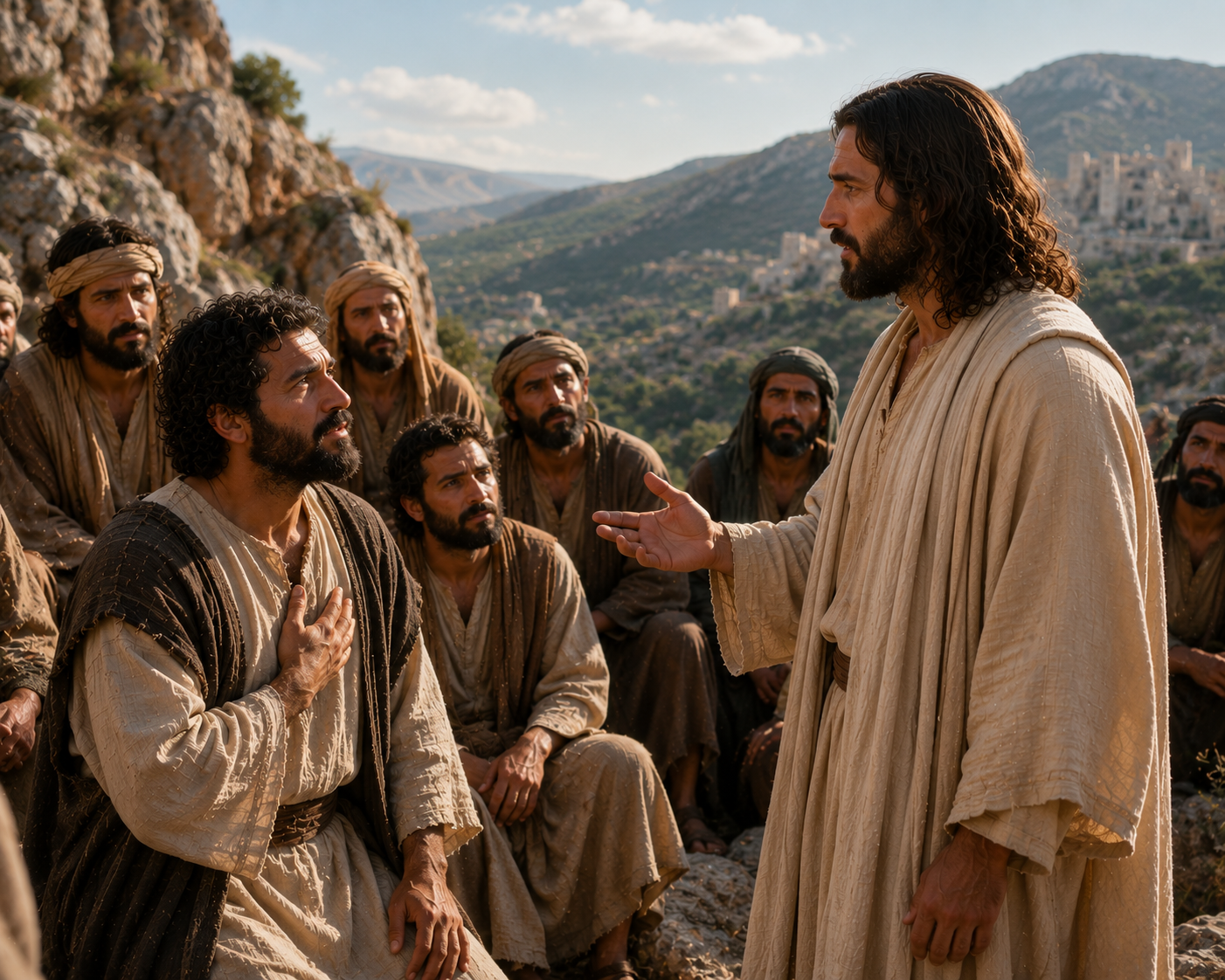
When they heard this, they praised God. Then they said to Paul: “You see, brother, how many thousands of Jews have believed, and all of them are zealous for the law. They have been informed that you teach all the Jews who live among the Gentiles to turn away from Moses, telling them not to circumcise their children or live according to our customs. What shall we do? They will certainly hear that you have come, so do what we tell you. There are four men with us who have made a vow. Take these men, join in their purification rites and pay their expenses, so that they can have their heads shaved. Then everyone will know there is no truth in these reports about you, but that you yourself are living in obedience to the law. As for the Gentile believers, we have written to them our decision that they should abstain from food sacrificed to idols, from blood, from the meat of strangled animals and from sexual immorality.” (Acts 21: 20–25)

Who may stand in his holy place? — photo by David Kitz
Who spoke the words shown within the quotation marks? Luke, the author, attributes these words to “they”—they being “James, and all the elders.” It is implausible that James and the elders spoke these words in unison. Most likely the statement Luke recorded is an accurate summation of their discussion—a discussion over which James presides. It logically follows that this statement provides a glimpse into the mind of James and the elders around him.
First, we are told “they praised God” on hearing Paul’s report of his ministry among the Gentiles. This signals James’ approval of Paul’s ministry and his specific call to reach the Gentiles.
As previously noted, Paul was not alone when he presented his report to James and the elders. He was accompanied by a number of Gentile believers. Luke uses the phrase “Paul and the rest of us” (Acts 21:18), thereby indicating his inclusion in Paul’s delegation during the day’s proceedings.
The presence of these Gentile followers of Christ certainly would have added weight to Paul’s report. These men were living proof of the grace of God being poured out on the Gentiles.
It makes sense that James would draw a good deal of satisfaction from Paul’s report, since it vindicated his previous ruling at the Jerusalem Council to open the door of faith to the Gentiles.
Paul’s report provided ample evidence that God endorsed this radical shift in policy. First, his ministry was accompanied by heaven-sent signs and wonders. Secondly, in quick succession he was establishing local churches in Asia Minor, Macedonia, and Greece. Thirdly, these churches were thriving to the point where they were providing financial support for the church in Jerusalem.
But Paul’s success brought with it a dilemma. In the response to Paul’s report we are told that in Jerusalem “many thousands of Jews have believed, and all of them are zealous for the law.” This zeal for the law presented a problem, since it had the potential of creating a deep cultural rift within the church. To ameliorate this problem, James and the leaders around him propose a bridge building exercise between Paul and these Jewish Christians.
Most often when divisions arise within an organization, misinformation lies at the root. That certainly was the case here. According to the above statement, the believers in Jerusalem “have been informed that you teach all the Jews who live among the Gentiles to turn away from Moses, telling them not to circumcise their children or live according to our customs.”
None of this is true and James knows this, but to set the record straight and prove Paul’s adherence to the law, he is advised to take part in a purification rite with four other men.
Despite Paul’s insistence that Gentile believers need not be circumcised (Galatians 5:2–6), he did not give such advice to Jewish followers of Christ. In fact, he did just the opposite. Timothy, Paul’s personal disciple, is a case in point. Timothy’s mother was Jewish, but his father was Greek. Before setting out on one of his journeys, Paul circumcised him.
Paul wanted to take him [Timothy] along on the journey, so he circumcised him because of the Jews who lived in that area, for they all knew that his father was a Greek. As they traveled from town to town, they delivered the decisions reached by the apostles and elders in Jerusalem for the people to obey. So the churches were strengthened in the faith and grew daily in numbers. (Acts 16:3–5)
What is most remarkable about this example of circumcision is that Paul did this while going about delivering the Jerusalem Council’s ruling that Gentiles need not be circumcised. The reason given for doing this circum-cision reveals a great deal about Paul’s methodology. We are told that this was done “because of the Jews who lived in that area, for they all knew that his father was a Greek.”
Why would the opinion of the Jews in the area matter to Paul? Wasn’t he free from the rule of the law and living under the grace of Christ? By extension, why would Paul submit to participate in purification rites as prescribed by James and the elders in Jerusalem? We can find the answer in Paul’s first letter to the Corinthians.
Though I am free and belong to no one, I have made myself a slave to everyone, to win as many as possible. To the Jews I became like a Jew, to win the Jews. To those under the law I became like one under the law (though I myself am not under the law), so as to win those under the law. To those not having the law I became like one not having the law (though I am not free from God’s law but am under Christ’s law), so as to win those not having the law. To the weak I became weak, to win the weak. I have become all things to all people so that by all possible means I might save some. I do all this for the sake of the gospel, that I may share in its blessings. (1 Corinthians 9:19–23)
Paul’s purpose was evangelism. He wanted to “save some.” He wanted to win the Jews in the vicinity of Tim-othy’s hometown over to faith in Christ. The same motivation would have been at work as Paul returned to Jerusalem. He wanted the gospel presented in the best light possible. If submitting to religious observances helped prepare people’s hearts to hear the gospel message, Paul was willing to oblige.
But this desire that motivated Paul also motivated James. James wanted the entire Jewish nation won over to the gospel. He wanted his people to embrace the message of redemption through the death, burial, and resur-rection of Jesus Christ. This is after all the express mission of the church.
There are theologians who see vastly different motives at work in James and Paul, but a careful reading of the scriptures does not bear this out. There is no indication that Paul chafed at this recommendation to undergo ritual purification. He submitted to it willingly because he wanted to correct the erroneous perception that he had abandoned the law and was encouraging other Jewish converts to do the same.
It should be noted that this erroneous perception existed among Christian Jews who were “zealous for the law.” As we shall see, the perception of unbelieving Jews was that Paul was worthy of death. The first bridge that needed to be built or repaired was between Paul and Jewish believers. Paul would go to great lengths for the sake of cross-cultural Christian unity.
All of this was part of Paul’s grand vision for the church. His great desire was to have Jews and Gentiles united as one under Christ. He gives voice to this thought in his Epistle to the Ephesians.
Therefore, remember that formerly you who are Gentiles by birth and called “uncircumcised” by those who call themselves “the circumcision” (which is done in the body by human hands)—remember that at that time you were separate from Christ, excluded from citizen-ship in Israel and foreigners to the covenants of the promise, without hope and without God in the world. But now in Christ Jesus you who once were far away have been brought near by the blood of Christ.
For he himself is our peace, who has made the two groups one and has destroyed the barrier, the dividing wall of hostility, by setting aside in his flesh the law with its commands and regulations. His purpose was to create in himself one new humanity out of the two, thus making peace, and in one body to reconcile both of them to God through the cross, by which he put to death their hostility. (Ephesians 2:11–16)

Peace begins within — photo by David Kitz
In very practical, tangible terms, Paul is trying to make peace and work at reconciliation between Jews and Gentiles. Paul does this by participating in the prescribed purification rites at the urging of James. These are precisely the laws, commands, and regulations which Christ set aside, according to the statement above.
Typically, these events are viewed from Paul’s perspective, but it is James who sits at the center these two camps—or is it four camps? James is trying to reconcile Paul and his Gentile converts with the Christ following, law-abiding Jews within his flock. James has a measure of sway over these two camps, due to his leadership role and the Spirit of Christ within him.
But beyond these two camps lies the broader Jewish and Gentile world. Both realms are innately hostile to the gospel. Yet as James sees it and Jesus’ Great Commission declares (see Matthew 28:18–20, Mark 16:15–20) the church is charged with reaching both these worlds.
James is fully vested in seeing both worlds reconciled to his brother, the Lord Jesus Christ. That’s why he en-dorsed Paul’s ministry at the Council of Jerusalem. That’s why he set the bar very low for Gentile entry into the church. And that’s why he rejoiced over Paul’s missionary report of rapid church growth among the Gentiles.
The Gentiles were being reconciled to Christ.
Full reconciliation cost Jesus his life. In this situation attempted reconciliation almost cost Paul his life. When hearts become hard, it takes a miracle to reconcile the irreconcilable. In this instance no miracle came. Whereas many hearts in the Gentile world were opening to Christ, in the Jewish world we see hearts are hardening.
When the seven days were nearly over, some Jews from the province of Asia saw Paul at the temple. They stirred up the whole crowd and seized him, shouting, “Fellow Israelites, help us! This is the man who teaches everyone everywhere against our people and our law and this place. And besides, he has brought Greeks into the temple and defiled this holy place.” (They had previously seen Trophimus the Ephesian in the city with Paul and assumed that Paul had brought him into the temple.)
The whole city was aroused, and the people came running from all directions. Seizing Paul, they dragged him from the temple, and immediately the gates were shut. While they were trying to kill him, news reached the commander of the Roman troops that the whole city of Jerusalem was in an uproar. He at once took some officers and soldiers and ran down to the crowd. When the rioters saw the commander and his soldiers, they stopped beating Paul. The commander came up and arrested him and ordered him to be bound with two chains. (Acts 21:27–33a)
There can be no doubt that the intervention of this Gentile commanding officer saved Paul from certain death at the hands of his countrymen.
It was James who sent Paul on this dangerous and futile attempt at cross-cultural bridge building, but there isn’t the slightest hint of anger or regret on Paul’s part during the events that follow. He does not blame James for his subsequent arrest and imprisonment. He sees it as part of the will and purpose of God for his life. He embraces his suffering and makes the most of his opportunities to be a witness for Christ before the Jewish mob, Roman authorities, the Sanhedrin, Governors Felix and Festus, and King Agrippa and Bernice. (See Acts 21:37–26:32.) Ultimately his defence of the gospel will bring him before the emperor in Rome.
Paul sees all this as the fulfilment of his divine mandate received from Christ. Rather than viewing his imprisonment as a hindrance, he sees it as an opportunity.
In light of Paul’s arrest and imprisonment, did James have any regrets for counseling Paul to engage in this ritual purification? There is no indication of that. The apostles wore persecution and suffering for Christ as a badge of honor. (See Acts 5:40–42 and 2 Corinthians 11:16–29.)
James’ advice to Paul while in prison would likely be in line with the opening words of his epistle.
Consider it pure joy, my brothers and sisters, whenever you face trials of many kinds, be-cause you know that the testing of your faith produces perseverance. Let perseverance finish its work so that you may be mature and complete, not lacking anything. (James 1:2–4)
In these matters, James was simply following his brother’s counsel as expressed in the concluding words of the Beatitudes.
Blessed are those who are persecuted because of righteousness, for theirs is the kingdom of heaven.
Blessed are you when people insult you, persecute you and falsely say all kinds of evil against you because of me. Rejoice and be glad, because great is your reward in heaven, for in the same way they persecuted the prophets who were before you. (Matthew 5:10–12)
The interaction between James and Paul in Acts 21 is the last occasion when we meet James within the pages of the Book of Acts. We see an apostle and a leader in his prime. He is exercising his authority over the church—an authority that extends beyond the local church in Jerusalem. The apostle Paul—the leading thinker, evangelist, and author of half the New Testament—reports to James and is accountable to him.
This raises the question: Were the other apostles accountable to James as well?
It could be argued that Paul may have developed a special relationship or bond with James. It may be that Paul saw himself as a disciple of James, and this is why Paul submits to him for counsel and advice.
But at the Council of Jerusalem in Acts 15, both Peter and Paul give reports in a meeting over which James presides. Though not explicitly stated, Luke’s account of the church meetings of Acts 15 and Acts 21 leave the distinct impression that James was functioning as the head of the church.
When we encounter James in Paul’s epistles, we are left with a similar impression. Paul sees Peter as a colleague, but he shows a deference and respect for James that one would expect toward someone in authority. (See 1 Corinthians 15:7, Galatians 1:18–2:16.)
In turn, Peter shows the same collegial respect toward Paul. (See 2 Peter 3:15–16.) The accounts in Acts and Galatians portray James as the overall leader of the church, but this contrasts sharply with the Roman Catholic position that Peter was the designated head of the church. In fact, there is little evidence to support the Catholic position within the Acts account or any of the epistles.
All of this has huge implications for church governance, and it goes to the root of many divisions we see across the church world today.
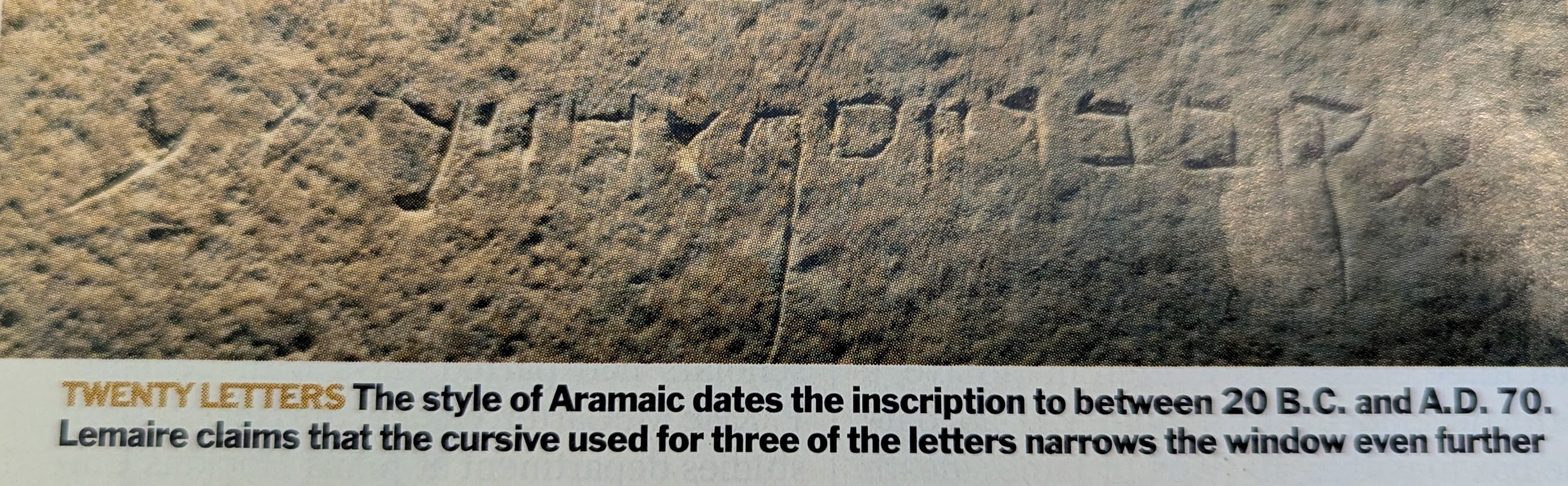
James lies at the heart of all these issues. But for many, James, the brother of Jesus, remains a great mystery—as enigmatic as the stone box that bears his name.
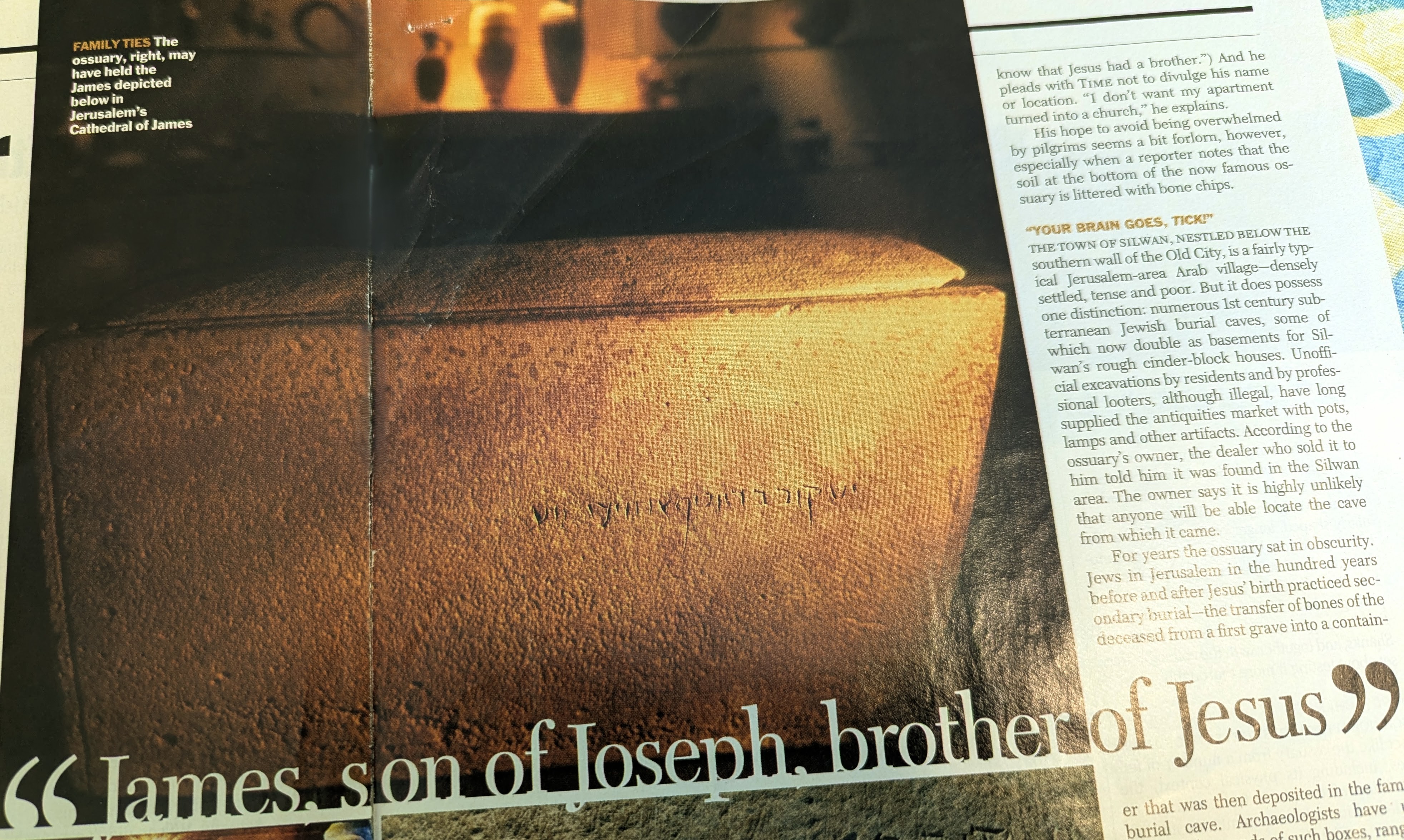
Time photo of the James Ossuary
(1) Marshall, The Acts of the Apostles, p. 342.
New from David Kitz
James—the brother of Jesus—who was this man? What evidence do we have that this “brother of our Lord” even existed?
David Kitz digs deep into archeology, family dynamics, church history, and the biblical texts. What emerges from his research is a portrait of a decisive, pivotal leader who embodied the will and character of Jesus Christ.
But how did James—James the unbeliever—transform to become a leader who changed the course of world history? In these pages you will uncover the answer and rediscover for yourself the life-changing power of the gospel.
To view further details or purchase directly from the author click here.