
Tags
church, evangelical, faith, God, God's blessing, great commission, harvest, praise, Prayer, Psalms, thanksgiving, the LORD
For the director of music.
With stringed instruments. A psalm. A song.
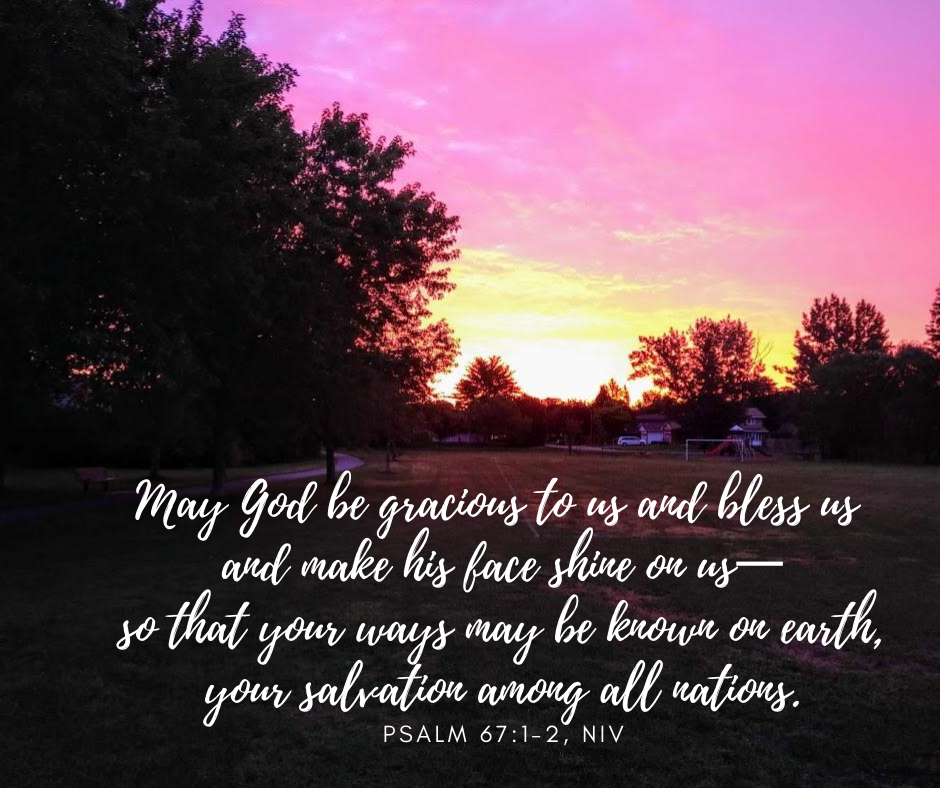
May God be gracious to us and bless us
and make his face shine upon us, (Selah)
that your ways may be known on earth,
your salvation among all nations.
May the peoples praise you, O God;
May all the peoples praise you.
May the nations be glad and sing for joy,
for you rule the peoples justly
and guide the nations of the earth. (Selah)
May the peoples praise you, O God;
May all the peoples praise you.
Then the land will yield its harvest,
and God, our God, will bless us.
God will bless us,
and all the ends of the earth will fear him. (NIV)
I am glad that we celebrate Thanksgiving in early October here in Canada. I cannot imagine waiting until late November to celebrate this holiday as Americans do. It puts Thanksgiving too close to Christmas, and it delays it too long after the harvest has been gathered. By late November, harvest time is just a distant memory, and much of the country is already in winter’s icy grip. Thanksgiving is after all a harvest festival, signalling our thankfulness to God for the bounty of the earth.
When you grow up on a farm, as I did, you appreciate the traditional aspects of Thanksgiving all the more. You are reminded each day that the food on your table does not simply come from a store. You are actively engaged in producing the nourishment that sustains your own life.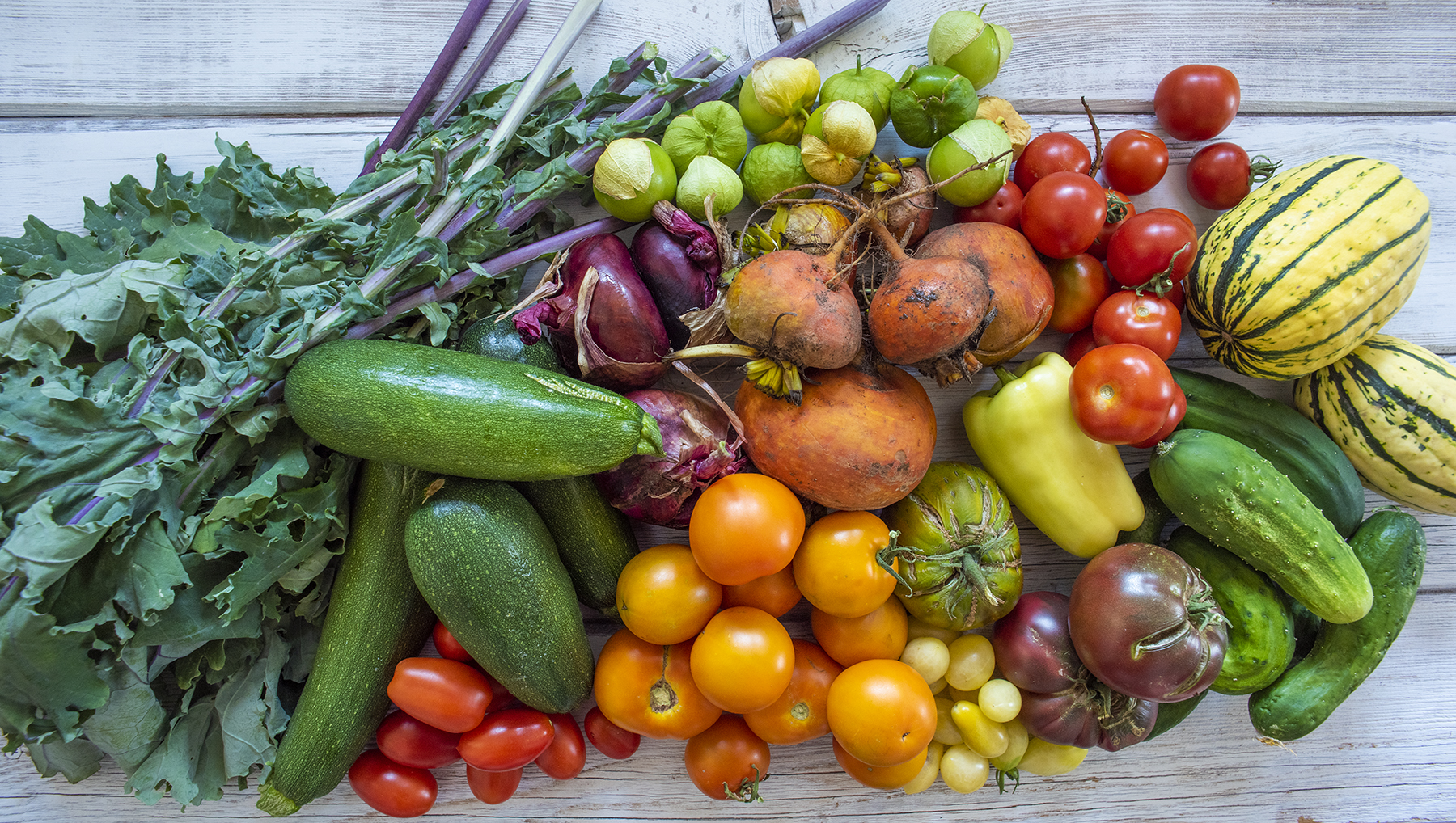
As a youngster I sat down to many a Thanksgiving feast, and almost all the food found on that groaning table was home-grown. I watched those vegetables growing in our garden in the hot summer sun. I even pulled the weeds from around those peas. And those mashed potatoes, I helped my mother hill those tubers in the spring and then dug them up after the frost hit in the fall. My brother loved growing pumpkins, and mom would turn his favourite into the best pumpkin pie east of the Rockies. And how can you eat pumpkin pie without a mound of whipped cream on top? Well let me tell you, it tastes even better, when just that morning you milked the cows that produced that sweet rich cream. Oh, and that huge turkey—we’ll miss that pompous strutting gobbler out by the henhouse. But I’m sure we’ll get over it, somehow. For now, let’s just dig in.
Let’s all dig in, and give thanks to the God, who made all this possible. This sumptuous feast has been brought to you by him. Now that’s Thanksgiving!
The great God in heaven has been kind to us. He has answered our prayers. He brought the warmth of spring and the rain of heaven. He caused his face to shine upon us. The rich earth responded to his touch. It brought forth its bounty, and now around this table we have gathered as a family to celebrate God’s great goodness to us.
The opening petition of Psalm 67 has been granted. May God be gracious to us and bless us and make his face shine upon us, that your ways may be known on earth, your salvation among all nations.
God has been gracious. We did not earn this blessing. Yes, we worked. We tilled the soil; we planted the seed. But, it was God who brought the increase. He has blessed the work of our hands. He has smiled on our efforts, and during this feast, every mouth-watering bite testifies to his amazing love and goodness. Let’s all dig in. Taste and see that the LORD is good! (Psalm 34:8).
Have you ever asked yourself why? Why is God so good? Why has he blessed you so richly? Why are his mercies new every morning? Why is he so forgiving? Why does he provide in such abundance?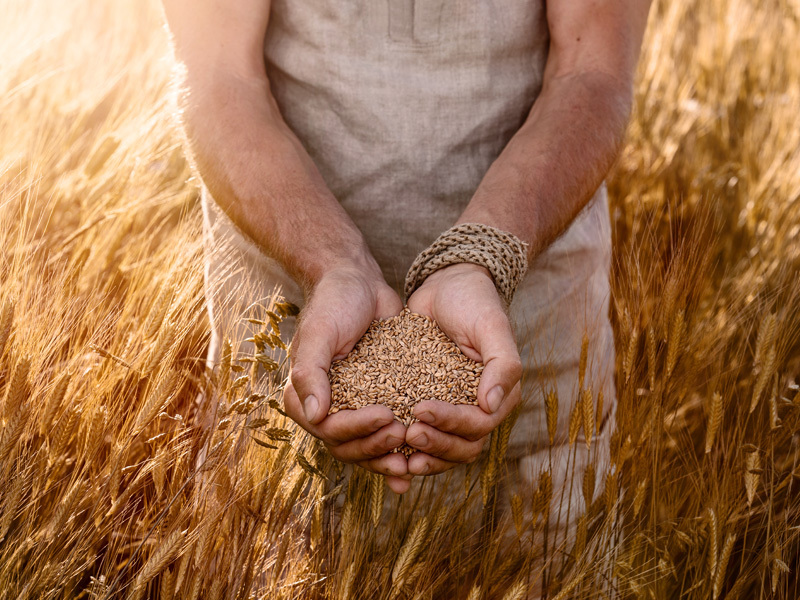
The simple answer is because that is his nature. He is kind, so he loves to bless us, whether we deserve it or not. He is kind so His blessings flow like water flows down a mountainside. Can rivers flow uphill? That’s impossible. In the same way, it is impossible for God not to be loving, gracious and merciful. It is simply his nature to pour out blessings.
Like any loving parent, God draws pleasure from blessing his children. But is there a divine motivation that extends beyond the family of God. As the opening verse of this psalm makes clear, God desires to bless us, so that his ways and his salvation may be known all over this world.
So then, Psalm 67 should be our prayer, not only for us, but for the world. May God be gracious to us and bless us and make his face shine upon us, that your ways may be known on earth, your salvation among all nations (v. 1-2).
In other words, God’s blessing is not solely for us. It is to extend around the world and beyond the family of God. Is God in fact, blessing us abundantly, so that we may in turn bless others? Is he blessing us, so that we may make his salvation known among all nations? That certainly would appear to be the plan according to Psalm 67.
This is perhaps the most evangelical of all the psalms. By that I mean there is good news in this psalm, and the good news of God’s loving-kindness, which is found here, is not to be kept to oneself. It is to be taken to the whole world.
In addition to an enormous feast, I have another childhood memory that is also linked to Thanksgiving. On Thanksgiving Sunday, as on every Sunday of the year, we would all dress up in our Sunday best and then squeeze into the family sedan for the four-mile trip to our local country church. For my mother, preparing the family brood of six children for church, and then stuffing grandma, dad, mom and six squirming kids into one car was no simple feat. I am sure that for her, stuffing a twenty-five-pound turkey was much easier, and it was accomplished with far less stress. 
On Sunday mornings, the last thing we did before leaving the house was prepare our church offering. Everybody gave. Every child and every adult had their own offering envelope, and typically, dad gave each child a dollar to put in that envelope. At a time when in town, a chocolate bar cost fifteen cents, and I could get a heaping ice-cream cone for one thin dime, this was quite a princely sum. I suppose dad could have combined all that money and put it all in one single envelope—his own. After all, every cent of it was actually his money. But, he chose to distribute it to his children, for us to put into the offering basket. I can only suppose that he wanted to train each of us to be givers.
However, Thanksgiving Sunday was different. On that Sunday unlike all the rest during the year, we did not get a dollar from dad. This was harvest time; the crop had come in. God had been good, and we were blessed. There were colorful crisp tens and twenties to go into those offering envelopes. And consequently, on Thanksgiving Sunday every child clutched their envelope a little more tightly until it landed safely in the offering basket at church.
There was something else different about Thanksgiving Sunday. On that Sunday all of our offering money went to missions. There was always a spot on the envelope to designate where we wanted our gift to go, and on Thanksgiving Sunday we were all told to mark our envelope for missions. This was dad’s way of saying that we had more than enough. This Sunday was for those who were not so blessed. It was for those people in foreign lands who did not even know about the great God, who filled our granaries and loaded down our table with a feast fit for kings.
I am not sure Dad knew he was bringing Psalm 67 to life. But he was actually doing this psalm. He was making this psalm come alive in front of his family. From the overflow of God’s blessing on his life and his family, he was channelling a portion of that blessing to the less fortunate. He was doing this, because he wanted the ways of God to be known all over the earth. He wanted the salvation of the LORD to be experienced not just here in Canada, but among all nations.
This is in fact, a psalm that addresses the nations. It extends beyond the individual or the family. It addresses every ethnic group on the face of the planet with these words. May the peoples praise you, O God; may all the peoples praise you. May the nations be glad and sing for joy, for you rule the peoples justly and guide the nations of the earth (v. 3-4).
The God of the universe is calling the peoples of the world to a festival of praise. Through the words of this psalm, we are petitioning the LORD over all nations, that his praise would ring forth from all the peoples of the earth. What a glorious day that will be when the nations break forth in joyous songs of praise to their Maker! All of nature testifies to his manifold wisdom. Already, the whole earth is full of his glory. Now our prayer is that all who live on the face of the earth would see that glory and unite in singing his praise. Now, that will be a day of thanksgiving—a day like none other!
This call for universal praise is unusual. It is unusual because it draws all of humanity into a common faith. The Jewish faith was and is a very exclusive religion. This is the faith of the chosen people—God’s chosen people. They did not choose him, but rather they were uniquely selected by God to bear his name before the nations of the world. Throughout the Old Testament we have a clear sense that God was dealing with his own special people, and they were to walk separate from the nations. They received God’s laws and were the guardians of his commands. They were instructed not to intermarry with other nations, nor be polluted by them and their idol worship. The worshippers of Yahweh were an exclusive group, a unique people, but they were not evangelical. They kept the message to themselves.
But here in Psalm 67 the constricted, exclusive God of the Old Testament appears to break out of his narrow nationalist cocoon. We see that he is truly a God for all nations, not just for the descendants of Abraham. Here we catch a glimpse of the big picture—the global perspective. All the nations of the earth are to praise him. The longstanding intent of the God Israel is that every people group should know his ways and experience his salvation. God’s great promise to Abraham will be fulfilled, “All peoples of the earth will be blessed through you” (Genesis 12:3).
In reality, throughout the Old Testament we can see a certain tension between this global view of the God of the universe, and the more restricted nationalist view of God. Most often the old covenant prophets were granted the best view of the God of the big picture—the God who rules over all nations. Isaiah was one such prophet. Now let’s hear his prophetic word for the nations:
See, darkness covers the earth and thick darkness the peoples, but the LORD rises upon you and his glory appears over you. Nations will come to your light, and kings to the brightness of your dawn (Isaiah 60:2-3).
It is the resurrected and ascendant Christ who broke through the thick darkness. He broke the power of the chains of death. He is the one whose light has come. Nations have come to his light and people all over the world continue to come. It is Jesus who broke Judaism out of its narrow bounds and brought the faith of Abraham to the nations. The light of the world has come. He has caused his face to shine upon us, and now the gift of salvation is available through him.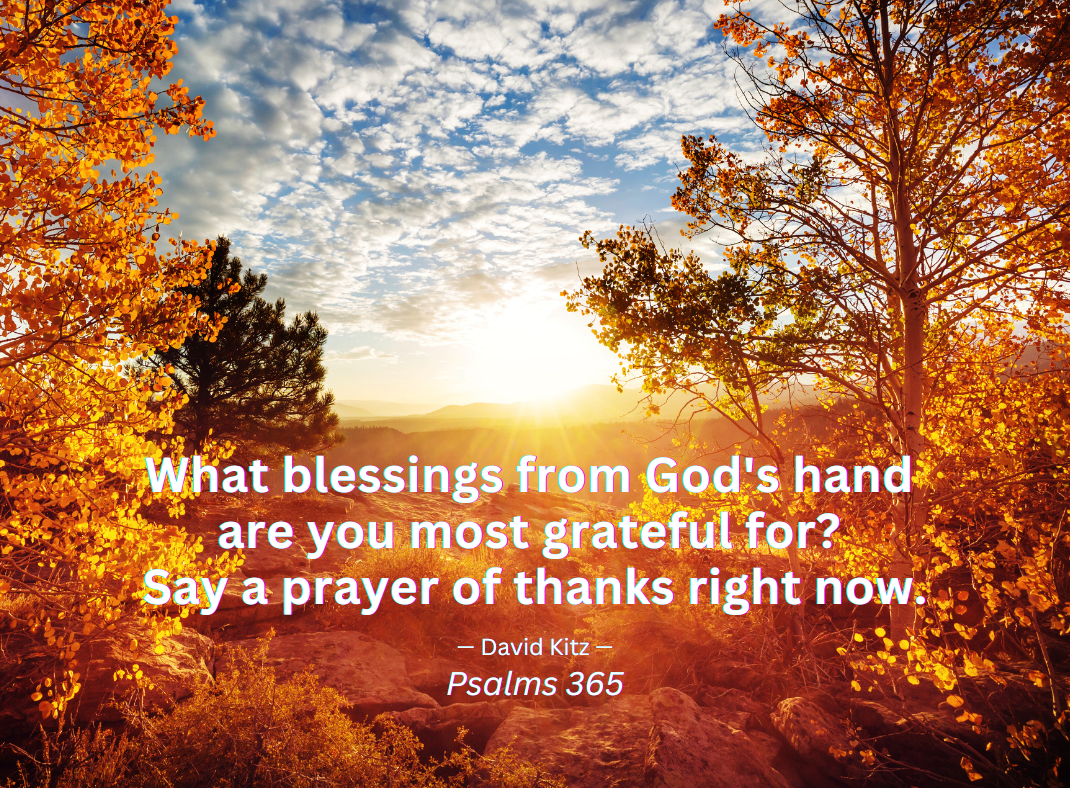
This is the greatest cause for thanksgiving. As the resurrected and triumphant Christ stood before his disciples, he gave them this command:
“All authority in heaven and on earth has been given to me. Therefore go and make disciples of all nations, baptizing them in the name of the Father and of the Son and of the Holy Spirit, and teaching them to obey everything I have commanded you. And surely I am with you always, to the very end of the age (Matthew 28:18-20).
This statement by Jesus is commonly known as the Great Commission. In Psalm 67 we can see an Old Testament version of the Great Commission. It is a commission that is rooted in thanksgiving and praise. I can only wonder if this is the fount from which all evangelism should flow, not from a browbeaten sense of guilt, but from a joy-filled heart of thanksgiving. If we have grasped the fullness of God’s blessing on us through Christ, then we are delighted to tell of his great love. We joyously spread the message.
May the peoples praise you, O God; may all the peoples praise you. Then the land will yield its harvest, and God, our God, will bless us. God will bless us, and all the ends of the earth will fear him (v. 5-7).
There is a great harvest day that is still coming on the earth. It is not a harvest of wheat, corn or rice, but a harvest of souls that will be swept into the Kingdom of God. If this psalm is to be believed, it is a harvest that is propelled and swelled by our praise. According to our praise it will be gathered in. Who will gather in this harvest? The sad-sack sourpusses of the church need not apply. They can keep their tight-fisted hands in their pocket, and their woe begotten complaints to themselves. The people of praise will see the harvest. With thankful hearts they will bring it home.
Now more than ever Jesus’ words ring true: “You may say there are still four months until harvest time. But I tell you look, and you will see that the fields are ripe and ready to harvest” (John 4:35).
Yesterday, I received two e-mail messages from overseas. One was from a young missionary couple who just arrived in Cambodia. The other was from a missionary couple in China. Their messages reminded me that a great international harvest is coming. It is happening even now. I am thankful that we have the LORD’s sure promise on this. Let’s dig in. It’s harvest time, and even as we praise him, God will bless us, and all the ends of the earth will fear him (v. 7).
Bringing Life to the Psalms
- Read Jesus’ discourse on the harvest as found in John 4:27-42. Consider that this story took place in Samaria. Already at this point Jesus was breaking out of the narrow confines of Judaism. While the disciples were getting food, Jesus was having a feast. What spiritual food sustains your faith?
- What are some of the family traditions that you follow at Thanksgiving? How do those traditions reflect God’s goodness to you?
- Take time today to count your blessings. Too often we focus on our problems and shortcomings, while there is always so much for which to be thankful.
- Consider making giving a significant part of your Thanksgiving celebration. If you have been blessed, why not make this an opportunity to bless others? Remember thanksgiving is a valid response to the grace of God at any time of the year.
- The praise induced fear of God referred to in this psalm stands in sharp contrast to the man induced terror, which lurks behind demon inspired religion. The LORD is not the author of intimidation or barrel-of-a-gun conversion. To fear God is to stand in awe of Him—in awe of His mercy, His grace and His sacrificial love. This awe-inspiring fear is the most direct path to true God pleasing worship. As you take time to thank God, pray that this wonder-filled awe of God will fall upon all nations.
- Reread Psalm 67. What is God saying to you by His Spirit?
Today’s post is Chapter 10 from the book Psalms Alive! Connecting Heaven & Earth by David Kitz. To find out more or purchase click here.



![BGBG_v4.3_150[1818]](https://davidkitz.blog/wp-content/uploads/2021/07/bgbg_v4.3_1501818.jpg)




 I love the Psalms