I will praise the LORD!

25 Saturday Apr 2020

15 Friday Mar 2019
Reading: Psalm 46
(Verses 8-11)
Come and see what the LORD has done,
the desolations he has brought on the earth.
He makes wars cease
to the ends of the earth.
He breaks the bow and shatters the spear;
he burns the shields with fire.
He says, “Be still, and know that I am God;
I will be exalted among the nations,
I will be exalted in the earth.”
The LORD Almighty is with us;
the God of Jacob is our fortress (NIV).

He was pierced for our transgressions.
Reflection
As I write this it’s the second week of Lent—forty days of contemplation leading to Good Friday—leading to our Saviour’s death on the cross. The opening line of this reading from Psalm 46 grabs me: Come and see what the LORD has done.
Yes. Come and see what the LORD has done! Come and see what has happened to God’s son. Come and see the desolations he has brought on the earth—the desolations He has brought on the dust-formed bundle of flesh that at birth was laid in a manager. Now he is laid on a cross. He is not wrapped in swaddling clothes. He is stripped naked; arms pried wide open and nailed to a cross.
Come and see what has happened to him. This is the LORD’s doing. This is the Father’s will. This is the Son’s willing obedience. Now hear the Spirit’s beckoning call, “Come and see what the LORD has done!”
This is what love looks like—not our love for God, but God’s love for man. Love looks like Jesus on the cross. Love looks like a bloody sacrifice, engineered by God, inflicted on God, God come-in-the-flesh. Love looks painful. It looks painful because it gives to the last drop. It calls us near to the last breath. “Come and see what the LORD has done!”
And when you come be still. He says, “Be still, and know that I am God.”
This is not the time to rush on by. Eve reached for the forbidden fruit. Adam rushed after her. Rushing has brought us this mess—this messed up world—this mess on the cross. Self-centered rushing hurtles us into sin with no thought for tomorrow—no thought for the man on a cross. Instead today, “Be still, and know that I am God; I will be exalted among the nations, I will be exalted in the earth.”
Be still. Be still before the cross. He is God. The man on the cross is God. Love has a price, always has a price. It’s written in blood—the Savior’s blood.
Response: LORD God, alter me at the foot of the cross. I need you to change my heart, my life, my attitude. Help me be still before you as I contemplate your love—love that I don’t deserve—that I have not earned. But Jesus, you offered yourself freely. Thank you. Amen.
Your Turn: Has your life been altered by the cross?
14 Thursday Mar 2019
Reading: Psalm 46
For the director of music. Of the Sons of Korah.
According to alamoth. A song.
(Verses 1-7)
God is our refuge and strength,
an ever-present help in trouble.
Therefore we will not fear, though the earth give way
and the mountains fall into the heart of the sea,
though its waters roar and foam
and the mountains quake with their surging.
There is a river whose streams make glad the city of God,
the holy place where the Most High dwells.
God is within her, she will not fall;
God will help her at break of day.
Nations are in uproar, kingdoms fall;
he lifts his voice, the earth melts.
The LORD Almighty is with us;
the God of Jacob is our fortress (NIV).

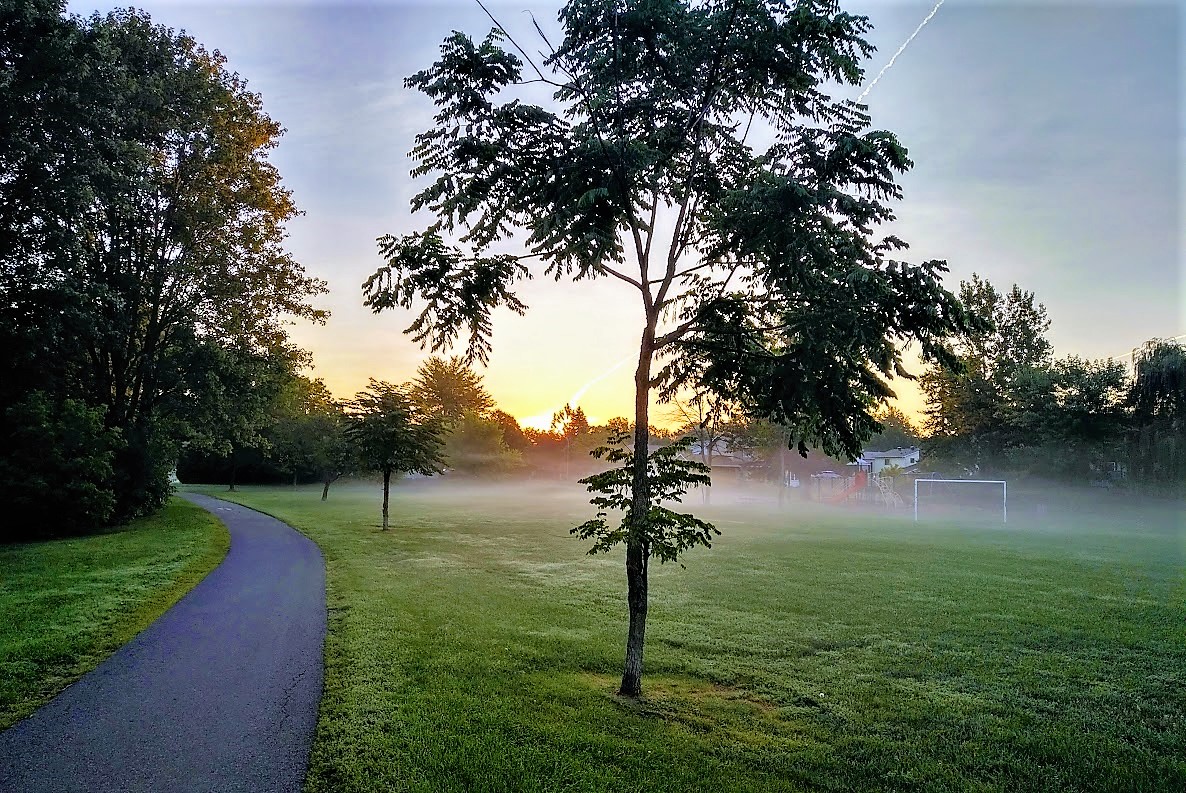
Early morning mist in Grey Nuns Park, Orleans, ON — photo by David Kitz
Reflection
Why are you confident? Confidence is a key ingredient in the life of any child of God. If we lack confidence, we lack faith. In fact, the word confidence is rooted in faith. Confidence is derived from the Latin word fide, which means faith. It is etymologically linked to words like fidelity and fiduciary—words that stand for trust and true faithfulness. But this faithfulness, fidelity and confidence come as a result of a relationship.
If we have no relationship with someone, how can we trust them? How can we have confidence in them or their actions if we don’t know them?
Here in Psalm 46, the psalmist expresses his complete confidence in God. He expresses that confidence despite the evidence around him. Hear his confident assertion: God is our refuge and strength, an ever-present help in trouble. Therefore we will not fear, though the earth give way and the mountains fall into the heart of the sea, though its waters roar and foam and the mountains quake with their surging.
There is nothing quite as unnerving as an earthquake. I know this from personal experience. When the solid ground beneath one’s feet suddenly gives way and rolls and buckles, nerves begin to fray. But the psalmist remains confident because he knows the One who is in control—the One who remains unmoved and unshakable. In times of trouble we can turn to Him.
But we should not turn to God simply as a last resort. He is the God who is with us. Our confidence grows as we live with Him day by day, in good times and bad. Our confidence grows as we experience Him as our rock of refuge and our shelter in the storm. Then we can say, “The LORD Almighty is with us; the God of Jacob is our fortress.”
Response: LORD God, I put my trust in you. In times of trouble you have been my help and my strength. I turn to you in confidence because you are with me. You are my Savior and my God. Amen.
Your Turn: Has your confidence been shaken recently? Where have you turned for help?
31 Tuesday Mar 2015
Reading: Psalm 46
(Verses 8-11)
Come and see what the LORD has done,
the desolations he has brought on the earth.
He makes wars cease
to the ends of the earth.
He breaks the bow and shatters the spear;
he burns the shields with fire.
He says, “Be still, and know that I am God;
I will be exalted among the nations,
I will be exalted in the earth.”
The LORD Almighty is with us;
the God of Jacob is our fortress (NIV).
Reflection
As I sit writing this, it’s Holy Week—a week of contemplation leading to Good Friday—leading to our Savior’s death on the cross. The opening line of this reading from Psalm 46 grabs my attention: Come and see what the LORD has done.
Yes. Come and see what the LORD has done! Come and see what has happened to God’s son. Come and see the desolations he has brought on the earth—the desolations He has brought on the dust-formed bundle of flesh that at birth was laid in a manager. Now he is laid on a cross. He is not wrapped in swaddling clothes. He is stripped naked, pried wide open and nailed to a cross.
Come and see what has happened to him. This is the LORD’s doing. This is the Father’s will. This is the Son’s willing obedience. Now hear the Spirit’s beckoning call, “Come and see what the LORD has done!”
This is what love looks like—not love for God—love for man. God’s love looks like Jesus on the cross. Love looks like a bloody sacrifice, engineered by God, inflicted on God, God come-in-the-flesh. Love looks painful. It looks painful because it gives to the last drop. It calls us near to the last breath. “Come and see what the LORD has done!”
And when you come be still. He says, “Be still, and know that I am God.”
This is not the time to rush. Eve reached for the forbidden fruit. Adam rushed after her. Rushing has brought us this mess—this messed up world—this mess on the cross. Self-centered rushing hurtles us into sin with no thought for tomorrow—no thought for a man on a cross. Instead today, “Be still, and know that I am God; I will be exalted among the nations, I will be exalted in the earth.”
Be still. Be still before the cross. He is God. The man on the cross is God. Love has a price, always has a price. It’s written in blood—the Savior’s blood.
Response: LORD God, alter me at the foot of the cross. I need you to change my heart, my life, my attitude. Help me be still before you as I contemplate your love. Amen.
Your Turn: Does the cross have meaning for you?
24 Tuesday Mar 2015
Tags
city of God, confidence, David Kitz, earthquake, God, God is our refuge and strength, Manhattan, Psalm 46, Psalms, trouble, trust
Reading: Psalm 46
For the director of music. Of the Sons of Korah. According to alamoth. A song.
(Verses 1-7)
God is our refuge and strength,
an ever-present help in trouble.
Therefore we will not fear, though the earth give way
and the mountains fall into the heart of the sea,
though its waters roar and foam
and the mountains quake with their surging.
There is a river whose streams make glad the city of God,
the holy place where the Most High dwells.
God is within her, she will not fall;
God will help her at break of day.
Nations are in uproar, kingdoms fall;
he lifts his voice, the earth melts.
The LORD Almighty is with us;
the God of Jacob is our fortress (NIV).
Why are you confident? Confidence is a key ingredient in the life of any child of God. If we lack confidence, we lack faith. In fact, the word confidence is rooted in faith. Confidence is derived from the Latin word fide, which means faith. It is etymologically linked to words like fidelity and fiduciary—words that stand for trust and true faithfulness. But this faithfulness, fidelity and confidence come as a result of a relationship.
If we have no relationship with someone, how can we trust them? How can we have confidence in them or their actions?
Here in Psalm 46, the psalmist expresses his complete confidence in God. He expresses that confidence despite the evidence around him. Hear his confident assertion: God is our refuge and strength, an ever-present help in trouble. Therefore we will not fear, though the earth give way and the mountains fall into the heart of the sea, though its waters roar and foam and the mountains quake with their surging.
There is nothing quite as unnerving as an earthquake. I know this from personal experience. When the solid ground beneath one’s feet suddenly gives way and rolls and buckles, nerves begin to fray. But the psalmist remains confident because he knows the One who is in control—the One who remains unmoved and unshakable. In times of trouble we can turn to Him.
But we should not turn to God as a last resort. He is the God who is with us. Our confidence grows as we live with Him day by day, in good times and bad. We must experience Him as our rock of refuge and our shelter in the storm. Then we can say, “The LORD Almighty is with us; the God of Jacob is our fortress.”
Response: LORD God, I put my trust in you. In times of trouble you have been my help and my strength. I turn to you in confidence. You are my Savior and my God. Amen.
Your Turn: Has your confidence been shaken recently? Where have you turned for help?