His Covenant

Tags

, ,

Reading: Psalm 105:8-15
He remembers his covenant forever,
the promise he made, for a thousand generations,
the covenant he made with Abraham,
the oath he swore to Isaac.
He confirmed it to Jacob as a decree,
to Israel as an everlasting covenant:
“To you I will give the land of Canaan
as the portion you will inherit.”
When they were but few in number,
few indeed, and strangers in it,
 they wandered from nation to nation,
from one kingdom to another.
He allowed no one to oppress them;
for their sake he rebuked kings:
 “Do not touch my anointed ones;
do my prophets no harm”
(NIV).*

two person in long sleeved shirt shakehand

Photo by Cytonn Photography on Pexels.com

Reflection
Covenant is a term that is not used much in daily speech. The Encarta Dictionary provides us with this definition of covenant: a solemn agreement that is binding on all parties. By that definition marriage is a covenant that we enter into. A sound Christian marriage is a three-way covenant between the husband, the wife, and their Creator.

Encarta also provides a biblical definition of God’s enduring covenant with His people: in the Bible, the promises that were made between God and the Israelites, who agreed to worship no other gods.

There is something very exclusive about both these covenants. In our marriage vows we covenant or promise to love each other exclusively. No other lover may intrude. In the same way no other gods may intrude into the covenant relationship that we have with God. The LORD wants us exclusively for Himself. That is the nature of true love. It is jealous—zealous and jealous in guarding that relationship.

God’s zealous and jealous love for His people is clearly visible in today’s reading from Psalm 105. We read: He remembers his covenant forever, the promise he made, for a thousand generations. A thousand generations is a long time, 25,000 years by the commonly used reckoning. But forever is much longer. What an incredible love the LORD has for us!

We serve a faithful, passionate God who will remain true to His covenant. The question that remains for us is, will we remain true to our end of the bargain? Will we be faithful, passionate, and committed in our love for the LORD? Through Christ we have an eternal inheritance by a covenant that is not of this world. Praise be to God for his enduring love.

Response: Father God, thank you for your love and faithfulness even when I have gone astray. You draw me back. Today, I renew my covenant with you. I commit myself afresh to loving and serving you. Amen.

Your Turn: Have you stayed faithful to your covenant? Does your covenant need to be renewed?

* NEW INTERNATIONAL VERSION, COPYRIGHT ©1973, 1978, 1984, 2011 BY BIBLICA

BGBG_v4.3_150[1818]

Please pray for the people of Ukraine!

Volume I of Psalms 365: Develop a Life of Worship and Prayer has won the 2021 Best Book of the Year Award and for those who love God’s word, it’s an ideal way to daily meet with the Lord. For a closer look at Volumes II and III click here.

Look to the LORD  

Tags

, ,

Reading: Psalm 105:1-7
Give praise to the LORD, proclaim his name;
make known among the nations what he has done.
Sing to him, sing praise to him;
tell of all his wonderful acts.
Glory in his holy name;
let the hearts of those who seek the L
ORD rejoice.
Look to the L
ORD and his strength;
seek his face always.
Remember the wonders he has done,
his miracles, and the judgments he pronounced,
you his servants, the descendants of Abraham,
his chosen ones, the children of Jacob.
He is the L
ORD our God;
his judgments are in all the earth
(NIV).*

img_20220707_2005042-effects

Photo by David Kitz

Reflection
This past Sunday during the children’s church time the pastor led the children in a rousing chorus of “Jesus Loves Me.” In case you need a quick refresher, here is the first verse of that much loved children’s hymn: Jesus loves me! This I know, For the Bible tells me so; Little ones to Him belong; They are weak, but He is strong.

I remember singing this song with much gusto as a young tyke at Vacation Bible School. I took special comfort from this line: Little ones to Him belong; They are weak, but He is strong.

As a child I was well aware that I needed the strength of Jesus, since I had so little strength of my own. As we grow up and mature into adulthood we can forget to depend on the Lord’s strength. We have plenty of our own strength. Soon we can find ourselves relying on our own intellect and resources to solve problems as they come our way. Who needs Jesus when we can make our own way in life? Maybe we don’t consciously say that, but our actions reflect that line of reasoning.

The children’s song “Jesus Loves Me” might have been inspired by a line from Psalm 105 where we read, Look to the LORD and his strength; seek his face always.

The plain truth is that I need the LORD and His strength at every stage of my life. My strength on every level is miniscule in the sight of God. That’s why I need to seek his face continually. His wisdom surpasses my limited understanding. I have so little strength on my own, but His power is all surpassing. How foolish we are to rely on our abilities, when the Lord offers to walk through this life right beside us. Jesus said, “Take my yoke upon you and learn from me, for I am gentle and humble in heart, and you will find rest for your souls” (Matthew 11:29).

Response: Lord Jesus, you are strong—strong enough to carry the cross on my behalf—strong enough to purchase my redemption. I look to you for strength and salvation. Always guide my steps. I confess that I need you at every stage of my life. Amen.
Your Turn: Did you find it easier to trust in Jesus as a child than as an adult? Why? What changes your level of trust in God?

* NEW INTERNATIONAL VERSION, COPYRIGHT ©1973, 1978, 1984, 2011 BY BIBLICA

BGBG_v4.3_150[1818]

Please pray for the people of Ukraine!

Volume I of Psalms 365: Develop a Life of Worship and Prayer has won the 2021 Best Book of the Year Award and for those who love God’s word, it’s an ideal way to daily meet with the Lord. For a closer look at Volumes II and III click here.

Two Boxcars and Two Cents

Tags

, , , ,

My Mother was welcomed into her heavenly home on July 9, 2022. Here is an account of the hardships of her childhood that she wrote about a decade ago. We have much to be thankful for.

My father Gotlieb Ziebart was born in Russia in 1886. He came to Canada in 1912, just before the First World War. He came to Wolseley, Saskatchewan. He helped build the number one highway. Later he took up a homestead, section 35, township 16, range 24, West 3 degrees, new, Maple Creek – Piepot on the prairies of southwestern Saskatchewan.

Wanda

Wanda Kitz (nee Ziebart) 1922-2022

He married my mother, Emily Wuschke in 1917. She was from Bateman, Saskatchewan. Her parents came over to Canada from Poland in 1911 when my mother was ten years old. There were nine children. The youngest was born in Canada, and she was only nine months old when her father passed away. The oldest boy in the family was sixteen. When his father died, he stayed at home to farm and the other kids went working. The boys were hired to tend cattle for neighbors and the girls babysat. They stayed wherever they worked. Their pay was a place to sleep, their daily food, and maybe a secondhand pair of shoes or a coat. They got home once in two or three months. Things were tough.

My parents lived on the homestead for about five years. I was the third child born there. Their farm was seconded by ranchers, and they wanted dad’s land, so he sold it and moved to Bateman and then to Mankota.

My father was a good farmer and by 1928 we had a car, a tractor, and a threshing machine and two lines of horses. He also had cattle and five kids. But he lived on rented land.

So he bought a farm at Mossbank. Mother had three brothers living there. His hopes were high for a great future for his family. He put all his money down for a down payment on the farm. Then the depression came. Markets crashed, not just the stock market, but the market for grain and everything the farm produced.

Drought came.

He lost everything.

The drought lasted for eight years. Things were rough. The government gave us relief – two dollars per person per month. By that time there were six children, but dad wouldn’t take anything for the baby.

He said, “I have milk. I will feed him.”

So we got twelve dollars a month. That was during the winter. When the grass got green, the government relief was cut off. My father was a proud man, and he didn’t take anything from anyone, least of all the government.

As the drought worsened, the people that had a little money just packed up and left for the Peace River country in northern Alberta, or they moved to B.C. There were beautiful homes and farmyards left vacant. They were simply abandoned. The land didn’t get seeded. The wind and the grasshoppers took care of it.

By 1937 things were so bad, the government offered to help the farmers to move out. Dad was one of them. They could move you, or watch you starve. There was no feed for the cattle. The government wanted you to sell them. I remember having to go and pump water every two hours until the well was dry. Then we would wait two hours and go pump again.

Dad and three of his friends went land hunting. Dad came back and said he had bought a farm. The other men said they were going to buy later, but they never did.

We were moving – moving from the treeless prairie to the bush country.

The prairie was all we knew.

Mother and us kids were not happy about the move. At Mossbank, mother had brothers and sisters and a mother. We kids had all our cousins and friends. But we moved to Aaron, Saskatchewan – post office White Beach. Dad had sold horses and cattle and made a down payment of $150.00 on a farm on the west end of Thunder Hill. It was more than four hundred miles to the northeast, very near the Manitoba border. For us it was like moving to another world.

How did we get there?

The government gave us two boxcars on a freight train. They said they would pay the passenger tickets to get the family there, and it would take two days for the freight train to arrive. The freight cars came, but nothing to move the family. No money. No money from the government, and dad didn’t have any.

You are on your own. You do what you must.

We had two days to load. In one freight car, dad put the cattle at one end, and the farm implements at the other end. Everything was taken apart. The seed drill, the binder, the hay rake, the wagon, and the horse drawn sleigh, everything was packed into the rail car. On the other end of the car were the nine horses, pigs in a crate, chickens, a dog and a cat, and then more farm implements piled up on one side. On the other railcar he put a wagon box. On the far end of the box was the furniture stacked from bottom to top. The dining room buffet was at the bottom, the dresser on top, and then the sewing machine on top of that. I can still see it all stacked and crammed in.

Mother and five kids lived in the wagon box. Dad and my oldest brother could stay with the cattle in the other car. They were legal. But the rest of us, the family, we were stowaways.

Right on the top of all the implements dad put the harrows, and we unrolled a mattress over them. We could lie up there, but couldn’t sit. It was too cramped. I spent most of my time up there.

The train stopped in every town, and every time it stopped or started it gave this awful jar. Our heads would hit the steel bars on the roof of the car. It was terrible. Terrible!

It was so hot! No air!

We were shut up with the animals. The stench!

Dad was told it would take us two days. We left Mossbank on the thirteenth of August in the afternoon at about three o’clock. We were prairie refugees. Dust bowl refugees. We traveled from Mossbank to Avonlea, and they left us sitting there until the next day, about thirty-five miles from Mossbank.

The next day we went from Avonlea to Moose Jaw and then on to Regina.

The third day we went to Saskatoon and sat there in the stifling prairie heat.

On the fourth day we started east and made it to Humboldt. We stayed there overnight.

On the fifth day we got to Aaron at about suppertime. We had traveled five days. The cattle and horses had little or no water or feed. The cattle were let out of the cars once, into the stockyards, but not the horses.

We had very little food and water. We almost died in the heat. It was August 13th to the 18th, 1937.

Hot. Dry. Dusty. Unrelenting heat.

Mother had prepared some food for on the way, enough for two days. She had roasted two chickens. When the railway station agent in Mossbank couldn’t sell us tickets, he was mad. Dad had no money. The agent wanted to squeal on him, so dad gave him the two roasted chickens and then dad told him to keep his mouth shut. But we starved.

I will never forget all this as long as I live.

That first evening in Aaron, mother and my sister and I stayed with the people from whom dad had bought the land. They gave us supper and a bed for the night. Dad and the boys stayed with the boxcars. They looked after the cattle and started unloading and setting the wagons together.

The next morning, I and two of my brothers were put in charge of the cattle. We were to take them to our farm ten miles away. We were strangers in a strange land. The cattle had never seen trees before. All this bush was foreign to them. They went through everything, fences and all. They wanted to go home, and so did we – back to where we came from.

By noon we were about halfway. There was an open field where the hay had been cut, so we let the cows graze and rest there. We went to a farmhouse and asked for water. Then we went back to the cattle and waited for dad to come with the wagons.

The people in the farmhouse were good to us. When afternoon began turning to evening, they came and asked us to come and have supper with them. We waited until midnight before dad finally came. Then we took the cattle the rest of the way. They followed the wagon in the dark, and this time they had sense enough to stay on the road.

When we got to our home, there were renters living on the land. It was August and they had to take off the crop. They were Ukrainian and couldn’t speak any English, but they had two boys, eight and ten years old. They could speak English because they learned it at school, so that is how we communicated with them. They gave mother and my sister and me a spot on the floor to sleep. Dad and the boys found some hay to sleep on. The next day they gave us a granary to use as a house until they moved out.

I was fourteen years old when we moved north to Aaron. Come September, my sister and one brother and I went to White Beech School. I was in grade eight. We got to know some very nice people. After all these years I still keep in touch with my old school pal Eva. She lives in Benito.

When we got there in mid-August, we had to make hay and feed for the winter. The people around us were very kind. They helped us out by giving us patches of hay land that they hadn’t cut. They gave us potatoes and vegetables too. We had never seen tomatoes in a garden before, or carrots or dry beans. In the south there was no such thing. There was no rain, only grasshoppers and dust storms. Here in the north everything was green – grass so tall you couldn’t walk through it. And it rained!

But winter came.

The government was supposed to send us relief for a year from Mossbank, but it didn’t come until Christmas. Dad had no money. The storekeeper at White Beech gave us credit so we could get coal oil and matches and a few groceries, or we would have starved in the dark.

For Christmas we kids wrote a letter to our friends and cousins in Mossbank. We were so homesick for them and our old home! We gave the letter to dad. But he couldn’t mail it. He didn’t have the two cents for postage stamps. He carried that letter in his pocket. He didn’t have the heart to tell us. Eventually in spring we found the crumpled envelope in dad’s jacket pocket.

That spring dad planted wheat on Thunder Hill. It came up and grew like nothing we had ever seen. We had high hopes. But everything rusted out. A rust fungus killed the wheat as it headed out. Most of the wheat was burned in the field. There was nothing in it. That first year in the north was harder to take than all the years of drought on the prairie. There the land had taught us to expect nothing. And we got nothing. But here the land, the sky and the falling rain promised to give us the moon. But come September, it too gave us nothing – a harvest of hardship.

After I passed my grade eight, I went out working for $5.00 a month. I finally worked my way to Roblin, Manitoba, and then to MacNutt, Saskatchewan where I met Ewald Kitz. We were married in 1943. A year later my parents moved to Dropmore, Manitoba where they farmed until they retired to Roblin. Mother passed away in 1970, and dad in 1977 at the age of ninety-one.

As long as I live, I will never forget that train trip from Mossbank to Aaron. Even now if I happen to be at a railway crossing when the train goes by, it still sends hot and cold shivers down my spine. Unbelievable!

I still can’t throw anything away. I always think of the hard times I went through growing up. I guess that’s why I make World Relief quilts. I know what it’s like to be without, what it’s like to be forced to pack up and leave home.

When You Send Your Spirit

Tags

, , ,

Reading: Psalm 104:27-35
All creatures look to you
    to give them their food at the proper time.
When you give it to them, they gather it up;
when you open your hand, they are satisfied with good things.
When you hide your face, they are terrified;
when you take away their breath, they die and return to the dust.
When you send your Spirit, they are created,
    and you renew the face of the ground.
May the glory of the LORD endure forever;
    may the LORD rejoice in his works—
he who looks at the earth, and it trembles,
    who touches the mountains, and they smoke.
I will sing to the LORD all my life;
    I will sing praise to my God as long as I live.
May my meditation be pleasing to him,
    as I rejoice in the LORD.
But may sinners vanish from the earth
    and the wicked be no more.
Praise the LORD, my soul. Praise the LORD (NIV).*

army burial cemetery cross

Photo by Pixabay on Pexels.com

Reflection
Recently, my wife and I attended the funeral of my brother-in-law, Victor. He was a man of deep faith, who was always active in the church. At no point was he ashamed to call himself a follower of his Lord and Savior, Jesus Christ. Victor loved his Savior, and I am sure his spirit rejoiced to see Jesus face to face.

There is a line from today’s reading from Psalm 104 which is particularly relevant as we think about life and death: when you take away their breath, they die and return to the dust. When you send your Spirit, they are created, and you renew the face of the ground.

In context of this psalm, the author was speaking of all creatures, in other words the animal kingdom, but these words apply to all that breathe the breath of life, including humans. For Victor, who struggled for every breath during the last years of his life, the words of this psalm had true meaning. But the second part of this psalm reading is also pertinent in the context of a funeral: When you send your Spirit, they are created.

I believe in the resurrection of the dead. The grave is not the end for those who have placed their faith in Christ. A great re-creation will happen. The grave could not hold Jesus, and a day is coming when it will not hold Victor, or any who have died in the faith. For the Lord himself will come down from heaven, with a loud command, with the voice of the archangel and with the trumpet call of God, and the dead in Christ will rise first (1 Thessalonians 4:16).  

Response: Father God, send your reviving Spirit. Come, Lord Jesus. I long for your return. Amen.

Your Turn: Do you believe in the resurrection of the dead? Who do you long to greet on the other side?

* NEW INTERNATIONAL VERSION, COPYRIGHT ©1973, 1978, 1984, 2011 BY BIBLICA

BGBG_v4.3_150[1818]

Please pray for the people of Ukraine!

Volume I of Psalms 365: Develop a Life of Worship and Prayer has won the 2021 Best Book of the Year Award and for those who love God’s word, it’s an ideal way to daily meet with the Lord. For a closer look at Volumes II and III click here.

Marking the Seasons

Tags

, , ,

Reading: Psalm 104:19-26
He made the moon to mark the seasons,
and the sun knows when to go down.
You bring darkness, it becomes night,
and all the beasts of the forest prowl.
The lions roar for their prey
and seek their food from God.
The sun rises, and they steal away;
they return and lie down in their dens.
Then people go out to their work,
to their labor until evening.
How many are your works, LORD!
In wisdom you made them all;
the earth is full of your creatures.
There is the sea, vast and spacious,
teeming with creatures beyond number—
living things both large and small.
There the ships go to and fro,
and Leviathan, which you formed to frolic there
(NIV).*

pathway between tomato fruits

Photo by Artem Beliaikin on Pexels.com

Reflection
There is something to be said for routine and regularity. By that I mean the whole vast rhythm of life. Today’s reading from Psalm 104 eloquently reflects the rhythm of life from sunrise to sunset and the return to sunrise once again.

Yesterday, my wife and I collected beautiful ripe tomatoes from our garden. But I expect in another month a hard frost will be on its way. By the end of October, we will be digging out the potatoes and root vegetables and putting them into storage. The seasons are changing. They always have. In this part of the world, all we can do is prepare for the transition; we can’t prevent it from happening.

In reality, transitions are about rest and renewal. The setting sun lets us know that it’s time to stop our labor and get the rest that is essential for our well-being. In the same way as winter approaches trees and vegetation go dormant, but after a season of rest the great spring renewal will surely come. It always has, and so it will continue until the end of time.

In the same way there is a renewal promised to us at the end this life. Resurrection happens every spring and it will happen to this old clod of earth as well. That’s the great hope we have because of Christ. The word of God has been planted in our hearts and it will bear fruit now and in eternity, which has been promised to those who believe. Do you believe? Do you have faith in the changing seasons? Do you have faith in the One who created the seasons?

Response: Father God, thank you for designing the days, months, and seasons. I want to draw near to you in every season of life. How many are your works, LORD! You are worthy of all praise. Renew and refresh me in the seasons of my life.  Amen.

Your Turn: What is your favorite season? Why?

* NEW INTERNATIONAL VERSION, COPYRIGHT ©1973, 1978, 1984, 2011 BY BIBLICA

BGBG_v4.3_150[1818]

Please pray for the people of Ukraine!

Volume I of Psalms 365: Develop a Life of Worship and Prayer has won the 2021 Best Book of the Year Award and for those who love God’s word, it’s an ideal way to daily meet with the Lord. For a closer look at Volumes II and III click here.
The Land is Populated

Tags

, ,

Reading: Psalm 104:10-18
He makes springs pour water into the ravines;
it flows between the mountains.
They give water to all the beasts of the field;
the wild donkeys quench their thirst.
The birds of the sky nest by the waters;
they sing among the branches.
He waters the mountains from his upper chambers;
the land is satisfied by the fruit of his work.
He makes grass grow for the cattle,
and plants for people to cultivate—
bringing forth food from the earth:
wine that gladdens human hearts,
oil to make their faces shine,
and bread that sustains their hearts.
The trees of the L
ORD are well watered,
the cedars of Lebanon that he planted.
There the birds make their nests;
the stork has its home in the junipers.
The high mountains belong to the wild goats;
the crags are a refuge for the hyrax
(NIV).*

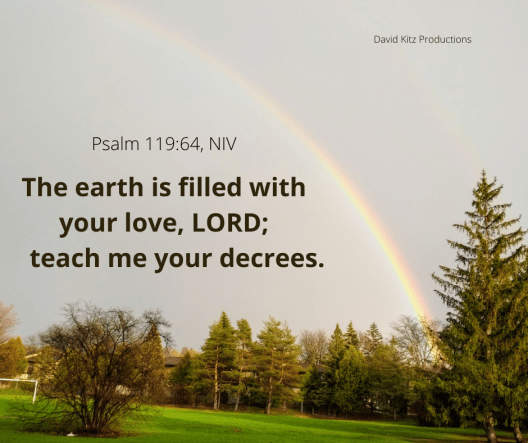
img_20220630_2053312-1

Photo by David Kitz

Reflection
Psalm 104 is a poetic ode in praise of God’s creation. In yesterday’s reading, God lay down the foundations of the earth, and set the boundaries of the oceans. Today we see how He waters the land and covers it with vegetation. He populates it with a vast variety of animals and birds.

He makes grass grow for the cattle, and plants for people to cultivate—bringing forth food from the earth: wine that gladdens human hearts, oil to make their faces shine, and bread that sustains their hearts.

In this psalm we see a God of teeming abundance. He is an extravagant God of infinite variety. Consider for a moment the various kinds of birds from the soaring eagle to the tiny hummingbird. Our God cares for them all. Jesus gives us these words of assurance concerning the humble sparrow, “not one of them will fall to the ground outside your Father’s care” (Matthew 10:29). In reality, all of today’s reading is about the Father’s care and His rich provision for all His creatures.

Have your eyes been opened to the LORD’s rich provision for you? He’s not a stingy God. Those who call on Him will have their needs met. Perhaps David said it best: The LORD is my shepherd, I lack nothing (Psalm 23:1).

Response: Father God, you created such a wonderful world! I marvel at your handiwork. I thank you for the great variety of lifeforms on this planet—the plants, the birds, the animals. Help us appreciate and safeguard your creation. Amen.

Your Turn: How can we go beyond words of thanks and demonstrate our thanks for God’s creation?

* NEW INTERNATIONAL VERSION, COPYRIGHT ©1973, 1978, 1984, 2011 BY BIBLICA

BGBG_v4.3_150[1818]

Please pray for the people of Ukraine!

Volume I of Psalms 365: Develop a Life of Worship and Prayer has won the 2021 Best Book of the Year Award and for those who love God’s word, it’s an ideal way to daily meet with the Lord. For a closer look at Volumes II and III click here.
More than Magnificent

Tags

, , ,

Today’s quote and prayer from
“Psalms 365: Develop a Life of Worship and Prayer”
by David Kitz.

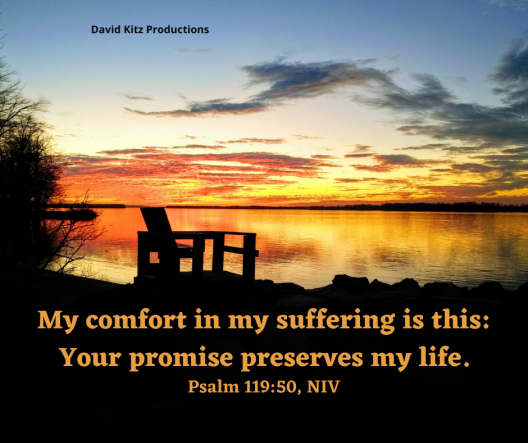
Psalm 104_2-3
Reading: Psalm 104:1-9

Heavenly Father,
you are very great!
I kneel before you,
my awesome God!
I praise you for your creation.
It is magnificent because you are more than magnificent.
All praise belongs to you.
Amen.

* NEW INTERNATIONAL VERSION, COPYRIGHT ©1973, 1978, 1984, 2011 BY BIBLICA

BGBG_v4.3_150[1818]

Please pray for the people of Ukraine!

Volume I of Psalms 365: Develop a Life of Worship and Prayer has won the 2021 Best Book of the Year Award and for those who love God’s word, it’s an ideal way to daily meet with the Lord. For a closer look at Volumes II and III click here.
In Praise of God’s Creation

Tags

, , ,

Reading: Psalm 104:1-9
Praise the LORD, my soul.
LORD my God, you are very great;
you are clothed with splendor and majesty.
The LORD wraps himself in light as with a garment;
he stretches out the heavens like a tent
and lays the beams of his upper chambers on their waters.
He makes the clouds his chariot
and rides on the wings of the wind.
He makes winds his messengers, flames of fire his servants.
He set the earth on its foundations; it can never be moved.
You covered it with the watery depths as with a garment;
the waters stood above the mountains.
But at your rebuke the waters fled,
at the sound of your thunder they took to flight;
they flowed over the mountains,
they went down into the valleys,
to the place you assigned for them.
You set a boundary they cannot cross;
never again will they cover the earth
(NIV).*

img_20220625_0823264

Photo by David Kitz

Reflection
All of Psalm 104 is a poetic ode in praise of God’s creation. Like the previous psalm it begins and ends by calling us to praise the LORD.

The psalmist begins his description of creation at the beginning. By that I mean he begins with the LORD in the heavens. He is the source point. It’s a very fitting start since the LORD called into being all of creation—all that we can see, hear, and examine. In the creation account we read, “the Spirit of God was hovering over the waters” (Genesis 1:2). But here we read a more detailed—a more poetic description: The LORD wraps himself in light as with a garment; he stretches out the heavens like a tent and lays the beams of his upper chambers on their waters.

The God of the heavens separates the waters of sky and earth. He establishes the boundaries of the oceans. These are the events of the second and third day in the Genesis account, but here they are portrayed as a seamless whole. In all this, the LORD is the actor, the mover, the sole performer. He makes winds his messengers, flames of fire his servants. He set the earth on its foundations; it can never be moved.

And what a performance this is! It has no equal and no precedent. Land, sky, and sea are His handiwork and do His bidding. They respond to the Master Builder, and so should we.

Response: LORD God, you are very great! I kneel before you, my awesome God! I praise you for your creation. It is magnificent because you are more than magnificent. All praise belongs to you. Amen.

Your Turn: Is there a particular aspect of creation that you are drawn to or enjoy, for example the stars, the oceans, or the animal kingdom?

* NEW INTERNATIONAL VERSION, COPYRIGHT ©1973, 1978, 1984, 2011 BY BIBLICA

BGBG_v4.3_150[1818]

Please pray for the people of Ukraine!

Volume I of Psalms 365: Develop a Life of Worship and Prayer has won the 2021 Best Book of the Year Award and for those who love God’s word, it’s an ideal way to daily meet with the Lord. For a closer look at Volumes II and III click here.
Willingly Offered

Tags

, , ,

Today’s quote and prayer from
“Psalms 365: Develop a Life of Worship and Prayer”
by David Kitz.

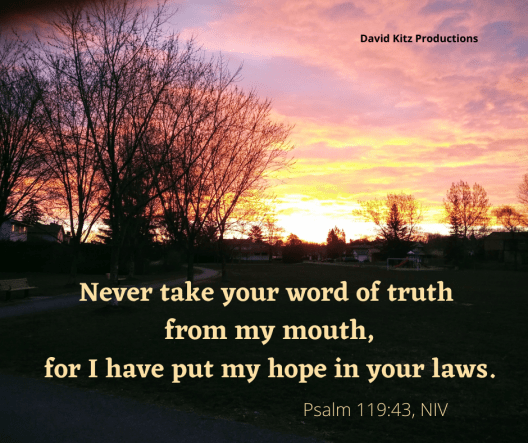
Psalm 103_19-22 -365
Reading: Psalm 103:19-22

Heavenly Father,
I appreciate the free will that you have given me.
I choose to worship you.
You are the lover of my soul.
Thank you for all you have done.
I owe my life to Jesus.
Amen.

* NEW INTERNATIONAL VERSION, COPYRIGHT ©1973, 1978, 1984, 2011 BY BIBLICA

BGBG_v4.3_150[1818]

Please pray for the people of Ukraine!

Volume I of Psalms 365: Develop a Life of Worship and Prayer has won the 2021 Best Book of the Year Award and for those who love God’s word, it’s an ideal way to daily meet with the Lord. For a closer look at Volumes II and III click here.
His Kingdom Rules over All

Tags

, , ,

Reading: Psalm 103:19-22
The LORD has established his throne in heaven,
and his kingdom rules over all.
Praise the LORD, you his angels,
you mighty ones who do his bidding,
who obey his word.
Praise the L
ORD, all his heavenly hosts,
you his servants who do his will.
Praise the L
ORD, all his works
everywhere in his dominion.
Praise the LORD, my soul (NIV).*

close up shot of scrabble tiles on a white surface

Photo by Brett Jordan on Pexels.com

Reflection
Have you ever found yourself in a chaotic situation where you immediately ask this question, “Who’s in charge here?” Sometimes I have walked into an unruly classroom where that question is very pertinent. The teacher may be nowhere in sight or is absorbed with one or two students while bedlam reigns all around. It takes very little to lose control of thirty twelve-year-olds. Trust me on this point: It takes a range of skills to get a class of youngsters motivated and moving in the same direction.

Today’s reading from the psalms gives us an answer to that age old question, “Who’s in charge here?” The LORD has established his throne in heaven, and his kingdom rules over all.

So there is your answer. The LORD is in charge here. He’s in charge of everything—the orderly and the controlled, and the seemingly random. Above this world and its mixture of order, routine, bedlam and chaos, the LORD sits enthroned as ruler overall.

Often the LORD is blamed for the bedlam and the chaos, but is that a fair assessment? Yes, He could control everything—every detail, but then there would be no humans on this planet—no free moral agents. To be human is to have the ability to choose both good and evil. If God sovereignly decided that we could only do good, then we would be robotic humanoids—not true humans at all.

Can there be true love if love is enforced from on high rather than freely chosen? Can there be genuine worship, if this divine privilege is induced by the Creator rather than willingly offered by the created? No, the LORD calls for our worship, but He forces it on no one. The God I serve is not a rapist; He is a true lover.

So, I will freely join with all creation to praise Him. I will join the angels, the heavenly hosts and all his works everywhere in his dominion. I will join in praising my Creator and my Redeemer, who was born in a stable and raised high to suffer on a cross, but now His throne is established in heaven and His kingdom rules over all. He is the One I will praise. How about you?

Response: Father God, I appreciate the free will that you have given me. I choose to worship you. You are the lover of my soul. Thank you for all you have done. I owe my life to Jesus. Amen.

Your Turn: Do we choose God, or does He choose us, or are both answers correct?

* NEW INTERNATIONAL VERSION, COPYRIGHT ©1973, 1978, 1984, 2011 BY BIBLICA

BGBG_v4.3_150[1818]

Please pray for the people of Ukraine!

Volume I of Psalms 365: Develop a Life of Worship and Prayer has won the 2021 Best Book of the Year Award and for those who love God’s word, it’s an ideal way to daily meet with the Lord. For a closer look at Volumes II and III click here.