Tip the Scale in My Favor

Tags

, , ,

Reading: Psalm 142:5-7
I cry to you, LORD;
I say, “You are my refuge,
my portion in the land of the living.”
Listen to my cry, for I am in desperate need;
rescue me from those who pursue me,
for they are too strong for me.
Set me free from my prison,
that I may praise your name.
Then the righteous will gather about me
because of your goodness to me (NIV).*

img_20210621_1638498

Summer days — photo by David Kitz

Reflection
Though I have visited prisoners, I have never been imprisoned, at least not in the classic sense of imprisonment. But in the broader meaning of the word, we all have been confined to prisons—prisons of the mind. Some of us are prisoners of counterproductive habits, or prisoners within crippling relationships that hinder personal growth and fulfillment. Prisons come in many forms. Some of them are disguised as places of personal liberty, but all too often the thing we freely choose can become a cruel slave master.

When David prayed the words of this psalm, he was not in a prison. He was confined to a cave or the immediate region around a cave, because he was a fugitive from King Saul who was trying to kill him. He voices this prayer: Listen to my cry, for I am in desperate need; rescue me from those who pursue me, for they are too strong for me. Set me free from my prison that I may praise your name.

Are you in a prison? Is fear of discovery locking you up? Are you trapped in habits, addictions or thought patterns that are too strong for you?

David was in a weak and vulnerable position. Saul, his personal enemy had an entire army on his side. For the second time in his life, David was in what we call the classic David and Goliath situation. He was outnumbered and in every way the advantage belonged to his opponent.

In such adverse circumstances we need God on our side. We need the resources of heaven to tip the scale in our favor. That is precisely what happened in David’s case. The LORD arranged situations that gave all the advantage to David. David ended up sparing Saul’s life on two occasions. For a full account read 1 Samuel 24  and 26.

David ends this psalm with an affirmation of his faith in God. Set me free from my prison that I may praise your name. Then the righteous will gather about me because of your goodness to me. That is exactly what happened. When the LORD set David free from his prison, righteous men took note, and they rallied around David as their leader because they saw that the LORD was with him.

Response: LORD God, set me free from the negative habits and thought patterns that imprison me. Help me identify them one by one, and then help me gain the victory over them in the power of Jesus. Amen.

Your Turn: Can you identify habits or thought patterns that harm your relationships with others? What can you do to change these situations?

* NEW INTERNATIONAL VERSION, COPYRIGHT ©1973, 1978, 1984, 2011 BY BIBLICA

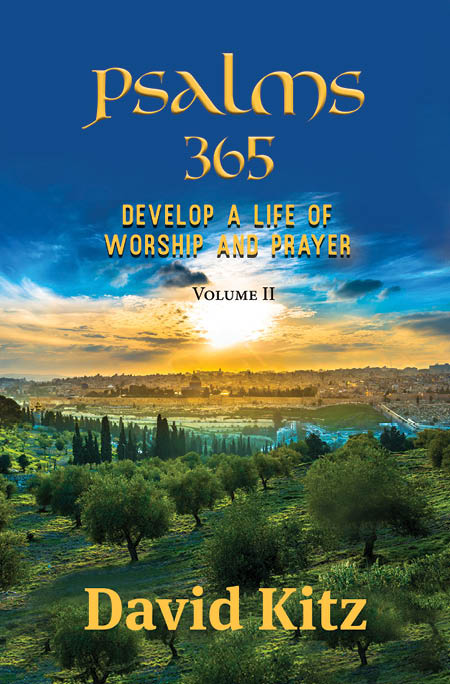
Volume II of Psalms 365: Develop a Life of Worship and Prayer by award-winning author David Kitz is available now. For a closer look at Volumes I and II click here.

God Has Heard my Prayer

Tags

, ,

I will praise the LORD!

img_20210611_1623396

Pink pentagon — photo by David Kitz

(Psalm 66:16-20, NIV)*

Come and hear, all you who fear God;
    let me tell you what he has done for me.
I cried out to him with my mouth;
    his praise was on my tongue.
If I had cherished sin in my heart,
    the Lord would not have listened;
but God has surely listened
    and has heard my prayer.
Praise be to God,
    who has not rejected my prayer
    or withheld his love from me!

I wish all my American readers a happy Independence Day.

* New International Version, Copyright ©1973, 1978, 1984, 2011 by Biblica

Volume II of Psalms 365: Develop a Life of Worship and Prayer by award-winning author David Kitz is available now. For a closer look at Volumes I and II click here.

Brought to a Place of Abundance

Tags

, , ,

I will praise the LORD!

img_20210617_0917017

Wild everlasting pea flowers — photo by David Kitz

(Psalm 66:8-12, NIV)*

Praise our God, all peoples,
    let the sound of his praise be heard;
he has preserved our lives
    and kept our feet from slipping.
For you, God, tested us;
    you refined us like silver.
You brought us into prison
    and laid burdens on our backs.
You let people ride over our heads;
    we went through fire and water,
    but you brought us to a place of abundance.

* New International Version, Copyright ©1973, 1978, 1984, 2011 by Biblica

Volume II of Psalms 365: Develop a Life of Worship and Prayer by award-winning author David Kitz is available now. For a closer look at Volumes I and II click here.

When I Am Down

Tags

, ,

Today’s quote and prayer from
“Psalms 365: Develop a Life of Worship and Prayer”
by David Kitz.The LORD’s complaint department

Reading: Psalm 142:1-4

LORD God,
 when I reach a low point you are there.
Hear me when I am down.
I bring my troubles and sorrows to you.
They are more than I can bear.
Jesus, be my burden bearer.

Amen.

Volume II of Psalms 365: Develop a Life of Worship and Prayer by award-winning author David Kitz is available now. For a closer look at this #1 new release click here. For a look back at Volume I click here.

A Listening Ear

Tags

, , , ,

Reading: Psalm 142:1-4
A maskil of David. When he was in the cave. A prayer.
I cry aloud to the LORD;
I lift up my voice to the LORD for mercy.
I pour out before him my complaint;
before him I tell my trouble.
When my spirit grows faint within me,
it is you who watch over my way.
In the path where I walk people have hidden a snare for me.
Look and see, there is no one at my right hand;
no one is concerned for me.
I have no refuge; no one cares for my life (NIV).*

img_20210621_1639377

A place of rest — photo by David Kitz

Reflection
Have you been in a cave? Despite what we read and know about cavemen, caves are not great living spaces. They are dark and dank. They may be fine places to retreat to in times of mortal danger, but they leave much to be desired as a permanent habitation.

In desperate times, people hide in caves. That’s where David found himself as he hid from his jealous master, King Saul. Though he was innocent, Saul in a jealous rage attacked David and repeatedly tried to kill him. See 1 Samuel 19:9-24. Eventually, David fled to a cave in the Desert of En Gedi. This psalm, Psalm 142, was born in a desolate place—a cave in the Desert of En Gedi. See 1 Samuel 24.

Here David hit rock bottom. From this low point in his life he called out to the LORD with these words: I cry aloud to the LORD; I lift up my voice to the LORD for mercy. I pour out before him my complaint; before him I tell my trouble.

The Psalms are the prayer book of the Bible. With this psalm David provides us with an excellent example of prayer—prayer from the lowest position—the position of weakness and vulnerability. The future looked bleak for David. He was living the precarious life of a fugitive. At any time, he could be discovered or betrayed. Would today be his last day?

Where did David take his troubles? He took them to the LORD.

Where do you go with your troubles? Where do you take your complaints? The LORD’s complaint department is open for business. There you will find a listening ear.

There are a host of things that are unfair in this life—sometimes brutally unfair. Are we supposed to suppress our outrage? Should we hide our hurt and pretend that all is well, while on the inside the bottom is falling out of our life? No. A thousand times, no! Take it to the LORD in prayer. That’s what David did. He cried out to his God, and his God answered.

Response: LORD God, when I reach a low point you are there. Hear me when I am down. I bring my troubles and sorrows to you. They are more than I can bear. Jesus, be my burden bearer. Amen.

Your Turn: Are you in a cave or a desert place? Take some time to call out to God.

* NEW INTERNATIONAL VERSION, COPYRIGHT ©1973, 1978, 1984, 2011 BY BIBLICA

Volume II of Psalms 365: Develop a Life of Worship and Prayer by award-winning author David Kitz is available now. For a closer look at Volumes I and II click here.

Are You Circumspect?

Tags

, , ,

Reading: Psalm 141:6-10
Their rulers will be thrown down from the cliffs,
and the wicked will learn that my words were well spoken.
They will say, “As one plows and breaks up the earth,
so our bones have been scattered at the mouth of the grave.”
But my eyes are fixed on you, Sovereign LORD;
in you I take refuge—do not give me over to death.
Keep me safe from the traps set by evildoers,
from the snares they have laid for me.
Let the wicked fall into their own nets,
while I pass by in safety (NIV).*

img_20210617_0850137

Tranquil waters — photo by David Kitz

Reflection
King David lived in treacherous times, and the opening lines from today’s reading reflect that reality. In fact, in its entirety Psalm 141 is a prayer for protection and personal safety. David had enemies who were eager to see his demise.

On a personal level the same is true for every redeemed believer. The apostle Peter provides us with this reminder: Be alert and of sober mind. Your enemy the devil prowls around like a roaring lion looking for someone to devour (1 Peter 5:8). Our very survival depends on heeding Peter’s advice.

David pleads for safety from the traps and snares that have been set for him. This brings to mind the word circumspect. As we move forward in life, we should be alert and circumspect. Circumspect is actually a compound Latin word. The circum portion of the word means around, or literally in a circle. The spect portion of the word means to look or see; this is the root for words such as spectacle or inspect. The circumspect person is looking around, so he does not step into the snares of the enemy.

But if we are truly circumspect, we don’t only look down for snares and traps. It is essential that we also look up. David expresses this thought with these words. But my eyes are fixed on you, Sovereign LORD; in you I take refuge—do not give me over to death. 

The writer of Hebrews urges us on in our faith with these words: Therefore, since we are surrounded by such a great cloud of witnesses, let us throw off everything that hinders and the sin that so easily entangles. And let us run with perseverance the race marked out for us, fixing our eyes on Jesus, the pioneer and perfecter of faith. For the joy set before him he endured the cross, scorning its shame, and sat down at the right hand of the throne of God. Consider him who endured such opposition from sinners, so that you will not grow weary and lose heart (Hebrews 12:1-3).

During this season, when we reflect on Christ’s coming, we need eyes that are fixed on him. He knows where the snares are, and he is well able to deliver us from the jaws of the enemy.

Response: Sovereign LORD, I commit my thoughts and ways to you. Guide me in the way of holiness for your name’s sake. I fix my eyes on you, Jesus, babe in a manger, suffering Savior, and my risen Lord. Amen.

Your Turn: How alert are you to the devil’s tactics? What do you do to fix your eyes on Jesus?

* NEW INTERNATIONAL VERSION, COPYRIGHT ©1973, 1978, 1984, 2011 BY BIBLICA

Happy Canada Day to all my Canadian readers!

flag of canada

Photo by Social Soup Social Media on Pexels.com

Volume II of Psalms 365: Develop a Life of Worship and Prayer by award-winning author David Kitz is available now. For a closer look at Volumes I and II click here.

Reviewers Wanted

Tags

, , ,

One of the challenges I face as an author is finding readers who are willing to write reviews for my books. At point of sale, when asked, purchasers often agree to write a review, but follow through is often lacking.

I get it. People are busy. People forget. In some cases, newly purchased books sit unread for months or even years.

Why are reviews important? They are a great help to potential readers. Most book sales are online these days, soRGB72PsalmsVol2 reviews take on added significance. As a review writer you are helping potential customers make an important decision. If the book has been beneficial to you, why not tell others about it through a short review?

Your review also serves as an excellent form of feedback for the author. Is there something you particularly liked about the book’s content, or the author’s writing style? Tell her or him about it by writing a review.

Not every book is worthy of a five-star review. Valid criticism well received sharpens an author’s skills. As a published author, I know that’s true for me on a personal level. An honest opinion well expressed is always worthy of serious consideration.

Regular readers of my posts may be aware my daily devotions on the Psalms are now available in book form. And yes, I welcome your reviews of Psalms 365: Develop a Life of Worship and Prayer, Volumes I & II. Volume III will complete the series and is scheduled for release in August. Reviews may be posted on a variety of platforms, such as Goodreads and Amazon. 

You may also wish to checkout other books I have written by typing my name into the Amazon search bar or by visiting my website.

God bless you, and thanks for your help and feedback.

Facing Correction

Tags

, ,

Reading: Psalm 141:5
Let a righteous man strike me—
that is a kindness;
let him rebuke me—
that is oil on my head.
My head will not refuse it,
for my prayer will still be
against the deeds of evildoers (NIV).*

img_20200614_0714080

Photo by David Kitz

Reflection
I don’t like being proven wrong. I like to think I have this world figured out. I am wise in my own eyes. A proud heart tells me I am right. Isn’t that so?

Am I the only one who suffers from this affliction—this deceptive pride that blinds me to my errors? Of course not. Human pride puts blinders over our eyes. We have trouble seeing our own faults. We often need others to gently, or sharply bring them to our attention. Better is open rebuke than hidden love (Proverbs 27:5).

Here in Psalm 141, David confesses his need for correction: Let a righteous man strike me—that is a kindness; let him rebuke me—that is oil on my head.

Do we see sharp correction as a kindness? Do we see a rebuke as a blessing like oil poured on our head? In today’s culture the thought of oil being poured on someone’s head has little appeal. But that was not the case in ancient times. Olive oil was a high-value commodity. Using it for personal grooming was considered a luxury. Only the wealthy would lavish themselves with such extravagance.

For David these words would bring back the memory of the occasion when the prophet Samuel anointed him to be king over Israel in place of King Saul. So Samuel took the horn of oil and anointed him in the presence of his brothers, and from that day on the Spirit of the Lord came powerfully upon David (1 Samuel 16:13).

Earlier, Samuel had rebuked Saul for his disobedience. See 1 Samuel 13. Saul did not receive that rebuke well. There was no repentance on his part. On the other hand years later when Nathan, the prophet, rebuked David for his sin with Bathsheba, David repented and sought the LORD with prayer and fasting. See 2 Samuel 12. The contrast between Saul’s response and David’s response to corrective rebuke is striking. David, the man after God’s own heart, received forgiveness and the mercy of God, while Saul became embittered and ultimately descended into witchcraft.

How we handle correction will determine the rise or fall of our career, our marriage, and ultimately our life with God. David learned to love rebuke. For him and for us, it can result in a course correction of eternal worth.

Response: LORD God, please correct me when I err. When others point out my faults, help me to receive that correction with grace and not anger. Lord Jesus, you alone are faultless. Forgive me. Amen.

Your Turn: Is it difficult for you to receive correction? What can make receiving correction easier?

* New International Version, Copyright ©1973, 1978, 1984, 2011 by Biblica

Volume II of Psalms 365: Develop a Life of Worship and Prayer by award-winning author David Kitz is available now. For a closer look at Volumes I and II click here.

Guide My Thoughts

Tags

, ,

Today’s quote and prayer from
“Psalms 365: Develop a Life of Worship and Prayer”
by David Kitz.Psalm 141_2

Reading: Psalm 141:1-4

LORD God,
I want my prayers to be like sweet incense to you.

Help me to pray according to your will.
That means listening for your voice
before I blurt out my requests.
Guide my thoughts.
Speak to me, and through me,
as I pray in Jesus’ name.
Amen.

Volume II of Psalms 365: Develop a Life of Worship and Prayer by award-winning author David Kitz is available now. For a closer look at this #1 new release click here. For a look back at Volume I click here.

Prayer Ascending Like Incense

Tags

, , ,

Reading: Psalm 141:1-4
A psalm of David.
I call to you, LORD, come quickly to me;
hear me when I call to you.
May my prayer be set before you like incense;
may the lifting up of my hands be like the evening sacrifice.
Set a guard over my mouth, LORD;
keep watch over the door of my lips.
Do not let my heart be drawn to what is evil
so that I take part in wicked deeds
along with those who are evildoers;
do not let me eat their delicacies (NIV).*

img_20210615_0754030

The bend in the path — photo by David Kitz

Reflection
Like so many of the psalms, Psalm 141 is a conversation with God—a prayer to the LORD—the Holy One. Prayer should be part of our daily routine, as routine as getting out of bed in the morning, and as regular as our evening meal. David, the psalmist, expresses this thought with these words: May my prayer be set before you like incense; may the lifting up of my hands be like the evening sacrifice.

In his revelation of the throne room of God, John saw our prayers being offered as incense before Jesus, the Lamb of God. And when he had taken it [the scroll], the four living creatures and the twenty-four elders fell down before the Lamb. Each one had a harp and they were holding golden bowls full of incense, which are the prayers of God’s people (Revelations 5:8).

I find it fascinating to view our prayers being offered up in a tangible way as incense—a pleasing aroma to the LORD. See Numbers 15:1-15.

David continues his prayer with this petition: Set a guard over my mouth, LORD; keep watch over the door of my lips.

Often my mouth gets me in trouble. I say I’ll do something, and then don’t follow through. I let others down. In frustration I blurt out words that I later regret. James, the brother of Jesus, provides us with this advice. My dear brothers and sisters, take note of this: Everyone should be quick to listen, slow to speak and slow to become angry, because human anger does not produce the righteousness that God desires (James 1:19-20).

I need a guard over my mouth. This is true in my daily conversation with others, but it’s also true of my conversations with God. I think we often pray rash prayers—prayers that in His mercy God does not answer. I think I know what is best for me only to discover after the fact, that what I thought would be a blessing is a huge detriment. My prayers can be mixed with the stench of human flesh.

Response: LORD, I want my prayers to be like sweet incense to you. Help me to pray according to your will. That means listening for your voice before I blurt out my requests. Guide my thoughts. Speak to me, and through me, as I pray in Jesus’ name. Amen.

Your Turn: How careful are you with your prayers? Can we be too cautious in prayer?

* NEW INTERNATIONAL VERSION, COPYRIGHT ©1973, 1978, 1984, 2011 BY BIBLICA

Volume II of Psalms 365: Develop a Life of Worship and Prayer by award-winning author David Kitz is available now. For a closer look at Volumes I and II click here.