The Voice of the LORD

Tags

, , ,

Reading: Psalm 29
A psalm of David.
Ascribe to the LORD, you heavenly beings,
ascribe to the L
ORD glory and strength.
Ascribe to the LORD the glory due his name;
worship the L
ORD in the splendor of his holiness.
The voice of the LORD is over the waters; the God of glory thunders,
the L
ORD thunders over the mighty waters.
The voice of the LORD is powerful; the voice of the LORD is majestic.
The voice of the L
ORD breaks the cedars;
the L
ORD breaks in pieces the cedars of Lebanon.
He makes Lebanon leap like a calf, Sirion like a young wild ox.
The voice of the LORD strikes with flashes of lightning.
The voice of the L
ORD shakes the desert;
the L
ORD shakes the Desert of Kadesh.
The voice of the L
ORD twists the oaks and strips the forests bare.
And in his temple all cry, “Glory!”
The LORD sits enthroned over the flood;
the L
ORD is enthroned as King forever.
The L
ORD gives strength to his people;
the L
ORD blesses his people with peace (NIV).*
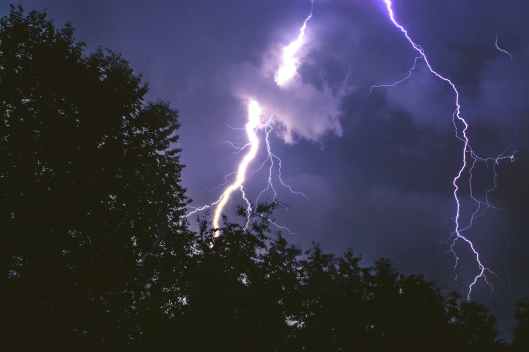
lightning strike on forest during night time

Photo by Tanya Gorelova on Pexels.com

Reflection
In Psalm 29 we see and hear the LORD, the God of the storm. There is an evocative poetic style to this psalm that helps the reader to picture the fury of the approaching tempest. But we not only see the flashes of lightning and the power of the wind, we also hear the booming thunder as it shakes the desert. The voice of the LORD twists the oaks and strips the forests bare. And in his temple all cry, “Glory!”

Nine times the psalmist repeats the phrase the voice of the LORD. In this psalm, the voice of the LORD is a very active force. The voice of the LORD thunders, breaks, strikes, shakes, twists and strips. The voice of the LORD is powerful; the voice of the LORD is majestic. 

The voice of the LORD spoke the world into existence, set the planets in their orbits, and scattered the starry hosts across the heavens. A thunderstorm sweeping down from Lebanon is as nothing to Him.

But the LORD of the storm is also the LORD of peace. One day on the Sea of Galilee Jesus our Lord brought peace to the storm. A furious squall came up, and the waves broke over the boat, so that it was nearly swamped. Jesus was in the stern, sleeping on a cushion. The disciples woke him and said to him, “Teacher, don’t you care if we drown?”

He got up, rebuked the wind and said to the waves, “Quiet! Be still!” Then the wind died down and it was completely calm (Mark 4:37-39).

Response: You are the LORD of the storm and the LORD of peace. When storms arise in my life help me to trust you completely. Lord Jesus, grant me peace in the midst of the storm. Amen.

Your Turn: Jesus says to us, “Why are you so afraid? Do you still have no faith?” (Mark 4:40). Are you hearing him?

* New International Version, Copyright ©1973, 1978, 1984, 2011 by Biblica

This post by award-winning author David Kitz will be published in book format later in 2020 by Elk Lake Publishing under the title 365 Days through the Psalms.

My Heart Leaps for Joy

Tags

, , , ,

Reading: Psalm 28
(Verses 6-9)
Praise be to the LORD,
for he has heard my cry for mercy.
The L
ORD is my strength and my shield;
my heart trusts in him, and he helps me.
My heart leaps for joy,
and with my song I praise him.
The LORD is the strength of his people,
a fortress of salvation for his anointed one.
Save your people and bless your inheritance;
be their shepherd and carry them forever
(NIV).*

img_20200512_1129520

Red trillium — photo by David Kitz

Reflection
David ends Psalm 28 with a doxology of praise. Yes, it is good and fitting to praise the LORD. He hears our cry for mercy. To those who seek to know Him, He is not a God of harsh judgment or we would all perish. He is my shield and strength despite my frequent failings. David declares, “My heart trusts in him, and he helps me.” I can join in David’s declaration and personally testify to the truth of these words, “My heart trusts in him, and he helps me.”

Our God does not stand afar off. He is near to those who call on Him.

David was not one to be shy or reserved in his expression of praise. He exults, “My heart leaps for joy, and with my song I praise him.” When David brought the Ark of the Covenant to Jerusalem, he gave full expression to his joy.  Wearing a linen ephod, David was dancing before the LORD with all his might, while he and all Israel were bringing up the ark of the LORD with shouts and the sound of trumpets (2 Samuel 6:14-15).

Recently, I watched as Canada’s women’s Olympic hockey team scored a late-rally, come-from-behind, overtime victory over a shocked American team. There was no shortage of leaping, dancing and rejoicing in the Canadian ranks. The outburst of praise and jubilation was completely fitting for them.

But as born-again children of God, redeemed by the blood of the Lamb, we have a far greater reason—an eternal reason—for bursting forth in praise. Our Savior, the Lord Jesus Christ has scored a late-rally, come-from-behind, overtime victory over death, hell and the grave. And he scored that victory for you and me. Together we are on an international team—Team Believer—believers in Jesus. What a victory he has won! What a celebration!

We join with David in declaring, “The LORD is the strength of his people, a fortress of salvation for his anointed one.”

Response: LORD God, help me to grasp the full extent of the victory I have in you. Now I ask you to hear my prayer, “Save your people and bless your inheritance; be their shepherd and carry them forever.” Amen.

Your Turn: Why do we put limits on our expressions of praise to God, when our praise is exuberant and boundless at sporting events?

* New International Version, Copyright ©1973, 1978, 1984, 2011 by Biblica

This post by award-winning author David Kitz will be published in book format later in 2020 by Elk Lake Publishing under the title 365 Days through the Psalms.

Oppression and Injustice

Tags

, , ,

Reading: Psalm 28
Of David.
(Verses 1-5)
To you, LORD, I call;
you are my Rock, do not turn a deaf ear to me.
For if you remain silent,
I will be like those who go down to the pit.
Hear my cry for mercy as I call to you for help,
as I lift up my hands toward your Most Holy Place.
Do not drag me away with the wicked,
with those who do evil,
who speak cordially with their neighbors
but harbor malice in their hearts.
Repay them for their deeds and for their evil work;
repay them for what their hands have done
and bring back on them what they deserve.
Because they have no regard for the deeds of the LORD
and what his hands have done,
he will tear them down
and never build them up again
(NIV).*

img_20200511_1322371

A spring crop of goslings — photo by David Kitz

Reflection
David begins Psalm 28 with a plea for God to hear him. As the psalm progresses it becomes clear that this is a plea not only for mercy, but also for justice. Hear my cry for mercy as I call to you for help, as I lift up my hands toward your Most Holy Place. Do not drag me away with the wicked, with those who do evil, who speak cordially with their neighbors but harbor malice in their hearts.

The cry for fairness is perhaps the most universal of all human desires. What is the most oft repeated phrase is in a kindergarten class? If you guessed, “That’s not fair!” you win the gold star. A desire for equality of opportunity and fairness is simply part of our human constitution; it’s bred into us.

Governments are defeated and revolutions happen when leaders fail the test of fairness and equality under the law. But all too often we do not see justice served in this life. The murderous Pol Pot was never brought to justice though three million Cambodians died under his regime. On a personal level, you too may have suffered a grievous injustice. When we become aware of such offences and heinous crimes, David’s call for justice rings true and clear. Repay them for their deeds and for their evil work; repay them for what their hands have done and bring back on them what they deserve.

The oppressed and the oppressor will meet the God of justice in the afterlife. But the redeemed have this assurance, ‘He will wipe every tear from their eyes. There will be no more death’ or mourning or crying or pain, for the old order of things has passed away” (Revelation 21:4).

Response: LORD God, have mercy on me. Do not drag me away with the wicked, with those who do evil. I put my trust in the redeeming sacrifice of your Son, Jesus. You are my help and salvation. Amen.

Your Turn: When you see injustice around you, do you take it to God in prayer? Are there other biblical ways to respond to injustice?

* New International Version, Copyright ©1973, 1978, 1984, 2011 by Biblica

This post by award-winning author David Kitz will be published in book format later in 2020 by Elk Lake Publishing under the title 365 Days through the Psalms.

Have We Lost the Ability to Hear God?

Tags

, , ,

Reading: Psalm 27
(Verses 7-14)
Hear my voice when I call, O LORD;
Be merciful to me and answer me.
Do not turn your servant away in anger;
You have been my helper.
Do not reject me or forsake me, O God my Savior.
Though my mother and father forsake me,
The LORD will receive me.
Teach me your way, O LORD;
Lead me in a straight path because of my oppressors.
Do not turn me over to the desire of my foes,
For false witnesses rise up against me breathing out violence.
I am still confident of this:
I will see the goodness of the LORD in the land of the living.
Wait for the LORD;
Be strong and take heart and wait for the LORD (NIV).*

photo of a boy listening in headphones

Photo by jonas mohamadi on Pexels.com

Reflection
Is God listening? Do I have His full attention? Is He even there? Even people of great faith ask questions such as these. Listen to David’s plea, “Hear my voice when I call, O LORD.”

David’s psalms are replete with calls for God to listen and then quickly respond to his cries for help. These pleas for a listening ear happen with such frequency throughout the Book of Psalms that one can be forgiven for wondering if God is deaf. In our minds we know this is an absurd proposition. He who formed the ear can surely hear the faintest whispered prayer or unvoiced thought. But despite what our intellect knows, we still plead for His listening ear. Along with David we cry out, “Hear my voice when I call, O LORD; be merciful to me and answer me.”

I suspect that the problem in prayer is not that we are speaking to a deaf God, but rather we, the petitioners, are deaf to God’s answers. The patriarchs and prophets of old heard the voice of God. They conversed with the LORD Almighty. Many of these conversations are recorded verbatim in the Old Testament. A fine example of this is found in Exodus as Moses speaks with the LORD at the burning bush.

Have we lost the ability to hear God? Has a great collective deafness settled across humanity?

In a cold world filled with rejection, there is a God. There is a God of mercy that the lonely soul can turn to. There is one who understands. There is one who listens to our anguished prayers. David discovered and knew that reality. We can join with David and say, “Though my mother and father forsake me, the LORD will receive me.”

Response: LORD God, this is my confession, “I am still confident of this: I will see the goodness of the LORD in the land of the living.” I will, “Wait for the LORD.” I will, “Be strong and take heart and wait for the LORD.” Amen.

Your Turn: Are there times when you doubt that God is listening to your prayers? How do you know He is there? Has the LORD spoken to your heart?

* New International Version, Copyright ©1973, 1978, 1984, 2011 by Biblica

This post by award-winning author David Kitz will be published in book format later in 2020 by Elk Lake Publishing under the title 365 Days through the Psalms.

One Thing I Ask of the LORD

Tags

, , ,

Reading: Psalm 27
(Verses 4-6)
One thing I ask of the LORD,
This is what I seek:
That I may dwell in the house of the LORD all the days of my life,
To gaze on the beauty of the LORD
And seek him in his temple.
For in the day of trouble he will keep me safe in his dwelling;
He will hide me in the shelter of his tabernacle
And set me high upon a rock.
Then my head will be exalted above the enemies who surround me;
At his tabernacle will I sacrifice with shouts of joy;
I will sing and make music to the LORD (NIV).*

IMG_20190222_1429121

Landestreu Church — photo by David Kitz

Reflection
No matter where we travel, or how pleasant the journey, within us all there is a longing to be home. The same longing for the safety and comfort of home can be found in this psalm of David, but for David, being at home meant being in the presence of God. The LORD God was David’s refuge and comfort. To be near the LORD was to be safe, at rest and fully at peace. Nearness to God was the paramount desire of David’s heart.

Now hear David’s heart cry, “One thing I ask of the LORD, this is what I seek: that I may dwell in the house of the LORD all the days of my life, to gaze on the beauty of the LORD and seek him in his temple.”

David’s statement here delineates a clear priority. For David the house of the LORD was of first importance. But, I do not believe that it was the physical structure or house that attracted and captivated David. It was the LORD of the house who captured David’s heart. He wanted to be with Him. He longed to see Him and be at home in His house.

Like many preschool children, my youngest son Joshua had some difficulty pronouncing the t-h sound, so in his four-year-old vocabulary the word ‘with’ became ‘whiff’ instead. He would make odd sounding statements such as this, “Daddy, I want to come whiff you,” or, “I want to do that whiff you.” Doing something ‘whiff’ someone brings to mind the notion of being so close to them that you can smell each other. That’s close—really close; bone of my bone and flesh of my flesh close—father and son close—intimate in a family kind of way.

Something deep and soul changing transpired as David tended that flock of sheep on those Judean hillsides. In his youth David met God. The LORD was ‘whiff David,’ so close that they could smell each other. David in his youth tasted and saw that the LORD is good. So even now in his adult years he yearns for that intimacy. He yearns for the house of the LORD. He is filled with a longing for home.

Response: Lord Jesus, I want to be ‘whiff’ you. I want to live my life close to you now and close to you forever. Show me how to do that. Be near me, Lord Jesus. I ask you to stay close by me forever, and love me I pray. Amen.

Your Turn: Are you at home with the LORD now? How at home will we feel with Him in eternity, if we aren’t at home with Him now?

* New International Version, Copyright ©1973, 1978, 1984, 2011 by Biblica

This post by award-winning author David Kitz will be published in book format later in 2020 by Elk Lake Publishing under the title 365 Days through the Psalms.

Our Guide Even to the End

Tags

, ,

I will praise the LORD!

img_20200204_1440116

Photo by David Kitz

Walk about Zion, go around her,
    count her towers,
consider well her ramparts,
    view her citadels,
that you may tell of them
    to the next generation.

For this God is our God for ever and ever;
    he will be our guide even to the end.

  (Psalm 48:12-14, NIV)*

* New International Version, Copyright ©1973, 1978, 1984, 2011 by Biblica

Your Praise Reaches to the Ends of the earth

Tags

, , , ,

I will praise the LORD!

IMG_20180815_1057157

It is you who watch over my way — photo by David Kitz

As we have heard,
    so we have seen
in the city of the LORD Almighty,
    in the city of our God:
God makes her secure
    forever.

Within your temple, O God,
    we meditate on your unfailing love.
Like your name, O God,
    your praise reaches to the ends of the earth;
    your right hand is filled with righteousness.
Mount Zion rejoices,
    the villages of Judah are glad
    because of your judgments.

  (Psalm 48:8-11, NIV)*

* New International Version, Copyright ©1973, 1978, 1984, 2011 by Biblica

8 BE-Attitudes for Good Mental Health During a Pandemic

Tags

, , , ,

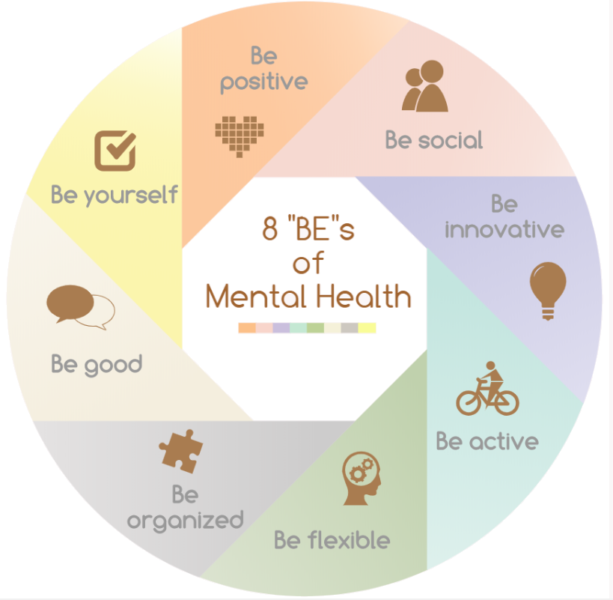
These are stressful times. Whether you have been largely confined to home during this pandemic, or have been busy at your workplace, we are all facing additional causes for fear, worry, and anxiety.

Here are some practical strategies to help you navigate these difficult times.
eight-BEs-613x600

  1. Be positive*

A positive mood is not only a kind of physiological filter that helps us to see the good parts of things, but also a physical adjustment of our brain and body to be healthy. A thankful heart is the bedrock of a positive attitude.
“Give thanks in all circumstances; for this is the will of God for you in Christ Jesus” (1 Thessalonians 5:18).

  1. Be social

Social distancing is not social isolation. Stay connected with people. Call them, Zoom them, say hi to your neighbour, wave to people passing by with their cars. Keep yourself busy on social media too, of course, with specific time limits.
“Do not forsake your friend or a friend of your family…” (Proverbs 27:10a).

  1. Be innovative

Hey, you are smart and fun. Come up with original ideas to entertain yourself. Try some new things. You will be surprised to figure out how interesting it can it be to stay at home. After all, your God is creative.
“See, I am doing a new thing! Now it springs up; do you not perceive it? I am making a way in the wilderness and streams in the wasteland” (Isaiah 43:19).

  1. Be active

Keep yourself busy with anything. Staying home is like cycling. If you slow down or stop balancing, your bicycling will become more difficult. So it is with life. People who are active with things they enjoy, usually experience fewer mental health problems.
“Go to the ant, you sluggard; consider its ways and be wise!” (Proverbs 6:6).

  1. Be flexible

Our world is changing in a better way. Now, people have time to care more about each other. We have to be adaptive to embrace the change. Change is useful not only for organizations but also for individuals who stay at home.
“My heart is changed within me; all my compassion is aroused” (Hosea 11:8b).

  1. Be organized

Staying home should not make us lazy and disorganized. We have a life to manage. Have a daily schedule. Don’t waste your time in front of screens. Show your life that you are the boss.
“Like a city whose walls are broken through is a person who lacks self-control” (Proverbs 25:28).

  1. Be good

Staying at home and practicing voluntary quarantine does not mean that you need to stop helping others. Nothing can stop you from doing good deeds. Start with your friends, relatives and neighbours. Find ways to make them happy. Making others happy will make you happy too. Happiness is the most reliable medicine against mental problems.
“A cheerful heart is good medicine, but a crushed spirit dries up the bones” (Proverbs 17:22).

  1. Be yourself

Don’t pretend to be someone else. Be yourself. Each person will face different experiences, and a solution that works for someone else may not work for you. As human beings, we are amazing. You are terrific when you are yourself and not somebody else.
“Therefore, if anyone is in Christ, the new creation has come: The old has gone, the new is here!” (2 Corinthians 5:17).

Omer Livvarcin is the co-author of the book “Risk Management for Non-Profits,” published by Business Experts Press. Omer is also the founder of Charify.ca and Vectors Group.

*Original material by Omer Livvarcin, modified by permission for a Christian audience by David Kitz