Open my mind and let me discover the wonders of your Law (Psalm 119:18, CEV).
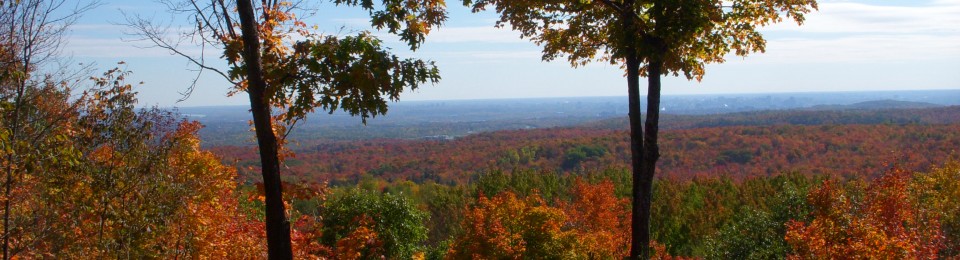
Cobourg, ON — photo courtesy of Eric E. Wright
Reflection
This week’s I Love the Psalms theme is wonders.
Yesterday’s post focused on the wonders of God as seen in creation. The sky declares His glory. But today’s focus is on the wonders of God’s word. Here is the psalmist’s prayer:
Open my mind and let me discover the wonders of your Law (Psalm 119:18, CEV).
The Law in this case is not simply referring to the Ten Commandments or the other precepts in the Jewish ceremonial and civil law. The Law in this verse refers to all of the inspired word of God, which for Christians includes all of the Old and New Testament.
There are wonders to be discovered in the pages of your Bible. Have you established a daily routine that includes reading the word of God? To discover the wonders of God’s word, we need to be immersing ourselves in God’s word, and as we do we do that we need to pray for a mind that is open to what God is saying to us. God’s word becomes wonderful as it is applied. Only then will it transform and give meaning to our lives.
Response: LORD God, today I want to open my mind to your word. Speak to me through it. I want to be a doer of your word. Help me make life changing discoveries in the Bible. Amen.
Your Turn: Do you have a habit of reading God’s word? Has the Holy Spirit spoken to you recently through the pages of your Bible?
The fool says in his heart, “There is no God.”
They are corrupt, their deeds are vile;
there is no one who does good.
The LORD looks down from heaven on all mankind
to see if there are any who understand, any who seek God.
All have turned away, all have become corrupt;
there is no one who does good, not even one.
Do all these evildoers know nothing?
They devour my people as though eating bread;
they never call on the LORD.
But there they are, overwhelmed with dread,
for God is present in the company of the righteous.
You evildoers frustrate the plans of the poor,
but the LORD is their refuge.
Oh, that salvation for Israel would come out of Zion!
When the LORD restores his people,
let Jacob rejoice and Israel be glad! (NIV)
Reflection
Apparently, atheism is not a modern phenomenon. Three thousand years ago in David’s time, there were people who said in their heart, “There is no God.” Atheism has a long and ignoble pedigree. I say ignoble because as David observes, it is the fool who says, “There is no God.”
There is a footnote in my Bible indicating that the word translated in this psalm as fool denotes someone who is morally deficient. David goes on to describe this moral deficiency. He uses the words corrupt and vile. In fact there is a complete absence of anything good. But this isn’t just David’s indictment against a few errant atheists; this is the LORD’s view of all mankind. All have turned away, all have become corrupt; there is no one who does good, not even one.In the New Testament, Paul the Apostle quotes from this psalm in his epistle to the Romans as he outlines the depravity of humanity.
Is there a link between unbelief and the sinful state of the human soul? Does sin breed unbelief? There is ample biblical and anecdotal evidence that it does. When Adam and Eve sinned, in an instant, they turned from God seekers to God avoiders. Add a little more sin, and it’s only a short step for a God avoider to become a God denier. We deny the existence of God to avoid accountability for our sin. We foolishly assume that since we can’t see God, He can’t see us and our misdeeds. Better yet, why not pretend that God doesn’t exist? Then we are at liberty to sin as much as we please without fear of God’s judgment. That sounds like morally deficient reasoning to me. The fool fools only himself.
Response: Father, I want to seek you always, especially when I sin. You forgive and clean me up. Amen.
Your Turn: Does sinful conduct affect your belief system?
Blessed is the one who does not walk in step with the wicked or stand in the way that sinners take or sit in the company of mockers, but whose delight is in the law of the LORD, and who meditates on his law day and night. That person is like a tree planted by streams of water, which yields its fruit in season and whose leaf does not wither— whatever they do prospers. Not so the wicked! They are like chaff that the wind blows away. Therefore the wicked will not stand in the judgment, nor sinners in the assembly of the righteous. For the LORD watches over the way of the righteous, but the way of the wicked leads to destruction (NIV).
Be a fruitful tree of life — photo by David Kitz
Reflection Have you ever noticed the prominent role trees play in the Bible? The creation account in Genesis begins with God planting two very special trees in the Garden of Eden: the Tree of Life and the Tree of the Knowledge of Good and Evil. After our first parent’s disobedience, we were banned from access to the Tree of Life. But the amazing, good news of the Bible is that at the end of the book, in the last chapter of the book of Revelation, God restores our access to the Tree of Life (Revelation 22:1-5).
In a very real sense, the Bible is a story about trees.
Here in the very first Psalm, the life of the righteous is compared to a fruit-bearing tree, flourishing by streams of water. The psalmist presents a picture of tranquil beauty. Is that a picture of my life, or am I caught up in busyness? Sometimes I feel more like windblown chaff—rather worthless and lacking a sense of direction.
But that’s where the other tree at the heart of the Bible comes into play. It stands on a hill called Calvary. There my Savior bled and died. There he showed me my true worth. There my sins were washed away, never to be remembered again. That’s where I became righteous, not by works that I had done, but by the grace and forgiveness of Christ.
What a beautiful tree! The tree on Mount Calvary isn’t t beautiful because of its leaves. It’s beautiful because of its fruit—the fruit of redemption purchased by the blood of Jesus. My righteousness is solely due to him.
Response: Dear Lord Jesus, thank you for your sacrifice. Help me to always remember you are the true source of my righteousness. At your prompting help me to rid myself of the worthless chaff in my life. Wind of God, blow on me. Water of life, refresh my soul. May I be fruitful, Lord, for you. Amen.
Your Turn: Have you knelt before the tree on Mount Calvary? Today, how can you show your appreciation for the tree God planted there?
Thank God for peace in Israel and Gaza, and continue to pray for peace to return to Ukraine and Russia!
Volume I of Psalms 365: Develop a Life of Worship and Prayer won the Best Book of the Year Award from The Word Guild and Volume II has won the Best Devotional of the Year Award. For those who love God’s word, this three-book series is an ideal way to daily meet with the Lord. To purchase or for a closer look click here.
New from David Kitz
James—the brother of Jesus—who was this man? What evidence do we have that this “brother of our Lord” even existed?
David Kitz digs deep into archeology, family dynamics, church history, and the biblical texts. What emerges from his research is a portrait of a decisive, pivotal leader who embodied the will and character of Jesus Christ.
But how did James—James the unbeliever—transform to become a leader who changed the course of world history? In these pages you will uncover the answer and rediscover for yourself the life-changing power of the gospel.
Psalm 1 Blessed is the one who does not walk in step with the wicked or stand in the way that sinners take or sit in the company of mockers, but whose delight is in the law of the Lord, and who meditates on his law day and night. That person is like a tree planted by streams of water, which yields its fruit in season and whose leaf does not wither— whatever they do prospers. Not so the wicked! They are like chaff that the wind blows away. Therefore the wicked will not stand in the judgment, nor sinners in the assembly of the righteous. For the Lord watches over the way of the righteous, but the way of the wicked leads to destruction. (NIV)
Reflection
Have you ever noticed the prominent role that trees play in the Bible? The creation account in Genesis begins with God planting two very special trees in the Garden of Eden: the Tree of Life and the Tree of the Knowledge of Good and Evil. After our first parent’s disobedience, we were banned from access the Tree of Life. But the amazing, good news of the Bible is that at the end of the book, in the last chapter of the Book of Revelation, God restores our access to the Tree of Life (Revelations 22:1-5).
In a very real sense the Bible is a story about trees.
Here in the very first Psalm, the life of the righteous is compared to a fruit-bearing tree, flourishing by streams of water. The psalmist presents a picture of tranquil beauty. Is that a picture of my life? Sometimes I feel more like windblown chaff – rather worthless and lacking a sense of direction.
But that’s where the other tree at the heart of the Bible comes into play. It stands on a hill called Calvary. There my Saviour bled and died. There he showed me my true worth. There my sins were washed away, never to be remembered again. That’s where I became righteous, not by works that I had done, but by the grace and forgiveness of Christ.
What a beautiful tree!
Response: Dear Lord Jesus, thank you for your sacrifice. Help me to always remember that you are the true source of my righteousness. At your prompting help me to rid myself of the worthless chaff in my life. Wind of God, blow on me. Water of life, refresh my soul. May I be fruitful, Lord, for You. Amen.
Your Turn: Jesus turned a tree of death—the cross— into a tree of life. Has the cross become a tree of life for you?