• Home
  • About
  • DavidKitz.ca
  • Youtube Videos
  • Books by David
  • Books on Amazon.com

I love the Psalms

~ Connecting daily with God through the Psalms

I love the Psalms

Tag Archives: idolatry

What If…

27 Thursday Oct 2022

Posted by davidkitz in Psalm 132

≈ 2 Comments

Tags

history, idolatry, King Jesus, promises of God

Reading: Psalm 132:11-18
The LORD swore an oath to David,
a sure oath he will not revoke:
“One of your own descendants
I will place on your throne.
If your sons keep my covenant
and the statutes I teach them,
then their sons will sit on your throne for ever and ever.”
For the LORD has chosen Zion,
he has desired it for his dwelling, saying,
“This is my resting place for ever and ever;
here I will sit enthroned, for I have desired it.
I will bless her with abundant provisions;
her poor I will satisfy with food.
I will clothe her priests with salvation,
and her faithful people will ever sing for joy.
“Here I will make a horn grow for David
and set up a lamp for my anointed one.
I will clothe his enemies with shame,
but his head will be adorned with a radiant crown”
(NIV). *

img_20221004_1604487

Autumn sumac — photo by David Kitz

Reflection
I am an armchair student of history. I enjoy reading history books, particularly books about war and great epic battles. In recent years, several books have appeared on the market, which examine alternate scenarios in history. The authors of these books imagine what might have happened if historic events had unfolded differently. For instance, what might have happened if Lee Harvey Oswald’s gun had jammed as he attempted to shoot President Kennedy? How would the Kennedy presidency have unfolded? Or what would the world look like today, if cooler heads had prevailed and the great blood bath commonly called World War I had been avoided? These are fascinating questions.

I call these “What if…” books. They imagine history unfolding differently. Today’s reading from Psalm 132 leaves me in a “What if…” frame of mind. The LORD made this promise to King David: “One of your own descendants I will place on your throne. If your sons keep my covenant and the statutes I teach them, then their sons will sit on your throne for ever and ever.”

God promised that history would unfold in a certain way. A descendant of David would sit on the throne of Israel in perpetuity. But there was a condition attached to that promise. God’s promise would be fulfilled, if the sons of David kept the covenant and the statutes. Unfortunately, that did not happen. The descendants of David disobeyed and succumbed to idolatry. But what if those sons had obeyed…

How will history be different, if I wholeheartedly obey the LORD?

Response: Father God, I thank you for your son, Jesus. He is the descendant of King David who fulfilled your covenant and now he reigns forever. King Jesus, I am your servant. Reign in my life today. Amen.

Your Turn: Is Jesus your king? How are you serving him?

* NEW INTERNATIONAL VERSION, COPYRIGHT ©1973, 1978, 1984, 2011 BY BIBLICA

BGBG_v4.3_150[1818]

Please pray for the people of Ukraine!

Volume I of Psalms 365: Develop a Life of Worship and Prayer won the Best Book of the Year Award from The Word Guild, and Volume II has won the Best Devotional of the Year Award. For those who love God’s word, this three-book series is an ideal way to daily meet with the Lord. To purchase or for a closer look click here.

Their Idols Are Silver and Gold

23 Tuesday Aug 2022

Posted by davidkitz in Psalm 115, Psalms

≈ 5 Comments

Tags

idolatry, idols, silver and gold

Reading: Psalm 115:1-8
Not to us, LORD, not to us
but to your name be the glory,
because of your love and faithfulness.
Why do the nations say,
“Where is their God?”
Our God is in heaven; he does whatever pleases him.
 But their idols are silver and gold,
made by human hands.
They have mouths, but cannot speak,
eyes, but cannot see.
They have ears, but cannot hear,
noses, but cannot smell.
They have hands, but cannot feel,
feet, but cannot walk,
nor can they utter a sound with their throats.
Those who make them will be like them,
and so will all who trust in them
(NIV).*
Psalm 119_72

Reflection
Where are your idols? “I have none,” you say. Are you sure? Most readers of this post would deny being idol worshippers, but perhaps we have more idols than we care to admit.

Idolatry was commonly practiced during Israel’s kingdom era. In Old Testament times, the nations around God’s people all practiced various forms of idol worship. One might assume God’s redeemed people, who were rescued from slavery, would have nothing to do with such vile practices. But you would be wrong. Time and again Israel fell into idolatry.

King Solomon, who was revered for his wisdom, is a prime example of someone who condoned idol worship. Here’s what we read about this ‘esteemed’ leader: On a hill east of Jerusalem, Solomon built a high place for Chemosh the detestable god of Moab, and for Molek the detestable god of the Ammonites. He did the same for all his foreign wives, who burned incense and offered sacrifices to their gods (1 Kings 11:7-8).

When leaders go astray, there will be many who follow. In the church today we have many leaders who have fallen captive to the god of Mammon—material goods. Jesus said, “No one can serve two masters. Either you will hate the one and love the other, or you will be devoted to the one and despise the other. You cannot serve both God and money” (Matthew 6:24).

Before we claim to be free from idols, we need to examine our hearts. Are we yielding to the Holy Spirit, or are we controlled by our desire for what this world has to offer?

Response: Father God, show me if there are idols in my life. In love, correct me when I stray. I want to serve you—put you first in my life. Lord Jesus, be my master. It’s an honor to serve you. Amen.

Your Turn: What things have become idols in your life? What actions can you take to establish Jesus as your Lord?

* NEW INTERNATIONAL VERSION, COPYRIGHT ©1973, 1978, 1984, 2011 BY BIBLICA

BGBG_v4.3_150[1818]

Please pray for the people of Ukraine!

Volume I of Psalms 365: Develop a Life of Worship and Prayer won the Best Book of the Year Award from The Word Guild and for those who love God’s word, it’s an ideal way to daily meet with the Lord. For a closer look at Volumes II and III click here.

Harsh Judgment Brought Change

11 Friday Jun 2021

Posted by davidkitz in Psalm 137, Psalms

≈ 7 Comments

Tags

Babylon, idolatry, judgment, King Solomon, repentance

Reading: Psalm 137:1-6
By the rivers of Babylon we sat and wept
when we remembered Zion.
There on the poplars we hung our harps,
 for there our captors asked us for songs,
our tormentors demanded songs of joy;
they said, “Sing us one of the songs of Zion!”
How can we sing the songs of the LORD
while in a foreign land?
If I forget you, Jerusalem,
may my right hand forget its skill.
May my tongue cling to the roof of my mouth
if I do not remember you,
if I do not consider Jerusalem my highest joy
(NIV)*

D Adam 8

Photo courtesy of Donald Adam

Reflection
It’s difficult to pinpoint the time in history when many of the Psalms were written. Many scholars believe that the Old Testament was compiled over a period of about 900 to 1,000 years. As for the Book of Psalms, there is considerable evidence to suggest that psalms were collected from three distinct periods: the reign of King David (1 Chronicles 23:5), the rule of Hezekiah (2 Chronicles 29:30), and during the leadership of Ezra and Nehemiah (Nehemiah 12:24).[1]

Psalm 137 is distinct, because we can tell from its content that this psalm was written early during the period of the Babylonian exile. Memories of Nebuchadnezzar’s destruction of Jerusalem in 586 BC were still fresh—etched with bitterness and pain in the mind of the author.

There are two great pivot points in the history of Old Testament Israel. The first is the liberation of Israel from Egypt and the subsequent conquest of the holy land. The second is the destruction of Jerusalem and the temple, which was followed by the seventy-year exile in Babylon. The mercy and power of God brought about the first pivotal event. The disobedience and idolatry of man set in motion the catastrophe of the second event.

From its inception the Jewish nation flirted with idolatry. While Moses was receiving the Ten Commandments, the people were reveling before a golden calf. King Solomon set up idols in Jerusalem so his foreign wives could worship their gods. See 1 Kings 11:1-8. This duplicity continued generation after generation until the Babylonians swept in and destroyed Jerusalem. Harsh judgment brought change. Will harsh judgment bring change in us, or will the mercy of God bring us to repentance?

Response: Father God, I don’t want to learn things the hard way. I want to be quick to obey you. Help me to learn from the lessons of history. You are the one, true God. I worship you. Amen.

Your Turn: How faithful are you to the LORD? Do other interests draw you away?

[1] K.R. “Dick” Iverson, Spirit Filled Life Bible, New King James Version, Jack W. Hayford, General Editor, Thomas Nelson Publishers, Nashville, TN, 1991, p. 750.

* NEW INTERNATIONAL VERSION, COPYRIGHT ©1973, 1978, 1984, 2011 BY BIBLICA

Volume II of Psalms 365: Develop a Life of Worship and Prayer by award-winning author David Kitz is available now. For a closer look at Volumes I and II click here.

Where Are Your Idols?

24 Wednesday Mar 2021

Posted by davidkitz in Psalm 115, Psalms

≈ 7 Comments

Tags

idolatry, idols, leaders

Reading: Psalm 115
(Verses 1-8)
Not to us, LORD, not to us
but to your name be the glory,
because of your love and faithfulness.
Why do the nations say,
“Where is their God?”
Our God is in heaven; he does whatever pleases him.
 But their idols are silver and gold,
made by human hands.
They have mouths, but cannot speak,
eyes, but cannot see.
They have ears, but cannot hear,
noses, but cannot smell.
They have hands, but cannot feel,
feet, but cannot walk,
nor can they utter a sound with their throats.
Those who make them will be like them,
and so will all who trust in them
(NIV).*

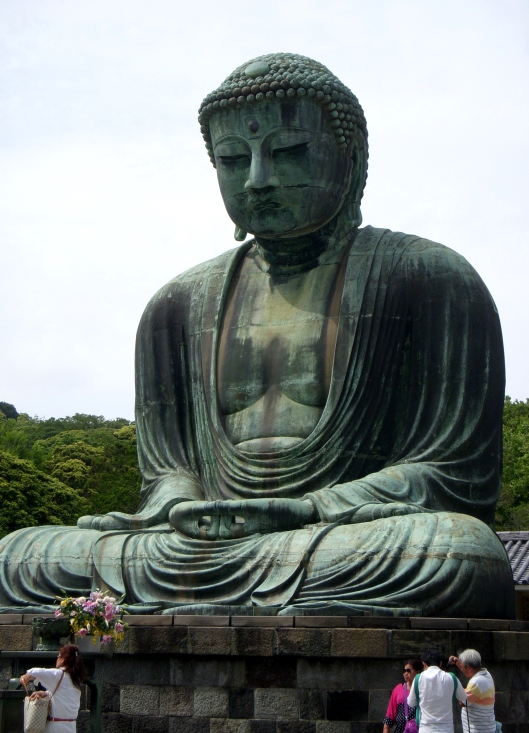
170 Giant Bhudda

Giant Bhudda, Kamakura, Japan — photo by David Kitz

Reflection
Where are your idols? “I have none,” you say. Are you sure? Most readers of this post would deny being idol worshippers, but perhaps we have more idols than we care to admit.

Idolatry was commonly practiced during Israel’s kingdom era. In Old Testament times, the nations around God’s people all practiced various forms of idol worship. One might assume God’s redeemed people, who were rescued from slavery, would have nothing to do with such vile practices. But you would be wrong. Time and again Israel fell into idolatry.

King Solomon, who was revered for his wisdom, is a prime example of someone who condoned idol worship. Here’s what we read about this ‘esteemed’ leader: On a hill east of Jerusalem, Solomon built a high place for Chemosh the detestable god of Moab, and for Molek the detestable god of the Ammonites. He did the same for all his foreign wives, who burned incense and offered sacrifices to their gods (1 Kings 11:7-8).

When leaders go astray, there will be many who follow. In the church today, we have many leaders who have fallen captive to the god of Mammon—material goods. Jesus said, “No one can serve two masters. Either you will hate the one and love the other, or you will be devoted to the one and despise the other. You cannot serve both God and money” (Matthew 6:24).

Before we claim to be free from idols, we need to examine our hearts. Are we yielding to the Holy Spirit, or are we controlled by our desire for what this world has to offer?

Response: Father God, show me if there are idols in my life. In love, correct me when I stray. I want to serve you—put you first in my life. Lord Jesus, be my master. It’s an honor to serve you. Amen.

Your Turn: Are there other things that can become idols in your life?

* New International Version, Copyright ©1973, 1978, 1984, 2011 by Biblica

The first volume of Psalms 365: Develop a Life of Worship and Prayer by award-winning author David Kitz is now available. For a closer look at this 262-page daily devotional book click here.

The Lament of a Homesick Captive

10 Friday Jan 2020

Posted by davidkitz in Devotionals, Psalm 137, Psalms

≈ 3 Comments

Tags

Babylon, exile, faithful, idolatry, judgment, Zion

Reading: Psalm 137
(Verses 1-6)
By the rivers of Babylon we sat and wept
when we remembered Zion.
There on the poplars we hung our harps,
 for there our captors asked us for songs,
our tormentors demanded songs of joy;
they said, “Sing us one of the songs of Zion!”
How can we sing the songs of the LORD
while in a foreign land?
If I forget you, Jerusalem,
may my right hand forget its skill.
May my tongue cling to the roof of my mouth
if I do not remember you,
if I do not consider Jerusalem my highest joy
(NIV)

img_20190805_0718028-effects

By the rivers of Babylon — photo by David Kitz

Reflection
It’s difficult to pinpoint the time in history when many of the Psalms were written. Many scholars believe that the Old Testament was compiled over a period of about 900 to 1,000 years. As for the Book of Psalms, there is considerable evidence to suggest that psalms were collected from three distinct periods: the reign of King David (1 Chronicles 23:5), the rule of Hezekiah (2 Chronicles 29:30), and during the leadership of Ezra and Nehemiah (Nehemiah 12:24).[1]

Psalm 137 is distinct, because we can tell from its content that this psalm was written early during the period of the Babylonian exile. Memories of Nebuchadnezzar’s destruction of Jerusalem in 586 BC were still fresh—etched with bitterness and pain in the mind of the author.

There are two great pivot points in the history of Old Testament Israel. The first is the liberation of Israel from Egypt and the subsequent conquest of the holy land. The second is the destruction of Jerusalem and the temple, which was followed by the seventy-year exile in Babylon. The mercy and power of God brought about the first pivotal event. The disobedience and idolatry of man set in motion the catastrophe of the second event.

From its inception the Jewish nation flirted with idolatry. While Moses was receiving the Ten Commandments, the people were reveling before a golden calf. King Solomon set up idols in Jerusalem so his foreign wives could worship their gods. See 1 Kings 11:1-8. This duplicity continued generation after generation until the Babylonians swept in and destroyed Jerusalem. Harsh judgment brought change. Will harsh judgment bring change in us, or will the mercy of God bring us to repentance? 

Response: Father God, I don’t want to learn things the hard way. I want to be quick to obey you. Help me to learn from the lessons of history. You are the one, true God. I worship you. Amen.

Your Turn: How faithful are you to the LORD? Do other interests draw you away?

[1] K.R. “Dick” Iverson, Spirit Filled Life Bible, New King James Version, Jack W. Hayford, General Editor, Thomas Nelson Publishers, Nashville, TN, 1991, p. 750.

An Idolatrous Financial System

06 Monday Jan 2020

Posted by davidkitz in Devotionals, Psalm 135, Psalms

≈ 5 Comments

Tags

finances, gold, idolatry, idols, Mammon, silver

Reading: Psalm 135
(Verses 15-21)
The idols of the nations are silver and gold,
made by human hands.
They have mouths, but cannot speak,
eyes, but cannot see.
They have ears, but cannot hear,
nor is there breath in their mouths.
Those who make them will be like them,
and so will all who trust in them.
All you Israelites, praise the LORD;
house of Aaron, praise the L
ORD;
house of Levi, praise the L
ORD;
you who fear him, praise the L
ORD.
Praise be to the L
ORD from Zion,
to him who dwells in Jerusalem.
Praise the LORD (NIV).

018

Street Corner Idol — Nagakute, Japan — David Kitz

Reflection
Though it may not be obvious, there is something timeless about the first sentence from today’s reading: The idols of the nations are silver and gold, made by human hands. 

In today’s world shaping silver or gold into an idol may be unusual, but it still occurs. India and the nations of Southeast Asia have plenty of gold and silver idols. This is not a dying worship form. Many have been cast in recent years.

In the western world we frown on such openly idolatrous displays of wealth and worship. Or do we? Gold and silver represent wealth. In reality, we have simply transformed our worship of wealth from bulky commodities like silver and gold to more transferable assets like securities and paper currency. We are still guilty of bowing before silver and gold, but it comes with a different name. Now we call it the almighty dollar.

The almighty dollar, or more broadly speaking, the market, determines the ebb and flow of commerce, and by extension impacts every aspect of our daily lives. It is not an exaggeration to say we are caught up in financial system that is deeply idolatrous. Our society has taken the worship of wealth (Mammon) to new heights. We elect our political leaders not on the basis of morality or personal integrity, but rather can they deliver a higher level of GDP—put more money in our pockets.

Into this corrupt world, St. Peter speaks these words to those who have been called to follow Christ:  For you know that it was not with perishable things such as silver or gold that you were redeemed from the empty way of life handed down to you from your ancestors, but with the precious blood of Christ, a lamb without blemish or defect (1 Peter 1:18-19).

Response: Father God, I need the right perspective on wealth and finances. Your precious blood is worth more than all the silver and gold this world has to offer. I bow before you as my Almighty Savior. Amen.

Your Turn: Is Jesus the Lord of your finances? Is your Redeemer more important than wealth?

Idols in Your Temple

24 Thursday Oct 2019

Posted by davidkitz in Devotionals, Psalm 115, Psalms

≈ 3 Comments

Tags

idolatry, idols, King Solomon, Mammon

Reading: Psalm 115
(Verses 1-8)
Not to us, LORD, not to us
but to your name be the glory,
because of your love and faithfulness.
Why do the nations say,
“Where is their God?”
Our God is in heaven; he does whatever pleases him.
 But their idols are silver and gold,
made by human hands.
They have mouths, but cannot speak,
eyes, but cannot see.
They have ears, but cannot hear,
noses, but cannot smell.
They have hands, but cannot feel,
feet, but cannot walk,
nor can they utter a sound with their throats.
Those who make them will be like them,
and so will all who trust in them
(NIV).

Bowl 2015-05-19

Moss-covered stone water bowl at a Shinto shrine, Kamakura, Japan — photo by David Kitz

Reflection
Where are your idols? “I have none,” you say. Are you sure? Most readers of this post would deny being idol worshippers, but perhaps we have more idols than we care to admit.

Idolatry was commonly practiced during Israel’s kingdom era. In Old Testament times, the nations around God’s people all practiced various forms of idol worship. One might assume that God’s redeemed people, who were rescued from slavery, would have nothing to do with such vile practices. But you would be wrong. Time and again Israel fell into idolatry.

King Solomon, who was revered for his wisdom, is a prime example of someone who condoned idol worship. Here’s what we read about this ‘esteemed’ leader: On a hill east of Jerusalem, Solomon built a high place for Chemosh the detestable god of Moab, and for Molek the detestable god of the Ammonites. He did the same for all his foreign wives, who burned incense and offered sacrifices to their gods (1 Kings 11:7-8).

When leaders go astray, there will be many who follow. In the church today we have many leaders who have fallen captive to the god of Mammon—material goods. Jesus said, “No one can serve two masters. Either you will hate the one and love the other, or you will be devoted to the one and despise the other. You cannot serve both God and money” (Matthew 6:24).

Before we claim to be free from idols, we need to examine our hearts. Are we yielding to the Holy Spirit, or are we controlled by our desire for what this world has to offer? 

Response: Father God, show me if there are idols in my life. In love, correct me when I stray. I want to serve you—put you first in my life. Lord Jesus, be my master. It’s an honor to serve you. Amen.

Your Turn: Are there other things that can become idols in your life?

The Homesick Captive

17 Friday Aug 2018

Posted by davidkitz in Bible, Devotionals, Psalm 137, Psalms

≈ 6 Comments

Tags

Babylonian exile, God's judgment, idolatry, mercy, Nebuchadnezzar, repentance

Reading: Psalm 137
(Verses 1-6)
By the rivers of Babylon we sat and wept
when we remembered Zion.
There on the poplars we hung our harps,
 for there our captors asked us for songs,
our tormentors demanded songs of joy;
they said, “Sing us one of the songs of Zion!”
How can we sing the songs of the LORD
while in a foreign land?
If I forget you, Jerusalem,
may my right hand forget its skill.
May my tongue cling to the roof of my mouth
if I do not remember you,
if I do not consider Jerusalem my highest joy
(NIV)

20180629_1755245[3574]

The Erechtheum on the Acropolis, Athens, Greece — photo by David Kitz

Reflection
It’s difficult to pinpoint the time in history when many of the Psalms were written. Many scholars believe that the Old Testament was compiled over a period of about 900 to 1,000 years. As for the Book of Psalms, there is considerable evidence to suggest that psalms were collected from three distinct periods: the reign of King David (1 Chronicles 23:5), the rule of Hezekiah (2 Chronicles 29:30), and during the leadership of Ezra and Nehemiah (Nehemiah 12:24).[1]

Psalm 137 is distinct, because we can tell from its content that this psalm was written early during the period of the Babylonian exile. Memories of Nebuchadnezzar’s destruction of Jerusalem in 586 BC were still fresh—etched with bitterness and pain in the mind of the author.

There are two great pivot points in the history of Old Testament Israel. The first is the liberation of Israel from Egypt and the conquest of the holy land. The second is the destruction of Jerusalem and the temple, and the subsequent seventy-year exile in Babylon. The mercy and power of God brought about the first pivotal event. The disobedience and idolatry of man set in motion the catastrophe of the second event.

From its inception the Jewish nation flirted with idolatry. While Moses was receiving the Ten Commandments, the people were reveling before a golden calf. King Solomon set up idols in Jerusalem so his foreign wives could worship their gods. See 1 Kings 11:1-8. This duplicity continued generation after generation until the Babylonians swept in and destroyed Jerusalem. Harsh judgment brought change. Will harsh judgment bring change in us, or will the mercy of God bring us to repentance?

Response: Father God, I don’t want to learn things the hard way. I want to be quick to obey you. Help me to learn from the lessons of history. You are the one, true God. I worship you. Amen.

Your Turn: How faithful are you to the LORD? Do other interests draw you away?

[1] K.R. “Dick” Iverson, Spirit Filled Life Bible, New King James Version, Jack W. Hayford, General Editor, Thomas Nelson Publishers, Nashville, TN, 1991, p. 750.

Silver and Gold

13 Monday Aug 2018

Posted by davidkitz in Bible, Devotionals, God's word, Psalm 135, Psalms

≈ 1 Comment

Tags

financial system, gold, idolatry, idols, silver, worship, worship of wealth

Reading: Psalm 135
(Verses 15-21)
The idols of the nations are silver and gold,
made by human hands.
They have mouths, but cannot speak,
eyes, but cannot see.
They have ears, but cannot hear,
nor is there breath in their mouths.
Those who make them will be like them,
and so will all who trust in them.
All you Israelites, praise the LORD;
house of Aaron, praise the L
ORD;
house of Levi, praise the L
ORD;
you who fear him, praise the L
ORD.
Praise be to the L
ORD from Zion,
to him who dwells in Jerusalem.
Praise the LORD (NIV).

IMG_20180802_1000441

Petrie Island, Ottawa, ON, CANADA — photo by David Kitz

Reflection
Though it may not be obvious, there is something timeless about the first sentence from today’s reading: The idols of the nations are silver and gold, made by human hands.

In today’s world shaping silver or gold into an idol may be unusual, but it still occurs. India and the nations of Southeast Asia have plenty of gold and silver idols. This is not a dying worship form. Many have been cast in recent years.

In the western world we frown on such openly idolatrous displays of wealth and worship. Or do we? Gold and silver represent wealth. In reality, we have simply transformed our worship of wealth from bulky commodities like silver and gold to more transferable assets like securities and paper currency. We are still guilty of bowing before silver and gold, but it comes with a different name. Now we call it the almighty dollar.

The almighty dollar, or more broadly speaking, the market, determines the ebb and flow of commerce, and by extension impacts every aspect of our daily lives. It is not an exaggeration to say we are caught up in financial system that is deeply idolatrous. Our society has taken the worship of wealth (Mammon) to new heights. We elect our political leaders not on the basis of morality or personal integrity, but rather can they deliver a higher level of GDP—put more money in our pockets.

Into this corrupt world, St. Peter speaks these words to those who have been called to follow Christ:  For you know that it was not with perishable things such as silver or gold that you were redeemed from the empty way of life handed down to you from your ancestors, but with the precious blood of Christ, a lamb without blemish or defect (1 Peter 1:18-19).

Response: Father God, I need the right perspective on wealth and finances. Your precious blood is worth more than all the silver and gold this world has to offer. I bow before you as my Almighty Savior. Amen.

Your Turn: Is Jesus the Lord of your finances? Is your Redeemer more important than wealth?

Are There Idols in your Life?

31 Thursday May 2018

Posted by davidkitz in Bible, Devotionals, Psalm 115, Psalms

≈ 4 Comments

Tags

gold, idolatry, idols, Jesus, Mammon, serve, silver, two masters

Reading: Psalm 115
(Verses 1-8)
Not to us, LORD, not to us
but to your name be the glory,
because of your love and faithfulness.
Why do the nations say,
“Where is their God?”
Our God is in heaven; he does whatever pleases him.
 But their idols are silver and gold,
made by human hands.
They have mouths, but cannot speak,
eyes, but cannot see.
They have ears, but cannot hear,
noses, but cannot smell.
They have hands, but cannot feel,
feet, but cannot walk,
nor can they utter a sound with their throats.
Those who make them will be like them,
and so will all who trust in them
(NIV).

Reflection
Where are your idols? “I have none,” you say. Are you sure? Most readers of this post would deny being idol worshippers, but perhaps we have more idols than we care to admit.

2018-05-18 3 sisters b

The “Three Sisters” mountain peaks in the Canadian Rockies — photo by David Kitz

Idolatry was commonly practiced during Israel’s kingdom era. In Old Testament times, the nations around God’s people all practiced various forms of idol worship. One might assume that God’s redeemed people, who were rescued from slavery, would have nothing to do with such vile practices. But you would be wrong. Time and again Israel fell into idolatry.

King Solomon, who was revered for his wisdom, is a prime example of someone who condoned idol worship. Here’s what we read about this ‘esteemed’ leader: On a hill east of Jerusalem, Solomon built a high place for Chemosh the detestable god of Moab, and for Molek the detestable god of the Ammonites. He did the same for all his foreign wives, who burned incense and offered sacrifices to their gods (1 Kings 11:7-8).

When leaders go astray, there will be many who follow. In the church today we have many leaders who have fallen captive to the god of Mammon—material goods. Jesus said, “No one can serve two masters. Either you will hate the one and love the other, or you will be devoted to the one and despise the other. You cannot serve both God and money” (Matthew 6:24).

Before we claim to be free from idols, we need to examine our hearts. Are we yielding to the Holy Spirit, or are we controlled by our desire for what this world has to offer?

Response: Father God, show me if there are idols in my life. In love, correct me when I stray. I want to serve you—put you first in my life. Lord Jesus, be my master.  It’s an honor to serve you. Amen.

Your Turn: Are there other things that can become idols in your life?

← Older posts
Newer posts →

Psalms 365: Develop a Life of Worship and Prayer

Psalms 365 Volume II

Psalms 365 vol 3
— Psalms 365 Volume III

Psalms

Recent posts

  • May the LORD Grant All Your Requests December 20, 2025
  • A Horn of Salvation December 19, 2025
  • Ready for the King of Glory December 19, 2025
  • My Spirit Rejoices in God My Savior December 18, 2025
  • Joining the Generation That Seeks God December 18, 2025
  • Why Am I So Favored December 17, 2025
  • How Can You Find the Good Life? December 17, 2025

Calendar

December 2025
M T W T F S S
1234567
891011121314
15161718192021
22232425262728
293031  
« Nov    

Blog Posts

Comments

  • davidkitz on Joining the Generation That Seeks God
  • cjsmissionaryminister on God Sent His Son
  • cjsmissionaryminister on The God of the Broken

Blog at WordPress.com.

Privacy & Cookies: This site uses cookies. By continuing to use this website, you agree to their use.
To find out more, including how to control cookies, see here: Cookie Policy
  • Subscribe Subscribed
    • I love the Psalms
    • Join 1,377 other subscribers
    • Already have a WordPress.com account? Log in now.
    • I love the Psalms
    • Subscribe Subscribed
    • Sign up
    • Log in
    • Report this content
    • View site in Reader
    • Manage subscriptions
    • Collapse this bar
 

Loading Comments...