• Home
  • About
  • DavidKitz.ca
  • Youtube Videos
  • Books by David
  • Books on Amazon.com

I love the Psalms

~ Connecting daily with God through the Psalms

I love the Psalms

Tag Archives: knowing God

Our God, the Extremist

15 Sunday Jun 2025

Posted by davidkitz in Psalms, Psalms Alive!

≈ Leave a comment

Tags

conquer, David, David and Goliath, forgiveness of sins, Jesus, knowing God, leaving a legacy, Prayer, Righteousness, stages of life, the LORD

Psalm 103:6-18

The LORD works righteousness
    and justice for all the oppressed.

He made known his ways to Moses,
    his deeds to the people of Israel:
The LORD is compassionate and gracious,
    slow to anger, abounding in love.
He will not always accuse,
    nor will he harbor his anger forever;
he does not treat us as our sins deserve
    or repay us according to our iniquities.
For as high as the heavens are above the earth,
    so great is his love for those who fear him;
as far as the east is from the west,
    so far has he removed our transgressions from us.

As a father has compassion on his children,
so the LORD has compassion on those who fear him;
for he knows how we are formed,
he remembers that we are dust.
The life of mortals is like grass,
they flourish like a flower of the field;
the wind blows over it and it is gone,
and its place remembers it no more.
But from everlasting to everlasting
the LORD’s love is with those who fear him,
and his righteousness with their children’s children—
with those who keep his covenant
and remember to obey his precepts.

It is well worth noting that Psalm 103 was written by David. David was a man of extremes; he lived life to the full. Never one to rest on his laurels—he was always up for a challenge, and if no challenge existed, he would create one for himself. He was a man’s kind of man, not easily discouraged or deterred, ready to throw himself headlong into the fray. Undoubtedly, others saw and admired these qualities in him. That’s why they gathered around him, and stuck with him through the extremes, the highs and lows of a life lived fully and unreservedly for God.

Sometimes I wonder what David would be like if we met him today—if he lived in today’s world. Into what endeavour would he throw his boundless energy? Who are the extreme men, the Davids of our time? Who are the men—or the women for that matter—who take on the Goliaths of our present world?

This gutsy determination was evident throughout David’s long and eventful life. As a young teenager, a mere scamp, David had the in-your-face audacity to take on Goliath, the towering, undefeated, Philistine champion. And this battle was no game of tiddlywinks, no computer simulation—this was mortal combat—the real thing, winner takes all, including your severed head (1 Samuel 17).

Do we have any young Davids—any teens—who with God on their side, will step out from the crowd, and risk all in the defence of faith and truth?

Later as a young man, we find David at Ziklag. After a meteoric start to his career, he has plummeted from favour. He has persevered through round after round of downward spiralling misfortune. Now at his lowest point, with his own men about to stone him, he rises above an embittered throng of naysayers and doubters. With his very life in the balance, he finds strength in the LORD his God. Then by the extraordinary grace of his God, this indefatigable David pursues his enemies. He seizes victory by the sandal straps and refuses—absolutely refuses—to let it escape over the next hill (1 Samuel 30).

Do we have any never-give-up, never-say-die Davids like that today? Or do we give up at the first sign of opposition? It takes young men of extreme faith to persevere in the face of an unrelenting foe. Have you seen a David lately?

A middle-aged David faced betrayal and heartbreak as his own son, Absalom, sought to kill him and wrench the kingdom from his faltering hands. As this grand tragedy unfolds, David humbles himself before God and his people. He flees Jerusalem barefoot, weeping and with his head covered as a sign of deep contrition (2 Samuel 15:30). The God of all mercy hears his prayers and restores the fallen king—the repentant king—to the throne. Sometimes humility takes far more courage than a strutting cocksure leader can muster. But King David—the man at the top—still knew how to humble himself. He knew how to repent.

What a stark contrast to the middle-aged barons of business, who in recent years have been hauled before the courts in disgrace. All we hear from them is deny, deny, and lie follows lie. Men are a strange lot. Once the great ego puffs itself up, it seems to be incapable of self-deflation. We cannot prick our own balloon.

Do we have any top-of-their-game Davids, who know how to humble themselves before God, and before the public, and openly repent? Upper echelon Davids like that are in extremely short supply, perhaps even extinct. Have you caught a glimpse of one?

In his old age David looked ahead. With a prophet’s eye he saw the future and he planned for a nation without him. He installed his son Solomon on the throne, but he placed the LORD at the helm of Israel, even as the LORD had always been at the helm of David’s entire life. Now in his last days, the House of God became David’s prime concern. He was not permitted to build the temple of the LORD (1 Chronicles 17). But, he made extensive preparations for it. Upon David’s death the House of God would rise. How like another descendant of David? Upon Jesus’ death, by the power of the Spirit, the Church of God would arise.

In his instructions to his son Solomon, David says,

“I have taken great pains to provide for the temple of the LORD a hundred thousand talents of gold, a million talents of silver, quantities of bronze and iron too great to be weighed, and wood and stone” (1Chronicles 22:14).

Do we have any end-of-life Davids like that today? Will you leave behind a visible legacy to the LORD’s great goodness? What preparations are you making that will honor God for generations yet to come? Remember a life lived for God never ends, and its influence never ceases.

Consider this. David is still influencing lives today—far more lives in fact, than he did three thousand years ago. And though Solomon’s temple no longer stands, David’s words—his psalms of praise to God—resound in every nation under heaven. Now that’s a legacy of faith—extreme faith!

The world needs far more faithful-to-the-LORD Davids. We need them at every stage of life. And if biblical Davids like that are in short supply in today’s world, why not decide to become one yourself? Never underestimate what God can do through a life that is wholly yielded to him. When complacency is replaced by extreme, in-touch-with-God faith, anything is possible.

Now verse by verse, let’s look at what David wrote in Psalm 103 about the wonderful God he served throughout his life. David declares, “The LORD works righteousness and justice for all the oppressed” (v. 6).

When David was oppressed by Saul, he did not give up, nor did he take vengeance into his own hands. He entrusted his fate to the LORD. And the LORD saw; he took note of his servant David. Saul falsely accused David of rebellion, but David was a faithful servant both to King Saul and to the LORD, the highest king. David waited on God and ultimately, he saw the LORD work righteousness and justice on his behalf. Saul was defeated by the Philistines and in due course, faithful David ascended to the throne.

He made known his ways to Moses, his deeds to the people of Israel (v. 7). There is a curious phraseology to this statement. It is well worth noting. Revelation is always based on relationship. My wife knows my bank account number; she has free access to my account at any time. That access is based on our relationship. Moses was shown the ways of God, but the people of Israel only saw his deeds. Moses had access to the LORD’s inner sanctum. He met regularly with God in the Tent of Meeting. He was privy to the counsel of the LORD. That relationship resulted in a far greater revelation of God’s plans and purposes.

Do you want a greater revelation of God’s plan and purpose for your life? Seek to know God better. Spend time with him. David brought the Ark of the Covenant to Jerusalem for that very reason. He wanted to be close to God, to spend time with him daily, and to praise and worship him freely. Relationship is always the wellspring of all revelation. It is while we are in God’s presence that we discover the mind of Christ. 

David certainly discovered the very nature of God. He discovered that “the LORD is compassionate and gracious, slow to anger, abounding in love” (v. 8). No sentence in the entire Bible captures the pure essence of God quite as fully as this one. It should be indelibly written on our hearts and minds. David could pen these words because he experienced them. He experienced God’s boundless grace; he was an object of the LORD’s great compassion.  

When you live life in the extreme, as David did, you are capable of both extreme failure and extreme success. You can bring down Goliath to the glory of God, and you can bring down an innocent man, Uriah the Hittite, to satisfy your selfish fleshly cravings. We are capable of both. The same testosterone fuelled spirit of conquest under girds both endeavors. One is inspired by God, the other reeks of hell’s sulphur.

Men are divinely engineered to conquer. We despise wimps. The real test is whether our conquests are directed by the Spirit of God, or by Satan working through our base desires. In God’s eyes, David was both an extreme success and an extreme failure. That’s why David needed an extreme God—extremely loving, extremely patient, and above all extremely forgiving. The LORD is an extremist.

The amazing thing about David is that he clung to God in both extremes, when he succeeded beyond his wildest dreams and when he failed spectacularly. In his success David tapped into the amazing grace of God—the supernatural enablement of the LORD. In his moral failure David found the extreme love and mercy of God.   

So it is that David could pen these words about the LORD: “He will not always accuse, nor will he harbour his anger forever; he does not treat us as our sins deserve or repay us according to our iniquities” (v. 9-10).

David, the adulterer and murderer, penned those words. The extreme sinner found the God of extreme mercy. David’s adultery with Bathsheba, and his premeditated murder of Uriah, meant that David deserved death. The Law of the LORD prescribed it. But instead, he received mercy, extreme mercy from an extreme God. He did not deserve God’s goodness; we never do. A cross on a hill makes that abundantly clear.

“For as high as the heavens are above the earth, so great is his love for those that fear him; as far as the east is from the west, so far has he removed our transgressions from us” (v. 11-12).

David, the spectacular failure, found the LORD to be spectacularly loving. And this extreme sinner needed an extremely loving and forgiving God.

How far has God removed your sins from you? In the infinity of space, east never meets west. The cleansing is complete. The sin is gone. Forgiven. Forever gone in time, space and eternity. Gone.

Totally forgiven means just that. What an extreme God!
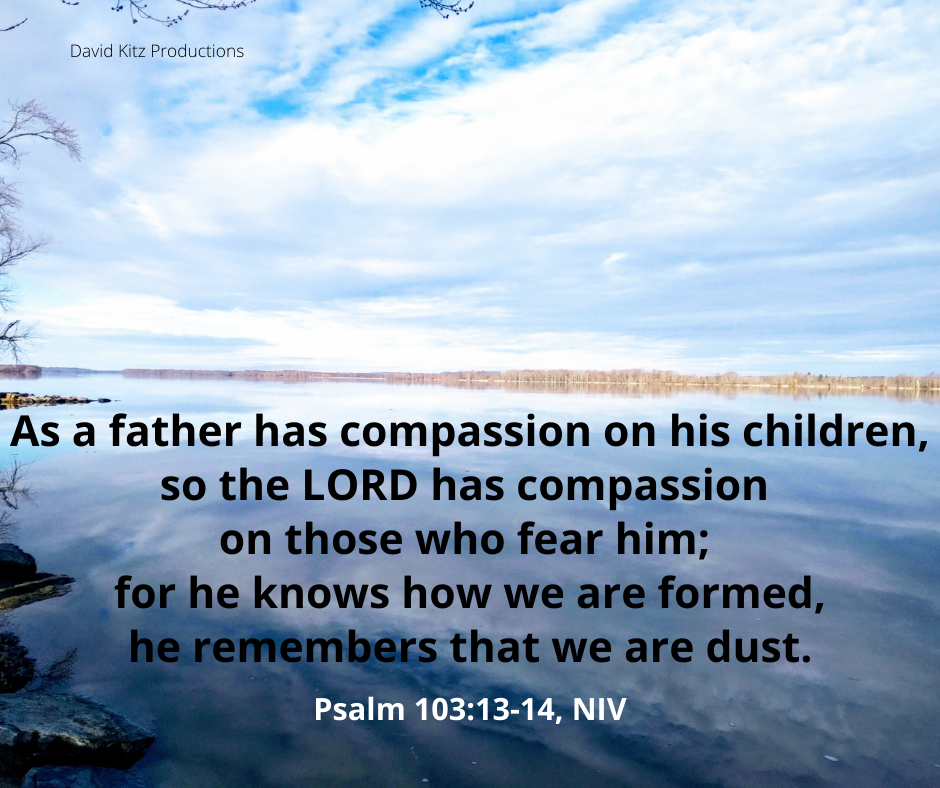
As a father has compassion on his children, so the LORD has compassion on those who fear him; for he knows how we are formed, he remembers that we are dust. As for man, his days are like grass. He flourishes like a flower of the field; the wind blows over it and it is gone, and its place remembers it no more (v. 13-16).

There is a humble humanity to these words, a certain taste of Jesus in them. Jesus taught us to pray, “Our Father… “

Did Jesus have these words of David in mind as he taught his disciples about his heavenly Father? Did David grasp the finite nature of his own earthly life as he contemplated the magnificent infinite One? We certainly catch a glimpse of eternity in his words that follow: 

But from everlasting to everlasting the LORD’s love is with those that fear him and his righteousness with their children’s children—with those who keep his covenant and remember to obey his precepts (v. 17-18).

It is striking to note that the extreme forgiveness of the LORD does not produce a flippant nonchalant attitude toward sin. It didn’t in David, and shouldn’t in us. Just the opposite is true. The extreme love of God for humanity gives birth within us to a hunger for righteousness. On the contrary, the loved and forgiven yearn to obey the LORD of mercy.

Who would not fear and love such an extreme God? Who would not want to transfer the knowledge of this extreme LORD to the generations yet to come? I long to see my children’s children loving and obeying this extremist God.

After all, I am forgiven.

Praise the LORD!

Bringing Life to the Psalms

  1. Are you aware of any present-day Davids? Who are they? What can we learn from them?
  2. David had a life of ups and downs, but throughout he was faithful to the LORD, and he finished well. Take time to read about the close of David’s life in 1 Chronicles 28 & 29. What can you learn about finishing well from this biblical account?
  3. Psalm 103 is filled with superlatives regarding the love of God. In many ways it has its New Testament parallel in Paul’s prayer for the Ephesians. Take a moment now to read that prayer in Ephesians 3:14-21
  4. Do you want a greater revelation of God’s plan and purpose for your life? Seek to know God better. Spend time with him this week. Be purposeful in prayer, praise and worship; David was.
  5. Jesus came to announce and establish the Kingdom of God. In the first century, it burst upon the Roman world with power. Has it now turned into the Wimpdom of God? Has the church become effeminate? What can you do to make your church a place where men become Kingdom builders and true disciples of Christ?

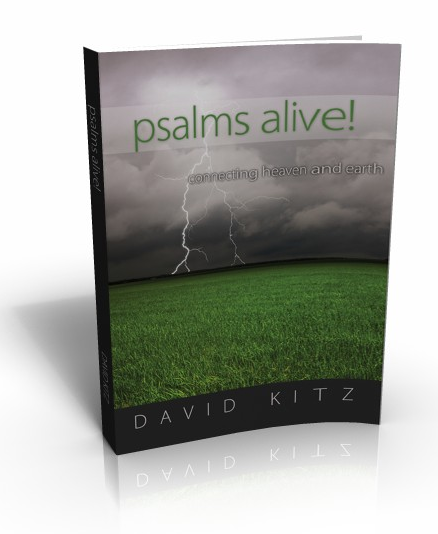
    Today’s post is Chapter 16 from the book Psalms Alive! Connecting Heaven & Earth by David Kitz. To find out more or purchase click here.

    Happy Father’s Day!


Knowing God: The Key to Doing His Will

19 Thursday Sep 2024

Posted by davidkitz in Psalms

≈ 2 Comments

Tags

faith, humility, intimacy, Jesus, knowing God, obedience, Prayer, Reflection, Relationship, Righteousness, Scripture

Reading: Psalm 36:10-12
Continue your love to those who know you,
your righteousness to the upright in heart.
May the foot of the proud not come against me,
nor the hand of the wicked drive me away.
See how the evildoers lie fallen—
thrown down, not able to rise! (NIV)

keys-of-the-kingdom (1)

Reflection
Do you know God? Are you well acquainted with Him and His ways? Are you in regular conversation with Him? I ask these questions because in this concluding portion of Psalm 36 David prays, “Continue your love to those who know you, your righteousness to the upright in heart” (v. 10).

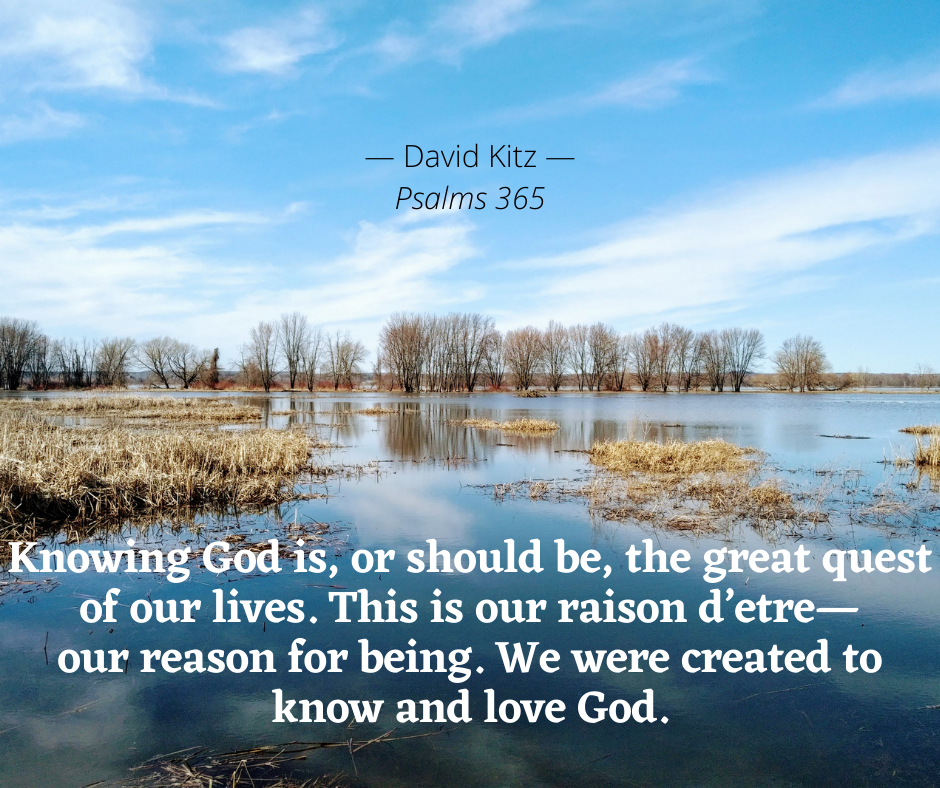
Knowing God is or should be the great quest of our lives. This is our raison d’etre—our reason for being. We were created to know and love God. The Garden of Eden was first and foremost a place of communion with God. Yet so often we see ourselves running from God or ignoring His invitation to draw close.

Jesus gives us this warning, “Not everyone who says to me, ‘Lord, Lord,’ will enter the kingdom of heaven, but only the one who does the will of my Father who is in heaven. Many will say to me on that day, ‘Lord, Lord, did we not prophesy in your name and in your name drive out demons and in your name perform many miracles?’ Then I will tell them plainly, ‘I never knew you. Away from me, you evildoers!’ (Matthew 7:21-23).

From Jesus statement here, there appear to be two requirements for entering the Kingdom of Heaven: doing the will of the Father and knowing Jesus. I would argue that truly knowing Jesus helps us to discover and do the will of the Father. If you know someone really well, you know what they want—what will please them—without even asking. We need to aim for that kind of intimacy with God.

We come to know the mind of God because we have drawn close to the heart of God through time spent with Him. Two-way prayer and meditation on His word acquaints us with God’s will and His ways—ways that do not change according to the whim of man.

God is not impressed by our prophetic or miraculous powers. He is not impressed by our power over demons. These after all are gifts from Him. God is impressed by our obedience as we seek His face and do His will.

Our God is faithful. He will continue His love to those who know Him. His righteousness will constantly flow to the upright in heart.

Response: LORD God, give me a humble heart that seeks after you. Show me your ways, O Lord. Give me a hunger for your word. I want to know you more and more. Help me to do the Father’s will today. In Jesus’ name, I pray. Amen.

Your Turn: How do you get to know God better? What practices or activities grow your faith and knowledge of God?

Para la publicación de Salmos 365 de hoy en español haga clic aquí.

* NEW INTERNATIONAL VERSION, COPYRIGHT ©1973, 1978, 1984, 2011 BY BIBLICA

BGBG_v4.3_150[1818]

Please pray for peace to return to Israel, Gaza, and Ukraine!

Volume I of Psalms 365: Develop a Life of Worship and Prayer won the Best Book of the Year Award from The Word Guild and Volume II has won the Best Devotional of the Year Award. For those who love God’s word, this three-book series is an ideal way to daily meet with the Lord. To purchase or for a closer look click here.

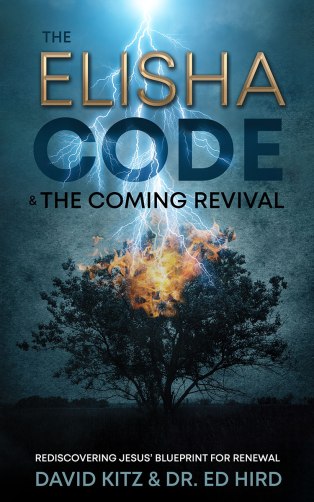
New from David Kitz
TheElishaCodeCVR5

To purchase or for a closer look click here.

Hunger for Your Word.

26 Wednesday Apr 2023

Posted by davidkitz in Psalm 36, Psalms

≈ Leave a comment

Tags

humble, hunger, knowing God, word of God

Today’s quote and prayer from
“Psalms 365: Develop a Life of Worship and Prayer”
by David Kitz.

Psalm 36_10-12 -365
Reading: Psalm 36:10-12

LORD God,
give me a humble heart that seeks after you.
Show me your ways, O Lord.
Give me a hunger for your Word.
I want to know you more and more.
Help me to do the Father’s will today.
In Jesus’ name, I pray.

Amen.

* NEW INTERNATIONAL VERSION, COPYRIGHT ©1973, 1978, 1984, 2011 BY BIBLICA

BGBG_v4.3_150[1818]

Your prayers for the people of Ukraine are making a difference.

Volume I of Psalms 365: Develop a Life of Worship and Prayer won the Best Book of the Year Award from The Word Guild, and Volume II has won the Best Devotional of the Year Award. For those who love God’s word, this three-book series is an ideal way to daily meet with the Lord. Start your day with a new devotional series. To purchase or for a closer look click here.

RGB300Kitz2AWARD

Knowing God—the Great Quest of Our Lives

26 Wednesday Apr 2023

Posted by davidkitz in Psalm 36, Psalms

≈ 2 Comments

Tags

knowing God, meditation, miraculous powers, obedience, two-way prayer

Reading: Psalm 36:10-12
Continue your love to those who know you,
your righteousness to the upright in heart.
May the foot of the proud not come against me,
nor the hand of the wicked drive me away.
See how the evildoers lie fallen—
thrown down, not able to rise!
(NIV) *

img_20220811_1922015

Photo by David Kitz

Reflection
Do you know God? Are you well acquainted with Him and His ways? Are you in regular conversation with Him? I ask these questions because in this concluding portion of Psalm 36 David prays, “Continue your love to those who know you, your righteousness to the upright in heart.”

Knowing God is or should be the great quest of our lives. This is our raison d’etre—our reason for being. We were created to know and love God. The Garden of Eden was first and foremost a place of communion with God. Yet so often we see ourselves running from God or ignoring His invitation to draw close.

Jesus gives us this warning, “Not everyone who says to me, ‘Lord, Lord,’ will enter the kingdom of heaven, but only the one who does the will of my Father who is in heaven. Many will say to me on that day, ‘Lord, Lord, did we not prophesy in your name and in your name drive out demons and in your name perform many miracles?’ Then I will tell them plainly, ‘I never knew you. Away from me, you evildoers!’ (Matthew 7:21-23).

From Jesus statement here, there appear to be two requirements for entering the Kingdom of Heaven: doing the will of the Father and knowing Jesus. I would argue that truly knowing Jesus helps us to discover and do the will of the Father. If you know someone really well, you know what they want—what will please them—without even asking. We need to aim for that kind of intimacy with God.

We come to know the mind of God because we have drawn close to the heart of God through time spent with Him. Two-way prayer and meditation on His word acquaints us with God’s will and His ways—ways that do not change according to the whim of man.

God is not impressed by our prophetic or miraculous powers. He is not impressed by our power over demons. These after all are gifts from Him. God is impressed by our obedience as we seek His face and do His will.

Our God is faithful. He will continue His love to those who know Him. His righteousness will constantly flow to the upright in heart.

Response: LORD God, give me a humble heart that seeks after you. Show me your ways, O Lord. Give me a hunger for your word. I want to know you more and more. Help me to do the Father’s will today. In Jesus’ name, I pray. Amen.

Your Turn: How do you get to know God better? What practices or activities grow your faith and knowledge of God?

* NEW INTERNATIONAL VERSION, COPYRIGHT ©1973, 1978, 1984, 2011 BY BIBLICA

BGBG_v4.3_150[1818]

Please pray for peace to return to Ukraine!

Volume I of Psalms 365: Develop a Life of Worship and Prayer won the Best Book of the Year Award from The Word Guild and Volume II has won the Best Devotional of the Year Award. For those who love God’s word, this three-book series is an ideal way to daily meet with the Lord. To purchase or for a closer look click here.

How Are Your Test Scores

08 Wednesday Mar 2023

Posted by davidkitz in Psalm 26, Psalms

≈ 2 Comments

Tags

David, experiences with God, knowing God, testing

Reading: Psalm 26:1-7
Of David.
Vindicate me, LORD,
for I have led a blameless life;
I have trusted in the L
ORD
and have not faltered.
Test me, L
ORD, and try me,
examine my heart and my mind;
for I have always been mindful of your unfailing love
and have lived in reliance on your faithfulness.
I do not sit with the deceitful,
nor do I associate with hypocrites.
I abhor the assembly of evildoers
and refuse to sit with the wicked.
I wash my hands in innocence,
and go about your altar, L
ORD,
proclaiming aloud your praise
and telling of all your wonderful deeds
(NIV). *

focused black guy preparing for exams in park near curious groupmates

Photo by Keira Burton on Pexels.com

Reflection
The opening lines of Psalm 26 certainly catch my attention. David claims to have led a blameless life—a rather audacious statement in my opinion. But he doesn’t stop there. He goes on to invite God to test him. David pleads, “Test me, LORD, and try me, examine my heart and my mind; for I have always been mindful of your unfailing love and have lived in reliance on your faithfulness.”

Now that takes some nerve. Do I really want the LORD to examine my heart and my mind? If I underwent a heart and mind exam, what would my test scores be? Most of us would shy away from being tested by God, but David’s response is completely different. He is clearly saying, “Bring it on!”

How could David be so self-assured—so confident—to the point of sounding arrogant? David’s confidence was not so much in his own performance, but rather his confidence was in God. He states he is mindful of the LORD’s unfailing love. He is relying on the LORD’s faithfulness. David knew the unfailing love and faithfulness of God, and this wasn’t merely head knowledge—a bit of mental information. No. David knew God experientially. He experienced the LORD’s unfailing love. He experienced the faithfulness of God over and over in his life. As a youth he slew a marauding lion and a bear. He brought down the mighty Goliath. He fled for his life, but ultimately triumphed over the madness of King Saul. David knew his God experientially in the grit of battle and the daily humdrum.

What about you? Do you have a memory bank full of great experiences with God? If the answer is no, why not ask God for a deposit today? If you put your faith in Him, He will not let you down.

Response: LORD, examine my heart and my mind. I want to grow in my knowledge of you and my confidence in you. Help me to have a pure heart and mind before you. I want to experience your presence in my life. Amen.

Your Turn: Have you experienced God’s love and faithfulness recently? Do you let Him examine you?

* NEW INTERNATIONAL VERSION, COPYRIGHT ©1973, 1978, 1984, 2011 BY BIBLICA

BGBG_v4.3_150[1818]

Please pray for the people of Turkiye and northern Syria affected by the earthquake.

Volume I of Psalms 365: Develop a Life of Worship and Prayer won the Best Book of the Year Award from The Word Guild, and Volume II has won the Best Devotional of the Year Award. For those who love God’s word, this three-book series is an ideal way to daily meet with the Lord. Start your day with a new devotional series. To purchase or for a closer look click here.

The Great Quest of Our Lives

01 Wednesday Dec 2021

Posted by davidkitz in Psalm 36, Psalms

≈ 3 Comments

Tags

humble, knowing God, loving God

Today’s quote and prayer from
“Psalms 365: Develop a Life of Worship and Prayer”
by David Kitz.

Psalm 36_10-12 -365Reading: Psalm 36:10-12

LORD God,
give me a humble heart that seeks after you.
Show me your ways, O Lord.
Give me a hunger for your word.
I want to know you more and more.
Help me to do the Father’s will today.
In Jesus’ name, I pray.
Amen.

Volume I of Psalms 365: Develop a Life of Worship and Prayer has won the 2021 Best Book of the Year Award and is an ideal Christmas gift for those who love God’s word. For a closer look at Volumes II and III click here.

Examining My Heart and My Mind

13 Wednesday Oct 2021

Posted by davidkitz in Psalm 26, Psalms

≈ 2 Comments

Tags

confidence in God, God's presence, knowing God

Today’s quote and prayer from
“Psalms 365: Develop a Life of Worship and Prayer”
by David Kitz.

Psalm 26a - 365Reading: Psalm 26:1-7

LORD God,
examine my heart and my mind.
I want to grow in my knowledge of you
and my confidence in you.
Help me to have a pure heart and mind before you.
I want to experience your amazing presence
in my life.

Amen.

Volume I of Psalms 365: Develop a Life of Worship and Prayer has won the 2021 Best Book of the Year Award. For a closer look at Volumes II and III click here.

How Can We Know God?

01 Wednesday Jul 2020

Posted by davidkitz in Devotions, Psalm 36, Psalms

≈ 7 Comments

Tags

gifts, knowing God, meditation, obedience, Prayer

Reading: Psalm 36
(Verses 10-12)
Continue your love to those who know you,
your righteousness to the upright in heart.
May the foot of the proud not come against me,
nor the hand of the wicked drive me away.
See how the evildoers lie fallen—
thrown down, not able to rise!
(NIV)*

img_20200621_0832487-1

A tree swallow — photo by David Kitz

Reflection
Do you know God? Are you well acquainted with Him and His ways? Are you in regular conversation with Him? I ask these questions because in this concluding portion of Psalm 36 David prays, “Continue your love to those who know you, your righteousness to the upright in heart.”

Knowing God is or should be the great quest of our lives. This is our raison d’etre—our reason for being. We were created to know and love God. The Garden of Eden was first and foremost a place of communion with God. Yet so often we see ourselves running from God, or ignoring His invitation to draw close.

Jesus gives us this warning, “Not everyone who says to me, ‘Lord, Lord,’ will enter the kingdom of heaven, but only the one who does the will of my Father who is in heaven. Many will say to me on that day, ‘Lord, Lord, did we not prophesy in your name and in your name drive out demons and in your name perform many miracles?’ Then I will tell them plainly, ‘I never knew you. Away from me, you evildoers!’ (Matthew 7:21-23).

From Jesus statement here, there appear to be two requirements for entering the Kingdom of Heaven: doing the will of the Father and knowing Jesus. I would argue that truly knowing Jesus helps us to discover and do the will of the Father. If you know someone really well you know what they want—what will please them—without even asking. We need to aim for that kind of intimacy with God.

We come to know the mind of God because we have drawn close to the heart of God through time spent with Him. Two-way prayer and meditation on His word acquaints us with God’s will and His ways—ways that do not change according to the whim of man.

God is not impressed by our prophetic or miraculous powers. He is not impressed by our power over demons. These after all are gifts from Him. God is impressed by our obedience as we seek His face and do His will.

Our God is faithful. He will continue His love to those who know Him. His righteousness will constantly flow to the upright in heart.

Response: LORD God, give me a humble heart that seeks after you. Show me your ways, O Lord. Give me a hunger for your word. I want to know you more and more. Help me to do the Father’s will today. In Jesus’ name, I pray. Amen.

Your Turn: How do you get to know God better? What practices or activities grow your faith and knowledge of God?

* New International Version, Copyright ©1973, 1978, 1984, 2011 by Biblica

This post by award-winning author David Kitz will be published in book format later in 2020 by Elk Lake Publishing under the title 365 Days through the Psalms.

Happy Canada Day to all my Canadian readers.

Image

How Do You Know God?

13 Wednesday May 2020

Tags

David, knowing God

Experientially

Posted by davidkitz | Filed under Psalms

≈ 4 Comments

How Big is Your God?

14 Tuesday Jan 2020

Posted by davidkitz in Devotionals, Psalm 138, Psalms

≈ 5 Comments

Tags

David, gods, Jesus, knowing God, nations

Reading: Psalm 138
Of David
(Verses 1-5)
I will praise you, LORD, with all my heart;
before the “gods” I will sing your praise.
I will bow down toward your holy temple
and will praise your name
for your unfailing love and your faithfulness,
for you have so exalted your solemn decree
that it surpasses your fame.
When I called, you answered me;
you greatly emboldened me.
May all the kings of the earth praise you, LORD,
when they hear what you have decreed.
May they sing of the ways of the L
ORD,
for the glory of the L
ORD is great (NIV)

20190121_080823

Sun dogs at sunset on a frigid Canadian evening — photo courtesy of Louie Foster

Reflection
David was wholehearted in all that he did, so it should not surprise us that he begins Psalm 138 with this assertion: I will praise you, LORD, with all my heart; before the “gods” I will sing your praise.

David, the shepherd king, wasn’t shy or hesitant about offering praise to the LORD. He knew his God and was quick to give Him praise. He would even praise the LORD before foreign gods. Elsewhere in the psalms we see this declaration: For great is the LORD and most worthy of praise; he is to be feared above all gods. For all the gods of the nations are idols, but the LORD made the heavens (Psalm 96:4-5).

During David’s time each nation had its own national god. These national gods were represented by carved idols of wood, metal or stone. But Israel had no idol. They were strictly forbidden to make any image or likeness of the LORD (Yahweh). See the First Commandment, Exodus 20:3-6. This prohibition set Israel apart. They were the people with no visible god.

But why settle for a visible god, when you can have the invisible God who fills the entire universe? Why settle for a national god, when you can have the LORD who created the heavens and the earth? Inevitably, if we fashion our own god, we will create a god who is far too small. The true God is far bigger, far wiser, and far more just, and compassionate than we can ever imagine. How can we as finite creatures begin to fathom the infinite power and glory of God?

By His great mercy the LORD reveals Himself to us. He does that best through His Son. The Son is the image of the invisible God, the firstborn over all creation (Colossians 1:15). Jesus helps make the infinite God comprehensible to us, so we can join with David’s anthem of praise. May all the kings of the earth praise you, LORD, when they hear what you have decreed. May they sing of the ways of the LORD, for the glory of the LORD is great. 

Response: LORD God, I praise you for your unfailing love and your faithfulness. Thank you for answering my prayers. You give me courage, and like David, you greatly emboldened me to carry on. Amen.

Your Turn: How big is your God? Is He bigger than your problems—bigger than your doubts?

← Older posts

Psalms 365: Develop a Life of Worship and Prayer

Psalms 365 Volume II

Psalms 365 vol 3
— Psalms 365 Volume III

Psalms

Recent posts

  • Ready for the King of Glory December 19, 2025
  • My Spirit Rejoices in God My Savior December 18, 2025
  • Joining the Generation That Seeks God December 18, 2025
  • Why Am I So Favored December 17, 2025
  • How Can You Find the Good Life? December 17, 2025
  • The Power of the Most High December 16, 2025
  •  The Earth Turns to the LORD December 16, 2025

Calendar

December 2025
M T W T F S S
1234567
891011121314
15161718192021
22232425262728
293031  
« Nov    

Blog Posts

Comments

  • davidkitz on Joining the Generation That Seeks God
  • cjsmissionaryminister on God Sent His Son
  • cjsmissionaryminister on The God of the Broken

Blog at WordPress.com.

Privacy & Cookies: This site uses cookies. By continuing to use this website, you agree to their use.
To find out more, including how to control cookies, see here: Cookie Policy
  • Subscribe Subscribed
    • I love the Psalms
    • Join 1,378 other subscribers
    • Already have a WordPress.com account? Log in now.
    • I love the Psalms
    • Subscribe Subscribed
    • Sign up
    • Log in
    • Report this content
    • View site in Reader
    • Manage subscriptions
    • Collapse this bar
 

Loading Comments...