• Home
  • About
  • DavidKitz.ca
  • Youtube Videos
  • Books by David
  • Books on Amazon.com

I love the Psalms

~ Connecting daily with God through the Psalms

I love the Psalms

Tag Archives: Martin Luther

A Call for Literary Prophets

19 Sunday Oct 2025

Posted by davidkitz in The Elisha Code

≈ 4 Comments

Tags

Charles Dickens, Elijah, Elisha, Harriet Beecher Stowe, Jesus, Kingdom of God, Leo Tolstoy, literary prophets, Martin Luther, Napolean, novel, prophets, Russia, Sermon on the Mount, Ukraine, war

Jesus performed many other signs in the presence of his disciples,
which are not recorded in this book.
But these are written that you may believe that Jesus is the Messiah, the Son of God, 
and that by believing you may have life in his name.
(John 20:30-31, NIV)

As stated earlier, the Old Testament prophetic duo of Elijah and Elisha can be categorized as non-literary prophets, in contrast to a host of literary prophets such as Isaiah, Ezekiel, and Micah, who provided us with the Old Testament canon.
            Like Elijah and Elisha, John the Baptist and Jesus are the premier non-literary prophets of the New Testament period. They wrote nothing for us to read. In fact, the memory of their incredible lives and deeds would undoubtedly have faded into obscurity without the work of four diligent publicists named Matthew, Mark, Luke, and John. Such is the indelible power of the written word.
            Have literary prophets arisen in our time—in the era in which we live? There are ample reasons to believe the answer is yes. But before we look for examples of current or historic literary prophets, a point of clarification is required. This search for literary prophets is not about adding to the established canon of Holy Scripture. The literary prophets we are talking about simply draw people back into relationship with God. This after all was the primary goal of godly prophetic voices down through the ages. Often that involved challenging the norms, beliefs, and systems of the time.
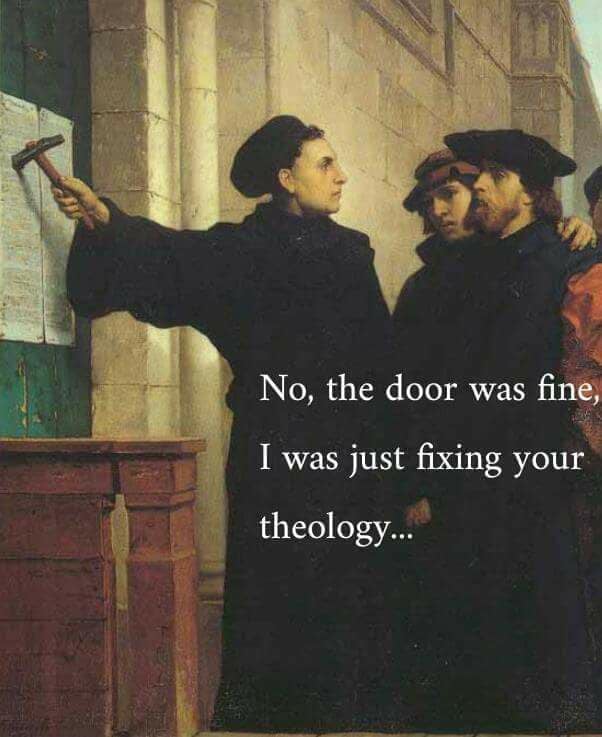
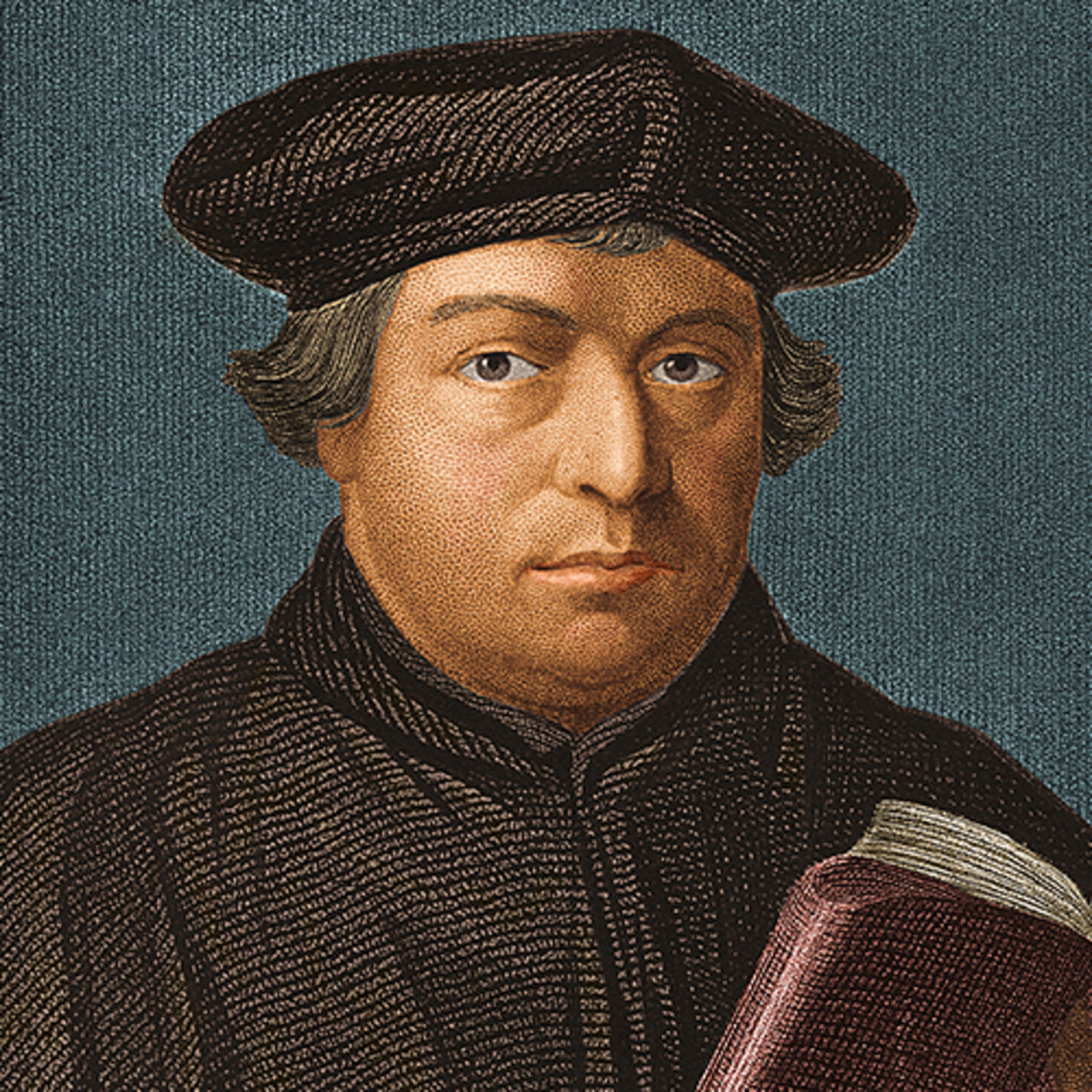
           In this respect perhaps the greatest prophet of the last millennium was Martin Luther [1483-1546]. He brought Europe out of the dark ages and into the glorious light of the gospel—a gospel that had been distorted almost beyond recognition by layers of institutional corruption, false doctrine, and a profound ignorance of the Holy Scriptures.
            How did Luther bring about such a radical change? The answer primarily lies in his work as a literary prophet. Scholars and historians agree that foremost among his literary works is his translation of the Bible into German, the vernacular of the people of central Europe. Of course, this inspired translators in other lands to produce Bibles in their local tongue. Suddenly, the Word of God was unleashed and active, changing hearts and lives across the continent and the work of Bible translation continues to this day.
            None of this would have taken place with such speed without the invention of Gutenberg’s printing press which for the first time made the Scriptures affordable and readily available. New technology presents new opportunities to transmit the gospel message. Are we currently using the new technologies available to us to advance the redeeming message of Christ in the world?
            In addition to translating the Bible, Luther authored a host of books, pamphlets, and tracts that expounded on biblical truth and exposed doctrinal error. Some of his views have been discredited, but many remain relevant.[i] He was a prophetic voice to his generation, and through his writing, his message still resounds five hundred years later.
            Four centuries after Luther, in eastern Europe, another literary figure arose to challenge the religious and political thinking of his time. His name was Leo Tolstoy [1828-1910].
            What might it take for peace to come today between Ukraine and Russia? What seems impossible with people is still possible with God.
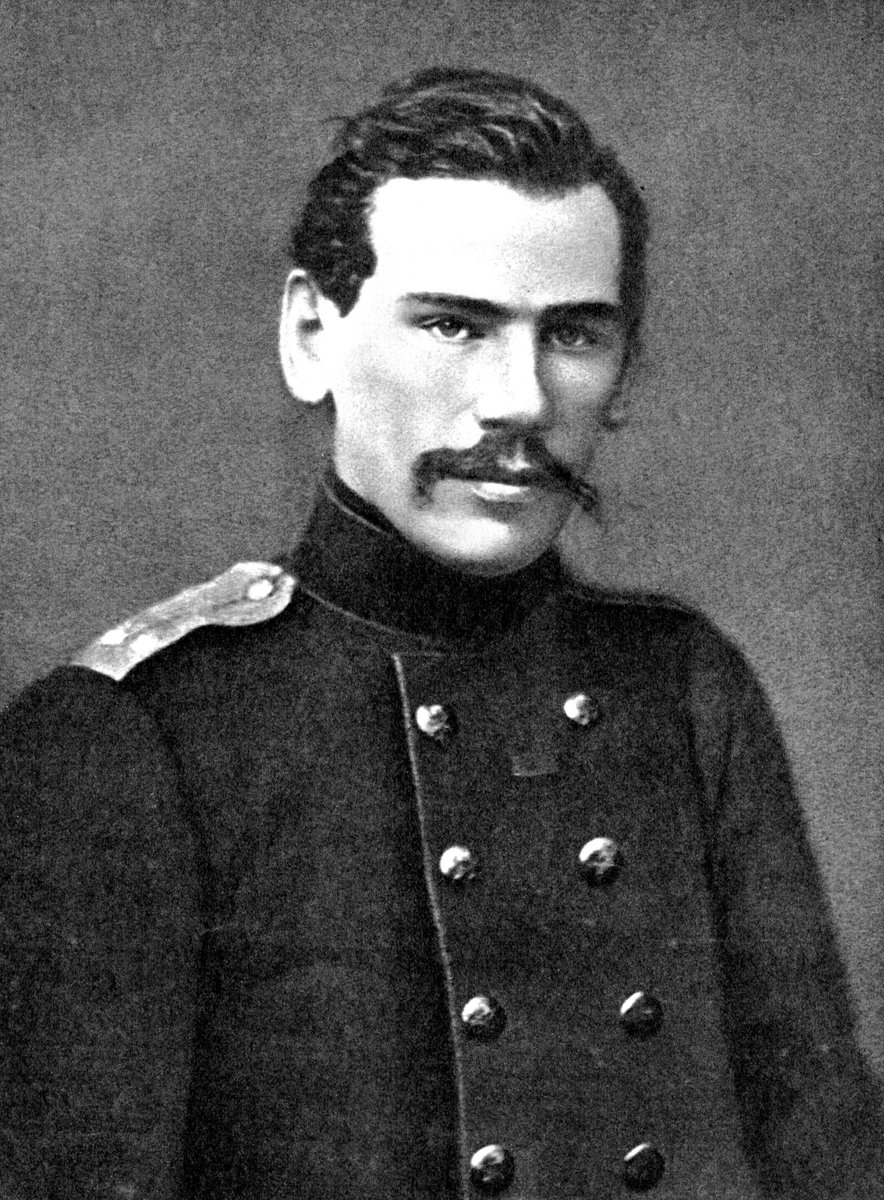
A young Leo Tolstoy

          What if Ukrainians and Russians would both rediscover the message of peace, forgiveness, and reconciliation in Tolstoy’s War & Peace? Sadly, this book is currently banned in Ukraine because of the mistaken idea that it glorifies the Russian military.
            After serving in the Crimean War as a young officer in the Russian army, Tolstoy became a committed pacifist. War & Peace never glorifies war, but rather, accurately portrays how war often embitters our souls, dehumanizes us, and robs us of the love of neighbor. Ironically, the Russian Orthodox Church excommunicated Tolstoy in 1901, partially because of his questioning their uncritical support for the Russian military.
           Many see Tolstoy as a Russian Charles Dickens. Considered by many as the world’s best novel, War & Peace overwhelms potential readers by its 1,400-page size. What surprised us as readers was how deeply Jesus’ gospel message of forgiveness was woven into this book. God is mentioned 312 times in War & Peace. Outwardly, the book is about Napoleon’s invasion of Russia, but at a deeper level, it was about human conflict and how the Kingdom of God is the only solution. 
           The Russian Prince Andrei, who represented the glorification of war in War & Peace, initially despised forgiveness as just for women and children.[i] After being mortally wounded, Andrei learns to forgive his dying enemy Anatole Kuragin, and his ex-fiancée Natasha who almost ran off with Anatole. He notably commented:

          Compassion, love of our brothers, for those who love us and for those who hate us, love of our enemies; yes, that love which God preached on earth…and I did not understand—that is what made me sorry to part with life, that is what remained for me had I lived. But now it is too late. I know it![ii]

           Andrei asks his doctor to get him a copy of the Gospels, saying that he had now a new source of happiness which had something to do with the Gospels. After discovering the law of love, Andrei met again with Natasha who was devastated with guilt and shame:

          “Forgive me!” she whispered, raising her head and glancing at him. “Forgive me!”
          “I love you,” said Prince Andrei…
          “Forgive…!”
          “Forgive what?” he asked.
          “Forgive me for what I have do-ne!” faltered Natasha in a scarcely audible, broken whisper, and began kissing his hand more rapidly, just touching it with her lips.
          “I love you more, better than before,” said Prince Andrei, lifting her face with his hand so as to look into her eyes.[iii]

            This novel could have been called Love & Forgiveness. Seventy-two times, Tolstoy talks about forgiveness in War & Peace. It was not just about the war with Napoleon, it was about the war between the sexes.

The Word of God — photo by David Kitz

            Another character in War & Peace, Pierre Bezukhov, is like a Russian Forrest Gump. He is a tragically comic figure who awkwardly stumbles into all the key times of the Napoleonic conflict, unexpectedly being a savior figure, and allowing us to observe the historic conflict in person, up close. Everything about him is unlikely, from his being an illegitimate son to becoming the wealthiest person in all of Russia. Through dreams and visions, Pierre discovered on Napoleon’s battlefield that:

            To love life is to love God. Harder and more blessed than all else is to love this life in one’s sufferings, in innocent sufferings.[i]

           Through discovering God, Pierre experienced a deep tranquility and happiness. He was no longer tormented by the meaningless of life: 

          …a simple answer was now always ready in his soul: “Because there is a God, that God without whose will not one hair falls from a man’s head.[ii]

          Meeting God gave him such a new ability to listen that people regularly told Pierre their most intimate secrets. This deep listening was what caused the embittered princess Natasha to fall in love and marry him.
           Tolstoy, a Russian aristocrat, became so enamoured with the Sermon on the Mount that he gave away all his wealth and chose to live like a peasant, tilling the land. When he decided to give up all his book income, his wife threatened to divorce him, so he compromised by only giving away the money from any of his newly written books.
            Tolstoy’s book The Kingdom of God Is Within You so impacted Mahatma Gandhi that he gave it out to his followers. Gandhi was so impressed by Tolstoy’s emphasis on the Sermon on the Mount (Matthew 5 to 7) that he read Jesus’ famous Sermon every day for the rest of his life. Tolstoy’s emphasis on non-violent resistance formed the basis of Gandhi’s campaign for Indian nationhood. Thus, through the influence of Tolstoy’s writing the entire subcontinent of India was transformed.
            Martin Luther King Jr., after reading E. Stanley Jones’ book on Gandhi, discovered the nonviolent key for his civil rights movement in America. So, the torch light of a peace-making gospel passed from a Russian author to India and onto America.
            Tolstoy’s passion for peace-making and forgiveness might even change Russian President Putin, if he would only take the time to read Tolstoy’s book.
            The late British journalist and Christian apologist Malcolm Muggeridge deeply admired the genius of Tolstoy:

         Tolstoy was one of those truly great men who come into the world at long intervals, and we need them, and we rightly continue to look to them just as the Russians do, despite all the changes that have happened.

            What if instead of resenting Russia for its tragic invasion of the Ukraine, we, like Tolstoy, began to pray passionately for its transformation? Could we have faith to believe that Russia will become a Sermon on the Mount nation, overflowing with peacemakers like Tolstoy? Let’s call out to God for such a miracle.
            On this continent in 1852, Harriet Beecher Stowe wrote a novel that transfixed America. Uncle Tom’s Cabin was the bestselling book in United States in the nineteenth century, surpassed only by the Bible.[iii] Stowe was motivated by her deep Christian faith. Her book pricked the conscience of the nation, exposed the horrors of slavery, and fomented the upheaval that led to the American Civil War which culminated in the emancipation of millions.   
            Martin Luther, Leo Tolstoy, and Harriet Beecher Stowe exemplify the incredible power of the printed page. Literary prophets are history shapers. They transformed nations and their influence remains to this day. We need more literary prophets—prophets filled with the courage of their convictions—prophets for our time.
            The written word inspires faith—life transforming faith. Perhaps John, the beloved, expressed this truth best when a the close of his Gospel he penned these immortal words: But these are written that you may believe that Jesus is the Messiah, the Son of God, and that by believing you may have life in his name (John 20:31).

[i] graf Leo Tolstoy. War and Peace (Kindle Locations 22902-22903). Kindle Edition.

[ii] graf Leo Tolstoy. War and Peace (Kindle Locations 23761-23762). Kindle Edition.

[iii] Uncle Tom’s Cabin – Wikipedia accessed March 1, 2023.

[i] graf Leo Tolstoy. War and Peace (Kindle Locations 19935-19936). Kindle Edition.

[ii] graf Leo Tolstoy. War and Peace (Kindle Locations 22902-22903). Kindle Edition.

[iii] graf Leo Tolstoy. War and Peace (Kindle Locations 19935-19936). Kindle Edition.

[i] While we honor Martin Luther as a literary prophet used in the Reformation, we acknowledge the tragic nature of the antisemitism that Luther slipped into later in his ministry.

This is the sixth weekly excerpt from the award-winning book 
The Elisha Code & the Coming Revival 

A soul-gripping read.
Is a return-to-Jesus revival possible in our time?
This book points the way forward.
For details click here.
Introduction to “The Elisha Code”

14 Sunday Sep 2025

Posted by davidkitz in The Elisha Code

≈ Leave a comment

Tags

anointing, Bible, biblical truth, Christ's miracles, church, church history, disciples, Jesus, Martin Luther, miraculous, mission, pestilence, political turmoil, prophet, revival

Discovering Jesus Blueprint for Renewal

By
David Kitz & Dr. Ed Hird

Is there a hidden code to the Bible? Is there some secret interpretation—hidden in plain sight—that we have been missing for generations? If so, what is it, and what are the implications for Christians today?

The book you are holding cracks the code—the code Jesus revealed to his disciples. Furthermore, it signals the pattern for the coming global revival—revivals that may well be marked by miraculous signs and wonders on an unprecedented scale.

We live in dark times—times of fear, pestilence, national and international intrigue, and political turmoil. Many are in despair. But into this darkness, the prophet Isaiah speaks:

         “The land of Zebulun and the land of Naphtali, 
           By the way of the sea, beyond the Jordan,
           Galilee of the Gentiles:
           The people who sat in darkness have seen a great light,
           And upon those who sat in the region and shadow of death
           Light has dawned” (Matthew 4:15-16, NKJV).

At the darkest time, in the darkest region, Jesus appeared on the scene. There he began his ministry. In these dark and divided times, as the truth of the Elisha Code is brought to light, we too will see Jesus revealing his grace and power among us.

Throughout the centuries-long history of the church, biblical truths have been lost—lost through sin, unbelief, and neglect—later to be rediscovered by thirsty souls searching for transformative change in dark times. Martin Luther triggered the reformation with his rediscovery of the truth of salvation by faith through grace. The truth of sanctification triggered the Great Awakening and the Methodist renewal with revival-fire starters such as the Wesley brothers, George Whitefield, and John Newton. The twentieth century began with a fresh outpouring of the Holy Spirit as the truths of Pentecost were brought to the fore through the globe-spanning Welsh revival and the Azusa Street outpouring.

When biblical truth is restored, revival often follows. A harvest of souls is swept into the Kingdom of God, as surely as the morning dawns on a new day.

Sydney Missionary Bible College (Flickr CC).

Let’s return to his Holy Word and uncover the foundation Jesus has already laid. Let’s return to truths we have overlooked for far too long. Jesus is the Master Builder of the church. By studying his earthly ministry, we can discover the blueprint he was following to launch and establish the church of the first century. It is a blueprint that is patterned after the prophetic Old Testament ministries of Elijah and Elisha.

Within this volume, there are chapters that explore this neglected connection to these two prophets of the old covenant. Often, these chapters are then followed by biographical snapshots of individuals in church history who have tapped into key truths. These principles have catapulted the gospel message forward to powerfully impact the world of their time.

To fulfill its divine mission, the church of the twenty-first century does not need to discover new and different truths for this current age. It needs to return to, and rediscover lived truths taught by Jesus and the apostles of the first century church and put into practise by leading men and women of God down through the ages.     

Together, let’s crack the Elisha Code and become participants in the next great end-times revival—a revival marked by a double portion of Christ’s miraculous anointing.

Let the quest begin!

This is the second weekly excerpt from the award-winning book 
The Elisha Code & the Coming Revival 

A soul-gripping read.
Is a return-to-Jesus revival possible in our time?
This book points the way forward.
For details click here.

Be Still and Know that I am God

27 Sunday Apr 2025

Posted by davidkitz in Psalms

≈ 2 Comments

Tags

Almighty, Creator, God, Hiroshima, history, Japan, Jesus, Martin Luther, mighty fortress, Nazi Germany, Psalms, the LORD

Psalm 46:6-11
Nations are in uproar, kingdoms fall;
He lifts his voice, the earth melts.

The LORD Almighty is with us;
the God of Jacob is our fortress. (Selah)

Come and see the works of the LORD,
the desolations he has brought on the earth.
He makes wars to cease to the ends of the earth;
he breaks the bow and shatters the spear,
he burns the shields with fire.
“Be still, and know that I am God;
I will be exalted among the nations,
I will be exalted in the earth.”

The LORD Almighty is with us;
the God of Jacob is our fortress. (Selah)

Perhaps no other psalm captures the essence of the cataclysmic as completely as Psalm 46. Here with the psalmist, we catch a glimpse of the apocalypse. The world of this psalm is in utter turmoil. It quakes. It writhes. It melts. Through a poetic eye we are viewing the death throes of a planet.

I spent New Year’s Day, 1985 in Hiroshima, Japan—a city well acquainted with cataclysm. Today, Hiroshima is a beautiful city. It is a seaside city, built on a flat river delta surrounded by mountains. Seven river channels cut across the city’s fertile flood plain on their way to the blue waters of Hiroshima Bay. In many respects Hiroshima resembles a more compact, oriental version of Vancouver.

But on August 6th, 1945, this beautiful city became a terrestrial picture of hell. The horrors inflicted on Hiroshima are without parallel in human history. In an atomic flash, 66,000 residents were instantly killed. They were the fortunate. Another 60,000 died later of their injuries, or from the effects of radiation sickness. The accounts of their suffering are among the most heart wrenching literature, I have ever read.   

Historic Hiroshima explosion photo.

I was not in Hiroshima alone; my wife and my two-and-a-half-year-old son were with me. Together, on a cool but sunny New Year’s Day, we strolled through the Hiroshima Peace Memorial Park. We slowly walked around the building known as the A-Bomb Dome. This devastated stone structure was the only building left standing after the atomic blast. Its skeletal structure is a visible reminder of that grim day in 1945. But is this stark ruin also a portent of our future, and the future of our planet?   

Across the ages the psalmist speaks, “Nations are in uproar, kingdoms fall; He lifts his voice, the earth melts.”

In 1945 the nations of the world were in uproar, and kingdoms were falling. In Europe the vaunted thousand-year rule of the Third Reich came to a brutal end. Great cities lay in ruins. Millions were exterminated; millions more were displaced and starving. A demon in human flesh had put the whole apparatus of the modern state to work in eradicating God’s people. The last victim of every murderous demon is its human host, so staying true to Satanic form, in the final days of war Hitler and his leading Nazi henchmen pulled the trigger on their own demise.

Across the Pacific, expansionist, Imperial Japan was on the verge of collapse. The emperor, whose subjects worshipped him as god was about to call an end to a war that was cannibalizing his own people. Emperor Hirohito was revered as a descendant of the sun god, and through brutal military conquest the land of the Rising Sun had spread its rays across much of Asia. But before the emperor could call a halt to the war, a different kind of sun would ignite a blazing inferno in the heart of the nation.

Nuclear physicists will tell you that in its simplest form an atomic bomb is the power of the sun released upon the earth. The heat and radiation are of the same magnitude. A miniature sun flashed 100 million volts of raw energy over Hiroshima at 8:15 a.m. on August 6th, 1945.

People beneath the epicenter of the blast were simply vaporised. In the Atomic Bomb Museum, later that day my eyes bore witness to this phenomenon. Dark shadows were all that remained of men who were sitting on the stone steps of a bank building. Their bodies left something resembling a photographic imprint on the stone. In an instant—in a flash—they were gone.

Miles from the epicenter, brass globes drooped and melted on the side that was facing this new sun that had come to the earth. The effects upon human flesh of the intense heat of this nuclear flash can only be imagined. On many survivors, clothing and skin exposed just for an instant, simply melted away.

Again, across the ages the psalmist speaks, “Nations are in uproar, kingdoms fall; He lifts his voice, the earth melts.”

You view all these things in a different light, when you are with your family. My wife was walking beside me on this tour. She was into her third month of pregnancy. I was either carrying my two-year-old son in my arms, holding his little hand or pushing him in a stroller. I kept asking myself, “What kind of world am I bringing my children into? Will they experience these things—this hell—in their lifetime?”

Today’s newspaper headlines are not reassuring. More than forty years have passed since my visit to Hiroshima, and thus far the world has avoided nuclear holocaust. But once again we appear to be creeping closer to the brink of annihilation. I began writing this chapter two days ago, but in one of those odd cases of divine coincidence, today when I retrieved my morning newspaper from its slot in the screen door, the headline read, “North Korea Conducts Nuclear Test.”

And if a rogue state like North Korea does not raise the level of our concern, we can always look to Iran and its nuclear ambitions. Meanwhile Russia is edging ever closer to a full conquest of Ukraine. Then there is China, which is growing more powerful and restive as its economic might increases. As for the Middle East, tension and conflict are a constant reality. In short, we live in a very dangerous and unpredictable world.

If news headlines are not reassuring, Bible prophecies are even less so. The apostle Peter, speaking nearly a thousand years after Psalm Forty-six was penned, states, “the present heavens and earth are reserved for fire, being kept for the day of judgment and destruction of ungodly men” (2 Peter 3:7).

Peter goes on to evoke the very images of Psalm 46.

“The day of the Lord will come like a thief. The heavens will disappear with a roar; the elements will be destroyed by fire, and the earth and everything in it will be laid bare (2 Peter 3:10).

But over this inferno—this world afire—the psalmist speaks, “The LORD Almighty is with us; the God of Jacob is our fortress.”

We will not face this worldwide conflagration alone. We are not abandoned. The LORD has not left our side. We are not to yield to fear and worry. Though the ungodly perish, we have these words of assurance: “The LORD Almighty is with us; the God of Jacob is our fortress.” If we must face dark days, we will not face them alone. We will face them with the LORD Almighty.

There are many names for God, and good poetry is all about the choice of words. It is then significant to note that the psalmist chose this particular name combination, the LORD Almighty, at this juncture in this psalm. The LORD, which is the Hebrew translation of Yahweh or Jehovah, means I AM. The great I AM is with us. The God of the burning bush has come to be with us. It is this God, who in Exodus 3:14 told Moses, “I AM who I AM.” He will carry us through this time of apocalyptic turmoil. And not only is I AM, the self-existent-one with us, the psalmist also asserts that this great I AM is none other than the Almighty. In cataclysm we will see the power of the Almighty. He not only holds the power to melt the world and its elements with a fervent heat, he also has the power to save and deliver his own from that cataclysmic destruction, if he so chooses.

Shadrach, Meshach and Abedinigo walked out of the blazing furnace unscathed, because the Almighty was with them. In Psalm 46 we are assured that this same God, the LORD Almighty, will be with us. He will be with us, when the end-times, world-consuming conflagration hits. The Almighty will be standing there in the furnace with us. His invisible mantle of protection will be extended over us, because the God of Jacob is our fortress.

By invoking the name of the God of Jacob, the psalmist links us to the great redemptive history of God’s people. This is the God who saves, who intervenes into the affairs of men. He is the God who brought Jacob back safely to the land of promise, after years of foreign sojourn. He is the God, who visited Egypt with the ten plagues, but by the blood of a lamb, he set apart his own people and so saved them from the Angel of Death. It was the God of Jacob, who parted the Red Sea for his people, but destroyed the pursuing army. He is the God who destroyed the world in the great flood, but he floated his eight-person restoration mission over the top of the billowing torrent. In these and a thousand other biblical stories, he is a God who saves. He is a fortress round about those who call on his name. In the fortress we rest secure, no matter what fiery maelstrom should assault.

Throughout history God’s people have found safety and refuge in the fortress. Martin Luther knew all too well the assaults of hell. It was from within the fortress that he took his stand against the legions of hell. On the threat of death, he would not bow to error. He stood upon the unchanging inerrant word of God. When he left the Diet of Worms, he was a marked man—marked for execution. But even then, he was safe. He was safe, because a fortress surrounded him and protected him wherever he travelled. You see Luther’s fortress was the God of Jacob. How fitting then that in addition to translating the whole Bible, he should pen the words to that great hymn, “A Mighty Fortress is our God.”

Now the psalmist beckons us closer. “Come and see the works of the LORD, the desolations he has brought on the earth. He makes wars to cease to the ends of the earth. He breaks the bow and shatters the spear; he burns the shields with fire.”

We live in a world that denies the existence of God, or at best it sees God as aloof and distant from the historical events that shape societies and the course of nations. But is this an accurate world view? The Old Testament writers had a completely different perspective. They saw God as active in the affairs of men. He does not stand aloof from his creation, but rather he is the great Conductor of History. Nations move at his impulse. He raises up one kingdom and sets down another. At his discretion, he exalts one leader and humiliates another.  

Reading the above passage from the Psalms can be quite disturbing to some of us. It disturbs me. Does God really bring desolation on the earth? Does he take sides in war? We may prefer our God to be more passive and distant. Perhaps God is a pacifist? He certainly loves peace. Yet in the Bible, God actively intervened in great battles and wars. And sometimes, to the consternation of God’s people, he was helping the other side. The LORD used heathen Babylon to bring divine judgment down upon Judah.

Has God changed? Perhaps he has reformed in his old age? What would a twentieth century history text look like if it was written by Nehemiah, Isaiah, or Jeremiah? Would Isaiah see God’s hand of judgment being unleashed on Nazi Germany? Was God actively working against this murderer of millions, with his hell hatched theory of racial supremacy? Was the God of the heavens ready to share his glory with the earthbound emperor of Japan? Did the LORD sanction the Sun god’s conquest of Asia? Or did the Creator of the universe have the final say on the matter? Were the master theorists behind atheistic communism correct? Or did the LORD laugh at them in derision? Did the Soviet empire collapse under its own weight, or was the LORD helping a few Polish believers as they pulled the last few bricks out of the crumbling foundation?


But no nation can gloat in a state of moral superiority. The stench of sin hovers over the whole globe. Is this world ripe for God’s judgment? Are we facing apocalypse over the next horizon?

Into this global chaos the LORD speaks, “Be still, and know that I am God; I will be exalted among the nations, I will be exalted in the earth.”

This psalm from start to finish evokes a thousand images of catastrophe, but it is the last picture that should lodge most deeply in our hearts. It is the picture of a hurt young child rushing home into the arms of a loving parent. The world has hurt us. But in these arms, we will find love, healing and courage to face the world, to face a new day. At the core, where it counts most, we are loved by our Father. Over that frightened, wounded child our Father speaks these words, “Be still, and know that I am God; I will be exalted among the nations, I will be exalted in the earth.”

I need to hear those words spoken to me. In the rush of life, I need to pause. I need to stop and hear God as I’m curled up in his arms. When pain and fear and worry come, he says, “Be still.”

Quiet your heart in God. He is bigger than your problems—bigger than the whole cruel world out there. He is in control of world events. Yield to his control in your own life. He holds the future—your future is in his hands—and these are loving hands. Though nations are in uproar and kingdoms fall, his Kingdom stands secure and eternal. When you are still—still and at rest in his Kingdom—you know the truth of these words. The LORD Almighty is with us; the God of Jacob is our fortress.

Bringing Life to the Psalms

  1. Read the account of Shadrach, Meshach and Abedinigo in the fiery furnace, as found in Daniel chapter three. Consider what this story says to you about facing persecution and calamity with courage.
  2. Do you have a hymnal handy? Why not read or sing, “A Mighty Fortress is our God?” The lyrics are a powerful declaration of the supremacy of God in a world gone mad. You may also wish to view the movie, Luther or the more recent movie, Bonhoeffer. Both movies accurately portray the courageous faith that is required when we rise up to oppose error and evil forces.
  3. End-times theology, or eschatology, frequently is a source of fear rather than comfort. Psalm 46 can act as a counterweight to many of the rather frightening passages found in the Book of Revelation. How can this psalm help you view the end-times in a more positive light?
  4. What are some of the dangers of putting too much emphasis on end-times prophecy? Are there dangers in wilful ignorance? How should we approach the scriptures that touch on the apocalypse?
  5. As we conclude this look at Psalm 46 take a moment to reread this apocalyptic psalm. What is God saying to you by His Spirit?

    Today’s post is Chapter 10 from the book Psalms Alive! Connecting Heaven & Earth by David Kitz. To find out more or purchase click here.

A Call for Literary Prophets

29 Tuesday Nov 2022

Posted by davidkitz in Tuesday's Truth

≈ 8 Comments

Tags

Gandhi, Leo Tolstoy, Martin Luther, Martin Luther King, prophets, Putin, Russia, Ukraine

Jesus performed many other signs in the presence of his disciples,
which are not recorded in this book.
But these are written that you may believe that Jesus is the Messiah, the Son of God,
and that by believing you may have life in his name.
(John 20:30-31, NIV)

A Guest Post by Ed Hird with David Kitz

The Old Testament prophetic duo of Elijah and Elisha can be categorized as non-literary prophets, in contrast to a host of literary prophets such as Isaiah, Ezekiel, and Micah. In the same way, John the Baptist and Jesus are non-literary prophets of the New Testament period. They wrote nothing for us to read. In fact, the memory of their incredible lives and deeds would undoubtedly have faded into obscurity without the work of four diligent publicists named Matthew, Mark, Luke, and John. Such is the indelible power of the written word.

Have literary prophets arisen in our time—in the era in which we live? There are ample reasons to believe the answer is yes. But before we look for examples of current or historic literary prophets, a point of clarification is required. This search for literary prophets is not about adding to the established canon of Holy Scripture. The literary prophets we are talking about simply draw people back into relationship with God. This after all was the primary goal of godly prophetic voices down through the ages. Often that involved challenging the norms, beliefs, and systems of the time.

In this respect perhaps the greatest prophet of the last millennium was Martin Luther [1483-1546]. He brought Europe out of the dark ages andMartin Luther into the glorious light of the gospel—a gospel that had been distorted almost beyond recognition by layers of institutional corruption, false doctrine, and a profound ignorance of the Holy Scriptures.

How did Luther bring about such a radical change? The answer primarily lies in his work as a literary prophet. Scholars and historians agree that foremost among his literary works is his translation of the Bible into German, the vernacular of the people of central Europe. Of course, this inspired translators in other lands to produce Bibles in their local tongue. Suddenly, the Word of God was unleashed and active, changing hearts and lives across the continent and that work of Bible translation continues to this day.

None of this would have taken place with such speed without the invention of Gutenberg’s printing press which for the first time made the Scriptures affordable and readily available. New technology presents new opportunities to transmit the gospel message. Are we currently using the new technologies available to us to advance the redeeming message of Christ in the world?

In addition to translating the Bible, Luther authored a host of books, pamphlets, and tracts that expounded on biblical truth and exposed doctrinal error. He was a prophetic voice to his generation but through his writing, his message still resounds five hundred years later.

Four centuries after Luther, in eastern Europe, another literary figure arose to challenge the religious and political thinking of his time. His name was Leo Tolstoy [1828-1910].

What might it take for peace to come today between Ukraine and Russia? What seems impossible with people is still possible with God.

What if Ukrainians and Russians would both rediscover the message of peace, forgiveness, and reconciliation in Tolstoy’s War & Peace? Sadly, this book is currently banned in Ukraine because of the mistaken idea that it glorifies the Russian military.

After serving in the Crimean War as a young officer in the Russian army, Tolstoy became a committed pacifist. War & Peace never glorifies war, but rather, accurately portrays how war often embitters our souls, dehumanizes us, and robs us of the love of neighbor. Ironically, the Russian Orthodox Church excommunicated Tolstoy in 1901, partially because of his questioning their uncritical support for the Russian military.

Leo Tolstoy

A young Leo Tolstoy

Many see Tolstoy as a Russian Charles Dickens. Considered by many as the world’s best novel, War & Peace overwhelms potential readers by its 1,400-page size. What surprised us as readers was how deeply Jesus’ gospel message of forgiveness was woven into this book. God is mentioned 312 times in War & Peace. Outwardly, the book is about Napoleon’s invasion of Russia, but at a deeper level, it was about human conflict and how the Kingdom of God is the only solution.

The Russian Prince Andrei, who represented the glorification of war in War & Peace, initially despised forgiveness as just for women and children. After being mortally wounded, Andrei learns to forgive his dying enemy Anatole Kuragin, and his ex-fiancée Natasha who almost ran off with Anatole. He notably commented:

             Compassion, love of our brothers, for those who love us and for those who hate us, love of our enemies; yes, that love which God preached on earth…and I did not understand—that is what made me sorry to part with life, that is what remained for me had I lived. But now it is too late. I know it!

Andrei asks his doctor to get him a copy of the Gospels, saying that he had now a new source of happiness which had something to do with the Gospels. After discovering the law of love, Andrei met again with Natasha who was devastated with guilt and shame:

“Forgive me!” she whispered, raising her head and glancing at him. “Forgive me!”
“I love you,” said Prince Andrei…
“Forgive…!”
“Forgive what?” he asked.
“Forgive me for what I have do-ne!” faltered Natasha in a scarcely audible, broken whisper, and began kissing his hand more rapidly, just touching it with her lips.
“I love you more, better than before,” said Prince Andrei, lifting her face with his hand so as to look into her eyes.

This novel could have been called Love & Forgiveness. Seventy-two times, Tolstoy talks about forgiveness in War & Peace. It was not just about the war with Napoleon, it was about the war between the sexes.

Another character in War & Peace, Pierre Bezukhov, is like a Russian Forrest Gump. He is a tragically comic figure who awkwardly stumbles into all the key times of the Napoleonic conflict, unexpectedly being a savior figure, and allowing us to observe the historic conflict in person, up close. Everything about him is unlikely, from his being an illegitimate son to becoming the wealthiest person in all of Russia. Through dreams and visions, Pierre discovered on Napoleon’s battlefield that:

          To love life is to love God. Harder and more blessed than all else is to love this life in one’s sufferings, in innocent sufferings.

Through discovering God, Pierre experienced a deep tranquility and happiness. He was no longer tormented by the meaningless of life:

          …a simple answer was now always ready in his soul: “Because there is a God, that God without whose will not one hair falls from a man’s head.

Meeting God gave him such a new ability to listen that people regularly told Pierre their most intimate secrets. This deep listening was what caused the embittered princess Natasha to fall in love and marry him.

Tolstoy, a Russian aristocrat, became so enamored with the Sermon on the Mount that he gave away all his wealth and chose to live like a peasant, tilling the land. When he decided to give up all his book income, his wife threatened to divorce him, so he compromised by only giving away the money from any of his newly written books.

Tolstoy’s book The Kingdom of God Is Within You so impacted Mahatma Gandhi that he gave it out to his followers. Gandhi was so impressed by Tolstoy’s emphasis on the Sermon on the Mount (Matthew 5 to 7) that he read Jesus’ famous Sermon every day for the rest of his life. Tolstoy’s emphasis on non-violent resistance formed the basis of Gandhi’s campaign for Indian nationhood. Thus, through the influence of Tolstoy’s writing the entire subcontinent of India was transformed.

Martin Luther King Jr., after reading E. Stanley Jones’ book on Gandhi, discovered the nonviolent key for his civil rights movement in America. So, the torch light of a peace-making gospel passed from a Russian author to India and onto America.

Tolstoy’s passion for peace-making and forgiveness might even change Russian President Putin, if he would only take the time to read Tolstoy’s book.

The late British journalist and Christian apologist Malcolm Muggeridge deeply admired the genius of Tolstoy:

         Tolstoy was one of those truly great men who come into the world at long intervals, and we need them, and we rightly continue to look to them just as the Russians do, despite all the changes that have happened.

What if instead of resenting Russia for its tragic invasion of the Ukraine, we, like Tolstoy, began to pray passionately for its transformation? Could we have faith to believe that Russia will become a Sermon on the Mount nation, overflowing with peacemakers like Tolstoy? Let’s call out to God for such a miracle.

Martin Luther and Leo Tolstoy exemplify the incredible power of the printed page. Literary prophets are history shapers. They transformed nations and their influence remains to this day. We need more literary prophets—prophets for our time.

The written word inspires faith—life transforming faith. Perhaps John, the beloved, expressed this truth best when a the close of his Gospel he penned these immortal words: But these are written that you may believe that Jesus is the Messiah, the Son of God, and that by believing you may have life in his name (John 20:31).

Please pray for the people of Ukraine!

Volume I of Psalms 365: Develop a Life of Worship and Prayer won the Best Book of the Year Award from The Word Guild and Volume II has won the Best Devotional of the Year Award. For those who love God’s word, this three-book series is an ideal way to daily meet with the Lord. To purchase or for a closer look click here.
RGB300Kitz2AWARD

Psalms 365: Develop a Life of Worship and Prayer

Psalms 365 Volume II

Psalms 365 vol 3
— Psalms 365 Volume III

Psalms

Recent posts

  • A Horn of Salvation December 19, 2025
  • Ready for the King of Glory December 19, 2025
  • My Spirit Rejoices in God My Savior December 18, 2025
  • Joining the Generation That Seeks God December 18, 2025
  • Why Am I So Favored December 17, 2025
  • How Can You Find the Good Life? December 17, 2025
  • The Power of the Most High December 16, 2025

Calendar

December 2025
M T W T F S S
1234567
891011121314
15161718192021
22232425262728
293031  
« Nov    

Blog Posts

Comments

  • davidkitz on Joining the Generation That Seeks God
  • cjsmissionaryminister on God Sent His Son
  • cjsmissionaryminister on The God of the Broken

Blog at WordPress.com.

Privacy & Cookies: This site uses cookies. By continuing to use this website, you agree to their use.
To find out more, including how to control cookies, see here: Cookie Policy
  • Subscribe Subscribed
    • I love the Psalms
    • Join 1,377 other subscribers
    • Already have a WordPress.com account? Log in now.
    • I love the Psalms
    • Subscribe Subscribed
    • Sign up
    • Log in
    • Report this content
    • View site in Reader
    • Manage subscriptions
    • Collapse this bar
 

Loading Comments...