Tags
Today’s verse from the Psalms.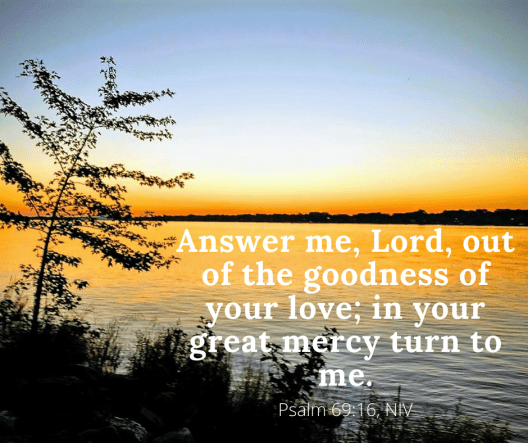
Lord God, your mercy knows no bounds,
therefore, I put my trust in you.
Amen.

26 Saturday Sep 2020
Tags
Lord God, your mercy knows no bounds,
therefore, I put my trust in you.
Amen.
05 Sunday Jul 2020
Tags

Wild roses — photo by David Kitz
31 Sunday May 2020
Tags

Early spring on Green’s Creek — photo by David Kitz
26 Tuesday May 2020
Tags
Reading: Psalm 30
(Verses 6-12)
When I felt secure, I said,
“I will never be shaken.”
LORD, when you favored me,
you made my royal mountain stand firm;
but when you hid your face, I was dismayed.
To you, LORD, I called;
to the LORD I cried for mercy:
“What is gained if I am silenced,
if I go down to the pit?
Will the dust praise you?
Will it proclaim your faithfulness?
Hear, LORD, and be merciful to me;
LORD, be my help.”
You turned my wailing into dancing;
you removed my sackcloth and clothed me with joy,
that my heart may sing your praises and not be silent.
LORD my God, I will praise you forever (NIV).*

Early spring morning, Petrie Island — photo by David Kitz
Reflection
Every psalm in the Book of Psalms reveals to us an aspect or characteristic of God. Here in Psalm 30, we see the LORD God of mercy, redemption and sudden turn-a-rounds.
We all go through times of triumph as well as times of deep discouragement. My emotional life often swings between these two extremes. Some days my glass is half full; on other days it is half empty. My faith level soars and plummets, often quite abruptly depending on circumstances. David also experienced these swings between optimism and pessimism. They are a trademark of his psalms. Perhaps that’s why I love them. They reflect my own life experience.
In the opening lines of today’s reading, David swings between a position of utter confidence and security to a position of shaken dismay. When trouble or disaster strikes we may well ask, “Where is God in all this?” Like David we may call out, “What is gained if I am silenced, if I go down to the pit? Will the dust praise you? Will it proclaim your faithfulness? Hear, LORD, and be merciful to me; LORD, be my help.”
God is always on His throne. He is not caught by surprise when you lose your job, a relationship breaks down, a pandemic hits, or you suffer a great loss. He remains secure, but more than that He is a God of great mercy and sudden turn-a-rounds. He is the LORD God of resurrection. He turned the disciples mourning into dancing when He raised Jesus from the dead. Always, always, always remember He can do the same for you. In the course of this psalm He turned David around. Jesus is the resurrection artist. And furthermore remember this: Jesus Christ is the same yesterday and today and forever (Hebrews 13:8).
Response: You turned my wailing into dancing; you removed my sackcloth and clothed me with joy, that my heart may sing your praises and not be silent. LORD my God, I will praise you forever. Amen.
Your Turn: Has God turned around a seemingly impossible situation for you? Take a moment to remind yourself of those God sent turn-a-rounds.
This post by award-winning author David Kitz will be published in book format later in 2020 by Elk Lake Publishing under the title 365 Days through the Psalms.
21 Saturday Mar 2020
21 Saturday Mar 2020
Tags

Wild pin cherries — Photo by David Kitz
17 Tuesday Mar 2020
13 Monday Jan 2020
Posted in Devotionals, Psalm 137, Psalms
Reading: Psalm 137
(Verses 7-9)
Remember, LORD, what the Edomites did
on the day Jerusalem fell.
“Tear it down,” they cried,
“tear it down to its foundations!”
Daughter Babylon, doomed to destruction,
happy is the one who repays you
according to what you have done to us.
Happy is the one who seizes your infants
and dashes them against the rocks (NIV).

Winter scene Montebello, Quebec — photo by David Kitz
Reflection
German is a fascinating language. It’s a language that seems to specializes in compound words—short words that are combined to form longer words. Some English language examples of compound words are quarterback, overcoat and windshield.
Schadenfreude is a compound German word. Actually, it’s such a useful and descriptive word that it has migrated into the English language and it can be found in any quality English dictionary. Schaden means harm or damage. Freude means joy. Simply put schadenfreude means joy experienced at another person’s expense—rejoicing in someone else’s suffering or loss.
Today’s reading from Psalm 137 is all about schadenfreude. The Edomites celebrated the destruction of Jerusalem. Rather than mourn over their neighbor’s calamity, they joined in calling for the destruction of the Jewish capital.
This manifestation of schadenfreude was rooted in centuries of fraternal rivalry and envy. The Edomites were the descendants of Esau, while the people of Jerusalem were the descendants of Jacob. These two people groups were linked by heredity, language and culture, and yet generation after generation they continued this brothers’ feud.
This psalm is not the only biblical counsel for us to avoid rejoicing in other people’s harm: Do not gloat when your enemy falls; when they stumble do not let your heart rejoice, or the LORD will see and disapprove and turn his wrath away from them (Proverbs 24:17-18).
If the LORD is punishing the evildoer, we should not appear too smug. We are spared by the grace of God and not by our moral superiority. The self-righteous suffer from delusions born of pride. It’s best not to identify with that camp. The opposite response is called for. Rather than crowing over someone else’s misfortune, we should be offering help, or drawing lessons on how to avoid a similar calamity.
When I see others experiencing calamity, I need to replace my schadenfreude with the genuine joy found in extending mercy, grace and compassion.
Response: LORD God, at times I have been guilty of schadenfreude. Help me to show compassion rather than smug indifference when I see others experience loss. Thank you for your ongoing mercy. Amen.
Your Turn: Have you experienced schadenfreude? How do you keep it in check?
23 Monday Dec 2019
Posted in Devotionals, Psalm 130, Psalms
Reading: Psalm 130
A song of ascents.
(Verses 1-4)
Out of the depths I cry to you, LORD;
LORD, hear my voice.
Let your ears be attentive
to my cry for mercy.
If you, LORD, kept a record of sins,
LORD, who could stand?
But with you there is forgiveness,
so that we can, with reverence, serve you (NIV).

A winter wonderland, Racette Park, Orleans, ON — photo by David Kitz
Reflection
Psalm 130 is a perfect example of a psalm that brings us into the private inner sanctum of communion with God. Here is a portrait of a fallen man—a man on his knees before his Maker, the eternal One. Hear him now as he agonizes in prayer, “Out of the depths I cry out to you, O LORD; O LORD, hear my voice. Let your ears be attentive to my cry for mercy.”
The opening lines of this psalm leave little doubt as to what has transpired. The psalmist has failed; he has missed the mark. He has transgressed, yet again. There is an abject poverty of spirit reflected in these words—a poverty that almost makes us cringe.
We do not know what sin, or list of sins has brought the psalmist to this wretched state. The transgression is left unstated. Was it anger, malice, or unbridled lust? Was it pride, greed or willful dishonesty? Was this a transgression of the mind, of the tongue, of action or inaction? God knows.
I am always somewhat skeptical of those who claim they could never commit this or that sin. I think we rarely comprehend the depravity of our own hearts. Pushed into wrong circumstances, in the wrong environment, with the wrong peer group, who can plumb the depths to which a man or woman may sink? I can identify with the psalmist. I have added my own pile of dung to this world’s heap of moral filth. I too have found myself in the psalmist’s position, sobbing out these words, “Out of the depths I cry out to you, O LORD; O LORD, hear my voice. Let your ears be attentive to my cry for mercy.“
But despite my failings, despite my moral poverty, this great God—this God of holiness—is approachable. He is a God of mercy. The psalmist reminds himself and the LORD of His merciful nature with these words: If you, LORD, kept a record of sins, LORD, who could stand? But with you there is forgiveness, so that we can, with reverence, serve you.
I need daily reminders of God’s forgiveness and mercy. God the moral accountant is also the LORD of forgiveness. No one does forgiveness better than God. When we confess our sins, He destroys the record. What accountant does that?
Response: Father God, I thank you for forgiveness. I have failed you many times, but you are rich in mercy. You are a patient God. Thank you for destroying the record of my sins. Thank you for the blood Jesus shed so I could be washed clean. Amen.
Your Turn: Have you been guilty of digging up the record of your sins—sins that have been forgiven?
12 Thursday Dec 2019
Posted in Devotionals, Psalm 123, Psalms
Tags
Reading: Psalm 123
A song of ascents.
I lift up my eyes to you,
to you who sit enthroned in heaven.
As the eyes of slaves look to the hand of their master,
as the eyes of a female slave look to the hand of her mistress,
so our eyes look to the LORD our God,
till he shows us his mercy.
Have mercy on us, LORD, have mercy on us,
for we have endured no end of contempt.
We have endured no end
of ridicule from the arrogant,
of contempt from the proud (NIV).

Photo by Luis Quintero on Pexels.com
Reflection
Like every parent, I have had moments when I have needed to correct my children. In my professional life as a teacher, correcting a child’s behavior was a daily, sometimes minute-to-minute occurrence. In such situations eye contact is crucial. If the child does not make eye contact with you, you are wasting your breath. Your advice—your admonition—your warning—is going nowhere. You might as well speak to the wind. But in such situations, it is essential that you speak to the heart of the child.
The eyes are the window of the heart. When someone is avoiding eye contact, in reality they are hiding their heart. They are closing their heart to you.
Of course the same principle is true when we consider our relationship with God. We need to make eye contact with the LORD. That’s why there is something truly intimate about this psalm. It’s all about making eye contact with God. It’s about opening your heart to the LORD and exposing what is deep inside you. You are showing when you lift your eyes to Him that you are ready to receive instruction. Yes, and correction too, if that is needed.
So the psalmist speaks these words: I lift up my eyes to you, to you who sit enthroned in heaven. He takes the position and the posture of a slave—a humble servant. He is looking for mercy—hoping for grace and blessing from the hand of His master.
This is perhaps the most intimate of the Songs of Ascent. Having come a great distance, the pilgrim is now in the LORD’s house. He has drawn nigh in the fullest sense. The pilgrim lifts his eyes—not to an idol, but to the LORD—the One who fills all, formed all, and transcends all. With eyes wide open he exposes his heart to God. He waits expectantly for the LORD’s instruction.
Prayer at its best is modeled for us in this psalm. It’s prayer with our eyes and our ears wide open to God. We are looking to Him for mercy, comfort, strength and direction.
Response: Father God, I come before you now. I lift up my eyes to you, to you who sit enthroned in heaven. Be merciful to me. Speak to me. Correct me, if I need correction. Give me direction. I am ready to receive instruction from you. I am your servant. Amen.
Your Turn: Are you drawing nigh to God? How do you make eye contact with the Lord?