• Home
  • About
  • DavidKitz.ca
  • Youtube Videos
  • Books by David
  • Books on Amazon.com

I love the Psalms

~ Connecting daily with God through the Psalms

I love the Psalms

Tag Archives: Passion Week

Good News to Start 2018

03 Wednesday Jan 2018

Posted by davidkitz in book review, Books by David Kitz, Psalms

≈ 20 Comments

Tags

award, crucified, crucifixion, Easter, forgiven, Interviews and Reviews, Lent, Longinus, New Years Day, Passion Week, redeemed, the cross, The Soldier Who Killed a King

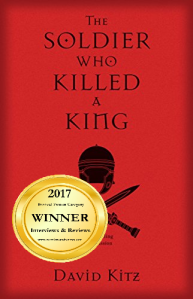
It’s always encouraging to get good news as you start the new year. That was my experience on New Years Day this year as I got word that my novel The Soldier Who Killed a King was voted the top book in the biblical fiction category for 2017, by the Christian book service, Interviews and Reviews.

biblical-fiction-award-2017_origYes, I was pleased! Winning this award bodes well for book sales as we approach the Lent and Easter season which will commence in mid February.

The book details the events of Passion Week as seen through the eyes of the Roman centurion, Marcus Longinus. He is the centurion who at the foot of the cross made this startling confession about Jesus, “Surely he was the Son of God!” (See Matthew 27:54, NIV.)

What led this hardened soldier to reach such a conclusion?

I think we often underestimate the power of the cross and the heart-gripping story that unfolded there. Paul, the apostle, did not make that mistake. Paul writes: Jews demand signs and Greeks look for wisdom, but we preach Christ crucified: a stumbling block to Jews and foolishness to Gentiles, but to those whom God has called, both Jews and Greeks, Christ the power of God and the wisdom of God (1 Corinthians 1:22-24). Biblical fiction winner 2017

The real good news for 2018 isn’t that my book won an award. The true good news is that Jesus suffered and died a wretched death on a wooden cross, so that I can be redeemed and forgiven.

He did the same for you. Do you believe that?

Have you been to the foot of the cross lately? I dare you to go there. Go there and be changed—truly changed.  That’s the real power of the cross. And that my friend is absolutely the best news of 2018!

This year I pray that you will fully experience the transformational power of the cross.


Pre-Christmas Sales Begin

15 Wednesday Nov 2017

Posted by davidkitz in book review, Books by David Kitz, Psalms

≈ Leave a comment

Tags

Amazon, Caiaphas, centurion, David Kitz, King Herod, Longinus, Passion Week, Pontius Pilate, The Soldier Who Killed a King

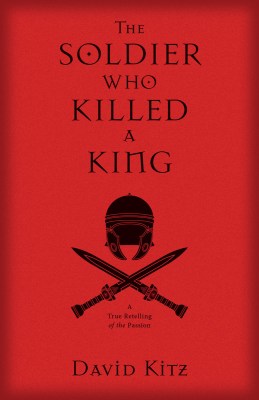
This week I noticed something different when I checked on the status of The Soldier Who Killed a King on Amazon. The price has dropped from $14.99 to $12.59US. There has been a similar drop on the Canadian website from $19.99CAD to $15.92CAD.

Since I have no control over prices, I can only guess that the corporate world wants to increase the sales volume, and as a result we the reading public can enjoy the benefit of a great book at a reduced price. The best deal I have seen online for a new edition of this book is at Christianbook.com where the list price is $10.99US.Soldier book

If you have been considering purchasing this historical novel, this is an ideal time. Here’s the book descriptor:

A stunning story of Holy Week through the eyes of a Roman centurion

Watch the triumphal entry of the donkey-riding king through the eyes of Marcus Longinus, the centurion charged with keeping the streets from erupting into open rebellion.

Look behind the scenes at the political plotting of King Herod, known as the scheming Fox for his ruthless shrewdness.

Get a front-row seat to the confrontation between the Jewish high priest Caiaphas and the Roman governor Pontius Pilate.

Understand as never before the horror of the decision to save a brutal terrorist in order to condemn the peaceful Jew to death.

If you’ve heard the story of Passion Week so often it’s become stale, now is the time to rediscover the terrible events leading from Jesus’s humble ride into the city to his crucifixion. The Soldier Who Killed a King will stun you afresh with how completely Christ’s resurrection changed history, one life at a time.

Now discover for yourself the transformational power of the cross and the resurrection.

REVIEW OF: The Soldier Who Killed a King

31 Thursday Aug 2017

Posted by davidkitz in Books by David Kitz, Psalms

≈ 6 Comments

Tags

author, Barabbas, Bible, Canadian Bible Society, centurion, Christian, crucifixion, David Kitz, Easter, gospel, historic novel, historical research, Jesus, Passion Week, plot, Roman centurion, terrorist, The Soldier Who Killed a King

REVIEW OF: The Soldier Who Killed a King
SUB-TITLE: A True Retelling of the Passion
PUBLISHER: Kregel Publishing, 2017, 285 pages Soldier book
CLASSIFICATION: Historical Christian fiction
ISBN: 978-0-8254-4485-2
AUTHOR: David Kitz

BY: Wilf Wight, Director, (retired)
Eastern Ontario District
Canadian Bible Society

Maybe it is because I am left-handed, or maybe it demonstrates impatience, but when I first pick up any book, I invariably flip to the concluding pages. Call me a cheater if you will, but I am looking for a conclusion worthy of the time required to read the book! When I turned to the back of The Soldier Who Killed a King, the concluding pages of this story accomplished what every well-written book should do. The author reached back into the plot for a brief review and then projected the reader toward the future. In this case, the plot obviously had elements of violence and suffering which were being transformed through forgiveness and healing. And the future held promise of hope and excitement.

My attention next is concentrated on the first couple of chapters. Has the author grasped my attention in the opening paragraphs? Was sufficient detail given to introduce the plot, while only hinting at more intrigue to follow? Were the characters being carefully introduced in a way that begged my investigation? Yes, the author passed the basic tests. He had been successful in reaching out to me and I wanted to read this book!

Our western world has had major exposure to the Christian Gospel and most readers know at least something of what has come to be known as Holy Week, the week between Palm Sunday and Easter. However, the Bible makes only passing reference to two of the main characters in the story, the Centurion (military officer) who carried out the crucifixion and Barabbas (the convicted murderer) released by the authorities. The author seizes upon this opportunity to give them personalities, develop their thoughts and articulate their opinions. This proved to be a clever and effective tool to experience the unfolding of the drama in a fresh perspective.

For readers who have the mistaken idea that the biblical account is far removed from reality, here is fiction that will help them discover truth. As the author effectively paints the picture of the process of first century justice, political influence and compromise become realities. We cringe as the sentence is carried out by the most cruel and violent method. This is the most gripping account of the crucifixion that I have ever read! One could almost hear the hammer fall, feel the pain, sense the dishonor and share the guilt of that scene. After reading the description of the crucifixion of the first two victims, I hesitated, in fact halted.  I was not sure if I wanted to tackle the third one—that of the Christ. And yet, despite the graphic description of this horrible experience, the author accomplished his goal without resorting to gross descriptions of the mangled human body.

We are confronted with the enigma of the Christ. He is the one who has demonstrated miraculous power to heal the lame and restore sight to the blind. He is the one who gently took children on his knee to teach them. Yet he set aside the exercise of his powers to submit to the terror of the Cross. The terrorist, Barabbas, was released—set free from prison and back into society—as the peoples’ alternative choice. And the sentence was carried out under Pilate’s  orders by the Soldier. Through the eyes of these two characters we see another perspective, which does not usually come to the mind of the worshiper during Passion Week.

One device the author uses effectively is the introduction of each chapter with a day and time orientation. In this way the unfolding of the drama is situated on the calendar. Those who know the biblical account realize that Friday is coming but that is not the end of the story because Easter Sunday will be the revelation of the resurrected Christ.

As we approach the chapter dealing with Easter Sunday, the reader is rewarded with the hope and excitement of an amazing new day. The darkness of the crucifixion is not forgotten but rather dims in the light of the resurrection. The despair of death is replaced by the hope of new life. The willing submission of Jesus, the Donkey King, to the soldiers is now recast as the power of the One who can forgive and restore.

The concluding pages of the story bring us to a climax, so well-crafted and tensioned that I dare not give it away.

The epilogue provides further details of the main characters of the plot, gleaned from historical research. The endnotes reference biblical and other texts, which document the main course of events. The author has done his homework. His account of these events is well researched and credible.

4485 TWITTER


Read a Chapter

08 Thursday Jun 2017

Posted by davidkitz in Books by David Kitz, Psalms

≈ Leave a comment

Tags

centurion, Christ's Passion, David Kitz, donkey, historic novel, Hosanna, Jerusalem, Jesus of Nazareth, Kregel, palm branches, Passion Week, Passover, Roman centurion, Son of David

Four in the afternoon, Sunday, April 2, AD 30

It was never like this before.

I have been posted here, in Jerusalem for ten years now, but in all that time I had never seen a Passover crowd like this. It was not the numbers. I had seen that before.

What made the big difference was the person at the center of it all. You see there had never been a central figure before. The Passover pilgrims just came plodding into the city in reverent caravans. Some of them would be chanting psalms. Others were silent; looking bone weary as they trudged, like fretful herdsmen with children in tow. Undoubtedly many were relieved that their holy city was finally in view.

Soldier bookBut, this year it was different. There was this man – at the center of the whole procession. Every movement within that huge throng seemed focused on him.

Squinting in a futile attempt to get a better view, I gave Claudius a backhanded slap to the shoulder and demanded, “What are they doing?”

“They’re climbing the trees, sir.”

“I can see that!” I snapped impatiently, “But what are they doing?”

“They seem to be tearing off the palm branches, sir.”

“What is going on here?” I said it more to myself than to any of the men standing near me. An uncomfortable feeling crept into me as the procession advanced.

“They don’t usually do this?” Claudius questioned.

“No.  . . .  They’ve never done this before.” There was worry in my voice.

Claudius had been recently assigned to this place, the festering armpit of the Empire, and I was at a loss to explain what was happening before us. We were standing on the wall above the gate of Jerusalem, and there less than a half mile ahead of us, we could see the jubilant pilgrims surging toward us, in numbers that were alarming.

“They’re laying the palm branches on the road in front of that man – the man on the donkey.”

Until Claudius said it, I had not noticed the donkey. Its small size, and the frenzy of activity round about, must have obscured this detail in the picture before me. What an odd way for this man to come? I could make no sense of it.

“They’re throwing down their cloaks before him.”

The sweat-glistened bodies of several men were clearly visible. Outer garments were being cast down as a sign of homage before this man. At the same time the rhythmic chanting of their voices became more distinct.

What were they singing? Could I pick up the words?

“Hosanna to the Son of David!
Blessed is he who comes in the name of the Lord!
Hosanna in the highest!”[i]

That’s when it hit me like a barbarian’s club. I realized what I was witnessing. It was a triumphal entry – the entry of a king.

It was the words.  The words they were now boisterously shouting. He was their Messiah. The son of David! The one they were waiting for! The one who would rid them of the Romans. He would set up his glorious Jewish kingdom, here, in Jerusalem! This is what I had been warned about since the day I first set foot on this cursed Judean soil.

And we, I and my men, and the garrison in the city, were all that stood in their way.

This crowd of thousands was sweeping down the Mount of Olives into the Kidron Valley and then on toward us. They advanced like a huge human wave about to collide with the rock hewn palisades on which we stood.

Would they sweep us away?

My initial curiosity had grown into worry. Now in an instant my worry turned to alarm. Instinctively, everything within me shouted, “Stand! Resist! Be a Roman!”

We had soldiers posted all about the city, especially along the pilgrim route. My own hundred men were among the first to be deployed. During Jewish feasts like this we made certain we were highly visible. I dreaded what might happen if this crowd ran wild. Rioting could erupt, and with an impassioned throng such as this riots have a way of quickly turning deadly.

For several moments a debate raged in my mind. Should I order the gate closed to keep this rabble with their pretender king out of the city? Or, should I let everything proceed – let it proceed as though somehow, we had not taken note of what was going on?

“Stand! Ready for orders!” I shouted above the swelling din. The sentinels on the wall snapped to attention.

I hastily scanned the crowd for any sign of weapons, any hint of armed treachery. To my surprise I saw none. They were paying no attention to us. Everyone was caught up with hailing this man, the man on the donkey.

The front edges of the crowd had now reached the first platoon of eight men that I had positioned by the roadside about four hundred yards before the gate. But they ignored them, sweeping past the clump of soldiers, without so much as creating a ripple, like a round stone in a swift flowing stream.

At that moment I knew it made no sense to lower the gate. It would only enrage this crowd that was already fully aroused and moving as one.

Let them come. We’ll handle them and their king inside the city.

Their king. On a donkey. I could only shake my head in disbelief.

I had watched many a triumphal entry, while growing up in Rome, and the conquering hero always rode a gallant war horse. And as a boy, I too had  dreams of personal glory. But a donkey? It could only happen here, I thought with an incredulous grin.

I could see him clearly now. Donkey or not, he had the look of a man who knew exactly what he was doing. Those about him might not know, or understand, but he knew. He had a destination in mind, a purpose. You could see it on his face.

“Hosanna to the Son of David!
Blessed is he who comes in the name of the Lord!”
Hosanna in the highest!”

There was something else that was different about him. At the time I did not know what it was. I could not put it into words for a long time. I think I noticed it because I had watched all those other men come into Rome in their triumphal processionals. They were conquerors, but still they were hollow men, feeding off of the adulation of the crowd, thirsting but never satisfied. You could see them vainly drink it in, hoping it would somehow fill the empty soul.

He was not drinking from the crowd. I somehow sensed he was full already, and what he had within, must have come from a different source.

“Hosanna in the highest!
Hosanna to the Son of David!
Blessed is he who comes in the name of the Lord!”

Just at that moment a strange feeling seemed to rise within me. Maybe it was the joy of the crowd. I had expected anger. Maybe it was the children waving the palm branches, or the spontaneity of the singing? I don’t know. For one moment it all seemed to come together. It seemed right somehow. Like heaven and earth had finally, for a moment, come into agreement – an agreement that had never been achieved before.

“Hosanna in the highest!”
He was much closer now.
“Hosanna to the Son of David!”
He was now within the shadow of the gate.
“Blessed is he who comes in the name of the Lord!”

At that moment he looked up. For an instant our eyes met. Then I heard a voice – clearly heard a voice say, “I have a future for you.”

I was confused.

I turned to Claudius and said, “What did you mean by that?”

“What did I mean by what?” He had a blank look on his face.

“By what you said about – about the future?”

“I didn’t say anything about the future, Sir. I didn’t say anything.”

Now I was totally baffled. Was I hearing voices? This whole thing was making no sense, no sense at all. Passover pilgrims are not supposed to come into the city this way. We’ve got a revolutionary on the loose – riding a donkey. And now I’m hearing things?

I rubbed the sweat from my forehead, hoping for some clarity to emerge out of all this.

I had a hundred men whose lives were in danger from this Jewish messiah, and his horde of followers. That’s what mattered now.

By this time the donkey man had passed under the gate and was heading in the direction of the temple in the heart of the city.

I signaled for Claudius to follow, as I raced down the stairs of the gatehouse. As I emerged onto the street, I grabbed the first two-legged bit of Jewish scum I saw. Pressing him against the stone wall I demanded, “Who is that man?” At the same time I pointed at the retreating figure on the donkey.

The poor wretch was in shock and seemed quite unable to get out a word.
Claudius reached for his sword.

“Je – Jesus of Nazareth!” He stammered and then quickly added, “The prophet from Nazareth in Galilee.”

I loosened my grip. Then in a voice loud enough for all near to hear I announced, “Well there is one thing I do know. We’re going to have to keep an eye on that man.”

  • For the month of June The Soldier Who Killed a King is available for preorder from Kregel Publishing for the early bird price of $10.99. The worldwide release date is July 25th.
  • Place your order today: http://www.kregel.com/fiction/the-soldier-who-killed-a-king/

The Soldier Who Killed a King

21 Sunday May 2017

Posted by davidkitz in Books by David Kitz, Psalms

≈ Leave a comment

Tags

Caiaphas, centurion, David Kitz, Holy Week, Jesus, King Herod, Kregel, Longinus, Passion Week, Pontius Pilate, terrorist

A stunning story of Holy Week through the eyes of a Roman centurion

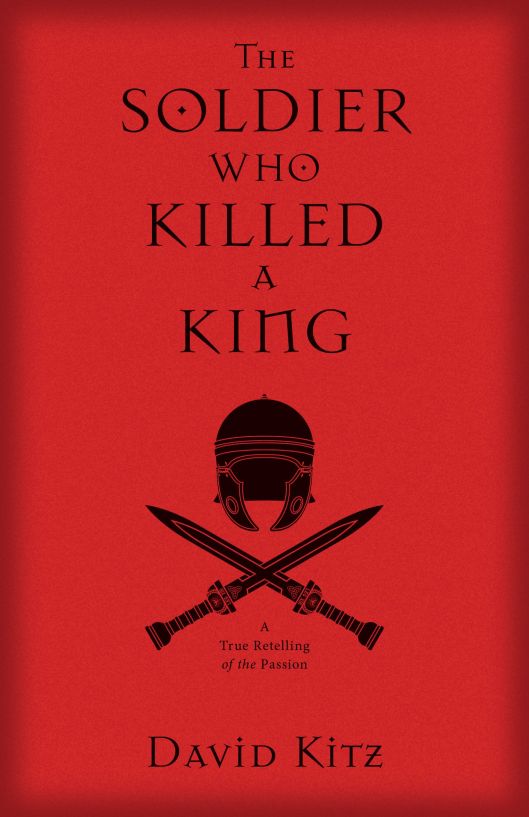
Soldier 800kb

New from David Kitz and Kregel Publishing — now available for preorder

Watch the triumphal entry of the donkey-riding king through the eyes of Marcus Longinus, the centurion charged with keeping the streets from erupting into open rebellion.

Look behind the scenes at the political plotting of King Herod, known as the scheming Fox for his ruthless shrewdness.

Get a front-row seat to the confrontation between the Jewish high priest Caiaphas and the Roman governor Pontius Pilate.

Understand as never before the horror of the decision to save a brutal terrorist in order to condemn the peaceful Jew to death.

If you’ve heard the story of Passion Week so often it’s become stale, now is the time to rediscover the terrible events leading from Jesus’s humble ride into the city to his crucifixion. The Soldier Who Killed a King will stun you afresh with how completely Christ’s resurrection changed history, one life at a time.

To pre-order directly from the publisher click on the link below:

http://www.kregel.com/fiction/the-soldier-who-killed-a-king/
The Rejected Stone

28 Wednesday Dec 2016

Posted by davidkitz in Psalm 118, Psalms

≈ 10 Comments

Tags

Christ, cornertone, foundation, Gatineau Park, Jesus, living rock, Passion Week, rejection, rejection of Jesus, rock of salvation, the LORD, the stone builders rejected

Reading:                                        Psalm 118

(Verses 22-29)

The stone the builders rejected
has become the cornerstone;
the L
ORD has done this,
and it is marvelous in our eyes.
 The L
ORD has done it this very day;
let us rejoice today and be glad.

 LORD, save us! LORD, grant us success!

Blessed is he who comes in the name of the LORD.
From the house of the L
ORD we bless you.
The L
ORD is God,
and he has made his light shine on us.
With boughs in hand, join in the festal procession
up to the horns of the altar.

You are my God, and I will praise you;
you are my God, and I will exalt you.

Give thanks to the LORD, for he is good;
his love endures forever
(NIV).\

Reflection

This final reading from Psalm 118 contains one of the most profound messianic prophecies of the Old Testament. The opening sentence carries great significance: The stone the builders rejected has become the cornerstone; the LORD has done this, and it is marvelous in our eyes.

img_20161010_150036

Along a Gatineau Park trail — photo by David Kitz

The apostle Peter identifies Jesus as the stone the builders rejected. He adds that this rejection was due to disobedience and unbelief and he quotes Isaiah 8:14 to prove his point. “[Jesus is] A stone that causes people to stumble and a rock that makes them fall.” They stumble because they disobey the message—which is also what they were destined for. But you are a chosen people, a royal priesthood, a holy nation, God’s special possession, that you may declare the praises of him who called you out of darkness into his wonderful light (1 Peter 2:8-9).

In reality our reading from Psalm 118 paints a metaphoric picture of Christ’s Passion Week. When Jesus arrived triumphant in Jerusalem on Palm Sunday he was greeted by the crowds chanting this line from Psalm 118: “Blessed is he who comes in the name of the Lord!” (Matthew 21:9). But later, Jesus, the rock of our salvation, was rejected by the religious leadership. Metaphorically, he was taken up to the horns of the altar and there on a cruel wooden cross, the Lamb of God became our sacrificial offering.

But… but praise be to God! The stone the builders rejected has become the cornerstone. This same Jesus was raised from the dead on the third day, and now he offers forgiveness and salvation for all those who put their faith in him. He is our living rock—the rock that accompanied Israel through the wilderness. See 1 Corinthians 10:1-5. Jesus is the rock on which you can build your life—your cornerstone.

Response: Father God, I thank you for your prophetic word because it points to Jesus. Lord Jesus, you are the rock solid foundation of my life. I give thanks to the LORD, for he is good! Amen.

Your Turn: Are you building on the Rock, which is Christ?

Newer posts →

Psalms 365: Develop a Life of Worship and Prayer

Psalms 365 Volume II

Psalms 365 vol 3
— Psalms 365 Volume III

Psalms

Recent posts

  • May the LORD Grant All Your Requests December 20, 2025
  • A Horn of Salvation December 19, 2025
  • Ready for the King of Glory December 19, 2025
  • My Spirit Rejoices in God My Savior December 18, 2025
  • Joining the Generation That Seeks God December 18, 2025
  • Why Am I So Favored December 17, 2025
  • How Can You Find the Good Life? December 17, 2025

Calendar

December 2025
M T W T F S S
1234567
891011121314
15161718192021
22232425262728
293031  
« Nov    

Blog Posts

Comments

  • davidkitz on Joining the Generation That Seeks God
  • cjsmissionaryminister on God Sent His Son
  • cjsmissionaryminister on The God of the Broken

Blog at WordPress.com.

Privacy & Cookies: This site uses cookies. By continuing to use this website, you agree to their use.
To find out more, including how to control cookies, see here: Cookie Policy
  • Subscribe Subscribed
    • I love the Psalms
    • Join 1,377 other subscribers
    • Already have a WordPress.com account? Log in now.
    • I love the Psalms
    • Subscribe Subscribed
    • Sign up
    • Log in
    • Report this content
    • View site in Reader
    • Manage subscriptions
    • Collapse this bar
 

Loading Comments...