• Home
  • About
  • DavidKitz.ca
  • Youtube Videos
  • Books by David
  • Books on Amazon.com

I love the Psalms

~ Connecting daily with God through the Psalms

I love the Psalms

Tag Archives: Pharisees

Opening Blind Eyes

12 Sunday Oct 2025

Posted by davidkitz in The Elisha Code

≈ 2 Comments

Tags

apostles, blind, church, Elisha, Jesus, New Testament, Old Testament history, Pharisees, prophetic, prophets, repentance, spirtual blindness

In that day the deaf will hear the words of the scroll,
and out of gloom and darkness the eyes of the blind will see.
(Isaiah 29:18, NIV)

In 1546, the English writer and poet, John Heywood, penned this proverb, “There are none so blind as those who will not see.”[i]
            Heywood’s proverb is as relevant to our times as it was in his day. The most damaging condition modern humanity suffers from is spiritual blindness. But alas, this condition has been afflicting humans since we exited Eden.
            Perhaps no biblical account portrays spiritual blindness better than the story of Elisha and his servant as they are trapped in the besieged city of Samaria. On the first morning of the siege, Elisha’s servant panicked when he saw the foreign army, but the prophet responded with these words:

             “Don’t be afraid,” the prophet answered. “Those who are with us are more than those who are with them.”
             And Elisha prayed, “Open his eyes, LORD, so that he may see.” Then the LORD opened the servant’s eyes, and he looked and saw the hills full of horses and chariots of fire all around Elisha
(2 Kings 6:16-17, NIV).

            As is so often the case, the servant was blind to the spiritual realm. Today, the servants of God suffer from the same short-sightedness. It took the prayer of Elisha to open the servant’s eyes. In our day, it also takes the Holy Spirit and present-day prophets to open our eyes.  
            This eye-opening miracle was paired with a mass-blinding miracle on an unprecedented scale.

             As the enemy came down toward him, Elisha prayed to the Lord, “Strike this army with blindness.” So he struck them with blindness, as Elisha had asked.
            Elisha told them, “This is not the road and this is not the city. Follow me, and I will lead you to the man you are looking for.” And he led them to Samaria
(2 Kings 6:18-19, NIV).

          Elisha led the enemy army into the presence of the king of Israel in the heart of the capital. The king then inquired if he should slaughter his enemies. But Elisha counseled kindness rather than retribution, and a feast was prepared for the Aramean army. This act of unprecedented grace and generosity led to a time of peace between these two warring nations (2 Kings 6:23).
            Eight centuries before Christ, Elisha’s advice to the king puts into practice the words of Jesus from his Sermon on the Mount. 

           “But to you who are listening I say: Love your enemies, do good to those who hate you, bless those who curse you, pray for those who mistreat you. If someone slaps you on one cheek, turn to them the other also. If someone takes your coat, do not withhold your shirt from them. Give to everyone who asks you, and if anyone takes what belongs to you, do not demand it back. Do to others as you would have them do to you (Luke 6:27-31).

          There is an uncanny link between Elisha, the Old Testament prophet, and Jesus, his New Testament counterpart. Both men see beyond the natural realm to the astonishment of the people of their day, and both prophets counsel kindness rather than revenge in dealing with enemies.
            Though there are many outstanding miracles recorded in the Old Testament, there is no account of the physically blind receiving their sight. Yet, time after time in the Gospels, Jesus restored sight to the blind.[ii] These physical miracles were signposts pointing to an even more significant restoration of sight—the restoration of spiritual eyesight—eyesight that allows us to see who Jesus truly is and what he is doing.
            The account of Jesus healing the blindman at the Pool of Siloam is entirely about opening the eyes of those who are both physically and spiritually blind. (See John 9.) The man who received his sight was blind from birth. This was not simply a miracle of restoration. It was a creative miracle, on par with the Adam and Eve account in Genesis 2, as Jesus so aptly demonstrated.

              While I am in the world, I am the light of the world.”
 After saying this, he spit on the ground, made some mud with the saliva, and put it on the man’s eyes. “Go,” he told him, “wash in the Pool of Siloam” (this word means “Sent”). So the man went and washed, and came home seeing
(John 9:5-7, NIV).

             Jesus opened the eyes of the blindman, but as the story continues, we see he is unable to open the eyes of the spiritually blind Pharisees. John Heywood’s proverb proves true, “There are none so blind as those who will not see.”
            The Pharisees in this account were wilfully blind. Many today suffer from the same willful blindness. Due to their stubborn hearts, they are unable to see who Jesus truly is.
            The entirety of John 9 is about seeing—seeing and recognizing who Jesus is. The miracle of the man blind from birth receiving his sight should have alerted the Pharisees and temple authorities to the divine nature of Jesus, the miracle worker. But the Pharisees could not see past the fact this miracle had been wrought on the Sabbath. The miracle worker had violated the Sabbath, so they reasoned, he must be a sinner and unworthy of respect.

                 Then they turned again to the blind man, “What have you to say about him? It was your eyes he opened.”
               
The man replied, “He is a prophet.” (John 9:17, NIV)

                The healed blindman stated what was patently obvious to him. He recognized that he had been touched by the hand of God. He saw Jesus as a prophet. All of Israel was waiting expectantly for a prophet—a prophet who would once again demonstrate the power of the Almighty. Surely, restoring sight to one who was born blind was a demonstration of this power. But the Pharisees questioned the validity of the miracle and the miracle worker.
                Why were many Pharisees so spiritually blind? Despite the evidence of multiple miracles, they were unwilling to recognize Jesus as a prophet. But this blindness was not a new condition. They had already rejected John the Baptist the forerunner of the Messiah. They refused to recognize John as a prophet too. See Matthew 21:25-27.
                And why did most Pharisees reject John the Baptist? The simple answer is because John preached a message of repentance. Repentance requires an acknowledgement of sin and a turning away from it. But the Pharisees, like many people nowadays, saw themselves as righteous already. They were blind to their sin, so they saw no need for repentance. Furthermore, repentance requires humility, a character quality they shunned in favor of obstinate pride—pride in their self-professed righteousness.
                Because the Pharisees did not recognize the first prophet, John, they were blind to the second prophet, Jesus. But Jesus was far more than a prophet. As his name implies, he was and is the Savior of the world. But the proud and the self-righteous have no felt need for a Savior. They see themselves as saved already—saved through their own efforts. In their own eyes—their spiritually blind eyes—they see no need for a Savior.
                This same spiritual blindness afflicts many in both the church and society today. The cure for spiritual blindness is repentance and rebirth by the power of the Holy Spirit. That was the message of our two New Testament prophets John the Baptist and Jesus.
                A gospel message that is preached without a call to repentance is not a gospel message at all. Coming to faith in Jesus requires—no, demands repentance. Real repentance is real change. Change from the inside out. Change that is deep, meaningful, and evident in daily life.
                John demanded change from those who came to be baptized, whatever their station in life, and that included Pharisees who in their pride believed no change was required. See Matthew 3:1-12.
                Furthermore, we should not see repentance simply as a one-time occurrence. Yes, it is the vital starting point in our walk of faith,[iii] but true repentance goes far beyond that. Repentance must be incorporated into our way of life—a life of continual turning away from sin and living in humble service to our Savior-King.[iv]
                Though the blindman received his sight, the Pharisees persisted in their spiritual blindness even though the miracle-working Savior was standing before them. 

                 Jesus said, “For judgment I have come into this world, so that the blind will see and those who see will become blind.”
                Some Pharisees who were with him heard him say this and asked, “What? Are we blind too?”
                Jesus said, “If you were blind, you would not be guilty of sin; but now that you claim you can see, your guilt remains.
(John 9:39-41, NIV)  

                For the Pharisees of Jesus day and the spiritually blind of our day, this maxim holds true: If we don’t recognize the prophet, we won’t recognize the Savior.
                Jesus’ words remain relevant today:      

                Whoever welcomes a prophet as a prophet will receive a prophet’s reward, and whoever welcomes a righteous person as a righteous person will receive a righteous person’s reward. (Matthew 10:41, NIV)

                The voice of the prophet is needed today just as it was in Jesus’ day. A national call to repentance is needed now. Who will voice that call? Where are the prophets for our time?
                The relative absence of legitimate prophetic voices in the church today should trouble us. There was a four-hundred-year prophetic gap between the Old and New Testament—a gap when the Spirit of God was silent. But then suddenly John the Baptist and Jesus appeared on the scene. The first two chapters of Luke describe an astonishing flurry of Spirit initiated activity as heaven set the great redemption story into motion. Will there be a similar flood of Spirit directed activity before Christ’s second coming?
                It is clear from the Scriptures prophets were active within the New Testament church, and furthermore, Paul considered them essential to the proper functioning of the body of Christ.

               So Christ himself gave the apostles, the prophets, the evangelists, the pastors and teachers, to equip his people for works of service, so that the body of Christ may be built up until we all reach unity in the faith and in the knowledge of the Son of God and become mature, attaining to the whole measure of the fullness of Christ. (Ephesians 4:11-13, NIV)

                In Acts we read that there were numerous prophets active in the church. Some of them are listed by name. They include Agabus, Barnabas, Simeon called Niger, Lucius of Cyrene, Manaen, and Saul.[v] This Saul is also known as Paul, and he and Barnabas were commissioned by the church leadership in Antioch to go on the first great missionary journey (Acts 13:1-3).
                Where would the church be today if these prophets had not spoken the word of the Lord over Paul and Barnabas? Would there be a church in Europe? Would we even know of the ministry of Paul? The New Testament church grew as it received prophetic direction from those who were tuned to hear the plans of God.

Landestreu Church

                The church of God grows and flourishes when there are men and women who hear what the Spirit is saying, see what the Spirit is doing, and then declare it to the church and the world. That is the role of the prophet.
                We need leaders with prophetic hindsight, insight, and foresight for the church to reach its full potential.
                Prophetic vision is not always forward looking or predictive. Sometimes it looks back at events in the past and sees them with heaven-endowed clarity. For example, Jesus spoke to the Samaritan woman at the well about her past marriages and current living arrangement (John 4:15-19). As a result, the Samaritan woman immediately recognized Jesus as a prophet. This gift of prophetic hindsight was pivotal in this entire community coming to faith.

                Many of the Samaritans from that town believed in him because of the woman’s testimony, “He told me everything I ever did.” So when the Samaritans came to him, they urged him to stay with them, and he stayed two days. And because of his words many more became believers. (John 4:39-41, NIV)

                The same prophetic hindsight is need today to capture the attention of individuals and reach whole communities estranged from Christ and the gospel.
                A word of caution is in order. Not all who call themselves prophets or apostles are prophets and apostles. A true prophet or apostle will be known by the fruit of their ministry, not by the self-styled handle on their business card. There have been false prophets throughout history. We should not be surprised when we see a raft of them emerge today. But the emergence of the counterfeit should not keep us from heeding those who genuinely hear from God and declare his word.
                Paul’s admonition to the Thessalonians remains valid:

                Do not quench the Spirit. Do not despise prophecies. Test all things; hold fast what is good. Abstain from every form of evil. (1 Thessalonians 5:19-22, NKJV)

                Humility and service to others are the hallmarks of genuine faith. Pride and self-aggrandizement are flashing red lights signalling error and deception. Know the Scriptures, heed the Spirit, and proceed with caution. God guides those who humbly seek him. Jesus still opens the eyes of the blind and he still uses prophetic voices to do just that.
                The third key that helps us unlock the Elisha code is prophetic vision or spiritual insight. It is vitally needed today.

[i] Who wrote the proverb “There are… | Trivia Answers | QuizzClub

[ii] Matthew 12:22, Matthew 15:30, Mark 8:22-26, Mark 10:46-52, Luke 7:2, John 9

[iii] Peter replied, “Repent and be baptized, every one of you, in the name of Jesus Christ for the forgiveness of your sins. And you will receive the gift of the Holy Spirit (Acts 2:28, NIV).

[iv] If we claim to be without sin, we deceive ourselves and the truth is not in us. If we confess our sins, he is faithful and just and will forgive us our sins and purify us from all unrighteousness. If we claim we have not sinned, we make him out to be a liar and his word is not in us (1 John 1:8-10, NIV).

[v] Acts 11:27-28, Acts 13:1-3, Acts 15:32, Acts 21:8-10

This is the fifth weekly excerpt from the award-winning book 
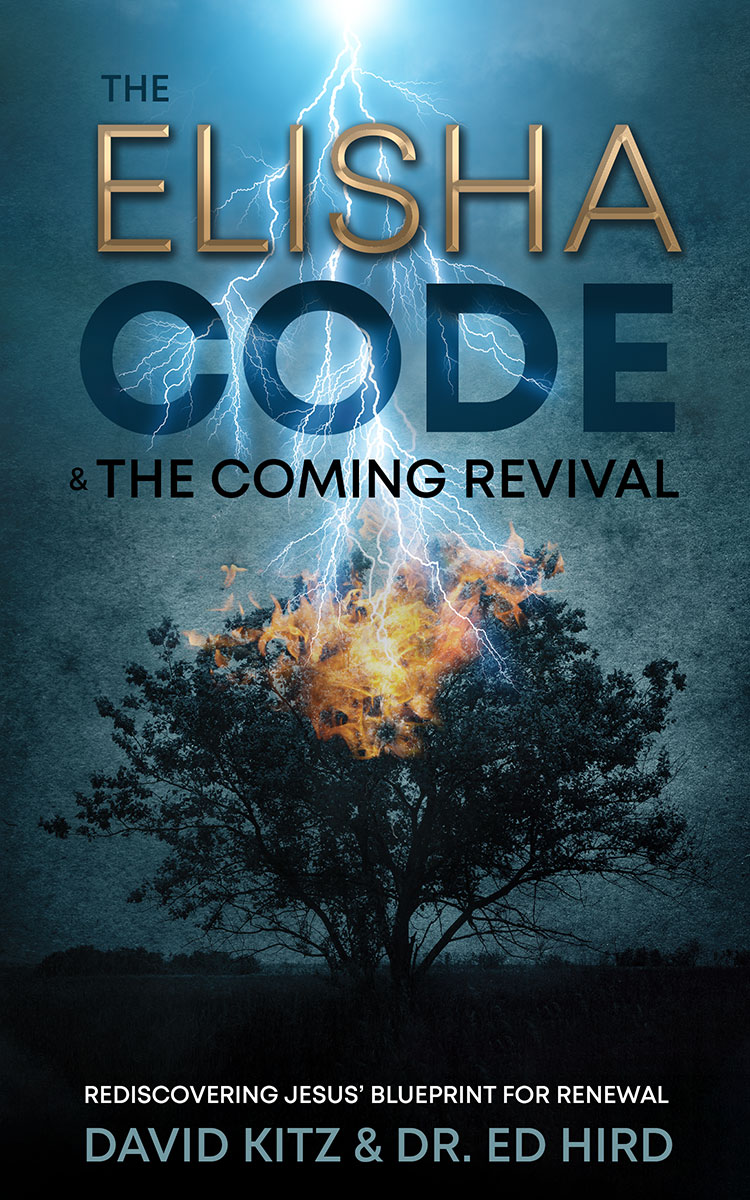
The Elisha Code & the Coming Revival 

A soul-gripping read.
Is a return-to-Jesus revival possible in our time?
This book points the way forward.
For details click here.

Your Posture of Prayer

23 Friday Feb 2024

Posted by davidkitz in Psalm 119, Psalms

≈ Leave a comment

Tags

Bible, humble, humility, Jesus, kneeling, Pharisees, postures in prayer, Prayer, Psalm 119, Psalms, tax collector

Reading: Psalm 119:153-160
ר Resh
Look on my suffering and deliver me,
for I have not forgotten your law.
Defend my cause and redeem me;
preserve my life according to your promise.
Salvation is far from the wicked,
for they do not seek out your decrees.
Your compassion, LORD, is great;
preserve my life according to your laws.
Many are the foes who persecute me,
but I have not turned from your statutes.
I look on the faithless with loathing,
for they do not obey your word.
See how I love your precepts;
preserve my life, LORD, in accordance with your love.
All your words are true;
all your righteous laws are eternal (NIV). *

a tattooed man praying while holding a book

Photo by cottonbro on Pexels.com

Reflection
As we draw near to the end of Psalm 119, I have a confession to make. Though in general, I love the Book of Psalms, Psalm 119 did not rank high in my affections. Though my views have changed, please bear with me now as I attempt to describe why at first, I disliked some aspects this Psalm.

In my opinion the author of this psalm spends too much time posturing. He continually reminds God how good he is and how disgusting others are. Statements like this one set my teeth on edge: I look on the faithless with loathing, for they do not obey your word. See how I love your precepts; preserve my life, LORD, in accordance with your love.

Words like these remind me of the Pharisee bragging in the temple while the tax collector humbly calls out to God for mercy. Jesus concludes that the tax collector “went home justified before God. For all those who exalt themselves will be humbled, and those who humble themselves will be exalted” (Luke 18:14). I’m left wondering, how did the author of Psalm 119 return home? Was his prayer heard and accepted by the LORD?

The answer must be a resounding yes. Psalm 119 would not be in our Bible’s if it was not the divinely inspired word of God. So, this question remains. How does the psalmist get away with using the sort of comparison that drew Jesus’ condemnation in his description of the Pharisee and the tax collector?

I believe the answer lies in posture. Psalm 119 is best prayed from a kneeling position. The psalmist is humbly—even desperately—calling out to God. The posture we assume influences the prayers we pray.

Response: Father God, teach me how to pray with a humble heart. Any righteousness or goodness I have comes from you. I will brag about your goodness and unfailing love for me. You are true. Amen.

Your Turn: What posture do you assume when you pray? How does your posture reflect your heart?

* NEW INTERNATIONAL VERSION, COPYRIGHT ©1973, 1978, 1984, 2011 BY BIBLICA

BGBG_v4.3_150[1818]

Please pray for peace to return to Israel, Gaza, and Ukraine!

Volume I of Psalms 365: Develop a Life of Worship and Prayer won the Best Book of the Year Award from The Word Guild and Volume II has won the Best Devotional of the Year Award. For those who love God’s word, this three-book series is an ideal way to daily meet with the Lord. To purchase or for a closer look click here.TheElishaCodeCVR5

To purchase or for a closer look click here.

Lord and Messiah

08 Monday Jan 2024

Posted by davidkitz in Psalm 110

≈ Leave a comment

Tags

Adonai, Jesus, Melchizedek, Messiah, Pharisees, the LORD, Yahweh

Reading: Psalm 110
Of David. A psalm.
The LORD says to my Lord:
“Sit at my right hand until I make your enemies a footstool for your feet.”
The LORD will extend your mighty scepter from Zion, saying,
“Rule in the midst of your enemies!”
Your troops will be willing on your day of battle.
Arrayed in holy splendor,
your young men will come to you
like dew from the morning’s womb.
The LORD has sworn and will not change his mind:
“You are a priest forever, in the order of Melchizedek.”
The Lord is at your right hand;
he will crush kings on the day of his wrath.
He will judge the nations, heaping up the dead
and crushing the rulers of the whole earth.
He will drink from a brook along the way,
and so he will lift his head high
(NIV). *

2019-06-20 L Kranz (2)

I have a delightful inheritance — photo courtesy of Liz Kranz

Reflection
Psalm 110 is perhaps the most messianic psalm in the entire psalter. Jesus made a direct reference to the opening line of this psalm in a discussion he had with the Pharisees in the temple courts during the week of his crucifixion. See Matthew 22:41-46 and Luke 20:41-44.

Jesus asks, “What do you think about the Messiah? Whose son is he?” In response the Pharisees answer, “The son of David.”

But Jesus refutes their answer by quoting from Psalm 110. His answer does not carry the same punch in the English language quote we see in Matthew, because we fail to see the distinction between the first ‘LORD’ and the second ‘Lord’. We see these words as synonymous, but in the original Hebrew they most certainly are not. The first LORD is Yahweh (Jehovah), but the second Lord is Adonai, the Messiah King.

Speaking prophetically by the Spirit, David was referring to his Adonai—his Messiah. By quoting this scripture, Jesus was affirming his designation by God as the Messiah the Jewish nation had longed to see. The long wait was over. Jesus the Messiah was standing directly in front of Pharisees who were blind to his presence and his deity.

This Lord or Adonai is also the divinely designated priest who will present his own body as a sacrifice on the cross. The LORD has sworn and will not change his mind: “You are a priest forever, in the order of Melchizedek.” The writer of the Book of Hebrews has a great deal to say about the priesthood of Melchizedek. He systematically reasons that Jesus is our heaven-sent prophet, priest, and king. See Hebrews chapters 6-8.   

Response: Father God, thank you for sending Jesus into the world to be my personal Messiah. Jesus, you suffered and died for me. Now extend your reign as conquering king over me and through me. Amen.

Your Turn: Have you bowed your knee before the Messiah King? How can you honor King Jesus today?

* NEW INTERNATIONAL VERSION, COPYRIGHT ©1973, 1978, 1984, 2011 BY BIBLICA

BGBG_v4.3_150[1818]

Please pray for peace to return to Israel and Ukraine!

Volume I of Psalms 365: Develop a Life of Worship and Prayer won the Best Book of the Year Award from The Word Guild and Volume II has won the Best Devotional of the Year Award. For those who love God’s word, this three-book series is an ideal way to daily meet with the Lord. To purchase or for a closer look click here.TheElishaCodeCVR5

To purchase or for a closer look click here.

Excerpt 7 from The Soldier Who Killed a King

31 Thursday Mar 2022

Posted by davidkitz in Books by David Kitz

≈ Leave a comment

Tags

Caesar, Jesus of Nazareth, Messiah, Pharisees

A journey to the cross is a journey to repentance. It’s a journey to deep personal change. Will you take this journey with me?

In today’s reading, Marcus, the centurion, meets with Jonas the tax collector. They discuss the news of the week, namely the huge stir that Jesus has caused in Jerusalem since his triumphal entry into the city. Date: Early morning April 6th, 30 A.D.

As I descended the stairs of the gate, I caught sight of Jonas and his son, unoccupied at the customs booth. With a quick wave of my hand, I signaled my intention to speak with him, and after taking the salute of the sentinels at the gate, I headed straight to the booth. “Good morning, you old goat!” I called out as I approached.
“Well, if it isn’t the top dog himself,” he shot back.
“It’s always good to see a man standing around doing nothing. It sets me at ease,” I said. “Ease?” His eyebrows shot up. “Oh yeah.” He nodded emphatically. “It’s been a week of ease all right. I’ve had my feet up all week.”
Of course, just the opposite was true, and it was true for both of us.
Free WW-e FACEBOOK-2 (2)

“Do you think we could have a short word?” With a jerk of my head, I motioned in the direction of the road leading down the Kidron Valley.
“Sure,” he answered, and then with a glance and a nod to his son, he transferred responsibility to him. A light mist still hung over the lowest reaches of the valley, but the early-morning sun was promising to burn it off. The swallows nesting along the crevices in the city wall were engaged in a full-throated competition with the songbirds in the trees along the brook. Traffic to and from the city was just beginning to stir.
When we had gone a few paces beyond the gate, I spoke. “I just wanted to say thanks for the help with the Barabbas case.”
“Oh, don’t mention it.” There was relief in his voice. “I thought you were going to warn me about some new plot.”
“No, there’s no new plot.” I hesitated. “Let me rephrase that. There’s no new plot that I know about. You never can be sure what’s being hatched in this crazy city.”
“Yeah, you’re right about that. I guess we learned that with Barabbas.” Jonas nervously bit on the corner whiskers of his mustache, and then continued. “Now, that Galilean prophet? I’ve been losing sleep over him all week.”
“Harmless as a dove,” I said. “Harmless as a dove.”
“How do you know?”
“I checked him out myself on Monday, right back there in the temple courts.” I made a quick double-pump motion with my upraised thumb aimed over my shoulder. “Then on Tuesday I had Claudius in there with the prophet.”
“You Romans have more nerve than brains.” He kicked a loose pebble off the pathway, looked up at me with a quizzical grin, and then with an incredulous shake of his head, he repeated, “More nerve than brains, that’s all I can say.”
“If we didn’t have nerve, we wouldn’t be running this place. Or any other place for that matter.”
He shrugged, furrowed his brow, and then cocked his head to one side. It was his way of reluctantly conceding my point.
“So he’s harmless?”
“Harmless to us.” With my index finger, I pointed first at myself, then at Jonas, and then back again. “Caiaphas, on the other hand”—I paused for effect—“now there’s a man who I’m sure hasn’t slept well all week.”
“So you think the old rusty gate has lost some sleep? Over what?”
“Money. Money and prestige. It can’t look too good having some roving up-country rabbi come in and take over your temple at the religious high point of the year.”
“I suppose not,” Jonas said. But then he added, “You know this prophet, Jesus of Nazareth, he’s been here before. He kicked out the money changers a few years back. Caused quite a stir then. But nothing like this. He’s got the temple guards running scared. That’s what my uncle told me.”
James Tht“Your uncle’s right. I saw that firsthand on Monday. So what else do you know about this Galilean?”
“My wife tells me he’s a friend of tax collectors and sinners. She told me one of his disciples was a tax collector before he met the prophet.”
“Ah, tax collectors and sinners?” I responded with a wink and a nod. “Maybe there is hope for the two of us yet.”
Jonas smiled back at me. “So, Marcus, where is this all headed? Some people think he’s the Messiah. You know that, don’t you?”
“Yes, we’re well aware of that. But he doesn’t oppose paying taxes to Caesar.” I gave my tax collector a supportive thumbs-up signal. “And he hasn’t spoken a word against Rome since he’s been here.”
“That’s not a surprise. He knows better. You and your boys would have him nailed up on Golgotha the moment he did.”
“You’re right about that,” I agreed. “But I honestly don’t think he’s got a quarrel with us. He’s going after the parading hypocrites in long, flowing robes, those killjoy Pharisees and teachers of the law. You know the ones—the religious police who run this place.”

American readers click this link to purchase The Soldier Who Killed a King.

Canadian readers click this link to purchase The Soldier Who Killed a King directly from the author.


This Is All about Money and Power

31 Wednesday Mar 2021

Posted by davidkitz in The Soldier Who Killed a King

≈ 5 Comments

Tags

high priest, Jesus, Passover, Pharisees, prophet

A journey to the cross is a journey to repentance. It’s a journey to deep personal change. Will you take this journey with me?

In today’s reading, from The Soldier Who Killed a King, Marcus is in a discussion with his friend and fellow centurion, Renaldo. They are at the Roman bathhouse at the end of a long day. Date: Wednesday, April 5th, 30 A.D. 

I sat down again beside the pool and let my feet dangle in the tepid water. Renaldo put his hand on my shoulder as he eased himself down into a similar position.
“So what do you mean by that? How do you think this will end?” he asked.
“This Galilean prophet’s days may be numbered. He’s stirred up a hornet’s nest by kicking those merchants and money changers out of the temple. He’s offended and humiliated the high priest and his clan. He’s cut off a major source of their temple revenue. He called the Pharisees a brood of vipers. And if that’s not enough, he predicted that their power, their kingdom as he calls it, will be taken from them and then given to others.”

4485 FACEBOOK-1
I paused and kicked my right foot out straight, scattering a shower of drops onto the flat surface of the water. “You don’t say and do those kinds of things without creating some enemies. I’d say he’s sealed his own fate.”
With a furrowed brow, Renaldo asked, “Where’d you get this information?”
“Claudius. Claudius told me. Yesterday I had him sit in on one of the prophet’s teaching sessions. It was quite an eye-opener. Jesus doesn’t just heal the poor; he takes a skewer to the bloated rich. He’s publicly opposed the rich and powerful in this town, and his opposition has been right to their face. If nothing else, the man’s got courage.”
I drummed my fingers on the poolside tiles and then continued. “I tell you, Renaldo, they won’t stand for it. They’re probably hatching some plot to do away with him right now, as we’re sitting here talking.”
“Yeah, but he healed all those kids,” he said. “Doesn’t that show that the God of heaven is working through him?”
“The God of heaven? Do you honestly think that matters to them? This is all about money and power. That’s their real god. Jesus is a threat to their money and their positions of power. Healing a few poor kids, the offspring of the unclean—that isn’t going to mean a thing to them. You’re right. You hit the nail on the head. They’re puffed-up swine that care only about themselves. There isn’t a drop of mercy in them.” Then with scathing irony I added, “But they’re right. They’re always right. Right to the letter of the law.”
“So what do you think they’ll do?”
“I’m not sure. But I know what they won’t do. They won’t arrest him with that crowd around him. They know better than that. They’d have a bloody riot on their hands. There’s no doubt about that.”
Thought after thought came racing in as I considered the implications of my own words. “They might wait till after Passover when the crowds leave, but then Jesus would probably leave with the crowds and head right back to Galilee. Then he’d be out of their hands. No.” I hesitated and then briskly snapped my fingers. “I think they’ll try to act now, if they can. He’s humiliated them in front of the people. They won’t stand for that. Caiaphas won’t stand for it. Jesus has co-opted the high priest’s authority right within the temple courts. Blood will flow because of it. Mark my words. It will flow.”
“But what could they do to him? What crime has he committed?” Renaldo reasoned. “You know the Jews can’tCenturion best condemn a man to death. They can’t have him crucified. They would have to bring him before Pilate.”

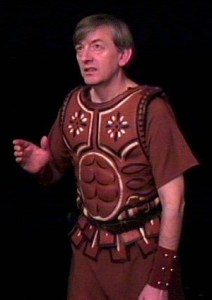
“Yes,” I said, “but accidents happen in the dark of the night. And Renaldo, I think you underestimate the old Weasel. If anyone can twist the law to his own liking, Caiaphas can. That Weasel can kill his prey in more than one way. The big question is, can he get his hands on the prophet?”
“So you really think there’ll be a confrontation?”
“Absolutely. From what I saw on Monday, the confrontation has already started. It started when Jesus kicked out the merchants. Later, when I was there, the high priest’s men questioned him, but he wouldn’t back down. Then yesterday, according to Claudius, he humiliated Caiaphas and his delegation right in front of the crowd. Like I said, he called the Pharisees and the teachers of the law a pack of hypocrites and a brood of vipers. I’d call that a confrontation. And he didn’t do it out in the desert; he did it right in front of them, in front of the pilgrims, and right in their holy place. I tell you, the man’s got guts.”
“But”—I paused to emphasize my point—“I’m just waiting for the other side to strike back. And they will.”
I made a long, sweeping motion with a pointed index finger and then stabbed down spear-like into my friend’s bare ribs. “I’m sure they will.”
Instinctively, Renaldo recoiled, shrugged off my antics, and then said, “But you don’t think he’s a threat to Rome?”
“Not from what I’ve seen or heard. But he is a threat to Caiaphas. Right now he’s their problem. And that’s where I want to leave him. If blood’s going to flow, I don’t want it getting on these hands.”

For book purchases, or a closer look at The Soldier Who Killed a King try Amazon or christianbook.com.

To download a free study guide for this high-impact, 288-page, bible-based novel visit: https://www.davidkitz.ca/centurion.php/free study guide PDF

Here’s a journey to the cross and the open tomb you will never forget.

Excerpt 16 for Lent from The Soldier Who Killed a King

12 Monday Mar 2018

Posted by davidkitz in Books by David Kitz, Christ's Passion, Lent, Monday Meditation

≈ 2 Comments

Tags

Caiaphas, centurion, crucified, David Kitz, Jesus, Passion Week, Passover, Pharisees, Pilate, Roman, The Soldier Who Killed a King

A journey to the cross is a journey to repentance. It’s a journey to deep personal change. Will you take this journey with me?

In today’s reading, Marcus is in a discussion with his friend and fellow centurion, Renaldo. They are at the Roman bathhouse at the end of a long day. Date: Wednesday, April 5th, 30 A.D. 

I sat down again beside the pool and let my feet dangle in the tepid water. Renaldo put his hand on my shoulder as he eased himself down into a similar position.
“So what do you mean by that? How do you think this will end?” he asked.
“This Galilean prophet’s days may be numbered. He’s stirred up a hornet’s nest by kicking those merchants and money changers out of the temple. He’s offended and humiliated the high priest and his clan. He’s cut off a major source of their temple revenue. He called the Pharisees a brood of vipers. And if that’s not enough, he predicted that their power, their kingdom as he calls it, will be taken from them and then given to others.”
4485 TWITTER
I paused and kicked my right foot out straight, scattering a shower of drops onto the flat surface of the water. “You don’t say and do those kinds of things without creating some enemies. I’d say he’s sealed his own fate.”
With a furrowed brow, Renaldo asked, “Where’d you get this information?”
“Claudius. Claudius told me. Yesterday I had him sit in on one of the prophet’s teaching sessions. It was quite an eye- opener. Jesus doesn’t just heal the poor; he takes a skewer to the bloated rich. He’s publicly opposed the rich and powerful in this town, and his opposition has been right to their face. If nothing else, the man’s got courage.”
I drummed my fingers on the poolside tiles and then continued. “I tell you, Renaldo, they won’t stand for it. They’re probably hatching some plot to do away with him right now, as we’re sitting here talking.”
“Yeah, but he healed all those kids,” he said. “Doesn’t that show that the God of heaven is working through him?”
“The God of heaven? Do you honestly think that matters to them? This is all about money and power. That’s their real god. Jesus is a threat to their money and their positions of power. Healing a few poor kids, the offspring of the unclean—that isn’t going to mean a thing to them. You’re right. You hit the nail on the head. They’re puffed- up swine that care only about themselves. There isn’t a drop of mercy in them.” Then with scathing irony I added, “But they’re right. They’re always right. Right to the letter of the law.”
“So what do you think they’ll do?”
“I’m not sure. But I know what they won’t do. They won’t arrest him with that crowd around him. They know better than that. They’d have a bloody riot on their hands. There’s no doubt about that.”
Thought after thought came racing in as I considered the implications of my own words. “They might wait till after Passover when the crowds leave, but then Jesus would probably leave with the crowds and head right back to Galilee. Then he’d be out of their hands. No.” I hesitated and then briskly snapped my fingers. “I think they’ll try to act now, if they can. He’s humiliated them in front of the people. They won’t stand for that. Caiaphas won’t stand for it. Jesus has co- opted the high priest’s authority right within the temple courts. Blood will flow because of it. Mark my words. It will flow.”
“But what could they do to him? What crime has he committed?” Renaldo reasoned. “You know the Jews can’t condemn a man to death. They can’t have him crucified. They would have to bring him before Pilate.”
“Yes,” I said, “but accidents happen in the dark of the night. And Renaldo, I think you underestimate the old Weasel. If anyone can twist the law to his own liking, Caiaphas can. That Weasel can kill his prey in more than one way. The big question is, can he get his hands on the prophet?”
“So you really think there’ll be a confrontation?”
“Absolutely. From what I saw on Monday, the confrontation has already started. ItCentur Rep started when Jesus kicked out the merchants. Later, when I was there, the high priest’s men questioned him, but he wouldn’t back down. Then yesterday, according to Claudius, he humiliated Caiaphas and his delegation right in front of the crowd. Like I said, he called the Pharisees and the teachers of the law a pack of hypocrites and a brood of vipers. I’d call that a confrontation. And he didn’t do it out in the desert; he did it right in front of them, in front of the pilgrims, and right in their holy place. I tell you, the man’s got guts.”
“But”—I paused to emphasize my point—“I’m just waiting for the other side to strike back. And they will.”
I made a long, sweeping motion with a pointed index finger and then stabbed down spear-like into my friend’s bare ribs. “I’m sure they will.” Instinctively Renaldo recoiled, shrugged off my antics, and then said,
“But you don’t think he’s a threat to Rome?”
“Not from what I’ve seen or heard. But he is a threat to Caiaphas. Right now he’s their problem. And that’s where I want to leave him. If blood’s going to flow, I don’t want it getting on these hands.”

American readers click this link to purchase The Soldier Who Killed a King.

Canadian readers click this link to purchase The Soldier Who Killed a King directly from the author.


Psalms 365: Develop a Life of Worship and Prayer

Psalms 365 Volume II

Psalms 365 vol 3
— Psalms 365 Volume III

Psalms

Recent posts

  • Ready for the King of Glory December 19, 2025
  • My Spirit Rejoices in God My Savior December 18, 2025
  • Joining the Generation That Seeks God December 18, 2025
  • Why Am I So Favored December 17, 2025
  • How Can You Find the Good Life? December 17, 2025
  • The Power of the Most High December 16, 2025
  •  The Earth Turns to the LORD December 16, 2025

Calendar

December 2025
M T W T F S S
1234567
891011121314
15161718192021
22232425262728
293031  
« Nov    

Blog Posts

Comments

  • davidkitz on Joining the Generation That Seeks God
  • cjsmissionaryminister on God Sent His Son
  • cjsmissionaryminister on The God of the Broken

Blog at WordPress.com.

Privacy & Cookies: This site uses cookies. By continuing to use this website, you agree to their use.
To find out more, including how to control cookies, see here: Cookie Policy
  • Subscribe Subscribed
    • I love the Psalms
    • Join 1,378 other subscribers
    • Already have a WordPress.com account? Log in now.
    • I love the Psalms
    • Subscribe Subscribed
    • Sign up
    • Log in
    • Report this content
    • View site in Reader
    • Manage subscriptions
    • Collapse this bar
 

Loading Comments...