• Home
  • About
  • DavidKitz.ca
  • Youtube Videos
  • Books by David
  • Books on Amazon.com

I love the Psalms

~ Connecting daily with God through the Psalms

I love the Psalms

Tag Archives: Messiah

James—More than an Epistle of Straw

05 Sunday Jul 2026

Posted by davidkitz in Books by David Kitz

≈ Leave a comment

Tags

Bible, Bonhoeffer, Christ, Christianity, church, epistle, epistle of James, faith, good works, gospel, grace, James, James the brother of Jesus, Jerusalem, Jesus, Judaism, leadership, Martin Luther, Messiah, Paul, Peter, Reformation, Roman Catholic, Scripture, Soren Kierkegaard

James: the Lynchpin of Our Faith — Chapter 18

There is something quite unique about the Epistle of James. It does not easily fit into the pattern of the other apostolic writings. There is a sharpness—a directness—that many readers find both challenging and refreshing.

In his writing James goes for the jugular with the relentless precision of an attack dog. And what is he attacking? He is attacking the hypocrisy, lethargy, and complacency that can so easily set into a believer’s life.

When the epistle is read in its entirety, the reader may come away with a keen desire to repent. It is an epistle that demands change—that requires action—that convicts the wayward.

If you are looking for comfort, you won’t find it in the Epistle of James. If you are looking for a philosophical discussion on the merits of the gospel or a treatise on various doctrinal points, you won’t find that either. What you do find is an unequivocal call for right living. For practical-minded James, wisdom is not an intellectual exercise. Wis-dom must be expressed through right words and actions.

Are any of you wise or sensible? Then show it by living right and by being humble and wise in everything you do. But if your heart is full of bitter jealousy and selfishness, don’t brag or lie to cover up the truth. That kind of wisdom doesn’t come from above. It is earthly and selfish and comes from the devil himself. Whenever people are jealous or selfish, they cause trouble and do all sorts of cruel things. But the wisdom that comes from above leads us to be pure, friendly, gentle, sensible, kind, helpful, genuine, and sincere. When peacemakers plant seeds of peace, they will harvest justice. (James 3:13–18, CEV)

An appeal for humility, right living, and bold faith are at the core of this epistle.

Jon Mark Ruthven makes these observations on James’ purpose for writing the Epistle of James:

[The Epistle of ] James is primarily practical and ethical, emphasizing duty rather than doctrine. The author wrote to rebuke the shameful neglect of certain Christian duties. In doing so, he analyzed the nature of genuine faith and urged his readers to demonstrate the validity of their experience with Christ. His supreme concern was reality in religion, and he set forth the practical claims of the gospel. (1)

It is the uniqueness of the Epistle of James that led to the near rejection of this book from the canon of scripture in the sixteenth century. No other book of the New Testament has such a laser-like focus on right living. To be clear, the Epistle of James was readily accepted by the early church fathers and was author-itatively quoted by Origen in the first half of the third century.

According to R.V.G. Tasker, “the Epistle of James had become firmly established in the canon of the western part of Christendom by the end of the fourth century.” (2)

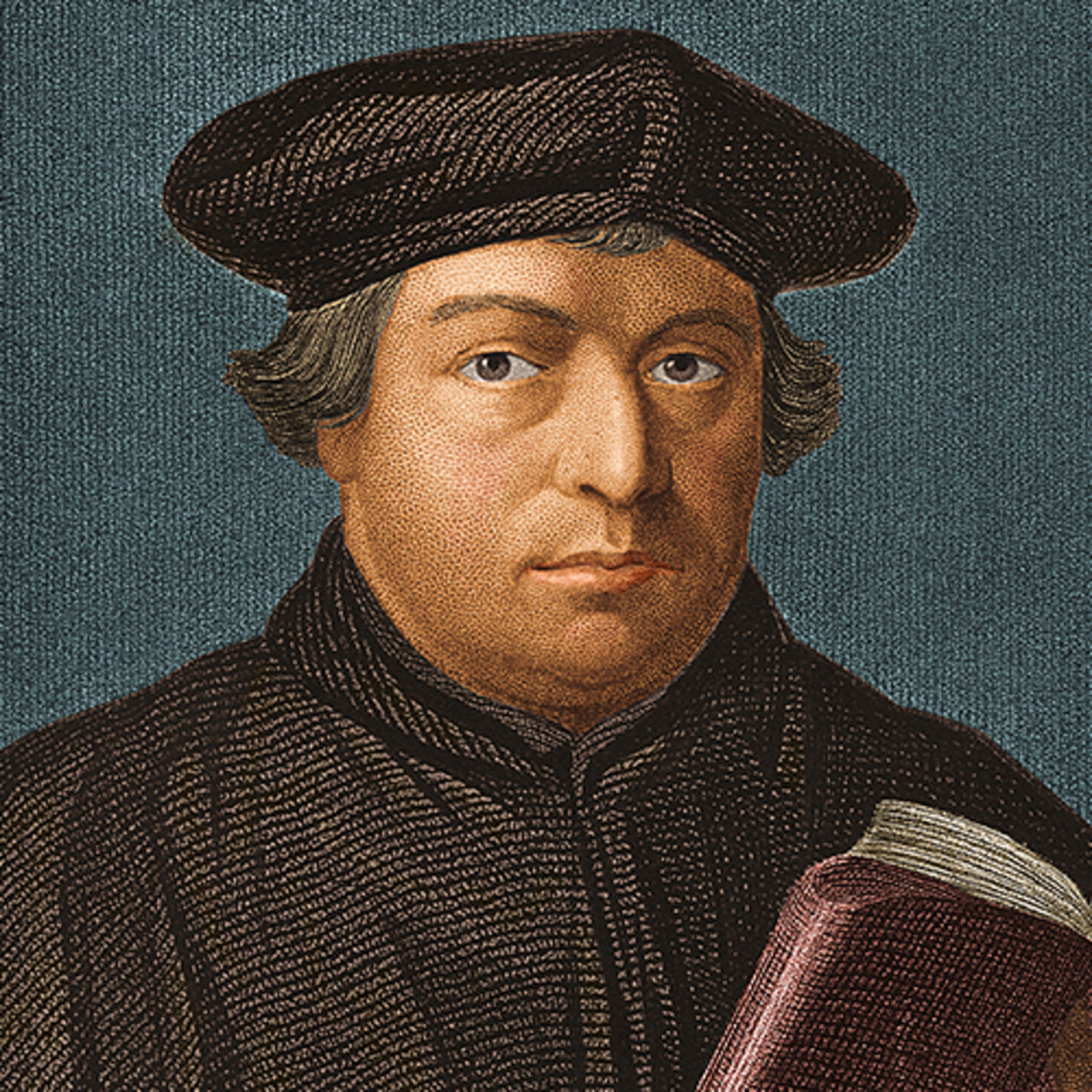
But the early reformers and Luther in particular had little use for the Epistle of James. Luther considered the letter an “epistle of straw,” since it lacked the doctrinal heft of the other epistles. He relegated the epistle to the back of his German translation of the New Testament because, among other things, he doubted that it was actually authored by James.

Citing J.H. Ropes, Tasker asserts that Erasmus and Luther “ascribed the letter to ‘some good, pious man who had taken some sayings from the apostle’s disciples.’” (3)

But Martin Luther’s problems with Epistle of James ran much deeper than uncertainty about the book’s authorship. Luther objected to one of the central tenets of James’ epistle. James boldly asserted that “faith without works is dead.” 

My friends, what good is it to say you have faith, when you don’t do anything to show that you really do have faith? Can that kind of faith save you? If you know someone who doesn’t have any clothes or food, you shouldn’t just say, “I hope all goes well for you. I hope you will be warm and have plenty to eat.” What good is it to say this, unless you do something to help? Faith that doesn’t lead us to do good deeds is all alone and dead!

Suppose someone disagrees and says, “It is possible to have faith without doing kind deeds.” I would answer, “Prove that you have faith without doing kind deeds, and I will prove that I have faith by doing them.” You surely believe there is only one God. That’s fine. Even demons believe this, and it makes them shake with fear.

Does some stupid person want proof that faith without deeds is useless? Well, our ancestor Abraham pleased God by putting his son Isaac on the altar to sacrifice him. Now you see how Abraham’s faith and deeds worked together. He proved that his faith was real by what he did. This is what the Scriptures mean by saying, “Abraham had faith in God, and God was pleased with him.” That’s how Abraham became God’s friend.

You can now see that we please God by what we do and not only by what we believe. For example, Rahab had been a prostitute. But she pleased God when she welcomed the spies and sent them home by another way.

Anyone who doesn’t breathe is dead, and faith that doesn’t do anything is just as dead! (James 2:14–26, CEV)

Luther had ushered in the Reformation on the doctrine of salvation by faith alone—sola fide. He had staked his faith and actions on the writings of Paul, which clearly stated that salvation came as a result of grace through faith and not of works.

We who are Jews by birth and not sinful Gentiles know that a person is not justified by the works of the law, but by faith in Jesus Christ. So we, too, have put our faith in Christ Jesus that we may be justified by faith in Christ and not by the works of the law, because by the works of the law no one will be justified. (Galatians 2:15–16, NIV)

Photo by Sora Shimazaki on Pexels.com

For Luther the Epistle of James represented a clear contradiction of his interpretation of the passage above from Galatians, and other passages from Paul’s epistles such as Ephesians 2:4–8 and Romans 5:1–2. James’ letter placed great emphasis on right living, while Paul’s letters emphasized the rightness of faith in Christ.

Under Luther’s leadership, justification before God by grace through faith became the central theme of the Reformation. Works had no part to play in personal salvation, since salvation was not earned. It came as a gift by God’s grace. But with statements such as, “As the body without the spirit is dead, so faith without deeds is dead” (James 2:26, NIV), James appeared to contradict the central tenet on which Luther’s understanding of faith was built. The Epistle of James appeared to undermine the founding premise of the entire Reformation.

Rather than reconcile these apparent doctrinal contradictions between two beloved apostles, Luther discounted James as an epistle of straw and shuffled it off to the back of his translation of the Bible—along with what he considered to be other low value books, such as Hebrews, Jude, and Revelation.

Tasker makes the following assessment:

He [Luther] had arbitrarily, and without any support from ancient manuscripts, placed the four books which he considered to be of doubtful apostolic authority and of secondary value doctrinally at the end of the New Testament published in 1522, to form a kind of supplement; and he did not number them in the table of contents. (4)

So, what exactly did Luther say about the Epistle of James? In context, here is J. H. Ropes’ translation from German of his 1522 words:

In fine, Saint John’s Gospel and in his first Epistle, Saint Paul’s epistles, especially those to the Romans, Galatians and Ephesians, and Saint Peter’s first epistle—these are the books which show thee Christ, and teach thee everything that is needful and blessed for thee to know even though thou never see or hear any other book or doctrine. Therefore is Saint James’s epistle a right strawy epistle in comparison with them, for it has no gospel character to it. (5)

The impact of this negative assessment of James’ epistle has rippled down through centuries. It has also colored our perspective of the person of James. He has been viewed as a theological lightweight beside the likes of Peter and Paul. But is this a fair and accurate assessment?

History has not been kind to James. Although James played a prominent and pivotal role in the first-century church, his role and his theological significance has largely been ignored, downplayed, or misunderstood down through the ages.

In the medieval period, the Roman Catholic Church drifted into what many reformers would call an idolatrous worship of Mary. This exaltation of Mary was matched with the development of several doctrinal positions which find no basis in scripture. These include the doctrine of the immaculate conception of Mary, her perpetual virginity, and her bodily assumption into heaven.

The doctrine of the perpetual virginity of Mary is particularly troublesome when it comes to our under-standing of James, since it strips him of his lineage and his direct brotherhood with Jesus. Thus emasculated, his words and life story lack the rightful authority and gravitas that this direct link to Christ confers.

With the emergence of the Reformation, with its emphasis on the centrality of the holy scriptures, it would only seem logical that James would regain the recognition he deserved. But alas, this was not the case. Luther found James’ epistle wanting because he viewed it as undermining the doctrine of sola fide.

Furthermore, Roman Catholic theologians drew comfort from the Epistle of James because in it they found the basis for two sacraments: the sacrament of divine unction (anointing the sick with oil for healing), and the sacrament of confession to the parish priest. Luther rejected both as sacraments of the church.

Though the early reformers recognized James’ lineage as the half-brother of Jesus, they found his theology suspect, since it appeared to contradict the writings of Paul. They believed, the Epistle of James appeared to undercut one of the foundational truths of the Reformation, namely the doctrine of justification by faith.

With the dawn of the Reformation, a great rift emerged in Christendom, which led to the formation of the various Protestant churches.

The Epistle of James lies right at the heart of that fault line. Catholicism embraced a more works-oriented path to salvation—a path apparently endorsed by James—while Protestantism embraced salvation by grace through faith—a path endorsed by Paul.

These opposing positions led to war and upheaval in Europe on a massive scale. All this is beyond strange when we consider that in their lifetime, according to the scriptures, Paul and James got along very well. They collaborated, respected one another, and each admired the other’s gifting and calling. Now some 1,500 years later, Christians were killing one another in an argument over letters that these two friends had written.

Photo by Pixabay on Pexels.com

Since the Reformation, some theologians would have us believe that these two men were at loggerheads, each with their doctrinal daggers drawn. As we have seen in earlier chapters, by examining their relationship through the lens of scripture, there is no basis for such an argument. Despite having strongly held views and differing spheres of in-fluence—Paul among the Gentile converts and James among Jewish converts—both were able to work with one another for the common good of the church.

So, are the theological differences between James and Paul more apparent than real? There certainly are several reasons to believe this is the case.

The first argument for a theological reconciliation between Paul and James has already been made. There is no evidence of relational conflict between Paul and James. Doctrinal conflict frequently leads to relational conflict, but the scripture provides us with no smoking gun in this regard. Texts written by Luke and Paul and the quoted words of James indicate a strong, healthy relationship between these two leaders.

Secondly, when examining a piece of writing, one needs to consider the author’s purpose. In his epistle, James was not writing with the purpose of laying out a theological framework for salvation, as was the case with Paul’s epistle to the Romans. James was writing an appeal to believers for righteous living. Much of Luther’s criticism of the Epistle of James is unwarranted. James is being faulted for what he did not write. This is like criticizing a dog for not being a cat.

Thirdly, on the surface it may appear that James and Paul are at odds on the role that faith and deeds play in salvation, but a closer examination reveals otherwise. For both Paul and James, having faith—saving faith—is not a passive response. True and saving faith is more than providing intellectual assent to a prescribed set of beliefs. That is precisely the argument that James is making when he claims that even demons believe in God, but their faith does not save them (James 2:19). For Paul as well, saving faith meant far more than intellectual assent.

Fourth, Paul and James agreed that genuine faith is personally transformative. Paul expected and called for personal transformation in the lives of every one of his converts. (See Ephesians 2:1–10.) How did that changed life reveal itself? Through deeds, of course. Time and again in his epistles, Paul calls for evidence of changed lives in the daily conduct of believers. Often these direct calls to action or works are found near the end of Paul’s epistles, since often he begins his letters by dealing with specific problems that have arisen in the church, or by presenting foundational truths of the Christian faith. (For examples of Paul’s calls to action, see Ephesians 4:25–6:20, 1 Thessalonians 5:12–22, and Colossians 3:18–4:6.)

James expected and called for personal transformation as well, but his epistle represents a shift from the Pauline paradigm. His entire epistle is a call for trans-formative, Christ-motivated actions, attitudes, and behavior.

In his discussion of the content of the Epistle of James, Jon Mark Ruthven makes this observation:

Rather than speculating or debating on religious theories, James directs his readers toward godly living. From the beginning to the end the mood of his letter is imperative. In 108 verses, 54 clear commands are given, and seven times James calls attention to his statements by using terms that are imperative in nature. This “bondservant of God” [James 1:1] writes as one supervising other slaves. The result is a statement of Christian ethics, which stands on par with any such teaching in the New Testament. (6)

The Word of God — photo by David Kitz

Finally, one needs to consider the work of the Holy Spirit. The Holy Spirit inspired both Paul and James to write their epistles. If we believe in the divine inspiration of the holy scriptures, it then follows that these two apostles, using their skills and experiences, wrote as the Holy Spirit directed them to write.

All Scripture is God-breathed and is useful for teaching, rebuking, correcting and training in righteousness, so that the servant of God may be thoroughly equipped for every good work. (2 Timothy 3:16–17)

From the earliest times the church has recognized the writings of James and Paul as God-breathed. If the Holy Spirit directed James to write an epistle focussed on practical Christian living, who are we question the wisdom of the Holy Spirit? Our understanding of what it means to live as a follower of Jesus would be considerably diminished without the Epistle of James.

In many respects James acts as a counterbalance to Paul. His epistle counters the notion of cheap grace that places no requirements on the believer. A hefty dose of Luther’s doctrine of sola fide can lead to a culture of easy believe-ism and an aversion to calls for personal holiness. Within such a church culture, anything that requires effort or personal sacrifice is frowned upon because it might be misconstrued as an attempt to earn one’s salvation.

In the last century, through his writing and the example he set by his life and death, the German Lutheran theologian Dietrich Bonhoeffer warned about the consequences of cheap grace—the results of which are a church rife with sin, which has no effective witness to the world because it conforms to the social and moral norms of the world. The Epistle of James is the biblical antidote to the easy believe-ism that Bonhoeffer warned against.

Similarly, a century before Bonhoeffer, the noted theologian and philosopher Soren Kierkegaard saw the Epistle of James as his chief weapon against the hypocrisy of his day.

It is surely both interesting and illuminating to recall that, when Soren Kierkegaard in the middle of the nineteenth century felt called to use his great gifts of eloquence and satire in a sustained warfare against the worldliness and hypocrisy of the contempor-ary Church, it was the Epistle of James that both inspired him for battle and supplied him with the ammunition with which to fight. (7)

It has been said that any doctrinal truth pushed to an extreme can lead to heresy. Though there is great truth in the doctrine of justification by grace through faith, when this teaching is embraced to the exclusion of other biblical truths, the result is a dis-tortion of truth, since it does not take into account the whole counsel of the Scriptures.

Kierkegaard was keenly aware of the effects of this distortion of truth. For him, according to one of his biographers, the Epistle of James represented the ideal counterweight.

Kierkegaard, while acknowledging the truth of Justification by Faith, as directed against “work-righteousness” and the assumption that one can earn his righteousness, had seen that the temper of the times “especially in Protestantism, and more especially in Denmark” required the proclamation of a complementary truth—a bringing to the fore of the practical, ethical side of Christianity, not by any means to the exclusion or minimizing of its dogmatic aspects, but to the exclusion of that barren orthodoxy which would make mere intellectual belief the primary act of Christian faith. The highly practical Epistle of James… was and remained Kierkegaard’s favourite Scripture. (8)

So, what are we to make of Luther’s assessment of the Epistle of James? Through the benefits of history and hindsight, we can see that this “right strawy Epistle” was and is the perfect counterweight to the excesses of sola fide, when this doctrine is pushed to the extreme while ignoring the full counsel of scripture.

Clearly Luther made an enormous contribution to our understanding of the Christian faith and his courage, determination, and hard work rescued many truths of the Bible from the dustbin of history. His translation of the Bible into the vernacular of the people unleashed a tidal wave that transformed Europe and the world. Thanks to his foundational work, people all over the world can read the Bible in their mother tongue and decide for themselves if this letter from James is an epistle of straw or an epistle filled with nuggets of pure gold.

(1) Ruthven, “Introduction: James,” Spirit Filled Life Bible, p. 1893.
(2) R.V.G. Tasker, The General Epistle of James: An Introduction and Commentary—Tyndale New Testament Commentaries (Eerdmans, 1983), p. 17.
(3) Tasker, The General Epistle of James, p. 21.
(4) Tasker, The General Epistle of James, p. 13.
(5) James Hardy Ropes, A Critical and Exegetical Commentary on the Epistle of St. James (Clark, 1916), p. 106.
(6) Ruthven, “Introduction: James,” Spirit Filled Life Bible, p. 1893.
(7) Tasker, The General Epistle of James, pp. 10–11.
(8) Robert Brettall, A Kierkegaard Anthology (Oxford University, 1947), p. 282.

New from David Kitz

James—the brother of Jesus—who was this man? What evidence do we have that this “brother of our Lord” even existed?

David Kitz digs deep into archeology, family dynamics, church history, and the biblical texts. What emerges from his research is a portrait of a decisive, pivotal leader who embodied the will and character of Jesus Christ.

But how did James—James the unbeliever—transform to become a leader who changed the course of world history? In these pages you will uncover the answer and rediscover for yourself the life-changing power of the gospel.

To view further details or purchase directly from the author click here.


To the Twelve Tribes Scattered among the Nations

28 Sunday Jun 2026

Posted by davidkitz in Books by David Kitz

≈ Leave a comment

Tags

Bible, Christ, Christianity, church, faith, Gentile converts, Gentiles, gospel, grace, James, James the brother of Jesus, Jerusalem, Jesus, Judaism, leadership, Messiah, Paul, Peter, Scripture

James the Reflection of Jesus
James through the Lens of his Epistle

James: the Lynchpin of Our Faith — Chapter 17

We can learn a great deal about James through the Gospels, through the Book of Acts, and through Paul’s references to him in his epistles. But ultimately the character of the reborn James is most eloquently revealed through his own writing—through his epistle, the Epistle of James.

Biblical scholars are divided when assigning a date for when the Epistle of James was written. It can be no later than 62 AD, since Josephus indicates that was the year when James was martyred. There is some evidence that it may have been written in the forties, and if true, it would then predate Paul’s letters. William Varner is among the scholars who favor an earlier date. (1) In his notes on James, K. Arthur also situates the epistle “sometime before 50 A.D. or in the early A.D. 50s.” (2) R.V.G Tasker places the most likely date as about AD 60.

In his introduction to the epistle of James, Jon Mark Ruthven states, “We cannot be dogmatic, and can only conclude that the letter was written between AD 48 and 62.” (3)

William Varner’s early date seems improbable, since it comes before the Council of Jerusalem in AD 50 that welcomed the Gentiles into the fellowship of the church. How- ever, a date in the early AD 50s or earlier is intriguing because it raises several questions.

Is the Epistle of James the first epistle in the canon? Did James set the pattern or standard for the other canonical epistle writers? Were Paul, Peter, John, and Jude following the example of James when they picked up the quill pen and wrote their epistles to local churches or more broadly to the universal church? Or alternately was James following the example of Paul when he wrote his epistle?

Due to James’ leadership role in the church, as demonstrated at the Council of Jeru-salem, it is not unreasonable to surmise that he may alsohave led the way in addressing the rapidly growing church through this Holy Spirit inspired literary form.

In fact, James had ample reasons to write an epistle. Having opened the door of the church to uncircumcised believers, he had a responsibility to ensure that these new converts were fully acquainted with the teaching and ethics of their Lord and Savior. Having put their faith in Jesus, how should these new believers live? With his practical, direct approach James answers that question in his epistle.

Furthermore, through his friendship with Paul and by his endorsement of his ministry, James had an envoy through whom he could ensure that his epistle was widely read throughout Paul’s network of churches.

As Ruthven states, we cannot be dogmatic on these points, but through James and Paul’s interaction we can see there is a logical progressionthat can readily explain the development of the epistles as a New Testament form of inter-church communication and teaching. James and his epistle sit at the heart of this first-century inter-church dialogue.

The Epistle of James appears in our bibles as the first of what are commonly called the general epistles. These epistles are called general because they are not addressed to a specific congregation, such as the church in Corinth or Ephesus.

But James does have an audience that he addresses with his greeting:

From James, a servant of God and of our Lord Jesus Christ. Greetings to the twelve tribes scattered all over the world. (James 1:1, CEV)

There is a humility in James’ self-introduction that is worthy of comment. He does not identify himself as the brother of Jesus; to do so would be self-exalting. Instead, he simply identifies as “a servant of God and of our Lord Jesus Christ.”

By identifying himself as a servant, James is accurately reflecting the character of his brother, who continually identified himself as a servant. On his final night with his disciples, Jesus assumed a servant’s role as he stooped to wash their feet (John 13:2-17). Now in his role as overseer, James addresses the church of Jesus Christ as the Lord’s
humble servant.

By declining to identify himself as Jesus’ brother, James is following the pattern of humility and self-effacement exemplified by his brother. Though Jesus was the Son of God, he did not refer to himself in those terms. He preferred the term ‘son of man.’ Even in his trial before the Jewish High Council, when he was directly asked if he was the Son of God, he answered, “You say that I am.” (Luke 22:70)

James takes the same approach as his brother. Rather than self-identify as the brother of Jesus, he allows others to identify him as such. He assumes a humble position. James refuses to take the place of honor until he is asked to do so, just as Jesus taught in one of his parables about guests arriving at a banquet (Luke 14:7–11).

James’ letter is addressed to “the twelve tribes scattered all over the world” (CEV) or as the more traditional King James Version reads “to the twelve tribes which are scattered abroad.” At first glance one might assume that this means that James is writing exclusively to the Jewish diaspora.

Some Bible scholars interpret this phrase in this narrow, literal sense. But there is ample evidence to suggest that the phrase “twelve tribes” is in fact inclusive of all Christian believers regardless of race or nationality. Under the new covenant ushered in by Jesus, followers of Christ are the new Israel of God (Galatians 6:14–16).

Tasker sees the phrase “twelve tribes” as a symbolic description of the new Israel.

James is not addressing a single group of Christians with whose circumstances he is familiar, but various congregations of Christians scattered far and wide throughout the Roman world. Together, these groups constitute the people of God who are continuous with the old Israel but consist of all, regardless of nationality, who acknowledge Jesus as God’s Messiah. (4)

The view that the phrase “twelve tribes scattered all over the world” is a description of the church as the new Israel is strengthened by Peter’s use of a similar phrase in 1 Peter 1:1. Peter addresses his letter to “the exiles of the Dispersion” (RSV) or scattering.

In the same way Paul, in his closing remarks to the largely Gentile churches of Galatia, refers to them and the global church as the “Israel of God” (Galatians 6:16). The point being made here is that the apostles saw all those who were redeemed by Christ as heirs of the new kingdom that he was establishing. This new kingdom is the “Israel of God” which James metaphorically calls the “twelve tribes” of the dispersion. According to Paul, the new converts are all the children of Abraham by faith. See Galatians 3:7.  Thus, it includes all the redeemed who have put their faith in Jesus Christ, both Jew and Gentile.

It logically follows that the Epistle of James is addressed to Christian believers every-where and for all time. The scattering or dispersion of believers throughout the world, whether through persecution or missionary endeavor, alludes to Jesus’ teaching about the growth of the kingdom of God as he compares it to yeast in a lump of dough (Matthew 13:33).

In the same vein, in the week prior to his death, Jesus taught via his Parable of the Tenants that a sharp change was coming (Matthew 21:33–46). He spoke this prophetic warning to the chief priests and Pharisees: “Therefore I tell you that the kingdom of God will be taken away from you and given to a people who will produce its fruit” (Matthew21:43).

The kingdom of God was being transferred from the Jewish nation to those who accepted the rulership of Jesus, the Messiah king. Christ’s dire warning had its ful-fillment with the destruction of Jerusalem in 70 AD and the exile of the Jewish population from their homeland. Much of Jesus’ discourse in Matthew 24 predicts and describes this traumatic national event.

Paul points out that by God’s grace and through the message of the gospel, Jews and Gentiles are being drawn together in one body.

In reading this, then, you will be able to understand my insight into the mystery of Christ, which was not made known to people in other generations as it has now been revealed by the Spirit to God’s holy apostles and prophets. This mystery is that through the gospel the Gentiles are heirs together with Israel, members together of one body, and sharers together in the promise in Christ Jesus. (Ephesians 3:4–6)

With the opening salutation of his epistle, then, James was tapping into the great mystery of the gospel, which binds Jews and Gentiles together as one people through faith in Christ Jesus. He was writing to a dispersed and culturally diverse church he had explicitly authorized by his decision at the Council of Jerusalem.

And how did one become a citizen of the kingdom of God and member of the church of Christ? James provides the answer in the first chapter of his epistle.

Don’t be deceived, my dear brothers and sisters. Every good and perfect gift is from above, coming down from the Father of the heavenly lights, who does not change like shifting shadows. He chose to give us birth through the word of truth, that we might be a kind of firstfruits of all he created. (James 1:16–18)

With this brief statement James encapsulates the core gospel message. Salvation is a gift, Ephesians 2:8–9, from our gracious heavenly Father who has chosen us, 1 Peter 1:1–2, and given us new birth into His family through the Word, 1 Peter 1:23, which came to us in human flesh in the person of Jesus, John 1:9–13. In short, we become citizens of the kingdom through rebirth, just as Jesus taught Nicodemus in John 3.

This statement fully aligns with the teaching found throughout the other New Test-ament texts. James and Paul were initially opponents of the ministry of Christ, yet after their conversion they came into agreement on the key elements of the gospel message.

How did that alignment come about? Undoubtedly, it came about as both men met with the apostles who were present during Jesus’ active ministry. The Twelve heard Jesus’ teachings, witnessed his interactions with the crowds, and saw his miraculous powers. One can easily imagine James as an eager new convert meeting with Matthew, Peter, and John, and discussing the key events and the teachings of Jesus’ ministry—events he was not present for.

With the passage of time, it became ever more urgent that these oral accounts be recorded for posterity. In his leadership role, did James by word or by the example provided by his epistle encourage the gospel writers to record the events they witnessed and researched? Possibly. What is clear is that through his epistle, James conveys the ethos, character, and spirit of his brother Jesus.

In summary, James 1:16-18 establishes the apostolic orthodoxy of James’ under-standing of the gospel, and James 1:1 establishes the universality of the audience for his message. Now let’s dig deeper and consider the scope and content of his epistle.

(1) William Varner, James—Evangelical Exegetical Commentary (Lexham, 2014), p.17.
(2) Arthur, The International Inductive Study New Testament, p. 355.
(3) Ruthven, “Introduction: James,” Spirit Filled Life Bible, p. 1893.
(4) R.V.G. Tasker, The General Epistle of James: An Introduction and Commentary—Tyndale New Testament Commentaries (Eerdmans, 1983), p. 39.

New from David Kitz

James—the brother of Jesus—who was this man? What evidence do we have that this “brother of our Lord” even existed?

David Kitz digs deep into archeology, family dynamics, church history, and the biblical texts. What emerges from his research is a portrait of a decisive, pivotal leader who embodied the will and character of Jesus Christ.

But how did James—James the unbeliever—transform to become a leader who changed the course of world history? In these pages you will uncover the answer and rediscover for yourself the life-changing power of the gospel.

To view further details or purchase directly from the author click here.


Jesus Comes to Jerusalem as King

24 Wednesday Jun 2026

Posted by Victor Uduh in Psalm 78, Psalms

≈ Leave a comment

Tags

Compassion Of Christ, Follow Jesus, Following Christ, God's will, gospel, gospel reading, Jesus, Jesus Our Savio, Jesus The King, Jesus The Messiah, Messiah, Psalms, Son of Man, The Love Of God, triumphal entry, Victory Through Christ

Today’s quote and prayer from
“Psalms 365: Develop a Life of Worship and Prayer
”


Today’s
Reading:
Psalm 78:9-16 (NIV)*

Listen to today’s reading by Jonathan Dent:

https://davidkitz.blog/wp-content/uploads/2026/06/ps-789-16-mix-2final.mp3

LORD God,
today I accept the challenge
to follow you with all my mind,
heart, soul, and strength.
Give me ears to hear and obey your commands.
I pray in Jesus’ all-powerful name.
Amen.

   — — — —

Gospel Reading:
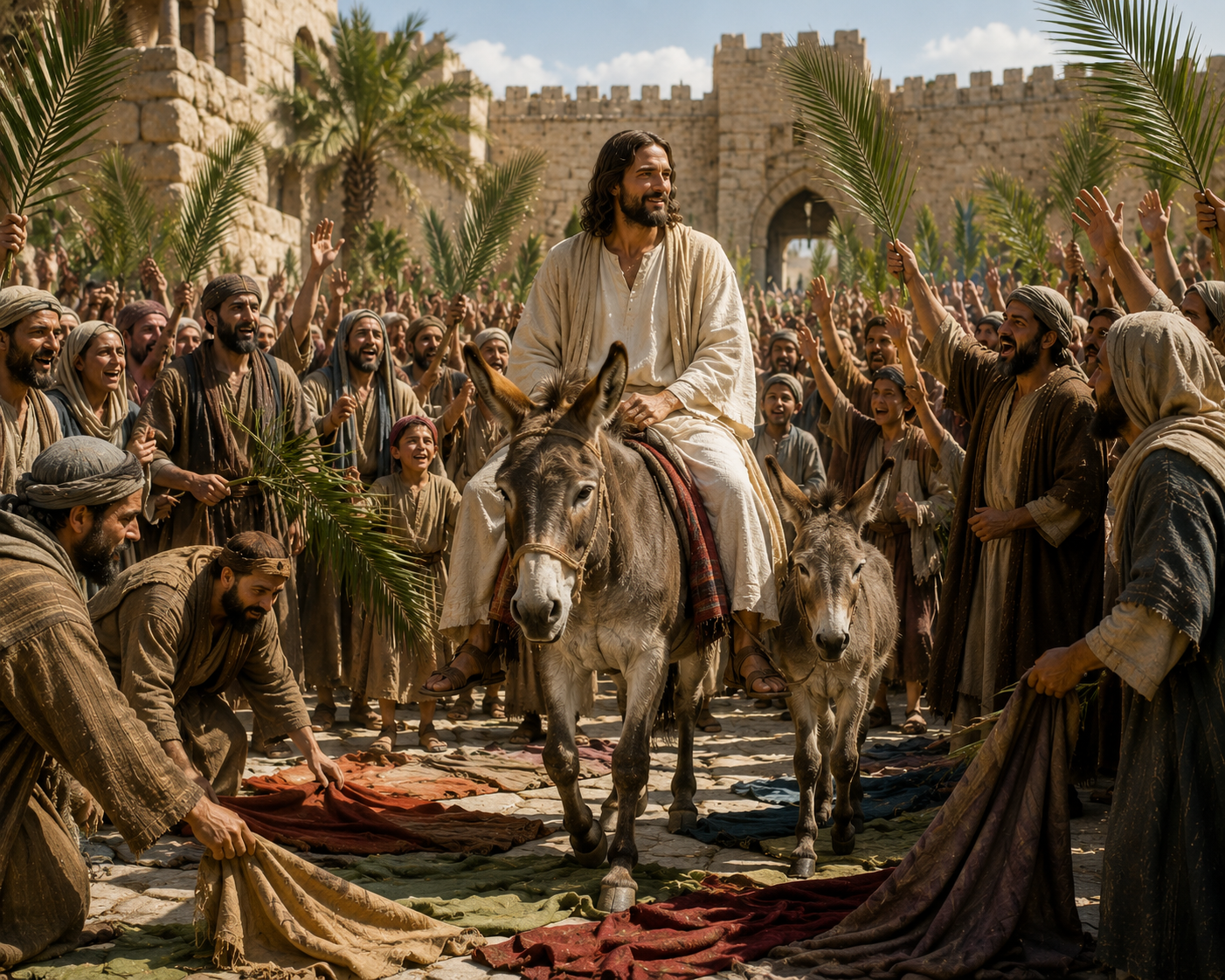
Jesus Comes to Jerusalem as King

As they approached Jerusalem and came to Bethphage
on the Mount of Olives,
Jesus sent two disciples,
 saying to them,
“Go to the village ahead of you,
and at once you will find a donkey tied there,
with her colt by her.
Untie them and bring them to me.
If anyone says anything to you,
say that the Lord needs them,
and he will send them right away.”

This took place to fulfill
what was spoken through the prophet:

“Say to Daughter Zion,
    ‘See, your king comes to you,
gentle and riding on a donkey,
    and on a colt, the foal of a donkey.’”

The disciples went and did as Jesus had instructed them.
They brought the donkey and the colt
and placed their cloaks on them for Jesus to sit on.
A very large crowd spread their cloaks on the road,
while others cut branches from the trees
and spread them on the road.
The crowds that went ahead of him
and those that followed shouted,

“Hosanna to the Son of David!”

“Blessed is he who comes in the name of the Lord!”

“Hosanna in the highest heaven!”

When Jesus entered Jerusalem,
the whole city was stirred and asked,
“Who is this?”

The crowds answered,
“This is Jesus, the prophet from Nazareth in Galilee.”

(Matthew 21:1-11).

* * *

Dear friends,
 if our hearts do not condemn us,
we have confidence before God

and receive from him anything we ask, 
because we keep his commands 
and do what pleases him.

(1 John 3:21-22 NIV)

Para la publicación de Salmos 365 de hoy en español haga clic aquí.

bgbg_v4.3_1501818
* NEW INTERNATIONAL VERSION, COPYRIGHT ©1973, 1978, 1984, 2011 BY BIBLICA

Pray for peace in Israel, Iran and the Middle East
and continue to pray for peace to return
to Ukraine and Russia!

Volume I of Psalms 365: Develop a Life of Worship and Prayer won the Best Book of the Year Award from The Word Guild and Volume II has won the Best Devotional of the Year Award. For those who love God’s word, this three-book series is an ideal way to daily meet with the Lord. To purchase or for a closer look click here.

New from David Kitz.

To view further details or purchase click here.

The Door of Faith Blows Open: Part II

10 Sunday May 2026

Posted by davidkitz in Books by David Kitz

≈ Leave a comment

Tags

apostles, Barnabas, Bible, Book of Acts, Christians, church, Gentiles, gospel, James, James the brother of Jesus, Jerusalem, Jesus, leadership, Luke, Messiah, missionary journeys, Paul, Peter, repent, resurrection, Scripture, speaking in tongues, testimony, the cross

James: the Lynchpin of Our Faith — Chapter 11 Continued

The rapid growth of the Gentile church in Antioch and Paul’s arrival there begins a transition within the Book of Acts. Up to this point Peter has been the main character in the narrative, but from this juncture forward Paul assumes the role of the main character. After Peter’s imprisonment and miraculous release in chapter twelve, he plays only a minor part in the remainder of the book.

One should not assume that Peter’s ministry was diminished, while Paul’s excelled. Instead, this transition within the Acts narrative largely reflects the experience and perspective of Luke, the book’s author. Luke was Paul’s personal doctor and a companion on his missionary journeys. (See Colossians 4:14, 2 Timothy 4:11, Philemon 24.) Furthermore, Luke was a Gentile, so the explosive growth of the Gentile church was quite naturally of particular interest to him.

In many respects, Luke played the role of Paul’s personal publicist. He ensured that Paul’s struggles and triumphs were recorded for posterity. None of the other apostles had a publicist, someone who acted as their press secretary. The inclusion of the Book of Acts in the canon of scripture guaranteed that Christians would be forever reminded about the exploits of the apostle Paul. Undoubtedly, the other apostles accomplished similar feats. Some are heralded in legend, but because these miracles and exploits were not recorded in scripture, memory of them has faded or vanished with the passage of time.(1)

Acts chapters thirteen and fourteen continue the narrative of the Church’s explosive growth among the Gentiles. A time of worship, fasting, and prayer at the church in Antioch sets in motion a chain of events that would rock the Roman Empire.

Now in the church at Antioch there were prophets and teachers: Barnabas, Simeon called Niger, Lucius of Cyrene, Manaen (who had been brought up with Herod the tetrarch) and Saul. While they were worshiping the Lord and fasting, the Holy Spirit said, “Set apart for me Barnabas and Saul for the work to which I have called them.” So after they had fasted and prayed, they placed their hands on them and sent them off. (Acts 13:1–3)

Photo by Harrison Haines on Pexels.com

What was this work to which Barnabas and Saul (Paul) had been called? No direct answer is provided in the text, but from the actions and events that follow, it is obvious that these two men are on a mission to bring the gospel message to the Gentiles. This is in full agreement with the word spoken to the disciple Ananias immediately after Saul’s encounter with Jesus on the road to Damascus.

But the Lord said to Ananias, “Go! This man is my chosen instrument to proclaim my name to the Gentiles and their kings and to the people of Israel. I will show him how much he must suffer for my name.” (Acts 9:15–16)

Paul is about to begin fulfilling the great purpose for which the Lord has called him to service. Many years later, while speaking in his own defence before King Agrippa, Paul gives this account of his initial encounter with Jesus and the purpose of his calling:

About noon, King Agrippa, as I was on the road, I saw a light from heaven, brighter than the sun, blazing around me and my companions. We all fell to the ground, and I heard a voice saying to me in Aramaic, “Saul, Saul, why do you persecute me? It is hard for you to kick against the goads.”

Then I asked, “Who are you, Lord?”

“I am Jesus, whom you are persecuting,” the Lord replied. “Now get up and stand on your feet. I have appeared to you to appoint you as a servant and as a witness of what you have seen and will see of me. I will rescue you from your own people and from the Gentiles. I am sending you to them to open their eyes and turn them from darkness to light, and from the power of Satan to God, so that they may receive forgiveness of sins and a place among those who are sanctified by faith in me.”

“So then, King Agrippa, I was not disobedient to the vision from heaven. First to those in Damascus, then to those in Jerusalem and in all Judea, and then to the Gentiles, I preached that they should repent and turn to God and demonstrate their repentance by their deeds. That is why some Jews seized me in the temple courts and tried to kill me. But God has helped me to this very day; so I stand here and testify to small and great alike. I am saying nothing beyond what the prophets and Moses said would happen—that the Messiah would suffer and, as the first to rise from the dead, would bring the message of light to his own people and to the Gentiles.” (Acts 26:13–23)

It is evident from Paul’s testimony that he sees his calling as bringing the gospel of Christ to the Gentiles. The prayer meeting in Antioch set him on a course to fulfill his life’s mission. Barnabas and Paul began their first missionary journey with a trip to Cyprus. Cyprus was the point of origin for the explosive church growth now evident in the Syrian city of Antioch, and furthermore it was home turf for Barnabas. Undoubtedly, he had many contacts on the island.

A pattern quickly begins to emerge in their ministry on this first journey, first in Cyprus and later in the regions of Pisidia and Lycaonia. They would begin by proclaiming the gospel message in the Jewish synagogues. Their message eventually meets with stiff resistance from many of the Jewish leaders in the community—however, the gospel is received with joy by many of the Gentiles who embrace it with much gratitude.

Often the proclamation of the gospel is accompanied by signs and wonders. On the island of Cyprus, Elymas is struck blind for resisting the gospel (Acts 13:6–12). In Iconium, “Paul and Barnabas spent considerable time there, speaking boldly for the Lord, who confirmed the message of his grace by enabling them to do miraculous signs and wonders” (Acts 14:3). In Lystra, with a single command Paul brought healing to a man who was unable to walk from birth (Acts 14:8–10). Undoubtedly, many believed their message because God confirmed the truth of the apostles’ words by the miracles that accompanied the gospel’s proclamation.

Eventually, persecution becomes acute to the point where Paul and Barnabas’ lives are at risk. So, as a result, the apostles move on to virgin territory with their message, where the pattern is repeated yet again. It is worth noting that, according to Luke, persecution and resistance to the message comes largely from the Jews rather than from the Gentile
population. (See Acts 13:6–8, Acts 13:44–52; Acts 14:2–7; Acts 14:19–20.)

Finally, Paul and Barnabas retrace their steps passing through the towns where they have already ministered.

They preached the gospel in that city [Derbe] and won a large number of disciples. Then they returned to Lystra, Iconium and Antioch, strengthening the disciples and encouraging them to remain true to the faith. “We must go through many hardships to enter the kingdom of God,” they said. Paul and Barnabas appointed elders for them in each church and, with prayer and fasting, committed them to the Lord, in whom they had put their trust. After going through Pisidia, they came into Pamphylia, and when they had preached the word in Perga, they went down to Attalia. (Acts 14:21–25)


The appointment of leaders was of great importance because it ensured the continuance of the church after the apostles’ departure. This tried and proven pattern of ministry was repeated in Paul’s subsequent missionary journeys.

Having achieved tremendous success in their mission despite fierce opposition, Paul and Barnabas return to Antioch in Syria.

From Attalia they sailed back to Antioch, where they had been committed to the grace of God for the work they had now completed. On arriving there, they gathered the church together and reported all that God had done through them and how he had opened a door of faith to the Gentiles. And they stayed there a long time with the disciples. (Acts 14:26–28)

It was the success of Paul and Barnabas in bringing the gospel to the Gentiles that precipitated the next great controversy in the church. The wind of the Spirit had blown the “door of faith to the Gentiles” (Acts 14:27) wide open, but there were those in the church who were determined to shut that door—and lock it permanently.

What position would James take in this growing controversy?

(1) For a detailed examination of the historical evidence regarding the mission and exploits of Christ’s original twelve apostles visit: http://www.biblepath.com/apostles.html.

New from David Kitz

James—the brother of Jesus—who was this man? What evidence do we have that this “brother of our Lord” even existed?

David Kitz digs deep into archeology, family dynamics, church history, and the biblical texts. What emerges from his research is a portrait of a decisive, pivotal leader who embodied the will and character of Jesus Christ.

But how did James—James the unbeliever—transform to become a leader who changed the course of world history? In these pages you will uncover the answer and rediscover for yourself the life-changing power of the gospel.

To view further details or purchase directly from the author click here.


The Door of Faith Blows Open

03 Sunday May 2026

Posted by davidkitz in Books by David Kitz

≈ Leave a comment

Tags

apostles, Bible, birth of the church, Book of Acts, Christ, Gentiles, gospel, James, James the brother of Jesus, Jerusalem, Jesus, Jesus' family, leadership, Messiah, Paul, Pentecost, Peter, resurrection, Scripture, speaking in tongues, the cross

James: the Lynchpin of Our Faith — Chapter 11

The persecution of the early Christians initiated by Saul (Paul) after the martyrdom of Stephen (Acts 7:54–60) had an unintended effect. As believers fled for their lives, the gospel message spread out from Jerusalem.

On that day a great persecution broke out against the church in Jerusalem, and all except the apostles were scattered throughout Judea and Samaria. Godly men buried Stephen and mourned deeply for him. But Saul began to destroy the church. Going from house to house, he dragged off both men and women and put them in prison.

Those who had been scattered preached the word wherever they went. (Acts 8:1b–4)

Acts chapter eight describes the conversion of the Samaritans through the ministry of Philip the evangelist. This brought the Christian message beyond the tight bounds of Jewish faith and lineage. The Samaritans were considered outsiders to the Abrahamic covenant, though some might legitimately claim a partial Jewish heritage as W. Haskell describes.

The Samaritans were a mixed race with a heathen core (Ezra 4:2). Their blood would become more and more Hebraized by the addition of renegade Jews and by the intermarriage with surrounding Israelites, who would find among them the familiar worship of former times. (1)

It should be noted that the Samaritans were monotheists. They had their own version of the Pentateuch and believed that Mount Gizrim rather than Jerusalem was the holy place chosen by God. For the purists among the Jewish Christians, the inclusion of Samaritan believers undoubtedly challenged long-held perspectives and conventions. However, the apostles appeared to welcome the news of Samaria’s turn toward faith in Jesus Christ.

When the apostles in Jerusalem heard that Samaria had accepted the word of God, they sent Peter and John to Samaria. When they arrived, they prayed for the new believers there that they might receive the Holy Spirit, because the Holy Spirit had not yet come on any of them; they had simply been baptized in the name of the Lord Jesus. Then Peter and John placed their hands on them, and they received the Holy Spirit. (Acts 8:14–17)

If there were any misgivings about welcoming the Samaritans into the Christian fold, they are not recorded in this account. Undoubtedly, Peter and John recognized that this spiritual harvest among the Samaritans was a sovereign work of the Holy Spirit. In all likelihood, they also recalled Jesus’ ministry among the Samaritans was marked by kindness and sympathy rather than by the shunning and hostility, which was the societal norm during this time. See Luke 10:25–37, Luke 17:11–19, John 4:4–42. Nonetheless, it must be noted that with the conversion of the Samaritans, the gospel message had leaped across a significant religious and social barrier. But there was more to come.

Acts chapter eight concludes with the conversion of an Ethiopian eunuch, “an important official in charge of all the treasury of the Kandake (which means “queen of the Ethiopians”)” (Acts 8:27). This eunuch appears to have been either a convert to Judaism or perhaps a member of the Jewish faith who could trace his lineage back to the time of Solomon. In either case he is identified as an Ethiopian, a man coming from the upper Nile region, possibly Nubia.

Though not explicitly stated, the eunuch was a man of a different race. Apparently Luke, the Gentile author of the Book of Acts, included this account of the Ethiopian’s conversion to signal the gospel’s leap across a racial barrier. It is well worth noting that the Coptic Church in Ethiopia traces its origin to this account in Acts chapter eight.

The spread of the Christian faith beyond Jerusalem drew a vicious response from Saul (Paul). He was not content to lay waste to the church in Jerusalem. He intended to wipe out the Christian faith wherever he found it.

Meanwhile, Saul was still breathing out murderous threats against the Lord’s disciples. He went to the high priest and asked him for letters to the synagogues in Damascus, so that if he found any there who belonged to the Way, whether men or women, he might take them as prisoners to Jerusalem. As he neared Damascus on his journey, suddenly a light from heaven flashed around him. He fell to the ground and heard a voice say to him, “Saul, Saul, why do you persecute me?”

“Who are you, Lord?” Saul asked.

“I am Jesus, whom you are persecuting,” he replied. “Now get up and go into the city, and you will be told what you must do.” (Acts 9:1–6)

Saul’s miraculous conversion set the early church on a radically different trajectory. Many theologians and biblical scholars see the conversion of Saul of Tarsus as the starting point for the Gentile tidal wave that would flood into the church. They see Saul, who is renamed Paul, as the prima facia cause for the rapid growth of the Christian faith in the Gentile world. However, a closer examination of the Acts narrative and church history reveals that Paul was part of a much larger movement—a Holy Spirit directed movement that propelled the
growing church from its cradle in Jerusalem to the ends of the earth. This movement began with Peter not Paul, and it was validated by James.

Acts chapter ten is of pivotal significance in this regard. With Saul’s fierce persecution brought to a sudden end by his conversion, we are told that:

Then the church throughout Judea, Galilee and Samaria enjoyed a time of peace and was strengthened. Living in the fear of the Lord and encouraged by the Holy Spirit, it increased in numbers. (Acts 9:31)

However, this increase was confined to Jewish and Samaritan converts to the faith. But as Peter toured through this region performing at least two miraculous signs, (see Acts 9:32–42) he eventually came to sojourn in Joppa at the home of a tanner named Simon. At Joppa the gospel message made a startling leap across the barrier between Jews and uncircumcised Gentiles.

An angel was sent to the household of Cornelius, a Roman centurion.

One day at about three in the afternoon he had a vision. He distinctly saw an angel of God, who came to him and said, “Cornelius!”

Cornelius stared at him in fear. “What is it, Lord?” he asked.

The angel answered, “Your prayers and gifts to the poor have come up as a memorial offering before God. Now send men to Joppa to bring back a man named Simon who is called Peter. He is staying with Simon the tanner, whose house is by the sea.” (Acts 10:3–6)

The next day as Peter was waiting for his noonday meal to be prepared, he fell into trance in which he saw a sheet lowered from heaven containing all manner of animals, birds, and reptiles.

Then a voice told him, “Get up, Peter. Kill and eat.”

“Surely not, Lord!” Peter replied. “I have never eaten anything impure or unclean.”

The voice spoke to him a second time, “Do not call anything impure that God has made clean.”

This happened three times, and immediately the sheet was taken back to heaven. (Acts 10:13–16)

More than watchmen wait for the morning — photo by David Kitz

While Peter was still wondering about the meaning of this vision,three messengers from Cornelius arrived at the door. Peter, who was keenly attuned to the voice of the Lord, heard the Holy Spirit say, “Simon, three men are looking for you. So get up and go downstairs. Do not hesitate to go with them, for I have sent them.” (Acts 10:19–20)

These events were preparing Peter’s heart and mind for the dramatic shift in direction that the proclamation of the gospel was about to take. Peter was being sent by the Spirit to a different audience—a Gentile audience outside the covenantal laws of the Jewish people.

In this regard, even Peter’s sojourn in the home of Simon the tanner can be viewed as a preparatory step. Because leather tanners were required to work with the carcasses of animals their work was considered unclean by many in the Jewish community. As I. Howard Marshall writes, “Commentators have noted that the tanner’s occupation was an unclean one, and that a person with Pharisaic scruples would avoid contact with such a man.” (2)

One could assume that Peter’s scruples regarding what was ceremonially clean and unclean were in a state of transition. He certainly did not adhere strictly to the Pharisaic scruples, which went beyond the law and were admired by some first-century Jews.

In this respect he was following the example of his master Jesus, who frequently came into conflict with the Pharisees on such matters. See Matthew 23, Mark 3:23–28, Mark 7:1–23.

But stepping into a Gentile’s home was a line few observant Jews would deign to cross. Therefore, on the following day when Peter enters Cornelius’s home, he offers the following explanation:

While talking with him [Cornelius], Peter went inside and found a large gathering of people. He said to them: “You are well aware that it is against our law for a Jew to associate with or visit a Gentile. But God has shown me that I should not call anyone impure or unclean. So when I was sent for, I came without raising any objection. May I ask why you sent for me?” (Acts 10:27–29)

In response Cornelius recounts the visitation of the angel, and how he was instructed to send for Peter. The assembled listeners are eager to hear what Peter has to tell them. Of course, Peter uses this heaven-sent opportunity to preach the good news about the ministry of Jesus Christ and his death, burial, and resurrection. He prefaces his message with these words of self-reflection: “I now realize how true it is that God does not show favoritism but accepts from every nation the one who fears him and does what is right” (Acts 10:34–35).

It is evident from Peter’s remarks that he did not cross this cultural barrier without due consideration and soul searching. Undoubtedly, he knew he would face criticism from fellow Jewish Christians. They would certainly question his decision to enter a Gentile’s home. In this single act of hospitality, centuries of rabbinical teaching and practice were being set aside. Many would see this as a grave offence, especially since
Peter was a leader in the church.

But this exercise in cross-cultural outreach was not initiated by Peter, Cornelius, or any other man. It was initiated by God. The proof of this can be seen in the response to Peter’s message. The Holy Spirit intervened while he is still presenting the message. Peter said:

“All the prophets testify about him [Jesus] that everyone who believes in him receives forgiveness of sins through his name.”

While Peter was still speaking these words, the Holy Spirit came on all who heard the message. The circumcised believers who had come with Peter were astonished that the gift of the Holy Spirit had been poured out even on Gentiles. For they heard them speaking in tongues and praising God.

Then Peter said, “Surely no one can stand in the way of their being baptized with water. They have received the Holy Spirit just as we have.” So he ordered that they be baptized in the name of Jesus Christ. Then they asked Peter to stay with them for a few days. (Acts 10:43–48)

They were all baptized into Moses in the cloud and in the sea (1 Corinthians 10:2). Photo by David Kitz

This event at the home of a Roman centurion in Caesarea has enormous historic significance. It represents the first penetration of the gospel message into the Roman world. Rome was the dominant political and cultural power at that time. This humble home meeting represents the beachhead from which the gospel would spread across Rome’s farflung empire. This was the birthplace of the Gentile church, and Peter played the role of attendant physician to this miraculous birth.

But it was not a birth without controversy. Peter was called to account for his actions that day in Caesarea.

The apostles and the believers throughout Judea heard that the Gentiles also had received the word of God. So when Peter went up to Jerusalem, the circumcised believers criticized him and said, “You went into the house of uncircumcised men and ate with them.” (Acts 11:1–3)

Evidently, many Jewish believers found Peter’s actions offensive. They certainly were contrary to the norms proscribed by the teachings of rabbinic Judaism. They felt this breech of the Talmudic law needed to be repaired. Peter must be confronted about his transgression. In response, Peter provides a full recount of the events leading to his visit to the centurion’s home and the subsequent conversion of all who were gathered there. In his justification for his action, he points the finger directly at the Holy Spirit.

“As I began to speak, the Holy Spirit came on them as he had come on us at the beginning. Then I remembered what the Lord had said: ‘John baptized with water, but you will be baptized with the Holy Spirit.’ So if God gave them the same gift he gave us who believed in the Lord Jesus Christ, who was I to think that I could stand in God’s way?” (Acts 11:15-17)

What was this “same gift” to which Peter refers? Of course, he is referring to speaking in tongues, as happened initially on the day of Pentecost about eleven years prior to Peter’s meeting at the home of Cornelius.(3) Peter was struck that without specific instruction on this matter, the same phenomena manifested among these Gentile listeners. While listening to Peter’s message, these Gentile hearers became Gentile believers, and the Holy Spirit confirmed their faith by granting them the same gift that the apostles received at Pentecost.

To the consternation of many, the Holy Spirit was making no distinction between Jews and Gentiles. Nonetheless, Peter’s explanation appeared to satisfy those who raised objections.

When they heard this, they had no further objections and praised God, saying, “So then, even to Gentiles God has granted repentance that leads to life.” (Acts 11:18)

Where was James in this debate? Was he presiding over this interrogation? Luke’s account gives us no indication, but it’s not difficult to imagine James as one of the first to raise objections to Peter’s conduct. Due to his prominent role in the early church, he likely was present to hear Peter’s defence. In his epistle penned many years later, James appears to be a rigorous defender of doing things right—correct and by the book. One can easily see how crossing the line into forbidden territory, as Peter had done, would not sit well with James. Nevertheless, Peter was not sanctioned for his conduct. On the contrary, his testimony on this matter led to rejoicing.

One should not assume that the inclusion of Gentile believers within the church proceeded without tension. Centuries of belief, practice, and prejudice are not easily set aside. While many Jewish followers of Christ embraced the message of his sacrificial death and resurrection, it does not logically follow that they would set aside all aspects of their Jewish heritage. They quite rightly saw Jesus as their promised Messiah, but it does not necessarily follow that they saw Jesus as the Savior of the whole world—the Gentile world.

There are an abundance of Old Testament scriptures that point to the salvation of the Gentiles.(4) One can rightly argue, as Paul does, that the salvation of the Gentiles is an integral part of the Abrahamic covenant.
(See Ephesians 3:6 and Genesis 22:18.) But it’s one thing to read these prophecies and give mental assent; it’s quite a different matter when one sees these things being fulfilled before one’s eyes. A complete paradigm shift is required. Undoubtedly some readily embraced this change, while other Jewish believers in Jesus found it difficult or impossible.

Jesus alluded to this in one of his teachings:

“No one sews a patch of unshrunk cloth on an old garment. Otherwise, the new piece will pull away from the old, making the tear worse. And no one pours new wine into old wineskins. Otherwise, the wine will burst the skins, and both the wine and the wineskins will be ruined. No, they pour new wine into new wineskins.” (Mark 2:21–22)

New truths are most easily adopted by those who are new to the gospel message. Those trained and hardened in traditional teachings often find it difficult or impossible to embrace radically different ideas or new concepts. Their wineskins have hardened. Accepting Gentiles into the faith required a radical shift in thinking for many Jewish followers of Christ, including the Lord’s own disciples. This was true despite his explicit teaching that the gospel was for all—for the whole world.(5)

The acceptance of Cornelius and the converts at his home into the church signals the tacit acceptance that their conversion was the fulfillment of the words of the prophets. However, this welcome into the fold does not answer the question of how these new converts should live. Should they be required to adhere to all the rigours of Judaic law? In their daily lives are they to live as Jews, as Gentile believers in the Jewish Christ, or some blend of the two? Should their males be circumcised? Should they celebrate the Sabbath? Which day should be set aside for worship?

These matters would come to the fore later in the Book of Acts. To some extent, these questions are matters of debate, and even some contention in the broader church today. For example, how should Christians apply Old Testament teachings today? What eventually pushed these questions to the fore in the first century was the robust growth of the church among the Gentiles. We read of this expansion later in the same chapter of Acts:

Now those who had been scattered by the persecution that broke out when Stephen was killed traveled as far as Phoenicia, Cyprus and Antioch, spreading the word only among Jews. Some of them, however, men from Cyprus and Cyrene, went to Antioch and began to speak to Greeks also, telling them the good news about the Lord Jesus. The Lord’s hand was with them, and a great number of people believed and turned to the Lord. (Acts 11:19–21)


This great ingathering resulted in an equally great need for sound teaching in the faith, as well as apostolic oversight. Therefore, the church in Jerusalem responded.

News of this reached the church in Jerusalem, and they sent Barnabas to Antioch. When he arrived and saw what the grace of God had done, he was glad and encouraged them all to remain true to the Lord with all their hearts. He was a good man, full of the Holy Spirit and faith, and a great number of people were brought to the Lord.

Then Barnabas went to Tarsus to look for Saul, and when he found him, he brought him to Antioch. So for a whole year Barnabas and Saul met with the church and taught great numbers of people. The disciples were called Christians first at Antioch. (Acts 11:22–26)

Why was Barnabas chosen to head this mission to Antioch? When Samaria turned to the Lord in Acts chapter eight, it was Peter and John who were sent to investigate and provide further instruction. (See Acts 8:14–25.) Why were they not sent to Antioch, since previously they had been engaged in a similar assignment? Luke’s account in the Book of Acts provides us with no further details. Perhaps they were fully engaged in other matters of ministry. It is worth noting however that Barnabas was originally from Cyprus (Acts 4:36), and it was men from Cyprus who first brought the gospel to Antioch. For cultural reasons Barnabas may have been a natural choice. He may also have been personally acquainted with these men from Cyprus, thus adding to his appeal as a candidate for this assignment.

Finally, it appears that this was a group decision. We read “they sent Barnabas to Antioch.” The Greek used here is plural. It appears that the apostolic leadership within the church decided the matter. It was not decided by one man alone. Was James a part of the decision-making process? From later references in Acts chapter twelve and fifteen, it would seem logical to believe so, though in this instance nothing is stated definitively.

(1) W. Haskell, Unger’s Bible Dictionary, Editor Merrill F. Unger (Moody, 1972), p. 958.
(2) I. Howard Marshall, The Acts of the Apostles—Tyndale New Testament Commentaries (Eerdmans, 1980), p. 180.
(3) The scholars associated with The International Inductive Study New Testament situate the Acts 2 day of Pentecost as occurring in 30 AD and the incident at the home of Cornelius as happening in 41 AD. From K. Arthur, The International Inductive Study New Testament (Harvest House, 1993), pp. 167, 168, 181.
(4) See Psalm 22:27, Psalm 86:9, Isaiah 9:2, Isaiah 49:6, Isaiah 60:3, Daniel 7:4, Hosea 2:23.
(5) See Matthew 24:14, Matthew 28:19, Mark 13:10, Mark 16:15, Luke 24:47, Acts 1:8.


New from David Kitz

James—the brother of Jesus—who was this man? What evidence do we have that this “brother of our Lord” even existed?

David Kitz digs deep into archeology, family dynamics, church history, and the biblical texts. What emerges from his research is a portrait of a decisive, pivotal leader who embodied the will and character of Jesus Christ.

But how did James—James the unbeliever—transform to become a leader who changed the course of world history? In these pages you will uncover the answer and rediscover for yourself the life-changing power of the gospel.

To view further details or purchase directly from the author click here.


Out of the Shadows a Leader Emerges

26 Sunday Apr 2026

Posted by davidkitz in Books by David Kitz

≈ 4 Comments

Tags

apostles, ascension of Christ, Bible, birth of the church, Book of Acts, Christ, crucifixion, gospel, James, James the brother of Jesus, Jerusalem, Jesus, Jesus' family, leadership, Messiah, Paul, Pentecost, Peter, resurrection, Scripture, speaking in tongues, the cross

———— Part Two ————
James the Leader
James through the Lens of the Book of Acts

James: the Lynchpin of Our Faith — Chapter 10

The most reliable account that we have of the early days of the church is Luke’s New Testament book known as The Acts of the Apostles (commonly abbreviated to Acts). It is the primary source through which we discover James’ spectacular rise to prominence in the church at Jerusalem.

Acts gives us a well-researched depiction of the explosive growth of the infant church. In his last meeting with the apostles just before his bodily ascension into heaven, Jesus predicts how the gospel message will ripple out from Jerusalem in concentric circles like waves in a pond after a rock has dropped into it.

Then they [the apostles] gathered around him and asked him, “Lord, are you at this time going to restore the kingdom to Israel?”

He [Jesus] said to them: “It is not for you to know the times or dates the Father has set by his own authority. But you will receive power when the Holy Spirit comes on you; and you will be my witnesses in Jerusalem, and in all Judea and Samaria, and to the ends of the earth.” (Acts 1:6–8)

Essentially, the above statement is a quick outline of the Book of Acts. Through the chronological progression of twenty-eight chapters, Luke describes the advance of the gospel message from Jerusalem, through Judea, to Samaria, and finally, through the ministry of the apostle Paul, to the ends of the earth. The book ends with Paul the apostle boldly preaching the message of Christ—his life, death, burial, and resurrection—while awaiting his own trial before Caesar in Rome.

For two whole years Paul stayed there in his own rented house and welcomed all who came to see him. He proclaimed the kingdom of God and taught about the Lord Jesus Christ—with all boldness and without hindrance! (Acts 28:30–31)

In one sense, the Book of Acts has no end because the proclamation of the gospel continues to this day. The concentric ripples continue to expand out into the world.

It is not clear from the description found in Luke’s text in Acts 1 if James was present at the ascension. There are contextual grounds to believe that he was. But it is well worth noting that James certainly was present with the apostles as they awaited the coming of the promised Holy Spirit.

Photo by 4FLY RJ on Pexels.com

Then the apostles returned to Jerusalem from the hill called the Mount of Olives, a Sabbath day’s walk from the city. When they arrived, they went upstairs to the room where they were staying. Those present were Peter, John, James and Andrew; Philip and Thomas, Bartholomew and Matthew; James son of Alphaeus and Simon the Zealot, and Judas son of James. They all joined together constantly in prayer, along with the women and Mary the mother of Jesus, and with his brothers. (Acts 1:12–14)

Essentially, the above statement is a quick outline of the Book of Acts. Through the chronological progression of twenty-eight chapters, Luke describes the advance of the gospel message from Jerusalem, through Judea, to Samaria, and finally, through the ministry of the apostle Paul, to the ends of the earth. The book ends with Paul the apostle boldly preaching the message of Christ—his life, death, burial, and resurrection—while awaiting his own trial before Caesar in Rome.

For two whole years Paul stayed there in his own rented house and welcomed all who came to see him. He proclaimed the kingdom of God and taught about the Lord Jesus Christ—with all boldness and without hindrance! (Acts 28:30–31)

In one sense, the storyline of the Book of Acts has no end because the proclamation of the gospel continues to this day. The concentric ripples continue to expand out into the world.

It is not clear from the description found in Luke’s text in Acts 1 if James was present at the ascension. There are contextual grounds to believe that he was. But it is well worth noting that James certainly was present with the apostles as they awaited the coming of the promised Holy Spirit.

Then the apostles returned to Jerusalem from the hill called the Mount of Olives, a Sabbath day’s walk from the city. When they arrived, they went upstairs to the room where they were staying. Those present were Peter, John, James and Andrew; Philip and Thomas, Bartholomew and Matthew; James son of Alphaeus and Simon the Zealot, and Judas son of James. They all joined together constantly in prayer, along with the women and Mary the mother of Jesus, and with his brothers. (Acts 1:12–14)

The phrase, “Mary the mother of Jesus, and with his brothers” must refer to the same brothers that are listed in the gospels, namely, James, Joseph, Judas (Jude), and Simon. See Matthew 13:55, Mark 6:3. Regent University Professor Jon Mark Ruthven in his introduction to the Epistle of James fully supports this view:

James apparently was an unbeliever during the ministry of Jesus (John 7:3–5). A post-resurrection appearance of Christ to him (1 Corinthians 15:7) probably led to his conversion, for he is numbered with the believers in Acts 1:14. (1)

The family reconciliation that Jesus undertook following his resurrection must have borne fruit. The unbelieving brothers are now numbered among the believers, and the divided family is now reunited. At last, the house of Joseph has rallied round Mary’s firstborn son. The occurrence of such a profound reversal lends credibility to the resurrection. It would take a miracle to change the hard-headed James—and a miracle of the highest order is precisely what occurred. The resurrection changed everything.

In the wake of the resurrection, there are two pivotal events in the Book of Acts. The first is the coming of the Holy Spirit on the day of Pentecost. The second is the breakthrough of the gospel messages into the Gentile world. Both events are totally transformational and continue to have a momentous impact right up to the present day.

The first event prefigures and is predictive of the second event. On the day of Pentecost, the Holy Spirit descended upon 120 believers gathered in an upper room in Jerusalem. The primary evidence of the Spirit’s arrival was a phenomenon commonly called speaking in tongues.

When the day of Pentecost came, they were all together in one place. Suddenly a Resound like the blowing of a violent wind came from heaven and filled the whole house where they were sitting. They saw what seemed to be tongues of fire that separated and came to rest on each of them. All of them were filled with the Holy Spirit and began to speak in other tongues as the Spirit enabled them.

Now there were staying in Jerusalem God-fearing Jews from every nation under heaven. When they heard this sound, a crowd came together in bewilderment, because each one heard their own language being spoken. Utterly amazed, they asked: “Aren’t all these who are speaking Galileans? Then how is it that each of us hears them in our native language Parthians, Medes and Elamites; residents of Mesopotamia, Judea and Cappadocia, Pontus and Asia, Phrygia and Pamphylia, Egypt and the parts of Libya near Cyrene; visitors from Rome (both Jews and converts to Judaism); Cretans and Arabs—we hear them declaring the wonders of God in our own tongues!” Amazed and perplexed, they asked one another, “What does this mean?”

Some, however, made fun of them and said, “They have had too much wine.” (Acts 2:1–13)

Though not all utterances in tongues are understood by those of foreign tongue, in this instance they were. To their astonishment, the pilgrims who arrived in Jerusalem for this Jewish festival heard these Galilean followers of Christ speaking in their native language. The significance of this linguistic breakthrough had them all perplexed, hence the question, “What does this mean?”

The apostle Peter stepped forward to address this question. What followed was a succinct explanation of this spiritual phenomenon, which links the Holy Spirit’s coming with the ancient prophecy of Joel. According to Peter, in these last days, God’s Spirit was being poured out on all people, “And everyone who calls on the name of the Lord will be saved” (Acts 2:21).

Peter goes on to explain that this salvation was available through faith in Jesus, who had been crucified, but had risen from the dead. Peter and those assembled with him were witnesses of these things. Furthermore, God signaled his approval of Christ’s bodily sacrifice by raising him from the dead and then pouring out the Holy Spirit on his followers.

“Therefore let all Israel be assured of this: God has made this Jesus, whom you crucified, both Lord and Messiah.”

When the people heard this, they were cut to the heart and said to Peter and the other apostles, “Brothers, what shall we do?”

Peter replied, “Repent and be baptized, every one of you, in the name of Jesus Christ for the forgiveness of your sins. And you will receive the gift of the Holy Spirit. The promise is for you and your children and for all who are far off—for all whom the Lord our God will call.”

With many other words he warned them; and he pleaded with them, “Save yourselves from this corrupt generation.” Those who accepted his message were baptized, and about three thousand were added to their number that day. (Acts 2:36–41)

What we have described here is the birth of the church. On her birthday she grew from one hundred twenty souls to three thousand souls. God was at work among his people.

It should be noted that these new believers were Jewish converts to what is now called Christianity. The term ‘Christianity’ had not yet been invented. But, already, there was a distinct foreshadowing about what was about to come. The assembled believers spoke in tongues—tongues that were understood by foreigners. Surely this was a portent—a sign that the gospel message was poised to break through into the Gentile world.

In the spirit realm a door had opened to the Gentile world—and it just so happened that James, the brother of Jesus, was the hinge on which this door would swing wide. He would play the pivotal role in the opening of the church to the world.

However, at this early juncture in the Book of Acts and the birth of the church, there is no indication that James would play a leadership role. Why would he? He had not been a follower of the Lord during his earthly ministry. The leadership within Christ’s apostolic band had been forged during three and a half years of miracle-filled itinerant ministry. Jesus’ inner circle consisted of three men: Peter and the brothers James and John, the sons of Zebedee, whom Jesus nicknamed “the sons of thunder” (Mark 3:17). Peter was clearly preeminent among the Twelve and acted as the spokesman for the group, even as he did on the day of Pentecost. James the son of Joseph was a complete outsider to this apostolic group.

But Acts gives us some strong indications that James soon rose to prominence in the church. The narrative structure of Acts records the gospel message spiraling out from Jerusalem to the world. The two central players in the drama that unfolds are first Peter and later Paul, but throughout the book James plays an important background role. He is the éminence grise in the story—a respected authority figure to whom others are accountable.

The first indication of this prominent role can be found in the account of Peter’s imprisonment in Acts chapter twelve. At this juncture, the persecution of the fledgling church by the Jewish authorities has been sharply intensified. After the martyrdom of Stephen in chapter seven, Saul (Paul) unleashes a round of murderous persecution that sends most of the believers fleeing from the city. (See Acts 8:1.) A second round of persecution is described in Acts chapter twelve.

It was about this time that King Herod arrested some who belonged to the church, intending to persecutethem. He had James, the brother of John, put to death with the sword. When he saw that this met with approval among the Jews, he proceeded to seize Peter also. This happened during the Festival of Unleavened Bread. After arresting him, he put him in prison, handing him over to be guarded by four squads of four soldiers each. Herod intended to bring him out for public trial after the Passover.

So Peter was kept in prison, but the church was earnestly praying to God for him. (Acts 12:1–5)

Peter is miraculously freed by an angel who wakes him in the middle of the night and escorts him past the sleeping guards and out through the prison gate, which opens of its own accord. He disrupts the prayer meeting that has been summoned to pray for his release.

But Peter kept on knocking, and when they opened the door and saw him, they were astonished. Petermotioned with his hand for them to be quiet and described how the Lord had brought him out of prison. “Tell James and the other brothers and sisters about this,” he said, and then he left for another place. (Acts12:16–17)

Without doubt, the James that Peter speaks of here is James, the half-brother of Jesus. Bible commentators agree on the identity of the James referred to here. But why would James be accorded this level of respect by Peter? Peter’s request implies a degree of accountability to James, as though James held a leadership role. At the very least, Peter sees James as a respected friend and brother in the faith.

I. Howard Marshall in his commentary on this passage states the following:

The James mentioned here is the brother of Jesus (Mk. 6:3) who later figured as the leader of the church in Jerusalem (Acts 15:13, 21:18); Paul regarded him, along with Peter and John, as one of the three ‘pillars of the church’ (Gal. 2:9). He had been a witness of a resurrection appearance of Jesus (1Cor. 15:7), and hence Paul recognized him as an apostle (Gal. 1:19). It seems probable that from an early stage he was one of the leaders in the church, and at some point he took Peter’s place as the recognized leader. The present passage [Acts 12:16–17] need not express more than that he was Peter’s deputy at this stage. (2)

Other commentators see James in a leadership role over Peter. George E. Ladd is among the theologians who hold this view. In his comments on Acts 12:16–17, he states the following:

James, the brother of Jesus, had become the acting head of the Jerusalem church, but he was not with the assembled church at this time. The brethren [other brothers and sisters] may be the elders of [Acts] 11:30 who shared the rule of the church with James. (3)

At this point in the Acts narrative, it may be unclear whether James was Peter’s deputy, a coequal or Peter’s superior; however, three chapters later it becomes obvious who has the greater authority. In Acts chapter fifteen it becomes apparent that James, the brother of Jesus, is the chief executive officer of the first century church. He makes what is arguably one of the most pivotal decisions in human history—a decision that has profound ramifications even today. He decides that his brother’s gospel message will not be confined to Jewry but will spread to the entire world.

(1) John Mark Ruthven, “Introduction: The Epistle of James,” Spirit Filled Life Bible, New King James Version, General Editor Jack W. Hayford, (Thomas Nelson, 1991), p. 1893.

(2) I. Howard Marshall, The Acts of the Apostles—Tyndale New Testament Commentaries (Eerdmans, 1980), pp. 210–211.

(3) George E. Ladd, The Wycliffe Bible Commentary, Editors Charles F. Pfeiffer and Everett F. Harrison (Moody, 1972), p. 1146.


New from David Kitz

James—the brother of Jesus—who was this man? What evidence do we have that this “brother of our Lord” even existed?

David Kitz digs deep into archeology, family dynamics, church history, and the biblical texts. What emerges from his research is a portrait of a decisive, pivotal leader who embodied the will and character of Jesus Christ.

But how did James—James the unbeliever—transform to become a leader who changed the course of world history? In these pages you will uncover the answer and rediscover for yourself the life-changing power of the gospel.

To view further details or purchase directly from the author click here.


Resurrection Visitation—When and Why

19 Sunday Apr 2026

Posted by davidkitz in Books by David Kitz

≈ Leave a comment

Tags

apostles, Christ, crucifixion, forty days, gospel, James, James the brother of Jesus, Jesus, Jesus' family, Messiah, Paul, Peter, Pilate, proof of the resurrection, resurrection, Scripture, skeptics, the cross, Thomas

James: the Lynchpin of Our Faith — Chapter 9

The cataclysmic events of Good Friday left a shattered, fragmented family in its wake. In the wake of Easter Sunday, Jesus’ post-resurrection visit with James was undoubtedly aimed at restoring a healthy family relationship. There is every indication that this visitation accomplished its purpose.

Because this event is so pivotal in the life of James moving forward, it warrants a closer examination. The New Testament information is indeed scant, but it is possible to propose a sequenced time frame for when this critical meeting of the two brothers took place. First, we need to use Paul the apostle’s statement in 1 Corinthians as a guide. It is repeated here for quick reference:

For what I received I passed on to you as of first importance: that Christ died for our sins according to the Scriptures, that he was buried, that he was raised on the third day according to the Scriptures, and that he appeared to Cephas [Peter], and then to the Twelve. After that, he appeared to more than five hundred of the brothers and sisters at the same time, most of whom are still living, though some have fallen asleep. Then he appeared to James, then to all the apostles, and last of all he appeared to me also, as to one abnormally born. (1 Corinthians 15:3–7)

It should however be noted that Paul’s account of the resurrection appearances of Christ is not comprehensive or complete. It was not intended to be an exhaustive listing of these events. The gospel writers detail other appearances that are not recorded in Paul’s defence of the resurrection. For example, Paul makes no mention of the three women who first reported the resurrection to the apostles on Sunday morning, (Luke 24:1–11, Mark 16:1–8, Matthew 28:1–10) nor does he report the more personal encounter between Jesus and Mary Magdalene (Mark 16:9, John 20:10–18). The gospel writers Luke and Mark report on Jesus’ encounter with two disciples on the road to Emmaus on Sunday afternoon and evening (Mark 16:12–13, Luke 24:13–35). This was followed later that evening by his appearing to the ten in a room with other gathered followers, (Mark 16:14, Luke 24:33–43, John 20:19–23) though apparently Thomas was not present. Eight days later Jesus appeared again among the apostles, and he made a point of convincing Thomas that the story of his resurrection was not a fabrication.
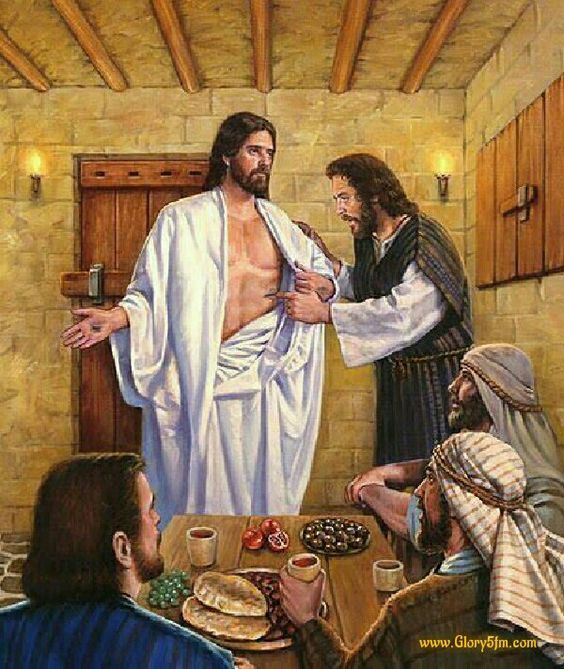
John’s account of this incident bears repeating here, since it may have been similar in some respects to Christ’s encounter with his half-brother James.

Now Thomas (also known as Didymus), one of the Twelve, was not with the disciples when Jesus came. So the other disciples told him, “We have seen the Lord!”

But he said to them, “Unless I see the nail marks in his hands and put my finger where the nails were, and put my hand into his side, I will not believe.”

A week later his disciples were in the house again, and Thomas was with them. Though the doors were locked, Jesus came and stood among them and said, “Peace be with you!” Then he said to Thomas, “Put your finger here; see my hands. Reach out your hand and put it into my side. Stop doubting and believe.”

Thomas said to him, “My Lord and my God!”

Then Jesus told him, “Because you have seen me, you have believed; blessed are those who have not seen and yet have believed.” (John 20:24–29)

Did James need this type of hands-on encounter to convince him that Jesus was alive, was standing before him and had risen from the dead? It certainly seems likely, since the apostle John called him an unbeliever (John 7:5). Did the brothers share a meal together, thus proving that the risen Jesus had fleshly substance and was not merely a ghostly apparition? See Luke 24:36–42.

Sometimes the most difficult people to persuade are the members of our own family. They know us too well and are fully aware of our foibles and shortcomings. After all, familiarity breeds contempt. But another familial phenomenon may be at play here. When we acknowledge the strengths of our sibling, we may feel diminished before them. Having seized the leadership role in the household of Joseph, did James begrudge yielding any authority or praise to the brother whose position he usurped? From James’ perspective, he was not usurping Jesus’ position. He was simply assuming his lawful role as the firstborn heir of Joseph. But acknowledging one’s brother as Messiah and Deity is a steep step down for any man to take. Bending the knee would not come easily.

James was a difficult nut to crack. There was a hard exterior to himm built up over years of rivalry, personal pride, and ambition. Those who have read his New Testament epistle will readily acknowledge that James was a man of rock-solid conviction and impeccable zeal. Some of those characteristics were undoubted evident before his conversion. They were simply oriented in a different direction—a direction that was hostile to Jesus and his mission. In this respect, James was very similar to another New Testament character—Saul who after his encounter with the risen Christ became the zealous apostle Paul.

James the skeptic would certainly need proof of the resurrection. If stunning proof was what he needed, Jesus was willing to provide it.

Luke, the author of the Book of Acts, informs us that there was a forty-day window—from the resurrection to Christ’s ascension—within which the encounter with James must have occurred.

In my former book, Theophilus, I wrote about all that Jesus began to do and to teach until the day he was taken up to heaven, after giving instructions through the Holy Spirit to the apostles he had chosen. After his suffering, he presented himself to them and gave many convincing proofs that he was alive. He appeared to them over a period of forty days and spoke about the kingdom of God. (Acts 2:1–3)

When this passage is compared with Paul’s remarks on the resurrection in 1 Corinthians 15, it becomes clear that Christ’s visitation with James took place near the conclusion of this forty-day period. Jesus saved the encounter with his fiercest skeptic and rival until near the end. Why would this be the case?

One can reasonably assume that there was some logical plan to the appearances that Jesus made. He was providing visible, physical proof of his resurrection. Luke says just that in the Acts passage cited above.

There is also a trainload of significance to the fact that these appearances happened over a period of forty days. Throughout the scriptures the passage of forty days signals a time of testing or proving. The great flood in the days of Noah took place over forty days (Genesis 7:17). Moses spent forty days with God on Mount Sinai receiving the Law (Exodus 34:28). Elijah traveled forty days to Mount Horeb, the mountain of God, on the strength of a single meal (1 Kings 19:7-9). In the same way, Jesus fasted forty days in the wilderness where he was tempted by the devil (Matthew 4:1–11, Mark 1:12–13, Luke 4:1–13). He was severely tested before his public ministry began. During that time of testing, Jesus proved that he was victorious over a triumvirate of evil—the temptations of the flesh, the world and the devil. He proved that he was ready to take on the responsibility of his redemptive mission.

Jesus’ life on planet earth was bookended by another forty days of proving. During this final forty-day interval, he went about proving that he had overcome another triumvirate that rules all humanity—the triumvirate of death, hell and the grave.

Despite repeatedly prophesying this very outcome. See Mark 8:31–33, 9:30–32, 10:32–34. Jesus’ physical resurrection was greeted with profound astonishment and near-universal skepticism. An excerpt from Mark’s gospel account dramatically illustrates this point:

When Jesus rose early on the first day of the week, he appeared first to Mary Magdalene, out of whom he had driven seven demons. She went and told those who had been with him and who were mourning and weeping. When they heard that Jesus was alive and that she had seen him, they did not believe it.

Afterward Jesus appeared in a different form to two of them while they were walking in the country. These returned and reported it to the rest; but they did not believe them either.

Later Jesus appeared to the Eleven as they were eating; he rebuked them for their lack of faith and their stubborn refusal to believe those who had seen him after he had risen (Mark 16:9–14)

One of the strongest arguments for the truth of the four gospel accounts springs from the unbelief of the apostles. When Jesus was raised from the dead, they were completely taken aback. Words such as floored, dumbfounded and thunderstruck spring to mind. And well they should. This is a miracle that defies all the norms of human experience. Their initial unbelief paints a rather unflattering picture of the apostles. This down-to-earth realism, however, lends credibility to the gospel accounts. Who would not be incredulous at reports of someone who was horribly tortured and killed, publicly speared, and drained of his blood (John 19:33–35) suddenly rising from the dead?

Furthermore, anyone who has read the four gospel accounts of the resurrection will discover that there is a certain amount of disorderly chaos in the way the events are reported. They do not match perfectly, and on certain points they seem contradictory. Clearly, no one employed a fact checker before each of the gospels went to press. But rather than sully their credibility, this rather haphazard reporting lends credence tothe truth of the events. The gospel accounts are not carefully crafted documents created by committee and verified in advance by scholarly research. On the contrary, they are independently produced, eyewitness accounts of events that transpired thirty-five or more years prior to the date when they were penned. Some discrepancies can be expected and indeed they are present. But rather than discredit the gospels, these straightforward recollections add to their authenticity and realism.

Present-day eyewitness accounts of the same event usually vary considerably in scope and detail. Witnesses whose stories agree perfectly provide evidence of collusion, nothing more. Discrepancies occur because each witness views the event from a different perspective and with varying degrees of perception. Also, human recall of an event is fallible and can vary over time. This is precisely what we encounter when we read the gospels. When one compares the resurrection accounts in the four gospels, some details appear to be jumbled or missing, but the picture that emerges is strong and clear: To the astonishment of all, Jesus rose from the dead.

Jesus had forty days to prove his resurrection. What logical plan did he follow to convince his followers, and ultimately the world, that he is alive?

Merely appearing before people who do not know him would prove nothing. They were not acquainted with him. Any random stranger could claim to have returned from the dead, but this claim means nothing to the hearer. It seems absurd! They do not know the man and they are unable to verify his claim. Nail scars in hands and feet may be curious features, but they could be self-inflicted wounds. They do not prove that the person thus wounded has risen from the dead.

The point of this argument is this: the people that Jesus must convince are his followers and those who knew him best. They are the only ones who can verify that this man, Jesus, rose from the dead. The general public, despite his fame, cannot verify that the resurrected Jesus is the same person who was put to death. Only those who knew him well can do that. For this reason, Jesus must convince his disciples—specifically the remaining eleven apostles. (Judas had hung himself. See Matthew 27:3–5.) But what is even more important, he must convince his family—his unbelieving brothers. They knew him from his childhood to the point of his death. If he cannot convince them, Jesus has utterly failed in his mission. His resurrection will be deemed a lie nothing more than a fabrication of his deluded followers. This is why police have a family member confirm the identify of an accident or murder victim.

Convincing James is then the ultimate test. Without James and the unbelieving brothers on side, the doctrine of the resurrection is a house of cards. To refute the resurrection claim, the brothers can simply testify that Jesus is dead. It is likely that they too saw him die from a distance. Since his crucifixion was a public event, along a public thoroughfare, it can be said with some accuracy that all Jerusalem witnessed his death.

Furthermore, the brothers can assert that his disciples are babbling idiots. They were already convinced of that before the crucifixion. Now the apostles have removed all doubt by spreading this wild fantasy about Jesus rising from the dead. To convince any thinking person from the public that Jesus is alive, his brothers must first be convinced that he is alive.

James is the linchpin. Unless he is converted, the entire gospel mission is stymied—dead on arrival. James is pivotal to the birth of the church and the advance of the gospel message. At the very core of the gospel message is the death, burial and resurrection of Jesus. For this reason, Jesus must prove to James that he has risen from the dead. He must prove that he is the Son of God. If Jesus is unable to convince the members of his own family, how can the apostles expect to convince the world?

What use or purpose is there in a dead Savior? If he is not alive, the Christian faith is vain and lifeless as a corpse. It is as the apostle Paul says, “And if Christ has not been raised, our preaching is useless and so is your faith” (1 Corinthians 15:14). Only a living Savior can forgive sins and cleanse a guilt-stained heart. Only a living Savior can throw open heaven’s gates. Only the resurrection fixes forever the Father’s seal of approval on the Son. If Jesus remains dead, his death is deserved. If he rises from the dead, his life and his message are vindicated. He is who he said he was—the Son of the Most High. See Matthew 27:63–64, Luke 22:67–71.

Wild flowers — photo by David Kitz

In addition, the gospel message is a message of reconciliation. Humanity is reconciled to God and to one another through the message of the gospel. Again, Paul sheds light on this central tenet of the gospel:

Therefore, if anyone is in Christ, the new creation has come: The old has gone, the new is here! All this is from God, who reconciled us to himself through Christ and gave us the ministry of reconciliation: that God was reconciling the world to himself in Christ, not counting people’s sins against them. And he has committed to us the message of reconciliation. (2 Corinthians5:17–19)

The message of reconciliation rings hollow if Christ cannot be reconciled to his brothers. How can the practitioners of the gospel advocate for reconciliation if the founder of the faith could not be reconciled with the members of his own household? Reconciliation is applied forgiveness. Forgiveness is at the heart of Christ’s teaching, and consequently reconciliation with James is essential. In a post-resurrection world, Jesus and James must be reconciled.

The gospel accounts bear witness to the urgency that Jesus attached to this mission of converting his brothers. On the night of his betrayal, he predicted that his disciples would desert him.

“You will all fall away,” Jesus told them, “for it is written:

“‘I will strike the shepherd, and the sheep will be scattered.’

“But after I have risen, I will go ahead of you into Galilee.” (Mark 14:27–28)

In announcing the resurrection, the angel at the tomb reiterates the same instruction:

“Don’t be alarmed,” he said. “You are looking for Jesus the Nazarene, who was crucified. He has risen! He is not here. See the place where they laid him. But go, tell his disciples and Peter, ‘He is going ahead of you into Galilee. There you will see him, just as he told you.’” (Mark 16:6–7)

Jesus appeared later that day to Mary Magdalene, the tomb-visiting women, to Peter, to two disciples on the road to Emmaus, and finally to the apostles (minus Thomas) at their evening meal in Jerusalem. What urgency was there then in returning to Galilee?

Galilee was the center point of Jesus’ ministry. But, more than that, it was his home. Once again, he would meet with his disciples there. But more importantly, he would return home and meet with his brothers. He says precisely that when he encounters the women near the tomb:

So the women hurried away from the tomb, afraid yet filled with joy, and ran to tell his disciples. Suddenly Jesus met them. “Greetings,” he said. They came to him, clasped his feet and worshiped him. Then Jesus said to them, “Do not be afraid. Go and tell my brothers to go to Galilee; there they will see me.” (Matthew 28:8–10)

The use of the term brothers (adelphos in Greek) is quite curious here. By using this term, Jesus could be broadly referring to his disciples, and most commentators interpret the word in this way. But why would Jesus say this if he was seeing his disciples that evening? Could he also be using the term brothers in the traditional familial sense of the word? Was he instructing these women to tell his unbelieving brothers and related kin to return to Galilee, where he will meet with them again?

His instruction for the brothers to return to Galilee also signals an end to the mourning period. Traditionally, Jewish families are expected to sit for seven days while mourning the loss of their deceased family member. But Jesus was no longer dead, so his announcement to the two Marys (Matthew 28:1-8) was a declaration of an end to the mourning period. Since he was alive, the family members (adelphos) who were in Jerusalem were free to return home to Galilee. The Jewish shiv-ah (mourning period) was over, because the deceased was very much alive.

Typically, the first day of the week, Sunday, was a travel day for the Passover pilgrims. With the end of the Passover week and the final Sabbath, the pilgrims would begin the long journey home. Jesus’ family members in Jerusalem had delayed their departure because of his death. They were observing shiv-ah. Now these two women give the brothers, his mother and other relatives the message that Jesus is alive. He will meet them in Galilee. What a startling turn of events this must have been for James!

The report of Jesus’ words must have cut to the core. “Do not be afraid. Go and tell my brothers to go to Galilee; there they will see me” (Matthew 28:10).

It would seem clear that these words were not intended solely for the eleven apostles. They would see Jesus that evening. They were also intended for his natural adelphos—his brothers according to the flesh.

Did James go to the empty tomb, even as Peter and John did? See John 20:2–10. Did he believe the disciples stole Jesus’ body away? See Matthew 28:11–15. What did he make of the reports of his brother’s resurrection Surely word of it spread like wildfire.

That evening Jesus appeared to his huddled and perplexed disciples. But he did not appear to James, since according to Paul’s defence of the resurrection in 1 Corinthians 15 that meeting was reserved for a later date.

Why was the meeting with James delayed? Paul’s list of resurrection appearances provides us with some clues. It would seem Jesus reserved the hard cases to the end.

Broadly speaking, it would seem that Jesus’ resurrection appearances moved outward in concentric rings from his inner circle, to the outer circle of disciples, to the doubters, and finally the openly hostile. Peter and Mary Magdalene were certainly in the closest inner ring. The Eleven comprise the next circle and then come other disciples beyond the apostolic band. Thomas represents the classic doubter, but there certainly were others, unmentioned by name in the scriptures, who presumably fit in this category. Paul and James fall in the category of the openly hostile—Paul for his persecution of the church, James because of his apparent opposition to Jesus and his gospel message.

Photo by Nacho Juu00e1rez on Pexels.com

As the evidence mounted and testimonials that Jesus was alive kept coming in, it must have produced a great deal of consternation in the hostile, unbelieving James. Since the great rift had opened between them, he had lived his life as a counterpoint to Jesus. These polar opposites did not attract.

In due course, Jesus met with his disciples in Galilee. This included his early morning seaside breakfast meeting with several of them. This occurred after Peter had led the group in a return-to-their-roots fishing expedition. Jesus took this occasion to fully restore his relationship with Peter after his threefold denial on the night of his betrayal. Three times Jesus asked Peter if he loved him, and three times Peter responded in the
affirmative (John 21:1-19).

It seems only fitting that Jesus would do the same work of restoration and reconciliation with James. Did it take only one meeting, or were there several? We do not know. They met at least once accordingto Paul’s testimony. It took several meetings before the relationship with Peter was fully restored. It seems reasonable to postulate that Jesus spent a good deal of time with James and his brothers. Their relationship was in much greater need of repair. They had a great deal to talk about. Ofthose forty post-resurrection days, a good many may have been spent with family, renewing ties that had been damaged and frayed almost beyond repair.

It only seems logical that Jesus returned to Galilee and to his family to rebuild a bridge across a great divide. As we will see, there is ample evidence that he succeeded.


New from David Kitz

James—the brother of Jesus—who was this man? What evidence do we have that this “brother of our Lord” even existed?

David Kitz digs deep into archeology, family dynamics, church history, and the biblical texts. What emerges from his research is a portrait of a decisive, pivotal leader who embodied the will and character of Jesus Christ.

But how did James—James the unbeliever—transform to become a leader who changed the course of world history? In these pages you will uncover the answer and rediscover for yourself the life-changing power of the gospel.

To view further details or purchase directly from the author click here.

 

He Opened Their Minds

13 Monday Apr 2026

Posted by davidkitz in Psalm 54, Psalms

≈ Leave a comment

Tags

forgiveness of sins, Jerusalem, Jesus, Jesus Christ, Messiah, Prayer, prophets, Psalms, repentance, resurrection, Scripture, seeing God

Today’s quote and prayer from
“Psalms 365: Develop a Life of Worship and Prayer


Today’s Reading: Psalm 54 (NIV)*

Listen to today’s reading by Jonathan Dent:

https://davidkitz.blog/wp-content/uploads/2026/04/psalm-54-mix-5final.mp3

LORD God
help me to know the battle belongs to you
and you are the ultimate victor.
My trust is in you.
I need not prove I am right.
You will have the final say.
Amen.

     — — — —


Post Resurrection Reading:
Their Minds Were Opened

He said to them,
“This is what I told you
while I was still with you:
Everything must be fulfilled
that is written about me in the Law of Moses,
the Prophets and the Psalms.”

Then he opened their minds
so they could understand the Scriptures.

He told them, “This is what is written:
The Messiah will suffer
and rise from the dead on the third day,

and repentance for the forgiveness of sins
will be preached in his name to all nations,
beginning at Jerusalem.

You are witnesses of these things.
I am going to send you
what my Father has promised;
but stay in the city until you have been clothed
with power from on high.”
(Luke 24:44-49).

* * *

This is how we know what love is:
Jesus Christ laid down his life for us.
And we ought to lay down our lives
for our brothers and sisters.
(1 John 3:16 NIV)

Para la publicación de Salmos 365 de hoy en español haga clic aquí.

bgbg_v4.3_1501818
* NEW INTERNATIONAL VERSION, COPYRIGHT ©1973, 1978, 1984, 2011 BY BIBLICA

Pray for peace in Israel, Iran and the Middle East
and continue to pray for peace to return to Ukraine and Russia!

Volume I of Psalms 365: Develop a Life of Worship and Prayer won the Best Book of the Year Award from The Word Guild and Volume II has won the Best Devotional of the Year Award. For those who love God’s word, this three-book series is an ideal way to daily meet with the Lord. To purchase or for a closer look click here.

Ideal for the Season of Lent


Watch the triumphal entry of the donkey-riding king through the eyes of Marcus Longinus, the centurion charged with keeping the streets from erupting into open rebellion.

Look behind the scenes at the political plotting of King Herod, known as the scheming Fox for his ruthless shrewdness.

Get a front-row seat to the confrontation between the Jewish high priest Caiaphas and the Roman governor Pontius Pilate.

Understand as never before the horror of the decision to save a brutal terrorist in order to condemn the peaceful Jew to death.

If you’ve heard the story of Passion Week so often it’s become stale, now is the time to rediscover the terrible events leading from Jesus’s humble ride into the city to his crucifixion. The Soldier Who Killed a King will stun you afresh with how completely Christ’s resurrection changed history, one life at a time.

To view further details or purchase click here.

The Resurrection Restoration

12 Sunday Apr 2026

Posted by davidkitz in Books by David Kitz

≈ 5 Comments

Tags

blasphemy, Caesar, crucifixion, James, James the brother of Jesus, Jesus, Jesus' family, Messiah, Paul's epistles, Pilate, proof of the resurrection, resurrection, Scripture, scriptures, the cross, treason

James: the Lynchpin of Our Faith — Chapter 8

The cataclysmic events of Good Friday left a shattered, fragmented family in its wake. On one level James must have felt vindicated. He had rightly assessed the pitfalls and dangers in his elder brother’s radical messianic mission. At times, he may have felt a kind of ‘I-told-you-so’ triumphalism. But there was no joy in it. How could there be? His brother was dead, the family lay in ruins, and the family reputation among the elite of Jewish society was in tatters—totally beyond redemption.

Family reputation meant a great deal to James. Saving face and maintaining family honour has always been of primary significance in Middle Eastern culture. How could James show his face back in Nazareth, knowing that his brother had been crucified for blasphemy and treason?

After all, the Sanhedrin had found Jesus guilty of blasphemy. (See Mark 14:61b–64.) From the outset of his ministry Jesus had dared to preach about the emergent kingdom of God (Mark 1:14–15). For the folly of this message he would die. Jesus and his message challenged the authority of Rome. A crown of thorns was Rome’s answer for such audacity. John’s gospel account gives us the clearest picture of how this charge of treason played itself out:

From then on, Pilate tried to set Jesus free, but the Jewish leaders kept shouting, “If you let this man go, you are no friend of Caesar. Anyone who claims to be a king opposes Caesar.”

When Pilate heard this, he brought Jesus out and sat down on the judge’s seat at a place known as the Stone Pavement (which in Aramaic is Gabbatha). It was the day of Preparation of the Passover; it was about noon.

“Here is your king,” Pilate said to the Jews.

But they shouted, “Take him away! Take him away! Crucify him!”

“Shall I crucify your king?” Pilate asked.

“We have no king but Caesar,” the chief priests answered.

Finally Pilate handed him over to them to be crucified. (John 19:12–16)

During the trial Pontius Pilate played his cards shrewdly. In exchange for a guilty verdict, he extracted what he had long wanted from the chief priests: a pledge of fidelity to Rome.

Jesus before Pilate

The humiliation and disgrace of the cross stained a family’s reputation immeasurably. Present day readers may easily underestimate the significance of this humiliation. Crosses adorn churches and are hung on gold chains around our necks. The cross is commonly used as jewelry. For us it has lost its horror. It is a symbol of faith and hope. Not so for the first century citizen of the Roman Empire. For the people of that day, it was viewed with revulsion. They saw it for what it was: a heinous instrument of death.

As the family head, James bore the shame of the cross. His errant bastard brother had brought shame to the family name. Jesus was stripped naked and pinned to a cross along the Roman road into the city. His crime was posted above his head: The King of the Jews. There he hung for all to see—a public spectacle—a living, dying billboard displaying his arrogance and the error of his ways.

It was more than James could bear. Some might understand or sympathize with someone charged with treason against Rome, but blasphemy against God was another matter. It was beyond the pale—an affront to the faith—an affront to the family’s Jewish identity. James could not countenance the thought.

To protect himself and his younger brothers, James took the drastic measure of disowning his mother. The elders in the community of Nazareth already recognized that Mary had conceived Jesus in sin. With Jesus’ trial and crucifixion, the rumours of old gained fresh currency. This child was conceived out of wedlock. He was not the son of Joseph. No son of Joseph would drag the family name through such a slough of infamy. Bad seed brings forth a bad harvest. And this outcome—this public crucifixion—was the ultimate in a bad harvest.

During Jesus’ ministry years, James had done what he could to distance himself from his older brother. Now that Jesus’ renown had turned into shame, he cut the final cord. He repudiated his mother. Surely the synagogue elders in Nazareth would approve of his actions. What else could he do to expunge this stain from the family record?

Three years earlier, after a hostile reception in his hometown, Jesus spoke these words, “A prophet is not without honor except in his own country, among his own relatives, and in his own house” (Mark 6:4, NKJV). Jesus the prophet spoke the truth. His own household rejected him.

As he hung dying, he cried out, “‘Eloi, Eloi, lama sabachthani?’ which is translated, ‘My God, My God, why have You forsaken Me?’” (Mark 15:34b, NKJV)

In his moment of greatest anguish, Jesus was rejected by his earthly family, his disciples had scattered in fear, and apparently even his heavenly Father had abandoned him. The physical torment of the cross was coupled with the torment of utter rejection on every level.

Photo by Pixabay on Pexels.com

James turned his back on his brother—so much for brotherly love. Surely, this was the low point. Between them, things could sink no lower. Does hell have a basement?

And yet… And yet the story does not end there. If we read through the remainder of the New Testament, we discover that James—this same James, the brother of Jesus—becomes a prominent leader in the early church. In fact, he authored a much quoted, canonical book that bears his name. How could this be?

The short answer is because of the resurrection. The resurrection changed everything, including the trajectory of James’ life.

There are certain stories in the New Testament that get a lot of play. By that I mean they are well known. The writer or writers provide the reader with a lot of information. The narrative is rich in detail, and in several instances, particularly in the gospels, we hear the account from various perspectives. The story of Paul’s conversion is told twice in the Book of Acts, for example, and snippets of it can be found in Paul’s epistles.

The conversion of James is not like that. We would know nothing of it except for a cursory mention that appears in Paul’s first letter to the Corinthians. Most casual readers pay little attention to this passing reference. But in accounting for the change in the life of James, this passage has enormous significance.

In Paul’s great defence of the resurrection, he makes this statement:

For what I received I passed on to you as of first importance: that Christ died for our sins according to the Scriptures, that he was buried, that he was raised on the third day according to the Scriptures, and that he appeared to Cephas [Peter], and then to the Twelve. After that, he appeared to more than five hundred of the brothers and sisters at the same time, most of whom are still living, though some have fallen asleep. Then he appeared to James, then to all the apostles, and last of all he appeared to me also, as to one abnormally
born. (1 Corinthians 15:3–7)

The resurrected Christ appeared to James! What an astonishing experience that must have been! It most certainly changed his life—altered his belief system—rattled his cage to the core. James had an encounter with his resurrected brother. For an unbeliever—more than that, an enemy of the gospel message—this can only be a trauma of the highest magnitude.

Imagine the scene for a moment. James is back in Nazareth in his carpentry shop working on some project. Perhaps his head is down, focussed on his work. He looks up and to his astonishment Jesus is there. The brother he believes is dead is standing before him.

Presumably, words are exchanged. What did Jesus say? How did James respond? This side of eternity we will never know the answer, but surely this was the most pivotal event in the life of James. Without question, it was also a pivotal event in the life of the early church.

Did Jesus show James the nail scars in his hands and feet? Did James require visible and tactile proof, as was the case with the apostle Thomas? (See John 20:24–29.) No one knows for sure; the biblical record is silent. What we do know with certainty is that from that moment on James was totally transformed. He was now firmly in the camp of the believers.

In a single encounter, the enmity that tore the family apart was reversed. It takes a miracle to restore a severed relationship. It took a miracle in the order of magnitude of the resurrection to re-establish this poisoned brotherly relationship.

The significance of this turning point should not be underestimated. There is ample evidence to support the concept that the conversion of James shaped not only the history of the early church, but the entire world.


New from David Kitz

James—the brother of Jesus—who was this man? What evidence do we have that this “brother of our Lord” even existed?

David Kitz digs deep into archeology, family dynamics, church history, and the biblical texts. What emerges from his research is a portrait of a decisive, pivotal leader who embodied the will and character of Jesus Christ.

But how did James—James the unbeliever—transform to become a leader who changed the course of world history? In these pages you will uncover the answer and rediscover for yourself the life-changing power of the gospel.

To view further details or purchase directly from the author click here.
 

The Final Cut

29 Sunday Mar 2026

Posted by davidkitz in Books by David Kitz

≈ Leave a comment

Tags

baptism of Jesus, Bartimaeus, born again, born of God, children of God, communion, God's family, insane, James, James the brother of Jesus, Jesus, Jesus' family, Joseph, Mary and Joseph, Messiah, Passover, Scripture, the cross

James: the Lynchpin of Our Faith — Chapter 7

At this point many readers may feel that this rift in Jesus’ natural family is overstated. Theologians and Bible scholars generally have not raised this matter, and it certainly is not a point of common discussion among believers, or a Sunday sermon topic within churches today. However, when one takes the time to connect the dots—make the links—the biblical record is quite clear. Jesus came from a dysfunctional family. A massive family rift existed between Jesus and his half-brothers, and James was at the crux of this division. No event brings this out more clearly than the crucifixion of Jesus.

But before we connect that final dot, let’s review the evidence of this rift as it has been presented thus far:

• Jesus was rejected by the people of his hometown, Nazareth,
and barely escaped being thrown off the cliff on which the
town was built. (Luke 4:16–30; see also Matthew 13:54–58
and Mark 6:1–6.)

• According to John, the gospel writer, Jesus’ brothers did not
believe in him or his divine mission. See John 7:1–13.

• At a point early in Jesus’ three-year ministry, his brothers and
his mother came to get Jesus because they believed he was out
of his mind. In response, Jesus identified his followers as his
true family. (Luke 4:16–30; see also Matthew 13:54–58 and
Mark 6:1–6.) Jesus taught a counter-cultural gospel of spiritual
rebirth into God’s family. (John 1:11–13 and John 3:1–21.)

• Membership in this new spiritual family required a radical
loyalty to Christ, which superseded the importance of one’s
blood relatives. (Matthew 10:34–39; see also Luke 14:26–27.)

Mackenzie King Estate, Gatineau Park — photo by David Kitz

The picture that emerges is quite clear. Following his baptism by John, Jesus left home and assumed a new identity—his true identity. He no longer identifies as the son of Joseph. He is the Son of God, even as the voice coming from heaven identified him at his baptism. (See Matthew 3:17, Mark 1:11, Luke 3:22.) His birth family, or at least the male members of it, have rejected him as insane or possibly demon possessed. They stand aloof from him, and none of them are numbered among his followers.

Mary finds herself caught in the middle, torn between her faith in and love for her firstborn, and the fierce rejection he has engendered among her other sons. She knows the secret of his divine conception and the prophetic words that were spoken over him. She witnessed the miracles and the angelic confirmation that surrounded the events of his birth. Mary believes—no, she knows—that her son Jesus is the Son of God. At her prompting, he performed his first miracle at Cana (John2:1–12). Yet here she finds herself caught in the middle of this storm of opposition—opposition within her own family. Owing to this opposition, she can only follow Jesus at a distance. She is not numbered among the women who supported and accompanied Jesus and his roving apostolic band as recorded in Luke’s Gospel:

After this, Jesus traveled about from one town and village to another, proclaiming the good news of the kingdom of God. The Twelve were with him, and also some women who had been cured of evil spirits and diseases: Mary (called Magdalene) from whom seven demons had come out; Joanna the wife of Chuza, the manager of Herod’s household; Susanna; and many others. These women were helping to support them out of their own means. (Luke 8:1–3)

Undoubtedly, Mary followed the reports of Jesus’ ministry with great interest. Repeatedly the gospel accounts record how the news of Jesus’ miraculous signs and healings spread throughout the entire region of Galilee and Judea. These reports would spur Mary to even greater faith. Surely the biblical prophecies were coming true. Her son was the long-awaited Messiah. His miraculous powers testified to his divinity. For Mary and thousands of others, hope tingled in the air. Israel’s day of deliverance was drawing nigh.

It is amid this air of expectant hope that Mary set out from Galilee to celebrate the Passover in Jerusalem. This annual pilgrimage was a well-established family tradition (Luke 2:41–42). Undoubtedly, she travelled in the company of one or more of her adult sons: James, Joseph, Simon, or Judas (Jude). No middle-aged woman at that time would undertake such a pilgrimage on her own.

Above all, Passover was and is a family celebration of the deliverance of the firstborn from the angel of death. It is a time for families to gather together. For Mary this journey would have brought back memories of that journey years earlier with her twelve-year-old firstborn, Jesus. Due to the rupture in relations recorded earlier, he was not part of the family gathering now. Jesus was with his new family, his disciples. He was going about “his Father’s business” (Luke 2:49).

But his presence amidst the festive throng stirred their collective faith as never before. They sensed the anticipation. Surely, the long-awaited kingdom of God was at hand. On the final morning of their journey, as they left Jericho for the ascent to Jerusalem, their hopes were confirmed. To the astonishment of all, Jesus performed one of his greatest miracles. Mark’s gospel gives us the most lucid account:

As Jesus and his disciples, together with a large crowd, were leaving the city, a blind man, Bartimaeus (which means “son of Timaeus”), was sitting by the roadside begging.

When he heard that it was Jesus of Nazareth, he began to shout, “Jesus, Son of David, have mercy on me!”

Many rebuked him and told him to be quiet, but he shouted all the more, “Son of David, have mercy on me!”

Jesus stopped and said, “Call him.”

So they called to the blind man, “Cheer up! On your feet! He’s calling you.” Throwing his cloak aside, he jumped to his feet and came to Jesus.

“What do you want me to do for you?” Jesus asked
him.

The blind man said, “Rabbi, I want to see.”

“Go,” said Jesus, “your faith has healed you.” Immediately he received his sight and followed Jesus along the road. (Mark 10:46–52)

The effect that this demonstration of heaven-sent power had upon the crowd cannot be overestimated. This was divine confirmation. The Messiah had come—was walking among them now! Deliverance was at hand. Surely, Jesus was the promised son of David—the anointed one—the Christ.

Wikimediacommons

That morning Jesus did more than open the eyes of a beggar; he opened the eyes of the pilgrims to his divine call and mission. And as they continued their journey, that beggar, Bartimaeus, was walking, talking, living proof of the Messiah’s power. A blind beggar, healed and set free, embodied the Passover pilgrims’ hopes and dreams. They too could be set free from the bondage of Roman rule. Anything was possible. The kingdom of God was among them. The rightful king of the kingdom was walking the dusty road with them.

As they reached the outskirts of Jerusalem, the excitement built to a crescendo. Jesus climbed on the back of a commandeered donkey, and the crowd began to hail him as king. In doing this, he and his followers signaled that he was the coming Messiah-King, the Christ, spoken of in Old Testament prophecy ((Zechariah 9:9).

Many people spread their cloaks on the road, while others spread branches they had cut in the fields. Those who went ahead and those who followed shouted,

“Hosanna!”


“Blessed is he who comes in the name of the
Lord!”

“Blessed is the coming kingdom of our father David!”

“Hosanna in the highest heaven!” (Mark 11:8–10)

Mary’s heart must have swelled with pride as this image unfolded. Her firstborn was being hailed as king! Before her very eyes the words of the angel Gabriel—the words of the annunciation—were coming true.

He will be great and will be called the Son of the Most High. The Lord God will give him the throne of his father David, and he will reign over Jacob’s descendants forever; his kingdom will never end. (Luke 1:32–33)

Only Caiaphas, the high priest, and Pontius Pilate, the Roman governor, stood in the way. All too soon these aspirations of greatness came crashing down. The soft power of a spiritual kingdom collided with the brute force of Rome. Though this grand arrival set all of Jerusalem in a stir, Matthew 21:10–11, the powers that be were not about to surrender authority and control to a so-called prophet from Nazareth.

Upon his arrival Jesus launched a coup. But the coup was not against the Romans. Instead, it was against the temple authorities. Jesus set about cleansing the temple compound of marketers and moneychangers, and then he turned it into his center for healing and teaching. See Matthew 21:12–17. The high priestly clan would countenance none of this. The crafty Caiaphas plotted revenge. See John 11:47–53.

The week that began with a king on a donkey ended with a king on a cross.

For Mary the more ominous words of another prophet were about to come true. At the infant Jesus’ dedication in the temple, the prophet Simeon had said to Mary, “And a sword will pierce your own soul too” (Luke 2:35b). The cruelest cut was yet to come.

Sunday’s elation transitioned to midweek apprehension and finally Friday’s death and despair. An incomprehensible reversal—an unfathomable descent into hell—that’s what Mary experienced.

Her midmorning arrival at the foot of her son’s cross evokes a level of pathos that breaks the bounds of description.

Near the cross of Jesus stood his mother, his mother’s sister, Mary the wife of Clopas, and Mary Magdalene. When Jesus saw his mother there, and the disciple whom he loved standing nearby, he said to her, “Woman, here is your son,” and to the disciple, “Here is your mother.” From that time on, this disciple took her into his home. (John 19:25–27)

Jesus committed his mother into the care of John, his dearest disciple, “the disciple whom he loved.” This was the spoken will of a dying man, and according to the text above, Mary and John carried out Jesus’ will. Mary moved into John’s home.

This event raises a whole series of questions:

• Why would Jesus commit his mother into the care of his
disciple?

• Why would Mary agree to this new living arrangement?

• Where were Jesus’ brothers? Why are they not with their
mother at the foot of the cross?

• What was the motive and basis for this new living arrangement?

None of this makes sense unless there was a deep rift—an estrangement—between Jesus and his brothers. As we have already seen, such an estrangement was evident early on in Jesus’ ministry. His crucifixion brought this rift fully into the open. Here was the climax—the final cut. The family is torn asunder. As for Mary, she has irrevocably aligned herself with Jesus, her firstborn.

But where is James in all this? Where are the other half-brothers? It is unimaginable or highly unlikely that James was not present in Jerusalem for this Passover. The Passover was a family celebration, and with Joseph’s death, and Jesus’ abandonment or abdication of his family responsibilities, James was now the head of the home. Since we know Mary did not come to Jerusalem with Jesus and his apostolic band, we must conclude that she came with James. As the oldest son of Joseph, it was his responsibility to lead the family in the sacred celebration of deliverance from the bondage of Egypt through the blood of the Passover lamb.

It is reasonable to believe that while Jesus was celebrating his last Passover meal and instituting the communion sacrament with his spiritual family—his disciples in Jerusalem—James was leading the Passover celebration with Mary his mother and Jesus’ natural family members at another location in the city. The house of Joseph was divided.

James was not present at the communion table because clearly there was no spiritual union between him and Jesus. By instituting this sacrament Jesus established a link between his imminent death—as the paschal lamb offered up for the sins of the world—and the ancient Jewish Passover ritual. But there is a deeper meaning in this blood sacrifice that warrants further exploration.

Using the emblems of bread and wine, Jesus commanded his disciples to eat his body and drink his blood. Though his words should be interpreted figuratively or spiritually, (John 6:63) they nonetheless represent a drastic departure from orthodox Jewish teaching. Human sacrifice is universally condemned under the Old Covenant, and though the meat of the sacrificial animal or paschal lamb was consumed, by a direct command of God the blood must never be. “And wherever you live, you must not eat the blood of any bird or animal. Anyone who eats blood must be cut off from their people” (Leviticus 7:26–27).

The prohibition is sharp.

According to John’s Gospel, Jesus introduced this teaching about eating his body and drinking his blood in the town of Capernaum in Galilee, prior to instituting the sacrament at his last Passover in Jerusalem. Not surprisingly, his teaching was roundly rejected at that time.

Jesus said to them, “Very truly I tell you, unless you eat the flesh of the Son of Man and drink his blood, you have no life in you. Whoever eats my flesh and drinks my blood has eternal life, and I will raise them up at the last day. For my flesh is real food and my blood is real drink. Whoever eats my flesh and drinks my blood remains in me, and I in them. Just as the living Father sent me and I live because of the Father, so the one who feeds on me will live because of me. This is the bread that came down from heaven. Your ancestors ate manna and died, but whoever feeds on this bread will live forever.” He said this while teaching in the synagogue in Capernaum. (John 6:53–59)

The thought of eating human flesh and drinking human blood is disgusting, repulsive, and strictly forbidden in religious law. The response of the faithful in Capernaum should surprise no one. “On hearing it, many of his disciples said, ‘This is a hard teaching. Who can accept it?’” (John 6:60)

John goes on to report the effect that this teaching had on his followers. “From this time many of his disciples turned back and no longer followed him” (John 6:66).

The question that naturally springs to mind is: Why introduce such a disturbing teaching? Why attempt to overthrow centuries of religious law?

Clearly Jesus must have attached a great deal of significance to this doctrine. It was not peripheral; it was at the core of his teaching. Furthermore, it was at the core of his teaching because it was at the core of his being. It was about his DNA—divine eternal DNA being transferred to his followers. This is why Jesus says, “Whoever eats my flesh and drinks my blood remains in me, and I in them. Just as the living Father sent me and I live because of the Father, so the one who feeds on me will live because of me” (John 6:56–57).

Eternity was written into Christ’s DNA, and to have eternal life, his followers must have eternal DNA. Eternal DNA is found in the blood of Christ. That is why in the sacrament he offers his blood to his followers. In his blood is the life of God. In communion, on a symbolic spiritual level, we become partakers in the DNA of Christ.

To impart eternal life to his disciples, which is only available through his shed blood, Jesus overturns the centuries’ old Levitical prohibition against consuming blood:

For the life of a creature is in the blood, and I have given it to you to make atonement for yourselves on the altar; it is the blood that makes atonement for one’s life. (Leviticus 17:11)

Not only did Jesus’ followers need to partake in his divine DNA, but they also needed to be cleansed by and forgiven through the sacrifice of his body. His shed blood atones for their sins, making them acceptable to God their Father. The writer of the Book of Hebrews makes this concept clear when he states, “In fact, the law requires that nearly everything be cleansed with blood, and without the shedding of blood there is no forgiveness” (Hebrews 9:21–23).

Forgiveness and eternal life are available now through the body and blood of Christ for all who believe. But at this point in our narrative James does not believe. He stands outside the family of God as described by his half-brother, the Lamb of God. James has not experienced a spiritual rebirth. To him this talk of consuming his brother’s flesh and blood is the gibberish of a madman—or worse yet, highhanded blasphemy.

While Jesus instituted the holy sacrament, James, the firstborn son of Joseph, celebrated the Jewish Passover in the traditional way. As a dutiful mother and the family matriarch, Mary would be present with James. But her heart was with Jesus—her firstborn. After all, this memorial celebration was all about the firstborn who was protected from the Angel of Death by the blood of the Passover lamb.

Photo by Kat Smith on Pexels.com

The spiritual family and the natural family of Jesus celebrated the Passover in strikingly different ways. For the most part, this is a difference that continues to this day, as Passover and the celebration of the Eucharist mark the dividing line between the Jewish and Christian faith.

The very next morning, though James was present in the city, he refused to come with his mother to the foot of the cross. As his half-brother Jesus, the Lamb of God, hung dying, James would not climb the hill of Golgotha to bid him farewell. That is how intense the animosity he felt toward Jesus was. James shunned and despised Jesus in the moment of his greatest suffering—in the moment of his death.

Undoubtedly, before Mary arrived at the foot of the cross, there was an intense and heated conversation between her and James. This conversation is not recorded in scripture; it happened off-camera, so to speak. But it’s not difficult to imagine the issues at play.

Mary is caught in the jaws of this horrific turn of events. Mary’s soaring hopes and dreams for her messianic son have come crashing to the ground. Her faith is shattered. Heaven’s promise has turned into hell—an intensely personal hell. In her grief, her only thought is to spend a few final minutes with the child she bore, the child she nursed and loved—the son of her most cherished dreams.

James on the other hand is seized with a mixture of anguish and rage. He sees his brother’s crucifixion as a natural consequence flowing from the words and actions of a dangerously deluded mind. He had tried to put an end to this messianic delusion—to take charge of his brother early in his ministry—all to no avail (Mark 3:20–35). Now his worst nightmare has come to pass. And what had all this talk of the kingdom of God accomplished? It led directly to death on a Roman cross—an outcome that was entirely predictable. Wasn’t this the reason he tried to take charge of Jesus? But the deluded fool would have none of it. He refused to listen to his family and the voice of reason.

As seen through the eyes of James, the sins of Jesus were numerous and stunningly heinous. He abandoned his family responsibilities. He rejected the wise counsel of his family members; in fact, he rejected his entire family (Mark 3:33–35). From the earliest days of his ministry, Jesus was a deranged rebel, who opposed the highest religious authorities in the land (Mark 3:22). Furthermore, he had the audacity to take his opposition to authority to the highest level. He denounced the strict and pious Pharisees, men whose legal scruples James admired. But not content with mocking the religious establishment from the sidelines, Jesus invaded the temple courts with his deluded hordes and challenged the authority of the high priest in his own precinct. Is it any wonder that Caiaphas reacted as he did?

But here is the most grievous of all his transgressions. Jesus had delusions of grandeur—of Deity. How could James’ brother—his flesh and blood brother—be God? Deity come in the flesh? Preposterous! Such an idea was beyond scandalous. It was the height of blasphemy. And James was proven right in this assessment when the Jewish high council, the Sanhedrin, reached its verdict in Jesus’ trial (Mark 14:61b–64).

What might James have thought at this moment? Death on a cross was too kind an outcome for such a fool—such a bastard!

And now Mary, the mother of this bastard—yes, and his own mother too—wants to say farewell to her bastard. Well, let her go. She was the mother of this bastard, and for reasons that totally confounded James, she had urged Jesus on in this course of action—this blasphemous folly to the shame and disgrace of the entire family.

Let her go. Let her go crying to her humiliated, bastard son. Wasn’t she the mother of this catastrophe—this affront to the Jewish faith? She was the source and the root cause of all the dissension in the family. From the moment of Jesus’ conception to this very instant, Mary had brought disrepute and an immeasurable dishonour to the house of Joseph.

Let the b*tch go to her bastard now, he must have thought. (I derive no pleasure in using these derogatory terms. Strong, insulting language is used here to signal the complete breakdown of the family relationship.) But in all likelihood, James also let Mary know that if she went to see Jesus, she was unwelcome in his home. If she went crying to him—if she sided with him—she too was an outcast.

This is a look into the mind of James on the day Jesus died.

Photo by Pixabay on Pexels.com

Well, Mary made her decision. She walked to the foot of the cross. But she did not come forward alone. She came with other believers, her sister, “Mary the wife of Clopas, and Mary Magdalene.” See John 19:25. At last Mary has fully entered the circle of Jesus followers. She made a courageous and conscientious decision to associate herself with the family of God. She aligned herself with her firstborn.

Why did Jesus commit his mother into John’s care? Without this background, this decision makes no sense because Mary has four remaining sons—and daughters, as well. According to rabbinical law and practice, the oldest son was required to be her provider in her declining years as a widow. The decision to commit Mary to John’s care only makes sense in view of the scenario that has just been described. Mary needs a new home and a new family because she has been rejected by her remaining children, her own flesh and blood.

Mary stood before Jesus as a homeless widow without a family. She is not an orphan in the traditional sense of the word, but with the death of Jesus, she will become an orphan from her natural family. Therefore, Jesus entrusts her into John’s care.

With her arrival at the cross, Mary has taken on a new identity in the fullest sense imaginable, even as Jesus did when he was baptized. She has left the household of Joseph and joined the household of God. She will be forever known as the mother of the Son of God.

Jesus would not leave his mother in the care of an unbeliever, so he entrusted her to John, his dearest disciple.

There is a profound spiritual dynamic at work here. Jesus is signaling to all that spiritual birth takes precedence over natural birth. In his eternal kingdom, the spiritual family and spiritual DNA trump the natural family and natural DNA.

For Mary this was the final cut. She was cut off from her natural family and grafted into the family tree of God.


New from David Kitz

James—the brother of Jesus—who was this man? What evidence do we have that this “brother of our Lord” even existed?

David Kitz digs deep into archeology, family dynamics, church history, and the biblical texts. What emerges from his research is a portrait of a decisive, pivotal leader who embodied the will and character of Jesus Christ.

But how did James—James the unbeliever—transform to become a leader who changed the course of world history? In these pages you will uncover the answer and rediscover for yourself the life-changing power of the gospel.

To view further details or purchase directly from the author click here.


← Older posts

Psalms 365: Develop a Life of Worship & Prayer

Psalms 365 Volume II

Psalms 365 vol 3
— Psalms 365 Volume III

Now available:

Psalms

Recent posts

  • The Birth of Jesus Foretold August 4, 2026
  • The Foundation of God’s Authority August 4, 2026
  • The Great Commission August 3, 2026
  • He is Incomparable! August 3, 2026
  • A Devotional Journey through the Epistle of James August 2, 2026
  • A God Abounding in Love and Faithfulness August 1, 2026
  • The Guards’ Report July 31, 2026

Calendar

August 2026
M T W T F S S
 12
3456789
10111213141516
17181920212223
24252627282930
31  
« Jul    

Blog Posts

Comments

  • davidkitz on Great Love Forever
  • Great Love Forever | Talmidimblogging on Great Love Forever
  • The Darkest of All Psalms | Talmidimblogging on The Darkest of All Psalms

Blog at WordPress.com.

Privacy & Cookies: This site uses cookies. By continuing to use this website, you agree to their use.
To find out more, including how to control cookies, see here: Cookie Policy
  • Subscribe Subscribed
    • I love the Psalms
    • Join 1,350 other subscribers
    • Already have a WordPress.com account? Log in now.
    • I love the Psalms
    • Subscribe Subscribed
    • Sign up
    • Log in
    • Report this content
    • View site in Reader
    • Manage subscriptions
    • Collapse this bar
Loading Comments...