• Home
  • About
  • DavidKitz.ca
  • Youtube Videos
  • Books by David
  • Books on Amazon.com

I love the Psalms

~ Connecting daily with God through the Psalms

I love the Psalms

Tag Archives: pride

Regime Change: the Mission of the Dynamic Duo

23 Sunday Nov 2025

Posted by davidkitz in The Elisha Code

≈ Leave a comment

Tags

Ahab, Elijah, Elisha, fire from heaven, God's power, humility, idolatry, Jesus, Jezebel, John the Baptist, lies, Mount Carmel, pride, Pride and Humility, regime change, repentance, Russia, the LORD, Ukraine

At that time Jesus, full of joy through the Holy Spirit, said, 
“I praise you, Father, Lord of heaven and earth,
because you have hidden these things from the wise and learned,
and revealed them to little children. 
Yes, Father, for this is what you were pleased to do.
(Luke 10:21, NIV)

Before sunrise on February 24, 2022, Russia launched a multi-pronged attack on Ukraine by air, land, and sea. Kiev, the capital, was expected to fall within days. President Biden offered to evacuate Ukrainian President Volodymyr Zelenskyy from the besieged capital. But a resolute and defiant Zelensky replied, “I need ammunition, not a ride.”[i]

What was Vladimir Putin’s objective in launching this unprovoked Russian attack on his smaller southern neighbor? His immediate goal was regime change. He wanted to oust the democratic, pro-western government of Ukraine and replace it with a pro-Russian regime subservient to his will.

Putin failed in his immediate objective. The Ukrainian defenders mounted a fierce resistance. The invaders were beaten back, though they engaged in rape, and a wanton killing of civilians, and inflicted massive destruction.

Photo by Pixabay on Pexels.com

At the time of this writing, the war rages on. The outcome remains uncertain. Regime change may yet come. But will the regime change be in Kiev or in Moscow? Time will tell.

Here is what we know with certainty from the Scriptures. The LORD wants regime change. Elijah and Elisha, the Old Testament dynamic duo, were on a mission. They had an assignment directly from the LORD God Almighty. What was their mission—the task the LORD assigned to them?

In broad terms their assignment was regime change. The northern Kingdom of Israel had turned its back on God—the God who generations earlier had rescued them from slavery in Egypt. Worse yet, Israel had turned to idolatry. Under the autocratic rule of Ahab and Jezebel, the worship of the fertility gods Baal and Asherah flourished.[ii]

First Elijah, and then, Elisha was tasked with bringing the wayward people of God back to worshipping Yahweh. But King Ahab and Queen Jezebel—Satan’s power couple—stood in the way.

Furthermore, this was a life and death struggle for the minds and hearts of the people.

Amid a famine brought on by a severe drought some dared to defy Israel’s King and Queen. Obadiah, Ahab’s palace administrator, was such a man. A devout believer in the LORD, Obadiah risked his life.

While Jezebel was killing off the Lord’s prophets, Obadiah had taken a hundred prophets and hidden them in two caves, fifty in each, and had supplied them with food and water (1 Kings 18:4, NIV).

In response, Elijah courageously confronted King Ahab and challenged him to assemble all of Israel for a duel to the death on Mount Carmel. Ahab was to bring with him “the four hundred and fifty prophets of Baal and the four hundred prophets of Asherah, who eat at Jezebel’s table” (1 Kings 18:19, NIV).
Thus the stage was set for what many consider the greatest challenge and display of God’s power in the Hebrew Scriptures.

          Elijah went before the people and said, “How long will you waver between two opinions? If the Lord is God, follow him; but if Baal is God, follow him.”
          But the people said nothing.
Then Elijah said to them, “I am the only one of the Lord’s prophets left, but Baal has four hundred and fifty prophets. Get two bulls for us. Let Baal’s prophets choose one for themselves, and let them cut it into pieces and put it on the wood but not set fire to it. I will prepare the other bull and put it on the wood but not set fire to it. Then you call on the name of your god, and I will call on the name of the Lord. The god who answers by fire—he is God.”
Then all the people said, “What you say is good”
(1 Kings 18:21-24, NIV).

The LORD vindicated his prophet, Elijah, by sending fire from heaven that “burned up the sacrifice, the wood, the stones and the soil, and also licked up the water in the trench” (1 Kings 18:38, NIV).

The prophets of Baal were vanquished.[iii] But rather than turn on Ahab and have him killed as well, Elijah declares the king should go and celebrate because a drought-ending rainfall was on its way. Then Elijah ascended the mountain, fell on his knees, and prayed for the rain to come, and after much prayer the downpour arrives.[iv]

Why this show of mercy to Ahab, the tyrant and accessory murder?[v] If the ultimate goal is regime change, then why not eliminate the man who stood in the way? Why didn’t the prophet mete out God’s wrath and retribution? Instead, Elijah portrays mercy and the abundant grace of God. Why?

The answer lies at the heart of the gospel message. The gospel message according to Jesus is all about regime change. It’s about letting King Jesus rule our hearts and minds. The government that affects us most directly isn’t in Washington, London, Moscow, or Ottawa, and it isn’t in a state or provincial capital. The government that affects us most directly is the government of our heart and mind. Is Jesus enthroned there? Is he governing your decision making? Is he calling the shots?

Far too often, we think a change of government at the national, state, or local level will transform our lives. That’s a political fantasy politicians love to peddle. True transformational change begins at the individual level. And there is nothing more transformational than spiritual rebirth. Jesus’ conversation with Nicodemus reveals that truth.[vi]

In Elijah’s interaction with Ahab, we see this principle of repentance and rebirth at work. Elijah was working to change the heart of the king. He wanted to see the LORD enthroned there. What could bring about that profound change in the king Ahab’s heart?

Clearly there was a need for repentance. And what could bring about that change? A jaw-dropping, heart-stopping demonstration of God’s power set the stage for genuine repentance. Surely, the miracle of fire falling from heaven would result in a change of heart and a change allegiance—a change from the worship of Baal to the worship of Yahweh.

Take up the Armor of God

Secondly, nothing melts stony hearts like the kindness and mercy of God. Elijah demonstrated that mercy by his treatment of Ahab, and by praying for the rain that ended a three and-a-half-year drought and famine in the land.[vii]

There’s something extravagant about the patience and mercy of God.

Don’t forget that the Lord is patient because he wants people to be saved
(2 Peter 3:15a, CEV).

Or do you show contempt for the riches of his kindness, forbearance and
patience, not realizing that God’s kindness is intended to lead you to repentance?
(Romans 2:4, NIV).

 In his interactions with Ahab, Elijah consistently displayed the undeserved kindness and patience of God. Nothing demonstrates this better than Elijah’s confrontation of Ahab after the incident involving Naboth’s vineyard. Jezebel plotted to have Naboth killed, and Ahab then seized Naboth’s land.[viii]

Elijah spoke these prophetic words to the king:

‘This is what the Lord says: In the place where dog licked up Naboth’s
blood, dogs will lick up your blood—yes, yours!’”
(1 Kings 21:19, NIV).

Of Jezebel, Elijah said:

“And also concerning Jezebel the Lord says: ‘Dogs will devour Jezebel by the
wall of Jezreel’
(1 Kings 21:23, NIV).

But what happen next is truly astonishing. We read that Ahab “tore his clothes, put on sackcloth, and fasted. He lay in sackcloth and went around meekly” (1 Kings 21:27, NIV).

And how did the LORD respond to Ahab’s apparent repentance and contrition?

Then the word of the LORD came to Elijah the Tishbite: “Have you noticed how Ahab has humbled himself before me? Because he has humbled himself, I will not bring this disaster in his day, but I will bring it on his house in the days of his son” (1 Kings 21:28-29, NIV).

What this turn of events demonstrates is the power of personal repentance. Genuine repentance has the power to change the course of history. It prevented the brutal end to Ahab’s dynasty during his lifetime.

Was Ahab’s repentance genuine? We can certainly debate that question. It appears that Ahab turned away from sin, but did he turn his affections to the LORD? Did he seek after God? Or was this a caught-with-a-hand-in-the-cookie-jar repentance that signaled he was sorry to be caught, but not sorry enough to change his ways?

Let’s remember that true biblical repentance brings about a regime change in the mind. The selfish ego that ruled for so long must abdicate. God is in charge now. King Jesus governs our thoughts and actions.

Perhaps Ahab experienced a measure of true repentance, but the real power—the true ruler of his life—was Queen Jezebel. She suppressed Ahab’s repentance and conversion, both after fire fell from heaven at Mount Carmel, and after Elijah confronted him over the incident involving Naboth’s vineyard.

For national regime change to occur, the true power behind the throne needed to repent or be replaced. But in this case, the kingpin wasn’t the king. The kingpin was Queen Jezebel. All of Elijah’s efforts appear to be aimed at King Ahab. But the queen remained untouched, unchanged, and unrepentant. And she ruled the day.

By faith, Elijah engineered an astonishing display of God’s power at Mount Carmel. But shortly thereafter, he also displayed an astonishing level of cowardice in the face of Jezebel’s threats.

Frequently, a great victory is followed by great temptation.

           Now Ahab told Jezebel everything Elijah had done and how he had killed all the prophets with the sword. So Jezebel sent a messenger to Elijah to say, “May the gods deal with me, be it ever so severely, if by this time tomorrow I do not make your life like that of one of them.
Elijah was afraid and ran for his life.
(1 Kings 19:1-3, NIV)

How could this prophet display such raw courage one day, and on the next day wilt before the threats of this depraved woman? After all, Jezebel was calling on the same disgraced gods that Elijah had revealed as powerless a day earlier. Where was the God of Elijah now in the face of this threat? Was he hiding, or had he fallen asleep?

Of course, not! But the prophet succumbed to his fleshly nature, sheer exhaustion, and the fear of man—or more precisely the fear of a woman.

Some psychologists see the classic hallmarks of a manic-depressive in Elijah’s response. He swings from extreme highs to extreme lows. He storms the mountain heights of emotion, exerts himself to an extreme,[ix] and then sinks into the depths of despair.

After fleeing to Horeb, the mountain of God, twice Elijah lays out his complaint before the LORD.

“I have been very zealous for the Lord God Almighty. The Israelites have rejected your covenant, torn down your altars, and put your prophets to death with the sword. I am the only one left, and now they are trying to kill me too” (1 Kings 19:14, NIV).

How does the LORD respond to Elijah’s complaint? He has him appoint his successor and then corrects his self-pitying exaggeration. The modern equivalent might be an announcement from your boss that you are fired for just cause. Let’s take a closer look at the LORD’s reply to Elijah:

“Go back the way you came, and go to the Desert of Damascus. When you get there, anoint Hazael king over Aram. Also, anoint Jehu son of Nimshi king over Israel, and anoint Elisha son of Shaphat from Abel Meholah to succeed you as prophet. Jehu will put to death any who escape the sword of Hazael, and Elisha will put to death any who escape the sword of Jehu. Yet I reserve seven thousand in Israel—all whose knees have not bowed down to Baal and whose mouths have not kissed him” (1 Kings 19:15-18, NIV).

Let’s first look at Elijah’s lie and Yahweh’s response to it. Yes, Elijah lied. He said he was the only prophet of the LORD left, yet Obadiah specifically told Elijah that as a faithful follower of the LORD since his youth, he had hidden a hundred prophets of the LORD in two caves.[x] Yet, before the people gathered on Mount Carmel, Elijah repeats his boast about being the only prophet of the LORD left in the land.[xi] Clearly this was not true.

Furthermore, there is false humility in Elijah’s plea before the LORD. He states, “I have been very zealous for the LORD God Almighty.” Though he has been zealous he has made his zeal a point of pride. He has compared himself with others and concluded their faith and sacrifices in the face of severe persecution merit no consideration. His efforts alone are noteworthy. Thus, he concludes he is the only faithful man left.

Depression begins when we believe a lie. Elijah believed the lie that he alone was faithful to Yahweh. In addition, depression breeds isolation and self-pity. Both are hallmarks of the state Elijah is in.

Sadly, this great man of God fell short and now a replacement is needed to continue the deep work he set in motion in Israel. The will and purpose of God must prevail. But the LORD uses pure vessels rather than those tainted by pride.[xii]

Elijah’s failings all too frequently have been repeated by churches and ministries down through the annals of history. God dramatically uses an individual or a movement to bring about a spiritual awakening or renewal. But then pride sets in. A sense of superiority emerges. This is coupled with a degree of exclusivity that manifests itself by restricting fellowship to a certain group or an inner circle. Attitudes or statements declaring that, “We alone have the full truth” begin to emerge.

Soon the Spirit that was so evidently present in the early days of fruitful ministry is absent. Pride sets in and the Holy Spirit flees. The LORD will use a different vessel—the humble vessel wiped clean.

There is a striking parallel between the ministry of Elijah and John the Baptist:

  • There appears to be a very deliberate attempt by John to take on the appearance of Elijah in his dress, diet, and demeanor.[xiii]
  • Both men boldly called the nation to repentance.
  • Both directly confronted the political leaders of their time (Ahab and Herod Antipas).
  • Both sank into states of depression where they questioned their ministry (Elijah at Mount Horeb, John while imprisoned).
  • Both had their life and ministry undermine or cut short by a woman (Jezebel and Herodias).
  • Both sought regime change but failed to see it in their day.
  • Both sowed the seeds of a remarkable transition.
  • Both were succeeded by men who brought the work they began to fruition (Elisha and Jesus).

With Elijah’s fiery departure, the mission of regime change fell to Elisha to accomplish. A double portion of Elijah’s anointing now rests on him, and under the LORD’s guidance through his ministry Elisha performs miracle after miracle—fourteen in total—doubling Elijah’s total.

Though the overall mission of this prophetic dynamic duo remained the same, there are some striking differences between Elijah and Elisha in terms of their calling, ministry, character, and personality. In the same vein, there are striking differences between the New Testament duo of John the Baptist and Jesus.

First, we should note that Elisha came from a wealthy farm family. We read that at the time of his calling, he was plowing with twelve yoke of oxen. A common farm family might have a single yoke (pair) of oxen, but Elisha was plowing with twelve yoke (twenty-four oxen). That’s an astonishing number, and it implies the family farm is enormous.

Elijah went up to him and threw his cloak around him. Elisha then left his oxen and ran after Elijah. “Let me kiss my father and mother goodbye,” he said, “and then I will come with you.”
“Go back,” Elijah replied. “What have I done to you?”
So Elisha left him and went back. He took his yoke of oxen and slaughtered them. He burned the plowing equipment to cook the meat and gave it to the people, and they ate. Then he set out to follow Elijah and became his servant
(1 Kings 19:19-21,NIV).

Elisha left all to follow Elijah. There is something highly symbolic about Elisha’s sacrifice of his oxen and the burning of his plow. In his farewell, he burned the bridges back to his former lifestyle. It’s a stunning about face for a wealthy young man. Elisha turned his back on the riches and prestige of this world to become the servant/slave of a homeless roving prophet.
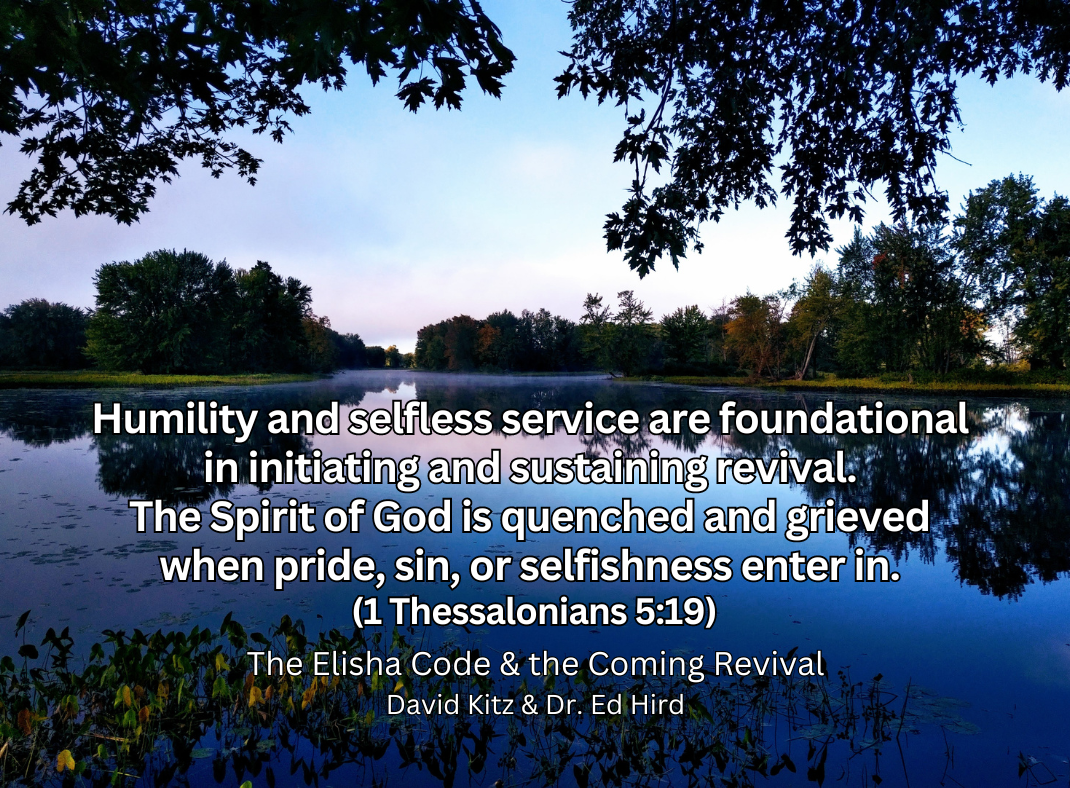
Jesus, the prophet of the new covenant, left his throne in glory to become the servant of all. He set aside the wealth of heaven to serve among the poor. He asks his followers to do the same. Some like Peter, James, John, and Matthew, the tax collector, heeded his call, left all, and followed him. Others like the rich young ruler clung to the security of their wealth.[xiv]

It’s striking that Elijah repeatedly tried to dissuade Elisha from following him.[xv] Yet, Elisha persisted. Similarly, Jesus repeatedly warned his followers of the cost they would bear in becoming his disciples.[xvi] Have you and I persevered in following Jesus despite hardship and opposition?

Second, Elisha was a man of the people, whereas Elijah was a man of solitude—a man of the desert wilderness.

Elijah spent months—possibly years—hidden in a raven while he was fed by ravens.[xvii] Again when he fled from Jezebel, he first retreated to the wilderness and then went on a forty-day trek into the Sinai Desert and Horeb, the mountain of God.[xviii] Elijah chose long periods of isolation and God spoke to him during these times.

By contrast, in the biblical record, there are no extended periods where Elisha self-isolated. Instead, we see a man who was actively engaged with others. His leadership role in the company of the prophets illustrates his gregarious nature. He is portrayed as a man of food and fellowship.[xix]

In his social life Elisha resembles Jesus, his New Testament counterpart. He too was outgoing—a man of the people. Similarly, Elijah, the austere prophet, resembles John the Baptist in his spartan ways and his desert lifestyle. In his discourse on John, Jesus draws our attention to the contrast between his temperament and ministry style when compared with John.

“To what can I compare this generation? They are like children sitting in the marketplaces and calling out to others:

“‘We played the pipe for you,
and you did not dance;
we sang a dirge,
and you did not mourn.’

For John came neither eating nor drinking, and they say, ‘He has a demon.’ The Son of Man came eating and drinking, and they say, ‘Here is a glutton and a drunkard, a friend of tax collectors and sinners.’ But wisdom is proved right by her deeds” (Matthew 11:16-19, NIV).

These words of Jesus are the prelude to his lament over the unrepentant cities (Matthew 11:20-24). Despite their sharply contrasting lifestyles, this New Testament dynamic duo was unable to bring about the deep nationwide repentance both men sought. Furthermore, despite miraculous works the population was largely unmoved, and therefore God’s judgment would fall.[xx]

Let’s remember the paramount goal for the prophetic Old Testament and New Testament dynamic duos is regime change. And genuine regime change starts with repentance. Hearts must be changed. Repentance is entirely about a change in direction. The wayward and rebellious turn away from sin and toward God. A new King begins to reign in the repentant heart and as a result a life is changed from the inside out.

When this happens broadly in a society, a true Spirit led awakening occurs.

Though Elijah was unable to bring about regime change, Elisha succeeded in doing just that, and he accomplished that transition in a remarkable way. He did it by commissioning an unnamed young man. Elisha entrusted the most significant nation-changing-assignment of his career into the hands of a biblical nobody.

And Elisha the prophet called one of the sons of the prophets, and said to him “Get yourself ready, take this flask of oil in your hand, and go to Ramoth Gilead. Now when you arrive at that place, look there for Jehu the son of Jehoshaphat, the son of Nimshi, and go in and make him rise up from among his associates, and take him to an inner room. Then take the flask of oil, and pour it on his head, and say, ‘Thus says the Lord: “I have anointed you king over Israel.”’ Then open the door and flee, and do not delay” (2 Kings 9:1-3, NIV).

The young man did just as he was told. The result was the overthrow of a brutal dynasty that for three generations had led the nation into a cesspool of sin and the clutches of idolatry. The demonic yoke of Jezebel’s oppression over Israel and Judah was broken and the worship of the LORD was restored. This dramatic regime change was the culmination of the prophetic work of Elijah and Elisha.

Why did Elisha entrust this nation-changing-assignment to this unnamed son of the prophets? Since Elisha received the revelation that regime change was at hand, why didn’t he deliver the message himself? Why work through this nameless young man?

The answer lies in the character and ministry style of the prophet. Elisha was a man of humility, and a team builder. He delegated responsibility rather than attempting to do everything by himself. This team building quality is displayed by his leadership role in the company of the prophets.[xxi] He continually worked with and alongside others including his devious servant Gehazi.[xxii]

In his ministry style Elisha resembles Jesus, our Lord and Savior. Above all, Jesus was a humble team builder. Yes, like Elisha, he was a miracle worker, but his most significant work (excluding redemption) was the education and equipping of his disciples. He too, had his greedy Gehazi. His name was Judas Iscariot.[xxiii] But Jesus risked all to train an army of followers who would overthrow the dark spiritual masters of this world and establish his kingdom. As Paul so eloquently states:

For our struggle is not against flesh and blood, but against the rulers, against the authorities, against the powers of this dark world and against the spiritual forces of evil in the heavenly realms (Ephesians 6:12, NIV).

Jesus deputized, empowered, and commissioned his followers to carry on his work, and he began doing so early in his ministry. He sent out the seventy (some translations seventy-two) into the towns where he was about to go. They returned rejoicing that the demons were subject to them. Their success brought Jesus great joy. See Luke 10:1-24.

Yes, Jesus has been using young, unsung, unnamed nobodies to accomplish his purpose from the very beginning.

This is the eleventh weekly excerpt from the award-winning book 
The Elisha Code & the Coming Revival 

A soul-gripping read.
Is a return-to-Jesus revival possible in our time?
This book points the way forward.
For details click here.

[i] “Volodymyr Zelenskiy stands defiant in face of Russian attack”, The Guardian, 26 February 2022. Archived from the original on 1 March 2022. Retrieved 2 March 2022.

[ii] “I have not made trouble for Israel,” Elijah replied. “But you and your father’s family have. You have abandoned the Lord’s commands and have followed the Baals. Now summon the people from all over Israel to meet me on Mount Carmel. And bring the four hundred and fifty prophets of Baal and the four hundred prophets of Asherah, who eat at Jezebel’s table” (1 Kings 18:18-20).

[iii] Then Elijah commanded them, “Seize the prophets of Baal. Don’t let anyone get away!” They seized them, and Elijah had them brought down to the Kishon Valley and slaughtered there (1 Kings 18:40).

[iv] 1 Kings 18:41-45

[v] 1 Kings 18:4, 1 Kings 21:1-16

[vi] John 3:1-21

[vii] James 5:17-18

[viii] 1 Kings 21:1-16

[ix] 1Kings 18:44-46

[x] 1 Kings 18:12-15

[xi] 1 Kings 18:22

[xii] 2 Timothy 2:19-21

[xiii] 2 Kings 1:8, Matthew 3:1-4

[xiv] Matthew 19:16-24, Mark 10:17-23, Luke 18:18-30

[xv] 1 Kings 19:20, 2 Kings 2:2, 2:4, 2:6

[xvi] Matthew 8:18-22, Luke 14:25-33, Matthew 10:37-39,

[xvii] 1 Kings 17:1-9

[xviii] 1 Kings 19:3-9

[xix] 2 Kings 6:1-7, 2 Kings 4:38-41, 2 Kings 4:42-44

[xx] Matthew 11:23-24, Luke 19:41-44

[xxi] 2 Kings 6:1-7

[xxii] 2 Kings 5:19-27, 2 Kings 6:15-17

[xxiii] John 12:4-6

The Servant of All

16 Sunday Nov 2025

Posted by davidkitz in The Elisha Code

≈ Leave a comment

Tags

Andrew Murray, Boer War, Christ, concentration camp, crucified, God, God's faithfulness, humility, Jesus, missionary, missions, Prayer, pride, revival

Sitting down, Jesus called the Twelve and said,
“Anyone who wants to be first must be the very last,
and the servant of all.”
(Mark 9:35, NIV)

Are you and I putting Jesus’ teaching on being the least into practise in our daily lives. Are we becoming the servant of all? Do we see ourselves as last or do we put ourselves and our concerns first above all others?
Why is humility so key to missionary breakthrough? In what way has pride and self-righteousness either prevented or killed times of revival? The much-loved devotional writer Andrew Murray has much to teach us in these key areas.

Andrew Jr.’s father, Andrew Senior, had come to South Africa from Scotland as a missionary in 1828.  The Dutch Reformed Church was so desperate for pastors that they would even accept Scottish Presbyterians into their fold.  Revival and missions were the air that Andrew Junior breathed in his father’s house. Missionaries constantly visited the Murray home, including Dr. David Livingstone.

In 1838, when Andrew Junior was ten, he and his brother John were sent by their parents to study in Scotland. In the spring of 1840, the revivalist William C. Burns came and spoke in Aberdeen, Scotland. Burns’ heart was constantly broken over the lost, and he would weep and pray for hours for their salvation. This left a deep impression on young Andrew Murray.

The two brothers then went to Utrecht, Holland, for further theological studies. There, they became part of a revival group called Sechor Dabar (remember the Word in Hebrew).

When he returned to South Africa, Andrew became a Dutch Reformed pastor, being elected six times as the Moderator of the entire Dutch Reformed Church denomination. After initially trying to shut down the 1860 South African revival, he ended up giving strong leadership to this key revival. As people cried out in anguish, Andrew initially said, “This must stop now. I am your pastor!” God changed his mind, so, with Andrew’s blessing, great renewal broke out throughout South Africa with many thousands confessing Christ.

Suddenly in 1879, at age 51, Murray lost his voice for two years. Out of his painful two years of silence, he learned to depend upon God’s faithfulness, surrendering everything to God, and coming into a deep place of humility and love for others. In this time of waiting, he learned that we have nothing but what we humbly receive from God. Humility is about being an empty vessel that God can fill. Are we willing to be radically dependent on God?

Andrew’s amazing book Humility came of this deep time of self-crucifixion. He wrote, “Nothing but a crucified Jesus revealed in the soul can give a humble spirit.”

Humility for Andrew was most clearly seen in the incarnate and crucified Christ who prayed “not my will but Thine be done.” Andrew discovered that “pride is death, and the other (humility) is life; the one is all hell, the other is all heaven.”

During his voice ailment, Andrew came to see that a lack of humility suppresses revival and missions. He wrote, “A lack of humility is the explanation of every defect and failure.”

In 1881, he went to London to Bethshan, a healing home started by W. E. Boardman. He was completely healed there and never had trouble with his voice again. From that point on, he knew and taught that spiritual gifts were for believers today, and that God’s will is for healing and wholeness. While in England in 1882, he attended the Keswick Convention which focused on holiness and deeper life in Christ. Eventually, he founded Keswick South Africa.

Andrew did not just recover his voice; His whole demeanor changed.  He became known for his joyful humour. A long-time friend of the family wrote to Murray’s daughter Mary of this transformation: “A great change came into his life after that. He used to be rather stern and very decided in his judgment of things—after that year he was all love. His great humility also struck me very forcibly at that time.”

Murray’s oldest daughter agreed, saying, “he began to show in all relationships constant tenderness and unruffled lovingkindness and unselfish thought for others which increasingly characterized his life from that point.”

God showed Andrew Murray that “manifestations of temper and touchiness and irritation, feelings of bitterness and estrangement, have their root in nothing but pride.” He concluded that our defensiveness and unkind words reveal a lack of humility.

This deep personal change is the hallmark of all who come to a point of full repentance and faith in Christ. Humility is the mark of those who have been broken by the Spirit.

In his play The Power of Darkness, Leo Tolstoy put these words in the mouth of one of the main characters, “Everyone thinks of changing the world, but no one thinks of changing himself.”[i]

World changers—God’s world changers—have first been changed by the Spirit of God. The self has been crucified and now Christ reigns. Leo Tolstoy, Andrew Murray, and the apostle, Paul, knew they were in desperate need of personal transformation. Real change begins with humble submission to Christ the crucified Lord and Savior.

 I have been crucified with Christ and I no longer live, but Christ lives in me. The life I now live in the body, I live by faith in the Son of God, who loved me and gave himself for me (Galatians 2:20, NIV).

Andrew ended up writing two hundred and forty books and booklets, including Waiting on God, The School of Obedience, Absolute Surrender, and The Deeper Christian Life. His anointed pen came from his anointed heart.

One of his most transformative books was called The Key to the Missionary Problem where he taught that missions were “the chief end of the church.” Dr F.B. Meyer said that The Key to the Missionary Problem, if widely read, would lead to one of the greatest revivals of missionary enthusiasm that the world has ever known.

Andrew Murray saw missions as so large and difficult it required the Church returning to “the Pentecostal life of her first love.”

“The Pentecostal commission can only be carried out by a Pentecostal Church in Pentecostal Power. …We have given too much attention to methods and to machinery and to resources and too little to the Source of Power—the filling with the Holy Ghost.”

Humble prayer, said Murray, was the heart of missions. He prayed that the cry of our whole heart, night, and day, would be, “Oh, for the humility of Jesus in myself and all around me!”

Murray saw humility as an essential key to winning the lost and reflecting the true character of Jesus. O that God would use such humility to breath a revival of missions throughout the world.

God eventually used Andrew as a peacemaker, humbly seeking to avoid the horrendous Boer/Anglo War (October 11, 1899 – May 31, 1902) where 26,000 of the 100,000 women and children in British concentration camps died of malnutrition and disease. Andrew Murray was ideally suited to the task of peacemaking. He had spent his entire working life as a bridge builder between the Dutch-speaking Afrikaners and the black tribal communities. Now as a British-born church leader, he interceded for peace in the face of British imperial aggression.

He wrote, “The horrors of war are too terrible; the sin and shame of war are too great; the folly of war is too monstrous… I believe with my whole heart that in many respects Britain is the noblest, the most Christian nation in the world, its greatest power for good or evil… Once again, I beseech the Christian people of Great Britain to rouse themselves, and to say, ‘This war shall not be.’ Let every lover of peace make his voice heard.”

In this time of tragic conflict, in various hot spots around the globe, may we pray that other humble peacemakers, like Andrew Murray, may arise. What might it take for the Russian and Ukrainian people to humbly seek lasting reconciliation and forgiveness?

The earnest prayer and humility of Jesus points the way forward. The hour is late. Hear our Savior’s plea, “Couldn’t you men keep watch with me for one hour?” (Matthew 26:40, NIV).

[i] Leo Tolstoy, The Power of Darkness, Kindle edition, 2012, Aylmer Maude (Translator), Louise Shanks Maude (Translator).

This is the tenth weekly excerpt from the award-winning book 
The Elisha Code & the Coming Revival 

A soul-gripping read.
Is a return-to-Jesus revival possible in our time?
This book points the way forward.
For details click here.

The Empty Space Without God

07 Friday Nov 2025

Posted by davidkitz in Psalm 10, Psalms

≈ 2 Comments

Tags

faith, forgiveness, humility, Jesus, judgment, No room for God, obedience, pride, Reflection, repentance, SelfDeception, wickedness

Today’s Devotion from Psalms 365 by David Kitz

Reading: Psalm 10:5-11

Listen to today’s reading by Jonathan Dent:

https://davidkitz.blog/wp-content/uploads/2025/11/psalm-105-11-final-mix.mp3

His ways are always prosperous;
your laws are rejected by him;
he sneers at all his enemies.
He says to himself, “Nothing will ever shake me.”
He swears, “No one will ever do me harm.”
His mouth is full of lies and threats;
trouble and evil are under his tongue.
He lies in wait near the villages;
from ambush he murders the innocent.
His eyes watch in secret for his victims;
like a lion in cover he lies in wait.
He lies in wait to catch the helpless;
he catches the helpless and drags them off in his net.
His victims are crushed, they collapse;
they fall under his strength.
He says to himself, “God will never notice;
he covers his face and never sees” (NIV). *

Photo by David Kitz

Reflection
Yesterday’s reading from Psalm 10 was an introduction to the man who has no room for God in his life. The psalmist states, “In his pride the wicked man does not seek him; in all his thoughts there is no room for God” (v. 4).

Today’s reading continues to describe in disturbing detail, the thoughts, deeds, and attitudes of the heart of such a person. He says to himself, “Nothing will ever shake me.” He swears, “No one will ever do me harm.” His mouth is full of lies and threats; trouble and evil are under his tongue (v. 6-7).

Nature abhors a vacuum. All manner of things will rush in to fill an empty space. When God is removed from His rightful place as the Master of our life, selfishness and pride rise to the top. If Jesus isn’t the Lord of my life, then my selfish nature will rise to the occasion. But when my selfish nature rules, all manner of sin follows. Worst of all self-deception follows. We deceive ourselves into believing a lie.

The psalmist states: He says to himself, “God will never notice; he covers his face and never sees” (v. 11).

Of course, God does see. Our pride and ignorance are on full display before Him. Jesus has these words to say about this topic. “But I tell you that everyone will have to give account on the day of judgment for every empty word they have spoken” (Matthew 12:36).

I have spoken more than a few empty words. How about you? The simple truth is I need a Lord and Master like Jesus to help me govern my life. I also need his love and forgiveness when I slip up.

Response: Lord Jesus, you are the Lord and Master of the universe. Even the wind and the waves obey you. I want to obey you too. Holy Spirit, blow into my life and fill me with your presence today. Amen.

Your Turn: What fills the vacuum in your life? Take some time to let Jesus fill that empty spot today.

Para la publicación de Salmos 365 de hoy en español haga clic aquí.

bgbg_v4.3_1501818
* NEW INTERNATIONAL VERSION, COPYRIGHT ©1973, 1978, 1984, 2011 BY BIBLICA

Thank God for peace in Israel and Gaza,
and continue to pray for peace to return to Ukraine and Russia!

Volume I of Psalms 365: Develop a Life of Worship and Prayer won the Best Book of the Year Award from The Word Guild and Volume II has won the Best Devotional of the Year Award. For those who love God’s word, this three-book series is an ideal way to daily meet with the Lord. To purchase or for a closer look click here.

New from David Kitz

James—the brother of Jesus—who was this man? What evidence do we have that this “brother of our Lord” even existed?

David Kitz digs deep into archeology, family dynamics, church history, and the biblical texts. What emerges from his research is a portrait of a decisive, pivotal leader who embodied the will and character of Jesus Christ.

But how did James—James the unbeliever—transform to become a leader who changed the course of world history? In these pages you will uncover the answer and rediscover for yourself the life-changing power of the gospel.

Finding Christ Beyond the Noise

06 Thursday Nov 2025

Posted by davidkitz in Psalm 4, Psalms

≈ Leave a comment

Tags

Christmas, devotion, Distraction, faith, God, greed, humility, idolatry, pride, Redeemer, Reflection, season, seeking, worship

Today’s Devotion from Psalms 365 by David Kitz

Reading: Psalm 10:1-4

Listen to today’s reading by Jonathan Dent:

https://davidkitz.blog/wp-content/uploads/2025/11/psalm-101-4-final-mix.mp3

Why, LORD, do you stand far off?
Why do you hide yourself in times of trouble?
In his arrogance the wicked man hunts down the weak,
who are caught in the schemes he devises.
He boasts about the cravings of his heart;
he blesses the greedy and reviles the LORD.
In his pride the wicked man does not seek him;
in all his thoughts there is no room for God (NIV). *

Early snowfall — photo by David Kitz

Reflection
As I write these thoughts on Psalm 10, outside my window snow is drifting down and appropriate or not, my mind returns to our annual rendezvous with Christmas. Ah, Christmas! I love the significance of the season—time spent with family and thoughts of a babe in a manger.

But for many, the celebration of Christ’s birth has become a mangled wreck—a gross distortion. For millions of people, this commercial bonanza is completely devoid of any spiritual meaning. It is nothing more than a buying and selling frenzy—a pursuit of trinkets signifying nothing—nothing of eternal value.

In this psalm we see the deceptive signs—the misdirected signs of that season. Through clever advertising and marketing schemes we too were hunted down by the top-level merchandisers of this world. Perhaps you were caught in the schemes they devised. Rather than being a season where we seek the LORD, we too can fall into a trap. We can find ourselves boasting about the cravings of our heart. As the Psalmist says, we bless the greedy and in so doing, we revile the LORD.

The words of the Psalmist ring true, “In his pride the wicked man does not seek him; in all his thoughts there is no room for God” (v. 4).

No room for God… in today’s world? In a perverse way it seems rather appropriate. There was no room for God in Bethlehem on the night Jesus was born. No room for God… no room for the Maker and Savior of the universe! That sounds insane, but then it seems we live in a world gone mad.

For you and me, it doesn’t have to be that way. While there was no room for God incarnate in Bethlehem, the magi were busy seeking Him. They were hungry to know more about this Redeemer of Israel and they crossed deserts to reach Him. They came to bow down and worship that baby in a manger.

Regardless of the season, or the season of our lives, you and I can set our hearts to be God seekers. In the year that lies before us, let’s set our hearts to seek after the LORD.

Response: Jesus, I seek after you. Open my eyes to see you at work today. You are not distant from me in time or space. Show up in my world today. I wait expectantly for you. Amen.

Your Turn: Have you seen Jesus in others? How can you seek God throughout the week? What would seeking God look like for you?

Para la publicación de Salmos 365 de hoy en español haga clic aquí.

bgbg_v4.3_1501818
* NEW INTERNATIONAL VERSION, COPYRIGHT ©1973, 1978, 1984, 2011 BY BIBLICA

Thank God for peace in Israel and Gaza,
and continue to pray for peace to return to Ukraine and Russia!

Volume I of Psalms 365: Develop a Life of Worship and Prayer won the Best Book of the Year Award from The Word Guild and Volume II has won the Best Devotional of the Year Award. For those who love God’s word, this three-book series is an ideal way to daily meet with the Lord. To purchase or for a closer look click here.

New from David Kitz

James—the brother of Jesus—who was this man? What evidence do we have that this “brother of our Lord” even existed?

David Kitz digs deep into archeology, family dynamics, church history, and the biblical texts. What emerges from his research is a portrait of a decisive, pivotal leader who embodied the will and character of Jesus Christ.

But how did James—James the unbeliever—transform to become a leader who changed the course of world history? In these pages you will uncover the answer and rediscover for yourself the life-changing power of the gospel.

The Boomerang Effect of Evil

31 Friday Oct 2025

Posted by davidkitz in Psalm 7, Psalms

≈ Leave a comment

Tags

consequences, forgiveness, getting even, humility, justice, mercy, pride, revenge, Righteousness, the LORD, Wile E. Coyote and The Road Runner, wisdom

Today’s Devotion from Psalms 365 by David Kitz

Reading: Psalm 7:10-17

Listen to today’s reading by Jonathan Dent:

https://davidkitz.blog/wp-content/uploads/2025/10/psalm-710-end-final-2-mix.mp3

My shield is God Most High,
who saves the upright in heart.
God is a righteous judge,
a God who displays his wrath every day.
If he does not relent, he will sharpen his sword;
he will bend and string his bow.
He has prepared his deadly weapons;
he makes ready his flaming arrows.
Whoever is pregnant with evil
conceives trouble and gives birth to disillusionment.
Whoever digs a hole and scoops it out
falls into the pit they have made.
The trouble they cause recoils on them;
their violence comes down on their own heads.
I will give thanks to the LORD because of his righteousness;
I will sing the praises of the name of the LORD Most High (NIV). *

Photo by Sora Shimazaki on Pexels.com

Reflection
Ah justice, sweet justice! When we take justice into our own hands, it always has a boomerang effect. I am reminded of Wile E. Coyote and the Roadrunner when I read these words from Psalm 7: Whoever digs a hole and scoops it out falls into the pit they have made.

In those Saturday cartoons of my youth, poor Wile E. must have dug a hundred pits and he fell into them every time. Every clever scheme backfired catastrophically. The Roadrunner always escaped. To paraphrase the words of this psalm, the trouble Wile E. caused recoiled on him; his violence came down on his own head. Even now can you picture the anvil falling on the hapless coyote, as he lies in a crumpled heap at the bottom of the canyon? The cartoonist and the psalmist must have been reading from the same script!

Somehow, we often have the mistaken impression getting even works—that scoring points at the expense of our neighbor elevates us somehow. If snide sarcasm and putdowns elevate us, then it’s the kind of elevation we often see in cartoons. Our clever, cutting remarks run us out off the edge of a cliff, and like the cartoons, there we stand in the middle of thin air—the last one to realize we are heading down fast. That’s justice, sweet justice, Psalm 7 style.

If as this psalm states, God displays his wrath every day, it’s because we reap the reward of our sinful actions. In our selfishness, we harm instead of building up those around us. We try to pull ahead by pulling others down. It’s a strategy doomed to failure. It always backfires. God and the Roadrunner will see to that.

Response: Heavenly Father, today show me how I can build others up instead of tearing them down. I want to be more like you, Lord Jesus. You came to lift others. In my interactions today, help me do the same. Amen.

Your Turn: Have you encouraged someone lately with a positive word? Did that bring a reward?

Para la publicación de Salmos 365 de hoy en español haga clic aquí.

bgbg_v4.3_1501818
* NEW INTERNATIONAL VERSION, COPYRIGHT ©1973, 1978, 1984, 2011 BY BIBLICA

Thank God for peace in Israel and Gaza,
and continue to pray for peace to return to Ukraine and Russia!

Volume I of Psalms 365: Develop a Life of Worship and Prayer won the Best Book of the Year Award from The Word Guild and Volume II has won the Best Devotional of the Year Award. For those who love God’s word, this three-book series is an ideal way to daily meet with the Lord. To purchase or for a closer look click here.

New from David Kitz

James—the brother of Jesus—who was this man? What evidence do we have that this “brother of our Lord” even existed?

David Kitz digs deep into archeology, family dynamics, church history, and the biblical texts. What emerges from his research is a portrait of a decisive, pivotal leader who embodied the will and character of Jesus Christ.

But how did James—James the unbeliever—transform to become a leader who changed the course of world history? In these pages you will uncover the answer and rediscover for yourself the life-changing power of the gospel.


Spared by the Grace of God

27 Wednesday Aug 2025

Posted by davidkitz in Psalm 137

≈ Leave a comment

Tags

Bible, compassion, destruction of Jerusalem, devotion, Esau, grace of God, mercy, Prayer, pride, Psalms, Schadenfreude, the LORD

Reading: Psalm 137:7-9

Remember, LORD, what the Edomites did
on the day Jerusalem fell.
“Tear it down,” they cried,
“tear it down to its foundations!”
Daughter Babylon, doomed to destruction,
happy is the one who repays you
according to what you have done to us.
Happy is the one who seizes your infants
and dashes them against the rocks
(NIV). *

Reflection
German is a fascinating language. It’s a language that seems to specialize in compound words—short words that are combined to form longer words. Some English language examples of compound words are homerun, overcoat and windshield.

Schadenfreude is a compound German word. It’s such a useful and descriptive word that it has migrated into the English language, and it can be found in any quality English dictionary. Schaden means harm or damage. Freude means joy. Simply put schadenfreude means joy experienced at another person’s expense—rejoicing in someone else’s suffering or loss.

Today’s reading from Psalm 137 is all about schadenfreude. The Edomites celebrated the destruction of Jerusalem. Rather than mourn over their neighbor’s calamity, they joined in calling for the destruction of the Jewish capital.

This manifestation of schadenfreude was rooted in centuries of fraternal rivalry and envy. The Edomites were the descendants of Esau, while the people of Jerusalem were the descendants of Jacob. These two people groups were linked by heredity, language, and culture, and yet generation after generation they continued this brothers’ feud.

This psalm is not the only biblical counsel for us to avoid rejoicing in other people’s harm: Do not gloat when your enemy falls; when they stumble do not let your heart rejoice, or the LORD will see and disapprove and turn his wrath away from them (Proverbs 24:17-18).

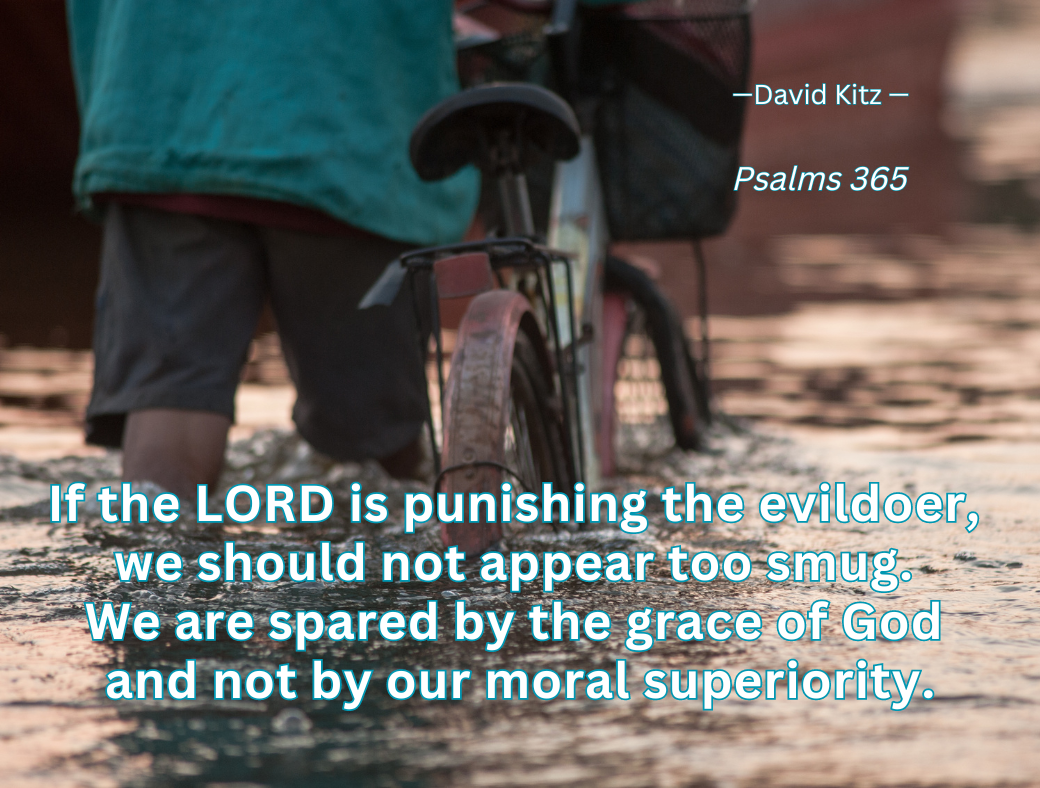
If the LORD is punishing the evildoer, we should not appear too smug. We are spared by the grace of God and not by our moral superiority. The self-righteous suffer from delusions of pride. It’s best not to identify with that camp. The opposite response is called for. Rather than crowing over someone else’s misfortune, we should be offering help or drawing lessons on how to avoid a similar calamity.

When I see others experiencing calamity, I need to replace my schadenfreude with the genuine joy found in extending mercy, grace and compassion.

Response: LORD God, at times I have been guilty of schadenfreude. Help me to show compassion rather than smug indifference when I see others experience loss. Thank you for your ongoing mercy. Amen.

Your Turn: Have you experienced schadenfreude? How do you keep it in check?

Para la publicación de Salmos 365 de hoy en español haga clic aquí.

bgbg_v4.3_1501818
* NEW INTERNATIONAL VERSION, COPYRIGHT ©1973, 1978, 1984, 2011 BY BIBLICA

Please pray for peace to return to Israel, Gaza, and Ukraine!

Volume I of Psalms 365: Develop a Life of Worship and Prayer won the Best Book of the Year Award from The Word Guild and Volume II has won the Best Devotional of the Year Award. For those who love God’s word, this three-book series is an ideal way to daily meet with the Lord. To purchase or for a closer look click here.

A gripping read from David Kitz.
Is a return-to-Jesus revival possible in our time?
This book points the way forward.
For details click here.

A Secret Addiction

25 Monday Aug 2025

Posted by davidkitz in Psalm 136

≈ Leave a comment

Tags

addiction, Bible, church, confess, devotion, his love endures forever, Jesus, Prayer, pride, rescue from sin and death, Savior, trust in Christ, turning to God

Reading: Psalm 136:17-26

to him who struck down great kings,
His love endures forever.
and killed mighty kings—
His love endures forever.
Sihon king of the Amorites
His love endures forever.
and Og king of Bashan—
His love endures forever.
and gave their land as an inheritance,
His love endures forever.
an inheritance to his servant Israel.
His love endures forever.
He remembered us in our low estate
His love endures forever.
and freed us from our enemies.
His love endures forever.
He gives food to every creature.
His love endures forever.
Give thanks to the God of heaven.
His love endures forever (NIV). *

Reflection
In recent months I have transitioned from attending an established church to involvement in a new church plant. In many respects the change has been refreshing. This new church has a clear focus on reaching the lost in our city, specifically those who are trapped in addictions. Almost weekly new converts are coming forward to put their trust in Christ. The church itself is a place of transition, as deadly habits are broken, and the healing power of Jesus is applied to long festering inner wounds.

So how does this connect with our reading from Psalm 136? In his description of Israel, the psalmist makes this statement: He remembered us in our low estate… and freed us from our enemies (v. 24-25).

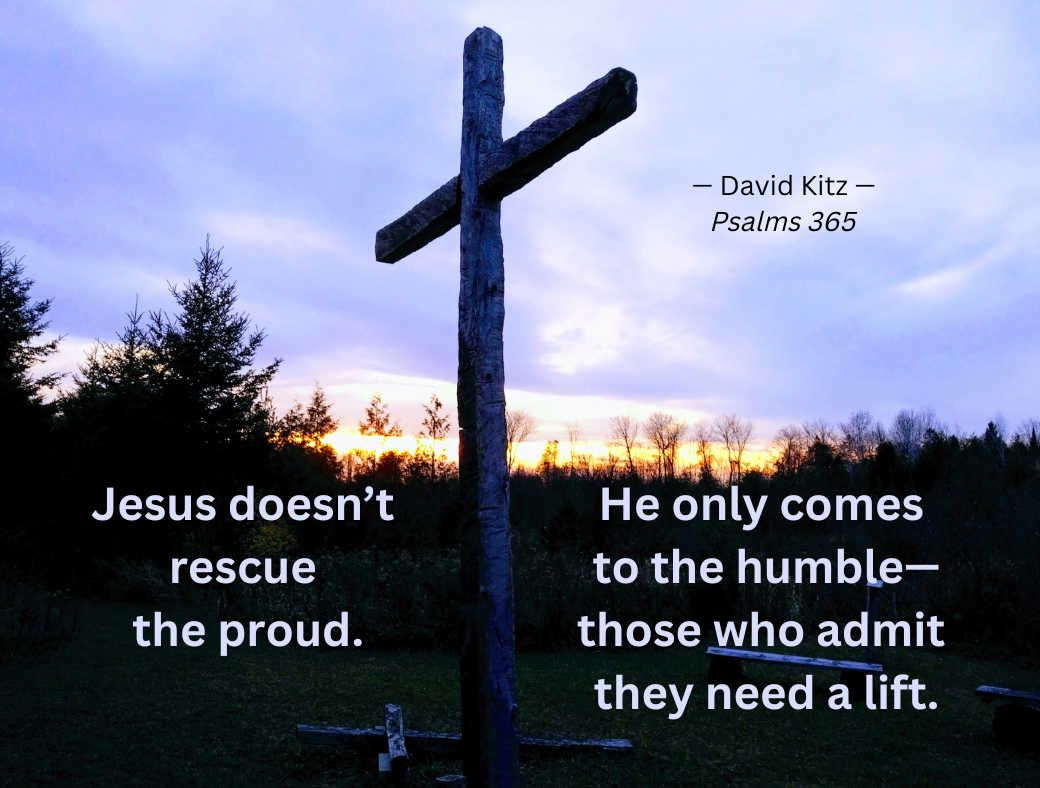
We serve a God who rescues us at our lowest point, in our low estate. In our foolish pride, we would never turn to God. But when we hit bottom—when there is no way forward, but up—then we turn to the Lord. You see, Christ has been patiently waiting for us to acknowledge our need. But Jesus doesn’t rescue the proud. He doesn’t save those who see no need for salvation. He only comes to the humble—those who admit they need a lift from the hole they find themselves in.

Sadly, there are many who sit in fine churches that have never discovered their low estate. Actually, they have become experts at hiding it. We all have a secret addiction to sin. Even St. Paul wrote, “For I do not do the good I want to do, but the evil I do not want to do—this I keep on doing” (Romans 7:19). The only one who can turn us around is Jesus, our Savior. See Romans 7:25.

Response: Father God, I admit my need for Jesus, your Son, my Savior. His love endures forever. Amen.

Your Turn: Why do we hide our sins rather than confess them? Does pride hold you back?

Para la publicación de Salmos 365 de hoy en español haga clic aquí.

bgbg_v4.3_1501818
* NEW INTERNATIONAL VERSION, COPYRIGHT ©1973, 1978, 1984, 2011 BY BIBLICA


Please pray for peace to return to Israel, Gaza, and Ukraine!

Volume I of Psalms 365: Develop a Life of Worship and Prayer won the Best Book of the Year Award from The Word Guild and Volume II has won the Best Devotional of the Year Award. For those who love God’s word, this three-book series is an ideal way to daily meet with the Lord. To purchase or for a closer look click here.

A gripping read from David Kitz.
Is a return-to-Jesus revival possible in our time?
This book points the way forward.
For details click here.


Humility Determines Destiny

08 Friday Aug 2025

Posted by davidkitz in Psalm 131, Psalms

≈ Leave a comment

Tags

Bible, child, children, content, contentment, devotion, humility, Jesus, meek, mother, peace, Prayer, pride, Psalms, wisdom

Today’s Devotion from Psalms 365 by David Kitz

Reading: Psalm 131

A song of ascents. Of David.

My heart is not proud, LORD,
    my eyes are not haughty;
I do not concern myself with great matters
    or things too wonderful for me.
But I have calmed and quieted myself,
    I am like a weaned child with its mother;
    like a weaned child I am content.
Israel, put your hope in the LORD
    both now and forevermore
(NIV). *

Photo by Arina Krasnikova on Pexels.com

Reflection
In my personal quiet time this morning I highlighted this verse. When pride comes, then comes disgrace, but with humility comes wisdom (Proverbs 11:2).

The wisdom that comes with humility is a rare commodity in today’s world. It appears that the crude bravado of boasting egocentrics is winning the day. Every field of human endeavor has its loudmouthed champions—men who heap scorn on meeker souls.

But Jesus has a message that runs completely contrary to this approach. In his Sermon on the Mount, he said, “Blessed are the meek, for they will inherit the earth” (Matthew 5:5). On another occasion, the disciples asked Jesus this question, “Who, then, is the greatest in the kingdom of heaven?”

This is Jesus’ response. “Truly I tell you, unless you change and become like little children, you will never enter the kingdom of heaven. Therefore, whoever takes the lowly position of this child is the greatest in the kingdom of heaven. And whoever welcomes one such child in my name welcomes me.” (See Matthew 18:1-5).

Jesus turns this world’s operating system on its head. He heaps honor on the weak, the humble and the vulnerable. He praises the soul of the weaned child—the one who takes the position of humility. Of course, Jesus is right. The folly of the proud ends in disgrace, but the humility of the meek ends in honor and a glorious inheritance.

Your eternal destiny is determined by your humility. These words of Jesus are an ominous warning:  “Truly I tell you, unless you change and become like little children, you will never enter the kingdom of heaven.”

I need to become like the weaned child of Psalm 131. Can I truthfully say these words? “My heart is not proud, LORD, my eyes are not haughty” (v. 1a). Have I “calmed and quieted myself? And am I “like a weaned child with its mother?” (v. 2). Am I content? Becoming like the weaned child requires change. I need to change. Jesus asks me to change. How about you?

Response: Father God, help me to change. I want to become more like Jesus. He was the servant of all.  Help me to avoid the pitfall of pride. Teach me how to quiet my soul and be content in you. Amen.

Your Turn: How are you learning to quiet your soul before God? What brings you peace and contentment?

Para la publicación de Salmos 365 de hoy en español haga clic aquí.

bgbg_v4.3_1501818
* NEW INTERNATIONAL VERSION, COPYRIGHT ©1973, 1978, 1984, 2011 BY BIBLICA


Please pray for peace to return to Israel, Gaza, and Ukraine!

Volume I of Psalms 365: Develop a Life of Worship and Prayer won the Best Book of the Year Award from The Word Guild and Volume II has won the Best Devotional of the Year Award. For those who love God’s word, this three-book series is an ideal way to daily meet with the Lord. To purchase or for a closer look click here.

A gripping read from David Kitz.
Is a return-to-Jesus revival possible in our time?
This book points the way forward.
For details click here.

With Humility Comes Wisdom

24 Monday Feb 2025

Posted by davidkitz in Psalm 86

≈ Leave a comment

Tags

answered prayer, Bible, God, humility, Prayer, pride, Psalms, Righteousness, the LORD, wisdom

Today’s quote and prayer from
“Psalms 365: Develop a Life of Worship and Prayer”
by David Kitz.

Reading: Psalm 86:1-7

LORD God,
I confess I am poor and needy.
My future,
my whole life is in your hands.
I do not own my next breath.
When I am in distress,
I call to you,
because you answer me.

Amen.

— — —

When pride comes, then comes disgrace,
    but with humility comes wisdom.
The integrity of the upright guides them,
    but the unfaithful are destroyed by their duplicity.
Wealth is worthless in the day of wrath,
    but righteousness delivers from death.
The righteousness of the blameless makes their paths straight,
    but the wicked are brought down by their own wickedness.
(Proverbs 11:2-5)*

Para la publicación de Salmos 365 de hoy en español haga clic aquí.

bgbg_v4.3_1501818
* NEW INTERNATIONAL VERSION, COPYRIGHT ©1973, 1978, 1984, 2011 BY BIBLICA

Please pray for peace to return to Israel, Gaza, and Ukraine!

New from David Kitz
Winner of the 2024 Word Award of Merit in Biblical Studies
TheElishaCodeCVR5

To purchase or for a closer look click here.

Volume I of Psalms 365: Develop a Life of Worship and Prayer won the Best Book of the Year Award from The Word Guild and Volume II has won the Best Devotional of the Year Award. For those who love God’s word, this three-book series is an ideal way to daily meet with the Lord. To purchase or for a closer look click here.
RGB300Kitz2AWARD


Learning to Walk in Humility

13 Thursday Feb 2025

Posted by adeyemiasaba1 in Psalms

≈ 3 Comments

Tags

accountability, comparison, faith, God, humility, justice, mercy, pride, psalm82, Righteousness, service

Reading: Psalm 82
A song. A psalm of Asaph.
God presides in the great assembly;
he renders judgment among the “gods”:
“How long will you defend the unjust
and show partiality to the wicked?
Defend the weak and the fatherless;
uphold the cause of the poor and the oppressed.
Rescue the weak and the needy;
deliver them from the hand of the wicked.
“The ‘gods’ know nothing, they understand nothing.
They walk about in darkness;
all the foundations of the earth are shaken.
“I said, ‘You are “gods”;
you are all sons of the Most High.’
But you will die like mere mortals;
you will fall like every other ruler.”
Rise up, O God, judge the earth,
for all the nations are your inheritance (NIV).

Reflection
How high is the pedestal you are standing on? Are you standing taller than the fellow beside you?

Most of us would answer that we are not standing on a pedestal but is that the truth. If we are honest with ourselves, I think we all can admit that we have looked down on others at times. We have considered ourselves superior to most of our peers.

Here in Psalm 82, God sets us on a pedestal. He calls us gods. This is a rather backhanded compliment, because after calling us gods, the Most High calls us to account. And what must we account for? We need to account for how we treat the weak and the poor among us. Here are the actions the LORD expects from us: Defend the weak and the fatherless; uphold the cause of the poor and the oppressed (v. 3).

Are we doing these things? Far too often I spend my time jacking up my pedestal—trying to get a bit of elevation over the fellow beside me. I’m too busy to help someone else who has fallen off their pedestal or the poor clod who can’t find one to stand on. You have to pity these folks—the ones who don’t have a pedestal. How can they hold their head up if they’re superior to no one?

Paul, the apostle, writes, “We do not dare to classify or compare ourselves with some who commend themselves. When they measure themselves by themselves and compare themselves with themselves, they are not wise” (2 Corinthians 10:12).

God will have the final say with mortals like me. This “god” needs to learn to serve in humility.

Response: LORD, you are the Most High. Help me to stop comparing myself with others. All I have comes from you. Today I want to get off my pedestal and help someone else. Show me how, Lord. Amen.

Your Turn: Do you compare yourself with others? Are you polishing your pedestal? How can we maintain an attitude of humility?

Para la publicación de Salmos 365 de hoy en español haga clic aquí.

* NEW INTERNATIONAL VERSION, COPYRIGHT ©1973, 1978, 1984, 2011 BY BIBLICA

Please pray for peace to return to Israel, Gaza, and Ukraine!

Volume I of Psalms 365: Develop a Life of Worship and Prayer won the Best Book of the Year Award from The Word Guild and Volume II has won the Best Devotional of the Year Award. For those who love God’s word, this three-book series is an ideal way to daily meet with the Lord. To purchase or for a closer look click here.
RGB300Kitz2AWARD

New from David Kitz
TheElishaCodeCVR5

To purchase or for a closer look click here.

← Older posts

Psalms 365: Develop a Life of Worship and Prayer

Psalms 365 Volume II

Psalms 365 vol 3
— Psalms 365 Volume III

Psalms

Recent posts

  • The Need for a Place of Refuge January 9, 2026
  • David Dances before the LORD January 8, 2026
  • The God of Turn-Arounds January 8, 2026
  • The LORD Who Heals You January 7, 2026
  • Why Praise God? January 7, 2026
  • I Give You My Peace January 6, 2026
  • Peace within the Storm January 6, 2026

Calendar

January 2026
M T W T F S S
 1234
567891011
12131415161718
19202122232425
262728293031  
« Dec    

Blog Posts

Comments

  • davidkitz on The Ultimate Come from Behind Victory  
  • cjsmissionaryminister on Preparing a Landing Strip for the Holy Spirit
  • cjsmissionaryminister on The Ultimate Come from Behind Victory  

Blog at WordPress.com.

Privacy & Cookies: This site uses cookies. By continuing to use this website, you agree to their use.
To find out more, including how to control cookies, see here: Cookie Policy
  • Subscribe Subscribed
    • I love the Psalms
    • Join 1,381 other subscribers
    • Already have a WordPress.com account? Log in now.
    • I love the Psalms
    • Subscribe Subscribed
    • Sign up
    • Log in
    • Report this content
    • View site in Reader
    • Manage subscriptions
    • Collapse this bar
 

Loading Comments...