I will praise Him!
-

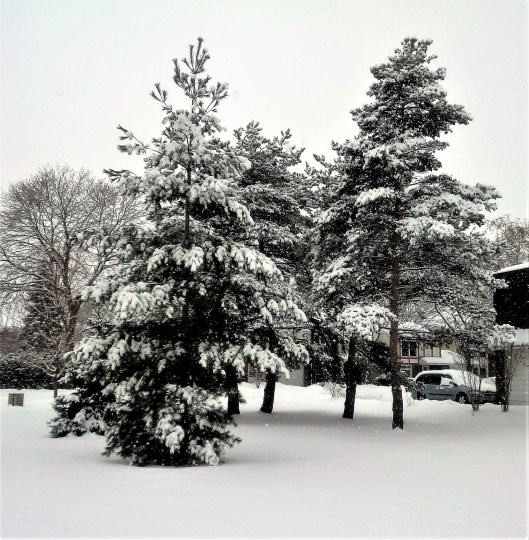
My soul finds rest in God — photo by David Kitz

02 Sunday Apr 2017
Posted in Psalms, Sunday's Psalm
My soul finds rest in God — photo by David Kitz
12 Sunday Mar 2017
Posted in Psalms, Sunday's Psalm

Create in me a pure heart — photo by David Kitz
07 Tuesday Mar 2017
Tags
baptism, bondage, Egypt, grace, liberation, Moses, peer pressure, Pharaoh, salvation, Satan, sinful habits, slavery, taskmasters
Reading: Psalm 135
(Verses 8-14)
He struck down the firstborn of Egypt,
the firstborn of people and animals.
He sent his signs and wonders into your midst, Egypt,
against Pharaoh and all his servants.
He struck down many nations
and killed mighty kings—
Sihon king of the Amorites,
Og king of Bashan,
and all the kings of Canaan—
and he gave their land as an inheritance,
an inheritance to his people Israel.
Your name, LORD, endures forever,
your renown, LORD, through all generations.
For the LORD will vindicate his people
and have compassion on his servants (NIV).
Reflection
Psalm 135 began with a call for the LORD’s people to praise Him. For the LORD has chosen Jacob to be his own, Israel to be his treasured possession.

They were all baptized into Moses in the cloud and in the sea (1 Corinthians 10:2). Photo by David Kitz
In today’s reading, the psalmist recounts how Israel came to be God’s treasured possession. It happened as the result of a great cosmic struggle. The descendants of the patriarch Israel (who was also called Jacob) were enslaved in Egypt. There they toiled under cruel taskmasters until by the hand of Moses the LORD sent his signs and wonders into their midst. After ten terrible plagues, Pharaoh finally relented and set God’s people free. Nevertheless, Pharaoh changed his mind and sent his army to pursue Israel. Again at the Red Sea, the LORD intervened. He parted the sea, for His chosen people, but brought it crashing down upon Egypt’s army.
Make no mistake; you too are part of a great cosmic struggle. You were born into a world that is under the control of Satan. Jesus called our adversary the ruler, or prince of this world (John 16:11). We were born under Satan’s authority and within his domain just as the Hebrew children were born into a state slavery in the land of Egypt. As we grow up, Satan has his taskmasters, who set us to work doing his bidding. It begins as we bow to peer pressure, but soon those things we choose begin to assert control. We can soon find ourselves in a downward spiral, imprisoned by sinful habits.
Only Jesus can liberate us from this bondage. At the cross he paid the full price for our redemption. Crossing the Red Sea foreshadows the New Testament sacrament of baptism. It signals our break with the old life—the old bondage. See 1 Corinthians 10:1-4. We have a new master now. His name is Jesus. He is the great liberator. He liberates us from the bondage of sin, and the taunts of the Accuser, who insists that we will never be good enough. But Jesus is our sufficiency. By his grace we are saved.
Response: Father God, I thank you for liberation. Through Jesus you freed me from the bondage of sin. I am eternally grateful. Fill me with the joy of your salvation. You saved me. Hallelujah! Amen.
Your Turn: Have you been liberated from the bondage of sin?
28 Saturday Jan 2017
Posted in Psalms, Saturday's Psalm
13 Tuesday Dec 2016
Tags
coffee, communion, communion cup, cup of salvation, hot coffee, java, Jesus, Jesus' blood, redemption, salvation, the cross
Reading: Psalm 116
(Verses 10-14)
I trusted in the LORD when I said,
“I am greatly afflicted”;
in my alarm I said, “Everyone is a liar.”
What shall I return to the LORD
for all his goodness to me?
I will lift up the cup of salvation
and call on the name of the LORD.
I will fulfill my vows to the LORD
in the presence of all his people (NIV).
Reflection
This morning started out a bit different. Rather than beginning my day with a hot cup of coffee, I had a few sips of water and then headed off for some blood tests. I missed that cup of coffee, but in reality going without it was no great hardship. Some view their morning shot of caffeine like a cup of salvation—early morning salvation. Today’s reading from Psalm 116 speaks of the cup of salvation. I’m sure the psalmist wasn’t speaking of his morning cup of java. What was he speaking of?

Your cup of salvation? — photo by David Kitz
The psalmist lifts up the cup of salvation and calls on the name of the LORD in response to this question: What shall I return to the LORD for all his goodness to me? The psalmist lifts up his cup as an expression of thanksgiving to the LORD for the salvation he has received from God.
But salvation came at a price. To purchase our salvation, Jesus lifted up a cup and brought it to his lips. It was a cup of unimaginable suffering. In the Garden of Gethsemane he prayed, “Father, if you are willing, take this cup from me; yet not my will, but yours be done” (Luke 22:42). He was referring to the anguish he would endure. In the hours that followed, Jesus drained that cup of suffering dry, even as his body was drained of blood on a cruel Roman cross.
In the great plan of redemption, Jesus’ cup of suffering became for us a cup of salvation. He drank it down to save us from the cruel consequences of our sin. Jesus assumed the full penalty of our disobedience, rebellion and devious ways. But now by faith, we can become active recipients of the salvation that he won on our behalf.
The next time you bring the communion cup to your lips you are remembering—acknowledging in a tangible way—that Jesus’ blood was shed for you. Salvation came through a cup of suffering. We can rejoice in that truth because early on a Sunday morning Jesus’ dead body was jolted back to life. He was resurrected by the power of the Father, and one day the body of every believer will be resurrected too.
Tomorrow morning, I’ll return to my usual routine and I’ll enjoy my hot cup of coffee. But the cup I savour most is the cup the Lord provides—the cup of salvation.
Response: Lord Jesus, I thank you for your sacrifice. You gave yourself fully for me. On a crude wooden cross you purchased my salvation. Today, help me fulfill my vows to the LORD. Amen.
Your Turn: Which cup do you appreciate most?
10 Saturday Dec 2016
Posted in Psalms, Saturday's Psalm

Manitoba sunrise — photo by David Kitz
07 Wednesday Dec 2016
Tags
Almighty, death and resurrection, Jesus, oppression, power, power of God, promised land, rescue, resurrection, salvation, tyranny
Reading: Psalm 114
When Israel came out of Egypt,
Jacob from a people of foreign tongue,
Judah became God’s sanctuary,
Israel his dominion.
The sea looked and fled,
the Jordan turned back;
the mountains leaped like rams,
the hills like lambs.
Why was it, sea, that you fled?
Why, Jordan, did you turn back?
Why, mountains, did you leap like rams,
you hills, like lambs?
Tremble, earth, at the presence of the Lord,
at the presence of the God of Jacob,
who turned the rock into a pool,
the hard rock into springs of water (NIV).
Reflection
“Why?” A four-year-old’s favourite question is, “Why?” Here in Psalm 114, the psalmist has some why questions as well. “Why did the sea flee? Why did the Jordan River turn back? Why did those mountains and hills seem to skip and dance? Why?”

The Thousand Islands near Gananoque, ON — photo by David Kitz
The answer of course is because of the jaw-dropping, eye-popping, heart-stopping power of God. God caused the sea to flee. He caused the Jordan to turn back. He caused mountains and hills to skip about and frolic like yearling lambs set free from the stall. What an awesome display! What an awesome God!
Psalm 114 is all about the overwhelming power of God. It is a grand portrayal of the pivotal event in the Old Testament Scriptures. Here within a few short verses we catch a panoramic view of God’s might on display, starting with Israel’s escape from Egypt, to their arrival in the Promised Land.
Why did the miracle-working LORD make the sea flee? Was it simply to display His awe-inducing power? Was it simply to create excitement among the million or more mortals, who were eyewitnesses to this divine wonder? In the Exodus account, the reason for this miraculous intervention is stated clearly: That day the LORD saved Israel from the hand of the Egyptians, and Israel saw the Egyptians lying dead on the shore. And when the Israelites saw the great power of the LORD displayed against the Egyptians, the people feared the LORD and put their trust in him and in Moses his servant (Exodus 14:30-31).
This power display had one primary purpose. That purpose was salvation. The LORD wanted to save people—His covenant people—from the vicious clutches of oppression and a tyranny. In short, the LORD works wonders so that He can save people—so He can bring them into His Kingdom—so they can escape the sin systems of this world, and come under His loving rule.
Response: Father God, thank you for going all out to save me through the death and resurrection of your Son, Jesus. What a display of your love and power! Help me to love, fear and trust you. Amen.
Your Turn: Why did God save you? Is there a reason for His mercy?
26 Saturday Nov 2016
Posted in Psalms, Saturday's Psalm

Prairie sunset near MacNutt, SK — photo by David Kitz
25 Friday Nov 2016
Posted in Friday's Focus, Psalms
Tags

Sunset on the Ottawa River as seen from Greens Creek Point; photo by David Kitz
10 Thursday Nov 2016
Tags
forgetting, redemption, remembering, Remembrance Day, sacrifice, salvation, slavery, soldiers, Veterans Day
Reading: Psalm 106
(Verses 16-27)
In the camp they grew envious of Moses
and of Aaron, who was consecrated to the LORD.
The earth opened up and swallowed Dathan;
it buried the company of Abiram.
Fire blazed among their followers; a flame consumed the wicked.
At Horeb they made a calf and worshiped an idol cast from metal.
They exchanged their glorious God
for an image of a bull, which eats grass.
They forgot the God who saved them,
who had done great things in Egypt,
miracles in the land of Ham and awesome deeds by the Red Sea.
So he said he would destroy them—
had not Moses, his chosen one,
stood in the breach before him
to keep his wrath from destroying them.
Then they despised the pleasant land;
they did not believe his promise.
They grumbled in their tents and did not obey the LORD.
So he swore to them with uplifted hand
that he would make them fall in the wilderness,
make their descendants fall among the nations
and scatter them throughout the lands (NIV).
Reflection
Tomorrow is Remembrance Day in Canada and Veterans Day in United States. That day was chosen to honor and remember our fallen soldiers because November 11, 1918 marked the end of the First World War. It is fitting that we remember those who sacrificed their lives in the defense of their country and its way of life. To forget them would be a disgrace to them and to the nation. We owe our liberty to these brave men and women. Lest we forget is the oft repeated motto of this day of solemn remembrance.

Ottawa River marsh, Orleans, ON — photo by David Kitz
Today’s reading from Psalm 106 highlights the importance of a nation’s collective memory. Israel was redeemed and set free from slavery in Egypt by the miracle working power of God, yet in a few short years they forgot, or chose to ignore the LORD who rescued them. They forgot the God who saved them, who had done great things in Egypt, miracles in the land of Ham and awesome deeds by the Red Sea.
There are serious consequences for the nation that forgets, or turns its back on the God who called its people out of darkness. The same is true on a personal level. We need to routinely mind ourselves that Jesus paid the ultimate price to redeem us and make us his very own.
Response: Father God, I thank you for my personal redemption. Lead me in the right path for my life. Guide our nation. May there be a collective turning to you in repentance and faith. Amen.
Your Turn: Is there such a thing as national redemption or salvation, or is it always personal?