
Tags
Bible, Christ, Christianity, church, circumcision, faith, Gentiles, gospel, James, James the brother of Jesus, Jerusalem, Jesus, leadership, Paul, Peter, Scripture, speaking in tongues
James: the Lynchpin of Our Faith — Chapter 12 — Part II
Peter’s declaration in favor of grace for the Gentiles rather than the Mosaic Law was followed by the testimony of Paul and Barnabas:
The whole assembly became silent as they listened to Barnabas and Paul telling about the signs and wonders God had done among the Gentiles through them. (Acts 15:12)
Through their testimony, Barnabas and Paul persuasively reinforced the argument Peter had presented. The conversion of the Gentiles was God’s doing. He had initiated it through Peter and now was continuing that work through Barnabas and Paul. The proof of this was in “the signs and wonders God had done.” If God was opposed to the inclusion of the Gentiles in the Christian faith, there would be no signs and wonders as the gospel message was presented. Instead, miraculous signs and wonders accompanied the preaching of the gospel, giving it credence. Large numbers of Gentiles believed the message they heard because they witnessed demonstrations of God’s power.
Signs and wonders were an integral part of the spread of the gospel as recorded in the Book of Acts. (1) Certainly, the apostles viewed these wonders as a natural extension of Jesus’ ministry. According to Mark’s Gospel, after his resurrection Jesus predicted this bursting forth of the miraculous:
Later Jesus appeared to the Eleven as they were eating; he rebuked them for their lack of faith and their stubborn refusal to believe those who had seen him after he had risen. He said to them, “Go into all the world and preach the gospel to all creation. Whoever believes and is baptized will be saved, but whoever does not believe will be condemned. And these signs will accompany those who believe: In my name they will drive out demons; they will speak in new tongues; they will pick up snakes with their hands; and when they drink deadly poison, it will not hurt them at all; they will place their hands on sick people, and they will get well.” (Mark 16:14–18) 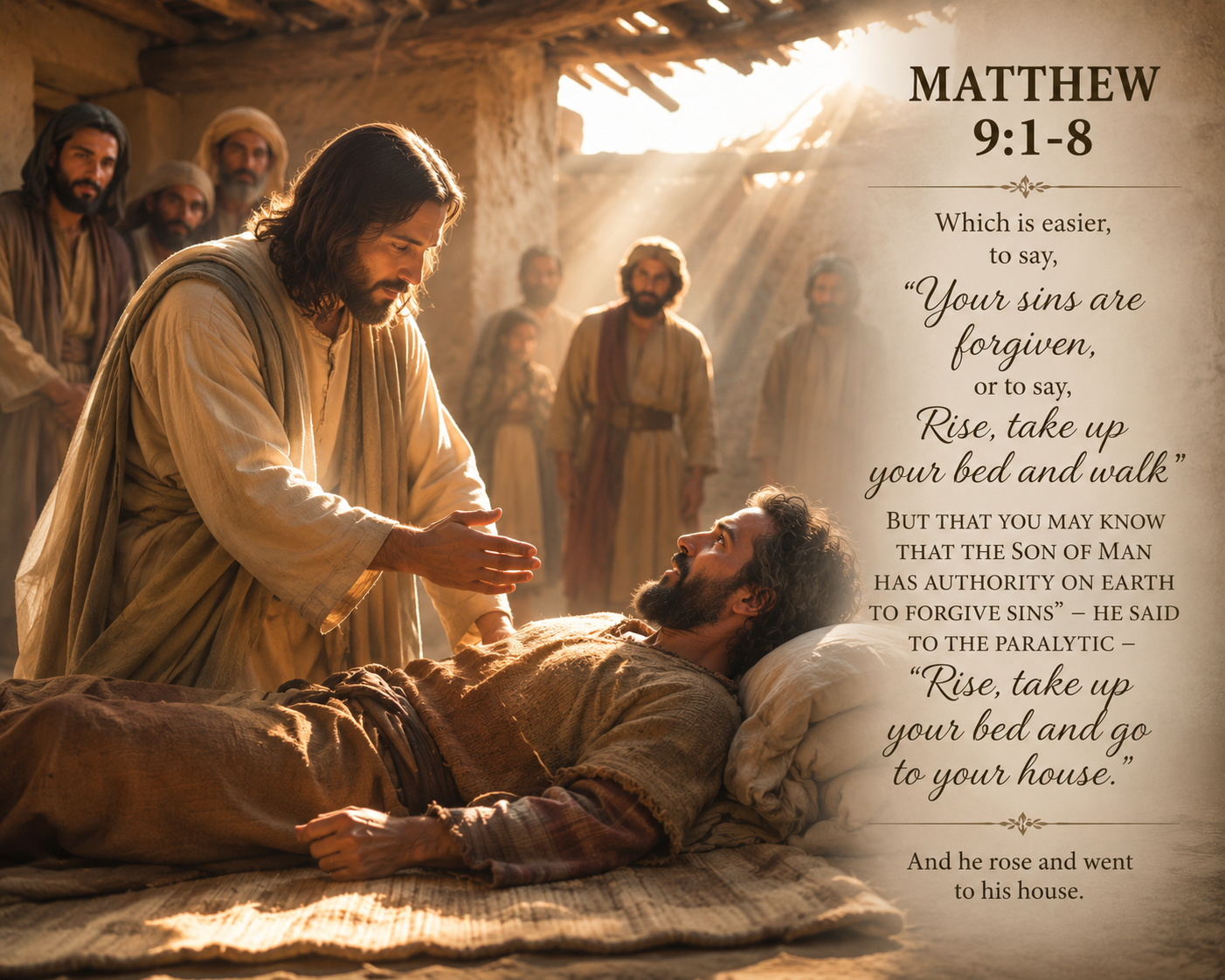
Furthermore, Jesus had promised his disciples that they would do even greater things than he had done.
Very truly I tell you, whoever believes in me will do the works I have been doing, and they will do even greater things than these, because I am going to the Father. And I will do whatever you ask in my name, so that the Father may be glorified in the Son. You may ask me for anything in my name, and I will do it. (John14:12–14)
As the apostles heard the testimony of Paul and Barnabas, they undoubtedly harkened back to the words of Jesus. God was at work claiming a people for Himself. The proof of this was in the manifestation of signs and wonders as the gospel was presented to the Gentiles, their positive response to the message, and the demonstrable presence of the Holy Spirit among them.
There are those who see substantial differences between Peter and Paul, but there are none on display here. The core of the gospel message they present is essentially the same: the door to salvation is open to all, Jew and Gentile, by grace through faith alone in the redeeming death and resurrection of Jesus Christ.
Together here at the Jerusalem Council, Peter and Paul present a united front. They act as a tag team delivering the decisive blows that demolished the argument in favor of circumcision and adherence to Mosaic Law. We see them work in cooperation with one another here at the Council and later out on the field.
We know their position carried the day due James’ response:
When they finished, James spoke up. “Brothers,” he said, “listen to me. Simon [Peter] has described to us how God first intervened to choose a people for his name from the Gentiles. The words of the prophets are in agreement with this, as it is written:
“‘After this I will return and rebuild David’s fallen tent. Its ruins I will rebuild, and I will restore it, that the rest of mankind may seek the Lord, even all the Gentiles who bear my name, says the Lord, who does these things’—things known from long ago.'” (See Amos 9:11–12.)
“It is my judgment, therefore, that we should not make it difficult for the Gentiles who are turning to God. Instead we should write to them, telling them to abstain from food polluted by idols, from sexual immorality, from the meat of strangled animals and from blood. For the law of Moses has been preached in every city from the earliest times and is read in the synagogues on every Sabbath.” (Acts 15:13–21)

From this account one clearly has the sense that James is presiding over this gathering or Council. He is providing oversight as the question is framed and opposing arguments are debated. At the conclusion of the debate, James states his position and renders his judgment on the matter. In this regard the Jerusalem Council proceedings resemble a court case with a presiding judge, namely James, pronouncing the final verdict.
There is no indication that this is a democratic assembly where a final vote on the motion is taken. Rather the Council follows the format of a judicial council, where the matter is considered and decided by a judge or overseer. This format was customary in both Jewish and Roman practise during this time and continues in various forms to this day.
In his statement James concurs with Peter’s testimony. In essence, he concludes that this is a decision that God has already made. “Simon has described to us how God first intervened to choose a people for his name from the Gentiles” (Acts 15:14). He then goes on to reinforce his position by quoting from the prophet Amos.
There are several Old Testament scriptures that predict the Gentiles will turn in faith to the God of Israel. Why did James choose to quote this particular passage?
First and foremost, the Amos passage captures the thought that the entry of the Gentiles into God’s kingdom is God’s idea. It is the Lord “who does these things.” What Peter had described was an intervention of God in bringing the Gentiles at the household of Cornelius to faith. Similarly, Paul and Barnabas described God’s intervention by means of signs and wonders as they preached the gospel to the Gentiles on their first missionary journey. So James concludes that the conversion of the Gentiles was God’s idea and indeed God’s doing.
The phrase “David’s fallen tent” also merits some consideration. Jesus was a direct descendant from the kingly line of David. James sees God’s intervention as restoring the rule of the Davidic dynasty through the eternal reign of King Jesus. As the brother of Jesus, James may well have seen himself as part of that Davidic line extending the kingdom of God on the earth. Again, this is God’s doing, and James finds himself in the pivotal role of opening wide the door to the Gentiles.
Having stated his position on the matter, James renders his verdict. “It is my judgment, therefore, that we should not make it difficult for the Gentiles who are turning to God” (Acts 15:19). The Greek word krino is translated here as judgment. In fact, krino is translated as judge or judgment eighty-seven times in the New Testament. (2) Most modern translations render krino as judgment; however, the traditional King James Version translates krino as sentence. “Wherefore my sentence is, that we trouble not them, which from among the Gentiles are turned to God” (Acts 15:19). By translating krino in this way, the King James translators highlight the magisterial role of James at the Council. He has declared his ruling on the matter.
There can be little doubt that James is viewed as the head of the church by all those present. He fulfills the role of chief executive officer. How do we know this? He has the undisputed final word on this crucial matter of faith, practice, and doctrine.
But one gets the sense that James was not heavy handed or dictatorial in reaching his decision. Through the discussion and a full airing of the matter, he was working to reach a consensus within the church. Evidence for this can be found in the actions that follow his ruling.
Then the apostles and elders, with the whole church, decided to choose some of their own men and send them to Antioch with Paul and Barnabas. They chose Judas (called Barsabbas) and Silas, men who were leaders among the believers. (Acts 15:22)
 There was agreement among the apostles, the elders, and the whole church on this matter.
With his decision James secured the future of the church. Christianity would not remain as an obscure sect within Judaism. It would spread around the world and become a dominant force in world history through the next two millennia. His decision made possible the unhindered progress of the gospel in the Roman Empire and beyond.
James’ judgment puts truth to these words, which were sung about his brother Jesus and recorded in John’s Revelation:
And they sang a new song, saying:
“You are worthy to take the scroll and to open its seals, because you were slain, and with your blood you purchased for God persons from every
tribe and language and people and nation. You have made them to be a kingdom and priests to serve our God, and they will reign on the earth.”
(Revelation 5:9–10)
(1) See Acts 3:7, Acts 5:5 & 10, Acts 5:15, Acts 9:34, Acts 9:40, Acts 13:11, Acts 14:3, Acts 14:10, Acts 19:11–12, Acts 20:10, Acts 28:5, Acts 28:8.
(2) Robert Young, Analytical Concordance to the Bible, Index-Lexicon to the New Testament, Revised by William B. Stevenson (Eerdmans, 1972), p. 78.
New from David Kitz
James—the brother of Jesus—who was this man? What evidence do we have that this “brother of our Lord” even existed?
David Kitz digs deep into archeology, family dynamics, church history, and the biblical texts. What emerges from his research is a portrait of a decisive, pivotal leader who embodied the will and character of Jesus Christ.
But how did James—James the unbeliever—transform to become a leader who changed the course of world history? In these pages you will uncover the answer and rediscover for yourself the life-changing power of the gospel.
To view further details or purchase directly from the author click here.

