I will praise Him!

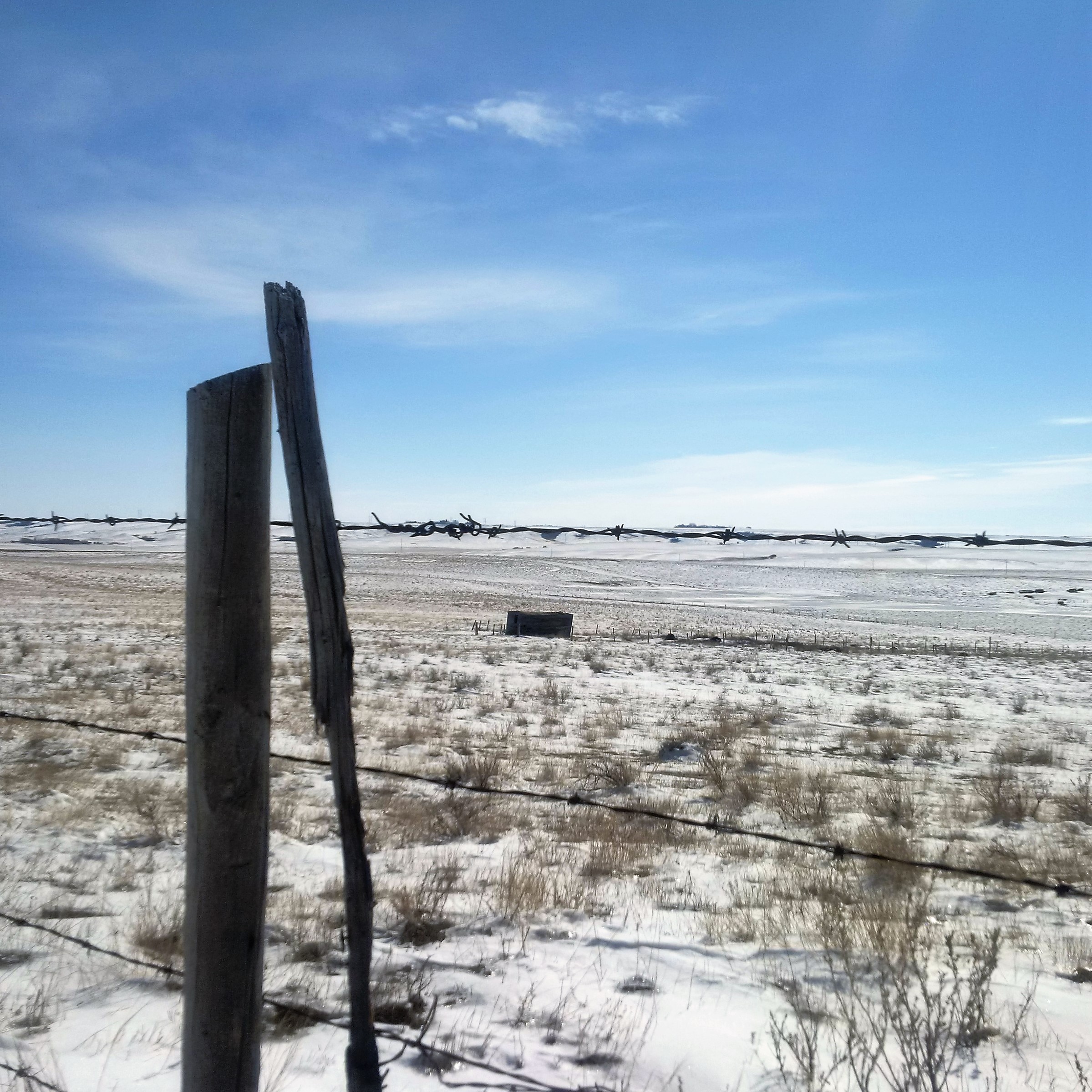
The Lord is on his heavenly throne — photo by David Kitz
08 Saturday Sep 2018
Posted in Bible, God's word, Psalm 11, Psalms

The Lord is on his heavenly throne — photo by David Kitz
07 Friday Sep 2018
Posted in Bible, Devotionals, Psalm 142, Psalms
Reading: Psalm 142
A maskil of David. When he was in the cave. A prayer.
(Verses 1-4)
I cry aloud to the LORD;
I lift up my voice to the LORD for mercy.
I pour out before him my complaint;
before him I tell my trouble.
When my spirit grows faint within me,
it is you who watch over my way.
In the path where I walk people have hidden a snare for me.
Look and see, there is no one at my right hand;
no one is concerned for me.
I have no refuge; no one cares for my life (NIV).

It is you who watch over my way — photo by David Kitz
Reflection
Have you been in a cave? Despite what we read and know about cavemen, caves are not great living spaces. They are dark and dank. They may be fine places to retreat to in times of mortal danger, but they leave much to be desired as a permanent habitation.
In desperate times, people hide in caves. That’s where David found himself as he hid from his jealous master, King Saul. Though he was innocent, Saul in a jealous rage attacked David and repeatedly tried to kill him. See 1 Samuel 19:9-24. Eventually, David fled to a cave in the Desert of En Gedi. This psalm, Psalm 142, was born in a desolate place—a cave in the Desert of En Gedi. See 1 Samuel 24.
Here David hit rock bottom. From this low point in his life he called out to the LORD with these words: I cry aloud to the LORD; I lift up my voice to the LORD for mercy. I pour out before him my complaint; before him I tell my trouble.
The Psalms are the prayer book of the Bible. With this psalm David provides us with an excellent example of prayer—prayer from the lowest position—the position of weakness and vulnerability. The future looked bleak for David. He was living the precarious life of a fugitive. At any time, he could be discovered or betrayed. Would today be his last day?
Where did David take his troubles? He took them to the LORD.
Where do you go with your troubles? Where do you take your complaints? The LORD’s complaint department is open for business. There you will find a listening ear.
There are a host of things that are unfair in this life—sometimes brutally unfair. Are we supposed to suppress our outrage? Should we hide our hurt and pretend that all is well, while on the inside the bottom is falling out of our life? No. A thousand times, no! Take it to the LORD in prayer. That’s what David did. He cried out to his God, and his God answered.
Response: LORD God, when I reach a low point you are there. Hear me when I am down. I bring my troubles and sorrows to you. They are more than I can bear. Jesus, be my burden bearer. Amen.
Your Turn: Are you in a cave or a desert place? Take some time to call out to God.
02 Sunday Sep 2018
Posted in Bible, God's word, Psalm 10, Psalms
Tags

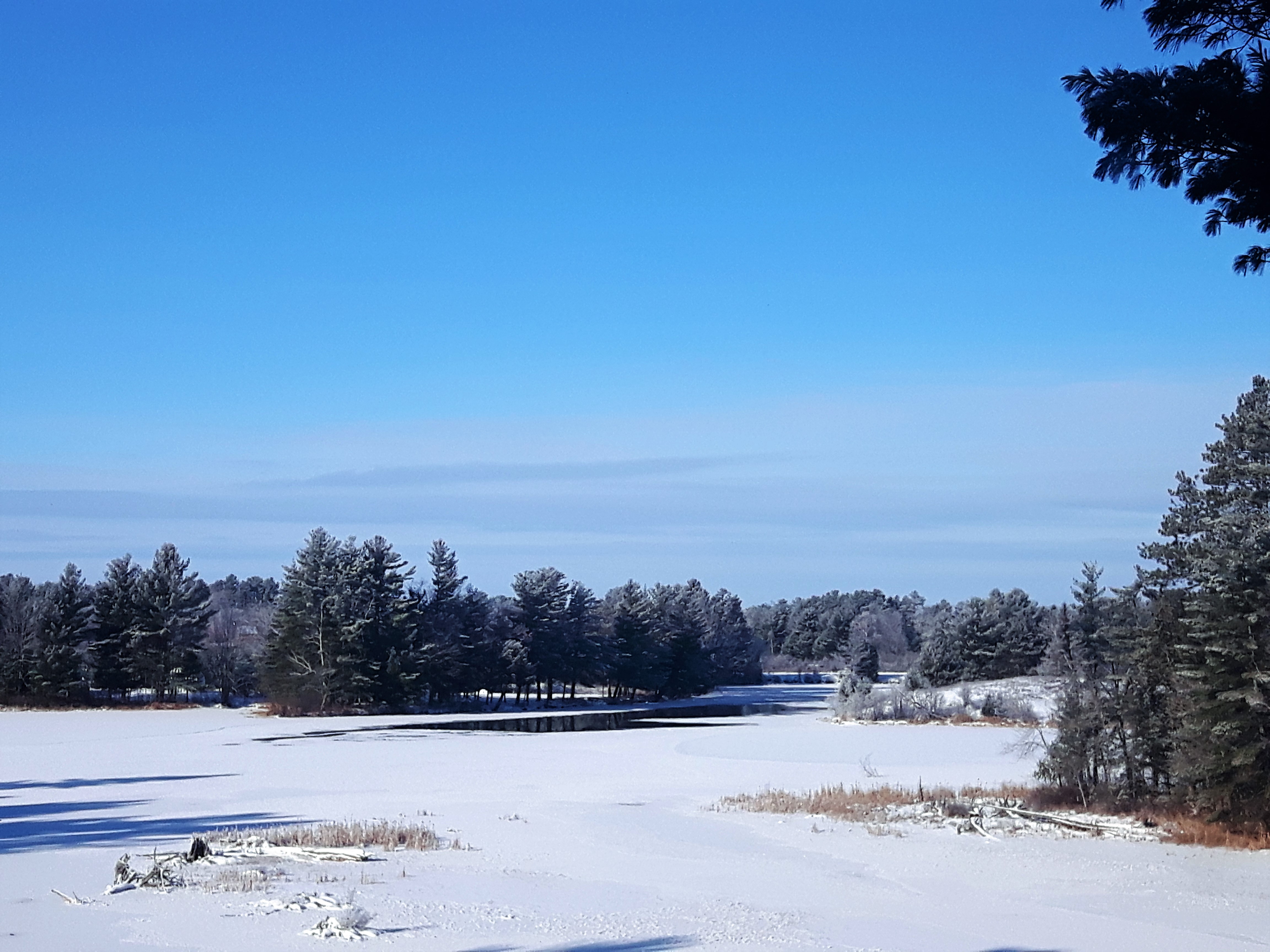
Shine down on your people, LORD — photo by David Kitz
25 Saturday Aug 2018
Tags

Near Yellowknife, Northwest Territories, Canada — photo courtesy of Liz Kranz
22 Wednesday Aug 2018
Posted in Bible, Devotionals, Psalm 138, Psalms
Tags
Reading: Psalm 138
(Verses 6-8)
Though the LORD is exalted, he looks kindly on the lowly;
though lofty, he sees them from afar.
Though I walk in the midst of trouble,
you preserve my life.
You stretch out your hand against the anger of my foes;
with your right hand you save me.
The LORD will vindicate me;
your love, LORD, endures forever—
do not abandon the works of your hands (NIV).

The abandoned McNeill Estate in the Spirit Rock Conservation Area, Wiarton, Ontario — photo by David Kitz
Reflection
There is something tragic about an abandoned house. An empty house has a missing soul. It was built to have souls—people—in it, so an absence of life invokes feelings of sadness in me. At one point hopes and dreams were alive in that house. It was a place of comfort and love—a refuge from nature’s elements. Perhaps it echoed with the voices of children at play, but now it sits empty and forlorn.
I find it surprising how quickly a home or community deteriorates after it’s abandoned. Have you viewed videos or the haunting images of the abandoned communities around the Chernobyl and Fukushima nuclear plants? In a few short years everything constructed by humans has become completely overgrown, and it begins to decay and breakdown.
Turning to today’s reading, we see that David ends this psalm with both a confession of faith and a prayer: The LORD will vindicate me; your love, LORD, endures forever—do not abandon the works of your hands.
David lives in confidence that the LORD is with him and will vindicate him—will side with him in the battles of life. But he adds this petition—do not abandon the works of your hands.
What happens when God abandons us? I dread the thought. When the LORD no longer lives among us, our lives—our spiritual lives—begin to deteriorate like an abandoned house in a nuclear exclusion zone. Around Fukushima wild boars have taken over. With no one to oppose them, they have ravaged the countryside and have moved into the abandoned towns.
Will the LORD abandon us? There is little chance of that happening. The far greater concern is that we abandon the LORD. I have witnessed firsthand the devastation that occurs when that happens. When people who respond to the gospel turn their backs on their Savior, over time the outcome resembles the ravages of nature on an abandoned home.
We need to recall these words: Though the LORD is exalted, he looks kindly on the lowly; though lofty, he sees them from afar. Though I walk in the midst of trouble, you preserve my life.
Response: LORD God, I want you to be fully at home in my heart and my mind. Show me your kindness. My body is a temple for your Holy Spirit. Live in me and through me, Lord Jesus. Amen.
Your Turn: How do you feel about abandoned houses? Is your inner man (woman) occupied by God?
21 Tuesday Aug 2018
Posted in Bible, Devotionals, God's word, Psalm 138, Psalms
Tags
Reading: Psalm 138
Of David
(Verses 1-5)
I will praise you, LORD, with all my heart;
before the “gods” I will sing your praise.
I will bow down toward your holy temple
and will praise your name
for your unfailing love and your faithfulness,
for you have so exalted your solemn decree
that it surpasses your fame.
When I called, you answered me;
you greatly emboldened me.
May all the kings of the earth praise you, LORD,
when they hear what you have decreed.
May they sing of the ways of the LORD,
for the glory of the LORD is great (NIV)

David knew his God and was quick to give Him praise — photo by David Kitz
Reflection
David was wholehearted in all that he did, so it should not surprise us that he begins Psalm 138 with this assertion: I will praise you, LORD, with all my heart; before the “gods” I will sing your praise.
David, the shepherd king, wasn’t shy or reticent about offering praise to the LORD. He knew his God and was quick to give Him praise. He would even praise the LORD before foreign gods. Elsewhere in the psalms we see this declaration: For great is the LORD and most worthy of praise; he is to be feared above all gods. For all the gods of the nations are idols, but the LORD made the heavens (Psalm 96:4-5).
During David’s time each nation had its own national god. These national gods were represented by carved idols of wood, metal or stone. But Israel had no idol. They were strictly forbidden to make any image or likeness of the LORD (Yahweh). See the First Commandment, Exodus 20:3-6. This prohibition set Israel apart. They were the people with no visible god.
But why settle for a visible god, when you can have the invisible God who fills the entire universe? Why settle for a national god, when you can have the LORD who created the heavens and the earth? Inevitably, if we fashion our own god, we will create a god who is far too small. The true God is far bigger, far wiser, and far more just, and compassionate than we can ever imagine. How can we as finite creatures begin to fathom the infinite power and glory of God?
By His great mercy the LORD reveals Himself to us. He does that best through His Son. The Son is the image of the invisible God, the firstborn over all creation (Colossians 1:15). Jesus helps make the infinite God comprehensible to us, so we can join with David’s anthem of praise. May all the kings of the earth praise you, LORD, when they hear what you have decreed. May they sing of the ways of the LORD, for the glory of the LORD is great.
Response: LORD God, I praise you for your unfailing love and your faithfulness. Thank you for answering my prayers. You give me courage, and like David, you greatly emboldened me to carry on. Amen.
Your Turn: How big is your God? Is He bigger than your problems—bigger than your doubts?
18 Saturday Aug 2018
Posted in Bible, God's word, Psalm 7, Psalms
Tags

Petrie Island, Orleans, Ontario — photo by David Kitz
05 Sunday Aug 2018
Posted in Bible, God's word, Psalm 4, Psalms
Tags

Be still before the LORD — photo by David Kitz
04 Saturday Aug 2018
Posted in Bible, God's word, Psalm 3, Psalms
Tags

Lake Placid, NY — photo by David Kitz
31 Tuesday Jul 2018
Posted in Bible, Devotionals, God's word, Psalm 130, Psalms
Tags
hope, redemption, silence, Songs of Ascent, the LORD, waiting
Reading: Psalm 130
(Verses 5-8)
I wait for the LORD, my whole being waits,
and in his word I put my hope.
I wait for the LORD
more than watchmen wait for the morning,
more than watchmen wait for the morning.
Israel, put your hope in the LORD,
for with the LORD is unfailing love
and with him is full redemption.
He himself will redeem Israel
from all their sins (NIV).

More than watchmen wait for the morning — photo by David Kitz
Reflection
Psalm 130 can be divided into three distinct sections: the confessional approach, the wait, and the LORD’s response. In yesterday’s reading, we looked at the confessional approach. The psalmist came before his God and poured out his heart. In desperation he pleaded for mercy and forgiveness. At the same time he acknowledged the extreme mercy of God. He knows full well that this God forgives the undeserving.
Now, the psalmist waits: “I wait for the LORD, my soul waits, and in his word I put my hope. My soul waits for the LORD more than watchmen wait for the morning, more than watchmen wait for the morning.”
This is the step that is most frequently missing in our communion with God. We cannot wait; we rush on. We have things to do, people to see, a life to live. We have no time to wait for the LORD’s response. But without waiting, we cannot hear the LORD speaking to our hearts. The rush of life takes over. We do not hear our Savior speak the words of divine pardon. Prayer is reduced to one way communication. We speak into the silence, and allow no time for the God of silence to answer back.
But in his time of silence, the psalmist heard from God. In this third section of the psalm, the author is no longer addressing the LORD in prayer. Now he is addresses us. The wait is over. God has spoken, and now the psalmist rises to his feet. He has a message from the LORD for us—the Israel of God.
Israel, put your hope in the LORD, for with the LORD is unfailing love and with him is full redemption.
For Israel, there was a long wait. The promised Messiah was a long time in coming. The centuries slipped by. Generation after generation passed on, but the word of the LORD stood firm. A Redeemer was coming. With an uncanny accuracy the Old Testament prophets foretold the coming of the Christ. Many of those prophetic words are found within the Psalms. The Lord Jesus is our fount of hope—our Redeemer. He is love and the source of unfailing love. It is he who with his blood redeemed us, body, soul and spirit. In the person of Jesus, God took on human flesh. On the cross he fulfilled these words. “He himself will redeem Israel from all their sins.”
Response: Father God, I thank you for your prophetic word because it points to Jesus. Lord Jesus, thank you for laying down your life to redeem me, and all those who bow before you in repentance. Amen.
Your Turn: Are you taking time to listen for the voice of God in prayer?