
• Home
  • About
  • DavidKitz.ca
  • Youtube Videos
  • Books by David
  • Books on Amazon.com

I love the Psalms

~ Connecting daily with God through the Psalms

I love the Psalms

Tag Archives: Yahweh

Lord and Messiah

08 Monday Jan 2024

Posted by davidkitz in Psalm 110

≈ Leave a comment

Tags

Adonai, Jesus, Melchizedek, Messiah, Pharisees, the LORD, Yahweh

Reading: Psalm 110
Of David. A psalm.
The LORD says to my Lord:
“Sit at my right hand until I make your enemies a footstool for your feet.”
The LORD will extend your mighty scepter from Zion, saying,
“Rule in the midst of your enemies!”
Your troops will be willing on your day of battle.
Arrayed in holy splendor,
your young men will come to you
like dew from the morning’s womb.
The LORD has sworn and will not change his mind:
“You are a priest forever, in the order of Melchizedek.”
The Lord is at your right hand;
he will crush kings on the day of his wrath.
He will judge the nations, heaping up the dead
and crushing the rulers of the whole earth.
He will drink from a brook along the way,
and so he will lift his head high
(NIV). *

2019-06-20 L Kranz (2)

I have a delightful inheritance — photo courtesy of Liz Kranz

Reflection
Psalm 110 is perhaps the most messianic psalm in the entire psalter. Jesus made a direct reference to the opening line of this psalm in a discussion he had with the Pharisees in the temple courts during the week of his crucifixion. See Matthew 22:41-46 and Luke 20:41-44.

Jesus asks, “What do you think about the Messiah? Whose son is he?” In response the Pharisees answer, “The son of David.”

But Jesus refutes their answer by quoting from Psalm 110. His answer does not carry the same punch in the English language quote we see in Matthew, because we fail to see the distinction between the first ‘LORD’ and the second ‘Lord’. We see these words as synonymous, but in the original Hebrew they most certainly are not. The first LORD is Yahweh (Jehovah), but the second Lord is Adonai, the Messiah King.

Speaking prophetically by the Spirit, David was referring to his Adonai—his Messiah. By quoting this scripture, Jesus was affirming his designation by God as the Messiah the Jewish nation had longed to see. The long wait was over. Jesus the Messiah was standing directly in front of Pharisees who were blind to his presence and his deity.

This Lord or Adonai is also the divinely designated priest who will present his own body as a sacrifice on the cross. The LORD has sworn and will not change his mind: “You are a priest forever, in the order of Melchizedek.” The writer of the Book of Hebrews has a great deal to say about the priesthood of Melchizedek. He systematically reasons that Jesus is our heaven-sent prophet, priest, and king. See Hebrews chapters 6-8.   

Response: Father God, thank you for sending Jesus into the world to be my personal Messiah. Jesus, you suffered and died for me. Now extend your reign as conquering king over me and through me. Amen.

Your Turn: Have you bowed your knee before the Messiah King? How can you honor King Jesus today?

* NEW INTERNATIONAL VERSION, COPYRIGHT ©1973, 1978, 1984, 2011 BY BIBLICA

BGBG_v4.3_150[1818]

Please pray for peace to return to Israel and Ukraine!

Volume I of Psalms 365: Develop a Life of Worship and Prayer won the Best Book of the Year Award from The Word Guild and Volume II has won the Best Devotional of the Year Award. For those who love God’s word, this three-book series is an ideal way to daily meet with the Lord. To purchase or for a closer look click here.TheElishaCodeCVR5
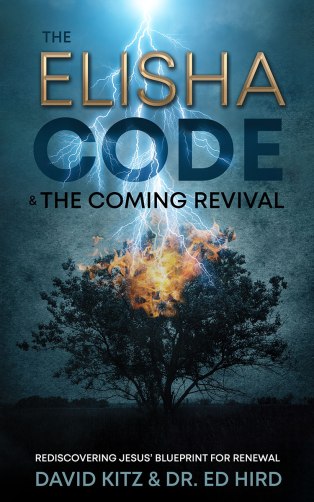
To purchase or for a closer look click here.

The Most Messianic Psalm?

16 Tuesday Aug 2022

Posted by davidkitz in Psalm 110, Psalms

≈ 10 Comments

Tags

Adonai, David, Messiah, messianic psalm, the LORD, Yahweh

Reading: Psalm 110
Of David. A psalm.
The LORD says to my Lord:
“Sit at my right hand until I make your enemies a footstool for your feet.”
The LORD will extend your mighty scepter from Zion, saying,
“Rule in the midst of your enemies!”
Your troops will be willing on your day of battle.
Arrayed in holy splendor,
your young men will come to you
like dew from the morning’s womb.
The LORD has sworn and will not change his mind:
“You are a priest forever, in the order of Melchizedek.”
The Lord is at your right hand;
he will crush kings on the day of his wrath.
He will judge the nations, heaping up the dead
and crushing the rulers of the whole earth.
He will drink from a brook along the way,
and so he will lift his head high
(NIV).

img_20220811_1922015

Photo by David Kitz

Reflection
Psalm 110 is perhaps the most messianic psalm in the entire psalter. Jesus made a direct reference to the opening line of this psalm in a discussion he had with the Pharisees in the temple courts during the week of his crucifixion. See Matthew 22:41-46 and Luke 20:41-44.

Jesus asks, “What do you think about the Messiah? Whose son is he?” In response the Pharisees answer, “The son of David.”

But Jesus refutes their answer by quoting from Psalm 110. His answer does not carry the same punch in the English language quote we see in Matthew, because we fail to see the distinction between the first ‘LORD’ and the second ‘Lord’. We see these words as synonymous, but in the original Hebrew they most certainly are not. The first LORD is Yahweh (Jehovah), but the second Lord is Adonai, the Messiah.

Speaking prophetically by the Spirit, David was referring to his Adonai—his Messiah. By quoting this scripture, Jesus was affirming his designation by God as the Messiah the Jewish nation had longed to see. The long wait was over. Jesus the Messiah was standing directly in front of Pharisees who were blind to his presence and his deity.

This Lord or Adonai is also the divinely designated priest who will present his own body as a sacrifice on the cross. The LORD has sworn and will not change his mind: “You are a priest forever, in the order of Melchizedek.” The writer of the Book of Hebrews has a great deal to say about the priesthood of Melchizedek. He systematically reasons that Jesus is our heaven-sent prophet, priest and king. See Hebrews chapters 6-8.   

Response: Father God, thank you for sending Jesus into the world to be my personal Messiah. Jesus, you suffered and died for me. Now extend your reign as conquering king over me and through me. Amen.

Your Turn: Have you bowed your knee before the Messiah King? How can you honor King Jesus today?

* NEW INTERNATIONAL VERSION, COPYRIGHT ©1973, 1978, 1984, 2011 BY BIBLICA

BGBG_v4.3_150[1818]

Please pray for the people of Ukraine!

Volume I of Psalms 365: Develop a Life of Worship and Prayer has won the 2021 Best Book of the Year Award and for those who love God’s word, it’s an ideal way to daily meet with the Lord. For a closer look at Volumes II and III click here.

The Great Hallelujah!

02 Monday Aug 2021

Posted by davidkitz in Psalm 148, Psalms

≈ 5 Comments

Tags

hallelujah, Hallelujah Chorus, praise the LORD, Yahweh

Reading: Psalm 148:13-14
Let them praise the name of the LORD,
for his name alone is exalted;
his splendor is above the earth and the heavens.
And he has raised up for his people a horn,
the praise of all his faithful servants,
of Israel, the people close to his heart.
Praise the LORD (NIV).*

img_20201109_1657017

The close of the day — photo by David Kitz

Reflection
Broadly speaking I like modern translations of the Bible over the traditional King James Version, but… But sometimes the old King James just sounds better, or more familiar. Here at the close of Psalm 148 we have a case in point.

The New International Version ends the psalm with these words: Praise the LORD. The King James Version ends the psalm with Praise ye the LORD. But a more literal translation or transliteration of this final phrase is Hallelujah! The footnotes to the New American Standard Bible point out that Hallelu means praise, while JAH is the abbreviated Hebrew name for God, which is often translated Jehovah or more accurately Yahweh.

Whenever you see the phrase praise the LORD, you are actually looking at a translation of the Hebrew word hallelujah!

Hallelujah is entirely absent from the New International Version of the Bible. It has also been scrubbed from most of the other modern translations. To put it bluntly, I miss hallelujah. It has an uplifting ring to it. Hallelujah skips off the tongue like a shooting star. It bursts forth from a thankful heart like fireworks on a summer night.

For the Christian believer Christmas is the great Hallelujah! God has come to the earth and been born as a baby like you and me. This is the beginning of the great redemption story.

The resurrection is the second great Hallelujah! The Son of God was vindicated. His death was not in vain. He conquered death, our greatest foe, and now Jesus reigns on high forever. That calls for a hallelujah! And for good measure, let’s add praise the LORD too!

The one who at his birth was laid in a manger is the King of kings and the Lord of lords. As Handel’s Messiah proclaims, “He shall reign forever and ever. Hallelujah!” Let the hallelujahs resound from the earth to the heavens as we join in the song of the angels—the song of the ages.

Let them praise the name of the LORD, for his name alone is exalted; his splendor is above the earth and the heavens.

Response: LORD God, I praise you for sending Jesus. I praise you for your great plan of redemption. Jesus, I thank you for carrying my sins to Calvary. I rejoice in your resurrection victory. Hallelujah! Amen.

Your Turn: Do you enjoy Handel’s Hallelujah Chorus? What is your favorite expression of praise to God?

* NEW INTERNATIONAL VERSION, COPYRIGHT ©1973, 1978, 1984, 2011 BY BIBLICA

BGBG_v4.3_150[1818]

https://BibleGateway.com/blog/bloggergrid/

Volume III of Psalms 365: Develop a Life of Worship and Prayer by award-winning author David Kitz is available now. For a closer look at Volumes I and II click here. Journey through the Psalms in a year.

My Messiah

17 Thursday Oct 2019

Posted by davidkitz in Devotionals, Psalm 110, Psalms

≈ Leave a comment

Tags

Lord, Messiah, messianic psalm, Yahweh

Reading: Psalm 110
Of David. A psalm.
The LORD says to my Lord:
“Sit at my right hand until I make your enemies a footstool for your feet.”
The LORD will extend your mighty scepter from Zion, saying,
“Rule in the midst of your enemies!”
Your troops will be willing on your day of battle.
Arrayed in holy splendor,
your young men will come to you
like dew from the morning’s womb.
The LORD has sworn and will not change his mind:
“You are a priest forever, in the order of Melchizedek.”
The Lord is at your right hand;
he will crush kings on the day of his wrath.
He will judge the nations, heaping up the dead
and crushing the rulers of the whole earth.
He will drink from a brook along the way,
and so he will lift his head high
(NIV).

img_20181023_1153130

Grey Nuns Park, Orleans. ON — photo by David Kitz

Reflection
Psalm 110 is perhaps the most messianic psalm in the entire psalter. Jesus made a direct reference to the opening line of this psalm in a discussion he had with the Pharisees in the temple courts during the week of his crucifixion. See Matthew 22:41-46 and Luke 20:41-44.

Jesus asks, “What do you think about the Messiah? Whose son is he?” In response the Pharisees answer, “The son of David.”

But Jesus refutes their answer by quoting from Psalm 110. His answer does not carry the same punch in the English language quote we see in Matthew, because we fail to see the distinction between the first ‘LORD’ and the second ‘Lord’. We see these words as synonymous, but in the original Hebrew they most certainly are not. The first LORD is Yahweh (Jehovah), but the second Lord is Adonai, the Messiah.

Speaking prophetically by the Spirit, David was referring to his Adonai—his Messiah. By quoting this scripture Jesus was affirming his designation by God as the Messiah that the Jewish nation had longed to see. The long wait was over. Jesus the Messiah was standing directly in front of Pharisees who were blind to his presence and his deity.

This Lord or Adonai is also the divinely designated priest who will present his own body as a sacrifice on the cross. The LORD has sworn and will not change his mind: “You are a priest forever, in the order of Melchizedek.” The writer of the Book of Hebrews has a great deal to say about the priesthood of Melchizedek. See Hebrews chapters 6-8. Jesus is our heaven-sent, born-in-a-stable prophet, priest and king.   

Response: Father God, thank you for sending Jesus into the world to be my personal Messiah. Jesus, you suffered and died for me. Now extend your reign as conquering king over me and through me. Amen.

Your Turn: Have you bowed your knee before the Messiah King?

Whose Name is Near

04 Tuesday Jun 2019

Posted by davidkitz in Devotionals, Psalm 75, Psalms

≈ 1 Comment

Tags

commands, name, the name of the LORD, Yahweh

Reading: Psalm 75
For the director of music. To the tune of “Do Not Destroy.” A psalm of Asaph. A song.
We praise you, God, we praise you, for your Name is near;
people tell of your wonderful deeds.
You say, “I choose the appointed time;
it is I who judge with equity.
When the earth and all its people quake,
it is I who hold its pillars firm.
To the arrogant I say, ‘Boast no more,’
and to the wicked, ‘Do not lift up your horns.
Do not lift your horns against heaven;
do not speak so defiantly.’”
No one from the east or the west
or from the desert can exalt themselves.
It is God who judges: He brings one down, he exalts another.
In the hand of the Lord is a cup
full of foaming wine mixed with spices;
he pours it out, and all the wicked of the earth
drink it down to its very dregs.
As for me, I will declare this forever;
I will sing praise to the God of Jacob,
who says, “I will cut off the horns of all the wicked,
but the horns of the righteous will be lifted up”
(NIV).

img_20190524_1912445-effects

Plum blossoms — photo by David Kitz

Reflection
I find the opening verse of this psalm to be very thought-provoking. Let’s take a moment to consider it: We praise you, God, we praise you, for your Name is near; people tell of your wonderful deeds.

Ask yourself how many, “Oh my G*ds!” do you hear in a day? How many “OMGs” do you see posted on Facebook? I dare say quite a few. Are these exclamations expressed in praise to God? Of course not. They are meaningless expressions of surprise—or are they?

They are meaningless expressions to those that believe this command from the LORD is a meaningless expression. “You shall not misuse the name of the LORD your God, for the LORD will not hold anyone guiltless who misuses his name” (Exodus 20:7, NIV).

The Common English Bible translates this command with these words, “Do not use the LORD your God’s name as if it were of no significance; the LORD won’t forgive anyone who uses his name that way” (Exodus 20:7, CEB).

God’s commands are not meaningless expressions. There is power in the name of the LORD (Yahweh). Perhaps we need this reminder. It is God who judges: He brings one down, he exalts another.

Response: LORD God, I want to treat your Name with the respect and honor it deserves. Please forgive me if I have misused your name in any way. I pray in the powerful name of Jesus. Amen.

Your Turn: Why do you think the LORD (Yahweh) makes a big deal about His name? Why is it important?

I Miss Hallelujah!

16 Tuesday May 2017

Posted by davidkitz in Psalm 148, Psalms

≈ 2 Comments

Tags

Bible translations, Christmas, hallelujah, Hallelujah Chorus, Handel's Messiah, Jehovah, Jesus, praise, resurrection, the LORD, victory, Yahweh

Reading:                                         Psalm 148

(Verses 13-14)
Let them praise the name of the LORD,
for his name alone is exalted;
his splendor is above the earth and the heavens.
And he has raised up for his people a horn,
the praise of all his faithful servants,
of Israel, the people close to his heart.
Praise the LORD (NIV).

Reflection

Broadly speaking I like modern translations of the Bible over the traditional King James Version, but… But sometimes the old King James just sounds better, or more familiar. Here at the close of Psalm 148 we have a case in point.

IMG_20170506_131109

Orleans woods in spring — photo by David Kitz

The New International Version ends the psalm with these words: Praise the LORD. The King James Version ends the psalm with Praise ye the LORD. But a more literal translation or transliteration of this final phrase is Hallelujah! The footnotes to the New American Standard Bible point out that Hallelu means praise, while JAH is the abbreviated Hebrew name for God, which is often translated Jehovah or more accurately Yahweh.

Whenever you see the phrase praise the LORD, you are actually looking at a translation of the Hebrew word hallelujah!

Hallelujah is entirely absent from the New International Version of the Bible. It has also been scrubbed from most of the other modern translations. To put it bluntly, I miss hallelujah. It has an uplifting ring to it. Hallelujah skips off the tongue like a shooting star. It bursts forth from a thankful heart like fireworks on a summer night. 

For the Christian believer Christmas is the great Hallelujah! God has come to the earth and been born as a baby like you and me. This is the beginning of the great redemption story.

The resurrection is the second great Hallelujah! The Son of God was vindicated. His death was not in vain. He conquered death, our greatest foe, and now Jesus reigns on high forever. That calls for a hallelujah! And for good measure, let’s add praise the LORD too!

The one who at his birth was laid in a manger is the King of kings and the Lord of lords. As Handel’s Messiah proclaims, “He shall reign forever and ever. Hallelujah!” Let the hallelujahs resound from the earth to the heavens as we join in the song of the angels—the song of the ages.

Let them praise the name of the LORD, for his name alone is exalted; his splendor is above the earth and the heavens.

Response: LORD God, I praise you for sending Jesus. I praise you for your great plan of redemption. Jesus, I thank you for carrying my sins to Calvary. I rejoice in your resurrection victory. Hallelujah! Amen.

Your Turn: Do you enjoy Handel’s Hallelujah Chorus? What is your favorite expression of praise to God?

Before Gods and Kings

16 Thursday Mar 2017

Posted by davidkitz in Psalm 138, Psalms

≈ 1 Comment

Tags

embolden, First Commandment, God, gods, idols, infinite, invisible, kings, national gods, praise, the LORD, Yahweh

Reading:                                         Psalm 138

Of David

(Verses 1-5)

I will praise you, LORD, with all my heart;
before the “gods” I will sing your praise.
I will bow down toward your holy temple
and will praise your name
for your unfailing love and your faithfulness,
for you have so exalted your solemn decree
that it surpasses your fame.
When I called, you answered me;
you greatly emboldened me.

May all the kings of the earth praise you, LORD,
when they hear what you have decreed.
May they sing of the ways of the L
ORD,
for the glory of the L
ORD is great (NIV)

Reflection

David was wholehearted in all that he did, so it should not surprise us that he begins Psalm 138 with this assertion: I will praise you, LORD, with all my heart; before the “gods” I will sing your praise.

img_20161206_092304

Walking in a winter wonderland — photo by David Kitz

David, the shepherd king, wasn’t shy or reticent about offering praise to the LORD. He knew his God and was quick to give Him praise. He would even praise the LORD before foreign gods. Elsewhere in the psalms we see this declaration: For great is the LORD and most worthy of praise; he is to be feared above all gods. For all the gods of the nations are idols, but the LORD made the heavens (Psalm 96:4-5).

During David’s time each nation had its own national god. These national gods were represented by carved idols of wood, metal or stone. But Israel had no idol. They were strictly forbidden to make any image or likeness of the LORD (Yahweh). See the First Commandment, Exodus 20:3-6. This prohibition set Israel apart. They were the people with no visible god.

But why settle for a visible god, when you can have the invisible God who fills the entire universe? Why settle for a national god, when you can have the LORD who created the heavens and the earth? Inevitably, if we fashion our own god, we will create a god who is far too small. The true God is far bigger, far wiser, and far more just, and compassionate than we can ever imagine. How can we as finite creatures begin to fathom the infinite power and glory of God?

By His great mercy the LORD reveals Himself to us. He does that best through His Son. The Son is the image of the invisible God, the firstborn over all creation (Colossians 1:15). Jesus helps make the infinite God comprehensible to us, so we can join with David’s anthem of praise. May all the kings of the earth praise you, LORD, when they hear what you have decreed. May they sing of the ways of the LORD, for the glory of the LORD is great.

Response: LORD God, I praise you for your unfailing love and your faithfulness. Thank you for answering my prayers. You give me courage and greatly emboldened me to carry on. Amen.

Your Turn: How big is your God? Is He bigger than your problems?

Psalms 365: Develop a Life of Worship and Prayer

Psalms 365 Volume II

Psalms 365 vol 3
— Psalms 365 Volume III

Psalms

Recent posts

  • I Call to You for Help January 10, 2026
  • Above All Gods January 9, 2026
  • The Need for a Place of Refuge January 9, 2026
  • David Dances before the LORD January 8, 2026
  • The God of Turn-Arounds January 8, 2026
  • The LORD Who Heals You January 7, 2026
  • Why Praise God? January 7, 2026

Calendar

January 2026
M T W T F S S
 1234
567891011
12131415161718
19202122232425
262728293031  
« Dec    

Blog Posts

Comments

  • davidkitz on The Ultimate Come from Behind Victory  
  • cjsmissionaryminister on Preparing a Landing Strip for the Holy Spirit
  • cjsmissionaryminister on The Ultimate Come from Behind Victory  

Blog at WordPress.com.

Privacy & Cookies: This site uses cookies. By continuing to use this website, you agree to their use.
To find out more, including how to control cookies, see here: Cookie Policy
  • Subscribe Subscribed
    • I love the Psalms
    • Join 1,381 other subscribers
    • Already have a WordPress.com account? Log in now.
    • I love the Psalms
    • Subscribe Subscribed
    • Sign up
    • Log in
    • Report this content
    • View site in Reader
    • Manage subscriptions
    • Collapse this bar
 

Loading Comments...