• Home
  • About
  • DavidKitz.ca
  • Youtube Videos
  • Books by David
  • Books on Amazon.com

I love the Psalms

~ Connecting daily with God through the Psalms

I love the Psalms

Author Archives: davidkitz

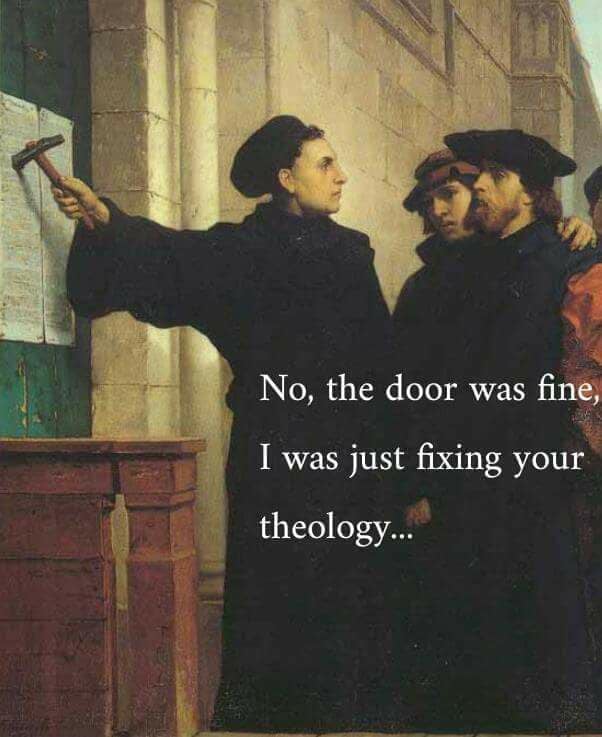
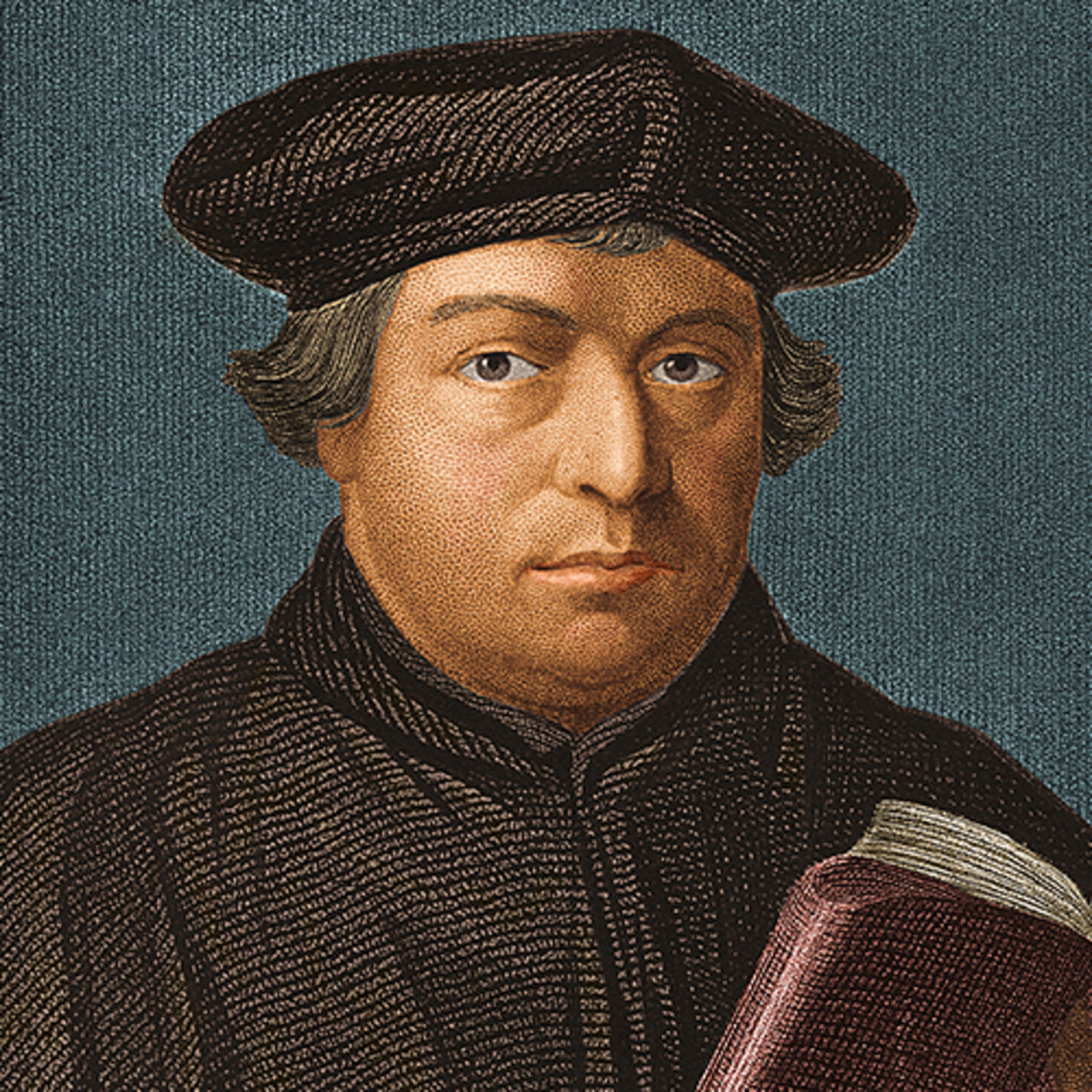
James the Door Hinge for the Gentile World

24 Sunday May 2026

Posted by davidkitz in Books by David Kitz

≈ Leave a comment

Tags

Bible, Christ, Christianity, church, circumcision, faith, Gentiles, gospel, James, James the brother of Jesus, Jerusalem, Jesus, leadership, Paul, Peter, Scripture, speaking in tongues

James: the Lynchpin of Our Faith — Chapter 12 — Part II

Peter’s declaration in favor of grace for the Gentiles rather than the Mosaic Law was followed by the testimony of Paul and Barnabas:

The whole assembly became silent as they listened to Barnabas and Paul telling about the signs and wonders God had done among the Gentiles through them. (Acts 15:12)

Through their testimony, Barnabas and Paul persuasively reinforced the argument Peter had presented. The conversion of the Gentiles was God’s doing. He had initiated it through Peter and now was continuing that work through Barnabas and Paul. The proof of this was in “the signs and wonders God had done.” If God was opposed to the inclusion of the Gentiles in the Christian faith, there would be no signs and wonders as the gospel message was presented. Instead, miraculous signs and wonders accompanied the preaching of the gospel, giving it credence. Large numbers of Gentiles believed the message they heard because they witnessed demonstrations of God’s power.

Signs and wonders were an integral part of the spread of the gospel as recorded in the Book of Acts. (1) Certainly, the apostles viewed these wonders as a natural extension of Jesus’ ministry. According to Mark’s Gospel, after his resurrection Jesus predicted this bursting forth of the miraculous:

Later Jesus appeared to the Eleven as they were eating; he rebuked them for their lack of faith and their stubborn refusal to believe those who had seen him after he had risen. He said to them, “Go into all the world and preach the gospel to all creation. Whoever believes and is baptized will be saved, but whoever does not believe will be condemned. And these signs will accompany those who believe: In my name they will drive out demons; they will speak in new tongues; they will pick up snakes with their hands; and when they drink deadly poison, it will not hurt them at all; they will place their hands on sick people, and they will get well.” (Mark 16:14–18)

Furthermore, Jesus had promised his disciples that they would do even greater things than he had done.

Very truly I tell you, whoever believes in me will do the works I have been doing, and they will do even greater things than these, because I am going to the Father. And I will do whatever you ask in my name, so that the Father may be glorified in the Son. You may ask me for anything in my name, and I will do it. (John14:12–14)

As the apostles heard the testimony of Paul and Barnabas, they undoubtedly harkened back to the words of Jesus. God was at work claiming a people for Himself. The proof of this was in the manifestation of signs and wonders as the gospel was presented to the Gentiles, their positive response to the message, and the demonstrable presence of the Holy Spirit among them.

There are those who see substantial differences between Peter and Paul, but there are none on display here. The core of the gospel message they present is essentially the same: the door to salvation is open to all, Jew and Gentile, by grace through faith alone in the redeeming death and resurrection of Jesus Christ.

Together here at the Jerusalem Council, Peter and Paul present a united front. They act as a tag team delivering the decisive blows that demolished the argument in favor of circumcision and adherence to Mosaic Law. We see them work in cooperation with one another here at the Council and later out on the field.

We know their position carried the day due James’ response:

When they finished, James spoke up. “Brothers,” he said, “listen to me. Simon [Peter] has described to us how God first intervened to choose a people for his name from the Gentiles. The words of the prophets are in agreement with this, as it is written:

“‘After this I will return and rebuild David’s fallen tent. Its ruins I will rebuild, and I will restore it, that the rest of mankind may seek the Lord, even all the Gentiles who bear my name, says the Lord, who does these things’—things known from long ago.'” (See Amos 9:11–12.)

“It is my judgment, therefore, that we should not make it difficult for the Gentiles who are turning to God. Instead we should write to them, telling them to abstain from food polluted by idols, from sexual immorality, from the meat of strangled animals and from blood. For the law of Moses has been preached in every city from the earliest times and is read in the synagogues on every Sabbath.” (Acts 15:13–21)


From this account one clearly has the sense that James is presiding over this gathering or Council. He is providing oversight as the question is framed and opposing arguments are debated. At the conclusion of the debate, James states his position and renders his judgment on the matter. In this regard the Jerusalem Council proceedings resemble a court case with a presiding judge, namely James, pronouncing the final verdict.

There is no indication that this is a democratic assembly where a final vote on the motion is taken. Rather the Council follows the format of a judicial council, where the matter is considered and decided by a judge or overseer. This format was customary in both Jewish and Roman practise during this time and continues in various forms to this day.

In his statement James concurs with Peter’s testimony. In essence, he concludes that this is a decision that God has already made. “Simon has described to us how God first intervened to choose a people for his name from the Gentiles” (Acts 15:14). He then goes on to reinforce his position by quoting from the prophet Amos.

There are several Old Testament scriptures that predict the Gentiles will turn in faith to the God of Israel. Why did James choose to quote this particular passage?

First and foremost, the Amos passage captures the thought that the entry of the Gentiles into God’s kingdom is God’s idea. It is the Lord “who does these things.” What Peter had described was an intervention of God in bringing the Gentiles at the household of Cornelius to faith. Similarly, Paul and Barnabas described God’s intervention by means of signs and wonders as they preached the gospel to the Gentiles on their first missionary journey. So James concludes that the conversion of the Gentiles was God’s idea and indeed God’s doing.

The phrase “David’s fallen tent” also merits some consideration. Jesus was a direct descendant from the kingly line of David. James sees God’s intervention as restoring the rule of the Davidic dynasty through the eternal reign of King Jesus. As the brother of Jesus, James may well have seen himself as part of that Davidic line extending the kingdom of God on the earth. Again, this is God’s doing, and James finds himself in the pivotal role of opening wide the door to the Gentiles.

Having stated his position on the matter, James renders his verdict. “It is my judgment, therefore, that we should not make it difficult for the Gentiles who are turning to God” (Acts 15:19). The Greek word krino is translated here as judgment. In fact, krino is translated as judge or judgment eighty-seven times in the New Testament. (2) Most modern translations render krino as judgment; however, the traditional King James Version translates krino as sentence. “Wherefore my sentence is, that we trouble not them, which from among the Gentiles are turned to God” (Acts 15:19). By translating krino in this way, the King James translators highlight the magisterial role of James at the Council. He has declared his ruling on the matter.

There can be little doubt that James is viewed as the head of the church by all those present. He fulfills the role of chief executive officer. How do we know this? He has the undisputed final word on this crucial matter of faith, practice, and doctrine.

But one gets the sense that James was not heavy handed or dictatorial in reaching his decision. Through the discussion and a full airing of the matter, he was working to reach a consensus within the church. Evidence for this can be found in the actions that follow his ruling.

Then the apostles and elders, with the whole church, decided to choose some of their own men and send them to Antioch with Paul and Barnabas. They chose Judas (called Barsabbas) and Silas, men who were leaders among the believers. (Acts 15:22)

There was agreement among the apostles, the elders, and the whole church on this matter.

With his decision James secured the future of the church. Christianity would not remain as an obscure sect within Judaism. It would spread around the world and become a dominant force in world history through the next two millennia. His decision made possible the unhindered progress of the gospel in the Roman Empire and beyond.

James’ judgment puts truth to these words, which were sung about his brother Jesus and recorded in John’s Revelation:

And they sang a new song, saying:
“You are worthy to take the scroll and to open its seals, because you were slain, and with your blood you purchased for God persons from every
tribe and language and people and nation. You have made them to be a kingdom and priests to serve our God, and they will reign on the earth.”
(Revelation 5:9–10)

(1) See Acts 3:7, Acts 5:5 & 10, Acts 5:15, Acts 9:34, Acts 9:40, Acts 13:11, Acts 14:3, Acts 14:10, Acts 19:11–12, Acts 20:10, Acts 28:5, Acts 28:8.
(2) Robert Young, Analytical Concordance to the Bible, Index-Lexicon to the New Testament, Revised by William B. Stevenson (Eerdmans, 1972), p. 78.

New from David Kitz

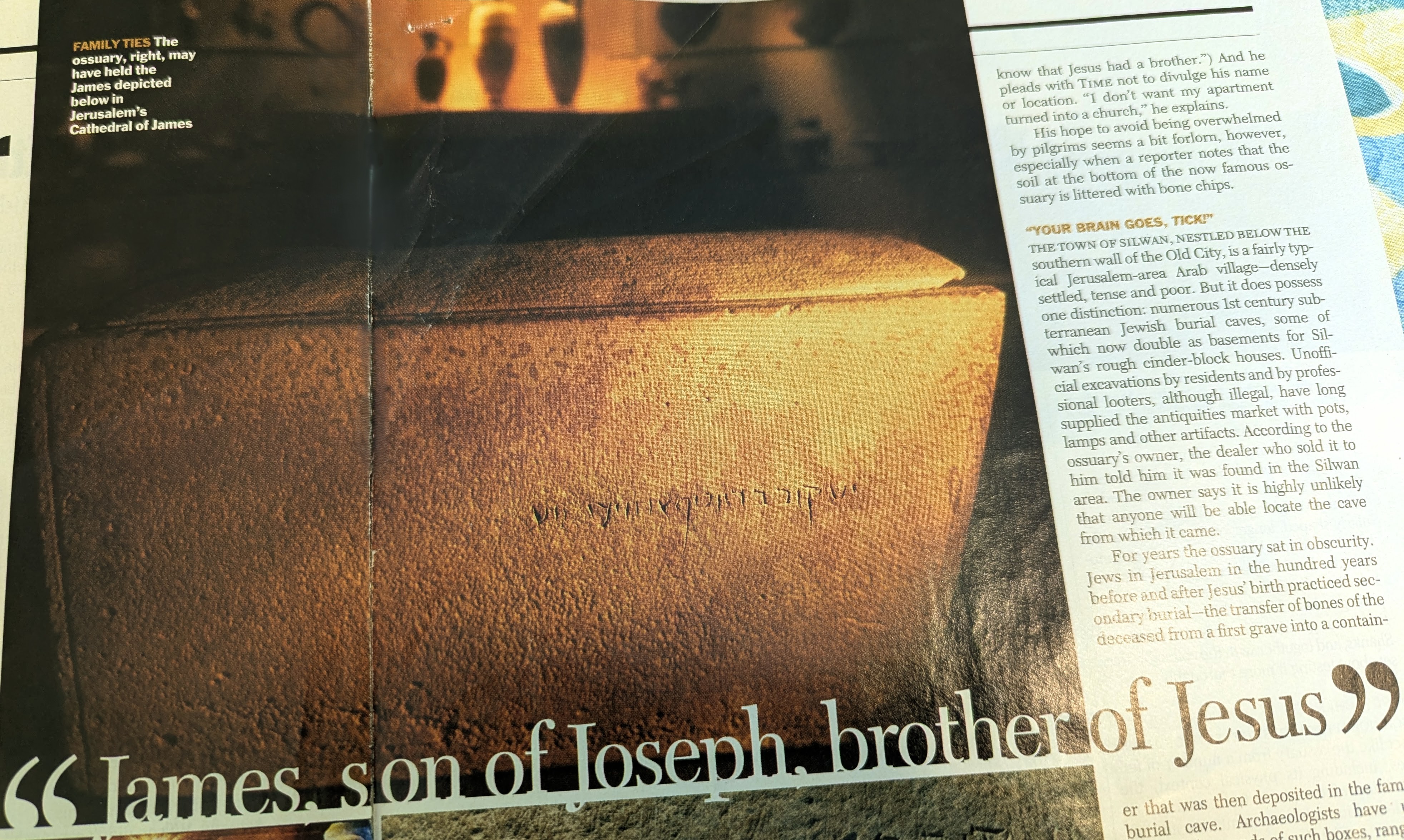
James—the brother of Jesus—who was this man? What evidence do we have that this “brother of our Lord” even existed?

David Kitz digs deep into archeology, family dynamics, church history, and the biblical texts. What emerges from his research is a portrait of a decisive, pivotal leader who embodied the will and character of Jesus Christ.

But how did James—James the unbeliever—transform to become a leader who changed the course of world history? In these pages you will uncover the answer and rediscover for yourself the life-changing power of the gospel.

To view further details or purchase directly from the author click here.

 

You Are Awesome in Your Sanctuary

23 Saturday May 2026

Posted by davidkitz in Psalm 68, Psalms

≈ 2 Comments

Tags

Israel, Psalms, Prayer, praise, sanctuary, power of God, praise the LORD, all nations, Strength in God, sing for joy, majesty of God, worthy of praise

Listen to Psalm 67 read by Jonathan Dent

https://davidkitz.blog/wp-content/uploads/2026/05/ps-6832-5-mix-1final.mp3

Reading: Psalm 68:32-35 (NIV)*

Sing to God,
you kingdoms of the earth,
sing praise to the Lord,
to him who rides across the highest heavens,
the ancient heavens,
who thunders with mighty voice.
Proclaim the power of God,
whose majesty is over Israel,
whose power is in the heavens.
You, God, are awesome in your sanctuary;
the God of Israel gives power
and strength to his people.
Praise be to God!


Response
LORD God, thank you for sending Jesus. Thank you for coming in frail human flesh—flesh like our own. Thank you because now we can know you as one of us—God with us. Be with me today and every day. Amen.

Para la publicación de Salmos 365 de hoy en español haga clic aquí.

bgbg_v4.3_1501818
* NEW INTERNATIONAL VERSION, COPYRIGHT ©1973, 1978, 1984, 2011 BY BIBLICA

Pray for peace in Israel, Iran and the Middle East
and continue to pray for peace to return to Ukraine and Russia!

Volume I of Psalms 365: Develop a Life of Worship and Prayer won the Best Book of the Year Award from The Word Guild and Volume II has won the Best Devotional of the Year Award. For those who love God’s word, this three-book series is an ideal way to daily meet with the Lord. To purchase or for a closer look click here.

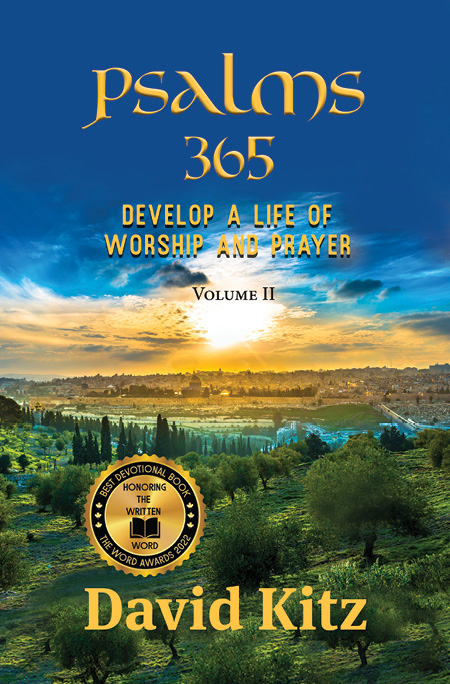
The photo of Jerusalem on the cover of Psalm 365, Volume II


Take a journey to the cross.


To view further details or purchase click here.


* New International Version, Copyright ©1973, 1978, 1984, 2011 by Biblica

May All the Peoples Praise You

16 Saturday May 2026

Posted by davidkitz in Psalm 67, Psalms

≈ 2 Comments

Tags

all nations, God's blessing, harvest, peoples, praise, praise the LORD, Prayer, Psalms, salvation, sing for joy, songs of joy, worthy of praise

Listen to Psalm 67 read by Jonathan Dent

https://davidkitz.blog/wp-content/uploads/2026/05/ps-67-mix-3final.mp3

Reading: Psalm 67 (NIV)*

For the director of music. With stringed instruments. A psalm. A song.
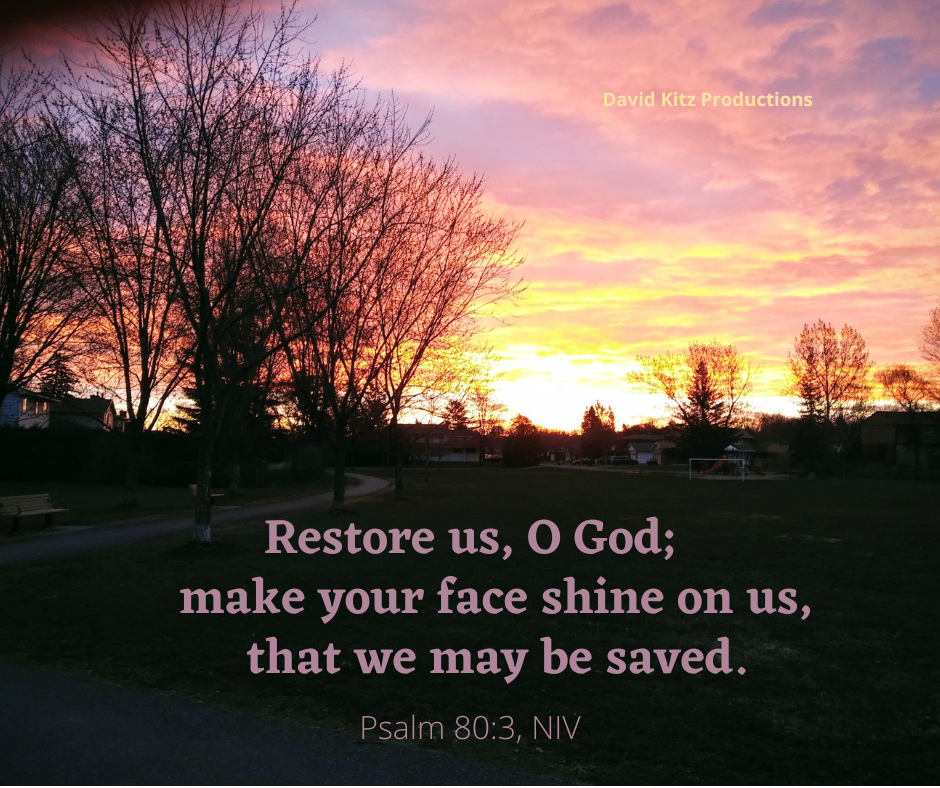
May God be gracious to us and bless us
and make his face shine on us—
so that your ways may be known on earth,
your salvation among all nations.
May the peoples praise you, God;
may all the peoples praise you.
May the nations be glad and sing for joy,
for you rule the peoples with equity
and guide the nations of the earth.
May the peoples praise you, God;
may all the peoples praise you.
The land yields its harvest;
God, our God, blesses us.
May God bless us still,
so that all the ends of the earth will fear him.


Reflection
Like any loving parent, God draws pleasure from blessing his children. But is there a divine motivation that extends beyond the family of God. As the opening verse of this psalm makes clear, God desires to bless us, so his ways and his salvation may be known all over this world.

Para la publicación de Salmos 365 de hoy en español haga clic aquí.

bgbg_v4.3_1501818
* NEW INTERNATIONAL VERSION, COPYRIGHT ©1973, 1978, 1984, 2011 BY BIBLICA

Pray for peace in Israel, Iran and the Middle East
and continue to pray for peace to return to Ukraine and Russia!

Volume I of Psalms 365: Develop a Life of Worship and Prayer won the Best Book of the Year Award from The Word Guild and Volume II has won the Best Devotional of the Year Award. For those who love God’s word, this three-book series is an ideal way to daily meet with the Lord. To purchase or for a closer look click here.


Take a journey to the cross.


To view further details or purchase click here.


* New International Version, Copyright ©1973, 1978, 1984, 2011 by Biblica

Your Work Partner

10 Sunday May 2026

Posted by davidkitz in Psalm 65, Psalms

≈ Leave a comment

Tags

abundant blessings, bounty, God's provision, praise, praise the LORD, Prayer, Psalms, songs of joy, worthy of praise

Listen to Psalm 65:9-13 read by Jonathan Dent

https://davidkitz.blog/wp-content/uploads/2026/05/ps-659-13-mix-2final.mp3

Reading: Psalm 65:9-13 (NIV)*

You care for the land and water it;
you enrich it abundantly.
The streams of God are filled with water
to provide the people with grain,
for so you have ordained it.
You drench its furrows and level its ridges;
you soften it with showers and bless its crops.
You crown the year with your bounty,
and your carts overflow with abundance.
The grasslands of the wilderness overflow;
the hills are clothed with gladness.
The meadows are covered with flocks
and the valleys are mantled with grain;
they shout for joy and sing.

Photo by Zen Chung on Pexels.com

Reflection
In our toil we are not alone. There is something sacred about work. God ordained it. He planted a Garden for Adam and Eve to tend. Whether we are rooting out weeds, extracting teeth or rooting out unproductive habits, God is present in our work. Welcome Him as your partner.

Para la publicación de Salmos 365 de hoy en español haga clic aquí.

bgbg_v4.3_1501818
* NEW INTERNATIONAL VERSION, COPYRIGHT ©1973, 1978, 1984, 2011 BY BIBLICA

Pray for peace in Israel, Iran and the Middle East
and continue to pray for peace to return to Ukraine and Russia!

Volume I of Psalms 365: Develop a Life of Worship and Prayer won the Best Book of the Year Award from The Word Guild and Volume II has won the Best Devotional of the Year Award. For those who love God’s word, this three-book series is an ideal way to daily meet with the Lord. To purchase or for a closer look click here.


Take a journey to the cross.


To view further details or purchase click here.


* New International Version, Copyright ©1973, 1978, 1984, 2011 by Biblica

The Door of Faith Blows Open: Part II

10 Sunday May 2026

Posted by davidkitz in Books by David Kitz

≈ Leave a comment

Tags

apostles, Barnabas, Bible, Book of Acts, Christians, church, Gentiles, gospel, James, James the brother of Jesus, Jerusalem, Jesus, leadership, Luke, Messiah, missionary journeys, Paul, Peter, repent, resurrection, Scripture, speaking in tongues, testimony, the cross

James: the Lynchpin of Our Faith — Chapter 11 Continued

The rapid growth of the Gentile church in Antioch and Paul’s arrival there begins a transition within the Book of Acts. Up to this point Peter has been the main character in the narrative, but from this juncture forward Paul assumes the role of the main character. After Peter’s imprisonment and miraculous release in chapter twelve, he plays only a minor part in the remainder of the book.

One should not assume that Peter’s ministry was diminished, while Paul’s excelled. Instead, this transition within the Acts narrative largely reflects the experience and perspective of Luke, the book’s author. Luke was Paul’s personal doctor and a companion on his missionary journeys. (See Colossians 4:14, 2 Timothy 4:11, Philemon 24.) Furthermore, Luke was a Gentile, so the explosive growth of the Gentile church was quite naturally of particular interest to him.

In many respects, Luke played the role of Paul’s personal publicist. He ensured that Paul’s struggles and triumphs were recorded for posterity. None of the other apostles had a publicist, someone who acted as their press secretary. The inclusion of the Book of Acts in the canon of scripture guaranteed that Christians would be forever reminded about the exploits of the apostle Paul. Undoubtedly, the other apostles accomplished similar feats. Some are heralded in legend, but because these miracles and exploits were not recorded in scripture, memory of them has faded or vanished with the passage of time.(1)

Acts chapters thirteen and fourteen continue the narrative of the Church’s explosive growth among the Gentiles. A time of worship, fasting, and prayer at the church in Antioch sets in motion a chain of events that would rock the Roman Empire.

Now in the church at Antioch there were prophets and teachers: Barnabas, Simeon called Niger, Lucius of Cyrene, Manaen (who had been brought up with Herod the tetrarch) and Saul. While they were worshiping the Lord and fasting, the Holy Spirit said, “Set apart for me Barnabas and Saul for the work to which I have called them.” So after they had fasted and prayed, they placed their hands on them and sent them off. (Acts 13:1–3)

Photo by Harrison Haines on Pexels.com

What was this work to which Barnabas and Saul (Paul) had been called? No direct answer is provided in the text, but from the actions and events that follow, it is obvious that these two men are on a mission to bring the gospel message to the Gentiles. This is in full agreement with the word spoken to the disciple Ananias immediately after Saul’s encounter with Jesus on the road to Damascus.

But the Lord said to Ananias, “Go! This man is my chosen instrument to proclaim my name to the Gentiles and their kings and to the people of Israel. I will show him how much he must suffer for my name.” (Acts 9:15–16)

Paul is about to begin fulfilling the great purpose for which the Lord has called him to service. Many years later, while speaking in his own defence before King Agrippa, Paul gives this account of his initial encounter with Jesus and the purpose of his calling:

About noon, King Agrippa, as I was on the road, I saw a light from heaven, brighter than the sun, blazing around me and my companions. We all fell to the ground, and I heard a voice saying to me in Aramaic, “Saul, Saul, why do you persecute me? It is hard for you to kick against the goads.”

Then I asked, “Who are you, Lord?”

“I am Jesus, whom you are persecuting,” the Lord replied. “Now get up and stand on your feet. I have appeared to you to appoint you as a servant and as a witness of what you have seen and will see of me. I will rescue you from your own people and from the Gentiles. I am sending you to them to open their eyes and turn them from darkness to light, and from the power of Satan to God, so that they may receive forgiveness of sins and a place among those who are sanctified by faith in me.”

“So then, King Agrippa, I was not disobedient to the vision from heaven. First to those in Damascus, then to those in Jerusalem and in all Judea, and then to the Gentiles, I preached that they should repent and turn to God and demonstrate their repentance by their deeds. That is why some Jews seized me in the temple courts and tried to kill me. But God has helped me to this very day; so I stand here and testify to small and great alike. I am saying nothing beyond what the prophets and Moses said would happen—that the Messiah would suffer and, as the first to rise from the dead, would bring the message of light to his own people and to the Gentiles.” (Acts 26:13–23)

It is evident from Paul’s testimony that he sees his calling as bringing the gospel of Christ to the Gentiles. The prayer meeting in Antioch set him on a course to fulfill his life’s mission. Barnabas and Paul began their first missionary journey with a trip to Cyprus. Cyprus was the point of origin for the explosive church growth now evident in the Syrian city of Antioch, and furthermore it was home turf for Barnabas. Undoubtedly, he had many contacts on the island.

A pattern quickly begins to emerge in their ministry on this first journey, first in Cyprus and later in the regions of Pisidia and Lycaonia. They would begin by proclaiming the gospel message in the Jewish synagogues. Their message eventually meets with stiff resistance from many of the Jewish leaders in the community—however, the gospel is received with joy by many of the Gentiles who embrace it with much gratitude.

Often the proclamation of the gospel is accompanied by signs and wonders. On the island of Cyprus, Elymas is struck blind for resisting the gospel (Acts 13:6–12). In Iconium, “Paul and Barnabas spent considerable time there, speaking boldly for the Lord, who confirmed the message of his grace by enabling them to do miraculous signs and wonders” (Acts 14:3). In Lystra, with a single command Paul brought healing to a man who was unable to walk from birth (Acts 14:8–10). Undoubtedly, many believed their message because God confirmed the truth of the apostles’ words by the miracles that accompanied the gospel’s proclamation.

Eventually, persecution becomes acute to the point where Paul and Barnabas’ lives are at risk. So, as a result, the apostles move on to virgin territory with their message, where the pattern is repeated yet again. It is worth noting that, according to Luke, persecution and resistance to the message comes largely from the Jews rather than from the Gentile
population. (See Acts 13:6–8, Acts 13:44–52; Acts 14:2–7; Acts 14:19–20.)

Finally, Paul and Barnabas retrace their steps passing through the towns where they have already ministered.

They preached the gospel in that city [Derbe] and won a large number of disciples. Then they returned to Lystra, Iconium and Antioch, strengthening the disciples and encouraging them to remain true to the faith. “We must go through many hardships to enter the kingdom of God,” they said. Paul and Barnabas appointed elders for them in each church and, with prayer and fasting, committed them to the Lord, in whom they had put their trust. After going through Pisidia, they came into Pamphylia, and when they had preached the word in Perga, they went down to Attalia. (Acts 14:21–25)


The appointment of leaders was of great importance because it ensured the continuance of the church after the apostles’ departure. This tried and proven pattern of ministry was repeated in Paul’s subsequent missionary journeys.

Having achieved tremendous success in their mission despite fierce opposition, Paul and Barnabas return to Antioch in Syria.

From Attalia they sailed back to Antioch, where they had been committed to the grace of God for the work they had now completed. On arriving there, they gathered the church together and reported all that God had done through them and how he had opened a door of faith to the Gentiles. And they stayed there a long time with the disciples. (Acts 14:26–28)

It was the success of Paul and Barnabas in bringing the gospel to the Gentiles that precipitated the next great controversy in the church. The wind of the Spirit had blown the “door of faith to the Gentiles” (Acts 14:27) wide open, but there were those in the church who were determined to shut that door—and lock it permanently.

What position would James take in this growing controversy?

(1) For a detailed examination of the historical evidence regarding the mission and exploits of Christ’s original twelve apostles visit: http://www.biblepath.com/apostles.html.

New from David Kitz

James—the brother of Jesus—who was this man? What evidence do we have that this “brother of our Lord” even existed?

David Kitz digs deep into archeology, family dynamics, church history, and the biblical texts. What emerges from his research is a portrait of a decisive, pivotal leader who embodied the will and character of Jesus Christ.

But how did James—James the unbeliever—transform to become a leader who changed the course of world history? In these pages you will uncover the answer and rediscover for yourself the life-changing power of the gospel.

To view further details or purchase directly from the author click here.

 

The Hope of All the Ends of the Earth

09 Saturday May 2026

Posted by davidkitz in Psalm 65, Psalms

≈ Leave a comment

Tags

confidence in God, David, forgiveness of sins, Lamb of God, praise, praise the LORD, Prayer, Psalms, redeemed, songs of joy, worthy of praise

Listen to Psalm 65:1-8 read by Jonathan Dent

https://davidkitz.blog/wp-content/uploads/2026/05/ps-651-8-mix-3.finalflac.mp3

Reading:  Psalm 65:1-8 (NIV)*

Praise awaits you, our God, in Zion;
to you our vows will be fulfilled.
You who answer prayer,
to you all people will come.
When we were overwhelmed by sins,
you forgave our transgressions.
Blessed are those you choose and bring near to live in your courts!
We are filled with the good things of your house,
of your holy temple.
You answer us with awesome and righteous deeds,
God our Savior, the hope of all the ends of the earth
and of the farthest seas,
who formed the mountains by your power,
having armed yourself with strength,
who stilled the roaring of the seas,
the roaring of their waves, and the turmoil of the nations.
The whole earth is filled with awe at your wonders;
where morning dawns, where evening fades,
you call forth songs of joy.

All creation speaks its praise — photo courtesy of Karen Kitz

Reflection
David was thankful for the forgiveness of his sins. There is no better feeling than knowing you have been washed clean from the inside out by the cleansing blood of the Lamb of God. And now you are accepted—welcomed with open arms into God’s family. Oh, hallelujah! I’ve been redeemed.

Para la publicación de Salmos 365 de hoy en español haga clic aquí.

bgbg_v4.3_1501818
* NEW INTERNATIONAL VERSION, COPYRIGHT ©1973, 1978, 1984, 2011 BY BIBLICA

Pray for peace in Israel, Iran and the Middle East
and continue to pray for peace to return to Ukraine and Russia!

Volume I of Psalms 365: Develop a Life of Worship and Prayer won the Best Book of the Year Award from The Word Guild and Volume II has won the Best Devotional of the Year Award. For those who love God’s word, this three-book series is an ideal way to daily meet with the Lord. To purchase or for a closer look click here.


Take a journey to the cross.


To view further details or purchase click here.


* New International Version, Copyright ©1973, 1978, 1984, 2011 by Biblica

The Door of Faith Blows Open

03 Sunday May 2026

Posted by davidkitz in Books by David Kitz

≈ Leave a comment

Tags

apostles, Bible, birth of the church, Book of Acts, Christ, Gentiles, gospel, James, James the brother of Jesus, Jerusalem, Jesus, Jesus' family, leadership, Messiah, Paul, Pentecost, Peter, resurrection, Scripture, speaking in tongues, the cross

James: the Lynchpin of Our Faith — Chapter 11

The persecution of the early Christians initiated by Saul (Paul) after the martyrdom of Stephen (Acts 7:54–60) had an unintended effect. As believers fled for their lives, the gospel message spread out from Jerusalem.

On that day a great persecution broke out against the church in Jerusalem, and all except the apostles were scattered throughout Judea and Samaria. Godly men buried Stephen and mourned deeply for him. But Saul began to destroy the church. Going from house to house, he dragged off both men and women and put them in prison.

Those who had been scattered preached the word wherever they went. (Acts 8:1b–4)

Acts chapter eight describes the conversion of the Samaritans through the ministry of Philip the evangelist. This brought the Christian message beyond the tight bounds of Jewish faith and lineage. The Samaritans were considered outsiders to the Abrahamic covenant, though some might legitimately claim a partial Jewish heritage as W. Haskell describes.

The Samaritans were a mixed race with a heathen core (Ezra 4:2). Their blood would become more and more Hebraized by the addition of renegade Jews and by the intermarriage with surrounding Israelites, who would find among them the familiar worship of former times. (1)

It should be noted that the Samaritans were monotheists. They had their own version of the Pentateuch and believed that Mount Gizrim rather than Jerusalem was the holy place chosen by God. For the purists among the Jewish Christians, the inclusion of Samaritan believers undoubtedly challenged long-held perspectives and conventions. However, the apostles appeared to welcome the news of Samaria’s turn toward faith in Jesus Christ.

When the apostles in Jerusalem heard that Samaria had accepted the word of God, they sent Peter and John to Samaria. When they arrived, they prayed for the new believers there that they might receive the Holy Spirit, because the Holy Spirit had not yet come on any of them; they had simply been baptized in the name of the Lord Jesus. Then Peter and John placed their hands on them, and they received the Holy Spirit. (Acts 8:14–17)

If there were any misgivings about welcoming the Samaritans into the Christian fold, they are not recorded in this account. Undoubtedly, Peter and John recognized that this spiritual harvest among the Samaritans was a sovereign work of the Holy Spirit. In all likelihood, they also recalled Jesus’ ministry among the Samaritans was marked by kindness and sympathy rather than by the shunning and hostility, which was the societal norm during this time. See Luke 10:25–37, Luke 17:11–19, John 4:4–42. Nonetheless, it must be noted that with the conversion of the Samaritans, the gospel message had leaped across a significant religious and social barrier. But there was more to come.

Acts chapter eight concludes with the conversion of an Ethiopian eunuch, “an important official in charge of all the treasury of the Kandake (which means “queen of the Ethiopians”)” (Acts 8:27). This eunuch appears to have been either a convert to Judaism or perhaps a member of the Jewish faith who could trace his lineage back to the time of Solomon. In either case he is identified as an Ethiopian, a man coming from the upper Nile region, possibly Nubia.

Though not explicitly stated, the eunuch was a man of a different race. Apparently Luke, the Gentile author of the Book of Acts, included this account of the Ethiopian’s conversion to signal the gospel’s leap across a racial barrier. It is well worth noting that the Coptic Church in Ethiopia traces its origin to this account in Acts chapter eight.

The spread of the Christian faith beyond Jerusalem drew a vicious response from Saul (Paul). He was not content to lay waste to the church in Jerusalem. He intended to wipe out the Christian faith wherever he found it.

Meanwhile, Saul was still breathing out murderous threats against the Lord’s disciples. He went to the high priest and asked him for letters to the synagogues in Damascus, so that if he found any there who belonged to the Way, whether men or women, he might take them as prisoners to Jerusalem. As he neared Damascus on his journey, suddenly a light from heaven flashed around him. He fell to the ground and heard a voice say to him, “Saul, Saul, why do you persecute me?”

“Who are you, Lord?” Saul asked.

“I am Jesus, whom you are persecuting,” he replied. “Now get up and go into the city, and you will be told what you must do.” (Acts 9:1–6)

Saul’s miraculous conversion set the early church on a radically different trajectory. Many theologians and biblical scholars see the conversion of Saul of Tarsus as the starting point for the Gentile tidal wave that would flood into the church. They see Saul, who is renamed Paul, as the prima facia cause for the rapid growth of the Christian faith in the Gentile world. However, a closer examination of the Acts narrative and church history reveals that Paul was part of a much larger movement—a Holy Spirit directed movement that propelled the
growing church from its cradle in Jerusalem to the ends of the earth. This movement began with Peter not Paul, and it was validated by James.

Acts chapter ten is of pivotal significance in this regard. With Saul’s fierce persecution brought to a sudden end by his conversion, we are told that:

Then the church throughout Judea, Galilee and Samaria enjoyed a time of peace and was strengthened. Living in the fear of the Lord and encouraged by the Holy Spirit, it increased in numbers. (Acts 9:31)

However, this increase was confined to Jewish and Samaritan converts to the faith. But as Peter toured through this region performing at least two miraculous signs, (see Acts 9:32–42) he eventually came to sojourn in Joppa at the home of a tanner named Simon. At Joppa the gospel message made a startling leap across the barrier between Jews and uncircumcised Gentiles.

An angel was sent to the household of Cornelius, a Roman centurion.

One day at about three in the afternoon he had a vision. He distinctly saw an angel of God, who came to him and said, “Cornelius!”

Cornelius stared at him in fear. “What is it, Lord?” he asked.

The angel answered, “Your prayers and gifts to the poor have come up as a memorial offering before God. Now send men to Joppa to bring back a man named Simon who is called Peter. He is staying with Simon the tanner, whose house is by the sea.” (Acts 10:3–6)

The next day as Peter was waiting for his noonday meal to be prepared, he fell into trance in which he saw a sheet lowered from heaven containing all manner of animals, birds, and reptiles.

Then a voice told him, “Get up, Peter. Kill and eat.”

“Surely not, Lord!” Peter replied. “I have never eaten anything impure or unclean.”

The voice spoke to him a second time, “Do not call anything impure that God has made clean.”

This happened three times, and immediately the sheet was taken back to heaven. (Acts 10:13–16)

More than watchmen wait for the morning — photo by David Kitz

While Peter was still wondering about the meaning of this vision,three messengers from Cornelius arrived at the door. Peter, who was keenly attuned to the voice of the Lord, heard the Holy Spirit say, “Simon, three men are looking for you. So get up and go downstairs. Do not hesitate to go with them, for I have sent them.” (Acts 10:19–20)

These events were preparing Peter’s heart and mind for the dramatic shift in direction that the proclamation of the gospel was about to take. Peter was being sent by the Spirit to a different audience—a Gentile audience outside the covenantal laws of the Jewish people.

In this regard, even Peter’s sojourn in the home of Simon the tanner can be viewed as a preparatory step. Because leather tanners were required to work with the carcasses of animals their work was considered unclean by many in the Jewish community. As I. Howard Marshall writes, “Commentators have noted that the tanner’s occupation was an unclean one, and that a person with Pharisaic scruples would avoid contact with such a man.” (2)

One could assume that Peter’s scruples regarding what was ceremonially clean and unclean were in a state of transition. He certainly did not adhere strictly to the Pharisaic scruples, which went beyond the law and were admired by some first-century Jews.

In this respect he was following the example of his master Jesus, who frequently came into conflict with the Pharisees on such matters. See Matthew 23, Mark 3:23–28, Mark 7:1–23.

But stepping into a Gentile’s home was a line few observant Jews would deign to cross. Therefore, on the following day when Peter enters Cornelius’s home, he offers the following explanation:

While talking with him [Cornelius], Peter went inside and found a large gathering of people. He said to them: “You are well aware that it is against our law for a Jew to associate with or visit a Gentile. But God has shown me that I should not call anyone impure or unclean. So when I was sent for, I came without raising any objection. May I ask why you sent for me?” (Acts 10:27–29)

In response Cornelius recounts the visitation of the angel, and how he was instructed to send for Peter. The assembled listeners are eager to hear what Peter has to tell them. Of course, Peter uses this heaven-sent opportunity to preach the good news about the ministry of Jesus Christ and his death, burial, and resurrection. He prefaces his message with these words of self-reflection: “I now realize how true it is that God does not show favoritism but accepts from every nation the one who fears him and does what is right” (Acts 10:34–35).

It is evident from Peter’s remarks that he did not cross this cultural barrier without due consideration and soul searching. Undoubtedly, he knew he would face criticism from fellow Jewish Christians. They would certainly question his decision to enter a Gentile’s home. In this single act of hospitality, centuries of rabbinical teaching and practice were being set aside. Many would see this as a grave offence, especially since
Peter was a leader in the church.

But this exercise in cross-cultural outreach was not initiated by Peter, Cornelius, or any other man. It was initiated by God. The proof of this can be seen in the response to Peter’s message. The Holy Spirit intervened while he is still presenting the message. Peter said:

“All the prophets testify about him [Jesus] that everyone who believes in him receives forgiveness of sins through his name.”

While Peter was still speaking these words, the Holy Spirit came on all who heard the message. The circumcised believers who had come with Peter were astonished that the gift of the Holy Spirit had been poured out even on Gentiles. For they heard them speaking in tongues and praising God.

Then Peter said, “Surely no one can stand in the way of their being baptized with water. They have received the Holy Spirit just as we have.” So he ordered that they be baptized in the name of Jesus Christ. Then they asked Peter to stay with them for a few days. (Acts 10:43–48)

They were all baptized into Moses in the cloud and in the sea (1 Corinthians 10:2). Photo by David Kitz

This event at the home of a Roman centurion in Caesarea has enormous historic significance. It represents the first penetration of the gospel message into the Roman world. Rome was the dominant political and cultural power at that time. This humble home meeting represents the beachhead from which the gospel would spread across Rome’s farflung empire. This was the birthplace of the Gentile church, and Peter played the role of attendant physician to this miraculous birth.

But it was not a birth without controversy. Peter was called to account for his actions that day in Caesarea.

The apostles and the believers throughout Judea heard that the Gentiles also had received the word of God. So when Peter went up to Jerusalem, the circumcised believers criticized him and said, “You went into the house of uncircumcised men and ate with them.” (Acts 11:1–3)

Evidently, many Jewish believers found Peter’s actions offensive. They certainly were contrary to the norms proscribed by the teachings of rabbinic Judaism. They felt this breech of the Talmudic law needed to be repaired. Peter must be confronted about his transgression. In response, Peter provides a full recount of the events leading to his visit to the centurion’s home and the subsequent conversion of all who were gathered there. In his justification for his action, he points the finger directly at the Holy Spirit.

“As I began to speak, the Holy Spirit came on them as he had come on us at the beginning. Then I remembered what the Lord had said: ‘John baptized with water, but you will be baptized with the Holy Spirit.’ So if God gave them the same gift he gave us who believed in the Lord Jesus Christ, who was I to think that I could stand in God’s way?” (Acts 11:15-17)

What was this “same gift” to which Peter refers? Of course, he is referring to speaking in tongues, as happened initially on the day of Pentecost about eleven years prior to Peter’s meeting at the home of Cornelius.(3) Peter was struck that without specific instruction on this matter, the same phenomena manifested among these Gentile listeners. While listening to Peter’s message, these Gentile hearers became Gentile believers, and the Holy Spirit confirmed their faith by granting them the same gift that the apostles received at Pentecost.

To the consternation of many, the Holy Spirit was making no distinction between Jews and Gentiles. Nonetheless, Peter’s explanation appeared to satisfy those who raised objections.

When they heard this, they had no further objections and praised God, saying, “So then, even to Gentiles God has granted repentance that leads to life.” (Acts 11:18)

Where was James in this debate? Was he presiding over this interrogation? Luke’s account gives us no indication, but it’s not difficult to imagine James as one of the first to raise objections to Peter’s conduct. Due to his prominent role in the early church, he likely was present to hear Peter’s defence. In his epistle penned many years later, James appears to be a rigorous defender of doing things right—correct and by the book. One can easily see how crossing the line into forbidden territory, as Peter had done, would not sit well with James. Nevertheless, Peter was not sanctioned for his conduct. On the contrary, his testimony on this matter led to rejoicing.

One should not assume that the inclusion of Gentile believers within the church proceeded without tension. Centuries of belief, practice, and prejudice are not easily set aside. While many Jewish followers of Christ embraced the message of his sacrificial death and resurrection, it does not logically follow that they would set aside all aspects of their Jewish heritage. They quite rightly saw Jesus as their promised Messiah, but it does not necessarily follow that they saw Jesus as the Savior of the whole world—the Gentile world.

There are an abundance of Old Testament scriptures that point to the salvation of the Gentiles.(4) One can rightly argue, as Paul does, that the salvation of the Gentiles is an integral part of the Abrahamic covenant.
(See Ephesians 3:6 and Genesis 22:18.) But it’s one thing to read these prophecies and give mental assent; it’s quite a different matter when one sees these things being fulfilled before one’s eyes. A complete paradigm shift is required. Undoubtedly some readily embraced this change, while other Jewish believers in Jesus found it difficult or impossible.

Jesus alluded to this in one of his teachings:

“No one sews a patch of unshrunk cloth on an old garment. Otherwise, the new piece will pull away from the old, making the tear worse. And no one pours new wine into old wineskins. Otherwise, the wine will burst the skins, and both the wine and the wineskins will be ruined. No, they pour new wine into new wineskins.” (Mark 2:21–22)

New truths are most easily adopted by those who are new to the gospel message. Those trained and hardened in traditional teachings often find it difficult or impossible to embrace radically different ideas or new concepts. Their wineskins have hardened. Accepting Gentiles into the faith required a radical shift in thinking for many Jewish followers of Christ, including the Lord’s own disciples. This was true despite his explicit teaching that the gospel was for all—for the whole world.(5)

The acceptance of Cornelius and the converts at his home into the church signals the tacit acceptance that their conversion was the fulfillment of the words of the prophets. However, this welcome into the fold does not answer the question of how these new converts should live. Should they be required to adhere to all the rigours of Judaic law? In their daily lives are they to live as Jews, as Gentile believers in the Jewish Christ, or some blend of the two? Should their males be circumcised? Should they celebrate the Sabbath? Which day should be set aside for worship?

These matters would come to the fore later in the Book of Acts. To some extent, these questions are matters of debate, and even some contention in the broader church today. For example, how should Christians apply Old Testament teachings today? What eventually pushed these questions to the fore in the first century was the robust growth of the church among the Gentiles. We read of this expansion later in the same chapter of Acts:

Now those who had been scattered by the persecution that broke out when Stephen was killed traveled as far as Phoenicia, Cyprus and Antioch, spreading the word only among Jews. Some of them, however, men from Cyprus and Cyrene, went to Antioch and began to speak to Greeks also, telling them the good news about the Lord Jesus. The Lord’s hand was with them, and a great number of people believed and turned to the Lord. (Acts 11:19–21)


This great ingathering resulted in an equally great need for sound teaching in the faith, as well as apostolic oversight. Therefore, the church in Jerusalem responded.

News of this reached the church in Jerusalem, and they sent Barnabas to Antioch. When he arrived and saw what the grace of God had done, he was glad and encouraged them all to remain true to the Lord with all their hearts. He was a good man, full of the Holy Spirit and faith, and a great number of people were brought to the Lord.

Then Barnabas went to Tarsus to look for Saul, and when he found him, he brought him to Antioch. So for a whole year Barnabas and Saul met with the church and taught great numbers of people. The disciples were called Christians first at Antioch. (Acts 11:22–26)

Why was Barnabas chosen to head this mission to Antioch? When Samaria turned to the Lord in Acts chapter eight, it was Peter and John who were sent to investigate and provide further instruction. (See Acts 8:14–25.) Why were they not sent to Antioch, since previously they had been engaged in a similar assignment? Luke’s account in the Book of Acts provides us with no further details. Perhaps they were fully engaged in other matters of ministry. It is worth noting however that Barnabas was originally from Cyprus (Acts 4:36), and it was men from Cyprus who first brought the gospel to Antioch. For cultural reasons Barnabas may have been a natural choice. He may also have been personally acquainted with these men from Cyprus, thus adding to his appeal as a candidate for this assignment.

Finally, it appears that this was a group decision. We read “they sent Barnabas to Antioch.” The Greek used here is plural. It appears that the apostolic leadership within the church decided the matter. It was not decided by one man alone. Was James a part of the decision-making process? From later references in Acts chapter twelve and fifteen, it would seem logical to believe so, though in this instance nothing is stated definitively.

(1) W. Haskell, Unger’s Bible Dictionary, Editor Merrill F. Unger (Moody, 1972), p. 958.
(2) I. Howard Marshall, The Acts of the Apostles—Tyndale New Testament Commentaries (Eerdmans, 1980), p. 180.
(3) The scholars associated with The International Inductive Study New Testament situate the Acts 2 day of Pentecost as occurring in 30 AD and the incident at the home of Cornelius as happening in 41 AD. From K. Arthur, The International Inductive Study New Testament (Harvest House, 1993), pp. 167, 168, 181.
(4) See Psalm 22:27, Psalm 86:9, Isaiah 9:2, Isaiah 49:6, Isaiah 60:3, Daniel 7:4, Hosea 2:23.
(5) See Matthew 24:14, Matthew 28:19, Mark 13:10, Mark 16:15, Luke 24:47, Acts 1:8.


New from David Kitz

James—the brother of Jesus—who was this man? What evidence do we have that this “brother of our Lord” even existed?

David Kitz digs deep into archeology, family dynamics, church history, and the biblical texts. What emerges from his research is a portrait of a decisive, pivotal leader who embodied the will and character of Jesus Christ.

But how did James—James the unbeliever—transform to become a leader who changed the course of world history? In these pages you will uncover the answer and rediscover for yourself the life-changing power of the gospel.

To view further details or purchase directly from the author click here.


Book Review: James the Lynchpin of Our Faith

02 Saturday May 2026

Posted by davidkitz in book review

≈ Leave a comment

Tags

Bible, book review, brother of Jesus, David Kitz, faith, history, James, James the brother of Jesus, skepticism, the early church

A Five Star Goodreads Review by David Milmine

James, the Lynchpin of Our Faith by David Kitz is a thoughtful and surprisingly vivid exploration of one of the most overlooked figures in the New Testament—James, the brother of Jesus. What makes this book stand out is how David brings together Scripture, historical context, and imaginative reconstruction to paint James not as a distant theological figure, but as a real man shaped by family tension, doubt, and ultimately transformation. I found the way David traces James’ journey—from skepticism about Jesus to becoming a pillar of the early church—both compelling and spiritually grounding. It feels less like reading a textbook and more like sitting with a seasoned storyteller who wants you to see the humanity behind the history.

What gives the book extra depth is David himself. He isn’t just writing academically—he’s lived this material. As an ordained minister for over 30 years, a Bible dramatist, and someone who has actually performed the role of James, he brings a kind of embodied insight to the narrative. You can sense that in the way scenes unfold and relationships are described, especially the complex dynamic within Jesus’ family. That personal, almost pastoral tone makes the book feel accessible and devotional without losing its intellectual credibility.

Overall, this is a book that invites reflection as much as it informs. It gently challenges you to consider how faith can grow out of doubt, and how God often works through ordinary, even resistant people. I came away with a deeper appreciation not only for James, but for the quiet, steady leadership that helps hold faith communities together—something David clearly believes is still vital.

To view further details or to purchase from Amazon click here.
Hear My Cry, O God

02 Saturday May 2026

Posted by davidkitz in Psalm 61, Psalms

≈ 3 Comments

Tags

confidence in God, David, glory of God, God's faithfulness, God's presence, praise, praise the LORD, Prayer, Psalms, worthy of praise

Listen to Psalm 61 read by Jonathan Dent

https://davidkitz.blog/wp-content/uploads/2026/04/psalm-61-mixfinal-1.mp3

Reading: Psalm 61 (NIV)*

For the director of music. With stringed instruments. Of David.
Hear my cry, O God;
listen to my prayer.
From the ends of the earth I call to you,
I call as my heart grows faint;
lead me to the rock that is higher than I.
For you have been my refuge,
a strong tower against the foe.
I long to dwell in your tent forever
and take refuge in the shelter of your wings.
For you, God, have heard my vows;
you have given me the heritage of those who fear your name.
Increase the days of the king’s life,
his years for many generations.
May he be enthroned in God’s presence forever;
appoint your love and faithfulness to protect him.
Then I will ever sing in praise of your name
and fulfill my vows day after day.

Strength and glory are in his sanctuary — photo by David Kitz

Reflection
We can call out to God with confidence. He is more than nearby; He is within us helping to form the words of our prayers. We can draw close. David reminds us that we can take refuge in the shelter of your wings (v. 6).

Para la publicación de Salmos 365 de hoy en español haga clic aquí.

bgbg_v4.3_1501818
* NEW INTERNATIONAL VERSION, COPYRIGHT ©1973, 1978, 1984, 2011 BY BIBLICA

Pray for peace in Israel, Iran and the Middle East
and continue to pray for peace to return to Ukraine and Russia!

Volume I of Psalms 365: Develop a Life of Worship and Prayer won the Best Book of the Year Award from The Word Guild and Volume II has won the Best Devotional of the Year Award. For those who love God’s word, this three-book series is an ideal way to daily meet with the Lord. To purchase or for a closer look click here.

Ideal for the Season of Lent

A stunning story of Holy Week through the eyes of a Roman centurion.

Watch the triumphal entry of the donkey-riding king through the eyes of Marcus Longinus, the centurion charged with keeping the streets from erupting into open rebellion.

Look behind the scenes at the political plotting of King Herod, known as the scheming Fox for his ruthless shrewdness.

Get a front-row seat to the confrontation between the Jewish high priest Caiaphas and the Roman governor Pontius Pilate.

Understand as never before the horror of the decision to save a brutal terrorist in order to condemn the peaceful Jew to death.

If you’ve heard the story of Passion Week so often it’s become stale, now is the time to rediscover the terrible events leading from Jesus’s humble ride into the city to his crucifixion. The Soldier Who Killed a King will stun you afresh with how completely Christ’s resurrection changed history, one life at a time.

To view further details or purchase click here.


* New International Version, Copyright ©1973, 1978, 1984, 2011 by Biblica

Jesus Heals Many

01 Friday May 2026

Posted by davidkitz in Psalm 62, Psalms

≈ 2 Comments

Tags

children's books, gospel, gospel reading, healing, Jesus, Jesus heals, Peter, Prayer, prophet, Psalms, thanksgiving, the rock

Today’s quote and prayer from
“Psalms 365: Develop a Life of Worship and Prayer
”


Today’s
Reading:
 Psalm 62:9-12 (NIV)*

Listen to today’s reading by Jonathan Dent:

https://davidkitz.blog/wp-content/uploads/2026/05/ps-629-12-mix-1final5.mp3

LORD God,
thank you for the unfailing love of Jesus.
You love me even when I have failed
and despite my shortcomings.
Help me live my life
in the light of eternity.
Amen.

  — — — —


River of Healing — Photo courtesy of Donald

Gospel Reading:
Jesus Heals Many

When Jesus came into Peter’s house,
he saw Peter’s mother-in-law
lying in bed with a fever.

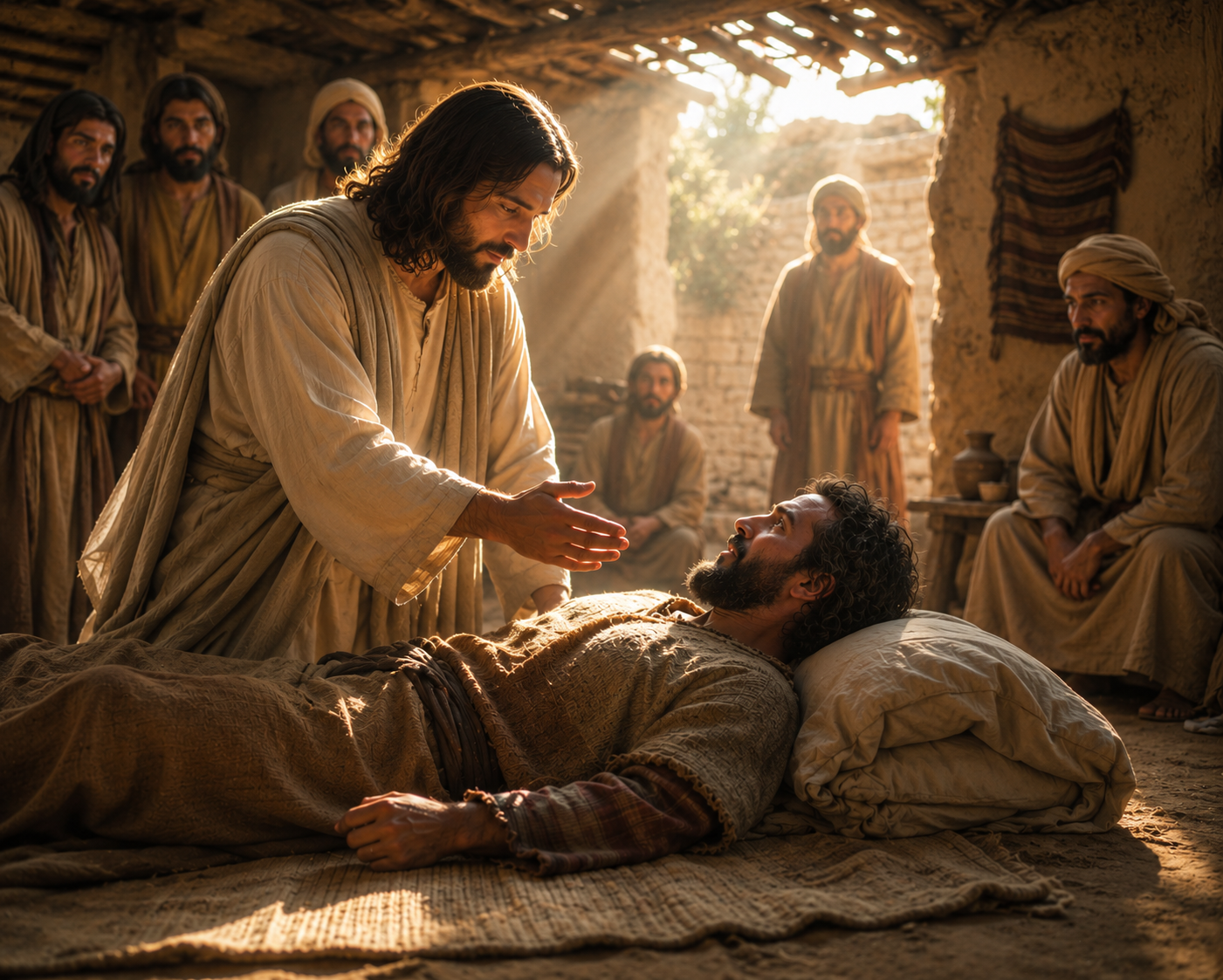
He touched her hand and the fever left her,
and she got up and began to wait on him.


When evening came,
many who were demon-possessed
were brought to him,
and he drove out the spirits with a word
and healed all the sick.

This was to fulfill what was spoken
through the prophet Isaiah:


“He took up our infirmities
    and bore our diseases.”

(Matthew 8:14-17).

* * *

Dear children,
let us not love with words or speech
but with actions and in truth.

(1 John 3:18 NIV)

Para la publicación de Salmos 365 de hoy en español haga clic aquí.

bgbg_v4.3_1501818
* NEW INTERNATIONAL VERSION, COPYRIGHT ©1973, 1978, 1984, 2011 BY BIBLICA

Pray for peace in Israel, Iran and the Middle East
and continue to pray for peace to return
to Ukraine and Russia!

Volume I of Psalms 365: Develop a Life of Worship and Prayer won the Best Book of the Year Award from The Word Guild and Volume II has won the Best Devotional of the Year Award. For those who love God’s word, this three-book series is an ideal way to daily meet with the Lord. To purchase or for a closer look click here.

New from David Kitz.

To view further details or purchase click here.
← Older posts
Newer posts →

Psalms 365: Develop a Life of Worship & Prayer

Psalms 365 Volume II

Psalms 365 vol 3
— Psalms 365 Volume III

Now available:

Psalms

Recent posts

  • God’s Mysterious Choice    July 1, 2026
  • The Parable of the Two Sons June 30, 2026
  • God’s Wrath is Real June 30, 2026
  • The Authority of Jesus Questioned June 29, 2026
  • A Fig Leaf of Self-Righteousness June 29, 2026
  • To the Twelve Tribes Scattered among the Nations June 28, 2026
  • Good Listening June 27, 2026

Calendar

July 2026
M T W T F S S
 12345
6789101112
13141516171819
20212223242526
2728293031  
« Jun    

Blog Posts

Enter your email address to follow this blog and receive notifications of new posts by email.

Comments

  • pastorpete51 on God’s Wrath is Real
  • 777joyce on Miracle-Working Power
  • cjsmissionaryminister on Jesus Heals a Demon-Possessed Boy

Blog at WordPress.com.

Privacy & Cookies: This site uses cookies. By continuing to use this website, you agree to their use.
To find out more, including how to control cookies, see here: Cookie Policy
  • Subscribe Subscribed
    • I love the Psalms
    • Join 1,355 other subscribers
    • Already have a WordPress.com account? Log in now.
    • I love the Psalms
    • Subscribe Subscribed
    • Sign up
    • Log in
    • Report this content
    • View site in Reader
    • Manage subscriptions
    • Collapse this bar

Loading Comments...