
• Home
  • About
  • DavidKitz.ca
  • Youtube Videos
  • Books by David
  • Books on Amazon.com

I love the Psalms

~ Connecting daily with God through the Psalms

I love the Psalms

Author Archives: davidkitz

The LORD Who Rescued Me

28 Thursday Aug 2025

Posted by davidkitz in Psalm 138

≈ Leave a comment

Tags

answered prayer, Bible, courage, David, Prayer, Psalms, the LORD

Today’s quote and prayer from
“Psalms 365: Develop a Life of Worship and Prayer”
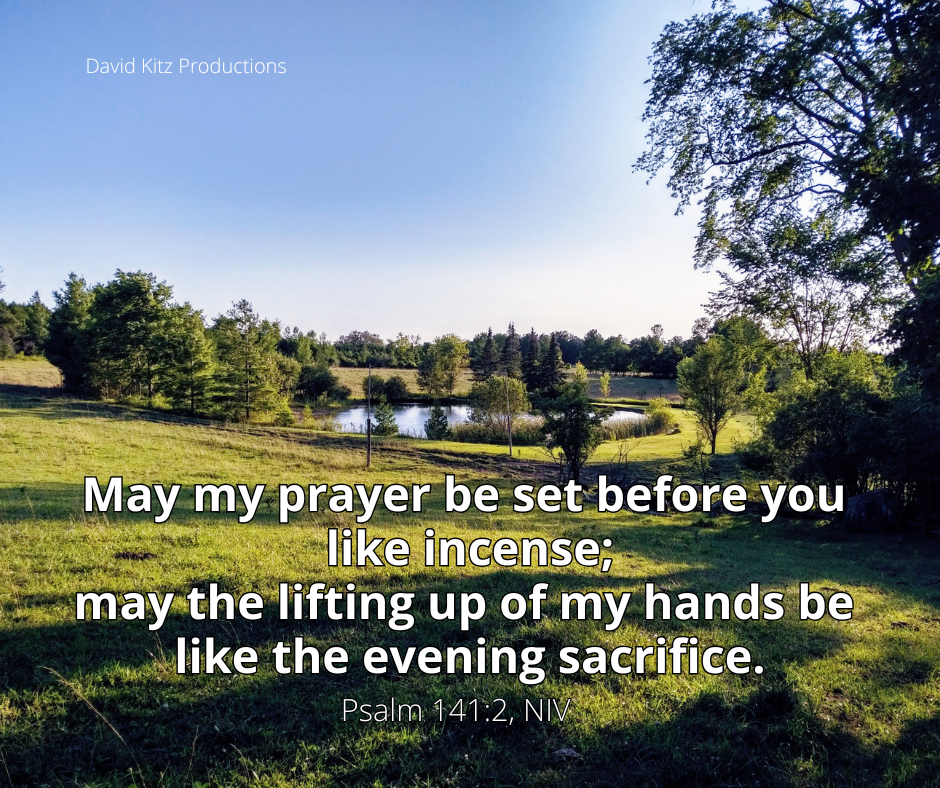
Today’s Reading: Psalm 138:1-5

LORD God,
I praise you
for your unfailing love and your faithfulness.
Thank you for answering my prayers.
You give me courage,
and like David,
you greatly emboldened me
to carry on.
Amen.

— — — —
 
David said to Saul,
“Let no one lose heart on account of this Philistine;
your servant will go and fight him.”

Saul replied,
“You are not able to go out
against this Philistine and fight him;
you are only a young man,
and he has been a warrior from his youth.”

But David said to Saul,
“Your servant has been keeping his father’s sheep.
When a lion or a bear came
and carried off a sheep from the flock,
 
I went after it,
struck it and rescued the sheep from its mouth.
When it turned on me,
I seized it by its hair,
struck it and killed it.
 
Your servant has killed
both the lion and the bear;
this uncircumcised Philistine will be like one of them,
because he has defied the armies of the living God.
 
The LORD who rescued me
from the paw of the lion
and the paw of the bear
will rescue me from the hand of this Philistine.”

Saul said to David,
“Go, and the LORD be with you.”
(1 Samuel 17:38-41 NIV)*

Para la publicación de Salmos 365 de hoy en español haga clic aquí.

bgbg_v4.3_1501818
* NEW INTERNATIONAL VERSION, COPYRIGHT ©1973, 1978, 1984, 2011 BY BIBLICA

Please pray for peace to return to Israel, Gaza, Iran, and Ukraine!

Volume I of Psalms 365: Develop a Life of Worship and Prayer won the Best Book of the Year Award from The Word Guild and Volume II has won the Best Devotional of the Year Award. For those who love God’s word, this three-book series is an ideal way to daily meet with the Lord. To purchase or for a closer look click here.
A gripping read from David Kitz.
Is a return-to-Jesus revival possible in our time?
This book points the way forward.

Is Your God too Small?

28 Thursday Aug 2025

Posted by davidkitz in Psalm 138

≈ Leave a comment

Tags

Bible, David, devotion, First Commandment, God's creation, infinite power and glory, Jesus, Prayer, Psalms, the LORD

Reading: Psalm 138:1-5

Of David
I will praise you, LORD, with all my heart;
    before the “gods” I will sing your praise.
I will bow down toward your holy temple
    and will praise your name
    for your unfailing love and your faithfulness,
for you have so exalted your solemn decree
    that it surpasses your fame.
When I called, you answered me;
    you greatly emboldened me.
May all the kings of the earth praise you, LORD,
    when they hear what you have decree
May they sing of the ways of the L
ORD,
    for the glory of the L
ORD is great (NIV) *

Algonquin Park — photo by L. Kranz.

Reflection
David was wholehearted in all that he did, so it should not surprise us that he begins Psalm 138 with this assertion: I will praise you, LORD, with all my heart; before the “gods” I will sing your praise (v. 1).

David, the shepherd king, wasn’t shy or reticent about offering praise to the LORD. He knew his God and was quick to give Him praise. He would even praise the LORD before foreign gods. Elsewhere in the psalms we see this declaration: For great is the LORD and most worthy of praise; he is to be feared above all gods. For all the gods of the nations are idols, but the LORD made the heavens (Psalm 96:4-5).

During David’s time each nation had its own national god. These national gods were represented by carved idols of wood, metal or stone. But Israel had no idol. They were strictly forbidden to make any image or likeness of the LORD (Yahweh). See the First Commandment, Exodus 20:3-6. This prohibition set Israel apart. They were the people with no visible god.

But why settle for a visible god, when you can have the invisible God who fills the entire universe? Why settle for a national god, when you can have the LORD who created the heavens and the earth? Inevitably, if we fashion our own god, we will create a god who is far too small. The true God is far bigger, far wiser, and far more just, and compassionate than we can ever imagine. How can we as finite creatures begin to fathom the infinite power and glory of God?

By His great mercy the LORD reveals Himself to us. He does that best through His Son. The Son is the image of the invisible God, the firstborn over all creation (Colossians 1:15). Jesus helps make the infinite God comprehensible to us, so we can join with David’s anthem of praise. May all the kings of the earth praise you, LORD, when they hear what you have decreed. May they sing of the ways of the LORD, for the glory of the LORD is great (v. 4-5).

Response: LORD God, I praise you for your unfailing love and your faithfulness. Thank you for answering my prayers. You give me courage, and like David, you greatly emboldened me to carry on. Amen.

Your Turn: How big is your God? Is He bigger than your problems—bigger than your doubts?

Para la publicación de Salmos 365 de hoy en español haga clic aquí.

bgbg_v4.3_1501818
* NEW INTERNATIONAL VERSION, COPYRIGHT ©1973, 1978, 1984, 2011 BY BIBLICA


Please pray for peace to return to Israel, Gaza, and Ukraine!

Volume I of Psalms 365: Develop a Life of Worship and Prayer won the Best Book of the Year Award from The Word Guild and Volume II has won the Best Devotional of the Year Award. For those who love God’s word, this three-book series is an ideal way to daily meet with the Lord. To purchase or for a closer look click here.

A gripping read from David Kitz.
Is a return-to-Jesus revival possible in our time?
This book points the way forward.
For details click here.

Live in Harmony

27 Wednesday Aug 2025

Posted by davidkitz in Psalm 137, Psalms

≈ 2 Comments

Tags

Bible, bless, compassion, Father God, mercy of God, mourn, Prayer, Psalms, rejoice, Schadenfreude

Today’s quote and prayer from
“Psalms 365: Develop a Life of Worship and Prayer”

Photo courtesy of L. Foster


Today’s Reading: Psalm 137:7-9

Father God,
at times I have been guilty of schadenfreude.
Help me to show compassion
rather than smug indifference
when I see others experience loss.
Thank you for your ongoing mercy.
Amen.

— — — —

Bless those who persecute you;
bless and do not curse.
 
Rejoice with those who rejoice;
mourn with those who mourn.
 
Live in harmony with one another.
Do not be proud,
but be willing to associate
with people of low position.
Do not be conceited.

(Romans 12:14-16 NIV
)*

Para la publicación de Salmos 365 de hoy en español haga clic aquí.

bgbg_v4.3_1501818
* NEW INTERNATIONAL VERSION, COPYRIGHT ©1973, 1978, 1984, 2011 BY BIBLICA

Please pray for peace to return to Israel, Gaza, Iran, and Ukraine!

Volume I of Psalms 365: Develop a Life of Worship and Prayer won the Best Book of the Year Award from The Word Guild and Volume II has won the Best Devotional of the Year Award. For those who love God’s word, this three-book series is an ideal way to daily meet with the Lord. To purchase or for a closer look click here.

A gripping read from David Kitz.
Is a return-to-Jesus revival possible in our time?
This book points the way forward.

Spared by the Grace of God

27 Wednesday Aug 2025

Posted by davidkitz in Psalm 137

≈ Leave a comment

Tags

Bible, compassion, destruction of Jerusalem, devotion, Esau, grace of God, mercy, Prayer, pride, Psalms, Schadenfreude, the LORD

Reading: Psalm 137:7-9

Remember, LORD, what the Edomites did
on the day Jerusalem fell.
“Tear it down,” they cried,
“tear it down to its foundations!”
Daughter Babylon, doomed to destruction,
happy is the one who repays you
according to what you have done to us.
Happy is the one who seizes your infants
and dashes them against the rocks
(NIV). *

Reflection
German is a fascinating language. It’s a language that seems to specialize in compound words—short words that are combined to form longer words. Some English language examples of compound words are homerun, overcoat and windshield.

Schadenfreude is a compound German word. It’s such a useful and descriptive word that it has migrated into the English language, and it can be found in any quality English dictionary. Schaden means harm or damage. Freude means joy. Simply put schadenfreude means joy experienced at another person’s expense—rejoicing in someone else’s suffering or loss.

Today’s reading from Psalm 137 is all about schadenfreude. The Edomites celebrated the destruction of Jerusalem. Rather than mourn over their neighbor’s calamity, they joined in calling for the destruction of the Jewish capital.

This manifestation of schadenfreude was rooted in centuries of fraternal rivalry and envy. The Edomites were the descendants of Esau, while the people of Jerusalem were the descendants of Jacob. These two people groups were linked by heredity, language, and culture, and yet generation after generation they continued this brothers’ feud.

This psalm is not the only biblical counsel for us to avoid rejoicing in other people’s harm: Do not gloat when your enemy falls; when they stumble do not let your heart rejoice, or the LORD will see and disapprove and turn his wrath away from them (Proverbs 24:17-18).

If the LORD is punishing the evildoer, we should not appear too smug. We are spared by the grace of God and not by our moral superiority. The self-righteous suffer from delusions of pride. It’s best not to identify with that camp. The opposite response is called for. Rather than crowing over someone else’s misfortune, we should be offering help or drawing lessons on how to avoid a similar calamity.

When I see others experiencing calamity, I need to replace my schadenfreude with the genuine joy found in extending mercy, grace and compassion.

Response: LORD God, at times I have been guilty of schadenfreude. Help me to show compassion rather than smug indifference when I see others experience loss. Thank you for your ongoing mercy. Amen.

Your Turn: Have you experienced schadenfreude? How do you keep it in check?

Para la publicación de Salmos 365 de hoy en español haga clic aquí.

bgbg_v4.3_1501818
* NEW INTERNATIONAL VERSION, COPYRIGHT ©1973, 1978, 1984, 2011 BY BIBLICA

Please pray for peace to return to Israel, Gaza, and Ukraine!

Volume I of Psalms 365: Develop a Life of Worship and Prayer won the Best Book of the Year Award from The Word Guild and Volume II has won the Best Devotional of the Year Award. For those who love God’s word, this three-book series is an ideal way to daily meet with the Lord. To purchase or for a closer look click here.

A gripping read from David Kitz.
Is a return-to-Jesus revival possible in our time?
This book points the way forward.
For details click here.

This Corrupt Generation

26 Tuesday Aug 2025

Posted by davidkitz in Psalm 137

≈ Leave a comment

Tags

baptized, Bible, forgiveness of sins, God, Holy Spirit, Jesus, message, Peter, Prayer, Psalms, repent, the LORD

Today’s quote and prayer from
“Psalms 365: Develop a Life of Worship and Prayer”

Today’s Reading: Psalm 137:1-6

Father God,
 I don’t want to learn things
the hard way.
I want to be quick to obey you.
Help us all to learn from the lessons of history.
You are the one, true God.
I worship you.
Amen.

— — — —
 
 Peter replied,
“Repent and be baptized,
every one of you,
in the name of Jesus Christ
for the forgiveness of your sins.
And you will receive the gift of the Holy Spirit.
 
The promise is for you and your children
and for all who are far off—
for all whom the Lord our God will call.”

With many other words he warned them;
and he pleaded with them,
“Save yourselves from this corrupt generation.”
 
Those who accepted his message were baptized,
and about three thousand
were added to their number that day.
(Acts 2:38-41 NIV)*

Para la publicación de Salmos 365 de hoy en español haga clic aquí.

bgbg_v4.3_1501818
* NEW INTERNATIONAL VERSION, COPYRIGHT ©1973, 1978, 1984, 2011 BY BIBLICA

Please pray for peace to return to Israel, Gaza, Iran, and Ukraine!

Volume I of Psalms 365: Develop a Life of Worship and Prayer won the Best Book of the Year Award from The Word Guild and Volume II has won the Best Devotional of the Year Award. For those who love God’s word, this three-book series is an ideal way to daily meet with the Lord. To purchase or for a closer look click here.

A gripping read from David Kitz.
Is a return-to-Jesus revival possible in our time?
This book points the way forward.

A Lament for Jerusalem

26 Tuesday Aug 2025

Posted by davidkitz in Psalm 137

≈ Leave a comment

Tags

Babylon, Babylonian exile, Bible, destruction of Jerusalem, devotion, God, idolatry, Jerusalem, judgment, mercy of God, Psalms, repentance, Ten Commandments, Zion

Reading: Psalm 137:1-6

By the rivers of Babylon we sat and wept
when we remembered Zion.
There on the poplars we hung our harps,
 for there our captors asked us for songs,
our tormentors demanded songs of joy;
they said, “Sing us one of the songs of Zion!”
How can we sing the songs of the LORD
while in a foreign land?
If I forget you, Jerusalem,
may my right hand forget its skill.
May my tongue cling to the roof of my mouth
if I do not remember you,
if I do not consider Jerusalem my highest joy
(NIV) *

Reflection
It’s difficult to pinpoint the time in history when many of the Psalms were written. Many scholars believe that the Old Testament was compiled over a period of about 900 to 1,000 years. As for the Book of Psalms, there is considerable evidence to suggest that psalms were collected from three distinct periods: the reign of King David (1 Chronicles 23:5), the rule of Hezekiah (2 Chronicles 29:30), and during the leadership of Ezra and Nehemiah (Nehemiah 12:24).[1]

Psalm 137 is distinct, because we can tell from its content that this psalm was written early during the period of the Babylonian exile. Memories of Nebuchadnezzar’s destruction of Jerusalem in 586 BC were still fresh—etched with bitterness and pain in the mind of the author.

There are two great pivot points in the history of Old Testament Israel. The first is the liberation of Israel from Egypt and the subsequent conquest of the holy land. The second is the destruction of Jerusalem and the temple, which was followed by the seventy-year exile in Babylon. The mercy and power of God brought about the first pivotal event. The disobedience and idolatry of man set in motion the catastrophe of the second event.

From its inception the Jewish nation flirted with idolatry. While Moses was receiving the Ten Commandments, the people were reveling before a golden calf. King Solomon set up idols in Jerusalem so his foreign wives could worship their gods. See 1 Kings 11:1-8. This duplicity continued generation after generation until the Babylonians swept in and destroyed Jerusalem. Harsh judgment brought change. Will harsh judgment bring change in us, or will the mercy of God bring us to repentance?

Response: Father God, I don’t want to learn things the hard way. I want to be quick to obey you. Help me to learn from the lessons of history. You are the one, true God. I worship you. Amen.

Your Turn: How faithful are you to the LORD? Do other interests draw you away?

[1] K.R. “Dick” Iverson, Spirit Filled Life Bible, New King James Version, Jack W. Hayford, General Editor, Thomas Nelson Publishers, Nashville, TN, 1991, p. 750.

Para la publicación de Salmos 365 de hoy en español haga clic aquí.

bgbg_v4.3_1501818
* NEW INTERNATIONAL VERSION, COPYRIGHT ©1973, 1978, 1984, 2011 BY BIBLICA


Please pray for peace to return to Israel, Gaza, and Ukraine!

Volume I of Psalms 365: Develop a Life of Worship and Prayer won the Best Book of the Year Award from The Word Guild and Volume II has won the Best Devotional of the Year Award. For those who love God’s word, this three-book series is an ideal way to daily meet with the Lord. To purchase or for a closer look click here.

A gripping read from David Kitz.
Is a return-to-Jesus revival possible in our time?
This book points the way forward.

For details click here.

We Have Never Seen Anything Like This!

25 Monday Aug 2025

Posted by davidkitz in Psalm 136, Psalms

≈ Leave a comment

Tags

authority, Bible, faith, forgiveness of sins, God, healing, Jesus, praise, Prayer, Psalms

Today’s quote and prayer from
“Psalms 365: Develop a Life of Worship and Prayer”
by David Kitz

Reading: Psalm 136:17-26

Father God,
I admit my need for Jesus,
your Son,
my Savior.
I need his love, 
and his forgiveness.
His love endures forever. 
Amen.

— — — —
 
A few days later,
when Jesus again entered Capernaum,
the people heard that he had come home.
 
They gathered in such large numbers 
that there was no room left,
not even outside the door,
and he preached the word to them.
 
Some men came,
bringing to him a paralyzed man, 
carried by four of them.
 
Since they could not get him to Jesus
because of the crowd,
they made an opening in the roof above Jesus
by digging through it
and then lowered the mat the man was lying on.
 
When Jesus saw their faith,
he said to the paralyzed man, 
“Son, your sins are forgiven.”

Now some teachers of the law were sitting there,
thinking to themselves,
 
“Why does this fellow talk like that?
He’s blaspheming!
Who can forgive sins but God alone?”

Immediately Jesus knew in his spirit
that this was what they were thinking in their hearts,
and he said to them, 
“Why are you thinking these things?
 
Which is easier: to say to this paralyzed man,
‘Your sins are forgiven,’
or to say,
‘Get up, take your mat and walk’?
 
But I want you to know
that the Son of Man 
has authority on earth to forgive sins.” 
So he said to the man,
 
“I tell you, get up, take your mat and go home.”
 
He got up,
took his mat
and walked out in full view of them all.
This amazed everyone and they praised God, saying,
“We have never seen anything like this!”

(Mark 2:1-12 NIV
)*

Para la publicación de Salmos 365 de hoy en español haga clic aquí.

bgbg_v4.3_1501818
* NEW INTERNATIONAL VERSION, COPYRIGHT ©1973, 1978, 1984, 2011 BY BIBLICA

Please pray for peace to return to Israel, Gaza, Iran, and Ukraine!

Volume I of Psalms 365: Develop a Life of Worship and Prayer won the Best Book of the Year Award from The Word Guild and Volume II has won the Best Devotional of the Year Award. For those who love God’s word, this three-book series is an ideal way to daily meet with the Lord. To purchase or for a closer look click here.

A gripping read from David Kitz.
Is a return-to-Jesus revival possible in our time?
This book points the way forward.

A Secret Addiction

25 Monday Aug 2025

Posted by davidkitz in Psalm 136

≈ Leave a comment

Tags

addiction, Bible, church, confess, devotion, his love endures forever, Jesus, Prayer, pride, rescue from sin and death, Savior, trust in Christ, turning to God

Reading: Psalm 136:17-26

to him who struck down great kings,
His love endures forever.
and killed mighty kings—
His love endures forever.
Sihon king of the Amorites
His love endures forever.
and Og king of Bashan—
His love endures forever.
and gave their land as an inheritance,
His love endures forever.
an inheritance to his servant Israel.
His love endures forever.
He remembered us in our low estate
His love endures forever.
and freed us from our enemies.
His love endures forever.
He gives food to every creature.
His love endures forever.
Give thanks to the God of heaven.
His love endures forever (NIV). *

Reflection
In recent months I have transitioned from attending an established church to involvement in a new church plant. In many respects the change has been refreshing. This new church has a clear focus on reaching the lost in our city, specifically those who are trapped in addictions. Almost weekly new converts are coming forward to put their trust in Christ. The church itself is a place of transition, as deadly habits are broken, and the healing power of Jesus is applied to long festering inner wounds.

So how does this connect with our reading from Psalm 136? In his description of Israel, the psalmist makes this statement: He remembered us in our low estate… and freed us from our enemies (v. 24-25).

We serve a God who rescues us at our lowest point, in our low estate. In our foolish pride, we would never turn to God. But when we hit bottom—when there is no way forward, but up—then we turn to the Lord. You see, Christ has been patiently waiting for us to acknowledge our need. But Jesus doesn’t rescue the proud. He doesn’t save those who see no need for salvation. He only comes to the humble—those who admit they need a lift from the hole they find themselves in.

Sadly, there are many who sit in fine churches that have never discovered their low estate. Actually, they have become experts at hiding it. We all have a secret addiction to sin. Even St. Paul wrote, “For I do not do the good I want to do, but the evil I do not want to do—this I keep on doing” (Romans 7:19). The only one who can turn us around is Jesus, our Savior. See Romans 7:25.

Response: Father God, I admit my need for Jesus, your Son, my Savior. His love endures forever. Amen.

Your Turn: Why do we hide our sins rather than confess them? Does pride hold you back?

Para la publicación de Salmos 365 de hoy en español haga clic aquí.

bgbg_v4.3_1501818
* NEW INTERNATIONAL VERSION, COPYRIGHT ©1973, 1978, 1984, 2011 BY BIBLICA


Please pray for peace to return to Israel, Gaza, and Ukraine!

Volume I of Psalms 365: Develop a Life of Worship and Prayer won the Best Book of the Year Award from The Word Guild and Volume II has won the Best Devotional of the Year Award. For those who love God’s word, this three-book series is an ideal way to daily meet with the Lord. To purchase or for a closer look click here.

A gripping read from David Kitz.
Is a return-to-Jesus revival possible in our time?
This book points the way forward.

For details click here.


With Shouts of Joy

24 Sunday Aug 2025

Posted by davidkitz in Psalm 105, Psalms

≈ 1 Comment

Tags

Abraham, Bible, bread of heaven, God's promises, holy, praise, praise the LORD, Prayer, Psalms, the LORD

I will praise the LORD!

Psalm 105:39-45

He spread out a cloud as a covering,
    and a fire to give light at night.
They asked, and he brought them quail;
    he fed them well with the bread of heaven.
He opened the rock, and water gushed out;
    it flowed like a river in the desert.
For he remembered his holy promise
    given to his servant Abraham.
He brought out his people with rejoicing,
    his chosen ones with shouts of joy;
he gave them the lands of the nations,
    and they fell heir to what others had toiled for—
that they might keep his precepts
    and observe his laws.
Praise the LORD. *

Para la publicación de Salmos 365 de hoy en español haga clic aquí.

bgbg_v4.3_1501818
* NEW INTERNATIONAL VERSION, COPYRIGHT ©1973, 1978, 1984, 2011 BY BIBLICA

Please pray for peace to return to Israel, Gaza, and Ukraine!

Volume I of Psalms 365: Develop a Life of Worship and Prayer won the Best Book of the Year Award from The Word Guild and Volume II has won the Best Devotional of the Year Award. For those who love God’s word, this three-book series is an ideal way to daily meet with the Lord. To purchase or for a closer look click here.

A gripping read from David Kitz.
Is a return-to-Jesus revival possible in our time?
This book points the way forward.
For details click here.

Filled with Laughter

24 Sunday Aug 2025

Posted by davidkitz in Psalm 126, Psalms

≈ Leave a comment

Tags

churches, faith, fortunes, harvest, Holy Spirit, Jesus, Jesus People, joy, lost generation, Prayer, Psalms, restoration, revival, the LORD, word of God, Zion

Psalm 126

A Song of Ascents

When the LORD brought back the captives to Zion,
we were like men who dreamed.
Our mouths were filled with laughter,
our tongues with songs of joy.
Then it was said among the nations,
“The LORD has done great things for them.”
The LORD has done great things for us,
and we are filled with joy.

Restore our fortunes, O LORD,
like streams in the Negev.
Those who sow in tears will reap with songs of joy.
He who goes out weeping,
carrying seed to sow,
will return with songs of joy,
carrying sheaves with him.

I cannot read this psalm—Psalm 126—without immediately identifying with it. I have lived this psalm; I have experienced the reality of it.

Now that’s a rather bold statement; some might call it an ignorant or arrogant statement. The historical context of this psalm is readily identifiable. The psalmist is commenting on the joyous return of the exiles following the seventy-year Babylonian captivity—an event that occurred in the sixth century before the birth of Christ. How could anyone alive today claim that they have lived or experienced this particular Psalm? None of us were present during these dramatic events in Jewish history.

But again, I repeat: I have lived this psalm; I have experienced the reality of it.

The whole premise of this book is built on the notion that the psalms can come alive within us. The writer of the Book of Hebrews reminds us that “the word of God is living and active (Hebrews 4:12).

Photo by L. Kranz

What is there then, to prevent this living word from coming alive within us? Why can we not experience this active word of God transforming and transporting us to the throne of grace? Only two things hinder us from living in the power and wonder of the word of God, and they are sin and unbelief. And sin and unbelief are only too eager to form within us, a constricting bond that smothers the Spirit empowered Word.

But when the power of sin is broken, and unbelief is purged from the doubting soul—oh what liberty awaits! The word of God comes alive within us. The LORD is then free to do great and glorious things in us, and through us.

That was my experience as a young man in the early 1970’s. The LORD was bringing back the captives to Zion, “and we were like men who dreamed. Our mouths were filled with laughter, our tongues with songs of joy.”

I was caught up in the vortex of the Jesus People movement of that time, and amazing things were happening. Young men and women were coming to faith in Christ at a phenomenal rate. At every church meeting newcomers were finding the forgiveness they needed. The prodigals were coming home in droves. Every gathering closed with a baptismal service as new believers affirmed their faith in the crucified and risen Christ. There was a heady infectious joy in the church that could not be contained.   

At that time, “Our mouths were filled with laughter, our tongues with songs of joy.”

The spontaneity of the worship experience during those days was truly astonishing. New songs were born—born by the Spirit—right within the corporate worship time. Many of them came directly from the scriptures. The psalms became the source book for our worship. The captives—captives of sin and Satan—had been set free, and now there was a new song in our hearts, and on our lips—a song of praise to our God. We could not keep this to ourselves. Who could possibly contain the overflowing goodness and mercy of God?

This ingathering of souls was God’s doing. A lost generation was arrested by the Almighty. He was turning us around, and we were discovering Jesus. And this move of the Holy Spirit did not begin in the church. No, it began in the flop houses and hippy communes. It started on the street—in the world—the sin-saturated world. It did not start with saintly scholars and philosophers, but rather with the young and restless, the hitchhikers and misfits. God was calling them to Himself, and He was miraculously transforming lives as only can God do.

Because this new thing that God was doing started in the world, many Christians were suspicious of it. Could this really be God? Many churches stood aloof. But those who welcomed these misfits found themselves overwhelmed and transformed by what God was doing. He had initiated this, and He stood at the center of it.

Soon the Jesus’ movement was affecting the entire youth culture. Amazing Grace became the number one hit on top forty radio. A half dozen hit songs spoke of the man from Galilee. Time magazine ran a cover story on how the youth across the continent were discovering Jesus. Suddenly, it was cool to love Jesus and to follow him.

And I was a frontline witness to all this. I was seeing lives changed all around me. Close friends, who were far from God, suddenly were having life altering encounters with Jesus. We were like men who dreamed. And in that dream Jesus had come to live among us. His long flowing hair had become our own. He was with us again, just like he was with that band of fishermen on the Sea of Galilee, and the nets were full of fish—boat swamping full of fish.

“Our mouths were filled with laughter, our tongues with songs of joy. Then it was said among the nations, ‘The LORD has done great things for them.'”

The world knows when God is doing something remarkable, and the psalmist records the ancient world heard that the captive Jewish nation had been released. The exiles were free to return to their homeland, and return they did. In the early 1970’s the modern world heard that Jesus was bringing young people to himself. They too were free—set free from a load of guilt and sin, set free from addictions and hang ups—free to love and serve God with hearts washed pure by the blood of the Lamb.

“The LORD has done great things for us, and we are filled with joy!”

That was my experience—an experience that was shared by thousands of others across this continent during this remarkable time. It was the LORD’s doing. He did great things for us—things I will never forget.

But …

But there is a pause in this psalm. This is a psalm written in two distinct sections, or stanzas. In most translations, this break between stanzas is indicated by a blank line. The psalmist abruptly transitions from joyous triumph to sober petition, from exuberance to sobbing desperation. We are left wondering what happened in between. What happened in that blank line? Why this sharp transition? In bleak desolation the psalmist pleads, “Restore our fortunes, O LORD, like streams in the Negev.”

Atacama Desert, Chile — Photo credit http://www.explora.com

Streams in the Negev are intermittent. A raging torrent one day becomes a mere trickle on the next day, and then nothing on the third day. The boisterous river of joy turns into a blank line on the desert floor. Nothing—just nothing.

The Negev is the parched desert region to the south of the land of Judah. Cloud bursts there can produce these streams in the barren desert, and with the sudden arrival of this moisture, long dormant seeds spring to life. Suddenly new life abounds. But without further moisture, the scorching sun takes its toll. The harsh environment reasserts its dominance. Land that was briefly lush and verdant reverts to desert dust.

Is it any wonder then that the psalmist cries out, “Restore our fortunes, O LORD, like streams in the Negev.” The psalmist longs for the flow of new life to continue.

And right along with the psalmist I cry, “Send your river flowing through here once again. Send a cloud burst of your mercy down on this nation again. Invade this culture again. Turn our young people to Jesus, yet again. Touch this new generation. Let them find themselves walking with you, the living Christ. You did it once, Lord, and I saw it. I experienced it. Now do it again! Do it again, not for me, but for those who don’t know you. Do great things for them. Set them free from the sin and the lies that ensnare them. Touch all of us, once again!”

“Restore our fortunes, O LORD, like streams in the Negev.”

In those days, at the height of what God was doing, I saw a dozen young men line up in the freezing cold. They arrived early. They were waiting for the pastor to arrive on a Saturday night to unlock the church so they could come in and give their hearts to Jesus. I saw hundreds of young people being baptized at that same church—more than three hundred in a year—one for every day of the year. The God of the harvest was adding to the church “daily those who were being saved” (Acts 2:47).

This was not about the Holy Spirit tickling the churches’ funny bone. It was about sinners finding God. Time after time I saw the lost crowding the altar at the close of the service. They wanted Jesus, nothing more, nothing less, just Jesus.

Now, only the faithful come to the altar, if anyone comes at all.

 “Restore our fortunes, O LORD.”

 I echo the psalmist’s prayer, “Restore our fortunes, O LORD.”

Fortunately, we are provided with the promise of God’s word in tandem with the psalmist’s petition, “Those who sow in tears will reap with songs of joy.”

A field of harvest ready oats near MacNutt, SK — photo by David Kitz

If you live in a dry land, water it with your tears. If the wind of God’s Spirit is a distant memory, remember seasons change. The seed of God’s word is still viable. It is always power packed and ready to spring to life. Just add water.

“He who goes out weeping, carrying seed to sow, will return with songs of joy, carrying sheaves with him.”

God’s promise stands sure and certain, but for us, two questions remain. Are you going out weeping? And are you carrying seed to sow?

Perhaps the church in Canada has never experienced a harsher spiritual climate than that which exists today. We live in a society that by and large has turned its back on God. The gospel message is often treated with contempt or outright ridicule. The church exists in a spiritual desert. Figuratively, Canada is the Negev. Conditions in in the United States are only marginally better.

In such a harsh climate the natural inclination is to cocoon ourselves away. The world out there is inhospitable. It’s best to stay inside, to huddle amongst ourselves. Isn’t it better to cloister ourselves away, than to expose ourselves to the harsh elements and the criticism of others? Let’s circle the wagons and entertain ourselves. This has become the unspoken modus operandi for many churches.

Into our cloistered existence the psalmist speaks. He instructs us to step out of our sheltered place. He tells us to go out weeping. What a bizarre command! Weeping is for private places. Why would we want to go out into the world weeping? Yet, this is what we are encouraged to do. Could it be that we are to get out of our churches and cry? Cry over what?

How about crying over a lost generation? How about crying over the homeless, the addicted and the needy? How about crying over the devastating effects of sin, and the degradation of our youth?

One day in the late 1950’s, David Wilkerson opened a copy of Life magazine where he saw photos of young gang members in New York City. Looking into their eyes, he broke down and wept. This young pastor left the shelter of his country church to bring the gospel to the toughest gangs in New York City. He went “out weeping, carrying seed to sow” and yes, David Wilkerson returned “with songs of joy, carrying sheaves with him.” He proved that the message of the cross is more powerful than the switchblade.

God has given us His seed—the word of God—for a reason. We are to scatter it out in the world. There can be no harvest unless someone goes out and plants the seed.

Are you carrying seed to sow? Don’t just carry it into the world. Scatter it. There is no joy quite like the harvester’s joy. The harvester has worked with God, and the LORD’s joy becomes his own.

“He who goes out weeping, carrying seed to sow, will return with songs of joy, carrying sheaves with him.”

Bringing Life to the Psalms

  1. Have you experienced the joy of harvest, where new souls have been added to the Kingdom of God? What was that experience like? What role did you play? Read 1 Corinthians 3:5-9 for Paul’s perspective on planting and harvesting.
  2. What is the difference between ingathering and revival? There appears to be a place for both in the economy of God’s Kingdom. Take note of the revival that took place under the leadership of Josiah, King of Judah, as recorded in 2 Chronicles 34-35. The discovery of the Book of the Law of the LORD was a key element in this revival. In a similar way, I would contend that the release of the Good News, New Testament by the Bible Society contributed significantly to the Jesus People movement of the early 1970’s. How important is it for you to have an understandable translation of the scriptures?
  3. Are we living in a harsh spiritual climate? Is the gospel message impacting the culture in which we live, or is the culture of the world impacting the church?
  4. What are you personally doing to sow the seed of God’s word? What are some innovative ways to get the seed out into the field? What can churches do to facilitate going out with the seed of God’s word? Have you circled the wagons? Are you merely entertaining yourselves? What is the role of tears in the harvest that God wills to bring on the earth?
  5. Reread Psalm 126. What is God saying to you by His Spirit?

Today’s post is Chapter 25 from the book Psalms Alive! Connecting Heaven & Earth by David Kitz. To find out more or purchase click here.


← Older posts
Newer posts →

Psalms 365: Develop a Life of Worship and Prayer

Psalms 365 Volume II

Psalms 365 vol 3
— Psalms 365 Volume III

Psalms

Recent posts

  • Givers & Takers February 19, 2026
  • Teach Me Your Paths February 18, 2026
  • Who holds you up? February 18, 2026
  • A Lesson from the Flowers February 17, 2026
  • Do not fret February 17, 2026
  • Minds Set on Things Above February 16, 2026
  • What are the desires of your heart? February 16, 2026

Calendar

February 2026
M T W T F S S
 1
2345678
9101112131415
16171819202122
232425262728  
« Jan    

Blog Posts

Enter your email address to follow this blog and receive notifications of new posts by email.

Comments

  • davidkitz on Teach Me Your Paths
  • K.L. Hale on Teach Me Your Paths
  • davidkitz on An Unflattering View of Yourself

Blog at WordPress.com.

Privacy & Cookies: This site uses cookies. By continuing to use this website, you agree to their use.
To find out more, including how to control cookies, see here: Cookie Policy
  • Subscribe Subscribed
    • I love the Psalms
    • Join 1,385 other subscribers
    • Already have a WordPress.com account? Log in now.
    • I love the Psalms
    • Subscribe Subscribed
    • Sign up
    • Log in
    • Report this content
    • View site in Reader
    • Manage subscriptions
    • Collapse this bar
 

Loading Comments...