• Home
  • About
  • DavidKitz.ca
  • Youtube Videos
  • Books by David
  • Books on Amazon.com

I love the Psalms

~ Connecting daily with God through the Psalms

I love the Psalms

Category Archives: Psalms

Our God, the Extremist

15 Sunday Jun 2025

Posted by davidkitz in Psalms, Psalms Alive!

≈ Leave a comment

Tags

conquer, David, David and Goliath, forgiveness of sins, Jesus, knowing God, leaving a legacy, Prayer, Righteousness, stages of life, the LORD

Psalm 103:6-18

The LORD works righteousness
    and justice for all the oppressed.

He made known his ways to Moses,
    his deeds to the people of Israel:
The LORD is compassionate and gracious,
    slow to anger, abounding in love.
He will not always accuse,
    nor will he harbor his anger forever;
he does not treat us as our sins deserve
    or repay us according to our iniquities.
For as high as the heavens are above the earth,
    so great is his love for those who fear him;
as far as the east is from the west,
    so far has he removed our transgressions from us.

As a father has compassion on his children,
so the LORD has compassion on those who fear him;
for he knows how we are formed,
he remembers that we are dust.
The life of mortals is like grass,
they flourish like a flower of the field;
the wind blows over it and it is gone,
and its place remembers it no more.
But from everlasting to everlasting
the LORD’s love is with those who fear him,
and his righteousness with their children’s children—
with those who keep his covenant
and remember to obey his precepts.

It is well worth noting that Psalm 103 was written by David. David was a man of extremes; he lived life to the full. Never one to rest on his laurels—he was always up for a challenge, and if no challenge existed, he would create one for himself. He was a man’s kind of man, not easily discouraged or deterred, ready to throw himself headlong into the fray. Undoubtedly, others saw and admired these qualities in him. That’s why they gathered around him, and stuck with him through the extremes, the highs and lows of a life lived fully and unreservedly for God.

Sometimes I wonder what David would be like if we met him today—if he lived in today’s world. Into what endeavour would he throw his boundless energy? Who are the extreme men, the Davids of our time? Who are the men—or the women for that matter—who take on the Goliaths of our present world?

This gutsy determination was evident throughout David’s long and eventful life. As a young teenager, a mere scamp, David had the in-your-face audacity to take on Goliath, the towering, undefeated, Philistine champion. And this battle was no game of tiddlywinks, no computer simulation—this was mortal combat—the real thing, winner takes all, including your severed head (1 Samuel 17).

Do we have any young Davids—any teens—who with God on their side, will step out from the crowd, and risk all in the defence of faith and truth?

Later as a young man, we find David at Ziklag. After a meteoric start to his career, he has plummeted from favour. He has persevered through round after round of downward spiralling misfortune. Now at his lowest point, with his own men about to stone him, he rises above an embittered throng of naysayers and doubters. With his very life in the balance, he finds strength in the LORD his God. Then by the extraordinary grace of his God, this indefatigable David pursues his enemies. He seizes victory by the sandal straps and refuses—absolutely refuses—to let it escape over the next hill (1 Samuel 30).

Do we have any never-give-up, never-say-die Davids like that today? Or do we give up at the first sign of opposition? It takes young men of extreme faith to persevere in the face of an unrelenting foe. Have you seen a David lately?

A middle-aged David faced betrayal and heartbreak as his own son, Absalom, sought to kill him and wrench the kingdom from his faltering hands. As this grand tragedy unfolds, David humbles himself before God and his people. He flees Jerusalem barefoot, weeping and with his head covered as a sign of deep contrition (2 Samuel 15:30). The God of all mercy hears his prayers and restores the fallen king—the repentant king—to the throne. Sometimes humility takes far more courage than a strutting cocksure leader can muster. But King David—the man at the top—still knew how to humble himself. He knew how to repent.

What a stark contrast to the middle-aged barons of business, who in recent years have been hauled before the courts in disgrace. All we hear from them is deny, deny, and lie follows lie. Men are a strange lot. Once the great ego puffs itself up, it seems to be incapable of self-deflation. We cannot prick our own balloon.

Do we have any top-of-their-game Davids, who know how to humble themselves before God, and before the public, and openly repent? Upper echelon Davids like that are in extremely short supply, perhaps even extinct. Have you caught a glimpse of one?

In his old age David looked ahead. With a prophet’s eye he saw the future and he planned for a nation without him. He installed his son Solomon on the throne, but he placed the LORD at the helm of Israel, even as the LORD had always been at the helm of David’s entire life. Now in his last days, the House of God became David’s prime concern. He was not permitted to build the temple of the LORD (1 Chronicles 17). But, he made extensive preparations for it. Upon David’s death the House of God would rise. How like another descendant of David? Upon Jesus’ death, by the power of the Spirit, the Church of God would arise.

In his instructions to his son Solomon, David says,

“I have taken great pains to provide for the temple of the LORD a hundred thousand talents of gold, a million talents of silver, quantities of bronze and iron too great to be weighed, and wood and stone” (1Chronicles 22:14).

Do we have any end-of-life Davids like that today? Will you leave behind a visible legacy to the LORD’s great goodness? What preparations are you making that will honor God for generations yet to come? Remember a life lived for God never ends, and its influence never ceases.

Consider this. David is still influencing lives today—far more lives in fact, than he did three thousand years ago. And though Solomon’s temple no longer stands, David’s words—his psalms of praise to God—resound in every nation under heaven. Now that’s a legacy of faith—extreme faith!

The world needs far more faithful-to-the-LORD Davids. We need them at every stage of life. And if biblical Davids like that are in short supply in today’s world, why not decide to become one yourself? Never underestimate what God can do through a life that is wholly yielded to him. When complacency is replaced by extreme, in-touch-with-God faith, anything is possible.

Now verse by verse, let’s look at what David wrote in Psalm 103 about the wonderful God he served throughout his life. David declares, “The LORD works righteousness and justice for all the oppressed” (v. 6).

When David was oppressed by Saul, he did not give up, nor did he take vengeance into his own hands. He entrusted his fate to the LORD. And the LORD saw; he took note of his servant David. Saul falsely accused David of rebellion, but David was a faithful servant both to King Saul and to the LORD, the highest king. David waited on God and ultimately, he saw the LORD work righteousness and justice on his behalf. Saul was defeated by the Philistines and in due course, faithful David ascended to the throne.

He made known his ways to Moses, his deeds to the people of Israel (v. 7). There is a curious phraseology to this statement. It is well worth noting. Revelation is always based on relationship. My wife knows my bank account number; she has free access to my account at any time. That access is based on our relationship. Moses was shown the ways of God, but the people of Israel only saw his deeds. Moses had access to the LORD’s inner sanctum. He met regularly with God in the Tent of Meeting. He was privy to the counsel of the LORD. That relationship resulted in a far greater revelation of God’s plans and purposes.

Do you want a greater revelation of God’s plan and purpose for your life? Seek to know God better. Spend time with him. David brought the Ark of the Covenant to Jerusalem for that very reason. He wanted to be close to God, to spend time with him daily, and to praise and worship him freely. Relationship is always the wellspring of all revelation. It is while we are in God’s presence that we discover the mind of Christ. 

David certainly discovered the very nature of God. He discovered that “the LORD is compassionate and gracious, slow to anger, abounding in love” (v. 8). No sentence in the entire Bible captures the pure essence of God quite as fully as this one. It should be indelibly written on our hearts and minds. David could pen these words because he experienced them. He experienced God’s boundless grace; he was an object of the LORD’s great compassion.  

When you live life in the extreme, as David did, you are capable of both extreme failure and extreme success. You can bring down Goliath to the glory of God, and you can bring down an innocent man, Uriah the Hittite, to satisfy your selfish fleshly cravings. We are capable of both. The same testosterone fuelled spirit of conquest under girds both endeavors. One is inspired by God, the other reeks of hell’s sulphur.

Men are divinely engineered to conquer. We despise wimps. The real test is whether our conquests are directed by the Spirit of God, or by Satan working through our base desires. In God’s eyes, David was both an extreme success and an extreme failure. That’s why David needed an extreme God—extremely loving, extremely patient, and above all extremely forgiving. The LORD is an extremist.

The amazing thing about David is that he clung to God in both extremes, when he succeeded beyond his wildest dreams and when he failed spectacularly. In his success David tapped into the amazing grace of God—the supernatural enablement of the LORD. In his moral failure David found the extreme love and mercy of God.   

So it is that David could pen these words about the LORD: “He will not always accuse, nor will he harbour his anger forever; he does not treat us as our sins deserve or repay us according to our iniquities” (v. 9-10).

David, the adulterer and murderer, penned those words. The extreme sinner found the God of extreme mercy. David’s adultery with Bathsheba, and his premeditated murder of Uriah, meant that David deserved death. The Law of the LORD prescribed it. But instead, he received mercy, extreme mercy from an extreme God. He did not deserve God’s goodness; we never do. A cross on a hill makes that abundantly clear.

“For as high as the heavens are above the earth, so great is his love for those that fear him; as far as the east is from the west, so far has he removed our transgressions from us” (v. 11-12).

David, the spectacular failure, found the LORD to be spectacularly loving. And this extreme sinner needed an extremely loving and forgiving God.

How far has God removed your sins from you? In the infinity of space, east never meets west. The cleansing is complete. The sin is gone. Forgiven. Forever gone in time, space and eternity. Gone.

Totally forgiven means just that. What an extreme God!

As a father has compassion on his children, so the LORD has compassion on those who fear him; for he knows how we are formed, he remembers that we are dust. As for man, his days are like grass. He flourishes like a flower of the field; the wind blows over it and it is gone, and its place remembers it no more (v. 13-16).

There is a humble humanity to these words, a certain taste of Jesus in them. Jesus taught us to pray, “Our Father… “

Did Jesus have these words of David in mind as he taught his disciples about his heavenly Father? Did David grasp the finite nature of his own earthly life as he contemplated the magnificent infinite One? We certainly catch a glimpse of eternity in his words that follow: 

But from everlasting to everlasting the LORD’s love is with those that fear him and his righteousness with their children’s children—with those who keep his covenant and remember to obey his precepts (v. 17-18).

It is striking to note that the extreme forgiveness of the LORD does not produce a flippant nonchalant attitude toward sin. It didn’t in David, and shouldn’t in us. Just the opposite is true. The extreme love of God for humanity gives birth within us to a hunger for righteousness. On the contrary, the loved and forgiven yearn to obey the LORD of mercy.

Who would not fear and love such an extreme God? Who would not want to transfer the knowledge of this extreme LORD to the generations yet to come? I long to see my children’s children loving and obeying this extremist God.

After all, I am forgiven.

Praise the LORD!

Bringing Life to the Psalms

  1. Are you aware of any present-day Davids? Who are they? What can we learn from them?
  2. David had a life of ups and downs, but throughout he was faithful to the LORD, and he finished well. Take time to read about the close of David’s life in 1 Chronicles 28 & 29. What can you learn about finishing well from this biblical account?
  3. Psalm 103 is filled with superlatives regarding the love of God. In many ways it has its New Testament parallel in Paul’s prayer for the Ephesians. Take a moment now to read that prayer in Ephesians 3:14-21
  4. Do you want a greater revelation of God’s plan and purpose for your life? Seek to know God better. Spend time with him this week. Be purposeful in prayer, praise and worship; David was.
  5. Jesus came to announce and establish the Kingdom of God. In the first century, it burst upon the Roman world with power. Has it now turned into the Wimpdom of God? Has the church become effeminate? What can you do to make your church a place where men become Kingdom builders and true disciples of Christ?

    Today’s post is Chapter 16 from the book Psalms Alive! Connecting Heaven & Earth by David Kitz. To find out more or purchase click here.

    Happy Father’s Day!


Meditate on the Holiness of God

15 Sunday Jun 2025

Posted by davidkitz in Psalm 99, Psalms

≈ Leave a comment

Tags

Aaron, holiness, holy, holy mountain, Moses, praise the LORD, Prayer, priests, Psalms, Samuel, worship

I will praise the LORD!

Psalm 99:6-9

Moses and Aaron were among his priests,
    Samuel was among those who called on his name;
they called on the LORD
    and he answered them.
He spoke to them from the pillar of cloud;
    they kept his statutes and the decrees he gave them.
LORD our God,
    you answered them;
you were to Israel a forgiving God,
    though you punished their misdeeds.
Exalt the LORD our God
    and worship at his holy mountain,
    for the LORD our God is holy.
*

Para la publicación de Salmos 365 de hoy en español haga clic aquí.

bgbg_v4.3_1501818
* NEW INTERNATIONAL VERSION, COPYRIGHT ©1973, 1978, 1984, 2011 BY BIBLICA

Please pray for peace to return to Israel, Gaza, and Ukraine!

Volume I of Psalms 365: Develop a Life of Worship and Prayer won the Best Book of the Year Award from The Word Guild and Volume II has won the Best Devotional of the Year Award. For those who love God’s word, this three-book series is an ideal way to daily meet with the Lord. To purchase or for a closer look click here.

A gripping read from David Kitz.
Is a return-to-Jesus revival possible in our time?

This book points the way forward.
For details click here.

Living a Life of Service

13 Friday Jun 2025

Posted by davidkitz in Psalms

≈ 5 Comments

Tags

death, eternity, faith, funeral, God, gratitude, legacy, Reflection, Scripture, servanthood, service, the LORD, values

Today’s Devotion from Psalms 365 by David Kitz

Reading: Psalm 116:15-19
Precious in the sight of the LORD
is the death of his faithful servants.
Truly I am your servant, LORD;
I serve you just as my mother did;
you have freed me from my chains.
I will sacrifice a thank offering to you
and call on the name of the LORD.
I will fulfill my vows to the LORD
in the presence of all his people,
in the courts of the house of the LORD—
in your midst, Jerusalem.
Praise the LORD (NIV). *

Window of Life – photo courtesy of Donald Adam

Reflection
Funerals are fascinating occasions for a whole variety of reasons. Recently I have had an opportunity to attend a number of these end-of-life events. There is something bittersweet about most funerals—bitter due to the loss of a loved one—sweet because often fond memories are recalled.

The end of a life here on earth gives us an opportunity to reflect on the values that the deceased portrayed, and by extension it allows us to examine the values and qualities that shape our own lives. Our lives paint a portrait. What sort of portrait will it be?

Apparently, the LORD takes note when one of His own passes on from this life. Precious in the sight of the LORD is the death of his faithful servants. Truly I am your servant, LORD; I serve you just as my mother did; you have freed me from my chains (v. 15-16).

The word servant is significant in the passage above. It is repeated twice along with its verb form serve. Now here is a question for you. Who are you serving? Are you a servant of the LORD or are you serving only yourself?

Those who serve only themselves should expect few at their bedside as they draw their last breath. All too often their last days are spent in loneliness and bitter resentment—not so for those who spent their lives in the service of others and the LORD. They can expect to be surrounded by family and friends because they have poured out their lives in service. We reap what we sow, and when the Grim Reaper comes, those who have sown generously will be rewarded generously. God, Himself will be present!

Now we should note that genuine service to others is service to the Lord. In essence, Jesus said just that when in his parable of the final judgment he declared, “Truly I tell you, whatever you did for one of the least of these brothers and sisters of mine, you did for me” (Matthew 25:40).

Response: LORD, I want to serve you. Today please show me how I can be the best possible servant to you and those around me. Open my eyes to the needs of others. I want to serve with a heart filled with gratitude and joy. Amen.

Your Turn: Are you living a life of service? What does serving God mean for you?

Para la publicación de Salmos 365 de hoy en español haga clic aquí.

bgbg_v4.3_1501818
* NEW INTERNATIONAL VERSION, COPYRIGHT ©1973, 1978, 1984, 2011 BY BIBLICA

Please pray for peace to return to Israel, Gaza, and Ukraine!

Volume I of Psalms 365: Develop a Life of Worship and Prayer won the Best Book of the Year Award from The Word Guild and Volume II has won the Best Devotional of the Year Award. For those who love God’s word, this three-book series is an ideal way to daily meet with the Lord. To purchase or for a closer look click here.

A gripping read from David Kitz.
Is a return-to-Jesus revival possible in our time?
This book points the way forward.
For details click here.

The cost of Salvation

12 Thursday Jun 2025

Posted by davidkitz in Psalms

≈ Leave a comment

Tags

communion, faith, grace, Jesus, redemption, Reflection, resurrection, sacrifice, salvation, thanksgiving

Today’s Devotion from Psalms 365 by David Kitz

Reading: Psalm 116:10-14
I trusted in the LORD when I said,
“I am greatly afflicted”;
in my alarm I said, “Everyone is a liar.”
What shall I return to the LORD
for all his goodness to me?
I will lift up the cup of salvation
and call on the name of the LORD.
I will fulfill my vows to the LORD
in the presence of all his people (NIV). *

Reflection
Today started a bit different. Rather than beginning my day with a hot cup of coffee, I had a few sips of water and then headed off for some blood tests. I missed that cup of coffee, but in reality going without it was no great hardship. Some view their morning shot of caffeine like a cup of salvation—early morning salvation. Today’s reading from Psalm 116 speaks of the cup of salvation. I’m sure the psalmist wasn’t speaking of his morning cup of java. What was he speaking of?

The psalmist lifts up the cup of salvation and calls on the name of the LORD in response to this question: What shall I return to the LORD for all his goodness to me? (v. 12) The psalmist lifts up his cup as an expression of thanksgiving to the LORD for the salvation he has received from God.

But salvation came at a price. To purchase our salvation, Jesus lifted a cup and brought it to his lips. It was a cup of unimaginable suffering. In the Garden of Gethsemane he prayed, “Father, if you are willing, take this cup from me; yet not my will, but yours be done” (Luke 22:42). He was referring to the anguish he would endure. In the hours that followed, Jesus drained that cup of suffering dry, even as his body was drained of blood on a cruel Roman cross.

In the great plan of redemption, Jesus’ cup of suffering became for us a cup of salvation. He drank it down to save us from the cruel consequences of our sin. Jesus assumed the full penalty of our disobedience, rebellion, and devious ways. But now by faith, we can become active recipients of the salvation he won on our behalf.

The next time you bring the communion cup to your lips you are remembering—acknowledging in a tangible way—that Jesus’ blood was shed for you. Salvation came through a cup of suffering. We can rejoice in that truth because early on a Sunday morning, Jesus’ dead body was jolted back to life. He was resurrected by the power of the Father, and one day the body of every believer will be resurrected too. In that moment we will experience the fullness of our salvation.

Tomorrow morning, I’ll return to my usual routine, and I’ll enjoy my hot cup of coffee. But the cup I savour most is the cup the Lord provides—the cup of salvation.

Response: Lord Jesus, I thank you for your sacrifice. You gave yourself fully for me. On a crude wooden cross, you purchased my salvation. Today, help me fulfill my vows to the LORD. Amen.

Your Turn: Which cup do you appreciate most? How can you show your appreciation for the cup of salvation?

Para la publicación de Salmos 365 de hoy en español haga clic aquí.

bgbg_v4.3_1501818
* NEW INTERNATIONAL VERSION, COPYRIGHT ©1973, 1978, 1984, 2011 BY BIBLICA

Please pray for peace to return to Israel, Gaza, and Ukraine!

Volume I of Psalms 365: Develop a Life of Worship and Prayer won the Best Book of the Year Award from The Word Guild and Volume II has won the Best Devotional of the Year Award. For those who love God’s word, this three-book series is an ideal way to daily meet with the Lord. To purchase or for a closer look click here.

A gripping read from David Kitz.
Is a return-to-Jesus revival possible in our time?
This book points the way forward.
For details click here.

Surviving Crisis Through Faith

11 Wednesday Jun 2025

Posted by davidkitz in Psalms

≈ 2 Comments

Tags

deliverance, faith, gratitude, healing, mercy, Prayer, Reflection, restoration, survival, testimony

Today’s Devotion from Psalms 365 by David Kitz

Reading: Psalm 116:1-9
I love the LORD, for he heard my voice;
he heard my cry for mercy.
Because he turned his ear to me,
I will call on him as long as I live.
The cords of death entangled me,
the anguish of the grave came over me;
I was overcome by distress and sorrow.
Then I called on the name of the LORD:
“LORD, save me!”
The LORD is gracious and righteous;
our God is full of compassion.
The LORD protects the unwary;
when I was brought low, he saved me.
Return to your rest, my soul,
for the LORD has been good to you.
For you, LORD, have delivered me from death,
my eyes from tears, my feet from stumbling,
that I may walk before the LORD
in the land of the living (NIV). *

David Kitz

Reflection
Five years ago, on a personal level I experienced the power and truth of the following words: For you, LORD, have delivered me from death, my eyes from tears, my feet from stumbling, that I may walk before the LORD in the land of the living (v. 8-9).

When I was seventeen, during a routine physical exam required for college entry, I was informed I had a heart murmur. Years later when I talked with other doctors, I was told my leaky heart valve was barely perceptible—not a big deal. Well, it was no big deal until I collapsed while sitting at my desk on the morning of July 16th, 2020. Suddenly, I felt incredibly weak. I dropped to the floor with my head between my knees. I tried desperately to remain conscious.

Moments earlier my wife had driven off to do some errands. I had visions of her returning to find me dead on the floor. Frantic I reached for my phone. Dialed. Ring. Ring. Ring. Prayed for her to pick up.

She answered. In minutes she was home. An ambulance arrived and half-conscious I was whisked off to hospital.

For the next eight days I teetered on the brink of death. Then, in the early months of the COVID pandemic, I had open-heart-triple-valve-repair surgery. It saved my life. Along with my wife I can rejoice and say, “You, LORD, have delivered me from death, my eyes from tears, my feet from stumbling.”

Response: Father God, I love you LORD, for you heard my voice. Over and over, you have answered my prayers. You have extended my life. You are a very merciful God. Now help to live each day with renewed vigor, thanksgiving, and purpose. Amen.

Your Turn: Has God helped you? Has He answered your prayers? Take a moment to testify.

Para la publicación de Salmos 365 de hoy en español haga clic aquí.

bgbg_v4.3_1501818
* NEW INTERNATIONAL VERSION, COPYRIGHT ©1973, 1978, 1984, 2011 BY BIBLICA

Please pray for peace to return to Israel, Gaza, and Ukraine!

Volume I of Psalms 365: Develop a Life of Worship and Prayer won the Best Book of the Year Award from The Word Guild and Volume II has won the Best Devotional of the Year Award. For those who love God’s word, this three-book series is an ideal way to daily meet with the Lord. To purchase or for a closer look click here.

A gripping read from David Kitz.
Is a return-to-Jesus revival possible in our time?
This book points the way forward.
For details click here.

Spiritual Defense

10 Tuesday Jun 2025

Posted by adeyemiasaba1 in Psalms

≈ Leave a comment

Tags

blessing, faith, help, praise, protection, Psalms, Reflection, shield, the LORD, trust, trust in God, worship

Today’s Devotion from Psalms 365 by David Kitz

Reading: Psalm 115:9-18
All you Israelites, trust in the LORD—
he is their help and shield.
House of Aaron, trust in the LORD—
he is their help and shield.
You who fear him, trust in the LORD—
he is their help and shield.
The LORD remembers us and will bless us:
He will bless his people Israel,
he will bless the house of Aaron,
he will bless those who fear the LORD—
small and great alike.
May the LORD cause you to flourish,
both you and your children.
May you be blessed by the LORD,
the Maker of heaven and earth.
The highest heavens belong to the LORD,
but the earth he has given to mankind.
It is not the dead who praise the LORD,
those who go down to the place of silence;
it is we who extol the LORD, both now and forevermore.
Praise the LORD (NIV). *

The LORD is my strength and my defense — Banff National Park — photo by David Kitz

Reflection
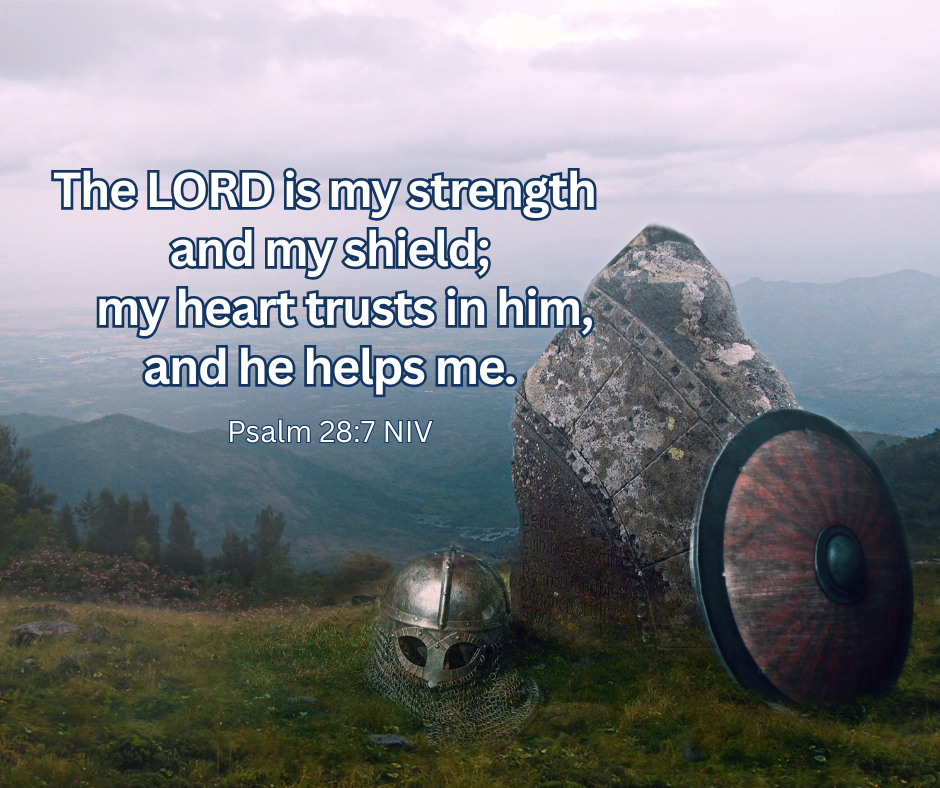
As a sharp contrast to placing our trust in the lifeless idols of this world, Psalm 115 calls us to place our trust in God. Today’s reading begins with a threefold call to trust the LORD. All you Israelites, trust in the LORD—he is their help and shield. House of Aaron, trust in the LORD—he is their help and shield. You who fear him, trust in the LORD—he is their help and shield (v. 9-11).

For those who are logically minded, there is a simple equation or formula at work here. Trust in the LORD results in help and protection—he is their help and shield. Our trust or faith in God brings a response from Him. The LORD’s response is both active and passive. He provides help; He intervenes by actively assisting us. From personal experience I know the LORD has been my help. In the nick of time, He has provided words of knowledge and wisdom. He has been my constant guide. When needed most, He has opened the windows of heaven and poured out blessings. He has sent help in various forms, and in ways too numerous to mention.

But the LORD is also our shield. He protects us from the slings and arrows of the evil one. He shields us from the enemy’s attacks, whether it is from physical harm and disease, or spiritual attacks that undermine our faith through faulty reasoning or deceptive philosophies. The LORD is our sure defense. We can draw strength from this promise: He will bless those who fear the LORD—small and great alike (v. 13).

Response: Father God, I trust you to be my help and my shield. Keep me safe from the evil one. Thank you for all your help through the years. You have been faithful to keep your word. Amen.

Your Turn: Can you think of instances when God has helped you? Take time to thank Him for being your help and your shield.

Para la publicación de Salmos 365 de hoy en español haga clic aquí.

bgbg_v4.3_1501818
* NEW INTERNATIONAL VERSION, COPYRIGHT ©1973, 1978, 1984, 2011 BY BIBLICA

Please pray for peace to return to Israel, Gaza, and Ukraine!

Volume I of Psalms 365: Develop a Life of Worship and Prayer won the Best Book of the Year Award from The Word Guild and Volume II has won the Best Devotional of the Year Award. For those who love God’s word, this three-book series is an ideal way to daily meet with the Lord. To purchase or for a closer look click here.

A gripping read from David Kitz.
Is a return-to-Jesus revival possible in our time?

This book points the way forward.
For details click here.

Modern forms of Idolatry

09 Monday Jun 2025

Posted by davidkitz in Psalms

≈ 2 Comments

Tags

devotion, Discipleship, faith, heartcheck, idolatry, obedience, Reflection, Scripture, truth, worship

Today’s Devotion from Psalms 365 by David Kitz

Reading: Psalm 115:1-8
Not to us, LORD, not to us
but to your name be the glory,
because of your love and faithfulness.
Why do the nations say,
“Where is their God?”
Our God is in heaven; he does whatever pleases him.
But their idols are silver and gold,
made by human hands.
They have mouths, but cannot speak,
eyes, but cannot see.
They have ears, but cannot hear,
noses, but cannot smell.
They have hands, but cannot feel,
feet, but cannot walk,
nor can they utter a sound with their throats.
Those who make them will be like them,
and so will all who trust in them (NIV). *

Street Corner Idol — Nagakute, Japan — David Kitz

Reflection
Where are your idols? “I have none,” you say. Are you sure? Most readers of this post would deny being idol worshippers, but perhaps we have more idols than we care to admit.

Idolatry was commonly practiced during Israel’s kingdom era. In Old Testament times, the nations around God’s people all practiced various forms of idol worship. One might assume God’s redeemed people, who were rescued from slavery, would have nothing to do with such vile practices. But you would be wrong. Time and again Israel fell into idolatry.

King Solomon, who was revered for his wisdom, is a prime example of someone who condoned idol worship. Here’s what we read about this ‘esteemed’ leader: On a hill east of Jerusalem, Solomon built a high place for Chemosh the detestable god of Moab, and for Molek the detestable god of the Ammonites. He did the same for all his foreign wives, who burned incense and offered sacrifices to their gods (1 Kings 11:7-8).

When leaders go astray, there will be many who follow. In the church today we have many leaders who have fallen captive to the god of Mammon—material goods. Jesus said, “No one can serve two masters. Either you will hate the one and love the other, or you will be devoted to the one and despise the other. You cannot serve both God and money” (Matthew 6:24).

Before we claim to be free from idols, we need to examine our hearts. Are we yielding to the Holy Spirit, or are we controlled by our desire for what this world has to offer?

Response: Father God, show me if there are idols in my life. In love, correct me when I stray. I want to serve you—put you first in my life. Lord Jesus, be my master. It’s an honor to serve you. Amen.

Your Turn: What things have become idols in your life? What actions can you take to establish Jesus as your Lord?

Para la publicación de Salmos 365 de hoy en español haga clic aquí.

bgbg_v4.3_1501818
* NEW INTERNATIONAL VERSION, COPYRIGHT ©1973, 1978, 1984, 2011 BY BIBLICA

Please pray for peace to return to Israel, Gaza, and Ukraine!

Volume I of Psalms 365: Develop a Life of Worship and Prayer won the Best Book of the Year Award from The Word Guild and Volume II has won the Best Devotional of the Year Award. For those who love God’s word, this three-book series is an ideal way to daily meet with the Lord. To purchase or for a closer look click here.

A gripping read from David Kitz.
Is a return-to-Jesus revival possible in our time?
This book points the way forward.
For details click here.

Praise the LORD, O My Soul

08 Sunday Jun 2025

Posted by davidkitz in Psalms

≈ Leave a comment

Tags

blessing God, compassion, forgiveness of sins, giving thanks, gratitude, Lord Almighty, love of God, praise the LORD, praising God, Prayer, Psalms

Psalm 103:1-5

Of David

Praise the LORD, O my soul;
all my inmost being, praise his holy name.
Praise the LORD O my soul,
and forget not all his benefits—
who forgives all your sins
and heals all your diseases,
who redeems your life from the pit
and crowns you with love and compassion,
who satisfies your desires with good things
so that your youth is renewed like the eagle’s.


The long wait was finally over. It was a beautiful day, and it all started so well. Anticipation does make the heart grow fonder.

For many years my wife had told me how she wanted her own desk and her own bookcase. It would help her organize her things; every woman needs her own space. I couldn’t agree more. The only problem was money. There was never enough of it. With a young family and a mortgage to pay, there always seemed to be more month left than money. These extras were always put on hold.

But then one spring day our income tax refund check arrived, and Karen renewed her perennial plea. This year the roof didn’t need shingles, the driveway didn’t need paving, but she did need that long delayed desk and bookcase. At long last, the time had come to answer her request and this time, a shortage of funds was not standing in the way.

After some judicious shopping, she narrowed the range of furniture choices, and then she brought me in to help in the final selection process. Together we chose a compact and versatile three drawer desk with a fold down top that acted as the writing surface. She loved the little compartments that could be used to store papers and valuables. A matching three-shelf bookcase completed our order. Both selections were unfinished furniture made of solid maple.

We both love solid wood because of its grain and texture. Of course, solid hardwood furniture is supremely durable as well. I gave some consideration to finishing the furniture myself. But a look at my work schedule led us to decide that it simply would be easier to have the furniture company apply the wood finish of our choice and then pick up the finished product upon completion. We paid our hard-earned money and waited.

About a week later the call came. The desk and bookcase were ready for pick up, but our car was too small for the job. No problem. Our neighbor kindly lent us his pickup truck. Now, this old Ford had seen better days. Rick briefly introduced me to old Betsy. He mentioned the rear tailgate was a bit cantankerous. I practised closing it. Then he handed me the keys and watched as I drove off with my wife by my side. We headed off like two giddy kids on a Christmas morning race to the tree.

At the furniture warehouse the bookcase and desk were packed in corrugated cardboard boxes. We did a quick inspection to confirm they were the right pieces, finished with the right colored stain, and then we loaded them onto old Betsy. I slammed the tailgate shut and we set out on the twenty-minute return trip to our home.

What happened on that return trip can best be described as tragic comedy. However, it would be fair to say that the comedic elements in this story were not entirely evident to us at the time.

On the four-lane expressway at 65mph (100kph) old Betsy’s tailgate popped open. The bookcase toppled out onto the hard black asphalt. I slammed on the brakes and pulled off to the shoulder. My wife was frantic; we were both frantic. Even at a distance I could tell the bookcase was still intact inside the corrugated cardboard box. Perhaps the damage was minor, or so I hoped. I jumped out of the truck and began running back to this hapless box as it lay on the highway. Three quarters of it lay on the paved shoulder—only one corner protruded onto the far-right lane of this busy four-lane expressway. As I ran back, several cars zoomed right by it. They didn’t even need to swerve to avoid it.

I thought it was safe.

But…

But… the next vehicle was a twenty-ton cement truck. It did not swerve. It bore down relentlessly on that cardboard box. What I saw next was an explosion. On impact, the bookcase exploded out of its cardboard box. Shelves and splintered pieces of wood went flying through the air and into the ditch.

It all happened so fast. In an instant our long-awaited treasure was turned into a mangled, splintered mess.

I gathered the debris out of the ditch, put it back in old Betsy, slammed the cantankerous tailgate shut, and drove on home.

Karen was in tears.

This should never have happened! A thousand regrets flooded my mind. Why? Why this disaster? What did we do to deserve this mess?

I hugged my wife.

Strangely on another level, a different set of thoughts was welling up from within. Those thoughts went something like this, “In everything give thanks: for this is the will of God in Christ Jesus for you” (1 Thessalonians 5:18 NKJV).

And then from the distant recesses of my spirit I heard, “Praise the LORD, O my soul; all my inmost being, praise his holy name. Praise the LORD, O my soul, and forget not all his benefits” (Psalm 103:1-2).

What lunacy is this? Why should I give thanks to God in the middle of this disaster? If God cared about me—about us—why didn’t he prevent this fiasco? My God is bigger than a cement truck. He could have steered that twenty-ton behemoth around our bookcase. Better still, the LORD Almighty could have kept that tailgate from popping open. And now, at this moment, I’m supposed to praise him? What insanity is this?

Again, I heard the Spirit’s prompting, “Praise the LORD, O my soul; all my inmost being, praise his holy name. Praise the LORD, O my soul, and forget not all his benefits.”

There are bigger things in life than a broken bookcase, I conceded. Under my breath I began to mumble, “Bless the LORD, O my soul and all that is within me, bless his holy name.”

Those were tough words to say at that moment. You see, my soul doesn’t always want to bless the LORD. If I’m going to praise him, shouldn’t it be in church while the choir sings softly in the background? Why praise him on an expressway, with my wife sobbing at my side, while I have fresh images of a splintered bookcase lodged in my brain?

There are times when cursing the LORD would seem to be a far more appropriate response than praising him. Surely, this was one such time.

Be joyful always; pray continually; give thanks in all circumstances, for this is God’s will for you in Christ Jesus (1 Thessalonians 5:16-18).

“LORD, why are you bringing these scriptures to my mind now?” I asked. “I would much rather blame you, God, and feel totally miserable, than give thanks in these wretched circumstances.”

But God’s Spirit would not relent. I can’t say I heard this audibly. But if I were to translate what I feel God was speaking to me at that moment, it would go something like this:

“Just shut up. Quit your bellyaching, Mr. Know-it-all. (God sometimes needs to be blunt with me.) All I am asking you to do is praise me. Praise me, whether you feel like it or not. You don’t know the beginning from the end, Mr. Wise-guy. Don’t you think I’m bigger than a few pieces of shattered wood?”  

In sullen reluctance, I agreed. I obeyed. I began to praise God. That’s right. I began to praise the LORD God Almighty, who let my wife’s long awaited, brand new, not-even-out-of-the-box bookcase get hit by a twenty-ton cement truck.

Praise the LORD? Yes, the LORD.

Now which Lord was that again?

The LORD “who forgives all your sins and heals all your diseases”.

 Ah, yes that LORD. He really is quite wonderful. Imagine forgiving all my sins, every last one of them. That’s a lot of sins.

That’s a lot of forgiving.

Praise the LORD. He’s quite some God.

Which God was that again?

The LORD who “heals all your diseases.”

Ah, yes that LORD. He really is quite fantastic. Imagine healing all my sicknesses, and all my injuries, too, from my childhood to this very moment. Now, that’s a whole lot of pain and woe.

Gone. It’s all gone. I don’t feel any of it now.

Praise the LORD. No aches or pains—that’s amazing. He’s an awesome God.

Now tell me again, which Lord is this?

The LORD “who redeems your life from the pit and crowns you with love and compassion.”

Oh yes, that LORD. He redeemed me—redeemed me with his blood. He went to the whipping post, was stripped naked and nailed—nailed through hands and feet to a cross. The LORD who was despised and reject. The LORD who came to his own, but his own would not receive him. That forsaken LORD—the LORD—who loved me to death. The LORD my redeemer, that’s the LORD, I praise.

I praise the One who pulled me out of the pit, the pit of self-pity, the pit of despair, the sucking pit of self-indulgence that spirals only downwards. He redeemed me from that sinking pit. And now, he is the One I praise.

But he doesn’t just redeem. He crowns me with love and compassion. Now that’s beyond amazing. Though I don’t deserve it, he puts a crown of love on my head. He wore a crown of thorns, but on my head, he puts a crown of love and compassion. He encircles my head—my stubborn head, my sin drenched head—with love and compassion. Awesome. What an awesome God!

Praise the LORD!

I’m a bit slow today, God. Remember I’ve got a splintered bookcase on my brain. Could you just remind me—remind me one more time? Which LORD are you?

The LORD “who satisfies your desires with good things, so that your youth is renewed like the eagle’s.”

Oh yes, LORD, you do satisfy me. You satisfy me with a thousand good things. I live like a king. My every need is met; every comfort is mine. I have abundance. Compared to billions on this planet today, and compared to billions going back through the ages, I am blessed—blessed beyond measure. 

You renew my strength. You put a glint in my eye, a spring in my step, and a well of hope in my heart. My youth is renewed like the eagle’s. Now, I’m soaring. Praise the LORD!

I said, “Praise the LORD! Praise the LORD, O my soul!”

I was feeling much better by the time I got home, and so was my wife.

As for that bookcase, I’m glancing up at it even as I write this chapter. It looks great! Some carpentry clamps and a little wood glue can work wonders. Despite being hit by a twenty-ton cement truck, only one shelf was broken beyond repair. While I was replacing that shelf at a wood shop in a school nearby, I was encouraged by a friend to take a university course in design and technology. That course rerouted my whole teaching career. It brought me into a line of work I simply love. I started on that new route because of a broken bookcase. Praise the LORD!

I said, “Praise the LORD, O my soul!”

Yes, praise the LORD! In any situation, it’s one of the best things this cantankerous soul can do.


Bringing Life to the Psalms

  1. The well-known adage, “Prayer changes things,” should be joined by its lesser-known cousin, “Praise changes things.” How do you think an attitude of praise worked to change things in the real-life account you just read? How is a praise response possible during difficult circumstances?

  2. What are the first words to come out of your mouth when something bad happens? If we change our reaction, can we affect the longer-term outcomes from a negative event?

  3. Praise changes our point of view. We look up at God instead of our circumstances. His perspective on the events in our life is completely different from our own. He does see the beginning from the end. He has the full picture. Genuine praise and worship elevates us. By the Spirit, it brings us above our situation. Remember things always look different when viewed from above.

  4. Reread Psalm 103, or better yet memorize it. Begin to build a foundation of praise in your life. It will help you weather many a storm.

  5. To start your day tomorrow read Psalm 100. Let your praise to God flow like a river.


Today’s post is Chapter 15 from the book Psalms A
live! Connecting Heaven & Earth by David Kitz. To find out more or purchase click here.


Is Anything Too Hard for God?

06 Friday Jun 2025

Posted by davidkitz in Psalms

≈ Leave a comment

Tags

deliverance, Exodus, faith, freedom, God, Israel, miracles, power, promised land, redemption, Reflection, salvation, trust, worship

Today’s Devotion from Psalms 365 by David Kitz

Reading: Psalm 114
When Israel came out of Egypt,
Jacob from a people of foreign tongue,
Judah became God’s sanctuary,
Israel his dominion.
The sea looked and fled,
the Jordan turned back;
the mountains leaped like rams,
the hills like lambs.
Why was it, sea, that you fled?
Why, Jordan, did you turn back?
Why, mountains, did you leap like rams,
you hills, like lambs?
Tremble, earth, at the presence of the Lord,
at the presence of the God of Jacob,
who turned the rock into a pool,
the hard rock into springs of water (NIV). *

Reflection
“Why?” A four-year-old’s favourite question is, “Why?” Here in Psalm 114, the psalmist has some why questions as well. “Why did the sea flee? Why did the Jordan River turn back? Why did those mountains and hills seem to skip and dance? Why?”

The answer of course is because of the jaw-dropping, eye-popping, heart-stopping power of God. God caused the sea to flee. He caused the Jordan to turn back. He caused mountains and hills to skip about and frolic like yearling lambs set free from the stall. What an awesome display! What an awesome God!

Psalm 114 is all about the overwhelming power of God. It is a grand portrayal of the pivotal event in the Old Testament Scriptures. Here within a few short verses, we catch a panoramic view of God’s might on display, starting with Israel’s escape from Egypt to their arrival in the Promised Land.

Why did the miracle-working LORD make the sea flee? Was it simply to display His awe-inducing power? Was it simply to create excitement among the million or more mortals, who were eyewitnesses to this divine wonder? In the Exodus account, the reason for this miraculous intervention is stated clearly: That day the LORD saved Israel from the hand of the Egyptians, and Israel saw the Egyptians lying dead on the shore. And when the Israelites saw the great power of the LORD displayed against the Egyptians, the people feared the LORD and put their trust in him and in Moses his servant (Exodus 14:30-31).

This power display had one primary purpose. That purpose was salvation. The LORD wanted to save people—His covenant people—from the vicious clutches of oppression and a tyranny. In short, the LORD works wonders so He can save people—so He can bring them into His Kingdom—so they can escape the sin systems of this world and come under His loving rule.

Response: Father God, thank you for going all out to save me through the death and resurrection of your Son, Jesus. What a display of your love and power! Help me to love, fear and trust you. Amen.

Your Turn: Why did God save you? Is there a reason for His mercy?

Para la publicación de Salmos 365 de hoy en español haga clic aquí.

bgbg_v4.3_1501818
* NEW INTERNATIONAL VERSION, COPYRIGHT ©1973, 1978, 1984, 2011 BY BIBLICA

Please pray for peace to return to Israel, Gaza, and Ukraine!

Volume I of Psalms 365: Develop a Life of Worship and Prayer won the Best Book of the Year Award from The Word Guild and Volume II has won the Best Devotional of the Year Award. For those who love God’s word, this three-book series is an ideal way to daily meet with the Lord. To purchase or for a closer look click here.

A gripping read from David Kitz.
Is a return-to-Jesus revival possible in our time?
This book points the way forward.
For details click here.

The Humility of God

05 Thursday Jun 2025

Posted by davidkitz in Psalms

≈ 1 Comment

Tags

compassion, cross, faith, God, grace, hope, humility, love, mercy, praise, praise the LORD, Psalms, redemption, Reflection, salvation, worship

Today’s Devotion from Psalms 365 by David Kitz

Reading: Psalm 113
Praise the LORD.
Praise the LORD, you his servants;
praise the name of the LORD.
Let the name of the LORD be praised,
both now and forevermore.
From the rising of the sun to the place where it sets,
the name of the LORD is to be praised.
The LORD is exalted over all the nations,
his glory above the heavens.
Who is like the LORD our God,
the One who sits enthroned on high,
who stoops down to look on the heavens and the earth?
He raises the poor from the dust
and lifts the needy from the ash heap;
he seats them with princes, with the princes of his people.
He settles the childless woman in her home
as a happy mother of children.
Praise the LORD (NIV). *

Reflection
In today’s reading the psalmist has a question for you and here it is: Who is like the LORD our God, the One who sits enthroned on high, who stoops down to look on the heavens and the earth? (v. 5-6)

Who indeed? Why would the exalted One, the enthroned One, stoop down? How undignified! Doesn’t the LORD know kings and potentates don’t bend over or stoop down? They certainly don’t do that sort of thing in public—not where they can be seen by others. Rulers rule from the seat of authority. They sit; they don’t stoop down. But our God stoops down. If the truth be told, it’s even worse than that.

The LORD gets His hands dirty. Actually, He has been getting His hands dirty from the very beginning. The LORD God formed a man from the dust of the ground and breathed into his nostrils the breath of life, and the man became a living being (Genesis 2:7). Now that was a failed experiment if there ever was one. Those living, breathing human dust bags showed no gratitude. They disobeyed God at the first opportunity and down through the generations, humanity has continued that pattern of disobedience and ingratitude.

Now in this psalm we read this: He raises the poor from the dust and lifts the needy from the ash heap (v. 7). Why would God show such affection for fallen humanity—humans who keep plunging deeper into the mire? There is no greater mystery. Our God keeps finding treasures in the trash—the human trash.

Still I keep wondering why anyone would stoop so low. Why would the One, who sits enthroned on high, stoop so low—low enough to die a criminal’s death on a cross? Why did the Lord stoop to rescue me?

Response: Father God, your love is beyond comprehension. Thank you for stooping down and involving yourself in my life. When I reach out to you, Father God, you lift me up. I praise you, LORD. Amen.

Your Turn: When did the LORD lifted you from the ash heaps of this life? How did that make you feel?

Para la publicación de Salmos 365 de hoy en español haga clic aquí.

bgbg_v4.3_1501818
* NEW INTERNATIONAL VERSION, COPYRIGHT ©1973, 1978, 1984, 2011 BY BIBLICA

Please pray for peace to return to Israel, Gaza, and Ukraine!

Volume I of Psalms 365: Develop a Life of Worship and Prayer won the Best Book of the Year Award from The Word Guild and Volume II has won the Best Devotional of the Year Award. For those who love God’s word, this three-book series is an ideal way to daily meet with the Lord. To purchase or for a closer look click here.

A gripping read from David Kitz.
Is a return-to-Jesus revival possible in our time?

This book points the way forward.
For details click here.

← Older posts
Newer posts →

Psalms 365: Develop a Life of Worship & Prayer

Psalms 365 Volume II

Psalms 365 vol 3
— Psalms 365 Volume III

Now available:

Psalms

Recent posts

  • Praise the Life-Giving Word April 20, 2026
  • Resurrection Visitation—When and Why April 19, 2026
  • Molly Jaber’s Review April 18, 2026
  • David’s Confession Part II April 18, 2026
  • Like Flowers of the Field April 17, 2026
  • When you are afraid, who do you turn to? April 17, 2026
  • Do Not Worry April 16, 2026

Calendar

April 2026
M T W T F S S
 12345
6789101112
13141516171819
20212223242526
27282930  
« Mar    

Blog Posts

Enter your email address to follow this blog and receive notifications of new posts by email.

Comments

  • davidkitz on David’s Confession Part II
  • cjsmissionaryminister on Peace Be with You!
  • davidkitz on Molly Jaber’s Review

Blog at WordPress.com.

Privacy & Cookies: This site uses cookies. By continuing to use this website, you agree to their use.
To find out more, including how to control cookies, see here: Cookie Policy
  • Subscribe Subscribed
    • I love the Psalms
    • Join 1,344 other subscribers
    • Already have a WordPress.com account? Log in now.
    • I love the Psalms
    • Subscribe Subscribed
    • Sign up
    • Log in
    • Report this content
    • View site in Reader
    • Manage subscriptions
    • Collapse this bar
 

Loading Comments...