Opening Blind Eyes

Tags

, , , , , , , , , , ,

In that day the deaf will hear the words of the scroll,
and out of gloom and darkness the eyes of the blind will see.
(Isaiah 29:18, NIV)

In 1546, the English writer and poet, John Heywood, penned this proverb, “There are none so blind as those who will not see.”[i]
            Heywood’s proverb is as relevant to our times as it was in his day. The most damaging condition modern humanity suffers from is spiritual blindness. But alas, this condition has been afflicting humans since we exited Eden.
            Perhaps no biblical account portrays spiritual blindness better than the story of Elisha and his servant as they are trapped in the besieged city of Samaria. On the first morning of the siege, Elisha’s servant panicked when he saw the foreign army, but the prophet responded with these words:

             “Don’t be afraid,” the prophet answered. “Those who are with us are more than those who are with them.”
             And Elisha prayed, “Open his eyes, LORD, so that he may see.” Then the LORD opened the servant’s eyes, and he looked and saw the hills full of horses and chariots of fire all around Elisha
(2 Kings 6:16-17, NIV).

            As is so often the case, the servant was blind to the spiritual realm. Today, the servants of God suffer from the same short-sightedness. It took the prayer of Elisha to open the servant’s eyes. In our day, it also takes the Holy Spirit and present-day prophets to open our eyes.  
            This eye-opening miracle was paired with a mass-blinding miracle on an unprecedented scale.

             As the enemy came down toward him, Elisha prayed to the Lord, “Strike this army with blindness.” So he struck them with blindness, as Elisha had asked.
            Elisha told them, “This is not the road and this is not the city. Follow me, and I will lead you to the man you are looking for.” And he led them to Samaria
(2 Kings 6:18-19, NIV).

          Elisha led the enemy army into the presence of the king of Israel in the heart of the capital. The king then inquired if he should slaughter his enemies. But Elisha counseled kindness rather than retribution, and a feast was prepared for the Aramean army. This act of unprecedented grace and generosity led to a time of peace between these two warring nations (2 Kings 6:23).
            Eight centuries before Christ, Elisha’s advice to the king puts into practice the words of Jesus from his Sermon on the Mount. 

           “But to you who are listening I say: Love your enemies, do good to those who hate you, bless those who curse you, pray for those who mistreat you. If someone slaps you on one cheek, turn to them the other also. If someone takes your coat, do not withhold your shirt from them. Give to everyone who asks you, and if anyone takes what belongs to you, do not demand it back. Do to others as you would have them do to you (Luke 6:27-31).

          There is an uncanny link between Elisha, the Old Testament prophet, and Jesus, his New Testament counterpart. Both men see beyond the natural realm to the astonishment of the people of their day, and both prophets counsel kindness rather than revenge in dealing with enemies.
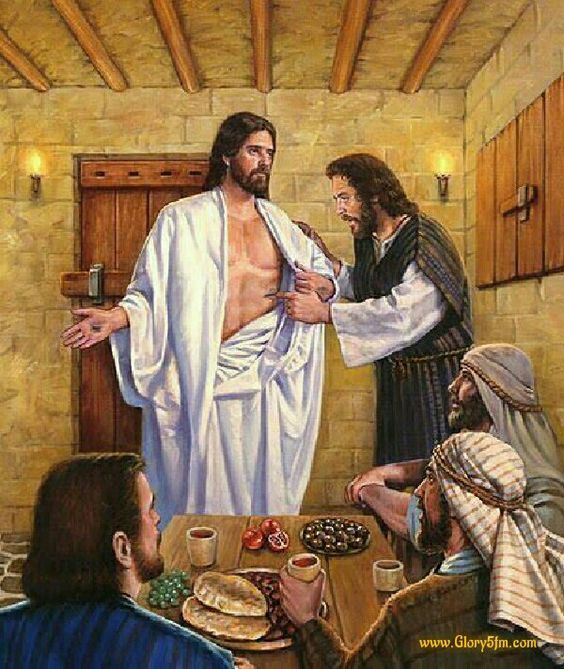
            Though there are many outstanding miracles recorded in the Old Testament, there is no account of the physically blind receiving their sight. Yet, time after time in the Gospels, Jesus restored sight to the blind.[ii] These physical miracles were signposts pointing to an even more significant restoration of sight—the restoration of spiritual eyesight—eyesight that allows us to see who Jesus truly is and what he is doing.
            The account of Jesus healing the blindman at the Pool of Siloam is entirely about opening the eyes of those who are both physically and spiritually blind. (See John 9.) The man who received his sight was blind from birth. This was not simply a miracle of restoration. It was a creative miracle, on par with the Adam and Eve account in Genesis 2, as Jesus so aptly demonstrated.

              While I am in the world, I am the light of the world.”
 After saying this, he spit on the ground, made some mud with the saliva, and put it on the man’s eyes. “Go,” he told him, “wash in the Pool of Siloam” (this word means “Sent”). So the man went and washed, and came home seeing
(John 9:5-7, NIV).

             Jesus opened the eyes of the blindman, but as the story continues, we see he is unable to open the eyes of the spiritually blind Pharisees. John Heywood’s proverb proves true, “There are none so blind as those who will not see.”
            The Pharisees in this account were wilfully blind. Many today suffer from the same willful blindness. Due to their stubborn hearts, they are unable to see who Jesus truly is.
            The entirety of John 9 is about seeing—seeing and recognizing who Jesus is. The miracle of the man blind from birth receiving his sight should have alerted the Pharisees and temple authorities to the divine nature of Jesus, the miracle worker. But the Pharisees could not see past the fact this miracle had been wrought on the Sabbath. The miracle worker had violated the Sabbath, so they reasoned, he must be a sinner and unworthy of respect.

                 Then they turned again to the blind man, “What have you to say about him? It was your eyes he opened.”
               
The man replied, “He is a prophet.” (John 9:17, NIV)

                The healed blindman stated what was patently obvious to him. He recognized that he had been touched by the hand of God. He saw Jesus as a prophet. All of Israel was waiting expectantly for a prophet—a prophet who would once again demonstrate the power of the Almighty. Surely, restoring sight to one who was born blind was a demonstration of this power. But the Pharisees questioned the validity of the miracle and the miracle worker.
                Why were many Pharisees so spiritually blind? Despite the evidence of multiple miracles, they were unwilling to recognize Jesus as a prophet. But this blindness was not a new condition. They had already rejected John the Baptist the forerunner of the Messiah. They refused to recognize John as a prophet too. See Matthew 21:25-27.
                And why did most Pharisees reject John the Baptist? The simple answer is because John preached a message of repentance. Repentance requires an acknowledgement of sin and a turning away from it. But the Pharisees, like many people nowadays, saw themselves as righteous already. They were blind to their sin, so they saw no need for repentance. Furthermore, repentance requires humility, a character quality they shunned in favor of obstinate pride—pride in their self-professed righteousness.
                Because the Pharisees did not recognize the first prophet, John, they were blind to the second prophet, Jesus. But Jesus was far more than a prophet. As his name implies, he was and is the Savior of the world. But the proud and the self-righteous have no felt need for a Savior. They see themselves as saved already—saved through their own efforts. In their own eyes—their spiritually blind eyes—they see no need for a Savior.
                This same spiritual blindness afflicts many in both the church and society today. The cure for spiritual blindness is repentance and rebirth by the power of the Holy Spirit. That was the message of our two New Testament prophets John the Baptist and Jesus.
                A gospel message that is preached without a call to repentance is not a gospel message at all. Coming to faith in Jesus requires—no, demands repentance. Real repentance is real change. Change from the inside out. Change that is deep, meaningful, and evident in daily life.
                John demanded change from those who came to be baptized, whatever their station in life, and that included Pharisees who in their pride believed no change was required. See Matthew 3:1-12.
                Furthermore, we should not see repentance simply as a one-time occurrence. Yes, it is the vital starting point in our walk of faith,[iii] but true repentance goes far beyond that. Repentance must be incorporated into our way of life—a life of continual turning away from sin and living in humble service to our Savior-King.[iv]
                Though the blindman received his sight, the Pharisees persisted in their spiritual blindness even though the miracle-working Savior was standing before them. 

                 Jesus said, “For judgment I have come into this world, so that the blind will see and those who see will become blind.”
                Some Pharisees who were with him heard him say this and asked, “What? Are we blind too?”
                Jesus said, “If you were blind, you would not be guilty of sin; but now that you claim you can see, your guilt remains.
(John 9:39-41, NIV)  

                For the Pharisees of Jesus day and the spiritually blind of our day, this maxim holds true: If we don’t recognize the prophet, we won’t recognize the Savior.
                Jesus’ words remain relevant today:      

                Whoever welcomes a prophet as a prophet will receive a prophet’s reward, and whoever welcomes a righteous person as a righteous person will receive a righteous person’s reward. (Matthew 10:41, NIV)

                The voice of the prophet is needed today just as it was in Jesus’ day. A national call to repentance is needed now. Who will voice that call? Where are the prophets for our time?
                The relative absence of legitimate prophetic voices in the church today should trouble us. There was a four-hundred-year prophetic gap between the Old and New Testament—a gap when the Spirit of God was silent. But then suddenly John the Baptist and Jesus appeared on the scene. The first two chapters of Luke describe an astonishing flurry of Spirit initiated activity as heaven set the great redemption story into motion. Will there be a similar flood of Spirit directed activity before Christ’s second coming?
                It is clear from the Scriptures prophets were active within the New Testament church, and furthermore, Paul considered them essential to the proper functioning of the body of Christ.

               So Christ himself gave the apostles, the prophets, the evangelists, the pastors and teachers, to equip his people for works of service, so that the body of Christ may be built up until we all reach unity in the faith and in the knowledge of the Son of God and become mature, attaining to the whole measure of the fullness of Christ. (Ephesians 4:11-13, NIV)

                In Acts we read that there were numerous prophets active in the church. Some of them are listed by name. They include Agabus, Barnabas, Simeon called Niger, Lucius of Cyrene, Manaen, and Saul.[v] This Saul is also known as Paul, and he and Barnabas were commissioned by the church leadership in Antioch to go on the first great missionary journey (Acts 13:1-3).
                Where would the church be today if these prophets had not spoken the word of the Lord over Paul and Barnabas? Would there be a church in Europe? Would we even know of the ministry of Paul? The New Testament church grew as it received prophetic direction from those who were tuned to hear the plans of God.

Landestreu Church

                The church of God grows and flourishes when there are men and women who hear what the Spirit is saying, see what the Spirit is doing, and then declare it to the church and the world. That is the role of the prophet.
                We need leaders with prophetic hindsight, insight, and foresight for the church to reach its full potential.
                Prophetic vision is not always forward looking or predictive. Sometimes it looks back at events in the past and sees them with heaven-endowed clarity. For example, Jesus spoke to the Samaritan woman at the well about her past marriages and current living arrangement (John 4:15-19). As a result, the Samaritan woman immediately recognized Jesus as a prophet. This gift of prophetic hindsight was pivotal in this entire community coming to faith.

                Many of the Samaritans from that town believed in him because of the woman’s testimony, “He told me everything I ever did.” So when the Samaritans came to him, they urged him to stay with them, and he stayed two days. And because of his words many more became believers. (John 4:39-41, NIV)

                The same prophetic hindsight is need today to capture the attention of individuals and reach whole communities estranged from Christ and the gospel.
                A word of caution is in order. Not all who call themselves prophets or apostles are prophets and apostles. A true prophet or apostle will be known by the fruit of their ministry, not by the self-styled handle on their business card. There have been false prophets throughout history. We should not be surprised when we see a raft of them emerge today. But the emergence of the counterfeit should not keep us from heeding those who genuinely hear from God and declare his word.
                Paul’s admonition to the Thessalonians remains valid:

                Do not quench the Spirit. Do not despise prophecies. Test all things; hold fast what is good. Abstain from every form of evil. (1 Thessalonians 5:19-22, NKJV)

                Humility and service to others are the hallmarks of genuine faith. Pride and self-aggrandizement are flashing red lights signalling error and deception. Know the Scriptures, heed the Spirit, and proceed with caution. God guides those who humbly seek him. Jesus still opens the eyes of the blind and he still uses prophetic voices to do just that.
                The third key that helps us unlock the Elisha code is prophetic vision or spiritual insight. It is vitally needed today.

[i] Who wrote the proverb “There are… | Trivia Answers | QuizzClub

[ii] Matthew 12:22, Matthew 15:30, Mark 8:22-26, Mark 10:46-52, Luke 7:2, John 9

[iii] Peter replied, “Repent and be baptized, every one of you, in the name of Jesus Christ for the forgiveness of your sins. And you will receive the gift of the Holy Spirit (Acts 2:28, NIV).

[iv] If we claim to be without sin, we deceive ourselves and the truth is not in us. If we confess our sins, he is faithful and just and will forgive us our sins and purify us from all unrighteousness. If we claim we have not sinned, we make him out to be a liar and his word is not in us (1 John 1:8-10, NIV).

[v] Acts 11:27-28, Acts 13:1-3, Acts 15:32, Acts 21:8-10

This is the fifth weekly excerpt from the award-winning book 
The Elisha Code & the Coming Revival 

A soul-gripping read.
Is a return-to-Jesus revival possible in our time?
This book points the way forward.
For details click here.

The Works of His Hands

Tags

, , , , , , , , ,

I will praise the LORD!

The glory of an autumn morning — David Kitz

Psalm 111:6-10

He has shown his people the power of his works,
    giving them the lands of other nations.
The works of his hands are faithful and just;
    all his precepts are trustworthy.
They are established for ever and ever,
    enacted in faithfulness and uprightness.
He provided redemption for his people;
    he ordained his covenant forever—
    holy and awesome is his name.
The fear of the LORD is the beginning of wisdom;
    all who follow his precepts have good understanding.
    To him belongs eternal praise.
 *

bgbg_v4.3_1501818
* NEW INTERNATIONAL VERSION, COPYRIGHT ©1973, 1978, 1984, 2011 BY BIBLICA

Please pray for peace to return to Israel, Gaza, and Ukraine!

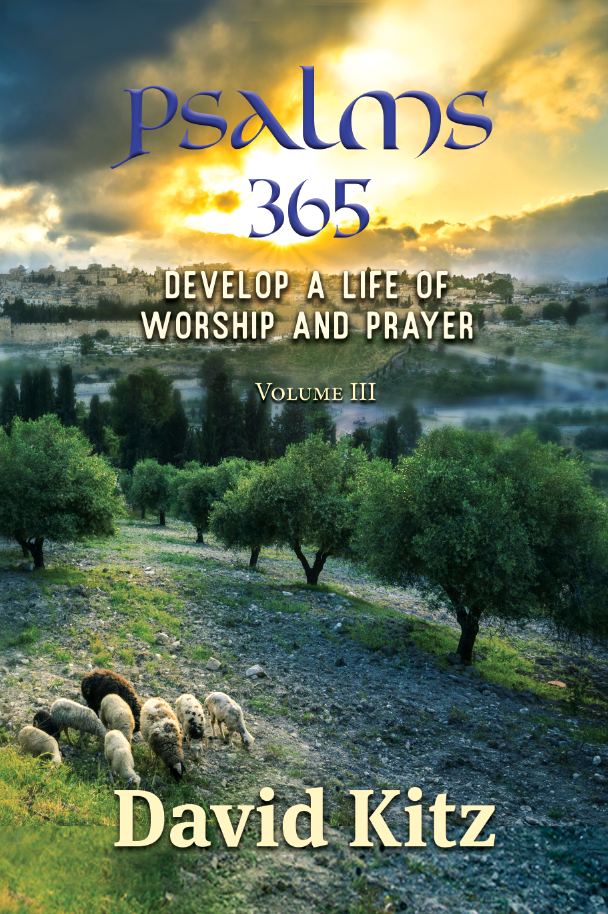
Volume I of Psalms 365: Develop a Life of Worship and Prayer won the Best Book of the Year Award from The Word Guild and Volume II has won the Best Devotional of the Year Award. For those who love God’s word, this three-book series is an ideal way to daily meet with the Lord. To purchase or for a closer look click here.

Coming soon…

Your Servant Is Listening

Tags

, , , , , , , ,

Today’s quote and prayer from
“Psalms 365: Develop a Life of Worship and Prayer”

Today’s Reading: Psalm 147:19-20

LORD God,
I need a greater revelation of you.
When you show yourself to me,
I am changed.
Come, Lord Jesus.
Invigorate my life.
Help me to know you better.
Speak deeply to my heart,
and my mind.
Amen.

— — — —

A third time the LORD called, “Samuel!”
And Samuel got up and went to Eli and said,
“Here I am; you called me.”

Then Eli realized that the LORD was calling the boy. 
So Eli told Samuel,
“Go and lie down, and if he calls you, say,
‘Speak, LORD, for your servant is listening.’”
So Samuel went and lay down in his place.

The LORD came and stood there,
calling as at the other times,
“Samuel! Samuel!”

Then Samuel said,
“Speak, for your servant is listening.”
(1 Samuel 3:8-10 NIV)*

Para la publicación de Salmos 365 de hoy en español haga clic aquí.

bgbg_v4.3_1501818
* NEW INTERNATIONAL VERSION, COPYRIGHT ©1973, 1978, 1984, 2011 BY BIBLICA

Please pray for peace to return to Israel, Gaza, Sudan, and Ukraine!

Volume I of Psalms 365: Develop a Life of Worship and Prayer won the Best Book of the Year Award from The Word Guild and Volume II has won the Best Devotional of the Year Award. For those who love God’s word, this three-book series is an ideal way to daily meet with the Lord. To purchase or for a closer look click here.

A gripping read from David Kitz.
Is a return-to-Jesus revival possible in our time?
This book points the way forward.

Jesus as the Ultimate Revelation of God

Tags

, , , , , , , , , , ,

Today’s Devotion from Psalms 365 by David Kitz

Reading: Psalm 147:19-20
He has revealed his word to Jacob,
his laws and decrees to Israel.
He has done this for no other nation;
they do not know his laws.
Praise the LORD (NIV). *

Reflection
Have you ever asked yourself this question: Where is God?

It’s a valid question. But when we ask that question, it may indicate a lack of faith or at least a level of doubt. When disaster strikes it’s not unusual to wonder, where is God in all this?

There are several theologically correct answers to that question. One could reply that God is in heaven, where He always has been. Or we could say God is everywhere because the Bible teaches that the LORD is omnipresent. See Psalm 139:7-10. Still others may say that the Lord is in their heart. St. Paul reminds us of this truth with this admonition: Do you not know that your bodies are temples of the Holy Spirit, who is in you, whom you have received from God? You are not your own; you were bought at a price. Therefore honor God with your bodies (1 Corinthians 6:19-20).

The simple truth is God needs to reveal Himself to us. The most obvious way that God does this is through His written word. Today’s reading from Psalm 147 speaks of the importance of that revelation. He has revealed his word to Jacob, his laws and decrees to Israel. He has done this for no other nation; they do not know his laws (v. 19-20).

But the written word of God can be nothing but dead words on a page to us unless those words are activated—made alive by the Spirit of God. We need the intervention of God—a revelation from God. When that happens, the written words dance off the page and into our hearts. The writer of Hebrews expresses it this way. For the word of God is alive and active. Sharper than any double-edged sword, it penetrates even to dividing soul and spirit, joints and marrow; it judges the thoughts and attitudes of the heart (Hebrews 4:12).

Just as God revealed His word to Jacob, we need God to speak to us today. He does that through His written word, but He also does that through the direct prompting of the Holy Spirit. God still speaks to people today. Are your ears open to hear His voice?

The greatest revelation of God came through the person of Jesus Christ. He is the word incarnate—the logos of God who came to dwell among us. At Christmas we celebrate the miracle of Jesus’ birth—God revealed in human flesh.

Where is God? He is in the person of Jesus. Jesus, come and dwell in my heart.

Response: LORD God, I need a greater revelation of you. When you show yourself to me, I am changed. Come, Lord Jesus. Invigorate my life. Help me to know you better. Speak deeply to my heart. Amen.

Your Turn: How does God speak to your heart? Does He reveal Himself to you in a variety of ways?

Para la publicación de Salmos 365 de hoy en español haga clic aquí.

bgbg_v4.3_1501818
* NEW INTERNATIONAL VERSION, COPYRIGHT ©1973, 1978, 1984, 2011 BY BIBLICA

Please pray for peace to return to Israel, Gaza, and Ukraine!

Volume I of Psalms 365: Develop a Life of Worship and Prayer won the Best Book of the Year Award from The Word Guild and Volume II has won the Best Devotional of the Year Award. For those who love God’s word, this three-book series is an ideal way to daily meet with the Lord. To purchase or for a closer look click here.

A gripping read from David Kitz.
Is a return-to-Jesus revival possible in our time?
This book points the way forward.
For details click here.

The Power of God’s Word

Tags

, , , , , , , , , , , , , , , , , ,

Today’s Devotion from Psalms 365 by David Kitz

Reading: Psalm 147: 13-18
He strengthens the bars of your gates
and blesses your people within you.
He grants peace to your borders
and satisfies you with the finest of wheat.
He sends his command to the earth;
his word runs swiftly.
He spreads the snow like wool
and scatters the frost like ashes.
He hurls down his hail like pebbles.
Who can withstand his icy blast?
He sends his word and melts them;
he stirs up his breezes, and the waters flow (NIV). *

Photo by Maria Orlova on Pexels.com

Reflection
What does a swiftly running word look like? Does it have legs on the bottom of each letter so it can run along, somewhat like a scurrying centipede? Or maybe when words run, they flow like a babbling stream rushing around and over rocks? How do you visualize running words?

Here in Psalm 147, the psalmist uses this metaphor to describe God’s word in action. He [the LORD] sends his command to the earth; his word runs swiftly (v. 15).

We can be sure of one thing. When the word of the LORD is sent forth, it accomplishes its purpose. The prophet Isaiah wrote of that unchanging truth. As the rain and the snow come down from heaven, and do not return to it without watering the earth and making it bud and flourish, so that it yields seed for the sower and bread for the eater, so is my word that goes out from my mouth: It will not return to me empty, but will accomplish what I desire and achieve the purpose for which I sent it (Isaiah 55:10-11).

God’s word brings blessing. That’s the picture that the psalmist paints. Isaiah uses different brush strokes, but in essence he paints a similar picture. The outpouring of the word of God onto His people brings a bountiful blessing. He strengthens the bars of your gates and blesses your people within you. He grants peace to your borders and satisfies you with the finest of wheat (v. 13-14).

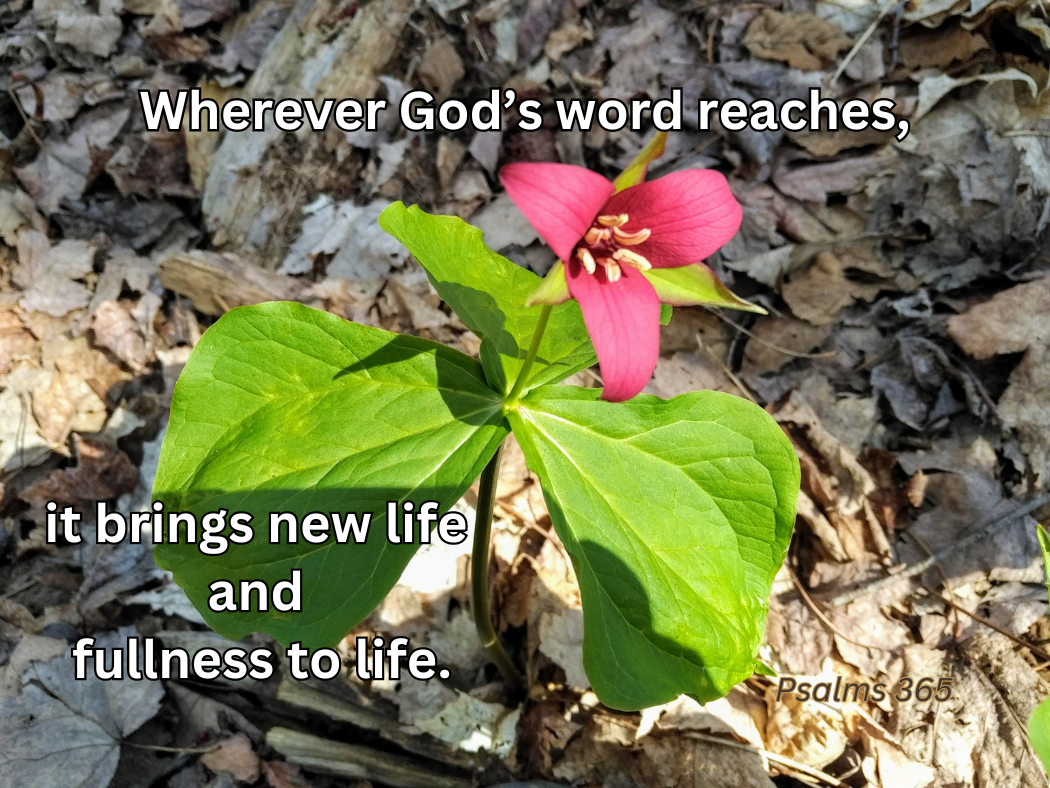
Wherever God’s word reaches, it brings new life and fullness to life. Yes, it often brings conviction of sins, but those are the dead limbs that need to be cut off so new growth can flourish. God’s word reorients my life from a path that leads to death to the way everlasting.

The inner peace and security that I need are found in the presence of the LORD. I need a constant flow of God’s word into my heart and my mind. True prosperity, healing and strength are found in the swiftly running words of God. I want to be immersed in those running words.

Response: LORD God, I treasure your commands and your words. I want your word to be active within me, cutting off those sins and habits that are unproductive, and then bringing forth new life and the fruits of righteousness, peace, and joy. Thank you, Jesus. Amen.

Your Turn: Do you allow God’s word to run and play in your mind? Has a Bible verse changed your life?

Para la publicación de Salmos 365 de hoy en español haga clic aquí.

bgbg_v4.3_1501818
* NEW INTERNATIONAL VERSION, COPYRIGHT ©1973, 1978, 1984, 2011 BY BIBLICA

Please pray for peace to return to Israel, Gaza, and Ukraine!

Volume I of Psalms 365: Develop a Life of Worship and Prayer won the Best Book of the Year Award from The Word Guild and Volume II has won the Best Devotional of the Year Award. For those who love God’s word, this three-book series is an ideal way to daily meet with the Lord. To purchase or for a closer look click here.

A gripping read from David Kitz.
Is a return-to-Jesus revival possible in our time?
This book points the way forward.
For details click here.
The Wells of Salvation

Tags

, , , , , , , , , ,

Today’s quote and prayer from
“Psalms 365: Develop a Life of Worship and Prayer”

Today’s Reading: Psalm 147: 8-12

LORD God,
I am thankful
that you are my supplier.
You provide for all my needs
and many of my desires as well.
Your grace is abundant.
Jesus,
you are my salvation
and source of joy.
Amen.

— — — —

Songs of Praise

In that day you will say:

“I will praise you, LORD.
    Although you were angry with me,
your anger has turned away
    and you have comforted me.
Surely God is my salvation;
    I will trust and not be afraid.
The LORD, the LORD himself,
is my strength and my defense;

    he has become my salvation.”
With joy you will draw water
    from the wells of salvation.
(Isaiah 5:1-3 NIV)*

Para la publicación de Salmos 365 de hoy en español haga clic aquí.

bgbg_v4.3_1501818
* NEW INTERNATIONAL VERSION, COPYRIGHT ©1973, 1978, 1984, 2011 BY BIBLICA

Please pray for peace to return to Israel, Gaza, Sudan, and Ukraine!

Volume I of Psalms 365: Develop a Life of Worship and Prayer won the Best Book of the Year Award from The Word Guild and Volume II has won the Best Devotional of the Year Award. For those who love God’s word, this three-book series is an ideal way to daily meet with the Lord. To purchase or for a closer look click here.

A gripping read from David Kitz.
Is a return-to-Jesus revival possible in our time?
This book points the way forward.

Finding Daily Provision in God

Tags

, , , , , , , , , , , , , , ,

Today’s Devotion from Psalms 365 by David Kitz

Reading: Psalm 147: 8-12
He covers the sky with clouds;
he supplies the earth with rain
and makes grass grow on the hills.
He provides food for the cattle
and for the young ravens when they call.
His pleasure is not in the strength of the horse,
nor his delight in the legs of the warrior;
the LORD delights in those who fear him,
who put their hope in his unfailing love.
Extol the LORD, Jerusalem;
praise your God, Zion (NIV). *

Reflection
I grew up on a farm on the prairies. During the hot summer it was not unusual for rain to be in short supply, but rain is essential for growing field crops of any kind.

As a child one of my favorite garden projects was growing watermelons. Two key ingredients are needed if you want to grow watermelons: lots of direct sunlight and a plentiful supply of water. I could count on the sunlight pouring down from the sky, but rain was far less dependable. There may be afternoon or evening thundershowers, but they were often of the hit and miss variety. All too often on the thundershower scoreboard, we scored a miss. In such conditions daily watering was essential.

Each of my watermelon plants could count on a daily supply of a gallon of water. Barring a major downpour, I was their supplier. I brought my plants pails of water from the well. By September all the hard work of summer began to pay off. The garden-grown watermelons were delicious and juicy beyond compare.

Today’s reading from Psalm 147 reminds us that the LORD is our supplier. He covers the sky with clouds; he supplies the earth with rain and makes grass grow on the hills (v. 8).

The LORD is the ultimate supplier of all things, rain and sunshine and life itself. All He asks is that we fear Him—honor Him with the respect He deserves. The LORD delights in those who fear him, who put their hope in his unfailing love (v. 11). What a comforting thought! The LORD delights in me. Wow!

I need a daily supplier. I need a supply of daily bread—those necessary things that sustain life. But beyond that, I also need less tangible things like love, encouragement and peace of mind. Sometimes those things fall from the sky. But there are other times when I need to go to the well—the well of my salvation. There is a supply of grace stored up there for me to access. “The LORD, the LORD himself, is my strength and my defense; he has become my salvation.” With joy you will draw water from the wells of salvation (Isaiah 12:2b-3).

Response: LORD God, I am thankful that you are my supplier. You provide for all my needs and many of my desires as well. Your grace is abundant. You are my salvation and source of joy. Amen.

Your Turn: Do you have a steady supplier? Do you have access to the well of salvation?

Para la publicación de Salmos 365 de hoy en español haga clic aquí.

bgbg_v4.3_1501818
* NEW INTERNATIONAL VERSION, COPYRIGHT ©1973, 1978, 1984, 2011 BY BIBLICA

Please pray for peace to return to Israel, Gaza, and Ukraine!

Volume I of Psalms 365: Develop a Life of Worship and Prayer won the Best Book of the Year Award from The Word Guild and Volume II has won the Best Devotional of the Year Award. For those who love God’s word, this three-book series is an ideal way to daily meet with the Lord. To purchase or for a closer look click here.

A gripping read from David Kitz.
Is a return-to-Jesus revival possible in our time?
This book points the way forward.
For details click here.

So That Christ May Dwell in Your Hearts

Tags

, , , , , , , , , , ,

Today’s quote and prayer from
“Psalms 365: Develop a Life of Worship and Prayer”

Today’s Reading: Psalm 147:4-7

LORD God,
I can’t begin to fathom your greatness.
You are far too wonderful for me.
I don’t deserve a moment of your thoughts.
But you did so much more.
You sent Jesus.
Thank you for your creation
and your great redemption.

Amen.

— — — —

For this reason I kneel before the Father, 
from whom every family in heaven
and on earth derives its name.
 
I pray that out of his glorious riches 
he may strengthen you with power 
through his Spirit in your inner being,
 
so that Christ may dwell
in your hearts through faith.
And I pray that you,
being rooted and established in love,
 
may have power,
together with all the Lord’s holy people, 
to grasp how wide and long |
and high and deep is the love of Christ,
 
and to know this love
that surpasses knowledge—
that you may be filled to the measure
of all the fullness of God.

(Ephesians 3:14-19 NIV)*

Para la publicación de Salmos 365 de hoy en español haga clic aquí.

bgbg_v4.3_1501818
* NEW INTERNATIONAL VERSION, COPYRIGHT ©1973, 1978, 1984, 2011 BY BIBLICA

Please pray for peace to return to Israel, Gaza, Sudan, and Ukraine!

Volume I of Psalms 365: Develop a Life of Worship and Prayer won the Best Book of the Year Award from The Word Guild and Volume II has won the Best Devotional of the Year Award. For those who love God’s word, this three-book series is an ideal way to daily meet with the Lord. To purchase or for a closer look click here.

A gripping read from David Kitz.
Is a return-to-Jesus revival possible in our time?
This book points the way forward.

How Big Is Your God?

Tags

, , , , , , , , , , , , ,

Today’s Devotion from Psalms 365 by David Kitz

Reading: Psalm 147:4-7
He determines the number of the stars
and calls them each by name.
Great is our Lord and mighty in power;
his understanding has no limit.
The LORD sustains the humble
but casts the wicked to the ground.
Sing to the LORD with grateful praise;
make music to our God on the harp (NIV). *

Reflection

How many stars are there in the Milky Way galaxy? According to astronomers the answers is somewhere between 100 billion and 400 billion. That’s quite a wide range. If we don’t know the number of stars in our own galaxy, how can we possibly know the total number of stars in the universe?

The difficulty of this calculation has not stopped scientists from coming up with an estimate. There are about two trillion galaxies in the known universe, so multiplying the number of stars in an average size galaxy by two trillion will give us an answer. Using these figures the total number of stars is 1 with twenty-four zeroes after it. But astronomers admit the actual number could well be ten times higher.

We need to understand today’s reading from Psalm 147 in the light of this astronomical number. He [the LORD] determines the number of the stars and calls them each by name. Great is our Lord and mighty in power; his understanding has no limit (v. 4-5).

The size of the universe blows my mind. It is so beyond comprehension in size and scope that we are left staggered and breathless. We can’t begin to take in the smallest fraction of it. But our great Lord knows the name of every star. If the universe is so big then it’s painfully obvious that my concept of God is far too small. He boggles the brain. The word awesome doesn’t begin to capture His greatness. He is truly limitless in time and space.

Knowing the greatness of God and his created universe should leave us in wonder about the next statement in this psalm. The LORD sustains the humble but casts the wicked to the ground (v. 6).

Why would this great limitless God care about me and the state of my heart and mind? Why would He consider me significant? Why would He care for me? Why would He fix His attention on anyone on this earth—this speck of dust in greatness of the universe? The LORD has galaxies to tend to.

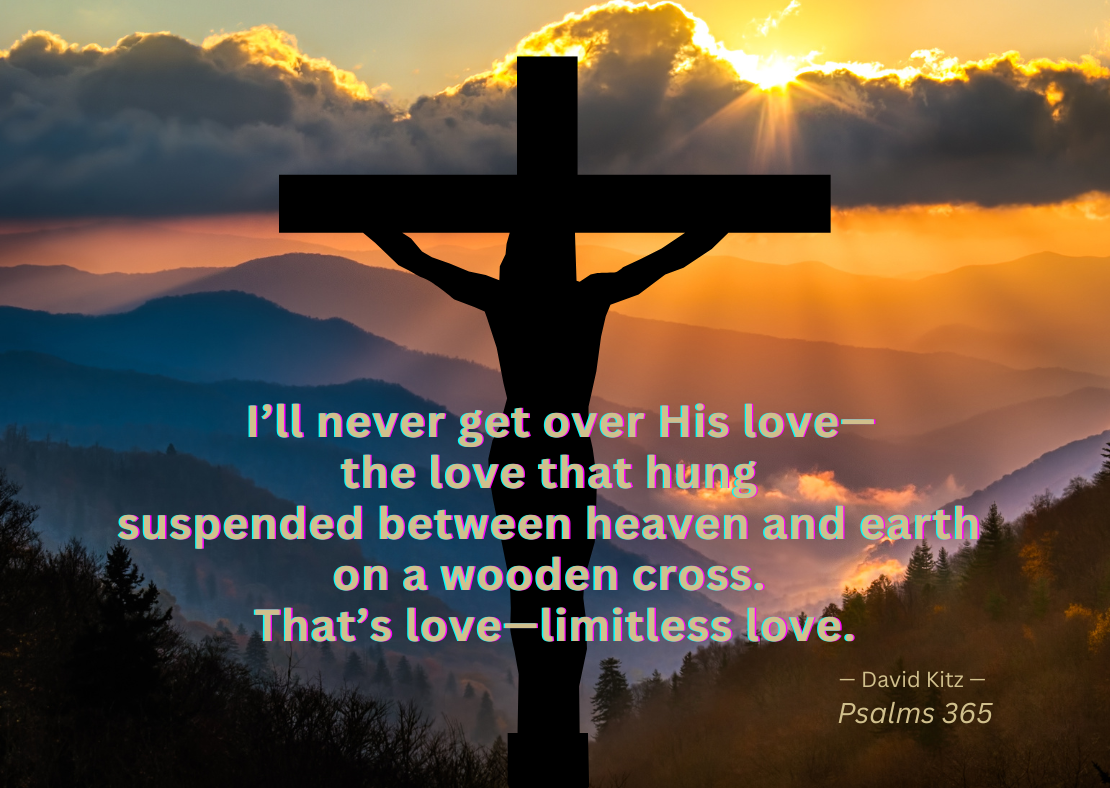
But He cares. This great, limitless God cares for the likes of you and me. Now that’s the wonder of it all. That’s the biggest ‘wow’ in the universe. I’ll never get over His love—the love that hung suspended between heaven and earth on a wooden cross. That’s love—limitless love.

Response: LORD God, I can’t begin to fathom your greatness. You are far too wonderful for me. I don’t deserve a moment of your thoughts. But you did so much more. You sent Jesus. Thank you for your creation and your great redemption. Amen.

Your Turn: How big is your God? Does He fill your universe?

Para la publicación de Salmos 365 de hoy en español haga clic aquí.

bgbg_v4.3_1501818
* NEW INTERNATIONAL VERSION, COPYRIGHT ©1973, 1978, 1984, 2011 BY BIBLICA

Please pray for peace to return to Israel, Gaza, and Ukraine!

Volume I of Psalms 365: Develop a Life of Worship and Prayer won the Best Book of the Year Award from The Word Guild and Volume II has won the Best Devotional of the Year Award. For those who love God’s word, this three-book series is an ideal way to daily meet with the Lord. To purchase or for a closer look click here.

A gripping read from David Kitz.
Is a return-to-Jesus revival possible in our time?
This book points the way forward.
For details click here.