Jesus’ Suffering and our Suffering

Tags

, , , ,

Reading: Psalm 22
(Verses 22-26)
I will declare your name to my people;
in the assembly I will praise you.
You who fear the L
ORD, praise him!
All you descendants of Jacob, honor him!
Revere him, all you descendants of Israel!
For he has not despised or scorned
the suffering of the afflicted one;
he has not hidden his face from him
but has listened to his cry for help.
From you comes the theme of my praise in the great assembly;
before those who fear you I will fulfill my vows.
 The poor will eat and be satisfied;
those who seek the L
ORD will praise him—
may your hearts live forever!
(NIV)

Gatinea P 2015-10-27

You who fear the LORD, praise him! — photo by David Kitz

Reflection
In this ongoing discussion of Psalm 22 we hit a critical turning point with yesterday’s scripture reading. The humiliated, pierced and tortured Christ prays, “But you, LORD, do not be far from me. You are my strength; come quickly to help me. Deliver me from the sword, my precious life from the power of the dogs. Rescue me from the mouth of the lions; save me from the horns of the wild oxen” (Psalm 22:19-21).

God the Father answered the prayer of his suffering Son, not immediately, but three days later Jesus arose from the dead. Now he reigns triumphant over death, hell and the grave. The opening words recorded here are the resurrected Christ’s song of triumph: I will declare your name to my people; in the assembly I will praise you. You who fear the LORD, praise him! All you descendants of Jacob, honor him! Revere him, all you descendants of Israel!

And why should we praise the LORD? Here is the answer: For he has not despised or scorned the suffering of the afflicted one; he has not hidden his face from him but has listened to his cry for help. 

In the context of this psalm, Christ is the afflict one. The prophet Isaiah declares, “He was pierced for our transgressions, he was crushed for our iniquities; the punishment that brought us peace was on him, and by his wounds we are healed” (Isaiah 53:5).

Yes, praise Him! We have a Savior who can fully identify with every aspect of our humanity because he was fully human. He suffered just as we suffer and in his body he experience severe loss and pain. God incarnate knows all about the human condition because He lived as a human. But in all this Jesus is the victor. May your hearts live forever because of Jesus Christ who conquered death and lives now and forever.

Response: Father, thank you for victory over death, hell and the grave through your Son Jesus. By faith his victory becomes my victory. Hallelujah! I praise you my Lord and Savior. Amen.

Your Turn: Does the knowledge of Christ’s suffering help you in times of personal pain or loss?

Hands and Feet Pierced for Me

Tags

, , , , , ,

Reading: Psalm 22
(Verses 16-21)
Dogs surround me,
a pack of villains encircles me;
they pierce my hands and my feet.
All my bones are on display;
people stare and gloat over me.
They divide my clothes among them
and cast lots for my garment.
But you, LORD, do not be far from me.
You are my strength; come quickly to help me.
Deliver me from the sword,
my precious life from the power of the dogs.
Rescue me from the mouth of the lions;
save me from the horns of the wild oxen
(NIV).

IMG_20181022_0837537

Bracket fungus on a decaying log — photo by David Kitz

Reflection
The title notes to Psalm 22 state, “A psalm of David.” But while this is David’s psalm, it’s entirely about Jesus—about our Savior’s personal thoughts and experience—about his suffering and death. Nowhere is this expressed more clearly than in the opening lines posted above: Dogs surround me, a pack of villains encircles me; they pierce my hands and my feet.

On the rock hill called Golgotha, surrounded by his taunting enemies, Jesus is stripped naked. His hands and feet are pierced as he is nailed to the cross and lifted up for the whole world to see. The helpless Christ silently laments, “All my bones are on display; people stare and gloat over me.”

All four Gospels record what happens next. The soldiers divide up Jesus clothes and gamble for his seamless garment. “Let’s not tear it,” they said to one another. “Let’s decide by lot who will get it.” This happened that the scripture might be fulfilled that said, “They divided my clothes among them and cast lots for my garment.” So this is what the soldiers did (John 19:24).

Thoughtless Roman soldiers fulfilled what David penned nine centuries earlier. But was Jesus truly helpless? If he was helpless, he was helpless by design. If he was forsaken by his Father, he was forsaken by choice—his choice. This was a course of action that Jesus willingly chose. He lay down his life. The Lamb of God suffered and died that our sins might be atoned, that we may receive a full pardon. Redemption has come; the price has been paid in full—paid in blood.

The turning point in this psalm is found in the last stanza above. With unvoiced words Jesus cries out to be rescued and delivered from death. Three days later his prayer was answered through his bodily resurrection. Ultimately, Jesus triumphed over death, hell and the grave. By faith his suffering brings our redemption and victory.

Response: Lord Jesus, my thanks flows to you. You were forsaken that I might have eternal life. Thank you for thinking of me rather than of yourself. You deserve all praise. Amen.

Your Turn: What is the right response to the love Jesus showed?

A Suffering Savior

Tags

, , , , , ,

Reading: Psalm 22
(Verses 9-15)
Yet you brought me out of the womb;
you made me trust in you, even at my mother’s breast.
From birth I was cast on you;
from my mother’s womb you have been my God.
Do not be far from me,
for trouble is near and there is no one to help.
Many bulls surround me;
strong bulls of Bashan encircle me.
Roaring lions that tear their prey
open their mouths wide against me.
I am poured out like water,
and all my bones are out of joint.
My heart has turned to wax; it has melted within me.
My mouth is dried up like a potsherd,
and my tongue sticks to the roof of my mouth;
you lay me in the dust of death
(NIV).

cross jesus summit cross

Photo by Pixabay on Pexels.com

Reflection
As we continue this meditation on Psalm 22, it is essential that we bear in mind that prophetically this is the crucifixion psalm. As stated in my previous post, the crucifixion is portrayed from the victim’s point of view—Jesus’ point of view. Through the poetic medium of this psalm, Jesus is speaking. He is describing his thoughts amid the horror of his excruciating affliction.

I recently read an account of the disastrous Dieppe Raid of 1942. In one scene from the carnage on the Normandy beach, a horribly-mangled, mortally-wounded young man is trapped in coils of razor wire. With his last desperate breaths what does he do? He cries out for his mother. In the pain of death the thoughts of grown men often turn to the soothing remembrance of their mother’s love. For our Savior it was no different. But from birth Jesus put his trust in God. Yet you brought me out of the womb; you made me trust in you, even at my mother’s breast. From birth I was cast on you; from my mother’s womb you have been my God.

As Jesus hangs pinned to the cross, he is encircled by his accusers—strong bulls of Bashan—who hurl insults at him. Peering down at his mangled and bleeding body he laments, I am poured out like water, and all my bones are out of joint. My heart has turned to wax; it has melted within me. 

As the heat of the day builds, the trickle of blood continues and severe dehydration sets in. He cries out, “I thirst!” (John 19:28). This is our Savior’s confession—his stark reality—a reality he endured for our redemption. My mouth is dried up like a potsherd, and my tongue sticks to the roof of my mouth; you lay me in the dust of death.

Response: Father God, thank you for sending your Son Jesus to this cruel world to suffer on my behalf. Your unconditional love for me was demonstrated on the cross for all to see. I thank you. Amen.

Your Turn: What does Jesus suffering mean for you?

The LORD is my Shepherd

Tags

, , , ,

I will praise Him!

agriculture clouds countryside daylight

Photo by Pixabay on Pexels.com

A psalm of David.

The LORD is my shepherd, I lack nothing.
He makes me lie down in green pastures,
he leads me beside quiet waters,
he refreshes my soul.
He guides me along the right paths
    for his name’s sake.
Even though I walk
    through the darkest valley,
I will fear no evil,
    for you are with me;
your rod and your staff,
    they comfort me.

(Psalm 23:1-4, NIV)

The Soldier Who Killed a King—A Review By Dr. Darlene Witte-Townsend

Tags

, , , , ,

Free WW-e FACEBOOK-2 (2)

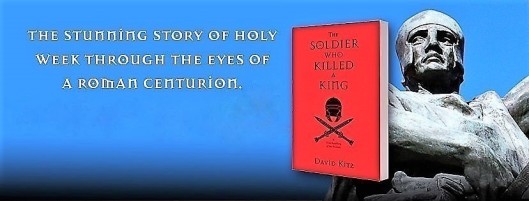
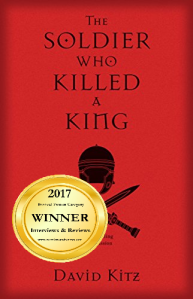
The Soldier Who Killed a King was voted the top book in the biblical fiction category for 2017 by the Christian book service, Interviews and Reviews. Having recently read this book, it’s not difficult to see why. It plays like a high-stakes movie in your mind.

Canadian author, David Kitz, closely examines the events occurring between Jesus’ entry into Jerusalem on Palm Sunday and his resurrection a few days later. But we see all these events from a unique perspective—through the eyes of a Roman soldier.

This engaging, hard-hitting narrative is a distillation of Kitz’s study and prayer over a 50-year span, when as pastor, educator and Bible dramatist, he steeped himself in the wonder of this story. As a novelist, he reveals profound respect for the historical record through his characterization of Marcus Longinus, a Roman centurion who is unwillingly caught in the power struggles of the day. Furthermore, Kitz stays true to the scriptural account by integrating more than a hundred quotes from the Gospels into the story text.

Three corrupt men, Herod Antipas, “the Fox,” Pontius Pilate, “the Badger,” and Josephbiblical-fiction-award-2017_orig Caiaphas, “the Weasel” have an insatiable lust for money and power. They each attempt to use the political tumult of the time for their own gain. In contrast to the stench of their machinations, Kitz offers a deep sense of Jesus, the donkey-riding King, as the man in whom all of heaven is invested. Jesus emerges in the Roman world offering an entirely new way for humankind to be reborn.

Above all else, this is a story of personal redemption. Marcus, the Roman Centurion is like us, caught between worlds. Who is his king? Why?

The Son of God shows unlimited compassion through healing the sick and feeding the hungry, and his purity catches the attention of the masses in a drama that still shakes the world, one aching, open, humble heart at a time.

Do you need to rediscover the power of the cross? The Soldier Who Killed a King will take you there.

For more information regarding the author and his live dramatizations visit https://davidkitz.ca/centurion.php

For more information regarding book purchase from the author visit https://www.davidkitz.ca/bookcart/index.php?route=product/product&product_id=50

or

For more information regarding U.S. book purchases visit https://www.amazon.com/Soldier-Who-Killed-King-Retelling/dp/0825444853/ref=sr_1_1?ie=UTF8&qid=1537465478&sr=8-1&keywords=the+soldier+who+killed+a+king


Why I Believe in Prophecy?

Tags

, , , , ,

Reading: Psalm 22
For the director of music. To the tune of “The Doe of the Morning.”
A psalm of David.
(Verses 1-8)
My God, my God, why have you forsaken me?
Why are you so far from saving me,
so far from my cries of anguish?
My God, I cry out by day, but you do not answer,
by night, but I find no rest.
Yet you are enthroned as the Holy One;
you are the one Israel praises.
In you our ancestors put their trust;
they trusted and you delivered them.
To you they cried out and were saved;
in you they trusted and were not put to shame.
But I am a worm and not a man,
scorned by everyone, despised by the people.
All who see me mock me;
they hurl insults, shaking their heads.
“He trusts in the L
ORD,” they say, “let the LORD rescue him.
Let him deliver him, since he delights in him”
(NIV).

jesus_on_cross_crucifixion-full (2)

“My God, my God, why have you forsaken me?”

Reflection
Do you believe in prophecy?

Psalm 22 is the most graphic description of Christ’s crucifixion found anywhere in the Bible. Yet here it is—tucked away among the Psalms—written roughly 900 years before the birth of Christ. How can this be? During David’s time, crucifixion as a form of execution had not yet been invented. Furthermore, crucifixion is portrayed from the victim’s point of view—Jesus’ point of view.

“My God, my God, why have you forsaken me?” These are the words of Jesus on the cross and they form the opening line of this psalm. Of course, Jesus knew he was quoting this psalm when he cried out in anguish.

But did his arrogant mockers know that they too were fulfilling scriptural prophecy as they hurled their insults, “He trusts in the LORD,” they say, “let the LORD rescue him. Let him deliver him, since he delights in him.” These words from Psalm 22 find an uncanny parallel in the verbal abuse thrown at Jesus in Matthew 27:43 where we read, “He trusts in God. Let God rescue him now if he wants him, for he said, ‘I am the Son of God.’”  

Remarkably, David saw it all. Through the inspiration of the Holy Spirit, he beheld the cross nine centuries in advance. I believe in prophecies to come because of prophecies fulfilled.  

Response: Father, thank you for sending your Son Jesus to this cruel world to suffer on my behalf. Thank you that I can put my trust in Your Holy Word. It was, is and will be forever true and trustworthy. Amen.

Your Turn: Why do you have confidence in God’s word?

The Right Picture of God

Tags

, , , , ,

Reading: Psalm 21
(Verses 8-13)
Your hand will lay hold on all your enemies;
your right hand will seize your foes.
When you appear for battle,
you will burn them up as in a blazing furnace.
The L
ORD will swallow them up in his wrath,
and his fire will consume them.
You will destroy their descendants from the earth,
their posterity from mankind.
 Though they plot evil against you
and devise wicked schemes, they cannot succeed.
You will make them turn their backs
when you aim at them with drawn bow.
Be exalted in your strength, L
ORD;
we will sing and praise your might
(NIV).

20181026_1245509[4102]

Fall glory, Orleans ON — photo by David Kitz

Reflection
I have a confession to make. The overall title of my blog is I Love the Psalms! But there are some psalms where the fondness runs very thin. That’s the case with this psalm portion. The pacifist side of me gets very uncomfortable with all this talk of God’s wrath burning like a consuming fire. My reasoning goes something like this: If God gets angry with others; I might be the next one dropped in the toaster.

In this psalm David paints a portrait of the LORD as a warrior. I’m not so sure I want to see the LORD as a fearsome warrior. I prefer to see Him as a gentle shepherd—the Good Shepherd—not a God of vengeance firing arrows at His foes. But if I have my way—if I see Him only as a meek shepherd—do I have a right picture of the LORD? Am I blind to an important side of His character? Is He both a warrior and a shepherd?

I can be guilty of shaping God according to my image—the likeness I prefer. But the god I create is not the true God. The true God is always greater, more awesome, fear-provoking, and loving than I can possibly imagine. Words on a page fall short—always fall far short—when we attempt to describe God.

As for this world, it’s inhabited by evil men. Some are heinously evil—monsters in human skin. Others by the mercy of God are filled with kindness. A measure of the grace of God is extended even to those who do not know Him. If God refused to rain judgment on the perpetrators of evil would He still be a good God? If this world were perfect, would we still long for heaven?

Who am I to judge God? Who am I to find fault with my Creator and His ways? Here is the conclusion: Ride on in the battle against evil, Warrior King. Shelter me in your arms, Good Shepherd.

Response: Heavenly Father, I confess I have an incomplete picture of you. I can never grasp or comprehend your fullness. I bow before you, LORD Almighty. In humility I worship you, the magnificent and perfect, I AM. Amen.

Your Turn: Has your picture of God changed over time? Has it become more biblically accurate?

The Test of Success

Tags

, , , , , , ,

Reading: Psalm 21
For the director of music. A psalm of David.
(Verses 1-7)
The king rejoices in your strength, LORD.
How great is his joy in the victories you give!
You have granted him his heart’s desire
and have not withheld the request of his lips.
You came to greet him with rich blessings
and placed a crown of pure gold on his head.
He asked you for life, and you gave it to him—
length of days, forever and ever.
Through the victories you gave, his glory is great;
you have bestowed on him splendor and majesty.
Surely you have granted him unending blessings
and made him glad with the joy of your presence.
For the king trusts in the L
ORD;
through the unfailing love of the Most High
he will not be shaken
(NIV).

20181006_1434108 (2)

Quiet stream, Orleans, Ontario — photo by David Kitz

Reflection
The greatest test of a man’s character does not come during times of failure and defeat, but rather during times of success and victory. The higher a person rises the more detached he becomes from the common man’s reality. The historian Lord Acton observed that “Power corrupts; absolute power corrupts absolutely.”

Despite much opposition, conflict and affliction, David, the shepherd boy, became the King of Israel. David’s character was severely tested as he wandered as a fugitive in the wilderness, but greater testing lay ahead. David’s moral failure came at the pinnacle of his success. He passed the test in the wilderness, but failed the test in the throne room. Nothing tests a man’s mettle like success.

Despite this weakness, David knew where his strength lay. His strength came from the LORD. He knew the true source of his success. Here in Psalm 21 he testifies to why he rose to prominence: The king rejoices in your strength, LORD. How great is his joy in the victories you give!

When we achieve success, we need to cast our mind back to the reason for that success. It’s interesting to note that David did not take the credit for his victories. He attributed his accomplishments to the LORD. This is contrary to human nature. I am apt to crow about my triumphs, rather than give the credit to God. The truth is my abilities come from God and any success I achieve comes as a gift from Him. For promotion and power come from nowhere on earth, but only from God. He promotes one and deposes another (Psalm 75:6-7, TLB)

Response: Heavenly Father, help me to rightly handle the success that you bring. Lord Jesus, you are my victory over death, hell and the grave. Keep me thankful. You are more wonderful than I can imagine. I praise you. I owe any success I have achieved to you, Lord. Amen.

Your Turn: What personal success can you thank God for today? Are you giving credit where credit is due?

Speaking Words of Blessing

Tags

, , , , ,

Reading: Psalm 20
For the director of music. A psalm of David.
May the LORD answer you when you are in distress;
may the name of the God of Jacob protect you.
May he send you help from the sanctuary
and grant you support from Zion.
May he remember all your sacrifices
and accept your burnt offerings.
May he give you the desire of your heart
and make all your plans succeed.
May we shout for joy over your victory
and lift up our banners in the name of our God.
May the LORD grant all your requests.
Now this I know:
The L
ORD gives victory to his anointed.
He answers him from his heavenly sanctuary
with the victorious power of his right hand.
Some trust in chariots and some in horses,
but we trust in the name of the L
ORD our God.
They are brought to their knees and fall, but we rise up and stand firm.
 L
ORD, give victory to the king! Answer us when we call! (NIV)

20180803_2021134

Petrie Island sunset — photo by David Kitz

Reflection
There’s an old saying that’s attributed to St. Augustine, “Pray as if everything depends on God. Work as if everything depends on you.” Here in Psalm 20, in the form of a prayer David captures the essence of that thought. But David is not praying for himself. He is praying for your success. Hear his words: May he [the LORD] give you the desire of your heart and make all your plans succeed. May we shout for joy over your victory and lift up our banners in the name of our God. May the LORD grant all your requests. 

David’s prayer on behalf of others brings a measure of conviction to my heart. How much time do I spend praying for the success of others? I tend to be rather selfish in my prayer requests. Do I want personal victories more than corporate or team success? Am I earnest in my desire to see others grow and prosper or is there a root of jealous envy that restricts my prayers on their behalf? Do I speak words of blessing over those around me? Do I inwardly rejoice when my brother stumbles, because it leaves me looking successful where he has failed?

The opening half of this psalm is intended as a spoken blessing over the life of my brother and my friend. Take a moment right now and substitute your friend’s name into this Psalm wherever the word you appears. Now speak the opening lines of this psalm as a blessing over your friend’s life. Finally, trust in the LORD your God to work on behalf of your friend or family member. We serve a God who brings victory.

Response: Heavenly Father, I repent of jealousy and envy. Help me speak words of blessing over those around me. I trust you. You are the true source of health and blessing in this world. Amen.

Your Turn: Whose life can you speak God’s blessing into today? Are there family members, friends or colleagues that need the blessing of God?