• Home
  • About
  • DavidKitz.ca
  • Youtube Videos
  • Books by David
  • Books on Amazon.com

I love the Psalms

~ Connecting daily with God through the Psalms

I love the Psalms

Tag Archives: bread

Good Gifts

13 Thursday Nov 2025

Posted by davidkitz in Psalm 13, Psalms

≈ Leave a comment

Tags

bread, children, faith, help in troubled times, Jesus, Prayer, Psalms, seeking, troubled times, worship

Today’s quote and prayer from
“Psalms 365: Develop a Life of Worship and Prayer

Today’s Reading: Psalm 13

Listen to today’s reading by Jonathan Dent:

https://davidkitz.blog/wp-content/uploads/2025/11/psalm-13-final-mix-1.mp3


LORD God,
thank you that I can call out to you
in times of trouble.
Show me the way forward.
Open my eyes
to the help you are providing
and will provide.
In Jesus’ name,
I trust and thank and praise you in advance.
Amen.

— — — —

Autumn glory, Gatineau Park, QC — photo by David Kitz

“Ask and it will be given to you;
seek and you will find;
knock and the door will be opened to you.

For everyone who asks receives;
the one who seeks finds;
and to the one who knocks,
the door will be opened.


“Which of you,
if your son asks for bread,
will give him a stone?

Or if he asks for a fish,
will give him a snake?

If you, then, though you are evil,
know how to give good gifts to your children,
how much more will your Father in heaven
give good gifts to those who ask him!

(Matthew 7:7-11 NIV)*

Para la publicación de Salmos 365 de hoy en español haga clic aquí.

bgbg_v4.3_1501818
* NEW INTERNATIONAL VERSION, COPYRIGHT ©1973, 1978, 1984, 2011 BY BIBLICA

Thank God for peace in Israel and Gaza,
and continue to pray for peace to return to Ukraine and Russia!

Volume I of Psalms 365: Develop a Life of Worship and Prayer won the Best Book of the Year Award from The Word Guild and Volume II has won the Best Devotional of the Year Award. For those who love God’s word, this three-book series is an ideal way to daily meet with the Lord. To purchase or for a closer look click here.

New from David Kitz

James—the brother of Jesus—who was this man? What evidence do we have that this “brother of our Lord” even existed?

David Kitz digs deep into archeology, family dynamics, church history, and the biblical texts. What emerges from his research is a portrait of a decisive, pivotal leader who embodied the will and character of Jesus Christ.

But how did James—James the unbeliever—transform to become a leader who changed the course of world history? In these pages you will uncover the answer and rediscover for yourself the life-changing power of the gospel.

To view further details or purchase this or other books directly from the author click here.

The Fire on the Road to Emmaus

21 Sunday Sep 2025

Posted by davidkitz in The Elisha Code

≈ 2 Comments

Tags

bread, breaking bread, Christ's teaching, David Kitz, disciples, fire, Holy Spirit, Jesus, Messiah, New Testament, Old Testament, Road to Emmaus, scriptures

And they said to one another,
“Did not our heart burn within us while He talked with us on the road,
and while He opened the Scriptures to us?”
 (Luke 24:32, NKJV)

Is there a conversation in the Bible, that you wish you could listen in on? How about the conversation between Mary and Joseph when she announces she is pregnant? What about the discussion the disciples had after Jesus stilled the storm on the Sea of Galilee? Or that night when Peter got out of the boat and began walking on the water? Oh, to have been there—to have seen the disciple’s astonishment and have heard their words!

Luke tells us of a conversation two downcast Jesus-followers had on the road to Emmaus on the afternoon of the first resurrection Sunday.

So it was, while they conversed and reasoned, that Jesus Himself drew near and went with them. But their eyes were restrained, so that they did not know Him.

And He said to them, “What kind of conversation is this that you have with one another as you walk and are sad?” (Luke 24:15-17, NKJV)

Jesus patiently listens as they speak of their dashed hopes and shattered dreams—dreams and hopes that ended with the crucifixion of the man they thought was the long-awaited Messiah. They go on to report that some of their women folk who had gone to his tomb had seen a vision of angels who announced this prophet from Nazareth was in fact alive. What were they to make of all this?

Then He said to them, “O foolish ones, and slow of heart to believe in all that the prophets have spoken! Ought not the Christ to have suffered these things and to enter into His glory?” And beginning at Moses and all the Prophets, He expounded to them in all the Scriptures the things concerning Himself (Luke 24:25-27, NKJV).  

Certainly, that was a conversation we all wish we could eavesdrop on. Specifically, what Scriptures did Jesus draw on as he expounded concerning Himself? Let’s keep in mind this was decades before any of the books of the New Testament canon were written.

The Word of God — photo by David Kitz

Surely, Jesus would have drawn on Isaiah 53 as he spoke of his suffering. What about the Psalms? Many of them resound with a prophetic Messianic ring.  To a degree, we can imagine what some of those Old Testament references might be. For example, we know that Peter quoted verbatim from both Psalm 16 and Psalm 110 in his first sermon on the day of Pentecost. (See Acts 2:25-28 and Acts 2:34-35.) Did Peter develop this understand concerning these prophetic Scriptures on his own, or were these passages an integral part of Christ’s teaching concerning himself during his post resurrection ministry? Were they part of the discussion on that eventful resurrection Sunday walk?  

Though the content of the Road to Emmaus discourse remains hidden from us, it is possible to tease out some of Christ’s teaching concerning himself and his ministry by examining other passages in both the New and Old Testament.

According to Luke, Cleopas and his companion were initially unable to recognize Jesus when he walked with them on the road. But their eyes were restrained, so that they did not know Him (Luke 24:16, NKJV).

Two disciples—men who had previously spent time with Jesus—were blind to their Lord and Savior. Why was this the case? Undoubtedly, Jesus looked different. A brutal death followed by a supernatural resurrection must have brought significant changes to his physical appearance. A lifelong friend or relative may look startlingly different after a severe trauma or illness. Surely, this accounts for some of the disciples’ inability to recognise Jesus.

But this inability to recognise Jesus extended beyond his physical appearance. It had a spiritual dimension. They were unable recognise that Jesus was the Christ—their long-awaited Messiah promised to them in their Scriptures. After all, this was what the conversation on the road was all about. It was Jesus revealing himself to these two men through the written Word of Moses and the Prophets.

Do we suffer from the same spiritual blindness? Do we need an eye-opening experience with the Lord and his Word? This lack of perception inhibits our walk with our Savior. We think we know the Word of God. But like these disciples of old, have our eyes been veiled as we read the Scriptures? Do we have a wrong set of expectations?

Many Christ-followers have never read the Old Testament—the first three quarters of their Bibles. Similarly, many Sunday sermons focus exclusively on texts drawn from the New Testament. How can we say we know the Word when we neglect the only Scriptures that Jesus knew and studied?

Something transpires when we immerse ourselves in God’s Word. Hearts and minds are transformed when the Word comes alive.

But let’s not fool ourselves. If we don’t understand the Word, or handle it incorrectly, we gain nothing. Worse yet, we deceive ourselves, pride inflates the mind, and we lead others astray. The Pharisees knew and followed the letter of the Law (the Word), but often they were devoid of the Spirit. The same self-deception can happen to us unless the Holy Spirit lights the way. Christ’s parable of the Sower and the seed plays out in real time to this present moment. The living word must root in us to bear fruit.

So, when did the light come on for Cleopas and his friend? When did recognition occur?

Now it came to pass, as He sat at the table with them, that He took bread, blessed and broke it, and gave it to them. Then their eyes were opened and they knew Him; and He vanished from their sight (Luke 24:30-31, NKJV).

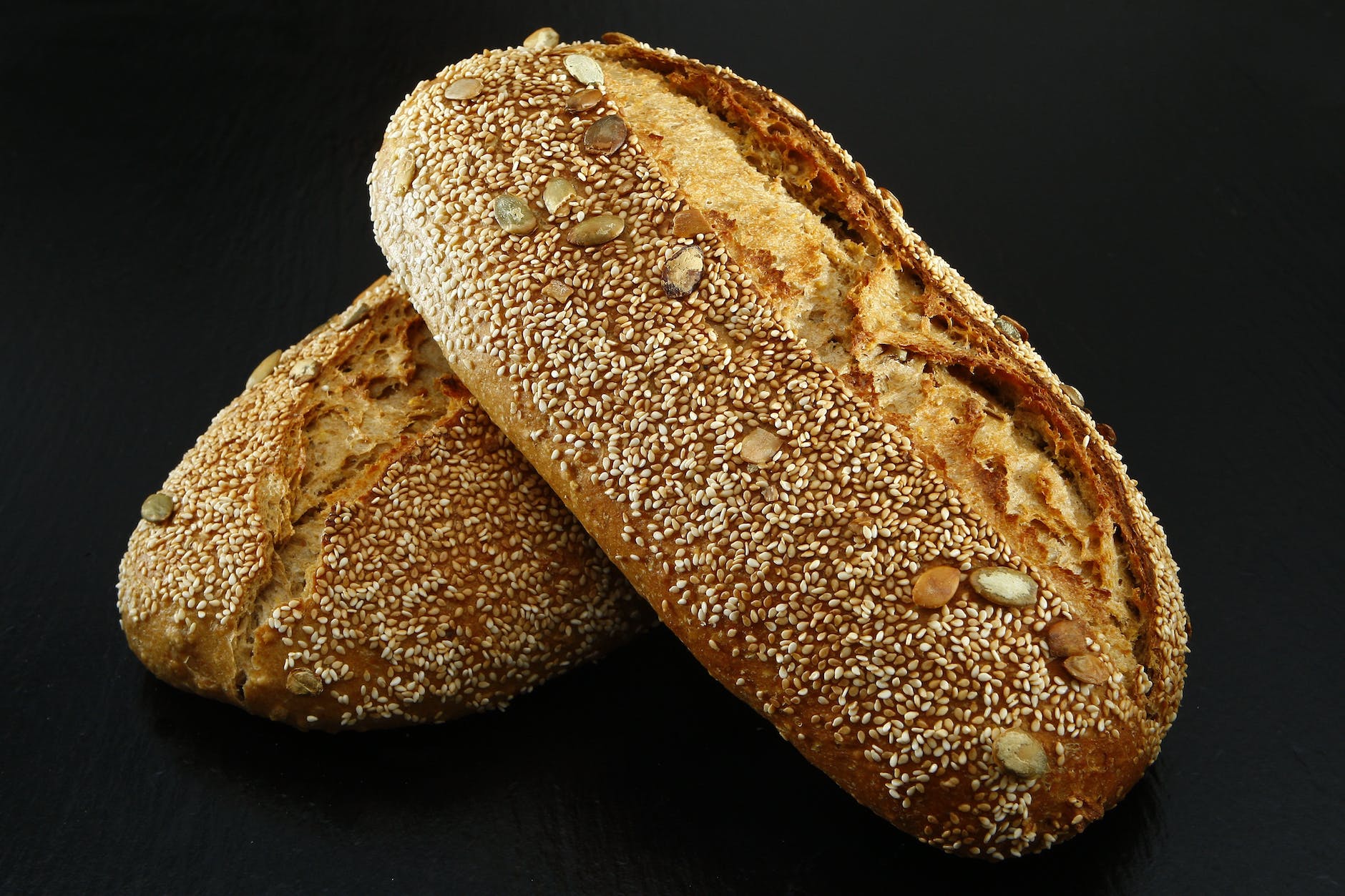
Photo by Pixabay on Pexels.com

Jesus was recognized when he broke bread with these two disciples. In that moment, they had their most intimate view of the living Christ.

Imagine the scene as Jesus picks up the bread. For the first time his hands come into full view. They gasp—awestruck at the sight of the nail scars. Who else could this be? It must be but their Savior! He offers thanks to his Father. With wounded hands, he tears the loaf and offers them a portion.

Like Thomas, who had a similar encounter nine days later, they are beyond astonished. Imagine them humbled—dropping to their knees before their Lord.

And then he is gone.

Only one thing remains. The fire remains. It remains within them.

And they said to one another, “Did not our heart burn within us while He talked with us on the road, and while He opened the Scriptures to us?” (Luke 24:32, NKJV)

It’s the same fire we must catch. The match was struck on the road to Emmaus. In the hearts of these two disciples, dying embers of hope began to glow as Jesus opened the Scriptures. Fifty days later, those embers would burst into open flame on the Day of Pentecost.

And suddenly there came a sound from heaven, as of a rushing mighty wind, and it filled the whole house where they were sitting. Then there appeared to them divided tongues, as of fire, and one sat upon each of them. And they were all filled with the Holy Spirit and began to speak with other tongues, as the Spirit gave them utterance (Acts 2:2-4, NKJV).

Are you ready to catch the fire?

This is the third weekly excerpt from the award-winning book 
The Elisha Code & the Coming Revival 

A soul-gripping read.
Is a return-to-Jesus revival possible in our time?
This book points the way forward.
For details click here.

He Makes Springs Pour Water

26 Sunday Nov 2017

Posted by davidkitz in Bible, Psalm 104, Psalms

≈ 2 Comments

Tags

bread, God's creation, Grand Tetons National Park, mountains, oil, ravines, the LORD, water, wine

I will praise Him!

Matthew Taylor Grand Tetons National Park

Grand Tetons National Park — photo by Matthew Taylor

He makes springs pour water into the ravines;
    it flows between the mountains.
They give water to all the beasts of the field;
    the wild donkeys quench their thirst.
The birds of the sky nest by the waters;
    they sing among the branches.
He waters the mountains from his upper chambers;
    the land is satisfied by the fruit of his work.
He makes grass grow for the cattle,
    and plants for people to cultivate—
    bringing forth food from the earth:
wine that gladdens human hearts,
    oil to make their faces shine,
    and bread that sustains their hearts.
The trees of the LORD are well watered,
    the cedars of Lebanon that he planted.
There the birds make their nests;
    the stork has its home in the junipers.
The high mountains belong to the wild goats;
    the crags are a refuge for the hyrax.

(Psalm 104:10-18, NIV)

Psalms 365: Develop a Life of Worship and Prayer

Psalms 365 Volume II

Psalms 365 vol 3
— Psalms 365 Volume III

Psalms

Recent posts

  • Ready for the King of Glory December 19, 2025
  • My Spirit Rejoices in God My Savior December 18, 2025
  • Joining the Generation That Seeks God December 18, 2025
  • Why Am I So Favored December 17, 2025
  • How Can You Find the Good Life? December 17, 2025
  • The Power of the Most High December 16, 2025
  •  The Earth Turns to the LORD December 16, 2025

Calendar

December 2025
M T W T F S S
1234567
891011121314
15161718192021
22232425262728
293031  
« Nov    

Blog Posts

Comments

  • davidkitz on Joining the Generation That Seeks God
  • cjsmissionaryminister on God Sent His Son
  • cjsmissionaryminister on The God of the Broken

Blog at WordPress.com.

Privacy & Cookies: This site uses cookies. By continuing to use this website, you agree to their use.
To find out more, including how to control cookies, see here: Cookie Policy
  • Subscribe Subscribed
    • I love the Psalms
    • Join 1,378 other subscribers
    • Already have a WordPress.com account? Log in now.
    • I love the Psalms
    • Subscribe Subscribed
    • Sign up
    • Log in
    • Report this content
    • View site in Reader
    • Manage subscriptions
    • Collapse this bar
 

Loading Comments...