• Home
  • About
  • DavidKitz.ca
  • Youtube Videos
  • Books by David
  • Books on Amazon.com

I love the Psalms

~ Connecting daily with God through the Psalms

I love the Psalms

Tag Archives: Creator

Be Still and Know that I am God

27 Sunday Apr 2025

Posted by davidkitz in Psalms

≈ 2 Comments

Tags

Almighty, Creator, God, Hiroshima, history, Japan, Jesus, Martin Luther, mighty fortress, Nazi Germany, Psalms, the LORD

Psalm 46:6-11
Nations are in uproar, kingdoms fall;
He lifts his voice, the earth melts.

The LORD Almighty is with us;
the God of Jacob is our fortress. (Selah)

Come and see the works of the LORD,
the desolations he has brought on the earth.
He makes wars to cease to the ends of the earth;
he breaks the bow and shatters the spear,
he burns the shields with fire.
“Be still, and know that I am God;
I will be exalted among the nations,
I will be exalted in the earth.”

The LORD Almighty is with us;
the God of Jacob is our fortress. (Selah)

Perhaps no other psalm captures the essence of the cataclysmic as completely as Psalm 46. Here with the psalmist, we catch a glimpse of the apocalypse. The world of this psalm is in utter turmoil. It quakes. It writhes. It melts. Through a poetic eye we are viewing the death throes of a planet.

I spent New Year’s Day, 1985 in Hiroshima, Japan—a city well acquainted with cataclysm. Today, Hiroshima is a beautiful city. It is a seaside city, built on a flat river delta surrounded by mountains. Seven river channels cut across the city’s fertile flood plain on their way to the blue waters of Hiroshima Bay. In many respects Hiroshima resembles a more compact, oriental version of Vancouver.

But on August 6th, 1945, this beautiful city became a terrestrial picture of hell. The horrors inflicted on Hiroshima are without parallel in human history. In an atomic flash, 66,000 residents were instantly killed. They were the fortunate. Another 60,000 died later of their injuries, or from the effects of radiation sickness. The accounts of their suffering are among the most heart wrenching literature, I have ever read.   

Historic Hiroshima explosion photo.

I was not in Hiroshima alone; my wife and my two-and-a-half-year-old son were with me. Together, on a cool but sunny New Year’s Day, we strolled through the Hiroshima Peace Memorial Park. We slowly walked around the building known as the A-Bomb Dome. This devastated stone structure was the only building left standing after the atomic blast. Its skeletal structure is a visible reminder of that grim day in 1945. But is this stark ruin also a portent of our future, and the future of our planet?   

Across the ages the psalmist speaks, “Nations are in uproar, kingdoms fall; He lifts his voice, the earth melts.”

In 1945 the nations of the world were in uproar, and kingdoms were falling. In Europe the vaunted thousand-year rule of the Third Reich came to a brutal end. Great cities lay in ruins. Millions were exterminated; millions more were displaced and starving. A demon in human flesh had put the whole apparatus of the modern state to work in eradicating God’s people. The last victim of every murderous demon is its human host, so staying true to Satanic form, in the final days of war Hitler and his leading Nazi henchmen pulled the trigger on their own demise.

Across the Pacific, expansionist, Imperial Japan was on the verge of collapse. The emperor, whose subjects worshipped him as god was about to call an end to a war that was cannibalizing his own people. Emperor Hirohito was revered as a descendant of the sun god, and through brutal military conquest the land of the Rising Sun had spread its rays across much of Asia. But before the emperor could call a halt to the war, a different kind of sun would ignite a blazing inferno in the heart of the nation.

Nuclear physicists will tell you that in its simplest form an atomic bomb is the power of the sun released upon the earth. The heat and radiation are of the same magnitude. A miniature sun flashed 100 million volts of raw energy over Hiroshima at 8:15 a.m. on August 6th, 1945.

People beneath the epicenter of the blast were simply vaporised. In the Atomic Bomb Museum, later that day my eyes bore witness to this phenomenon. Dark shadows were all that remained of men who were sitting on the stone steps of a bank building. Their bodies left something resembling a photographic imprint on the stone. In an instant—in a flash—they were gone.

Miles from the epicenter, brass globes drooped and melted on the side that was facing this new sun that had come to the earth. The effects upon human flesh of the intense heat of this nuclear flash can only be imagined. On many survivors, clothing and skin exposed just for an instant, simply melted away.

Again, across the ages the psalmist speaks, “Nations are in uproar, kingdoms fall; He lifts his voice, the earth melts.”

You view all these things in a different light, when you are with your family. My wife was walking beside me on this tour. She was into her third month of pregnancy. I was either carrying my two-year-old son in my arms, holding his little hand or pushing him in a stroller. I kept asking myself, “What kind of world am I bringing my children into? Will they experience these things—this hell—in their lifetime?”

Today’s newspaper headlines are not reassuring. More than forty years have passed since my visit to Hiroshima, and thus far the world has avoided nuclear holocaust. But once again we appear to be creeping closer to the brink of annihilation. I began writing this chapter two days ago, but in one of those odd cases of divine coincidence, today when I retrieved my morning newspaper from its slot in the screen door, the headline read, “North Korea Conducts Nuclear Test.”

And if a rogue state like North Korea does not raise the level of our concern, we can always look to Iran and its nuclear ambitions. Meanwhile Russia is edging ever closer to a full conquest of Ukraine. Then there is China, which is growing more powerful and restive as its economic might increases. As for the Middle East, tension and conflict are a constant reality. In short, we live in a very dangerous and unpredictable world.

If news headlines are not reassuring, Bible prophecies are even less so. The apostle Peter, speaking nearly a thousand years after Psalm Forty-six was penned, states, “the present heavens and earth are reserved for fire, being kept for the day of judgment and destruction of ungodly men” (2 Peter 3:7).

Peter goes on to evoke the very images of Psalm 46.

“The day of the Lord will come like a thief. The heavens will disappear with a roar; the elements will be destroyed by fire, and the earth and everything in it will be laid bare (2 Peter 3:10).

But over this inferno—this world afire—the psalmist speaks, “The LORD Almighty is with us; the God of Jacob is our fortress.”

We will not face this worldwide conflagration alone. We are not abandoned. The LORD has not left our side. We are not to yield to fear and worry. Though the ungodly perish, we have these words of assurance: “The LORD Almighty is with us; the God of Jacob is our fortress.” If we must face dark days, we will not face them alone. We will face them with the LORD Almighty.

There are many names for God, and good poetry is all about the choice of words. It is then significant to note that the psalmist chose this particular name combination, the LORD Almighty, at this juncture in this psalm. The LORD, which is the Hebrew translation of Yahweh or Jehovah, means I AM. The great I AM is with us. The God of the burning bush has come to be with us. It is this God, who in Exodus 3:14 told Moses, “I AM who I AM.” He will carry us through this time of apocalyptic turmoil. And not only is I AM, the self-existent-one with us, the psalmist also asserts that this great I AM is none other than the Almighty. In cataclysm we will see the power of the Almighty. He not only holds the power to melt the world and its elements with a fervent heat, he also has the power to save and deliver his own from that cataclysmic destruction, if he so chooses.

Shadrach, Meshach and Abedinigo walked out of the blazing furnace unscathed, because the Almighty was with them. In Psalm 46 we are assured that this same God, the LORD Almighty, will be with us. He will be with us, when the end-times, world-consuming conflagration hits. The Almighty will be standing there in the furnace with us. His invisible mantle of protection will be extended over us, because the God of Jacob is our fortress.

By invoking the name of the God of Jacob, the psalmist links us to the great redemptive history of God’s people. This is the God who saves, who intervenes into the affairs of men. He is the God who brought Jacob back safely to the land of promise, after years of foreign sojourn. He is the God, who visited Egypt with the ten plagues, but by the blood of a lamb, he set apart his own people and so saved them from the Angel of Death. It was the God of Jacob, who parted the Red Sea for his people, but destroyed the pursuing army. He is the God who destroyed the world in the great flood, but he floated his eight-person restoration mission over the top of the billowing torrent. In these and a thousand other biblical stories, he is a God who saves. He is a fortress round about those who call on his name. In the fortress we rest secure, no matter what fiery maelstrom should assault.

Throughout history God’s people have found safety and refuge in the fortress. Martin Luther knew all too well the assaults of hell. It was from within the fortress that he took his stand against the legions of hell. On the threat of death, he would not bow to error. He stood upon the unchanging inerrant word of God. When he left the Diet of Worms, he was a marked man—marked for execution. But even then, he was safe. He was safe, because a fortress surrounded him and protected him wherever he travelled. You see Luther’s fortress was the God of Jacob. How fitting then that in addition to translating the whole Bible, he should pen the words to that great hymn, “A Mighty Fortress is our God.”

Now the psalmist beckons us closer. “Come and see the works of the LORD, the desolations he has brought on the earth. He makes wars to cease to the ends of the earth. He breaks the bow and shatters the spear; he burns the shields with fire.”

We live in a world that denies the existence of God, or at best it sees God as aloof and distant from the historical events that shape societies and the course of nations. But is this an accurate world view? The Old Testament writers had a completely different perspective. They saw God as active in the affairs of men. He does not stand aloof from his creation, but rather he is the great Conductor of History. Nations move at his impulse. He raises up one kingdom and sets down another. At his discretion, he exalts one leader and humiliates another.  

Reading the above passage from the Psalms can be quite disturbing to some of us. It disturbs me. Does God really bring desolation on the earth? Does he take sides in war? We may prefer our God to be more passive and distant. Perhaps God is a pacifist? He certainly loves peace. Yet in the Bible, God actively intervened in great battles and wars. And sometimes, to the consternation of God’s people, he was helping the other side. The LORD used heathen Babylon to bring divine judgment down upon Judah.

Has God changed? Perhaps he has reformed in his old age? What would a twentieth century history text look like if it was written by Nehemiah, Isaiah, or Jeremiah? Would Isaiah see God’s hand of judgment being unleashed on Nazi Germany? Was God actively working against this murderer of millions, with his hell hatched theory of racial supremacy? Was the God of the heavens ready to share his glory with the earthbound emperor of Japan? Did the LORD sanction the Sun god’s conquest of Asia? Or did the Creator of the universe have the final say on the matter? Were the master theorists behind atheistic communism correct? Or did the LORD laugh at them in derision? Did the Soviet empire collapse under its own weight, or was the LORD helping a few Polish believers as they pulled the last few bricks out of the crumbling foundation?


But no nation can gloat in a state of moral superiority. The stench of sin hovers over the whole globe. Is this world ripe for God’s judgment? Are we facing apocalypse over the next horizon?

Into this global chaos the LORD speaks, “Be still, and know that I am God; I will be exalted among the nations, I will be exalted in the earth.”

This psalm from start to finish evokes a thousand images of catastrophe, but it is the last picture that should lodge most deeply in our hearts. It is the picture of a hurt young child rushing home into the arms of a loving parent. The world has hurt us. But in these arms, we will find love, healing and courage to face the world, to face a new day. At the core, where it counts most, we are loved by our Father. Over that frightened, wounded child our Father speaks these words, “Be still, and know that I am God; I will be exalted among the nations, I will be exalted in the earth.”

I need to hear those words spoken to me. In the rush of life, I need to pause. I need to stop and hear God as I’m curled up in his arms. When pain and fear and worry come, he says, “Be still.”

Quiet your heart in God. He is bigger than your problems—bigger than the whole cruel world out there. He is in control of world events. Yield to his control in your own life. He holds the future—your future is in his hands—and these are loving hands. Though nations are in uproar and kingdoms fall, his Kingdom stands secure and eternal. When you are still—still and at rest in his Kingdom—you know the truth of these words. The LORD Almighty is with us; the God of Jacob is our fortress.

Bringing Life to the Psalms

  1. Read the account of Shadrach, Meshach and Abedinigo in the fiery furnace, as found in Daniel chapter three. Consider what this story says to you about facing persecution and calamity with courage.
  2. Do you have a hymnal handy? Why not read or sing, “A Mighty Fortress is our God?” The lyrics are a powerful declaration of the supremacy of God in a world gone mad. You may also wish to view the movie, Luther or the more recent movie, Bonhoeffer. Both movies accurately portray the courageous faith that is required when we rise up to oppose error and evil forces.
  3. End-times theology, or eschatology, frequently is a source of fear rather than comfort. Psalm 46 can act as a counterweight to many of the rather frightening passages found in the Book of Revelation. How can this psalm help you view the end-times in a more positive light?
  4. What are some of the dangers of putting too much emphasis on end-times prophecy? Are there dangers in wilful ignorance? How should we approach the scriptures that touch on the apocalypse?
  5. As we conclude this look at Psalm 46 take a moment to reread this apocalyptic psalm. What is God saying to you by His Spirit?

    Today’s post is Chapter 10 from the book Psalms Alive! Connecting Heaven & Earth by David Kitz. To find out more or purchase click here.

Ruled by Love, Not Force

25 Friday Apr 2025

Posted by davidkitz in Psalm 103, Psalms

≈ Leave a comment

Tags

Bible, chaos, Creator, dominion, faith, freewill, God, heaven, order, praise, praise the LORD, Psalms, sovereignty, the LORD, worship

Today’s Devotion from Psalms 365 by David Kitz

Reading: Psalm 103:19-22
The LORD has established his throne in heaven,
and his kingdom rules over all.
Praise the LORD, you his angels,
you mighty ones who do his bidding,
who obey his word.
Praise the LORD, all his heavenly hosts,
you his servants who do his will.
Praise the LORD, all his works
everywhere in his dominion.
Praise the LORD, my soul (NIV). *

Reflection
Have you ever found yourself in a chaotic situation where you immediately ask this question, “Who’s in charge here?” Sometimes I have walked into an unruly classroom where that question is very pertinent. The teacher may be nowhere in sight or is absorbed with one or two students while bedlam reigns all around. It takes very little to lose control of thirty twelve-year-olds. Trust me on this point: It takes a range of skills to get a class of youngsters motivated and moving in the same direction.

Today’s reading from the psalms gives us an answer to that age old question, “Who’s in charge here?” The LORD has established his throne in heaven, and his kingdom rules over all ( v. 19).

So, there is your answer. The LORD is in charge here. He’s in charge of everything—the orderly and the controlled, and the seemingly random. Above this world and its mixture of order, routine, bedlam and chaos, the LORD sits enthroned as ruler overall.

Often the LORD is blamed for the bedlam and the chaos, but is that a fair assessment? Yes, He could control everything—every detail, but then there would be no humans on this planet—no free moral agents. To be human is to have the ability to choose both good and evil. If God sovereignly decided that we could only do good, then we would be robotic humanoids—not true humans at all.

Can there be true love if love is enforced from on high rather than freely chosen? Can there be genuine worship, if this divine privilege is induced by the Creator rather than willingly offered by the created? No, the LORD calls for our worship, but He forces it on no one. The God I serve is not a rapist; He is a true lover.

So, I will freely join with all creation to praise Him. I will join the angels, the heavenly hosts and all his works everywhere in his dominion. I will join in praising my Creator and my Redeemer, who was born in a stable and raised high to suffer on a cross, but now His throne is established in heaven and His kingdom rules over all. He is the One I will praise. How about you?

Response: Father God, I appreciate the free will that you have given me. I choose to worship you. You are the lover of my soul. Thank you for all you have done. I owe my life to Jesus. Amen.

Your Turn: Do we choose God, or does He choose us, or are both answers correct? How has choosing to worship God changed you?

Para la publicación de Salmos 365 de hoy en español haga clic aquí.

bgbg_v4.3_1501818
* NEW INTERNATIONAL VERSION, COPYRIGHT ©1973, 1978, 1984, 2011 BY BIBLICA

Please pray for peace to return to Israel, Gaza, and Ukraine!

Volume I of Psalms 365: Develop a Life of Worship and Prayer won the Best Book of the Year Award from The Word Guild and Volume II has won the Best Devotional of the Year Award. For those who love God’s word, this three-book series is an ideal way to begin the new year, and daily meet with the Lord. To purchase or for a closer look click here.

RGB72PsalmsVol2

A gripping read from David Kitz.
4485 SHARABLE-2

To purchase or for a closer look click here.

God’s Sovereignty

28 Friday Mar 2025

Posted by adeyemiasaba1 in Psalm 95, Psalms

≈ Leave a comment

Tags

Bible, cancer, Creator, God, God's hands, Jesus, life and death, Prayer, Psalms, the LORD, the world, worship

View Post

Today’s Devotion from Psalms 365 by David Kitz

Reading: Psalm 95:1-7
Come, let us sing for joy to the LORD;
let us shout aloud to the Rock of our salvation.
Let us come before him with thanksgiving
and extol him with music and song.
For the LORD is the great God,
the great King above all gods.
In his hand are the depths of the earth,
and the mountain peaks belong to him.
The sea is his, for he made it,
and his hands formed the dry land.
Come, let us bow down in worship,
let us kneel before the LORD our Maker;
for he is our God
and we are the people of his pasture,
the flock under his care (NIV). *

puzzlewharehouse.com

Reflection
I can’t read this opening portion of Psalm 95 without the folk spiritual “He’s Got the Whole World in His Hands” springing to mind. The psalmist makes this declaration: In his hand are the depths of the earth, and the mountain peaks belong to him. The sea is his, for he made it, and his hands formed the dry land (v. 4-5). In other words, He’s got the whole world in His hands.

There is something deeply reassuring about that thought. The great loving God, the Creator of the universe, has the whole world in His hands. But more specifically, our heavenly Father has you and me in His hands. If we grasp this biblical truth, it has broad personal implications.

Early this morning I met with a weekly gathering of men to pray and study God’s word. One of the co-leaders of the group is going through a great personal tragedy. His young, vibrant wife is dying of pancreatic cancer. Unless the Lord miraculously intervenes, his school-age son and daughter will soon be without a mother. At the close of our meeting, we placed our hands on this husband and father and prayed. The LORD has the whole world in his hands including this young family.

Do we understand the LORD’s purposes in all this? No. We would be fools to think we do. We can content ourselves in knowing that these great matters—these matters of life and death are in God’s hands. They are loving hands—hands that in the person of Jesus were scarred and pierced by nails. I’ll be content to be held in those hands.

Knowing this, let’s heed the psalmist’s call. Come, let us bow down in worship, let us kneel before the LORD our Maker; for he is our God and we are the people of his pasture, the flock under his care (v. 6-7).

Response: LORD God, you know all things. We were created for your purpose. Help us to live our lives in service to you. We are the flock under your care. Please extend your hand of mercy and blessing to those we know who are suffering or grieving. Amen.

Your Turn: Have you questioned God’s care for you during times of stress and grief? Does knowing your life is in God’s hands bring you reassurance?

Para la publicación de Salmos 365 de hoy en español haga clic aquí.

bgbg_v4.3_1501818
* NEW INTERNATIONAL VERSION, COPYRIGHT ©1973, 1978, 1984, 2011 BY BIBLICA

Please pray for peace to return to Israel, Gaza, and Ukraine!

Volume I of Psalms 365: Develop a Life of Worship and Prayer won the Best Book of the Year Award from The Word Guild and Volume II has won the Best Devotional of the Year Award. For those who love God’s word, this three-book series is an ideal way to begin the new year, and daily meet with the Lord. To purchase or for a closer look click here.

RGB72PsalmsVol2

A gripping read from David Kitz.
4485 SHARABLE-2

To purchase or for a closer look click here.

You Rule the Surging Sea

15 Saturday Mar 2025

Posted by davidkitz in Psalm 89

≈ Leave a comment

Tags

Bible, Creator, power of God, praise the LORD, Prayer, Psalms, worship

I will praise the LORD!


Psalm 89:9-13

You rule over the surging sea;
    when its waves mount up, you still them.
You crushed Rahab like one of the slain;
    with your strong arm you scattered your enemies.
The heavens are yours, and yours also the earth;
    you founded the world and all that is in it.
You created the north and the south;
    Tabor and Hermon sing for joy at your name.
Your arm is endowed with power;
    your hand is strong, your right hand exalted.
*

Para la publicación de Salmos 365 de hoy en español haga clic aquí.

bgbg_v4.3_1501818
* NEW INTERNATIONAL VERSION, COPYRIGHT ©1973, 1978, 1984, 2011 BY BIBLICA

Please pray for peace to return to Israel, Gaza, and Ukraine!

Volume I of Psalms 365: Develop a Life of Worship and Prayer won the Best Book of the Year Award from The Word Guild and Volume II has won the Best Devotional of the Year Award. For those who love God’s word, this three-book series is an ideal way to begin the new year, and daily meet with the Lord. To purchase or for a closer look click here.

RGB72PsalmsVol2

A gripping read from David Kitz.
4485 SHARABLE-2

This biblically accurate novel is ideal for the Lent/Easter season.
For details click here.

Life is Temporary, but God is Eternal

13 Thursday Mar 2025

Posted by davidkitz in Psalms

≈ 2 Comments

Tags

Creator, Ecclesiastes, eternity, faith, God, life, mortality, Prayer, Psalms, Reflection, Scripture, wisdom

Today’s Devotion from Psalms 365 by David Kitz

Reading: Psalm 90:1-6
A prayer of Moses the man of God.
Lord, you have been our dwelling place
throughout all generations.
Before the mountains were born
or you brought forth the whole world,
from everlasting to everlasting you are God.
You turn people back to dust,
saying, “Return to dust, you mortals.”
A thousand years in your sight
are like a day that has just gone by,
or like a watch in the night.
Yet you sweep people away in the sleep of death—
they are like the new grass of the morning:
In the morning it springs up new,
but by evening it is dry and withered (NIV). *

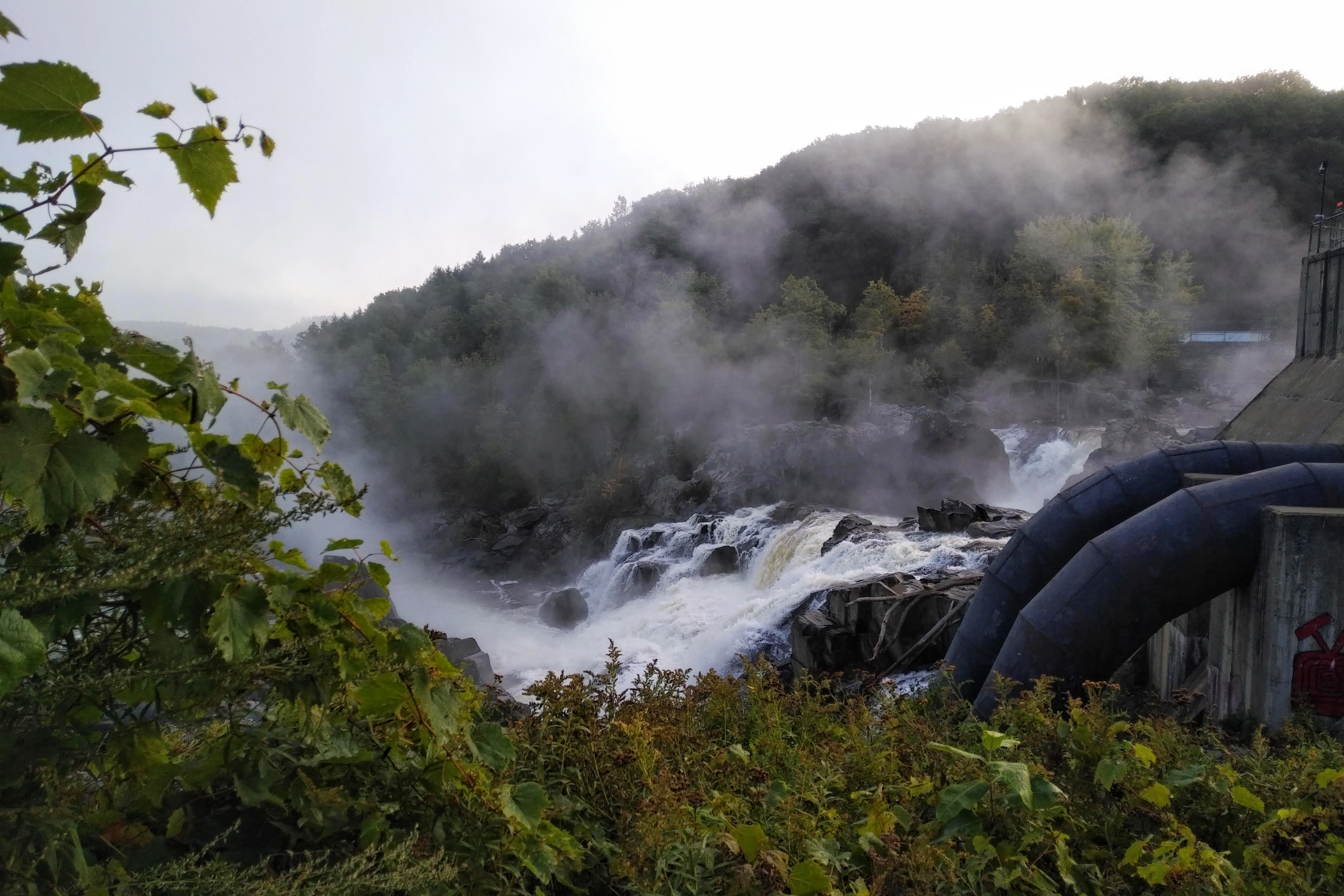
The falls at Fairfax, VT — photo by David Kitz

Reflection
In case you have not noticed, your life on this earth is temporal. It won’t last forever. In fact, there is very little on this earth that fits into the “lasts forever category.” My car fits well into this rusty, temporal category. My physical body will suffer a similar fate. My morning aches and pains remind me of this outcome. In this psalm Moses states the obvious when he makes this declaration: You turn people back to dust, saying, “Return to dust, you mortals” (v. 3).

James, the brother of our Lord, makes a similar observation: You should know better than to say, “Today or tomorrow we will go to the city. We will do business there for a year and make a lot of money!” What do you know about tomorrow? How can you be so sure about your life? It is nothing more than mist that appears for only a little while before it disappears (James 4:13-14, CEV).

Only God stands apart, above and beyond this temporal world. He is the ageless One, untouched by time. This assertion holds true. A thousand years in your sight are like a day that has just gone by, or like a watch in the night (v. 4).

The entire book of Ecclesiastes addresses the topic of the temporal nature of human life. Glenn Fobert has written an excellent book that explains the true meaning of that puzzling book: Everything Is Mist: Ecclesiastes on Life in a Puzzling and Troubled Temporary World.

Life is not meaningless or vanity. According to Fobert, scholars have mistranslated the Hebrew word for mist in Ecclesiastes. Life is like a morning fog that lifts, and is gone. Where has it gone? It goes to the eternal One, the Creator of all life. How then should we live? Ecclesiastes gives us the answer. Simply live in full reverence and praise to your Maker.

Response: LORD God, I thank you for being the author of this wonderful thing called life. Today, I want to live in humble thanksgiving and praise to you. Let my work, words, and conduct honor you. Amen.

Your Turn: Is the Lord your dwelling place? Are you at home with Him?

Para la publicación de Salmos 365 de hoy en español haga clic aquí.

bgbg_v4.3_1501818
* NEW INTERNATIONAL VERSION, COPYRIGHT ©1973, 1978, 1984, 2011 BY BIBLICA

Please pray for peace to return to Israel, Gaza, and Ukraine!

Volume I of Psalms 365: Develop a Life of Worship and Prayer won the Best Book of the Year Award from The Word Guild and Volume II has won the Best Devotional of the Year Award. For those who love God’s word, this three-book series is an ideal way to begin the new year, and daily meet with the Lord. To purchase or for a closer look click here.

RGB72PsalmsVol2

A gripping read from David Kitz.
4485 SHARABLE-2

To purchase or for a closer look click here.

Prophets Spoke from God

11 Tuesday Mar 2025

Posted by davidkitz in Psalm 89

≈ 2 Comments

Tags

Bible, Creator, Holy Spirit, prophecy, prophetic, prophets, Scripture, the LORD, trust in God, trust in God's word

Today’s quote and prayer from
“Psalms 365: Develop a Life of Worship and Prayer”
by David Kitz.

Reading: Psalm 89:38-45

LORD God,
my trust is in you
and your word.
Creator God,
I want my faith to be as secure for me
as the earth beneath my feet
and the air in my lungs.
You are all around me.
Thank you, Lord.

Amen.

— — —

We also have the prophetic message
as something completely reliable,
and you will do well to pay attention to it,
as to a light shining in a dark place,
until the day dawns
and the morning star rises in your hearts.
 
Above all,
you must understand
that no prophecy of Scripture came about
by the prophet’s own interpretation of things.
 
For prophecy never had its origin
in the human will,
but prophets, though human,
spoke from God
as they were carried along by the Holy Spirit.

(2 Peter 1:19-21, NIV)*

Para la publicación de Salmos 365 de hoy en español haga clic aquí.

bgbg_v4.3_1501818
* NEW INTERNATIONAL VERSION, COPYRIGHT ©1973, 1978, 1984, 2011 BY BIBLICA

Please pray for peace to return to Israel, Gaza, and Ukraine!

New from David Kitz
Winner of the 2024 Word Award of Merit in Biblical Studies
TheElishaCodeCVR5

To purchase or for a closer look click here.

Volume I of Psalms 365: Develop a Life of Worship and Prayer won the Best Book of the Year Award from The Word Guild and Volume II has won the Best Devotional of the Year Award. For those who love God’s word, this three-book series is an ideal way to daily meet with the Lord. To purchase or for a closer look click here.

This biblically accurate novel is ideal for the Lent/Easter season.
For details click here.

The Third Witness Prompts Response

02 Sunday Mar 2025

Posted by davidkitz in Psalms, Psalms Alive!

≈ Leave a comment

Tags

confession, Creator, David, God, God's forgiveness, Holy Spirit, Jesus, meditation, Prayer, Psalms, the LORD, transgressions, wilful sins, witness

Psalm 19:12-14
Who can discern his errors?
Forgive my hidden faults.
Keep your servant also from wilful sins;
may they not rule over me.
Then will I be blameless,
innocent of great transgression.
May the words of my mouth
and the meditation of my heart
be pleasing in your sight,
O LORD, my Rock and my Redeemer. (NIV)

What is your response to God’s word and His voice as it speaks to your heart?

That’s exactly what we find here in this final portion of Psalm 19. Here we see David’s response to God. God has been doing the talking thus far. God has been speaking to David through the stars, through the night sky, and the blazing heat of the sun—the first witness. He has spoken to him through the Word of God—His written revelation—the second witness. Now as this Psalm draws to a close, we hear David responding back to God.

In actuality, David is responding to the third witness. His heart is bearing witness to the reality of God. His conscience is convicting him of his sin and of the righteousness of God. We all have this third witness within us—a witness that will not be silenced, though we may try to drown out this inner voice of the Spirit.

This dialogue between God and man is one of the unique features of the Psalms. The Psalms are not simply the statements of a man in prayer, or even the words of a man caught up in praise and worship of his Creator. God speaks back, or as we see here in this Psalm, God initiates the conversation. We are eaves dropping on a conversation between a human being—someone just like us, caught up in the same travails and passions—and the transcendent, eternal God of the universe.

What a conversation! What communion we find here! This isn’t God pronouncing His dictates from heaven, though He has every right to do so. This is God whispering in the ear of an individual who is struggling to know and understand God’s will. And if God can speak to David in this manner, then there is hope for us. God can speak to us too. Surely this is why the Psalms have resonated with humankind throughout the ages. 

If along with David, we have heard the voices of the first and second witness, then there is only one appropriate response. It is the response recorded here in Holy Scriptures. If we see and grasp the awesome power and majesty of God, if through His word we have glimpsed His holiness, then we are brought low. We are humbled before him. Our greatest achievements are nothing. Our pride dissolves. Our weakness, our smallness is self-evident in the presence of the LORD of heaven and earth. We are exposed; our sin is exposed before this holy, magnificent God. 

Hear David’s response, “Who can discern his errors? Forgive my hidden faults.

We all stand naked of soul before our Creator. The all-seeing One knows us. He knows us intimately. There are no secrets in His all-encompassing dominion. He sees all. He knows all. We can hide nothing from Him.

But hiding is the human heart’s first response. Adam and Eve did it first. They hid from their Creator immediately after their initial sin. In fact, hiding is what our Adamic nature does best. Since our first parents fall, we have had thousands of years to perfect the art of hiding. And it truly is an art. We have all seen and heard a young child’s amateur attempts at a lie. And lies are simply a verbal attempted at hiding the truth. As we mature, we become ever more sophisticated at hiding the truth. We excuse our faults and quickly sweep them under the carpet, and for many of us the thickest and most luxurious carpets are religious carpets. They are great for hiding a multitude of sins.

One of my earliest childhood memories is an attempt to hide from my mother. I hid behind the living room drapes. They were made of thick, heavy material. I could not see her through them, so I reasoned that I must be safe. My feet were left exposed, and the form of my body was obvious as I pressed my back against the wall. It’s not hard to guess the outcome of this bit of childish foolery.

 All of us have tried to play peek-a-boo with God. Our faulty reasoning goes something like this. If I hide from Him, and I can’t see Him—if I completely ignore Him —He must not be there. I cannot see Him; He cannot see me. He will pass by without noticing me.

But a barefaced encounter with the Almighty exposes all. We have come to the Light. Nothing is hidden or can be hidden. We can’t play peek-a-boo with God.
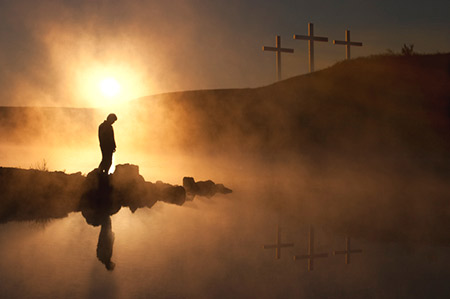
David has been found by God. He has been found naked, just as our first parents were found naked in the Garden. Ah, but that’s not what the Adam and Eve story says. The Bible says, “they sewed fig leaves together and made coverings for themselves” (Genesis 3:7).

They were not naked. No, Eve and Adam had managed to pull a curtain over themselves as they hid in God’s living room. But their feet were exposed, even as their butts were pressed against the proverbial wall.

The truth is they were naked of soul before the all-seeing God. We are always naked of soul before Him, no matter what outer garb we put on.

Hence, David’s first response to God is so appropriate, “Who can discern his errors? Forgive my hidden faults.”

With these words, David is giving voice, to his inner voice, his conscience. The third witness is testifying to the reality of God—a God before whom, we must all give account. The God, who speaks externally through creation, and his holy written word, also speaks from within the human heart. His voice is prompting David to respond.

David is confessing that before the all-seeing One, he is naked. Not only is he fully exposed, but he is incapable of fully discerning his own sin. He cannot see himself in his entirety. Only God can see him completely.

We should note our inability to fully see ourselves is true on every level. All too often, we are blind to the consequences of our actions, blind to our character faults, blind to the annoying quirks that drive others from us. We cannot stand outside of ourselves and see ourselves fully or accurately. This is as true on the physical level as it is on the spiritual level.

Think on the following statement for a moment: You have never seen your own face. It’s true. A photograph of your face is an image of your face caught in time, but it is only an image. It is not your face. The image of your face in a mirror is just that. It is an image; it is not your face. The truth is you have never seen your own face. Only others can see your full physical form.

Only God can see you in your entirety, spirit, soul and body. He sees you from the outside and from the inside, from your beginning to your end.

 In this Psalm, David finds himself face to face with this all-seeing, all-knowing God. In humility he pleads, “Forgive my hidden faults.”

If we perceive God correctly, and if we assess ourselves accurately and honestly, then we quickly realize our greatest need. Our greatest need is for forgiveness. This is the bedrock on which any human relationship with God is built.

Next, because David longs to live in relationship with this amazing God, he cries out for holiness, “Keep your servant also from wilful sins; may they not rule over me. Then will I be blameless, innocent of great transgression (Psalm 19:13).

 We should note here that there are degrees of sin. For example, John the disciple, writes in his first letter, “There is a sin that leads to death” (1 John 5:16). John then goes on to state that, “All wrongdoing is sin, and there is a sin that does not lead to death (1 John 5:16).

But perhaps nowhere in all of the scriptures are the degrees of sin more clearly delineated than here in this passage. David begins by asking, “Who can discern his errors?”

There is no intent in errors. We all make mistakes. In this great exam called life, errors will occur. Even the most spiritually studious fall short of perfection. To sin is to miss the mark, and all, even the saintliest, will from time to time miss God’s mark of perfection.

David asks God to forgive hidden sins. We all possess an ample supply of these. Some sins are hidden from others. We may confess these sins to God, but to others they remain a secret that we take with us to our graves.

Yet other sins are hidden from us. We fail to see our own faults, which may be glaringly obvious to others. A truly good friend will not only forgive our faults, but in time he will help us to see and overcome these hidden sins.
Now as David prays, he asks, “Keep your servant also from wilful sins; may they not rule over me.”

Here we have transitioned from errors, which are unintentional sins, to the realm of wilful sins. This is a conscious decision to do wrong, to disobey God and His laws or requirements. This is a very slippery slope. Notice how wilful sin can turn into a controlling monster. We begin by wilfully choosing to disobey, but when this sin has taken root and is allowed to grow, something changes. It grows into a monstrosity. What we freely chose, now chooses us. We become its slave. It rules over us. Our will is overpowered. Any addict can testify to the ravenous power of this sin monster. Every wilful sin has an addictive power associated with it. That’s why David wants to avoid this trap. He prays, “Keep your servant also from wilful sins.”

David longs to be “blameless, innocent of great transgression.”

What is great transgression? It could be argued that it is sin that leads to death. James, the brother of our LORD writes, “We are tempted by our own desires that drag us off and trap us. And when sin is finished with us, it leaves us dead” (James 1:14-15).

But within David beats a different heart. He longs for holiness. His desire is for a blameless life—a life lived in relationship with God. It’s as though David is saying to God, “Those evening walks you took with Adam in the Garden, can we go for one of those LORD?”

Hear his prayer, “May the words of my mouth and the meditation of my heart be pleasing in your sight, O LORD, my Rock and my Redeemer.”

With these words David has identified the source of sin and the cornerstone of any hope for holiness, as we live out our lives on this earth. The source point is the human heart. If our hearts are right before God, there is hope. If our hearts are fixed on our Rock and our Redeemer, we can bring pleasure to Him.

Jesus said, “The things that come out of the mouth come from the heart, and these make a man ‘unclean’. For out of the heart come evil thoughts, murder, adultery, sexual immorality, theft, false testimony, slander. These make a man unclean” (Matthew 15:18-20).

Jesus knew the desperately wicked state of our hearts. David knew his own heart too. He knew it needed cleansing and forgiveness. That’s why he cries out for it. He knew that our mouths speak from the overflow of the heart. The meditation of the heart must be pure if the words we speak are to bring life and encouragement.

Your words are important. There is no such thing as an idle word. In a world that constantly spews forth verbal sewer filth, God is looking for those with a pure heart. Your heavenly Father does not need a stethoscope to check the condition of your heart. He only needs to listen to the words coming out of your mouth.

Notice how David wants his words and his heart to bring pleasure to God. His prayer is that they be pleasing in His sight. O, to bring pleasure to the all-seeing One! That is his prayer. He does not wish to hide; hiding is futile. No, he longs to consciously live his life in the full and constant view of the LORD.

We have all endured annoying music, droning noises or irritating voices that grate on our nerves. But the opposite is so refreshing. Soothing music, joyful noises and happy voices invigorate us. They bring gladness into our lives.

Like David, make it your goal to bring gladness to your Rock and your Redeemer. Put a smile on your Father’s face.   

Bringing Life to the Psalms

  1. Read James 2:1-12. There is no clearer biblical discourse on the power of the tongue for both good and evil. Heed the advice found there.
  2. Do you have a foul mouth? Determine to clean up your conversation. When you slip up make Psalm 19:14 your prayer.
  3. Is the third witness—the inner voice of God’s Spirit—speaking to you? Take time to respond to God. Use David’s prayer in this final portion of Psalm 19 as a pattern for your own response to the Holy Spirit’s prompting.
  4. Take time to meditate on God’s word. Select a passage and read it repeatedly. See it; smell it; taste it. Let it become part of you. In our rushed world become a cow. Lie down, relax and chew your mental cud. Meditating on God’s word is like that.
  5. Psalm 19 has a Trinitarian structure that points to the Triune God, who is the source point of all Holy Scripture. The first portion of this psalm introduces us to our heavenly Father, the LORD God of creation. The second portion extols the virtues of the Word of God. John’s Gospel introduces Jesus as the Word of God. The Word became flesh and made his dwelling among us. We have seen his glory, the glory of the one and only Son, who came from the Father, full of grace and truth (John 1:14). Finally, we witness the convicting power of the Holy Spirit as David cries out, “Forgive my hidden faults. Keep your servant also from wilful sins; may they not rule over me” (Psalm 19:12-13). The concept of the Trinity was and is foreign to the Jewish faith, yet it is written into its foundational texts. How do you account for the remarkable presence of this coded truth?
  6. Now take a minute to reread all of Psalm 19. What is God saying to you by His Spirit?

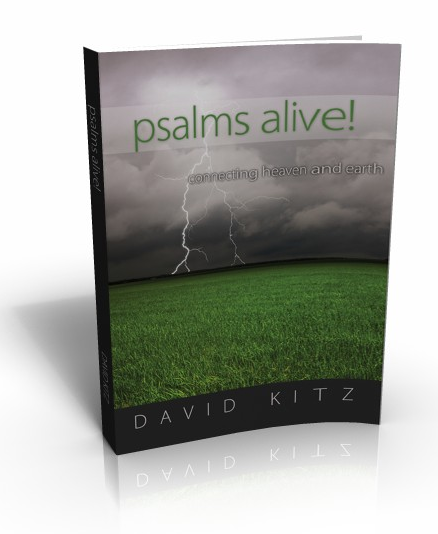
Today’s post is the third chapter from the book Psalms Alive! Connecting Heaven & Earth by David Kitz. To find out more or purchase click here.
The First Witness Speaks

16 Sunday Feb 2025

Posted by davidkitz in Psalms, Psalms Alive!

≈ 1 Comment

Tags

a man after God's own heart, Creator, David, glory of God, God, night sky, Psalms, stars, the LORD

PSALM 19:1-6

For the director of music. A psalm of David.
The heavens declare the glory of God;
the skies proclaim the work of his hands.
Day after day they pour forth speech;
night after night they display knowledge.
There is no speech or language where their voice is not heard.
Their voice goes out into all the earth,
their words to the ends of the world.
In the heavens he has pitched a tent for the sun,
which is like a bride groom coming forth from his pavilion,
like a champion rejoicing to run its course.
It rises at one end of the heavens and makes its circuit to the other;
nothing is hidden from its heat. (NIV)

             When was the last time you went for a walk beneath a canopy of stars? Now, I’m not talking about catching a fleeting glimpse of a dozen or so stars, obscured by the incessant glare of city streetlights. I’m talking about walking beneath a canopy of stars, visible in their myriads, stretching from horizon to horizon. Now that’s a truly awe-inspiring experience!

            That’s where David begins this Psalm. He begins it beneath the stars. He begins it beneath a sky so big it reduces any who behold it to a mere speck of insignificance—a speck below the glorious vastness above. Can you see him standing there—the youthful shepherd, on the Judean hillside, gazing into the face of eternity?

            And eternity is talking. The sky is talking to him.

            What is it saying? Can you hear its words?

            David can. He hears it pouring forth speech. And it’s not just the night sky that’s talking to him. The heavens are speaking continually, day and night. This is an endless conversation heard around the world.

            You see the sky speaks in a language understood by all. Who has not stopped and stood in wonder at the sight of a dazzling sunset, marvelled at the shafts of light beaming down from behind a thunder head, been amazed by the appearance of a rainbow, or perhaps you have seen the aurora whirl and dance across the northern sky?

Photo by Pat Whelen on Pexels.com

These experiences are universal. They are available to all, on every continent, in every nation, to every language and people group.

            The sky is talking. Are you listening? Do you understand the words?

            “I am the Creator. I am the maker of the heavens and the earth. I am the author of beauty, the fount of life, the giver of knowledge, the ageless one. I am food for the hungry, water of life for the thirsty, wisdom for the seeking soul. I am bigger than your problems, more vast than the oceans, deeper than the abyss, higher than the sky.

            I am eternal.

            I am here.

            I am.”

            I am is speaking.

            Is he speaking to you?

            Theologians call these words spoken from the sky, the testimony of nature. It is considered by many to be one of the primary or foremost arguments for the existence of God. Now in a court of law it is essential that any witness who is called to the stand speak audibly, so their testimony can be heard by all.

            In this Psalm we hear David’s implied question to us, “Have you heard the sky speaking? Do you hear the testimony—the words heaven is proclaiming to your heart?”

            We are all summoned to this cosmic courtroom. All of the humanity is there. We may all listen to the testimony of this witness. Everyone under the sun can hear these words. They are as loud as the blaring brilliance of the sun at high noon, or as soft as the glow of the most distant star.

            Are you listening? Can you hear it now—these words that the sky above declares?

            Some nine hundred years after David penned Psalm 19, the apostle Paul wrote these words about humankind:

            “What may be known about God is plain to them, because God has made it plain   to them. For since the creation of the world God’s invisible qualities—his eternal        power and divine nature—have been clearly seen, being understood from what      has been made, so that men are without excuse” (Romans 1:19-20).

            In effect, Paul is saying the sky has been talking all this time. In fact, the entirety of nature has been declaring the power and character of this awesome Creator God. Have you not heard him in the thundering waterfall, caught a glimpse of his reflection in the azure mountain lake, picked up his whisper beneath the ocean breakers’ roar? Have you not heard nature testifying to the grandeur and majesty of the Creator?

Are you deaf or have you chosen not to hear?

            Romans chapter one is in fact a ringing indictment against humankind. Beneath the sky that covers us all, we have been summoned. We have come to the court of the universe. Heaven’s witnesses have spoken, and they are a multitude beyond number. They have addressed us. And we have stopped our ears. We have refused to listen.

            Surely, God’s judgment on us will follow.

            But here in Psalm 19, we see a man with a different heart—a man whose heart is tuned to God—a man who hears the heavens speaking. This is in fact David’s distinguishing characteristic. He is a man after God’s own heart.

            In 1 Samuel 13:14, we see that David was chosen to be king over Israel because of this singular trait. Saul was rejected as king because of his refusal to hear and obey the voice of God. In this one sentence of scripture, spoken by Samuel the prophet, we hear the LORD’s indictment against Saul, and we also hear the LORD’s reason for choosing David to replace him.

            “But now your kingdom will not endure; the LORD has sought out a man after his own heart and appointed him leader of his people, because you have not kept the LORD’s command” (1 Samuel 13:14).

            Where did David develop that heart that seeks after God? Could it be that it all began on a starry night as he stood alone on that Judean hillside—a mere speck below the glorious vastness above?  

            If we cannot hear God in the silence, will we be able to hear him at all? Unless we cultivate a listening heart, how can we hope to hear him in the din of life, amid the hectic charge?

            I began this chapter with a question, “When was the last time you went for a walk beneath a canopy of stars?”

            I must confess that for me it’s been years. You see, I am a city dweller, and though I often go for nighttime walks through the park by my home, even on the clearest night only a few of the brightest stars are visible.

            We have blocked them out. We have made our own lights. Now if we choose to walk at night, we walk by our own light. That age old communion between humanity and the night sky has been broken. And we are the poorer for it.

            Edison’s fine invention has robbed me of this opportunity to gaze into the face of eternity.           

            In 2006 the world’s population reached a significant milestone. More than 50 per cent of the earth’s people now live in an urban environment. The inhabitants of this increasingly urbanized planet are becoming ever more disconnected from the nightly conversation of the heavens—this conversation of which David wrote so many centuries ago. In fact a kind of cosmic reversal has taken place. Now the darkened planet beams light up into the night sky. Have you seen the satellite photos of North America at night? They show a constellation of cities twinkling along the eastern and western seaboard. Vast agglomerations of light are camped along the Great Lakes. We have developed our own Milky Way.

            Astronomers lament this light pollution. They must move their star gazing equipment to ever more remote locations.

            But what about the common man or woman, the girl or boy who grows up without engaging in this heavenly conversation—a conversation that was so common, so universal a century ago? They have lost an opportunity to marvel, to stand in awe beneath the transcendent One. And this is no minor loss.

            What have we engaged in instead? What are we caught up in? Humanity is caught up in a fascination with gadgetry. Techno-wizardry enthrals us. Computers beckon for our time. Radios blare. Televisions drone on. The advertisers flash their images upon our naked brain. And we sit transfixed; entertained, but rarely enlightened; occupied, but rarely enthralled; impressed only with ourselves, but seldom challenged.

            This is a world turned in on itself, self-absorbed, playing with its own toys. Its back is turned away from God. The heavens flash their message. The skies call out but no one is listening.

            Have we forgotten how to stand in awe?

            How can we hear God if we have drowned out the stars and the message that they bring? If the astronomers are in lamentation, then the theologians, the God-seekers on this earth should be on their knees in sackcloth and ashes. 

            We have silenced the myriads. Within our urban environments, their message has been blocked, drowned out by the light our own creation. Their testimony to the majesty of God has been nullified. Three billion people can no longer hear this witness on a regular nightly basis.

            Is it any wonder that faith in the all wise creator God is in decline? And nowhere is this decline more evident than in urban centers.

Extol Him — photo by David Kitz

            In cities even the view of the daytime sky is obstructed. Broad open vistas are blocked by buildings. All too often daylight working hours are spent in windowless buildings. Increasingly smog hinders our view. The testimony of the sky is impeded.

            Nevertheless, David’s words in this Psalm haunt us. The glory of God remains. We may have sullied the skies, but the skies remain. Our view of the sun maybe clouded by pollutants, but the sun remains. Our view of the stars may be dimmed by our own light, but the stars remain. They sing out His glory. 

            God remains. The unchanging, unfathomable, ageless Creator remains. His desire to communicate with us remains. His voice has not been silenced. He still beckons us out from our self-obsessed focus to seek after Him, to discover His heart.

            On that Judean hillside, among those few sheep, little David found himself. He found himself small beneath the hand of the Almighty God. He discovered his smallness—his insignificance beneath the all surpassing vastness of God.

            Have you discovered your smallness?

            Unless we catch a glimpse of God, we are doomed to walk this planet like self-inflated titans, puffed up large in our own eyes, but void of all meaning. The world is filled with men who strut about in this fashion. King Saul had become such a man.

            So God sought a man after his own heart. In David he found the right heart—a heart that had been touched by the greatness of God—not the greatness of self. If there is a theme throughout the Psalms, surely this is it. The Psalms are all about the greatness of God.

            In a few short weeks I hope to return to my childhood home. There on the prairies unobstructed by city lights, I can behold the same stars David saw nearly three thousand years ago. They can begin their magical chant. Again, I can hear the words they proclaimed to me as a young farm boy so many years ago. Perhaps they are the same words David heard. They dare not speak of themselves. They speak only of the source of all light.

            Can you hear them?

            “I am the Creator. I am the maker of the heavens and the earth. I am the author of beauty, the fount of life, the giver of knowledge, the ageless one. I am food for the hungry, water of life for the thirsty, wisdom for the seeking soul. I am bigger than your problems, more vast than the oceans, deeper than the abyss, higher than the sky.

            I am eternal.

            I am here.

            I am.”

            I am is speaking.

            Is he speaking to you?

Sunset on the Ottawa River — photo by David Kitz

Bringing Life to the Psalms

  1. Plan a personal evening beneath the stars outside the city. Make it a time of listening for God’s voice.
  2. Have you encountered God in nature? Take a few moments to reflect on that experience. How did you respond as you sensed his presence?
  3. Take a daily nature break. Even five minutes spent in a park or garden can rejuvenate the human spirit and bring us more in tune with God.
  4. Take time to be alone. Turn off the noise box and listen. Heed the psalmist’s admonition, “Be still and know that I am God” (Psalm 46:10). Without a doubt, the Maker of the universe is still speaking. He longs to speak to you.
  5. Religious surveys indicate there is a high percentage of atheists and agnostics in the faculties of most secular universities. However, astronomy departments are largely peopled by men and women of who have faith in God. How do you account for this discrepancy?

Today’s post is the first chapter from the book Psalms Alive! Connecting Heaven & Earth by David Kitz. To view or purchase click here.

God’s Invisible Qualities

13 Wednesday Nov 2024

Posted by davidkitz in Psalm 53, Psalms

≈ Leave a comment

Tags

creation, Creator, God, Jesus, peace, Prayer, pure heart

Today’s quote and prayer from
“Psalms 365: Develop a Life of Worship and Prayer”
by David Kitz.Psalm 53_1 -365

Reading: Psalm 53

LORD God,
Creator of heaven and earth,
I bow my knees before you.
Grant me a pure heart
so I can daily see you at work all around me.
In Jesus’ name, I pray.

Amen.

— — —

For since the creation of the world
God’s invisible qualities—
his eternal power and divine nature—
have been clearly seen,
being understood from what has been made,
so that people are without excuse.
(Romans 1:20)*

Para la publicación de Salmos 365 de hoy en español haga clic aquí.

bgbg_v4.3_1501818
* NEW INTERNATIONAL VERSION, COPYRIGHT ©1973, 1978, 1984, 2011 BY BIBLICA

Please pray for peace to return to Israel, Gaza, and Ukraine!

New from David Kitz
Winner of the 2024 Word Award of Merit in Biblical Studies
TheElishaCodeCVR5

To purchase or for a closer look click here.

Volume I of Psalms 365: Develop a Life of Worship and Prayer won the Best Book of the Year Award from The Word Guild and Volume II has won the Best Devotional of the Year Award. For those who love God’s word, this three-book series is an ideal way to daily meet with the Lord. To purchase or for a closer look click here.
RGB300Kitz2AWARD

The God Who Sees, Hears, and Feels

05 Thursday Sep 2024

Posted by davidkitz in Psalms

≈ Leave a comment

Tags

Ark of the Covenant, brokenhearted, Creator, crushed, David, God, Jesus, Lord, Mercy Seat, Psalms, Sistine Chapel

Reading: Psalm 34:15-18
The eyes of the LORD are on the righteous,
and his ears are attentive to their cry;
but the face of the LORD is against those who do evil,
to blot out their name from the earth.
The righteous cry out, and the LORD hears them;
he delivers them from all their troubles.
The LORD is close to the broken-hearted
and saves those who are crushed in spirit (NIV).10 ideas of what God looks like – Deseret News

Reflection
In yesterday’s discussion of Psalm 34 I shared an “Invitation to Taste” Remember David invites us in Psalm 34:8 to “Taste and see that the LORD is good.”

As this psalm continues David again invites us to take a closer look at God. He reminds us that, “The eyes of the LORD are on the righteous, and his ears are attentive to their cry; but the face of the LORD is against those who do evil to blot out their name from the earth.”

In this passage David depicts the LORD as having eyes, ears, and a face. I always have trouble picturing God. This inability does not stem from a lack of imagination. It comes from the knowledge that God is a spirit. How do you picture something that has no physical substance or form?

But picturing God comes with further difficulties. We are specifically forbidden to create an image or likeness of God. The God of the Hebrews sat on the Mercy Seat on the Ark of the Covenant between two cherubim. But there was no image or statue there. To create an image or statue would be blasphemous. For that reason, I find Michelangelo’s painting on the ceiling of the Sistine Chapel offensive. I am not offended by the depiction of a naked Adam. I’m offended by the portrayal of an old grey-haired man as God. How dare he create an image of God? I am similarly troubled by any artistic rendering of God the Father. God is so far beyond human that to render Him as having a human form demeans His Majesty.

But that’s what makes the incarnation so spectacular. This God of no fixed form took on material reality. In the person of Jesus, He became a man with eyes, ears, and a human face. The God who sees all and hears all limited himself to a human body. The Creator took on the form and limitations of a creature—limitations that encompass betrayal, pain, and death. In the body of Jesus, the Creator God, who sees and hears, experienced our reality—our humanity.

The psalmist, David declares, “The righteous cry out, and the LORD hears them; he delivers them from all their troubles. The LORD is close to the broken-hearted and saves those who are crushed in spirit.”

The LORD is close to the broken-hearted because in the form of Christ his heart was broken. He experienced the pain that touches you and me. His eyes are on you. He is listening when you cry out.

Response: Hear my prayer, Lord. I seek your face. Be my healer, my redeemer and deliverer. In Jesus’ name, who defeated death, I pray. Amen.

Your Turn: Do you have a picture of God? How does God look to you?

Para la publicación de Salmos 365 de hoy en español haga clic aquí.

* NEW INTERNATIONAL VERSION, COPYRIGHT ©1973, 1978, 1984, 2011 BY BIBLICA

BGBG_v4.3_150[1818]

Please pray for peace to return to Israel, Gaza, and Ukraine!

Volume I of Psalms 365: Develop a Life of Worship and Prayer won the Best Book of the Year Award from The Word Guild and Volume II has won the Best Devotional of the Year Award. For those who love God’s word, this three-book series is an ideal way to daily meet with the Lord. To purchase or for a closer look click here.

New from David Kitz
TheElishaCodeCVR5

To purchase or for a closer look click here.

← Older posts
Newer posts →

Psalms 365: Develop a Life of Worship & Prayer

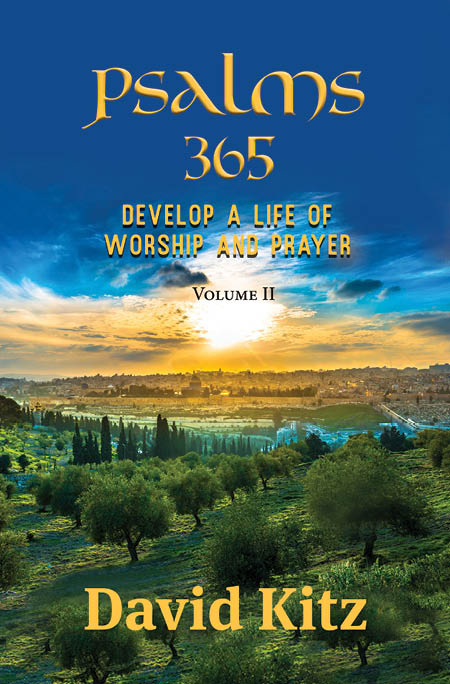
Psalms 365 Volume II

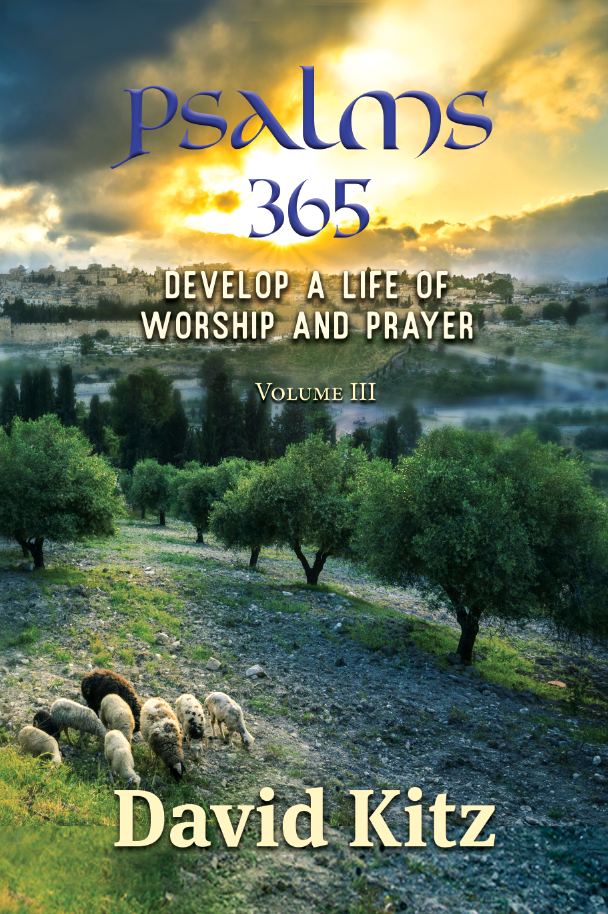
Psalms 365 vol 3
— Psalms 365 Volume III

Now available:

Psalms

Recent posts

  • Busy Ascribing August 31, 2026
  • A Devotional Journey through the Epistle of James August 30, 2026
  • The Mountain Peaks Belong to Him August 29, 2026
  • The Parable of the Growing Seed August 28, 2026
  •  Renewal to Our Worship August 28, 2026
  • A Lamp on a Stand August 27, 2026
  • Hard Hearts August 27, 2026

Calendar

August 2026
M T W T F S S
 12
3456789
10111213141516
17181920212223
24252627282930
31  
« Jul    

Blog Posts

Comments

  • atimetoshare.me on A Devotional Journey through the Epistle of James
  •  Renewal to Our Worship | Talmidimblogging on  Renewal to Our Worship
  • A Lamp on a Stand | Talmidimblogging on A Lamp on a Stand

Blog at WordPress.com.

Privacy & Cookies: This site uses cookies. By continuing to use this website, you agree to their use.
To find out more, including how to control cookies, see here: Cookie Policy
  • Subscribe Subscribed
    • I love the Psalms
    • Join 1,353 other subscribers
    • Already have a WordPress.com account? Log in now.
    • I love the Psalms
    • Subscribe Subscribed
    • Sign up
    • Log in
    • Report this content
    • View site in Reader
    • Manage subscriptions
    • Collapse this bar
Loading Comments...