I will praise Him!
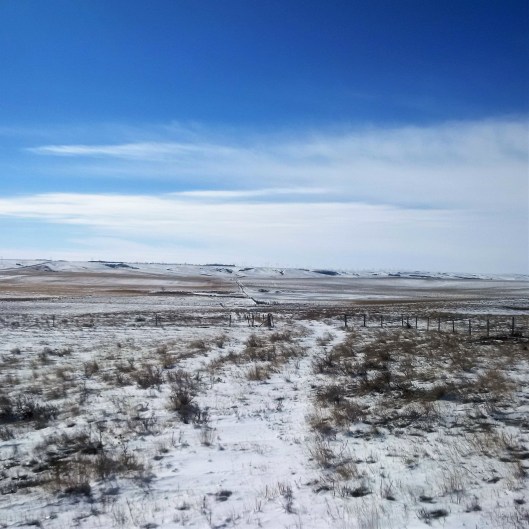
Along a prairie trail, north of Maple Creek, Saskatchewan — photo by David Kitz

16 Sunday Dec 2018
Along a prairie trail, north of Maple Creek, Saskatchewan — photo by David Kitz
14 Friday Dec 2018
Posted in Bible, Devotionals, Psalm 25, Psalms
Tags
brave heart, David, demonic, lonely heart, Psalm 25, trouble
Reading: Psalm 25
(Verses 16-22)
Turn to me and be gracious to me,
for I am lonely and afflicted.
Relieve the troubles of my heart
and free me from my anguish.
Look on my affliction and my distress
and take away all my sins.
See how numerous are my enemies
and how fiercely they hate me!
Guard my life and rescue me;
do not let me be put to shame,
for I take refuge in you.
May integrity and uprightness protect me,
because my hope, LORD, is in you.
Deliver Israel, O God,
from all their troubles! (NIV)

I take refuge in you — Lake Louise, Alberta — photo by David Kitz
Reflection
David begins Psalm 25 on a note of confidence, but as this psalm draws to a close he truly bears his heart. David plaintively calls out to the LORD, “Turn to me and be gracious to me, for I am lonely and afflicted.”
The warrior king let’s his guard down and we see into his soul. There is a time for putting on a brave face, and there’s a time for open and transparent honesty. Here within the context of this psalm we see both; David the brave heart and David the lonely heart. Earlier in this psalm David showed absolute confidence in his God, but now he pours out his soul in humble petition. Hear the cry of his heart, “Relieve the troubles of my heart and free me from my anguish. Look on my affliction and my distress and take away all my sins.”
David recognized his greatest need. David’s greatest need was forgiveness. That’s our greatest need too. We need the peace of mind that forgiveness brings.
David was surrounded by mortal enemies, but then so are we. The legions of hell are arrayed against the Christian believer. At this moment worldly philosophies and demonic forces are conspiring to destroy your home, your marriage and your life. Along with David we pray, “See how numerous are my enemies and how fiercely they hate me! Guard my life and rescue me; do not let me be put to shame, for I take refuge in you.”
Our hope must always be centered in the LORD. Integrity and uprightness form a wall of protection around the people of God. But our deliverance comes from the LORD. Along with David we affirm, “No one who hopes in you [LORD] will ever be put to shame.”
Response: Lord Jesus, help me to be open and transparent before you. Take away all my sins. My hope is in you. Protect me the attacks of the enemy. Deliver me from all my troubles. Amen.
Your Turn: How much do you need God? Do you need His forgiveness?
12 Wednesday Dec 2018
Posted in Bible, Devotionals, Psalm 25, Psalms
Tags
Reading: Psalm 25
Of David.
(Verses 1-7)
In you, LORD my God, I put my trust.
I trust in you; do not let me be put to shame,
nor let my enemies triumph over me.
No one who hopes in you will ever be put to shame,
but shame will come on those
who are treacherous without cause.
Show me your ways, LORD,
teach me your paths.
Guide me in your truth and teach me,
for you are God my Savior,
and my hope is in you all day long.
Remember, LORD, your great mercy and love,
for they are from of old.
Do not remember the sins of my youth
and my rebellious ways;
according to your love remember me,
for you, LORD, are good (NIV).

Light dawns for the upright — Grey Nuns Park, Orleans, ON — photo by David Kitz
Reflection
Shame is often viewed as a very negative feeling, and it is. Some pop psychologists are of the opinion that this emotional response should be completely removed from our lives. They argue that it has no useful function, since it often holds us back from exploring and experimenting with new behaviors and activities in the world around us.
However, a life lived without any sense of shame is a life without an active conscience. Those who lack a shame gland soon find themselves trapped in self-destructive behavior that spirals out of control. A sense of shame when we have done wrong can act as the messenger of God calling us to repentance and a change of heart.
Here in this psalm, David pleads with the LORD that he will not be put to shame. That should be our prayer as well. And how can we avoid being put to shame? David gives us the answer. No one who hopes in you [the LORD] will ever be put to shame, but shame will come on those who are treacherous without cause.
If your hope is in the LORD, He will protect you from shame and disgrace. Trusting in God, rather than in ourselves is the point where freedom from shame begins. A humble teachable spirit is what God desires. Because of His great mercy and love, He forgives the sins of our youth and our rebellious ways. Praise the LORD!
Response: LORD, this is my prayer: Show me your ways, LORD, teach me your paths. Guide me in your truth and teach me, for you are God my Savior, and my hope is in you all day long. Amen.
Your Turn: How does trusting in God protect you from experiencing shame?
09 Sunday Dec 2018
Tags

Photo courtesy of Liz Kranz
08 Saturday Dec 2018
Tags

Mackenzie King Estate, Gatineau Park, QC — photo by David Kitz
02 Sunday Dec 2018

A psalm of David.
You prepare a table before me
in the presence of my enemies.
You anoint my head with oil;
my cup overflows.
Surely your goodness and love will follow me
all the days of my life,
and I will dwell in the house of the LORD
forever.
30 Friday Nov 2018
Posted in Bible, Devotionals, Psalm 22, Psalms
Tags
crucifixion, David, forsaken, Jesus, messianic, messianic psalm
Reading: Psalm 22
For the director of music. To the tune of “The Doe of the Morning.”
A psalm of David.
(Verses 1-8)
My God, my God, why have you forsaken me?
Why are you so far from saving me,
so far from my cries of anguish?
My God, I cry out by day, but you do not answer,
by night, but I find no rest.
Yet you are enthroned as the Holy One;
you are the one Israel praises.
In you our ancestors put their trust;
they trusted and you delivered them.
To you they cried out and were saved;
in you they trusted and were not put to shame.
But I am a worm and not a man,
scorned by everyone, despised by the people.
All who see me mock me;
they hurl insults, shaking their heads.
“He trusts in the LORD,” they say, “let the LORD rescue him.
Let him deliver him, since he delights in him” (NIV).

“My God, my God, why have you forsaken me?”
Reflection
Do you believe in prophecy?
Psalm 22 is the most graphic description of Christ’s crucifixion found anywhere in the Bible. Yet here it is—tucked away among the Psalms—written roughly 900 years before the birth of Christ. How can this be? During David’s time, crucifixion as a form of execution had not yet been invented. Furthermore, crucifixion is portrayed from the victim’s point of view—Jesus’ point of view.
“My God, my God, why have you forsaken me?” These are the words of Jesus on the cross and they form the opening line of this psalm. Of course, Jesus knew he was quoting this psalm when he cried out in anguish.
But did his arrogant mockers know that they too were fulfilling scriptural prophecy as they hurled their insults, “He trusts in the LORD,” they say, “let the LORD rescue him. Let him deliver him, since he delights in him.” These words from Psalm 22 find an uncanny parallel in the verbal abuse thrown at Jesus in Matthew 27:43 where we read, “He trusts in God. Let God rescue him now if he wants him, for he said, ‘I am the Son of God.’”
Remarkably, David saw it all. Through the inspiration of the Holy Spirit, he beheld the cross nine centuries in advance. I believe in prophecies to come because of prophecies fulfilled.
Response: Father, thank you for sending your Son Jesus to this cruel world to suffer on my behalf. Thank you that I can put my trust in Your Holy Word. It was, is and will be forever true and trustworthy. Amen.
Your Turn: Why do you have confidence in God’s word?
29 Thursday Nov 2018
Posted in Bible, Devotionals, Psalm 21, Psalms
Tags
David, God's wrath, good shepherd, picture, the LORD, warrior
Reading: Psalm 21
(Verses 8-13)
Your hand will lay hold on all your enemies;
your right hand will seize your foes.
When you appear for battle,
you will burn them up as in a blazing furnace.
The LORD will swallow them up in his wrath,
and his fire will consume them.
You will destroy their descendants from the earth,
their posterity from mankind.
Though they plot evil against you
and devise wicked schemes, they cannot succeed.
You will make them turn their backs
when you aim at them with drawn bow.
Be exalted in your strength, LORD;
we will sing and praise your might (NIV).
![20181026_1245509[4102]](https://davidkitz.blog/wp-content/uploads/2018/11/20181026_12455094102.jpg?w=529)
Fall glory, Orleans ON — photo by David Kitz
In this psalm David paints a portrait of the LORD as a warrior. I’m not so sure I want to see the LORD as a fearsome warrior. I prefer to see Him as a gentle shepherd—the Good Shepherd—not a God of vengeance firing arrows at His foes. But if I have my way—if I see Him only as a meek shepherd—do I have a right picture of the LORD? Am I blind to an important side of His character? Is He both a warrior and a shepherd?
I can be guilty of shaping God according to my image—the likeness I prefer. But the god I create is not the true God. The true God is always greater, more awesome, fear-provoking, and loving than I can possibly imagine. Words on a page fall short—always fall far short—when we attempt to describe God.
As for this world, it’s inhabited by evil men. Some are heinously evil—monsters in human skin. Others by the mercy of God are filled with kindness. A measure of the grace of God is extended even to those who do not know Him. If God refused to rain judgment on the perpetrators of evil would He still be a good God? If this world were perfect, would we still long for heaven?
Who am I to judge God? Who am I to find fault with my Creator and His ways? Here is the conclusion: Ride on in the battle against evil, Warrior King. Shelter me in your arms, Good Shepherd.
Response: Heavenly Father, I confess I have an incomplete picture of you. I can never grasp or comprehend your fullness. I bow before you, LORD Almighty. In humility I worship you, the magnificent and perfect, I AM. Amen.
Your Turn: Has your picture of God changed over time? Has it become more biblically accurate?
22 Thursday Nov 2018
Posted in Bible, Devotionals, Psalm 19, Psalms
Tags
Reading: Psalm 19
For the director of music. A psalm of David.
(Verses 1-6)
The heavens declare the glory of God;
the skies proclaim the work of his hands.
Day after day they pour forth speech;
night after night they reveal knowledge.
They have no speech, they use no words;
no sound is heard from them.
Yet their voice goes out into all the earth,
their words to the ends of the world.
In the heavens God has pitched a tent for the sun.
It is like a bridegroom coming out of his chamber,
like a champion rejoicing to run his course.
It rises at one end of the heavens
and makes its circuit to the other;
nothing is deprived of its warmth (NIV).

The approaching storm, near Saltcoats, SK — photo by Tracy K
Reflection
When was the last time you went for a walk beneath a canopy of stars? Now, I’m not talking about catching a fleeting glimpse of a dozen or so stars, obscured by the incessant glare of city street lights. I’m talking about walking beneath a canopy of stars, visible in their myriads, stretching from horizon to horizon. Now that’s a truly awe inspiring experience!
That’s where David begins this Psalm. He begins it beneath the stars. He begins it beneath a sky so big it reduces any who behold it to a mere speck of insignificance—a speck below the glorious vastness above. Can you see him standing there—the youthful shepherd, on the Judean hillside, gazing into the face of eternity?
And eternity is talking. The sky is talking to him. What is it saying? Can you hear its words? David can. He hears it pouring forth speech. And it’s not just the night sky that’s talking to him. The heavens are speaking continually, day and night. This is an endless conversation heard around the world.
You see the sky speaks in a language understood by all. Who has not stopped and stood in wonder at the sight of a dazzling sunset, marvelled at the shafts of light beaming down from behind a thunderhead, been amazed by the appearance of a rainbow, or perhaps you have seen the aurora whirl and dance across the northern sky?
These experiences are universal. They are available to all, on every continent, in every nation, to every language and people group. The sky is talking. Are you listening? Do you understand the words?
Response: Heavenly Father, help me hear your voice speaking to me in nature. Open my eyes and my ears to the glory of your creation. You are more wonderful than I can imagine. I praise you for all your marvelous works. Amen.
Your Turn: Does God speak to you through the beauty of nature? Have you paused recently to wonder at the majesty of His creation?
21 Wednesday Nov 2018
Posted in Bible, Devotionals, Psalm 18, Psalms
Reading: Psalm 18
(Verses 46-50)
The LORD lives! Praise be to my Rock!
Exalted be God my Savior!
He is the God who avenges me,
who subdues nations under me,
who saves me from my enemies.
You exalted me above my foes;
from a violent man you rescued me.
Therefore I will praise you, LORD, among the nations;
I will sing the praises of your name.
He gives his king great victories;
he shows unfailing love to his anointed,
to David and to his descendants forever (NIV).

Old Orchard Beach, Maine — photo by David Kitz
Reflection
The joyful exuberance of the opening lines of this final reading from Psalm 18 is well worth reflecting upon. David exults, “The LORD lives! Praise be to my Rock! Exalted be God my Savior!”
To my thinking, there’s nothing quite as dead as a rock. But here in the same breath, David praises the living LORD, his Rock and his Savior. Living rock seems to be a contradiction in terms, but our God is very much alive. He was alive and active in David’s life, and He is alive and active in your life as well—as active and alive as you allow Him to be.
But the LORD also wants to be the Rock of stability in your life—the solid foundation from which you draw strength. A life anchored in God can withstand the storms of adversity and the test of time. The LORD is that stalwart mainstay that actively trains us for eternity.
Most importantly, our LORD saves. He saved David from all of his troubles. It was God’s intervention in David’s life that brought him the victory time after time. God was not content to sit in heaven and cheer from the sidelines. The LORD got involved in David’s life. He responded repeatedly to David’s cries for mercy and help.
If David had ample reasons to praise God and be thankful, we who live on this side of the cross, under the new covenant, have far more grounds for praise. God intervened directly for us. We have a Savior in Jesus, who left his throne in glory. He put His own skin in the game. The Father sent His one and only Son to live as a man, and then suffer and die on our behalf. And Jesus did not remain dead. God the Father raised him from the dead. Now with David we can say, “The LORD lives! Praise be to my Rock! Exalted be God my Savior!”
Response: Heavenly Father, thank you for sending Jesus. Thank you for his life, his death and his resurrection. I love you, Lord Jesus. You are the living Rock on which I can build my life. Through you I am more than a conqueror. Holy Spirit help me live this day in praise of my Savior. Amen.
Your Turn: Is the LORD your living Rock? Has He been your help? Has Jesus become your Savior? How will you honor Him today?

