• Home
  • About
  • DavidKitz.ca
  • Youtube Videos
  • Books by David
  • Books on Amazon.com

I love the Psalms

~ Connecting daily with God through the Psalms

I love the Psalms

Tag Archives: faith

An Ever-Present Help

13 Sunday Apr 2025

Posted by davidkitz in Psalm 46, Psalms

≈ Leave a comment

Tags

Bible, cancer, Christian, courage, earthquake, faith, fear, God, Jesus, Prayer, Psalms, refuge in trouble, September 11th 2001, tsunami

Psalm 46:1-5

Of the Sons of Korah

God is our refuge and strength,
an ever-present help in trouble.
Therefore we will not fear,
though the earth give way
and the mountains fall into the heart of the sea,
though its waters roar and foam
and the mountains quake with their surging. (Selah)

There is a river whose streams make glad the city of God,
the holy place where the Most High dwells.
God is within her, she will not fall;
God will help her at break of day.

Where were you on September 11th, 2001? What were you doing when you heard the news of the horrific attacks on the World Trade Center and the Pentagon? I was at school at the time, but I was on a break between classes. The equipment repairman had just arrived to fix some of the power tools in the woodworking shop. He seemed rather agitated as he reported, “A plane has hit the World Trade Center in New York.”

I was unfazed by this news, and I responded, “It’s probably just a small two-seater plane. What’s the big deal?”

“No. It was a big passenger jet,” the repairman said with a shake of his head. This made no sense to me, and with that said, the repairman returned to his truck, where he sat for a minute or two listening to the vehicle’s radio.

He returned in an even more animated state to report, “A second plane has crashed into the other tower.”

At this point I turned on the classroom radio and began listening to the reports myself. The true emotional impact of these events did not hit me however, until about an hour later. On a classroom television that was hastily moved into the school custodian’s office, I watched the towers come crashing to the ground. My whole body was left shaking.

Now many years later, the whole earth is still reverberating from the consequences of those events.

At church gatherings I do live spoken-word dramatizations of the fourteen psalms that form the basis for this book. But I cannot perform Psalm Forty-six without evoking memories of the day we call nine-eleven. Instantly, the pictures of the planes hitting the towers flash into my mind. Once again, the towers disintegrate and come crashing down onto the streets—down onto the people and rescue workers below.

But Psalm Forty-six begins with these words. God is our refuge and strength, an ever-present help in trouble. Therefore, we will not fear, though the earth give way …

The earth gave way on September 11th, 2001. If the earth falls out from under you—if everything you have known to be secure suddenly disintegrates—how can you not succumb to fear? Fear is a person’s natural response to such events. If the earth gives way beneath us, then the only one we have to hold onto is God. If all earthly securities disintegrate, the only remaining refuge is our heavenly Father.

I dare say that too many North American Christians know God only, as a God of sunny days, full bellies and prosperity. I would place myself in that category. For us personally, the earth has not fallen away from beneath us. What will become of us when it does? Are we even remotely prepared for such events? Can we ever be fully prepared? Are you ready for the hundred story plunge to the street below?

Against this backdrop, for all to hear the psalmist declares,

            God is our refuge and strength, an ever-present help in trouble. Therefore we will not fear, though the earth give way and the mountains fall into the heart of   the sea, though its waters roar and foam and the mountains quake with their surging.

On December 26th, 2004, at 7:58:53 a.m. local time, the mountains beneath the sea off the coast of Indonesian island of Sumatra, began to quake. That quake registered 9.2 magnitude on the Richter scale, making it the second most powerful quake ever recorded. It also was the longest earthquake in duration. This devastating temblor unleashed a tsunami that claimed the lives of an estimated 229,866 people. The ocean surge reached a height of thirty metres in places, and it killed people as distant as 8,000 km from the epicenter.

Since that date, I cannot perform Psalm Forty-six without evoking memories of the Boxing Day Tsunami. Instantly the pictures of walls of water come flooding into my mind. Once again whole villages are scoured off the coast like so much worthless refuse that is swept out to sea. Men, women and children disappear in a muddy seething swill of saltwater debris.

More recently on March 11th, 2011, northern Japan was devastated by an enormous earthquake and tsunami. Video of the ensuing destruction is impossible to forget.

But despite all this—in the midst of all this—as though he had been granted a preview of these very events, the psalmist speaks up, “God is our refuge and strength, an ever-present help in trouble. Therefore we will not fear, though the earth give way and the mountains fall into the heart of the sea, though its waters roar and foam and the mountains quake with their surging.”

From this scene of utter devastation, the psalmist transitions to the polar opposite. He brings us to the Gates of Splendor, and within those gates we find “there is a river whose streams make glad the city of God, the holy place where the Most High dwells. God is within her, she will not fall; God will help her at break of day.

What a contrast! Here is our place of refuge. Here in that holy place, we are face to face with God, the God who is our strength. We are at the source point of gladness. There is an endless supply of the water of life within this sacred city. The Master calls, “Come and drink.”

Are you drinking even now?

How can we face an uncertain future without fear, when the world around us is being torn apart? That question is really the primary focus of this psalm. Here beside the river of God we can find the answer.

Lloyd Ogilvie in his book, Facing the Future without Fear[1], points out that God’s most frequently repeated command in the scriptures is, “Fear not.”

We are not to fear men, or circumstances or the demons of hell. We are not to fret or worry. After all, worry is simply a case of borrowing fear from the Bank of Insecurity in order to make a down payment on a future event, which despite our worries is unlikely to occur. Now, that truly is an unwise investment. Ogilvie points out that in the Bible, there are 366 commands for us not to fear, one for every day of the year, including one for leap-year. In short, God’s word for us daily is, “Fear not!”

Why is our ability to overcome fear so important to God? Could it be that God sees that fear imprisons us? It prevents us from doing God’s will for our lives. Fear locks us into patterns of behaviour that keep us from growing and maturing in our faith. If we are afraid of what others think, we will never share our faith. If we are afraid to risk going without, we will never know the full joy of true giving. If we fear rejection, we will never risk opening our hearts to love. If we play it safe and like a turtle keep our head in our shell, we will never truly experience life—life to the full.

On a stormy night, Peter stepped out of a boat in the middle of a lake and walked on the water. Think of it. What a perfectly insane thing to do! He rejected fear and chose Jesus. Jesus called him out of that boat. He said, “Come” (Matthew 14:29).

You can only do what Peter did, if you know the one who is calling you. Peter knew Jesus. He recognized his call, and he stepped out of natural security (the boat) onto the supernatural security of Christ’s call. He walked by faith, a faith that transcends what is seen and reaches into the heavenly realm, “the holy place where the Most High dwells.“

Psalm Forty-six calls us to life on that higher plane. We can overcome fear, if we have tasted the waters of those streams that make glad the city of God. This is the same living water that Jesus offered to the woman at the well. In the midst of the storms of life, the psalmist invites us to come to that higher plane. He calls us aside. In times of trouble, he invites us to embrace our citizenship in the city of God.

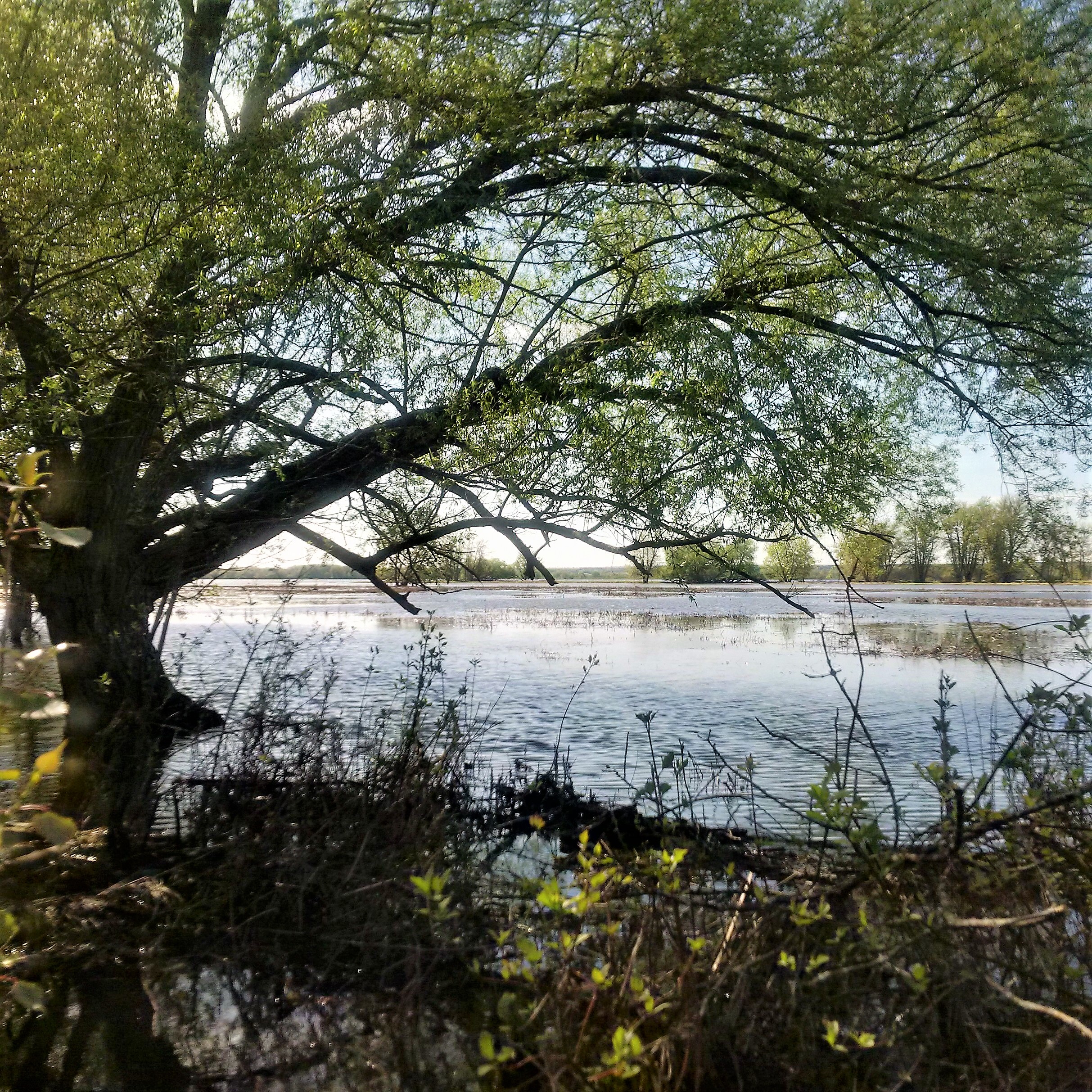
Morning calm — Petrie Island — photo by David Kitz

How can we face an uncertain future without fear? If you have died to the elemental passions of this world, you can live your life beyond fear and worry. Dead men do not panic. The apostle Paul urged the Colossian believers to acknowledge their death to this world and embrace their new life in Christ: “Set your minds on things above, not on earthly things. For you died, and your life is now hidden with Christ in God” (Colossians 3:2-3). 

Repeatedly in his epistles, Paul likens baptism to death, burial and resurrection. This is our point of identification with Christ as we begin a new life of faith in him. And a life of faith is precisely what we are called to as believers in our resurrected Lord, who has ascended to the heavenly Jerusalem before us. That life of faith triumphs over fear. It turns defeat into conquest, doubt into certainty, death into the ultimate victory.

My own hunger for a deeper knowledge of the psalms was sparked by a middle-aged couple, John and Clare Tremblay. The Tremblays had attended our church for a few years, but then they moved to another part of the city, and we lost touch. Upon their return to our neighborhood, we discovered that Clare had developed diabetes and gone blind. I began to make regular pastoral visits to their home. On these visits it became my habit to read a psalm to Clare, while John stood nearby. She drew such strength and comfort from these psalms; you could see her face light up every time a psalm was read. Unfortunately, her condition declined rapidly. After a number of falls, it became clear that she was unable to walk. Soon she was confined to a long-term care facility. Even there she found her refuge in the psalms. It seemed to be the only thing that could put a smile on her face.

You see for that moment Clare was no longer blind, but rather she could see, and she was sitting by the “river whose streams make glad the city of God, the holy place where the Most High dwells.” While she listened to the psalms, her mind was set on things above where her life was hidden with Christ in God. Within those psalms she found God—the God who is an ever-present help in time of trouble.

As time went by I could see in Clare the truth of these words “God is within her, she will not fall; God will help her at break of day.”

One morning Clare found herself there, in the very presence of the LORD. This psalm had become her reality. Her funeral became a celebration of the psalms she loved, and the God of refuge that she found within those psalms.

After Clare’s passing, I paid a number of visits to John to offer some comfort and support to him as he mourned the loss of his wife. “Pastor, could you read me a psalm?” John asked.

Of course I brought my Bible along to do just that. He sat in rapt attention as I read. He got that wistful, far off look in his eyes, and I knew where he was. He was crouched by one of those streams that make glad the city of God. He was having a good thirst-quenching drink.

On one of those visits John complained of a backache, and I suggested he have a doctor check it out. A few weeks later John’s daughter-in-law called. John was in the hospital. The backache was spinal cancer, and the doctors said that John had only a month to live. In fact, he lasted only three weeks. John was on a three week, hundred story plunge to death—a plunge he faced without a hint of fear.

I recall those hospital visits. They were tinged with bittersweet warmth. John had watched his bride of forty years face death with faith and courage. Now he did the same. Through a fog of pain John would smile up at me, and in a hoarse whisper he would say, “Pastor, could you read me a psalm?”

On my last visit with John, I read Psalm Forty-six. I cleared my throat and began, “God is our refuge and strength, an ever-present help in trouble. Therefore we will not fear, though the earth give way …”

John smiled his biggest smile. He knew the truth of those words even as the earth beneath him was giving way.

John and Clare were both in their early sixties. They died within six months of each other. In me they sparked an ongoing love for the Book of Psalms. It’s a love that I trust will carry me into eternity, even as it carried them.

[1] Facing the Future Without Fear: Prescriptions for Courageous Living in the New Millennium, (paperback) by Lloyd J. Ogilvie, Vine Books, 2002 edition.

Bringing Life to the Psalms

  1. Read the account of Peter and Jesus walking on the water as found in Matthew 14:22-36. Consider what this story says to you about walking with Jesus. What does it say to you about faith and fear? Is Jesus calling you to a walk of faith? Is he calling you out of your comfort zone?
  2. What do you think Paul means when he says, “Set your minds on things above, not on earthly things. For you died, and your life is now hidden with Christ in God” (Colossians 3:2-3). How can you live your life here on earth and simultaneously in heaven with Christ? Setting your mind takes personal discipline. It involves purposeful thought. What godly disciplines help you set your mind on things above?
  3. Has God been a God of sunny days, and prosperity for you? Praise God for all the good times. Have you also faced adversity and trouble as you walked with the LORD? How did your faith help you overcome?

Today’s post is Chapter 9 from the book Psalms Alive! Connecting Heaven & Earth by David Kitz. To find out more or purchase click here.
 

Gratitude and Thanksgiving

11 Friday Apr 2025

Posted by davidkitz in Psalms

≈ 1 Comment

Tags

blessings, faith, gratitude, harvest, joy, praise, Psalms, Reflection, thanksgiving, worship

Today’s Devotion from Psalms 365 by David Kitz

Reading: Psalm 100
A psalm. For giving grateful praise.
Shout for joy to the LORD, all the earth.
Worship the LORD with gladness;
come before him with joyful songs.
Know that the LORD is God.
It is he who made us, and we are his;
we are his people, the sheep of his pasture.
Enter his gates with thanksgiving
and his courts with praise;
give thanks to him and praise his name.
For the LORD is good and his love endures forever;
his faithfulness continues through all generations (NIV). *

Enter his gates with thanksgiving — photo by David Kitz

Reflection
When you grow up on a prairie farm, as I did, you appreciate the traditional aspects of Thanksgiving all the more. You are reminded each day that the food on your table does not simply come from a store. You are actively engaged in producing the nourishment that sustains your own life. Though today may be a long way from Thanksgiving, I know I need daily reminders to be thankful. How about you?

As a youngster I sat down to many a Thanksgiving feast, and almost all the food found on that groaning table was home-grown. I watched those vegetables growing in our garden in the hot summer sun. I even pulled the weeds from around those peas. And those mashed potatoes, I helped my mother hill those tubers in the spring and then dug them up after the frost hit in the fall.

My brother loved growing pumpkins, and mom would turn his favorite into the best pumpkin pie east of the Rockies. And how can you eat pumpkin pie without a mound of whipped cream on top? Well let me tell you, it tastes even better, when just that morning you milked the cows that produced that sweet rich cream. Oh, and that huge turkey—we’ll miss that pompous strutting gobbler out by the henhouse. But I’m sure we’ll get over it, somehow. For now, let’s just dig in.

Let’s all dig in, and give thanks to the God, who made all this possible. This sumptuous feast has been brought to you by Him. Now that’s Thanksgiving!

The great God in heaven has been kind to us. He has answered our prayers. He brought the warmth of spring and the rain of heaven. He caused his face to shine upon us. The rich earth responded to his touch. It brought forth its bounty, and now around this table we have gathered as a family to celebrate God’s great goodness to us.

As the psalmist declares, “It is he who made us, and we are his; we are his people, the sheep of his pasture” (v. 3). So today with joy-filled hearts, we enter his gates with thanksgiving and his courts with praise. We give thanks to him and praise his name.

Response: Heavenly Father, thank you for all your kindness. You have been so good to us! Help us to maintain an attitude of gratitude all year long and not only on Thanksgiving Day, but every day. Amen.

Your Turn: What blessings from God’s hand are you most grateful for? Say a prayer of thanks right now.

Para la publicación de Salmos 365 de hoy en español haga clic aquí.

bgbg_v4.3_1501818
* NEW INTERNATIONAL VERSION, COPYRIGHT ©1973, 1978, 1984, 2011 BY BIBLICA

Please pray for peace to return to Israel, Gaza, and Ukraine!

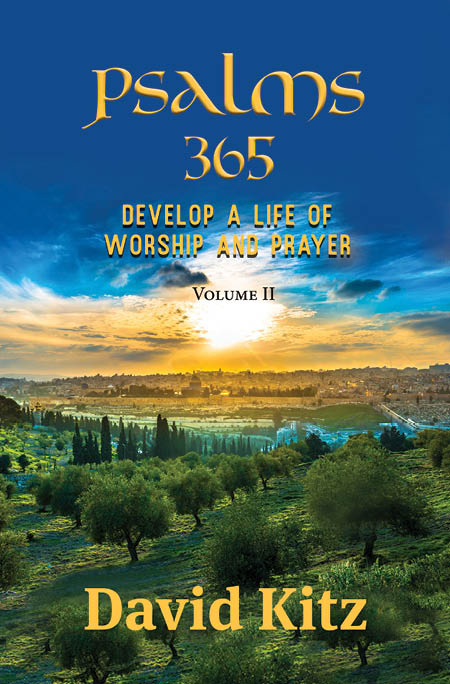
Volume I of Psalms 365: Develop a Life of Worship and Prayer won the Best Book of the Year Award from The Word Guild and Volume II has won the Best Devotional of the Year Award. For those who love God’s word, this three-book series is an ideal way to begin the new year, and daily meet with the Lord. To purchase or for a closer look click here.

RGB72PsalmsVol2

A gripping read from David Kitz.
4485 SHARABLE-2

To purchase or for a closer look click here.

Spiritual Accountability

10 Thursday Apr 2025

Posted by adeyemiasaba1 in Psalms

≈ Leave a comment

Tags

David, discipline, faith, forgiveness, holiness, leadership, mercy, Moses, obedience, Reflection, repentance, Scripture, the LORD

Today’s Devotion from Psalms 365 by David Kitz

Reading: Psalm 99:6-9
Moses and Aaron were among his priests,
Samuel was among those who called on his name;
they called on the LORD
and he answered them.
He spoke to them from the pillar of cloud;
they kept his statutes and the decrees he gave them.
LORD our God,
you answered them;
you were to Israel a forgiving God,
though you punished their misdeeds.
Exalt the LORD our God
and worship at his holy mountain,
for the LORD our God is holy (NIV). *

Flood your people with your grace mercy and peace, LORD — photo by David Kitz

Reflection
David’s name appears in the text of several of the psalms, but this is the only psalm that lists other heroes of the faith. Moses, Aaron, and Samuel, three heavy hitters of the Old Testament, are honored here. They are honored because they called on the LORD and he answered them.

I could quibble with the choice of these three. Moses struck the rock in anger when he was told to speak to it and thereby bring forth water for the people. As a consequence, he was not allowed to enter the Promised Land. Aaron gave into the people’s will and fashioned an idol—the golden calf. Samuel appointed Saul as the first king of Israel—a man who became a disappointing, disastrous leader who descended into witchcraft.

But… But then can I claim to be error free in the way I have lived my life? Like Moses I have lost my patience in more than one situation. If God treated me like Moses, there would be little hope of me reaching the Promised Land. Like Aaron, I tend to be led astray by the crowd, and like the prophet Samuel, at times I have backed people who stumbled badly and betrayed the Lord.

I have not lived a flawless life. That’s why I take comfort in these words: LORD our God, you answered them; you were to Israel a forgiving God, though you punished their misdeeds (v. 8).

I need a forgiving God. I need a God who forgives my transgressions—those times when I think I know better, but of course I’m wrong. And if I am truly honest, I also admit that I need a God who punishes my misdeeds. If there are no consequences for my wrongdoing, my transgressions will escalate. I need the discipline of the LORD, or I will go astray by following my own selfish desires. Just like the ancient people of Israel I need to live under the wise and loving rule of a holy God. How about you? Do you need a forgiving God?

Response: LORD God, you are holy. I want to live in a way that honors you. You know my failings and shortcomings. Forgive me as I call on you. I am needy, but in you I find all that I need. Amen.

Your Turn: If there were no consequences for sin would that change your life and conduct? Do you fear the consequences that come from wrongdoing?

Para la publicación de Salmos 365 de hoy en español haga clic aquí.

bgbg_v4.3_1501818
* NEW INTERNATIONAL VERSION, COPYRIGHT ©1973, 1978, 1984, 2011 BY BIBLICA

Please pray for peace to return to Israel, Gaza, and Ukraine!

Volume I of Psalms 365: Develop a Life of Worship and Prayer won the Best Book of the Year Award from The Word Guild and Volume II has won the Best Devotional of the Year Award. For those who love God’s word, this three-book series is an ideal way to begin the new year, and daily meet with the Lord. To purchase or for a closer look click here.

RGB72PsalmsVol2

A gripping read from David Kitz.
4485 SHARABLE-2

To purchase or for a closer look click here.

The Command to Hate Evil, Not Evildoers

04 Friday Apr 2025

Posted by davidkitz in Psalms

≈ Leave a comment

Tags

evil, faith, hate, joy, justice, Light, love, mercy, Psalms, redemption, Righteousness, the LORD

Today’s Devotion from Psalms 365 by David Kitz

Reading: Psalm 97:8-12
Zion hears and rejoices
and the villages of Judah are glad
because of your judgments, LORD.
For you, LORD, are the Most High
over all the earth;

you are exalted far above all gods.
Let those who love the LORD hate evil,
for he guards the lives of his faithful ones
and delivers them from the hand of the wicked.
Light shines on the righteous
and joy on the upright in heart.
Rejoice in the LORD, you who are righteous,
and praise his holy name (NIV). *

Light shines on the righteous.

Reflection
Love and hate are two extremes—two opposites. Almost always we see love as a good thing, something to be encouraged or applauded, while hate is regarded as a universally negative emotion. But is this a correct view of love and hate?

The addict may love his crack cocaine pipe, but is that a good or wholesome kind of love? Strange as it may seem, the battered wife may love her abusive husband and yet feel locked into that relationship despite its toxic or even deadly consequences. Is that a healthy kind of love? Of course not, but the addict and the abused partner both use the term love when they describe the object of their affection.

Similarly hate—that polar opposite emotion—is universally viewed as negative. Is it wrong to hate injustice, murder, or pedophilia? Of course not. Hate is the right emotional response when we see these things taking place. The devastating consequences of sin and criminal wrongdoing are repulsive. Seeing such harmful conduct should prompt us to hate those actions.

In today’s reading from Psalm 97, we see a different perspective on love and hate. Let those who love the LORD hate evil, for he guards the lives of his faithful ones and delivers them from the hand of the wicked (v.10).

Are you loving God and hating evil? All too often we see there are those in this world who love evil and hate God. Why do they hate God? Could it be because the LORD expects—no requires—better from them, and they thinking they know better, have gone their own selfish way?

Note that we are commanded to hate evil. We are not commanded to hate evildoers. God in His great mercy may yet redeem the evildoer. It is by God’s grace that we ourselves are not caught up in evil, so wisdom urges us not to be haughty. We do well to focus on loving the LORD. We can draw encouragement from these words: Light shines on the righteous and joy on the upright in heart (v. 11).

Response: LORD God, teach me to identify and hate evil when I see it. I want your light to shine on me, so I can walk the path you have set out for me. Let my love for you and others grow day by day. Amen.

Your Turn: Are you loving the LORD and hating evil? How can you learn to hate the sin, but not the sinner?

Para la publicación de Salmos 365 de hoy en español haga clic aquí.

bgbg_v4.3_1501818
* NEW INTERNATIONAL VERSION, COPYRIGHT ©1973, 1978, 1984, 2011 BY BIBLICA

Please pray for peace to return to Israel, Gaza, and Ukraine!

Volume I of Psalms 365: Develop a Life of Worship and Prayer won the Best Book of the Year Award from The Word Guild and Volume II has won the Best Devotional of the Year Award. For those who love God’s word, this three-book series is an ideal way to begin the new year, and daily meet with the Lord. To purchase or for a closer look click here.

RGB72PsalmsVol2

A gripping read from David Kitz.
4485 SHARABLE-2

To purchase or for a closer look click here.

The Sovereignty of God

03 Thursday Apr 2025

Posted by davidkitz in Psalms

≈ Leave a comment

Tags

authority, faith, glory, justice, reign, Righteousness, sovereignty, trust, truth, worship

Today’s Devotion from Psalms 365 by David Kitz

Reading: Psalm 97:1-7
The LORD reigns, let the earth be glad;
let the distant shores rejoice.
Clouds and thick darkness surround him;
righteousness and justice are the foundation of his throne.
Fire goes before him
and consumes his foes on every side.
His lightning lights up the world;
the earth sees and trembles.
The mountains melt like wax before the LORD,
before the Lord of all the earth.
The heavens proclaim his righteousness,
and all peoples see his glory.
All who worship images are put to shame,
those who boast in idols—
worship him, all you gods! (NIV). *

Great peace have those who love your law — photo by David Kitz

Reflection
Who is in charge here? In any situation, that’s a legitimate question. There are always a variety of authorities in any given situation. A while back, I watched Prince William and his family get off a plane in Victoria, BC. On the tarmac the royal family was first greeted by the Governor General, then by the Prime Minister of Canada, then the Lieutenant Governor of the province and finally, the Premier of the province. They were all lined up according to proper protocol. Yes, there are a variety of authorities all deserving respect. But this question remains. Who is in charge here?

The authorities of this world have jurisdiction over a certain geographic area or realm. Some authorities govern well and in others rule as despots who plunder the wealth of the nation. But Psalm 97 reminds us there is one great authority who rules overall. The LORD reigns, let the earth be glad; let the distant shores rejoice (v. 1).

The earth can be glad, and the distant shores can rejoice because this King, this heaven-dwelling authority rules well. He does not plunder His faithful people and bring them to ruin. He reigns supreme from on high. Clouds and thick darkness surround him; righteousness and justice are the foundation of his throne (v. 2).

We can rest assured the LORD will do what is right. He is allied with goodness, mercy, and truth. That’s why justice is the foundation of His throne. We should not fear His judgments because they are right and good. Yes, the authors of evil should be afraid, but if we have done right, we can count on the LORD as our defender. Now here is a proclamation we all should heed: The heavens proclaim his righteousness and all peoples see his glory (v. 6).

Response: LORD God, it is my prayer that all people will see your glory and bow before you, the magnificent King of Righteousness. Extend your reign I pray. Let the distant shores rejoice because you reign. Amen.

Your Turn: Is the Lord Jesus reigning over you and your home? Who has jurisdiction there?

Para la publicación de Salmos 365 de hoy en español haga clic aquí.

bgbg_v4.3_1501818
* NEW INTERNATIONAL VERSION, COPYRIGHT ©1973, 1978, 1984, 2011 BY BIBLICA

Please pray for peace to return to Israel, Gaza, and Ukraine!

Volume I of Psalms 365: Develop a Life of Worship and Prayer won the Best Book of the Year Award from The Word Guild and Volume II has won the Best Devotional of the Year Award. For those who love God’s word, this three-book series is an ideal way to begin the new year, and daily meet with the Lord. To purchase or for a closer look click here.

RGB72PsalmsVol2

A gripping read from David Kitz.
4485 SHARABLE-2

To purchase or for a closer look click here.

Singing for the Glory of God

01 Tuesday Apr 2025

Posted by davidkitz in Psalms

≈ 2 Comments

Tags

devotion, faith, glory, God, joy, music, praise, renewal, salvation, Scripture, singing, the LORD, worship

Today’s Devotion from Psalms 365 by David Kitz

Reading: Psalm 96:1-6
Sing to the LORD a new song;
sing to the LORD, all the earth.
Sing to the LORD, praise his name;
proclaim his salvation day after day.
Declare his glory among the nations,
his marvelous deeds among all peoples.
For great is the LORD and most worthy of praise;
he is to be feared above all gods.
For all the gods of the nations are idols,
but the LORD made the heavens.
Splendor and majesty are before him;
strength and glory are in his sanctuary (NIV). *

I sing for joy at what your hands have done — photo by David Kitz

Reflection
Who are you singing to? Let’s face it; most of us sing. We may not sing in a choir or in front of a crowd of thousands, but we sing. Maybe you sing in the shower. Maybe you just hum, whistle or sing a tune in your mind. Even though you may not fully vocalize your song, the music is still there bubbling beneath the surface.

Psalm 96 urges us to sing that song to the LORD. Sing to the LORD a new song; sing to the LORD, all the earth. Sing to the LORD, praise his name; proclaim his salvation day after day (v. 1-2).

I believe it’s in our nature to sing. Music is after all a universal activity enjoyed by people of every race and culture. This universality begs a question: Who put that love for music and song within us?

For believers the answer is obvious. God put music in our hearts and God puts songs on our lips. We sing because we are and because God is. Music is so foundational—so fundamental to our being—it’s hard to imagine our world without it. When we break forth in song, we are doing what God designed us to do. You were designed to sing, just as you were designed to bring glory to God through the work of your hands or the fruit of your body. So let your voice bring honor, praise, and glory to God. Sing out your worship with joy.

Psalm 96 is also a call for newness in worship. Why does God want a new song? Could it be because His mercy and love for us are continually renewed? Amid national tragedy, Jeremiah reminded us of this truth. Because of the LORD’s great love we are not consumed, for his compassions never fail. They are new every morning; great is your faithfulness (Lamentations 3:22-23).

Just as the changing seasons bring renewal to the earth and its vegetation, so too new songs of praise bring renewal to our worship. So, whether you hum, whistle, or belt out songs in the choir, let your song ascend to the LORD. You are singing for Him and to Him.

Response: LORD God, I want to praise you. Give me news songs and new melodies to sing your praise. Your goodness and love abound. Great is the LORD and most worthy of praise. Amen.

Your Turn: Do you enjoy singing? Do you like both old and new worship songs?

Para la publicación de Salmos 365 de hoy en español haga clic aquí.

bgbg_v4.3_1501818
* NEW INTERNATIONAL VERSION, COPYRIGHT ©1973, 1978, 1984, 2011 BY BIBLICA

Please pray for peace to return to Israel, Gaza, and Ukraine!

Volume I of Psalms 365: Develop a Life of Worship and Prayer won the Best Book of the Year Award from The Word Guild and Volume II has won the Best Devotional of the Year Award. For those who love God’s word, this three-book series is an ideal way to begin the new year, and daily meet with the Lord. To purchase or for a closer look click here.

RGB72PsalmsVol2

A gripping read from David Kitz.
4485 SHARABLE-2

To purchase or for a closer look click here.

Spiritual Awareness

31 Monday Mar 2025

Posted by davidkitz in Psalms

≈ 2 Comments

Tags

devotion, faith, humility, listening, obedience, Prayer, Reflection, Scripture, Spirituality, worship

Today’s Devotion from Psalms 365 by David Kitz

Reading: Psalm 95:7-11
Today, if only you would hear his voice,
“Do not harden your hearts as you did at Meribah,
as you did that day at Massah in the wilderness,
where your ancestors tested me;
they tried me, though they had seen what I did.
For forty years I was angry with that generation;
I said, ‘They are a people whose hearts go astray,
and they have not known my ways.’
So I declared on oath in my anger,
‘They shall never enter my rest’” (NIV). *

man listen

Reflection
Long before we knew about the medical condition known as hardening of the arteries, there existed another condition called hardening of the heart. Hardening of the heart is not a deadly medical condition; it’s a deadly spiritual condition. Those who suffer from hardening of the heart have a hard time hearing God, and when they do hear God, they tend to stop their ears, or they do their best to pretend that God hasn’t spoken.

Although we can safely say that this condition has existed since the human species stepped out of Eden, the first reported case of hardening of the heart occurred about 3,500 years ago. In the book of Exodus we read that Pharaoh developed a severe case of hardening of the heart. But when Pharaoh saw that there was relief, he hardened his heart and would not listen to Moses and Aaron, just as the LORD had said (Exodus 8:15).

Time and again as the ten plagues ravaged Egypt, we read that Pharaoh hardened his heart and he would not let the people of Israel go. In several instances we read that the LORD hardened Pharaoh’s heart. But let’s be clear about this condition. Heart hardening only happens with the willing participation of the individual. Don’t go about blaming God for your hard heart. Hearts harden due to our willful disregard of God’s Spirit and His laws.

Neither should we presume that heart hardening only happens with a certain type of person. We are all prone to develop this spiritual malady. Our ancestry or genetic makeup offers no protection. The Egyptian Pharaoh developed a heart, but ultimately the Israelites—the people that the LORD pried free from Pharaoh also developed the same condition. That’s why the psalmist issues this warning: Today, if only you would hear his voice, “Do not harden your hearts as you did at Meribah, as you did that day at Massah in the wilderness, where your ancestors tested me; they tried me, though they had seen what I did” (v. 7b-9).

The key to avoiding a hard heart is hearing and heeding the voice of God. It’s just that simple.

Response: LORD, give me ears that hear your voice gently speaking to me. Give me a heart that is quick to obey. I want a tender heart that reflects your love for me and for others. I pray in Jesus’ name. Amen.

Your Turn: Does a hard heart toward others result in a hard heart toward God? What are your thoughts?

Para la publicación de Salmos 365 de hoy en español haga clic aquí.

bgbg_v4.3_1501818
* NEW INTERNATIONAL VERSION, COPYRIGHT ©1973, 1978, 1984, 2011 BY BIBLICA

Please pray for peace to return to Israel, Gaza, and Ukraine!

Volume I of Psalms 365: Develop a Life of Worship and Prayer won the Best Book of the Year Award from The Word Guild and Volume II has won the Best Devotional of the Year Award. For those who love God’s word, this three-book series is an ideal way to begin the new year, and daily meet with the Lord. To purchase or for a closer look click here.

RGB72PsalmsVol2

A gripping read from David Kitz.
4485 SHARABLE-2

To purchase or for a closer look click here.

The Hidden God and the Hiding Place

30 Sunday Mar 2025

Posted by davidkitz in Psalm 32, Psalms

≈ Leave a comment

Tags

Bible, cougar encounter, David, faith, fear factor, fear of God, forgiveness, God, Jesus, nearness of God, Prayer, Psalms, seeking God, the LORD

Psalm 32:6-7

Therefore let everyone who is godly pray to you,
while you may be found;
Surely when the mighty waters rise,
they will not reach him.
You are my hiding place;
You will protect me from trouble
and surround me with songs of deliverance. (NIV) *

In the previous stanza of this psalm, David has just received the marvellous dam-busting forgiveness of God. Can you hear the excitement still ringing in David’s voice? He has just experienced a wonderful release from a load of guilt. But now in his next breath he has some advice for us, and here it is. Therefore let everyone who is godly pray to you, while you may be found.

We are to pray to God while He may be found. This raises some interesting questions. Is God unavailable at times? If God cannot be found, is He hiding? Furthermore, if God is hiding, where does He hide?

At this point I feel like jumping to my feet, like a lawyer in the court of reason, and shouting out, “I object! All that David has told us about God so far would lead us to believe that God is always close at hand. Didn’t David testify to this earlier in Psalm twenty-three? He said the following words about the LORD his shepherd: Even though I walk through the valley of the shadow of death, I will fear no evil, for you are with me. And now it seems David is telling us that there are times when God cannot be found. Which is it David? It can’t be both.”

Ah, but it is both. This is one of those great divine paradoxes. The God, who is near, even in my heart, can also be distant—light years away, both in time and place. There exists a perceived distance between us that can vary according to the state of my heart—that is according to the state of my relationship with God.

The fact remains that we cannot see God. We can see evidence of His handiwork all around us. Our infinitely complex human bodies and finely tuned senses are themselves proof of His existence, yet Him we cannot see. He is a hidden God, and when we walk beside Him, we walk by faith and not by sight.

Repeatedly in the scriptures we are commanded to seek after the LORD. I find this to be a rather curious expression. We cannot see God, and yet we are commanded to seek Him, as though He might suddenly appear over the next hill, or around the next bend in the road. Suddenly, in unexpected ways, we may encounter God. In reality the Psalms are all about encounters with God. Psalm nineteen began that way. Suddenly the starry hosts began talking to David about God, declaring His glory. We may pick up the Bible, and suddenly it speaks to our deepest need—the need of the moment, and we know that this is the voice of God with a word specifically for us today.

Even the ungodly people of this world recognize that people encounter God. They use expressions like, “He found God,” to describe someone’s conversion to faith in Christ.

As a young lad growing up on a farm in Saskatchewan, I had a very frightening experience that left me totally baffled for several days. I was about eleven years old at the time, and my younger brother, who always accompanied me, was about nine. During our summer vacation we loved to tramp about the wooded pastureland that surrounded our farm home. In the far corner of the pasture, we found a secluded spot, where we chopped down a few saplings and set up a makeshift tent.

My dog, Champ, always tagged along on these excursions. On one of these outings, while we were relaxing by our tent, Champ went totally berserk. He began barking frantically. He ran in tight circles around us. Every hair on his back stood erect. He was totally panicked.

We looked about to see what had set the dog into such a sudden frenzy but could see nothing. But his urgent alarm grew even more intense. The dog was completely beside himself with fear as he continued to run circles around us. Each frantic bark urged us out of there. I picked up the axe and together we ran for our lives. From what we ran, my brother and I could only guess. Was it some large wild animal? A malicious human intruder? I had never seen my dog react this way to anything or anyone.

We reported this event to our parents, who listened with interest, but they could offer no further insight, except to say that it was wise to heed Champ’s warning and leave. We were spooked by this happening, and for well over a week we did not return to our favourite spot.

Finally, we took courage and on a sunny summer afternoon, we set out for our secluded campsite once again. Of course, Champ tagged along with us. All went well until we were very near our destination. As we emerged into an open grassy area, Champ suddenly went ballistic. But this time I clearly saw the cause of his alarm. There a short distance ahead, a huge tawny cat—a cougar—reared up and bounded off into the woods.

We froze in our tracks. We were shaken to the core. But now we knew what was out there. On that earlier occasion, only my faithful dog stood between us and that powerful predator. Without his fierce protection, two prairie boys may well have become a hungry cougar’s lunch and supper.

In a peculiar way, an unexpected encounter with the living God can be a lot like an encounter with a cougar. Suddenly, we realize our every move has been studied and watched; we are not alone. And that other being out there, watching us, is much bigger and more powerful than we are. Are you really prepared to meet Him around the next curve in the road, or just over the next hill?

Sometimes I think we seriously underestimate the fear factor when we speak of God with those who do not know Him. They are not prepared to meet Him, and the very thought of meeting Him should send them into bouts of soul-cleansing terror. The writer of the Book of Hebrews reminds us that “it is a dreadful thing to fall into the hands of the living God (Hebrews 10:31). In many instances, I believe intuitively, the ungodly understand this truth better than believers do. When was the last time you heard a soul-stirring message on the fear of the LORD? We prefer our God to be soft and cuddly, so we have defanged and de-clawed the Lion of the Tribe of Judah. We have relegated the God of fearful judgment to those unread pages of the Old Testament. Surely, we reason that God has reformed His ways.

But my God is still an awesome God. I have carefully avoided the use of the word awesome to describe the Almighty up to this point. I have avoided the word because it is over used and has lost its power. In its original form the word awesome connotes a confrontation—an encounter—with knee-buckling, soul-arresting, pant-wetting consequences. Awesome? Our God is not awesome. He is uber-awesome. No human language can begin to capture the vast and fearful awesomeness of this holy God.

Yet, it is this fear-inducing God that we are to seek. Why seek after a lesser god? We are commanded to search for Him, while He may be found. But why would we want to find this God, a God of holiness and judgment? How can we even coexist with this uber-awesome God?

We must seek and find Him so that we can be forgiven. That is the only way that we can cohabit the same neck of the woods. And remember that though this God is hidden, He always knows our exact whereabouts, and He can pounce upon us in love or in judgment at any moment He chooses. David knew he needed to find Him so that he could be forgiven. I need His forgiveness too. I need this all-powerful, holy God on my side. I do not want to meet Him in judgment around the next bend. But rather I need to find God so that I can be reconciled to Him. Then I will discover that this hidden God is working behind the scenes on my behalf.

In 1 Chronicles we read of David celebrated the arrival of the Ark of the Covenant in Jerusalem, by teaching Asaph and his priestly associates a psalm. In that psalm David calls on the people of Israel to “look to the LORD and his strength; seek his face always. (1 Chronicles 16:11).

When in humility I call out to the strong One, and find Him, I want His strength working with me, in me and on my behalf.

About five hundred years after David taught the words to the above-mentioned Psalm, the idolatrous people of Judah went into exile. After a long siege Jerusalem was sacked and burned. The temple of the LORD was destroyed. Jeremiah, the weeping prophet, was charged with delivering God’s stark message of judgment to the people of that time.

What I find most remarkable about this grievous time of judgment is God’s command to Jeremiah. He is ordered by the LORD not to pray for the people of his homeland, “Do not pray for this people nor offer any plea or petition for them, because I will not listen when they call to me in the time of their distress” (Jeremiah 11:14).

In effect, God was saying that this was one of those times when He would be hidden from His people. He would not hear their prayers. They may seek after the LORD, but He would not be found. Though they cry out, the heavens would be as brass. Though I wish it were otherwise, there are times when God simply cannot be found. We read the word of God, and it is as dry and palatable as sawdust on our tongue. Our prayers fall to the ground lifeless like so much deadwood, and though we wait, no answer comes.

Fortunately seasons change. The cold winter of the soul does not last forever. Later, speaking of a time yet to come, Jeremiah reports, “Then you will call upon me and come to pray to me, and I will listen to you. You will seek and find me when you seek me with all your heart. I will be found by you,” declares the LORD, “and will bring you back from captivity” (Jeremiah 29:12-14).

The lesson we can draw from all this is that we should never presume that God is standing by to do our beckoning. He reveals himself to us when, and as He sees fit. One believer may hear the audible voice of God, while another can hear of God only through someone else. To one believer God’s word is a feast of unmatched proportions, while another may struggle to glean even a single kernel from His word. One believer hears the wondrous love of God being trumpeted straight into his heart; another questions if God even cares. Strangely, on the road of life, the above-mentioned believers may find their roles completely reversed tomorrow. He, who was so full of faith, may find himself racked with doubt. He, who was so close, may find himself estranged.

If we have seen His face today, we cannot presume the hidden God will be showing us His face tomorrow. We must rejoice in what He has revealed of Himself today and holdfast, for we do not know what tomorrow brings.

So then let’s heed David as he admonishes us, “Let everyone who is godly pray to you, while you may be found.” 

If we have found the LORD, been forgiven by Him, and reconciled to Him, then we can build our lives on that rock, which is Christ. We can experience the security of the next statement that David makes in this Psalm. Surely when the mighty waters rise, they will not reach him. You are my hiding place; you will protect me from trouble and surround me with songs of deliverance.

The Rock, which is Christ, stands above all else. There is no higher ground. He towers above the storms of life, immovable and secure. Surely, Jesus had this very passage in mind when he told the parable of the wise and foolish builders, as found in Matthew chapter seven. If we put Christ’s teaching into practice, we have a foundation set upon that high Rock. Though the storm winds blow, the rains beat down and the flood streams rise, they will not reach Him. And the destructive force of the mighty waters will not reach us either, if our life is built on Him.

At times of catastrophe, we can find rest in this hiding place. Noah knew that hiding place, during the greatest calamity to hit this planet. He also built his house, the ark, upon the Rock. When the rains began, it was the LORD who closed the door shutting him in. While all outside perished, Noah and his family were hidden in God. 

In the greatest storm to hit Europe during the twentieth century, a young Dutch woman found a hiding place in God. While Nazi terror reigned, Corrie ten Boom found refuge in the words of this psalm. Amid the horror of the concentration camp, she found a secret place, a hiding place secure from the raging storm.[1] 

The LORD becomes our hiding place. Take a moment to imagine that. The uber-awesome, hidden God becomes our hiding place. I am tucked snugly between the paws of the great and fearsome Lion of the Tribe of Judah. None can harm me there. No cougar, no wild beast, no human scheme, no demon from hell, can snatch me from between those fearsome, gentle paws. And while the storm rages, while the demons gnash their teeth, while kingdoms fall, I can hear the Lion’s purr. He is protecting me from trouble. He is surrounding me with songs of deliverance.

[1] The Hiding Place, by Corrie ten Boom, Random House Inc., 1982, paperback.

Bringing Life to the Psalms

  1. Have you read any of the books in the Chronicles of Narnia series by C. S. Lewis? Aslan, the great lion in the series, represents Christ, our redeeming king. Consider reading, The Lion, the Witch, and the Wardrobe, or you can rent the movie. Be prepared for a blessing as you draw the links between this children’s story and the great truths of the Gospel message
  2. What are you doing to seek God? This week take special note of how God reveals Himself to you. Watch for Him. If we are not careful, we can miss the ways He manifests His presence in our lives. A journal can be helpful way to record these events.
  3. We all need a shelter from the storms of life. Are you going through a difficult time right now? Throw yourself into the arms of Jesus. He knows how to shelter you.
  4. The God we seek also revealed Himself as the Saviour—the predator God—who actively seeks us. Jesus said, “The Son of Man came to seek and to save what was lost” (Luke 19:10). Take a moment to read the account of how Jesus pounced on Zacchaeus the tree-sitting tax collector. Jesus is a hunter—hunting sinners that he might save them. Read Luke 19:1-10 to catch a glimpse of the Lion of the Tribe of Judah on the prowl.
  5. There is something quite unnatural about humans seeking after God. C.S. Lewis said it was like the mouse seeking the cat. How is seeking God unnatural though we are commanded to do it?

Today’s post is the seventh chapter from the book Psalms Alive! Connecting Heaven & Earth by David Kitz. To find out more or purchase click here.

The Assurance of God’s Unfailing Love

27 Thursday Mar 2025

Posted by davidkitz in Psalms

≈ Leave a comment

Tags

anxiety, consolation, corruption, faith, gospel, justice, leadership, politics, refuge, Righteousness

Today’s Devotion from Psalms 365 by David Kitz

Reading: Psalm 94:16-23
Who will rise up for me against the wicked?
Who will take a stand for me against evildoers?
Unless the LORD had given me help,
I would soon have dwelt in the silence of death.
When I said, “My foot is slipping,”
your unfailing love, LORD, supported me.
When anxiety was great within me,
your consolation brought me joy.
Can a corrupt throne be allied with you—
a throne that brings on misery by its decrees?
The wicked band together against the righteous
and condemn the innocent to death.
But the LORD has become my fortress,
and my God the rock in whom I take refuge.
He will repay them for their sins
and destroy them for their wickedness;
the LORD our God will destroy them (NIV). *

Photo by Porapak Apichodilok on Pexels.com

Reflection
Here is a question that is well worth asking at election time, or really at any time during the life of a nation: Can a corrupt throne be allied with you—a throne that brings on misery by its decrees?

Whatever your political persuasion, this is a question that has relevance. Corruption isn’t a problem that is unique to just one party. It transcends the political spectrum. Corruption and poorly designed laws or decrees can bring misery to millions. According to the psalmist, it has happened in the past and as long as we live in a fallen world, it will continue into the future.

If we fix our eyes on the problems of this world, we can soon find ourselves in despair. Like the psalmist, in times of worry, we need to turn to the LORD. When I said, “My foot is slipping,” your unfailing love, LORD, supported me. When anxiety was great within me, your consolation brought me joy (v. 18-19).

That’s the good news of the gospel. In times of anxiety, we have someone to turn to. His name is Jesus. He was familiar with suffering and adversity. In Psalm 55 we read, “Cast your cares on the LORD and he will sustain you; he will never let the righteous be shaken” (Psalm 55:22). The apostle Peter reiterates the same thought: Cast all your anxiety on him [God] because he cares for you (1 Peter 5:7).

In times of trouble, the unfailing love of the LORD will sustain you. In times of loss His consolation will bring you joy. That’s the promise of Psalm 94. It’s a promise that’s worth clinging to in good times and bad, and yes, even in election years.

Response: LORD God, I am so glad that first and foremost I live under your Kingdom rule. You are my King. I find unfailing love and consolation in knowing you. Guide the leaders of our land into paths of righteousness, wisdom, and truth. Amen.

Your Turn: Are you facing adversity now? Are others supporting you in prayer?

Para la publicación de Salmos 365 de hoy en español haga clic aquí.

bgbg_v4.3_1501818
* NEW INTERNATIONAL VERSION, COPYRIGHT ©1973, 1978, 1984, 2011 BY BIBLICA

Please pray for peace to return to Israel, Gaza, and Ukraine!

Volume I of Psalms 365: Develop a Life of Worship and Prayer won the Best Book of the Year Award from The Word Guild and Volume II has won the Best Devotional of the Year Award. For those who love God’s word, this three-book series is an ideal way to begin the new year, and daily meet with the Lord. To purchase or for a closer look click here.

RGB72PsalmsVol2

A gripping read from David Kitz.
4485 SHARABLE-2

To purchase or for a closer look click here.

The Refining Process of Faith

26 Wednesday Mar 2025

Posted by davidkitz in Psalm 94, Psalms

≈ Leave a comment

Tags

adversity, character, discipline, endurance, faith, Growth, Jesus, obedience, Righteousness, salvation, transformation, wisdom

Today’s Devotion from Psalms 365 by David Kitz

Reading: Psalm 94:8-15
Take notice, you senseless ones among the people;
you fools, when will you become wise?
Does he who fashioned the ear not hear?
Does he who formed the eye not see?
Does he who disciplines nations not punish?
Does he who teaches mankind lack knowledge?
The LORD knows all human plans;
he knows that they are futile.
Blessed is the one you discipline, LORD,
the one you teach from your law;
you grant them relief from days of trouble,
till a pit is dug for the wicked.
For the LORD will not reject his people;
he will never forsake his inheritance.
Judgment will again be founded on righteousness,
and all the upright in heart will follow it (NIV). *

A procession of wild flowers — photo by David Kitz

Reflection
Do I like discipline? Hardly. Do I like self-discipline? Not really. Discipline sounds difficult or unpleasant. Self-discipline and self-denial are twin brothers. I don’t like either of them. They are two tough customers that demand I change, but I don’t like change. My flesh—my stubborn sinful nature—resists change.

On the other hand, do I like the fruits of self-discipline? Absolutely. Self-discipline pays huge dividends. In any field of endeavor, in due time self-discipline will bring rewards. Athletes succeed because of self-discipline. Fortunes are accumulated through self-discipline. But those same fortunes can be frittered away through a lack of discipline. Strength of character does not develop naturally; it develops through adversity and self-discipline.

Discipline comes in two forms, internally or externally. Both are needed if we are to become people of the cross. Son though he was, he [Jesus] learned obedience from what he suffered and, once made perfect, he became the source of eternal salvation for all who obey him (Hebrews 5:8-9). If Jesus learned obedience through the discipline of suffering, as his followers should we not expect to experience the same?

Here in Psalm 94, we learn that the LORD disciplines nations. The following admonition reminds us of the vital role that discipline plays in the life of the believer: “My son, do not make light of the Lord’s discipline, and do not lose heart when he rebukes you, because the Lord disciplines the one he loves, and he chastens everyone he accepts as his son.” Endure hardship as discipline; God is treating you as his children. For what children are not disciplined by their father? If you are not disciplined—and everyone undergoes discipline—then you are not legitimate, not true sons and daughters at all (Hebrews 12:5-8).

Response: LORD God, I confess that I need your discipline. I want to become like your Son, Jesus. Help me to learn from the difficult experiences of life. I want to live my life as your obedient child. Amen.

Your Turn: Do you appreciate God’s discipline? Are you enjoying the fruit of self-discipline?

Para la publicación de Salmos 365 de hoy en español haga clic aquí.

bgbg_v4.3_1501818
* NEW INTERNATIONAL VERSION, COPYRIGHT ©1973, 1978, 1984, 2011 BY BIBLICA

Please pray for peace to return to Israel, Gaza, and Ukraine!

Volume I of Psalms 365: Develop a Life of Worship and Prayer won the Best Book of the Year Award from The Word Guild and Volume II has won the Best Devotional of the Year Award. For those who love God’s word, this three-book series is an ideal way to begin the new year, and daily meet with the Lord. To purchase or for a closer look click here.

RGB72PsalmsVol2

A gripping read from David Kitz.
4485 SHARABLE-2

To purchase or for a closer look click here.

← Older posts
Newer posts →

Psalms 365: Develop a Life of Worship and Prayer

Psalms 365 Volume II

Psalms 365 vol 3
— Psalms 365 Volume III

Psalms

Recent posts

  • A House Divided March 15, 2026
  • Longing for God March 14, 2026
  • A New Command March 13, 2026
  • Altered by the Altar March 13, 2026
  • Judas Took the Bread March 12, 2026
  • Hope for the Downcast March 12, 2026
  • Jesus Washes His Disciples Feet March 11, 2026

Calendar

March 2026
M T W T F S S
 1
2345678
9101112131415
16171819202122
23242526272829
3031  
« Feb    

Blog Posts

Comments

  • R. Marshall on A House Divided
  • cjsmissionaryminister on Jesus Washes His Disciples Feet
  • davidkitz on Hope for the Downcast

Blog at WordPress.com.

Privacy & Cookies: This site uses cookies. By continuing to use this website, you agree to their use.
To find out more, including how to control cookies, see here: Cookie Policy
  • Subscribe Subscribed
    • I love the Psalms
    • Join 1,384 other subscribers
    • Already have a WordPress.com account? Log in now.
    • I love the Psalms
    • Subscribe Subscribed
    • Sign up
    • Log in
    • Report this content
    • View site in Reader
    • Manage subscriptions
    • Collapse this bar
 

Loading Comments...