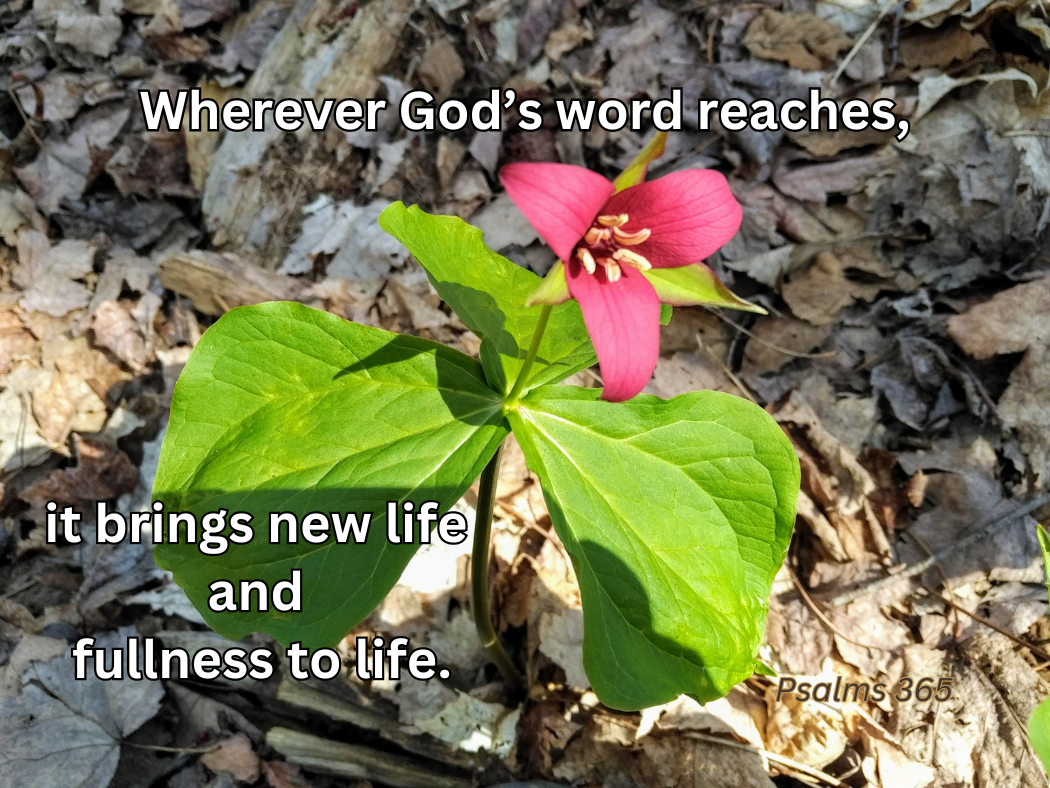
Psalm 119:12-16
Praise be to you, O LORD;
Teach me your decrees.
With my lips I recount
all the laws that come from your mouth.
I rejoice in following your statutes
as one rejoices in great riches.
I meditate on your precepts
and consider your ways.
I delight in your decrees;
I will not neglect your word.
Psalm 119 is the longest psalm in the Bible. It is also an acrostic poem, which in this case means each stanza of this poetic psalm begins with a different letter of the Hebrew alphabet. The section above for instance, begins with the letter Beth, which roughly corresponds to our letter B. Also, within each alphabetic stanza are eight verses, which all begin with the same Hebrew letter. In this way the psalm’s composer works his way through the entire twenty-two letters of the Hebrew alphabet. This psalm is in fact a remarkable literary composition, which was originally structured to be memorized, like the alphabet. Unfortunately, for the English reader, much of the elaborate, intricate beauty of this psalm is lost the moment it is translated from its original tongue.
The theme of this psalm is consistent throughout. It is a poetic testimony in praise of God’s holy, unchanging word. Here we find the alpha and omega of the psalms—a literary tribute to the A to Z wonder of God’s word. Every letter trumpets the salutary goodness of God’s written word. Charles Spurgeon, the nineteenth century theologian, has called Psalm 119, “A pearl island, or better still, a garden of sweet flowers.”[1]
Here in Psalm 119, we find these immortal words of comfort and encouragement, “Your word is a lamp to my feet and a light for my path” (Psalm 119:105).
Throughout the ages the saints of God have found that light for the journey comes streaming through the written pages of the word of God. Where can we turn in times of despair? How can we scale mountains of fear? How can we cross an ocean of worry? In this sin-darkened world, the word of God stands secure. It sends out a beam of radiant truth to light the traveller’s path. Is it any wonder then that the psalmist declares, “I have put my hope in your word” (Psalm 119:147b).

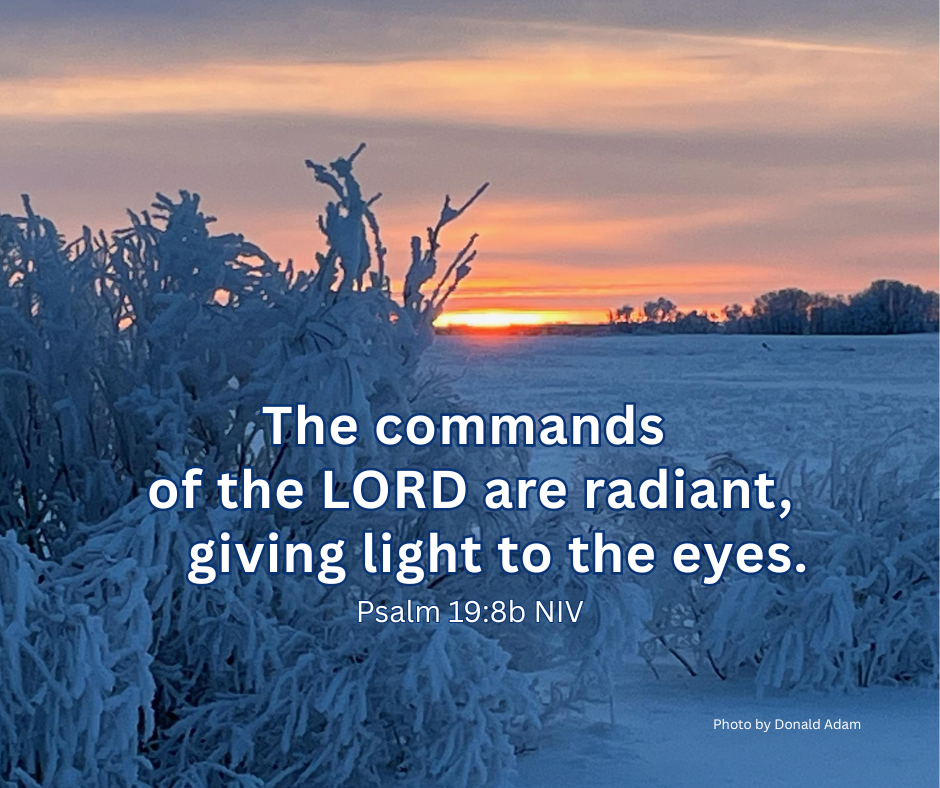
The light of your presence, LORD — photo by David Kitz
While Psalm 119 shouts out the eternal praises of God’s word, it does so, from a kneeling position. There is an unmistakable posture to this psalm. It rings most true, when it is spoken by a worshipper on his knees. This is a psalm filled with humble supplication. It is humble supplication that kneels and bows low before the Holy One of Israel.
There is an earnest pleading in this psalm that springs from the realization that apart from God and His Holy Word, personal holiness and salvation are impossible. Hence, we have the opening question that frames this stanza, “How can a young man keep his way pure?”
But in His mercy the LORD has provided a response: “Praise be to you, O LORD; teach me your decrees.”
Unless God teaches me His decrees, I stumble through life lost, without direction, meaning or purpose. In reality, the eat, drink and be merry philosophy that governs the actions of so many in this world, simply springs naturally from their lost state. Hedonism is after all a rather logical response, if life has no meaning or purpose, or if our souls have no eternal destiny.
But to the soul that has heard God’s whisper in the wind or caught a glimpse of His unfading glory in the setting sun, hedonism has lost much of its allure. The soul that takes the long view—that sees beyond the grave—lives life in a different light. We are called to live on a higher plain—a plain that is sustained and nourished by God’s life-giving, life-invigorating Word.
So, in humility with the psalmist, we cry out to the LORD, “Teach me your decrees.”
Now, aware of our fallen position—from a position of need—we cry out to the LORD, “Teach me your decrees.”
The arrogant and self-satisfied are unfamiliar with this prayer. It has no resonance within them. This is the prayer of the hungry and the thirsty. It is Jesus, the word incarnate, who takes it upon himself to personally answer this prayer. Through the beatitudes he answers the cry of our heart, “Blessed are those who hunger and thirst for righteousness, for they will be filled” (Matthew 5:6).

There is a righteousness that does not spring from our performance or our merit. It does not come from observing the law. It comes directly from the crucified and risen Christ, the one who knew no sin. This righteousness—the righteousness of Christ—is credited to our account by faith. So then as the apostle Paul asserts, “we have believed in Jesus Christ, that we might be justified by faith in Christ and not by the works of the law; for by the works of the law no flesh shall be justified” (Galatians 2:16 NKJV).
Did the writer of Psalm 119 understand the true source of holiness, or was he simply trying to achieve holiness through his own human effort? Is the psalmist’s focus on the law of the LORD and His commands and decrees, just a misdirected reflection of legalistic Old Testament thinking? For today’s believers, who look back in history from this side of the cross, this is a valid question.
On this point, the psalmist’s prayer in later in Psalm 119 is truly insightful. Notice both his choice of words and his posture in supplication, “May your unfailing love come to me, O LORD, your salvation according to your promise; then I will answer the one who taunts me, for I trust in your word” (Psalm 119:41).
Clearly the psalmist saw his need for salvation—salvation that comes freely from a God of grace and unfailing love. Secondly, in the same way as New Testament believers find salvation, the psalmist puts his trust in the word of God and the LORD’s sure promises—promises that include the coming of a Saviour-Redeemer. Satan’s taunts are no match for the believer who has put his faith in the LORD and His word.

Bridge across the Assiniboine River — photo courtesy of Donald Adam
Biblical revelation is progressive through time. The full revelation of God’s way of redemption was not revealed to the Old Testament prophets. They saw in part and prophesied in part concerning the coming of our Lord and Saviour, Jesus Christ. But the partial nature of their revelation does not invalidate their testimony or the authority of their words. Even as the above passage reveals, they saw the way of salvation with an uncanny accuracy—an accuracy that was Holy Spirit breathed.
In fact, the apostle Peter validates the ministry of the Old Testament writers by declaring of these men that they “spoke from God as they were carried along by the Holy Spirit” (2 Peter 1:21).
Again, Peter confirms the authority of the Old Testament scriptures by quoting the words of Isaiah, “All men are like grass and their glory is like the flowers of the field; the grass withers and the flowers fall, but the word of the Lord stands forever” (1 Peter 1:24- 25).
If the word of the LORD stands forever, why do so many Christians discount the Old Testament scriptures? They maybe scriptures, but we discount them. They have been dumped into the half-off bin at the back of our scriptural storehouse. They’re in the front of the Bible, but for many of us, they are in that unused, unread portion. Mentally, we have moved them to the back forty. They have become the back forty-four—out of sight and out of mind.
But the words of Psalm 119 break into our mind. Here we have some radical thinking—a radical all out devotion to God’s word.
“With my lips I recount all the laws that come from your mouth. I rejoice in following your statutes as one rejoices in great riches.”
In my mind, recounting something with my lips sounds a lot like a rehearsal. Have you rehearsed God’s laws? Doing a rehearsal with my lips sounds a lot like recitation. Have you recited God’s laws? And how can anyone recite something without memorizing it? Have you committed portions of God’s word to memory?
Memorization is a skill that has fallen by the wayside. At one time it was routinely taught and practised at our schools. Alas, in many classes, at many schools, those days are long gone. For many years the church was the last bastion of memorization. But in many churches, here too, this skill has fallen by the wayside. As a result, God’s word has fallen by the wayside.
In recent years the birds of the air have had plenty to devour, because God’s people have forgotten how to hide the word of the LORD in their hearts. But Satan’s emissaries have been busy doing double duty. Not only have they been snatching away the word of God, they also have been filling the empty spots in our minds. They have been planting illicit images where God’s word should be growing.
Is it any wonder then that the church is anaemic? The Spirit-infused bread of life has not been digested and incorporated into the church, the earthbound corpus Christi.
Memorization is hard work; it takes discipline. A disciple embraces discipline. Are you a disciple in the body of Christ? Then you will discover there is a joy that comes through incorporating God’s word more fully into your mind and into your life.
The psalmist found a wellspring of joy in the word of God. Hear his words, “I rejoice in following your statutes as one rejoices in great riches.”

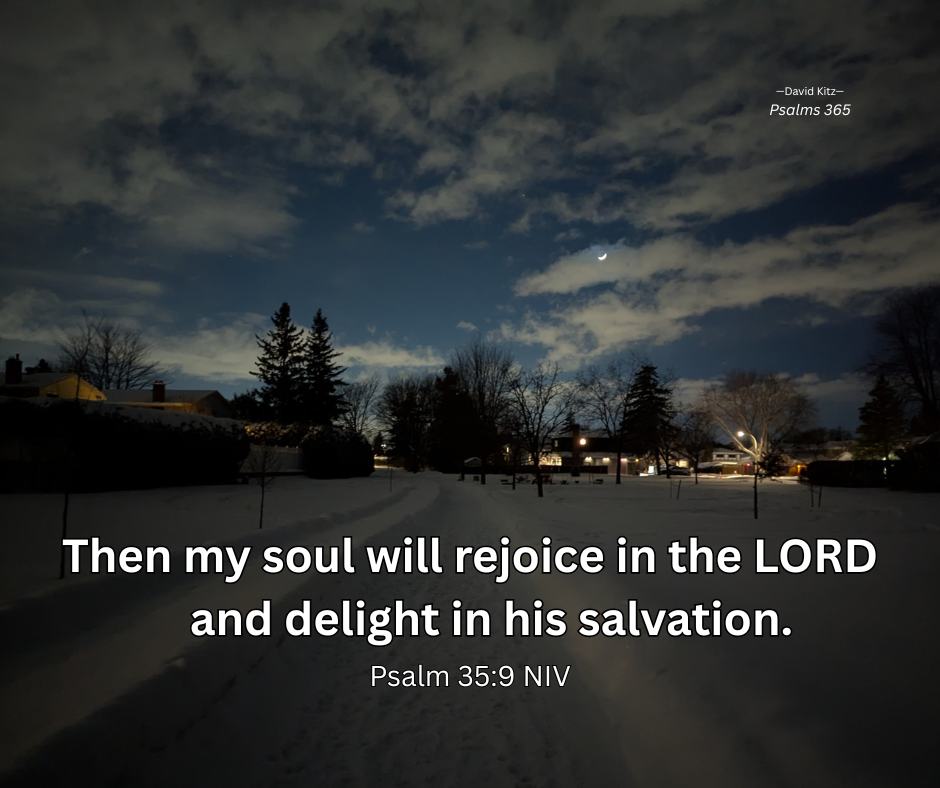
Light shines on the righteous and joy on the upright in heart — photo by David Kitz
Memorization very naturally leads to incorporation. The word becomes part of us, just as the food we eat. God’s word is lived out—expressed daily through our lives. We follow the written word—the statutes—and in so doing we are following Christ. After all, it was Jesus who told his disciples, “If you love me, you will obey what I command” (John 14:15).
When we obey, the word becomes fully alive in us. As it was at Christ’s conception, once again, the word becomes incarnate. But this time, God’s word is alive in us—alive in our earthen vessels.
Are you rich with this world’s wealth? Or are you rich in God’s word? Are you finding joy in following Jesus’ commands? If you are discovering that joy, a wonderful promise awaits you. Jesus said, “If anyone loves me, he will obey my teaching. My Father will love him, and we will come to him and make our home with him” (John 14:23).
The empty spot in the garden of our heart will be filled. Jesus will live there through the power of His Word. Your heart will become His dwelling place.
Meditating on God’s word makes room for Jesus in our mind. The psalmist did not only know the secret of a clean mind, he also knew how to keep his mind occupied, healthy and active. Hear him again, “I meditate on your precepts and consider your ways.”
Unlike mind emptying transcendental meditation, biblical meditation fills the mind with God’s holy word. Our mind becomes a garden of life—a garden of sweet flowers—bringing glory to God our Creator.

Autumn sunflowers, Churchbridge, SK — photo by David Kitz
By meditating on God’s word and His ways, we put into practice the apostle Paul’s, advice to us, “Whatever is true, whatever is noble, whatever is right, whatever is pure, whatever is lovely, whatever is admirable—if anything is excellent or praiseworthy—think about such things” (Philippians 4:8).
As we meditate on these things and put them into practice, the God of all peace will be with us. He resides in His Word. His presence in us will manifest itself through an ever-increasing measure of spiritual power, when we open our hearts and our minds to meditate on His word. Then we will find joy coming to us through God’s word. The psalmist’s confession will become our own. “I delight in your decrees.”
“I will not neglect your word.”
For me, these words have become a daily challenge, and a personal commitment. I will not neglect God’s word. When I am walking in His garden, Jesus finds me there.
[1] The Treasury of David, Psalms 111-150 (Classic Reflections on the Wisdom of the Psalms, Volume 3) by Charles H. Spurgeon, Henderson Publishing, 2005.
Bringing Life to the Psalms
- Memorization and meditation are sisters. Both practices bury God’s word more deeply in our minds. The buried seed of God’s word germinates, grows and bears fruit. Why not commit yourself to memorize God’s word? Psalm 119 Beth is a wonderful place to begin this life changing practice.
- When the word of God takes root in our hearts, we become living epistles—letters from God to a lost generation. You are the only Bible many in this world will ever read. Take a moment to read 2 Corinthians 3:1-3. What do those around you see when they read your life?
- Is the Old Testament in your scriptural deep-discount bin? What relevance does it have for your life today? Have there been instances when an Old Testament passage or story significantly impacted your life? What steps can be taken to honor the whole of God’s word more fully in our churches today?
- Take time to read all of Psalm 119. Highlight those verses that particularly speak to your heart. Review these same passages later in the day or the week. Take time to think on these things. By doing so, you are meditating on God’s word.
Today’s post is Chapter 23 from the book Psalms Alive! Connecting Heaven & Earth by David Kitz. To find out more or purchase click here.