• Home
  • About
  • DavidKitz.ca
  • Youtube Videos
  • Books by David
  • Books on Amazon.com

I love the Psalms

~ Connecting daily with God through the Psalms

I love the Psalms

Tag Archives: Jacob

The God of the Broken

14 Sunday Dec 2025

Posted by davidkitz in The Elisha Code

≈ 3 Comments

Tags

AB Simpson, Aimee Semple McPherson, Andrew Murray, Bible, broken, brokenness, Christ, David, Jacob, Jesus, Prayer, the LORD

 And He said,
“Your name shall no longer be called Jacob, but Israel;
for you have struggled with God and with men,
and have prevailed.”
(Genesis 32:28, NKJV)

The people whom God uses to change the world have first been radically changed by the Spirit of God. Often, these world changers have experienced major setbacks. We might even say they have been broken by God, but they have come through those experiences transformed and empowered by the Spirit.

There is a pattern that emerges as we look back at the lives of the three revival leaders we have examined thus far. Each of them reached a breaking point.

A. B. Simpson was a successful minister, who through much hard work, built a large church but he experienced burnout and a physical breakdown. From this low point, God healed him and raised him up to bring healing and salvation to thousands.

Similarly, Aimee Semple McPherson experienced a complete physical breakdown that left her hospitalized and at the point of death. She had returned from the mission field as a widow and a broken woman. She transitioned to a new life but steadfastly resisted God’s call. But God broke her resistance, miraculously restored her health, and catapulted her into a healing ministry that changed the trajectory of the church in America and the world.

Andrew Murray had what many would consider a successful ministry. But he too reached a breaking point. He lost his voice for two years. From this low point, God healed, transformed, and restored Murray to a far more effective and far-reaching ministry.

The common thread running through these life stories is that all three leaders encountered a breaking point. God broke them. Why would God do such a thing? Do we need to be broken to become effective ministers of the gospel of Christ?

There are several stories in the Bible that illustrate this need for God to break us.

The life story of the patriarch Jacob serves as the primary example of God taking a man to a breaking point. Jacob was a grasper. He grabbed for power. This is graphically illustrated by the way he came into this world. He arrived grasping his twin brother’s heel.[i] From the moment of birth, we see Jacob attempting to supplant Esau, his older brother, through cunning and deception.

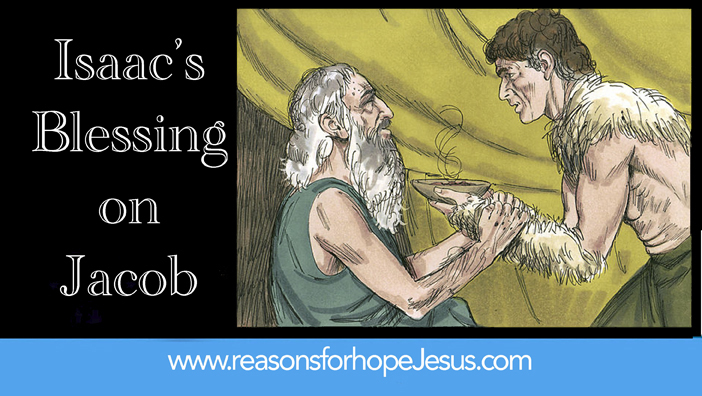
Jacob succeeds first by trading a pot of lentil stew for Esau’s birthright (Genesis 25:29-35), and later by conspiring with his mother to rob Esau of his father’s blessing (Genesis 27:1-41). When Esau threatens to kill him, Jacob flees to the distant home of his uncle Laban.

Repeatedly, Jacob bargains with God, and God answers his prayers. Perhaps this is the most remarkable feature of Jacob’s life story. The LORD sticks with this deceiver and blesses him despite his devious ways. His life is a portrait of God’s unmerited favor in the face of constant opposition.

Jacob met his cunning, devious double in the person of Uncle Laban. First, Laban deceived Jacob by swapping Leah for her sister Rachel on his wedding night. There is more than a little divine justice at play in Laban’s clever deception. Jacob who cheated his blind father is cheated blind in his own marriage bed. The irony in this outcome is striking. Jacob is required to work seven years for Leah and then seven more years for Rachel, his true love.[ii]

Then, over the years, Laban changed Jacob’s wages ten times. But despite Laban’s constant readjustments, Jacob’s flocks and herds grew and prospered. God’s blessing bestowed by Isaac remained on Jacob.[iii]

But eventually, God brought Jacob to a breaking point. It happened on Jacob’s return to his homeland.
Jacob gets word that his brother Esau is coming to meet him with 400 men. Why would Esau come with 400 men unless he intended to carry out the threat, he uttered twenty years earlier? Suddenly, Jacob’s life is on the line, and not only his life, but also the lives of his two wives and his twelve sons. His family and all the wealth he accumulated over years of hard labor is about to be wiped out. He finds himself in a truly desperate situation with no way out.

In exchange for his life, he offers to bargain away all his livestock, his wives, and his children. But will this desperate ploy satisfy the angry brother he has cheated? Jacob sends all he has ahead of him. To his servants he says:

“When my brother Esau meets you and asks, ‘Who do you belong to, and where are you going, and who owns all these animals in front of you?’ then you are to say, ‘They belong to your servant Jacob. They are a gift sent to my lord Esau, and he is coming behind us’” (Genesis 32:17-18, NIV).

But Jacob stays back on the opposite side of the Jabok River. There alone in the dark for the whole night, Jacob wrestled with a man. But in truth, he wrestled with God.

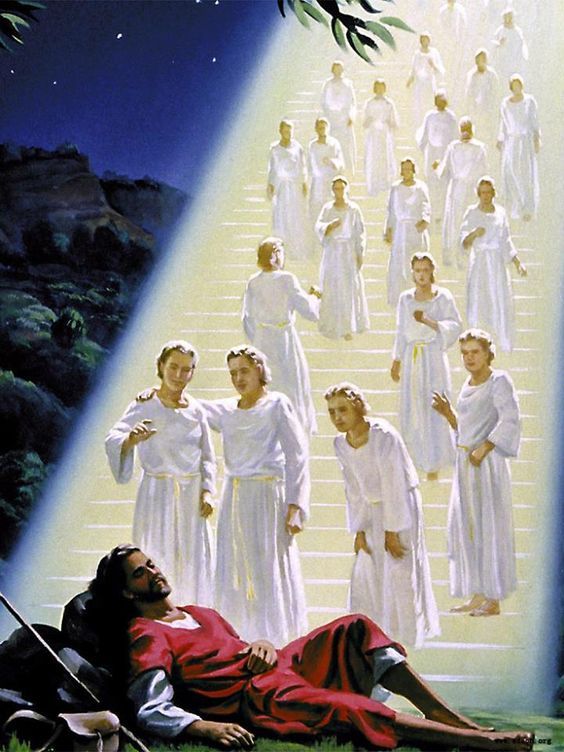
Jacob’s Ladder — Genesis 28:12

Many Bible scholars view this man as a Christophany—a preincarnate appearance of Christ. Christ came down from heaven to break this obstinate cheater—break him and change him into a vessel he could use for his glory and his eternal purpose.

When the man saw that he could not overpower him, he touched the socket of Jacob’s hip so that his hip was wrenched as he wrestled with the man. Then the man said, “Let me go, for it is daybreak.”

But Jacob replied, “I will not let you go unless you bless me.”

The man asked him, “What is your name?”

“Jacob,” he answered.

Then the man said, “Your name will no longer be Jacob, but Israel, because you have struggled with God and with humans and have overcome.”

Jacob said, “Please tell me your name.”

But he replied, “Why do you ask my name?” Then he blessed him there.

So Jacob called the place Peniel, saying, “It is because I saw God face to face, and yet my life was spared” (Genesis 32:25-30).

There can be no doubt who the stronger man was at Peniel. With a simple touch Jacob’s

hip was wrenched. With a simple touch Christ healed the sick, raised the crippled, and restored sight to the blind. But here with a simple touch, Christ wrenched Jacob’s hip and left him limping for the rest of his days.

Why this stark contrast? We can easily understand why Christ would heal a crippled beggar, but why would he break a man? Why break Jacob?

The simple answer is because Jacob needed to be broken. The wild horse serves no one. The wild stallion serves only himself. Only the broken horse is fit for the master’s service. All of Jacob’s service was self-serving, and that includes his service to Laban. From Peniel onward Jacob—broken Jacob—was serving the LORD.

Galloping Horses – Image courtesy of Tina Phillips at FreeDigitalPhotos.net

David, the man after God’s own heart, needed to be broken too. David was true to the LORD in the wilderness with jealous King Saul in hot pursuit, but after he assumed the throne of Israel his fleshly desires led him astray. After his sin with Bathsheba, God needed to break him. The events that followed this sordid affair brought the humility so essential to effective service to God. Psalm 51 reflects the heart cry of a broken man.

This need for the servant of God to be broken by God appears in the New Testament as well. Peter needed to be broken by Jesus. Peter was a natural leader—sure of himself in all situations—ready to step out of a boat and even walk on water. That takes more than a little courage. But that confident self-assurance needed to be broken, and Jesus knew how to do it.

It only took the third crowing of a rooster to break Peter and reduce him to a blubbering, sobbing mess. Jesus knows how to break the strongest men. But he also knows how to restore them.

Three times Jesus asked, “Simon son of John, do you love me?”[iv] Three times Peter affirmed his love for the Lord, and three times Jesus affirmed Peter’s calling:

Jesus said, “Feed my lambs” (John 21:15).
Jesus said, “Take care of my sheep” (John 21:16).
Jesus said, “Feed my sheep” (John 21:17).

Photo by kailash kumar on Pexels.com

The broken Peter was now ready for service. He would fulfill the prophetic words Jesus had spoken over him before his fall and now in his restoration.

“Simon, Simon, Satan has asked to sift all of you as wheat. But I have prayed for you, Simon, that your faith may not fail. And when you have turned back, strengthen your brothers” (Luke 22:31-32, NIV).

The broken Peter had been humbled. Now Jesus ruled Peter. Now the Master was truly the Master and Lord of all.

Have you been broken by Jesus? Most Christians are eager to serve the Lord, but only in an advisory capacity. Peter was quick to give Jesus advice on how he should avoid the cross. See Matthew 16:21-27.

The Lord is not looking for our advice. He is looking for our obedience.

Jesus himself needed to be broken. His Heavenly Father broke him on the cross where he cried out, “Eli, Eli, lema sabachthani?” (Which means “My God, my God, why have you forsaken me?”) (Matthew 27:46, NIV).

When Jesus broke, he broke the stranglehold of sin over humanity. His breaking was essential for the salvation of our souls.

As disciples of our Lord Jesus, we can expect to be broken as well. We need to become like our Master in every way.

Saul of Tarsus was zealous to serve the God of his fathers, so zealous he persecuted the church. Jesus himself intervened in Saul’s life in order to break him. On the road to Damascus, Saul was confronted by Jesus—arrested by Jesus—blinded and broken by him.

Out of his brokenness Paul ministered the gospel to the Gentile world of his day. Through his writing he continues to speak to millions today.

Have we been confronted by Jesus? Has he opposed you at any point in your life? Have you been broken by him? In the power of our own flesh, we can do many good and noble things in the name of our Lord. Many fine churches have been built through clever marketing and ingenuity. Human effort and talent can carry us a long way.

In the eyes of many, A. B. Simpson had a successful ministry before Christ broke him. Andrew Murray was powerfully used by God before God broke him and set him aside for two years. But both these men came out of their time of brokenness refined and empowered by the Spirit of God. In their hearts there had been a regime change. The risen Christ was fully in charge now and the Spirit of God was directing them forward.

Are you and I ready to be broken and poured out at the feet of Jesus?

Then Mary took a pound of very costly oil of spikenard, anointed the feet of Jesus, and wiped His feet with her hair. And the house was filled with the fragrance of the oil (John 12:3, NIV).

[i] Genesis 25:21-26

[ii] Genesis 29:14-30

[iii] Genesis 31:38-42

[iv] John 21:15-19

This is the fourteenth weekly excerpt from the award-winning book 
The Elisha Code & the Coming Revival 

A soul-gripping read.
Is a return-to-Jesus revival possible in our time?
This book points the way forward.
For details click here.

The Promise He Made

23 Saturday Aug 2025

Posted by davidkitz in Psalm 105

≈ Leave a comment

Tags

Abraham, covenant, Isaac, Jacob, peace, praise the LORD, Prayer, prophets, Psalms

I will praise the LORD!

Psalm 105:8-15

He remembers his covenant forever,
    the promise he made, for a thousand generations,
the covenant he made with Abraham,
    the oath he swore to Isaac.
He confirmed it to Jacob as a decree,
    to Israel as an everlasting covenant:
“To you I will give the land of Canaan
    as the portion you will inherit.”
When they were but few in number,
    few indeed, and strangers in it,
they wandered from nation to nation,
    from one kingdom to another.
He allowed no one to oppress them;
    for their sake he rebuked kings:
“Do not touch my anointed ones;
    do my prophets no harm.” *

Para la publicación de Salmos 365 de hoy en español haga clic aquí.

bgbg_v4.3_1501818
* NEW INTERNATIONAL VERSION, COPYRIGHT ©1973, 1978, 1984, 2011 BY BIBLICA

Please pray for peace to return to Israel, Gaza, and Ukraine!

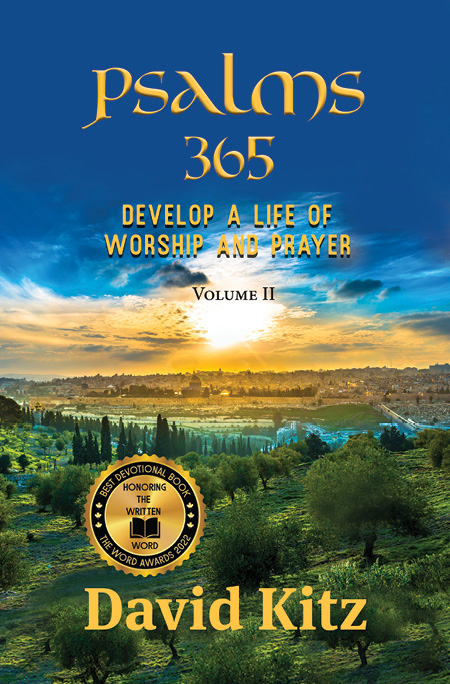
Volume I of Psalms 365: Develop a Life of Worship and Prayer won the Best Book of the Year Award from The Word Guild and Volume II has won the Best Devotional of the Year Award. For those who love God’s word, this three-book series is an ideal way to daily meet with the Lord. To purchase or for a closer look click here.

A gripping read from David Kitz.
Is a return-to-Jesus revival possible in our time?
This book points the way forward.
For details click here.

You Give Us Victory

30 Sunday Jun 2024

Posted by davidkitz in Psalm 44

≈ 2 Comments

Tags

ancestors, enemies, foes, God, Jacob, nations, praise the LORD, trust in God, victory

I will praise the LORD!Psalm 74_22

Reading: Psalm 44:1-8

For the director of music. Of the Sons of Korah. A maskil.

We have heard it with our ears, O God;
    our ancestors have told us
what you did in their days,
    in days long ago.
With your hand you drove out the nations
    and planted our ancestors;
you crushed the peoples
    and made our ancestors flourish.
It was not by their sword that they won the land,
    nor did their arm bring them victory;
it was your right hand, your arm,
    and the light of your face, for you loved them.
You are my King and my God,
    who decrees victories for Jacob.
Through you we push back our enemies;
    through your name we trample our foes.
I put no trust in my bow,
    my sword does not bring me victory;
but you give us victory over our enemies,
    you put our adversaries to shame.
In God we make our boast all day long,
    and we will praise your name forever.
*

Para la publicación de Salmos 365 de hoy en español haga clic aquí.

* NEW INTERNATIONAL VERSION, COPYRIGHT ©1973, 1978, 1984, 2011 BY BIBLICA

Please pray for peace to return to Israel, Gaza, and Ukraine!

Volume I of Psalms 365: Develop a Life of Worship and Prayer won the Best Book of the Year Award from The Word Guild and Volume II has won the Best Devotional of the Year Award. For those who love God’s word, this three-book series is an ideal way to daily meet with the Lord. To purchase or for a closer look click here.

B1P95Jv-LtS._SY300_


He Has Been with Me

24 Monday Jun 2024

Posted by davidkitz in Psalm 15, Psalms

≈ Leave a comment

Tags

altar of God, answered prayer, Bethel, eternity, Father God, God's presence, Jacob, Prayer, Psalms

Today’s quote and prayer from
“Psalms 365: Develop a Life of Worship and Prayer”
by David Kitz.Psalm 15 -365

Reading: Psalm 15

Father God,
I don’t want to come for an occasional visit.
I want to live in your presence now
and in eternity.
Today,
help me interact with others with the knowledge
you are watching every thought, word, and action.
I’m living with you.

Amen.

— — —

So Jacob said to his household
and to all who were with him,
“Get rid of the foreign gods you have with you,
and purify yourselves and change your clothes.
 
Then come,
let us go up to Bethel,
where I will build an altar to God,
who answered me in the day of my distress
and who has been with me
wherever I have gone.”

(Genesis 35:2-3), NIV)*

Para la publicación de Salmos 365 de hoy en español haga clic aquí.

* GOOD NEWS TRANSLATION

BGBG_v4.3_150[1818]

Please pray for peace to return to Israel, Gaza, and Ukraine!

Volume I of Psalms 365: Develop a Life of Worship and Prayer won the Best Book of the Year Award from The Word Guild and Volume II has won the Best Devotional of the Year Award. For those who love God’s word, this three-book series is an ideal way to daily meet with the Lord. To purchase or for a closer look click here.

New from David Kitz
TheElishaCodeCVR5

To purchase or for a closer look click here.

The God of the Broken

11 Saturday Feb 2023

Posted by davidkitz in Bible

≈ 1 Comment

Tags

A. B. Simpson, Aimee Semple McPherson, Christ, Jacob

The following post is a chapter from The Elisha Code by Dr. Ed Hird and David Kitz.

And He said,
“Your name shall no longer be called Jacob, but Israel;
for you have struggled with God and with men,
and have prevailed.”
(Genesis 32:28, NKJV)

             The people whom God uses to change the world have first been radically changed by the Spirit of God. Often, these world changers have experienced major setbacks. We might even say they have been broken by God, but they have come through those experiences transformed and empowered by the Spirit.

There is a pattern that emerges as we look back at the lives of the three revivalists we have examined thus far. Each of them reached a breaking point.
A B Simpson A. B. Simpson was a successful minister who through much hard work, built a large church but he experienced burnout and a physical breakdown. From this low point, God healed him and raised him up to bring healing and salvation to thousands.

Similarly, Amy Semple McPherson experienced a complete physical breakdown that left her hospitalized and at the point of death. She had returned from the mission field as a widow and a broken woman. She transitioned to a new life but steadfastly resisted God’s call. But God broke her resistance, miraculously restored her health, and catapulted her into a healing ministry that changed the trajectory of the church in America and the world.

AimeeSempleMcPherson_lg.250w.tn

Aimee Semple McPherson

Andrew Murray had what many would consider a successful ministry. But he too reached a breaking point. He lost his voice for two years. From this low point, God healed, transformed, and restored Murray to a far more effective and far-reaching ministry.

The common thread that runs through these life stories is all three leaders encountered a breaking point. God broke them. Why would God do such a thing? Do we need to be broken to become effective ministers of the gospel of Christ?

There are several stories in the Bible that illustrate this need for God to break us.

The life story of the patriarch Jacob serves as the primary example of God taking a man to a breaking point. Jacob was a grasper. He grabbed for power. This is graphically illustrated by the way he came into this world. He arrived grasping his twin brother’s heel.[i] From the moment of birth, we see Jacob attempting to supplant Esau, his older brother, through cunning and deception.
Jacob succeeds first by trading a pot of lentil stew for Esau’s birthright (Genesis 25:29-35), and later by conspiring with his mother to rob Esau of his father’s blessing (Genesis 27:1-41). When Esau threatens to kill him, Jacob flees to the distant home of his uncle Laban.

Repeatedly, Jacob bargains with God, and God answers his prayers. Perhaps this is the most remarkable feature of Jacob’s life story. The LORD sticks with this deceiver and blesses him despite his devious ways. His life is a portrait of God’s unmerited favor in the face of constant opposition.

Jacob met his cunning, devious double in the person of Uncle Laban. First, Laban deceived Jacob by swapping Leah for her sister Rachel on his wedding night. There is more than a little divine justice at play in Laban’s clever deception. Jacob who cheated his blind father is cheated blind in his own marriage bed. The irony in this outcome is striking. Jacob is required to work seven years for Leah and then seven more years for Rachel, his true love.[ii]

Then, over the years, Laban changed Jacob’s wages ten times. But despite Laban’s constant readjustments, Jacob’s flocks and herds grew and prospered. God’s blessing bestowed by Isaac remained on Jacob.[iii]

Jacob's Ladder

Jacob’s Ladder — Genesis 28:12

But eventually, God brought Jacob to a breaking point. It happened on Jacob’s return to his homeland.

Jacob gets word that his brother Esau is coming to meet him with 400 men. Why would Esau come with 400 men unless he intended to carry out the threat, he uttered twenty years earlier? Suddenly, Jacob’s life is on the line, and not only his life, but also the lives of his two wives and his twelve sons. His family and all the wealth he accumulated over years of hard labor is about to be wiped out. He finds himself in a truly desperate situation with no way out.

In exchange for his life, he offers to bargain away all his livestock, his wives, and his children. But will this desperate ploy satisfy the angry brother he has cheated? Jacob sends all he has ahead of him. To his servants he says:

“When my brother Esau meets you and asks, ‘Who do you belong to, and where are you going, and who owns all these animals in front of you?’ then you are to say, ‘They belong to your servant Jacob. They are a gift sent to my lord Esau, and he is coming behind us’” (Genesis 32:17-18, NIV).

But Jacob stays back on opposite side of the Jabok River. There alone in the dark for the whole night, Jacob wrestled with a man. But in truth, he wrestled with God.

Many Bible scholars view this man as a Christophany—a preincarnate appearance of Christ. Christ came down from heaven to break this obstinate cheater—break him and change him into a vessel he could use for his glory and his eternal purpose.

When the man saw that he could not overpower him, he touched the socket of Jacob’s hip so that his hip was wrenched as he wrestled with the man. Then the man said, “Let me go, for it is daybreak.”

          But Jacob replied, “I will not let you go unless you bless me.”

          The man asked him, “What is your name?”

          “Jacob,” he answered.

          Then the man said, “Your name will no longer be Jacob, but Israel, because you have struggled with God and with humans and have overcome.”

          Jacob said, “Please tell me your name.”

          But he replied, “Why do you ask my name?” Then he blessed him there.

          So Jacob called the place Peniel, saying, “It is because I saw God face to face, and yet my life was spared” (Genesis 32:25-30).

There can be no doubt who the stronger man was at Peniel. With a simple touch Jacob’s hip was wrenched. With a simple touch Christ healed the sick, raised the crippled, and restored sight to the blind. But here with a simple touch, Christ wrenched Jacob’s hip and left limping for the rest of his days.

Why this stark contrast? We can easily understand why Christ would heal a beggar, but why would he break a man? Why break Jacob?

The simple answer is because Jacob needed to be broken. The wild horse serves no one. The wild stallion serves only himself. Only the broken horse is fit for the master’s service. All of Jacob’s service was self-serving, and that includes his service to Laban. From Peniel onward Jacob—broken Jacob—was serving the LORD.

David, the man after God’s own heart, needed to be broken too. David was true to the LORD in the wilderness with jealous King Saul in hot pursuit, but after he assumed the throne of Israel his fleshly desires led him astray. After his sin with Bathsheba, God needed to break him. The events that followed this sordid affair brought the humility so essential for effective service to God. Psalm 51 reflects the heart cry of a broken man.

This need for the servant of God to be broken by God appears in the New Testament as well. Peter needed to be broken by Jesus. Peter was a natural leader—sure of himself in all situations—ready to step out of a boat and even walk on water. That takes more than a little courage. But that confident self-assurance needed to be broken, and Jesus knew how to do it.

It only took three crows from a rooster to break Peter and reduce him to a blubbering, sobbing mess. Jesus knows how to break the strongest men. But he also knows how to restore them.

Three times Jesus asked, “Simon son of John, do you love me?”[iv]
Three times Peter affirmed his love for the Lord, and three times Jesus affirmed Peter’s calling:

Jesus said, “Feed my lambs” (John 21:15).
Jesus said, “Take care of my sheep” (John 21:16).
Jesus said, “Feed my sheep” (John 21:17).

The broken Peter was now ready for service. He would fulfill the prophetic words Jesus had spoken over him before his fall and now in his restoration.

“Simon, Simon, Satan has asked to sift all of you as wheat. But I have prayed for you, Simon, that your faith may not fail. And when you have turned back, strengthen your brothers” (Luke 22:31-32, NIV).

The broken Peter had been humbled. Now Jesus ruled Peter. Now the Master was truly the Master and Lord of all.

Have you been broken by Jesus? Most Christians are eager to serve the Lord, but only in an advisory capacity. Peter was quick to give Jesus advice on how he should avoid the cross. See Matthew 16:21-27. The Lord is not looking for our advice. He is looking for our obedience.

Jesus himself needed to be broken. His Heavenly Father broke him on the cross where he cried out,“Eli, Eli, lema sabachthani?” (Which means “My God, my God, why have you forsaken me?”) (Matthew 27:46, NIV).

When Jesus broke, he broke the stranglehold of sin over humanity. His breaking was essential for the salvation of our souls.
As disciples of our Lord Jesus, we can expect to be broken as well. We need to become like our Master in every way.

Saul of Tarsus was zealous to serve the God of his fathers, so zealous he persecuted the church. Jesus himself intervened in Saul’s life in order to break him. On the road to Damascus, Saul was confronted by Jesus—arrested by Jesus—blinded and broken by him.

Out of his brokenness Paul ministered the gospel to the Gentile world of his day. Through his writing he continues to speak to millions today.

Have we been confronted by Jesus? Has he opposed you at any point in your life? Have you been broken by him? In the power of our own flesh we can do many good and noble things in the name of our Lord. Many fine churches have been built through clever marketing and ingenuity. Human effort and talent can carry us along way.

In the eyes of many, A. B. Simpson had a successful ministry before Christ broke him. Andrew Murray was powerfully used by God before God broke him and set him aside for two years. But both these men came out of their time of brokenness refined and empowered by the Spirit of God. In their hearts there had been a regime change. The risen Christ was fully in charge now and the Spirit of God was directing them forward.

Are you and I ready to be broken and poured out at the feet of Jesus?

Then Mary took a pound of very costly oil of spikenard, anointed the feet of Jesus, and wiped His feet with her hair. And the house was filled with the fragrance of the oil (John 12:3, NIV).

[i] Genesis 25:21-26

[ii] Genesis 29:14-30

[iii] Genesis 31:38-42

[iv] John 21:15-19

An Everlasting Covenant

02 Saturday Jan 2021

Posted by davidkitz in Psalm 105, Psalms

≈ 3 Comments

Tags

Abraham, covenant, Isaac, Jacob, miracles

I will praise the LORD!

white concrete building

Photo by Haley Black on Pexels.com

Remember the wonders he has done,
    his miracles, and the judgments he pronounced,
you his servants, the descendants of Abraham,
    his chosen ones, the children of Jacob.
He is the LORD our God;
    his judgments are in all the earth.
  He remembers his covenant forever,
    the promise he made, for a thousand generations,
the covenant he made with Abraham,
    the oath he swore to Isaac.
He confirmed it to Jacob as a decree,
    to Israel as an everlasting covenant:
“To you I will give the land of Canaan
    as the portion you will inherit.”

(Psalm 105:5-11, NIV)*

* New International Version, Copyright ©1973, 1978, 1984, 2011 by Biblica

Praise the LORD, for the LORD is Good

29 Saturday Dec 2018

Posted by davidkitz in Psalm 135, Psalms

≈ 4 Comments

Tags

Jacob, praise, praise the LORD, the goodness of God

I will praise Him!

A sign of your goodness — photo by David Kitz

Praise the LORD.

Praise the name of the LORD;
    praise him, you servants of the LORD,
you who minister in the house of the Lord,
    in the courts of the house of our God.
Praise the LORD, for the LORD is good;
    sing praise to his name, for that is pleasant.
For the LORD has chosen Jacob to be his own,
    Israel to be his treasured possession.
I know that the LORD is great,
    that our LORD is greater than all gods.
The LORD does whatever pleases him,
    in the heavens and on the earth,
    in the seas and all their depths.
He makes clouds rise from the ends of the earth;
    he sends lightning with the rain
    and brings out the wind from his storehouses.

(Psalm 135:1-7, NIV)

Biblical Schadenfreude?

20 Monday Aug 2018

Posted by davidkitz in Bible, Devotionals, Psalm 137, Psalms

≈ 1 Comment

Tags

Esau, harm, Jacob, joy, Lord, Schadenfreude

Reading: Psalm 137
(Verses 7-9)
Remember, LORD, what the Edomites did
on the day Jerusalem fell.
“Tear it down,” they cried,
“tear it down to its foundations!”
Daughter Babylon, doomed to destruction,
happy is the one who repays you
according to what you have done to us.
Happy is the one who seizes your infants
and dashes them against the rocks
(NIV).

IMG_20180629_1825564-ANIMATION (2)

The Parthenon, Athens, Greece — photo by David Kitz

Reflection
German is a fascinating language. It’s a language that seems to specializes in compound words—short words that are combined to form longer words. Some English language examples of compound words are homerun, overcoat and windshield.

Schadenfreude is a compound German word. Actually, it’s such a useful and descriptive word that it has migrated into the English language and it can be found in any quality English dictionary. Schaden means harm or damage. Freude means joy. Simply put schadenfreude means joy experienced at another person’s expense—rejoicing in someone else’s suffering or loss.

Today’s reading from Psalm 137 is all about schadenfreude. The Edomites celebrated the destruction of Jerusalem. Rather than mourn over their neighbor’s calamity, they joined in calling for the destruction of the Jewish capital.

This manifestation of schadenfreude was rooted in centuries of fraternal rivalry and envy. The Edomites were the descendants of Esau, while the people of Jerusalem were the descendants of Jacob. These two people groups were linked by heredity, language and culture, and yet generation after generation they continued this brothers’ feud.

This psalm is not the only biblical counsel for us to have to avoid rejoicing in other people’s harm: Do not gloat when your enemy falls; when they stumble do not let your heart rejoice, or the LORD will see and disapprove and turn his wrath away from them (Proverbs 24:17-18).

If the LORD is punishing the evildoer, we should not appear too smug. We are spared by the grace of God and not by our moral superiority. The self-righteous suffer from delusions of pride. It’s best not to identify with that camp. The opposite response is called for. Rather than crowing over someone else’s misfortune, we should be offering help or drawing lessons on how to avoid a similar calamity.

When I see others experiencing calamity, I need to replace my schadenfreude with the genuine joy found in extending mercy, grace and compassion.

Response: LORD God, at times I have been guilty of schadenfreude. Help me to show compassion rather than smug indifference when I see others experience loss. Thank you for your ongoing mercy. Amen.

Your Turn: Have you experienced schadenfreude? How do you keep it in check?

The Rescue Mission

27 Friday Apr 2018

Posted by davidkitz in Bible, Devotionals, Psalm 105, Psalms

≈ 3 Comments

Tags

Aaron, Abraham, blood of Christ, Egypt, firstborn, Israel, Jacob, Jesus, Moses, New Covenant, Petrie Island, redemption, the LORD

Reading:                                                     Psalm 105
(Verses 23-38)
Then Israel entered Egypt; Jacob resided as a foreigner in the land of Ham.
The L
ORD made his people very fruitful;
he made them too numerous for their foes,
whose hearts he turned to hate his people, to conspire against his servants.
He sent Moses his servant, and Aaron, whom he had chosen.
They performed his signs among them,
his wonders in the land of Ham.
He sent darkness and made the land dark—
for had they not rebelled against his words?
He turned their waters into blood, causing their fish to die.
Their land teemed with frogs,
which went up into the bedrooms of their rulers.
He spoke, and there came swarms of flies,
and gnats throughout their country.
He turned their rain into hail, with lightning throughout their land;
he struck down their vines and fig trees
and shattered the trees of their country.
He spoke, and the locusts came, grasshoppers without number;
they ate up every green thing in their land, ate up the produce of their soil.
Then he struck down all the firstborn in their land,
the firstfruits of all their manhood.
He brought out Israel, laden with silver and gold,
and from among their tribes no one faltered.
Egypt was glad when they left, because dread of Israel had fallen on them
(NIV).

Reflection
In its entirety Psalm 105 celebrates the redemption and release of the people of Israel from cruel bondage and oppression in Egypt. They are the LORD’s called out people. That call began with Abraham and was passed down and renewed through the generations as the patriarchs had their own personal encounter with the LORD. With each succeeding generation their covenant with the LORD was reaffirmed.

2017-06-04f

Petrie Island morning — photo by David Kitz

Today’s reading recounts the actions the LORD undertook to free His people. This psalm portion is filled with powerful verbs—action words. Take a moment to scan through them. The LORD made, sent, turned, spoke, struck and brought. He did not sit back and watch from afar. He got directly involved in rescuing His people.

Redemption takes a concerted effort. It took a determined effort to redeem and rescue Israel from Egypt. And it took a determined effort for Father God to redeem you and me from the allure of the world and the power of the devil. Redemption came at a price. It cost the life of every firstborn in Egypt. But for you and me, who live under the New Covenant, it cost the life of Jesus, God’s only Son.

Response: Father God, thank you for the effort expended to rescue me from the grip of sin. I appreciate you, Lord Jesus. You were willing to lay down your life for me. What awesome, undeserved love! Amen.

Your Turn: Do you appreciate the New Covenant that was sealed by the blood of Christ?

Zealous and Jealous Love

25 Wednesday Apr 2018

Posted by davidkitz in Bible, Devotionals, Psalm 105, Psalms

≈ Leave a comment

Tags

Abraham, anointed, Canaan, covenant, generations, inheritance, Isaac, Jacob, jealous, kingdom, prophet, the LORD, true love, zealous

Reading:                                   Psalm 105                                                    

(Verses 8-15)
He remembers his covenant forever,
the promise he made, for a thousand generations,
the covenant he made with Abraham,
the oath he swore to Isaac.
He confirmed it to Jacob as a decree,
to Israel as an everlasting covenant:
“To you I will give the land of Canaan
as the portion you will inherit.”
When they were but few in number,
few indeed, and strangers in it,
 they wandered from nation to nation,
from one kingdom to another.
He allowed no one to oppress them;
for their sake he rebuked kings:
“Do not touch my anointed ones;
do my prophets no harm”
(NIV).

Reflection
Covenant is a term that is not used much in daily speech. The Encarta Dictionary provides us with this definition of covenant: a solemn agreement that is binding on all parties. By that definition marriage is a covenant that we enter into. A sound Christian marriage is a three-way covenant between the husband, the wife and their Creator.

2018-04-02c

His enduring love stretches beyond the horizon — photo by David Kitz

Encarta also provides a biblical definition of God’s enduring covenant with His people: in the Bible, the promises that were made between God and the Israelites, who agreed to worship no other gods.

There is something very exclusive about both these covenants. In our marriage vows we covenant or promise to love each other exclusively. No other lover may intrude. In the same way no other gods may intrude into the covenant relationship that we have with God. The LORD wants us exclusively for Himself. That is the nature of true love. It is jealous—zealous and jealous in guarding that relationship.

God’s zealous and jealous love for His people is clearly visible in today’s reading from Psalm 105. We read: He remembers his covenant forever, the promise he made, for a thousand generations. A thousand generations is a long time, 25,000 years by the commonly used reckoning. But forever is much longer. What an incredible love the LORD has for us!

We serve a faithful, passionate God who will remain true to His covenant. The question that remains for us is, will we remain true to our end of the bargain? Will we be faithful, passionate and committed in our love for the LORD? Through Christ we have an eternal inheritance by a covenant that is not of this world. Praise be to God for his enduring love.

Response: Father God, thank you for your love and faithfulness even when I have gone astray. You draw me back. Today, I renew my covenant with you. I commit myself afresh to loving and serving you. Amen.

Your Turn: Have you stayed faithful to your covenant? Does your covenant need to be renewed?

← Older posts

Psalms 365: Develop a Life of Worship and Prayer

Psalms 365 Volume II

Psalms 365 vol 3
— Psalms 365 Volume III

Psalms

Recent posts

  • May the LORD Grant All Your Requests December 20, 2025
  • A Horn of Salvation December 19, 2025
  • Ready for the King of Glory December 19, 2025
  • My Spirit Rejoices in God My Savior December 18, 2025
  • Joining the Generation That Seeks God December 18, 2025
  • Why Am I So Favored December 17, 2025
  • How Can You Find the Good Life? December 17, 2025

Calendar

December 2025
M T W T F S S
1234567
891011121314
15161718192021
22232425262728
293031  
« Nov    

Blog Posts

Comments

  • davidkitz on Joining the Generation That Seeks God
  • cjsmissionaryminister on God Sent His Son
  • cjsmissionaryminister on The God of the Broken

Blog at WordPress.com.

Privacy & Cookies: This site uses cookies. By continuing to use this website, you agree to their use.
To find out more, including how to control cookies, see here: Cookie Policy
  • Subscribe Subscribed
    • I love the Psalms
    • Join 1,377 other subscribers
    • Already have a WordPress.com account? Log in now.
    • I love the Psalms
    • Subscribe Subscribed
    • Sign up
    • Log in
    • Report this content
    • View site in Reader
    • Manage subscriptions
    • Collapse this bar
 

Loading Comments...