• Home
  • About
  • DavidKitz.ca
  • Youtube Videos
  • Books by David
  • Books on Amazon.com

I love the Psalms

~ Connecting daily with God through the Psalms

I love the Psalms

Tag Archives: Jesus

The Servant of All

16 Sunday Nov 2025

Posted by davidkitz in The Elisha Code

≈ Leave a comment

Tags

Andrew Murray, Boer War, Christ, concentration camp, crucified, God, God's faithfulness, humility, Jesus, missionary, missions, Prayer, pride, revival

Sitting down, Jesus called the Twelve and said,
“Anyone who wants to be first must be the very last,
and the servant of all.”
(Mark 9:35, NIV)

Are you and I putting Jesus’ teaching on being the least into practise in our daily lives. Are we becoming the servant of all? Do we see ourselves as last or do we put ourselves and our concerns first above all others?
Why is humility so key to missionary breakthrough? In what way has pride and self-righteousness either prevented or killed times of revival? The much-loved devotional writer Andrew Murray has much to teach us in these key areas.

Andrew Jr.’s father, Andrew Senior, had come to South Africa from Scotland as a missionary in 1828.  The Dutch Reformed Church was so desperate for pastors that they would even accept Scottish Presbyterians into their fold.  Revival and missions were the air that Andrew Junior breathed in his father’s house. Missionaries constantly visited the Murray home, including Dr. David Livingstone.

In 1838, when Andrew Junior was ten, he and his brother John were sent by their parents to study in Scotland. In the spring of 1840, the revivalist William C. Burns came and spoke in Aberdeen, Scotland. Burns’ heart was constantly broken over the lost, and he would weep and pray for hours for their salvation. This left a deep impression on young Andrew Murray.

The two brothers then went to Utrecht, Holland, for further theological studies. There, they became part of a revival group called Sechor Dabar (remember the Word in Hebrew).

When he returned to South Africa, Andrew became a Dutch Reformed pastor, being elected six times as the Moderator of the entire Dutch Reformed Church denomination. After initially trying to shut down the 1860 South African revival, he ended up giving strong leadership to this key revival. As people cried out in anguish, Andrew initially said, “This must stop now. I am your pastor!” God changed his mind, so, with Andrew’s blessing, great renewal broke out throughout South Africa with many thousands confessing Christ.

Suddenly in 1879, at age 51, Murray lost his voice for two years. Out of his painful two years of silence, he learned to depend upon God’s faithfulness, surrendering everything to God, and coming into a deep place of humility and love for others. In this time of waiting, he learned that we have nothing but what we humbly receive from God. Humility is about being an empty vessel that God can fill. Are we willing to be radically dependent on God?

Andrew’s amazing book Humility came of this deep time of self-crucifixion. He wrote, “Nothing but a crucified Jesus revealed in the soul can give a humble spirit.”

Humility for Andrew was most clearly seen in the incarnate and crucified Christ who prayed “not my will but Thine be done.” Andrew discovered that “pride is death, and the other (humility) is life; the one is all hell, the other is all heaven.”

During his voice ailment, Andrew came to see that a lack of humility suppresses revival and missions. He wrote, “A lack of humility is the explanation of every defect and failure.”

In 1881, he went to London to Bethshan, a healing home started by W. E. Boardman. He was completely healed there and never had trouble with his voice again. From that point on, he knew and taught that spiritual gifts were for believers today, and that God’s will is for healing and wholeness. While in England in 1882, he attended the Keswick Convention which focused on holiness and deeper life in Christ. Eventually, he founded Keswick South Africa.

Andrew did not just recover his voice; His whole demeanor changed.  He became known for his joyful humour. A long-time friend of the family wrote to Murray’s daughter Mary of this transformation: “A great change came into his life after that. He used to be rather stern and very decided in his judgment of things—after that year he was all love. His great humility also struck me very forcibly at that time.”

Murray’s oldest daughter agreed, saying, “he began to show in all relationships constant tenderness and unruffled lovingkindness and unselfish thought for others which increasingly characterized his life from that point.”

God showed Andrew Murray that “manifestations of temper and touchiness and irritation, feelings of bitterness and estrangement, have their root in nothing but pride.” He concluded that our defensiveness and unkind words reveal a lack of humility.

This deep personal change is the hallmark of all who come to a point of full repentance and faith in Christ. Humility is the mark of those who have been broken by the Spirit.

In his play The Power of Darkness, Leo Tolstoy put these words in the mouth of one of the main characters, “Everyone thinks of changing the world, but no one thinks of changing himself.”[i]

World changers—God’s world changers—have first been changed by the Spirit of God. The self has been crucified and now Christ reigns. Leo Tolstoy, Andrew Murray, and the apostle, Paul, knew they were in desperate need of personal transformation. Real change begins with humble submission to Christ the crucified Lord and Savior.

 I have been crucified with Christ and I no longer live, but Christ lives in me. The life I now live in the body, I live by faith in the Son of God, who loved me and gave himself for me (Galatians 2:20, NIV).

Andrew ended up writing two hundred and forty books and booklets, including Waiting on God, The School of Obedience, Absolute Surrender, and The Deeper Christian Life. His anointed pen came from his anointed heart.

One of his most transformative books was called The Key to the Missionary Problem where he taught that missions were “the chief end of the church.” Dr F.B. Meyer said that The Key to the Missionary Problem, if widely read, would lead to one of the greatest revivals of missionary enthusiasm that the world has ever known.

Andrew Murray saw missions as so large and difficult it required the Church returning to “the Pentecostal life of her first love.”

“The Pentecostal commission can only be carried out by a Pentecostal Church in Pentecostal Power. …We have given too much attention to methods and to machinery and to resources and too little to the Source of Power—the filling with the Holy Ghost.”

Humble prayer, said Murray, was the heart of missions. He prayed that the cry of our whole heart, night, and day, would be, “Oh, for the humility of Jesus in myself and all around me!”

Murray saw humility as an essential key to winning the lost and reflecting the true character of Jesus. O that God would use such humility to breath a revival of missions throughout the world.

God eventually used Andrew as a peacemaker, humbly seeking to avoid the horrendous Boer/Anglo War (October 11, 1899 – May 31, 1902) where 26,000 of the 100,000 women and children in British concentration camps died of malnutrition and disease. Andrew Murray was ideally suited to the task of peacemaking. He had spent his entire working life as a bridge builder between the Dutch-speaking Afrikaners and the black tribal communities. Now as a British-born church leader, he interceded for peace in the face of British imperial aggression.

He wrote, “The horrors of war are too terrible; the sin and shame of war are too great; the folly of war is too monstrous… I believe with my whole heart that in many respects Britain is the noblest, the most Christian nation in the world, its greatest power for good or evil… Once again, I beseech the Christian people of Great Britain to rouse themselves, and to say, ‘This war shall not be.’ Let every lover of peace make his voice heard.”

In this time of tragic conflict, in various hot spots around the globe, may we pray that other humble peacemakers, like Andrew Murray, may arise. What might it take for the Russian and Ukrainian people to humbly seek lasting reconciliation and forgiveness?

The earnest prayer and humility of Jesus points the way forward. The hour is late. Hear our Savior’s plea, “Couldn’t you men keep watch with me for one hour?” (Matthew 26:40, NIV).

[i] Leo Tolstoy, The Power of Darkness, Kindle edition, 2012, Aylmer Maude (Translator), Louise Shanks Maude (Translator).

This is the tenth weekly excerpt from the award-winning book 
The Elisha Code & the Coming Revival 

A soul-gripping read.
Is a return-to-Jesus revival possible in our time?
This book points the way forward.
For details click here.

Those Who Have Faith in Jesus

14 Friday Nov 2025

Posted by davidkitz in Psalm 14, Psalms

≈ 2 Comments

Tags

atonement, blood of Jesus, faith, glory of God, God, grace of God, Jesus, justified, Prayer, Psalms, sacrifice

Today’s quote and prayer from
“Psalms 365: Develop a Life of Worship and Prayer


Today’s Reading: Psalm 14

Listen to today’s reading by Jonathan Dent:

https://davidkitz.blog/wp-content/uploads/2025/11/psalm-14-final-mix-2.mp3

Father God,
I want to seek you always,
especially when I sin.
That’s when I need you most.
You have the remedy for my sin—
the blood of Jesus.
You forgive me
and clean me up.
Amen.

— — — —

There is no difference between Jew and Gentile,
for all have sinned and fall short of the glory of God,
and all are justified freely by his grace
through the redemption that came by Christ Jesus.

God presented Christ as a sacrifice of atonement,
through the shedding of his blood—
to be received by faith.
He did this to demonstrate his righteousness,
because in his forbearance
he had left the sins committed
beforehand unpunished—

he did it to demonstrate his righteousness
at the present time,
so as to be just
and the one who justifies
those who have faith in Jesus.

(Romans 3:22-26 NIV)*

Para la publicación de Salmos 365 de hoy en español haga clic aquí.

bgbg_v4.3_1501818
* NEW INTERNATIONAL VERSION, COPYRIGHT ©1973, 1978, 1984, 2011 BY BIBLICA

Thank God for peace in Israel and Gaza,
and continue to pray for peace to return to Ukraine and Russia!

Volume I of Psalms 365: Develop a Life of Worship and Prayer won the Best Book of the Year Award from The Word Guild and Volume II has won the Best Devotional of the Year Award. For those who love God’s word, this three-book series is an ideal way to daily meet with the Lord. To purchase or for a closer look click here.

New from David Kitz

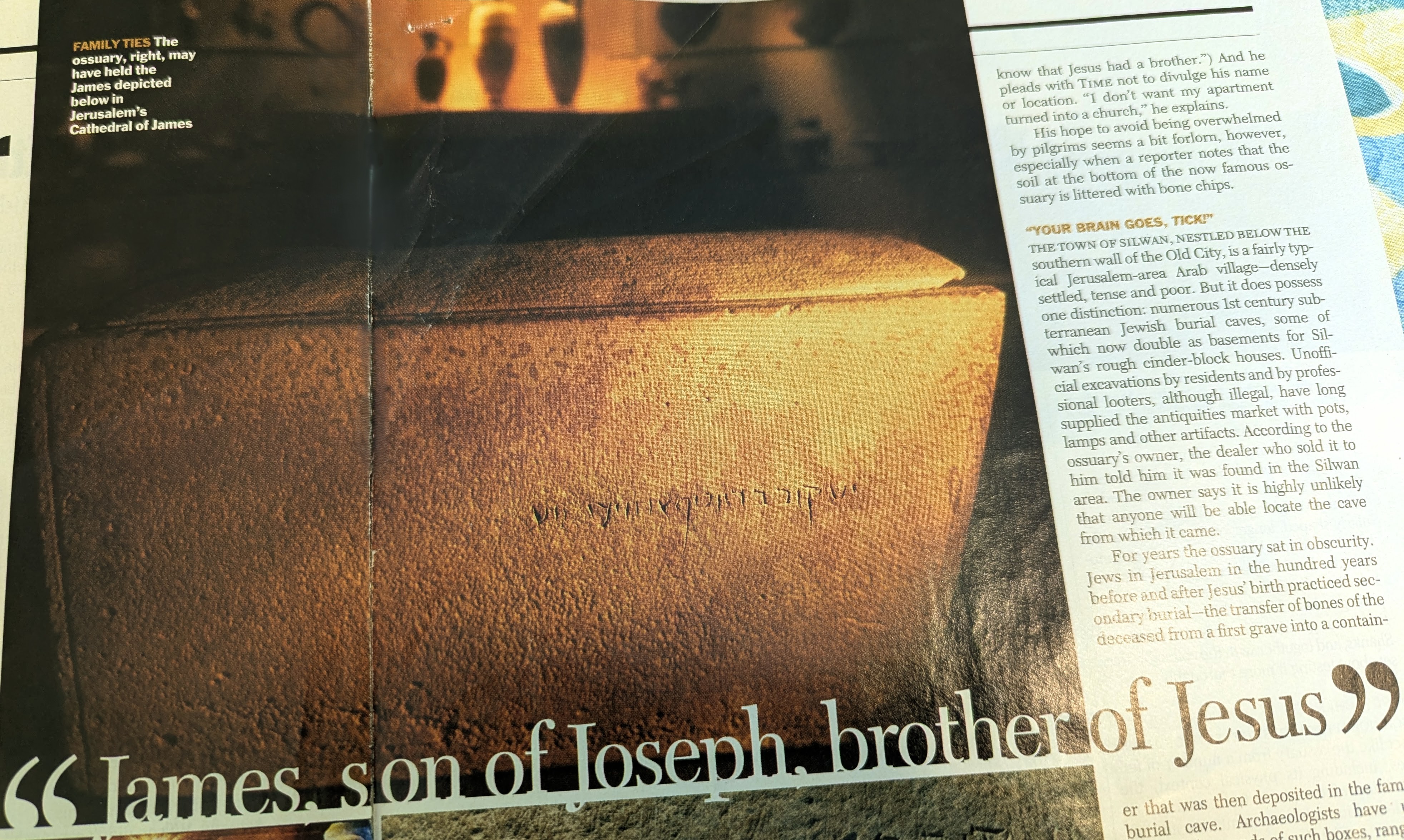
James—the brother of Jesus—who was this man? What evidence do we have that this “brother of our Lord” even existed?

David Kitz digs deep into archeology, family dynamics, church history, and the biblical texts. What emerges from his research is a portrait of a decisive, pivotal leader who embodied the will and character of Jesus Christ.

But how did James—James the unbeliever—transform to become a leader who changed the course of world history? In these pages you will uncover the answer and rediscover for yourself the life-changing power of the gospel.

To view further details or purchase this or other books directly from the author click here.
The Folly of Denying God

14 Friday Nov 2025

Posted by davidkitz in Psalm 14, Psalms

≈ Leave a comment

Tags

accountability, Atheism, David, faith, God, humanity, Jesus, morality, Psalms, Reflection, repentance, sin, the LORD, Unbelief, wisdom

Today’s Devotion from Psalms 365 by David Kitz

Reading: Psalm 14

Listen to today’s reading by Jonathan Dent:

https://davidkitz.blog/wp-content/uploads/2025/11/psalm-14-final-mix-2.mp3


For the director of music. Of David.

The fool says in his heart, “There is no God.”
They are corrupt, their deeds are vile;
there is no one who does good.
The LORD looks down from heaven on all mankind
to see if there are any who understand, any who seek God.
All have turned away, all have become corrupt;
there is no one who does good, not even one.
Do all these evildoers know nothing?
They devour my people as though eating bread;
they never call on the LORD.
But there they are, overwhelmed with dread,
for God is present in the company of the righteous.
You evildoers frustrate the plans of the poor,
but the LORD is their refuge.
Oh, that salvation for Israel would come out of Zion!
When the LORD restores his people,
let Jacob rejoice and Israel be glad! (NIV) *

Reflection
Apparently, atheism is not a modern phenomenon. Three thousand years ago in David’s time, there were people who said in their heart, “There is no God.” Atheism has a long and ignoble pedigree. I say ignoble because as David observes, it is the fool who says, “There is no God” (v. 1).

There is a footnote in my Bible indicating the word translated in this psalm as fool denotes someone who is morally deficient. David goes on to describe this moral deficiency. He uses the words corrupt and vile. In fact, there is a complete absence of anything good. But this isn’t just David’s indictment against a few errant atheists; this is the LORD’s view of all mankind. All have turned away, all have become corrupt; there is no one who does good, not even one (v. 3). In the New Testament, Paul the Apostle quotes from this psalm in his epistle to the Romans as he outlines the depravity of humanity.

Is there a link between unbelief and the sinful state of the human soul? Does sin breed unbelief? There is ample biblical and anecdotal evidence that it does. When Adam and Eve sinned, in an instant, they turned from God seekers to God avoiders. Add a little more sin, and it’s only a short step for a God avoider to become a God denier.

We deny the existence of God to avoid accountability for our sin. We foolishly assume that since we can’t see God, He can’t see us and our misdeeds. Better yet why not pretend God doesn’t exist? Then we are at liberty to sin as much as we please without fear of God’s judgment. That sounds like morally deficient reasoning to me. But the fool fools only himself.

Response: Father, I want to seek you always, especially when I sin. That’s when I need you most. You have the remedy for my sin—the blood of Jesus. You forgive me and clean me up. Amen.

Your Turn: Does sinful conduct affect or infect your belief system? How does sin cloud our reasoning?

Para la publicación de Salmos 365 de hoy en español haga clic aquí.

bgbg_v4.3_1501818
* NEW INTERNATIONAL VERSION, COPYRIGHT ©1973, 1978, 1984, 2011 BY BIBLICA

Thank God for peace in Israel and Gaza,
and continue to pray for peace to return to Ukraine and Russia!

Volume I of Psalms 365: Develop a Life of Worship and Prayer won the Best Book of the Year Award from The Word Guild and Volume II has won the Best Devotional of the Year Award. For those who love God’s word, this three-book series is an ideal way to daily meet with the Lord. To purchase or for a closer look click here.

New from David Kitz

James—the brother of Jesus—who was this man? What evidence do we have that this “brother of our Lord” even existed?

David Kitz digs deep into archeology, family dynamics, church history, and the biblical texts. What emerges from his research is a portrait of a decisive, pivotal leader who embodied the will and character of Jesus Christ.

But how did James—James the unbeliever—transform to become a leader who changed the course of world history? In these pages you will uncover the answer and rediscover for yourself the life-changing power of the gospel.

To view further details or purchase this or other books directly from the author click here.

Good Gifts

13 Thursday Nov 2025

Posted by davidkitz in Psalm 13, Psalms

≈ Leave a comment

Tags

bread, children, faith, help in troubled times, Jesus, Prayer, Psalms, seeking, troubled times, worship

Today’s quote and prayer from
“Psalms 365: Develop a Life of Worship and Prayer


Today’s Reading: Psalm 13

Listen to today’s reading by Jonathan Dent:

https://davidkitz.blog/wp-content/uploads/2025/11/psalm-13-final-mix-1.mp3


LORD God,
thank you that I can call out to you
in times of trouble.
Show me the way forward.
Open my eyes
to the help you are providing
and will provide.
In Jesus’ name,
I trust and thank and praise you in advance.
Amen.

— — — —

Autumn glory, Gatineau Park, QC — photo by David Kitz

“Ask and it will be given to you;
seek and you will find;
knock and the door will be opened to you.

For everyone who asks receives;
the one who seeks finds;
and to the one who knocks,
the door will be opened.


“Which of you,
if your son asks for bread,
will give him a stone?

Or if he asks for a fish,
will give him a snake?

If you, then, though you are evil,
know how to give good gifts to your children,
how much more will your Father in heaven
give good gifts to those who ask him!

(Matthew 7:7-11 NIV)*

Para la publicación de Salmos 365 de hoy en español haga clic aquí.

bgbg_v4.3_1501818
* NEW INTERNATIONAL VERSION, COPYRIGHT ©1973, 1978, 1984, 2011 BY BIBLICA

Thank God for peace in Israel and Gaza,
and continue to pray for peace to return to Ukraine and Russia!

Volume I of Psalms 365: Develop a Life of Worship and Prayer won the Best Book of the Year Award from The Word Guild and Volume II has won the Best Devotional of the Year Award. For those who love God’s word, this three-book series is an ideal way to daily meet with the Lord. To purchase or for a closer look click here.

New from David Kitz

James—the brother of Jesus—who was this man? What evidence do we have that this “brother of our Lord” even existed?

David Kitz digs deep into archeology, family dynamics, church history, and the biblical texts. What emerges from his research is a portrait of a decisive, pivotal leader who embodied the will and character of Jesus Christ.

But how did James—James the unbeliever—transform to become a leader who changed the course of world history? In these pages you will uncover the answer and rediscover for yourself the life-changing power of the gospel.

To view further details or purchase this or other books directly from the author click here.

Rich in Faith

12 Wednesday Nov 2025

Posted by davidkitz in Psalm 12, Psalms

≈ 1 Comment

Tags

care for others, David Kitz, faith, God's chosen, inherit, James, Jesus, the oppressed, the poor, the rich

Today’s quote and prayer from
“Psalms 365: Develop a Life of Worship and Prayer


Today’s Reading: Psalm 12

Listen to today’s reading by Jonathan Dent:

https://davidkitz.blog/wp-content/uploads/2025/11/psalm-12-final-mix-2.mp3


LORD God,
give me a caring heart
for those who are poor and oppressed.
Help me to demonstrate care
not just in thought but in practical ways
as Jesus would.
Amen.

— — — —

Daisy Lake photo by L. Kranz

Listen,
my dear brothers and sisters:
Has not God chosen those who are poor
in the eyes of the world to be rich in faith
and to inherit the kingdom
he promised those who love him?

But you have dishonored the poor.
Is it not the rich who are exploiting you?
Are they not the ones
who are dragging you into court?

Are they not the ones
who are blaspheming the noble name of him
to whom you belong?
(James 2:5-7 NIV)*

Para la publicación de Salmos 365 de hoy en español haga clic aquí.

bgbg_v4.3_1501818
* NEW INTERNATIONAL VERSION, COPYRIGHT ©1973, 1978, 1984, 2011 BY BIBLICA

Thank God for peace in Israel and Gaza,
and continue to pray for peace to return to Ukraine and Russia!

Volume I of Psalms 365: Develop a Life of Worship and Prayer won the Best Book of the Year Award from The Word Guild and Volume II has won the Best Devotional of the Year Award. For those who love God’s word, this three-book series is an ideal way to daily meet with the Lord. To purchase or for a closer look click here.

New from David Kitz

James—the brother of Jesus—who was this man? What evidence do we have that this “brother of our Lord” even existed?

David Kitz digs deep into archeology, family dynamics, church history, and the biblical texts. What emerges from his research is a portrait of a decisive, pivotal leader who embodied the will and character of Jesus Christ.

But how did James—James the unbeliever—transform to become a leader who changed the course of world history? In these pages you will uncover the answer and rediscover for yourself the life-changing power of the gospel.

To view further details or purchase this or other books directly from the author click here.

The LORD Who Rescued Me

11 Tuesday Nov 2025

Posted by davidkitz in Psalm 11, Psalms

≈ Leave a comment

Tags

believers, David, faith in God, faith under attack, Jesus, lion, Philistine, Prayer, Psalms, rescued, Saul, the LORD

Today’s quote and prayer from
“Psalms 365: Develop a Life of Worship and Prayer

On the eleventh day of the eleventh month, we honour those who gave their lives in service for their country with this reading and meditation from Psalm 11.

Today’s
Reading: Psalm 11

Listen to today’s reading by Jonathan Dent:

https://davidkitz.blog/wp-content/uploads/2025/11/psalm-11-final-mix.mp3


LORD God,
you are my refuge.
Help me to stand my ground
when my faith is under attack
and help other believers to do the same
by the grace of Jesus.
Our faith rests on you,
Lord Jesus.
Amen.

— — — —


Saul replied,
“You are not able to go out
against this Philistine and fight him;
you are only a young man,
and he has been a warrior from his youth.”

But David said to Saul,
“Your servant has been keeping his father’s sheep.
When a lion or a bear came
and carried off a sheep from the flock,

I went after it,
struck it and rescued the sheep from its mouth.
When it turned on me,
I seized it by its hair,
struck it and killed it.

Your servant has killed both the lion and the bear;
this uncircumcised Philistine will be like one of them,
because he has defied the armies of the living God.

The LORD who rescued me from the paw of the lion
and the paw of the bear
will rescue me from the hand of this Philistine.”

Saul said to David, “Go, and the LORD be with you.”
(1 Samuel 17:33-37 NIV)*

Para la publicación de Salmos 365 de hoy en español haga clic aquí.

bgbg_v4.3_1501818
* NEW INTERNATIONAL VERSION, COPYRIGHT ©1973, 1978, 1984, 2011 BY BIBLICA

Thank God for peace in Israel and Gaza,
and continue to pray for peace to return to Ukraine and Russia!

Volume I of Psalms 365: Develop a Life of Worship and Prayer won the Best Book of the Year Award from The Word Guild and Volume II has won the Best Devotional of the Year Award. For those who love God’s word, this three-book series is an ideal way to daily meet with the Lord. To purchase or for a closer look click here.

New from David Kitz

James—the brother of Jesus—who was this man? What evidence do we have that this “brother of our Lord” even existed?

David Kitz digs deep into archeology, family dynamics, church history, and the biblical texts. What emerges from his research is a portrait of a decisive, pivotal leader who embodied the will and character of Jesus Christ.

But how did James—James the unbeliever—transform to become a leader who changed the course of world history? In these pages you will uncover the answer and rediscover for yourself the life-changing power of the gospel.

To view further details or purchase this or other books directly from the author click here.

Your Father Knows What You Need

10 Monday Nov 2025

Posted by davidkitz in Psalms

≈ 2 Comments

Tags

Bible, children, Father's care, Heavenly Father, Jesus, peace, pray, Prayer, Psalms

Today’s quote and prayer from
“Psalms 365: Develop a Life of Worship and Prayer


Today’s Reading: Psalm 10:12-18

Listen to today’s reading by Jonathan Dent:

https://davidkitz.blog/wp-content/uploads/2025/11/psalm-1012-18-final-1-mix.mp3


LORD God,
father me.
Thank you for caring for me
from the moment I was conceived.
Help me become the father (or mother)
that I need to be
for my children.
Amen.

— — — —

Photo by Andreas Wohlfahrt on Pexels.com

But when you pray,
go into your room,
close the door and pray to your Father,
who is unseen.
Then your Father,
who sees what is done in secret,
will reward you.

And when you pray,
do not keep on babbling like pagans,
for they think they will be heard
because of their many words.

Do not be like them,
for your Father knows what you need
before you ask him.

(Matthew 6:6-8 NIV)*

Para la publicación de Salmos 365 de hoy en español haga clic aquí.

bgbg_v4.3_1501818
* NEW INTERNATIONAL VERSION, COPYRIGHT ©1973, 1978, 1984, 2011 BY BIBLICA

Thank God for peace in Israel and Gaza,
and continue to pray for peace to return to Ukraine and Russia!

Volume I of Psalms 365: Develop a Life of Worship and Prayer won the Best Book of the Year Award from The Word Guild and Volume II has won the Best Devotional of the Year Award. For those who love God’s word, this three-book series is an ideal way to daily meet with the Lord. To purchase or for a closer look click here.

New from David Kitz

James—the brother of Jesus—who was this man? What evidence do we have that this “brother of our Lord” even existed?

David Kitz digs deep into archeology, family dynamics, church history, and the biblical texts. What emerges from his research is a portrait of a decisive, pivotal leader who embodied the will and character of Jesus Christ.

But how did James—James the unbeliever—transform to become a leader who changed the course of world history? In these pages you will uncover the answer and rediscover for yourself the life-changing power of the gospel.

To view further details or purchase this or other books directly from the author click here.

God the Father of the Fatherless

10 Monday Nov 2025

Posted by davidkitz in Psalm 10, Psalms

≈ Leave a comment

Tags

child, comfort, compassion, faith, Fatherhood, guidance, hope, Jesus, justice, Prayer, Reflection, strength, the LORD

Today’s Devotion from Psalms 365 by David Kitz

Reading: Psalm 10:12-18

Listen to today’s reading by Jonathan Dent:
https://davidkitz.blog/wp-content/uploads/2025/11/psalm-1012-18-final-1-mix.mp3

Arise, LORD! Lift up your hand, O God.
Do not forget the helpless.
Why does the wicked man revile God?
Why does he say to himself,
“He won’t call me to account?”
But you, God, see the trouble of the afflicted;
you consider their grief and take it in hand.
The victims commit themselves to you;
you are the helper of the fatherless.
Break the arm of the wicked man;
call the evildoer to account for his wickedness
that would not otherwise be found out.
The LORD is King forever and ever;
the nations will perish from his land.
You, LORD, hear the desire of the afflicted;
you encourage them, and you listen to their cry,
defending the fatherless and the oppressed,
so that mere earthly mortals will never again strike terror (NIV). *

Photo by Tatiana Syrikova on Pexels.com

Reflection
From the beginning, it has always been so. At the start of life there is a father. Without a father there is no life. Ponder those words for a moment. Of course, those words are true of a mother as well. But today’s psalm focusses on fathers. To be more accurate, the psalmist calls attention to the fatherless. Apparently, fathers aren’t just needed at conception; they are needed throughout life.

There are voices in our society that question the need for fathers. Life can go on without them. In some cases, life is better without them. But I would argue that’s not life as life should be—as life was designed to be from the beginning. Our prisons are filled with fatherless men. A huge chunk of the misery, distress and degradation in this world is caused by the absence of fathers—men who fail to assume their role as fathers.

A good father—an active, involved father—makes a world of difference in the life of a child. As a public-school teacher, I saw the truth of this every day. The well-fathered child of either gender has advantages beyond compare on every social, economic, and intellectual scale. We need fathers. I need a father—a perfect Father.

That’s why we can draw comfort and encouragement from this psalm. Twice the LORD promises to be a helper and defender of the fatherless. Jesus came to introduce us to our Father—a heavenly Father who cares.

Response: LORD God, father me. Thank you for caring. Help me become the father (or mother) I need to be. Amen.

Your Turn: Has your father made a difference in your life for good or bad? Are you letting God be your Father today?

Para la publicación de Salmos 365 de hoy en español haga clic aquí.

bgbg_v4.3_1501818
* NEW INTERNATIONAL VERSION, COPYRIGHT ©1973, 1978, 1984, 2011 BY BIBLICA

Thank God for peace in Israel and Gaza,
and continue to pray for peace to return to Ukraine and Russia!

Volume I of Psalms 365: Develop a Life of Worship and Prayer won the Best Book of the Year Award from The Word Guild and Volume II has won the Best Devotional of the Year Award. For those who love God’s word, this three-book series is an ideal way to daily meet with the Lord. To purchase or for a closer look click here.

New from David Kitz

James—the brother of Jesus—who was this man? What evidence do we have that this “brother of our Lord” even existed?

David Kitz digs deep into archeology, family dynamics, church history, and the biblical texts. What emerges from his research is a portrait of a decisive, pivotal leader who embodied the will and character of Jesus Christ.

But how did James—James the unbeliever—transform to become a leader who changed the course of world history? In these pages you will uncover the answer and rediscover for yourself the life-changing power of the gospel.

To view further details or purchase this or other books directly from the author click here.

He Who Is Least

09 Sunday Nov 2025

Posted by davidkitz in The Elisha Code

≈ Leave a comment

Tags

Banting, Bible, born again, Christianity, diabetes, evangelical, faith, God, gospel, humble, humility, insulin, Jesus, John the Baptist, Kingdom of God, Matthew, Old Testament, paradox, rebirth, servant, serve

On that day you, Jerusalem, will not be put to shame
for all the wrongs you have done to me,
because I will remove from you your arrogant boasters.
Never again will you be haughty on my holy hill.
But I will leave within you the meek and humble.
The remnant of Israel will trust in the name of the L
ORD
.
(Zephaniah 3:11-12, NIV)

The previous chapter concluded with Paul declaring he came to the Corinthians “in weakness with great fear and trembling” (1 Corinthians 2:3), but despite his weakness, God mightily used him to demonstrate the Spirit’s power.
There is something quite contradictory or paradoxical about Paul’s statement in 1 Corinthians 2:3-5, but this paradox of strength in weakness follows a consistent pattern in Paul’s epistles. He begins his first letter to the Corinthians by highlighting one of these apparent contradictions.

Brothers and sisters, think of what you were when you were called. Not many of you were wise by human standards; not many were influential; not many were of noble birth. But God chose the foolish things of the world to shame the wise; God chose the weak things of the world to shame the strong. God chose the lowly things of this world and the despised things—and the things that are not—to nullify the things that are, so that no one may boast before him (1 Corinthians 1:26-29, NIV).

Paul is telling us that God and his Kingdom operate on entirely different principles than the values and philosophies of this world. God uses and shows favor to those who are weak, foolish, and of low status in the eyes of the world. God’s Kingdom is a totally upside-down Kingdom according to the world’s perspective.

Paul elaborates further on the contradictory, paradoxical nature of God’s Kingdom in his second letter to the Corinthians when he states, “That is why, for Christ’s sake, I delight in weaknesses, in insults, in hardships, in persecutions, in difficulties. For when I am weak, then I am strong” (2 Corinthians 12:10).
This call for humility and submission is not confined to Paul’s letters. Peter explicitly calls for the same.

All of you, clothe yourselves with humility toward one another, because,

“God opposes the proud
but shows favor to the humble.”

Humble yourselves, therefore, under God’s mighty hand, that he may lift you up in due time. (1 Peter 5:5b-6).

James repeats this call for humility in his epistle. In fact, in their appeal James and Peter quote the same verse, Proverbs 3:34. (See James 4:6-7.)

The apostles’ teaching and lived experience simply reflected the teaching of their Lord and master Jesus Christ. Jesus’ life was a continual paradox. He was born in a stable, yet his birth was heralded by angels, the appearance of a star, and the arrival of magi from foreign lands. Then, he began his ministry with a manifesto that sets the operating principles of our world on its head.

“Blessed are the poor in spirit for theirs is the kingdom of heaven.
Blessed are those who mourn, for they will be comforted.
                                        
Blessed are the meek, for they will inherit the earth.
                                         
Blessed are those who hunger and thirst for righteousness, for they will be filled.
                                       
Blessed are the merciful, for they will be shown mercy.
                                                
Blessed are the pure in heart, for they will see God.
                                             
Blessed are the peacemakers, for they will be called children of God.
                                                

Blessed are those who are persecuted because of righteousness, for theirs is the kingdom of heaven” (Matthew 5:3-10)

Jesus’ ministry centered on the poor, the sick, the oppressed and afflicted. Peter described Jesus’ life work with these words, “God anointed Jesus of Nazareth with the Holy Spirit and power, and how he went around doing good and healing all who were under the power of the devil, because God was with him” (Acts 10:38).

Jesus was the eternal Creator of all things, yet through the miracle of incarnation he willingly subjected himself to the frailties and limitations of humanity. That included the humiliation of suffering the death of a criminal on a cruel Roman cross.

This upside-down perspective is at the heart of the Elisha code as revealed in the eleventh chapter of Matthew. In the previous chapters of this book, we recounted how the miracles of Jesus run parallel to the miracles of the prophet Elisha. In fact, there is a striking similarity in the content, style, and tenor of the ministries of Jesus and Elisha.
Furthermore, in Matthew eleven, Jesus definitively states that John the Baptist “is the Elijah who is to come” (Matthew 11:14). Again, there is a remarkable similarity in the intent, tone, and scope of the ministries of John and Elijah. So then, chapter eleven of Matthew establishes the link between the Old Testament prophetic duo of Elijah and Elisha and the New Testament duo of John the Baptist and Jesus Christ.

But in his description of John, Jesus goes on to make a statement that is rather puzzling and frequently misunderstood or misinterpreted.

Truly I tell you, among those born of women there has not risen anyone greater than John the Baptist; yet whoever is least in the kingdom of heaven is greater than he (Matthew 11:11, NIV).

The first part of this statement is very straight forward though quite startling. Clearly, Jesus held John in the highest regard—higher than any human past or present. Higher than Abraham. Higher than Moses. Higher than David. Higher than any of the Old Testament prophets. Jesus places John the Baptist at the head of the list, above all who ever lived. That is quite the honor!

But then Jesus goes on to say, “yet whoever is least in the kingdom of heaven is greater than he.”
So, who then is greater than John?

Evangelicals have puzzled over the meaning of this statement. Some have come up with a rather elaborate interpretation that relies heavily on dispensational theology. They reason that John was not born again; therefore, he is not included in the kingdom of heaven. Hence, anyone who is born again under the New Testament dispensation is greater than John.

However, this dispensational interpretation runs into several obstacles when we compare it with the whole of Scripture.

First, let’s be unequivocally clear. Spiritual rebirth is essential to anyone’s entrance into the kingdom of God. Jesus said, “Most assuredly, I say to you, unless one is born again, he cannot see the kingdom of God” (John 3:3). We must come into relationship with God—be born into his kingdom to be citizens of the kingdom.

Monarch Butterfly — photo by David Kitz

Jesus’ statement in John 3:3 raises other questions concerning the believers of the Old Testament era. Will we see them in heaven? Are they citizens of the kingdom?

There is ample biblical evidence that John the Baptist and all the great saints of the Old Testament are citizens of the Kingdom. In fact, in Luke’s Gospel, Jesus said just that.

“There will be weeping and gnashing of teeth, when you see Abraham and Isaac and Jacob and all the prophets in the kingdom of God, and yourselves thrust out. They will come from the east and the west, from the north and the south, and sit down in the kingdom of God. And indeed there are last who will be first, and there are first who will be last” (Luke 13:28-30).

Moreover, in Matthew 11, Jesus identifies John as being greater than all the prophets.

Then what did you go out to see? A prophet? Yes, I tell you, and more than a prophet. This is the one about whom it is written: “‘I will send my messenger ahead of you, who will prepare your way before you’” (Matthew 11:9-10).

If the patriarchs and prophets of the old covenant are included in the kingdom of God, then surely John who Jesus identifies as being greater than them all is included as well.

Furthermore, Hebrews 11 makes it abundantly clear that great Old Testament heroes of the faith will be present with us in glory. In fact, they are part of a great cloud of witnesses cheering us on (Hebrews 12:1-3).

So from these scriptures it is clear that the Old Testament heroes of the faith are all citizens of the kingdom. But Jesus said they cannot be citizens of the kingdom unless they are born again (John 3:3). How can they be born again when that teaching had not been introduced yet? In John 3, Jesus provides the answer to that conundrum.

“The wind blows where it wishes, and you hear the sound of it, but cannot tell where it comes from and where it goes. So is everyone who is born of the Spirit” (John 3:8).

Rebirth happens by the Spirit, and it has been happening from the very beginning. The day may come when we will meet with Enoch, Moses, and David in the kingdom.

The wind of the Spirit was blowing in the hearts of John the Baptist and the Old Testament citizens of the spiritual kingdom, and they were born again by the Spirit. This must be so, or Jesus could not say what he said in Luke 13:28-30 where he identifies them as sitting down in the kingdom of God. (They could not be sitting down in the kingdom of God unless they were born again.)

Moreover, there are not two kingdoms of God, one for the Old Testament believers and one for the New Testament born-again believers. There is only one eternal, spiritual kingdom of God, and we will all sit together in it.

Jesus is after all the great unifier of Jews and Gentiles just as Paul states.

 In reading this, then, you will be able to understand my insight into the mystery of Christ, which was not made known to people in other generations as it has now been revealed by the Spirit to God’s holy apostles and prophets. This mystery is that through the gospel the Gentiles are heirs together with Israel, members together of one body, and sharers together in the promise in Christ Jesus. (Ephesians 3:4-6)

Jesus introduced us to the teaching and the understanding of being born again, but that does not mean spiritual rebirth was not happening before he introduced that teaching. Isaac Newton introduced us to the concept of gravity, but that does not mean the laws of gravity were not working until he introduced them.

Similarly, Dr. Frederick Banting and Dr. Charles Best discovered insulin in 1921, and in January 1922 they injected insulin into a dying fourteen-year-old, type one diabetic named Leonard Thompson. The transformation in Leonard’s body was nothing short of miraculous. Until that time a diagnosis of type one diabetes was viewed as a death sentence. Most patients died within weeks or months.

Where land ends, Bruce Peninsula National Park — photo by Karen Kitz

We too like Leonard Thompson are under a death sentence. We suffer from a deadly condition called a sinful nature. The cure for this condition is spiritual rebirth at the hands of the Great Physician, Jesus Christ.

Insulin was doing its life-sustaining work in human bodies long before Banting and Best discovered it. In the same way, the Spirit was at work drawing people like Moses and David into relationship with the heavenly Father long before Jesus had his conversation with Nicodemus in John 3. And Old Testament people like Deborah, Ruth, Esther, and Jeremiah responded in faith as the Spirit of God touched their lives. They too came into a life altering relationship with God—a relationship that we now call being born again.

Logic dictates that these Old Testament saints must have experienced rebirth, or they could not sit down in the kingdom of God as Jesus declares they will in Luke 13:28-30.

Consequently, Jesus’ statement in Matthew 11:11 about “he who is least in the kingdom of God” is not about setting up a distinction between those who are born again, and those who are not born again, or drawing a distinction between the Old Testament and New Testament dispensations. Rather, it’s a passage about humility, where Jesus takes on the identity of being the one who is least in the Kingdom of God.

Now let’s again look at Matthew 11:11 with fresh eyes.

Truly I tell you, among those born of women there has not risen anyone greater than John the Baptist; yet whoever is least in the kingdom of heaven is greater than he (Matthew 11:11, NIV).

After stating that John is the greatest man who ever lived, Jesus asserts that the one who is least in the kingdom is greater than John. So, who then is greater than John?

Surely, we can all agree that Jesus is greater than John. He is after all the king of the kingdom. But in true contradictory, paradoxical fashion Jesus casts himself as being least in the kingdom of God. Jesus takes on that identity because he came to serve, suffer, and die.

So then, Matthew 11:11 is a passage that portrays Jesus humbling himself and taking the lowest position though he is King of all. This is the ultimate paradox expressed in a brilliant turn of phrase—so brilliant its meaning has eluded more than a few theologians.

Paul beautifully describes Christ’s humiliation and subsequent exaltation with these familiar words:

Who, being in very nature God,
did not consider equality with God something to be used to his own advantage;
rather, he made himself nothing
by taking the very nature of a servant,
being made in human likeness.
And being found in appearance as a man,
he humbled himself by becoming obedient to death—
even death on a cross!

Therefore God exalted him to the highest place
and gave him the name that is above every name,
that at the name of Jesus every knee should bow,
in heaven and on earth and under the earth,
and every tongue acknowledge that Jesus Christ is Lord,
to the glory of God the Father
(Philippians 2:6-11, NIV).

With his statement in Matthew 11:11, Jesus is making himself nothing and taking on the very nature of a servant just as Paul describes.

Furthermore, this self-deprecation follows a pattern that we see repeated in Matthews Gospel. Jesus repeatedly tells reverse stories, paradoxical parables where the first will be last. See Matthew 18:1-5, Matthew 19:30, Matthew 20:16, Matthew 20:28. These passages assert that Jesus and his kingdom work on principles and values that are the opposite of those found in the world. The poor have true wealth. The weak are strong. The despised are honored. Matthew 11:11 fits into this pattern of reversal with Jesus taking the lowest or least position.

But why is this emphasis on humility significant? What is the application for us today? Humility is at the core of the Elisha Code. We too need to follow in the footsteps of Jesus. We too need to humble ourselves and serve as he did.

The world will not be won to Christ by millionaire evangelists and pastors crisscrossing the globe in their private jets and preaching a gospel of prosperity and self-fulfillment. The world will be won by the meek—those who know how to humble themselves and serve—serve at the cost of their lives as the first century apostles did. That is the Jesus way—the way of the cross.

This is the nineth weekly excerpt from the award-winning book 
The Elisha Code & the Coming Revival 

A soul-gripping read.
Is a return-to-Jesus revival possible in our time?
This book points the way forward.
For details click here.

Why Are You So Afraid?

07 Friday Nov 2025

Posted by davidkitz in Psalm 10, Psalms

≈ Leave a comment

Tags

Bible, disciples, faith, Holy Spirit, Jesus, Prayer, Psalms, stilling storms, storms of life, the LORD

Today’s quote and prayer from
“Psalms 365: Develop a Life of Worship and Prayer


Today’s Reading: Psalm 10:5-11

https://davidkitz.blog/wp-content/uploads/2025/11/psalm-105-11-final-mix.mp3


Lord Jesus,
you are the Lord and Master of the universe.
Even the wind and the waves obey you.
I want to obey you too.
Holy Spirit,
blow into my life
and fill me with your presence today.
Amen.

— — — —

Photo by Pixabay on Pexels.com

Leaving the crowd behind,
they took him along,
just as he was, in the boat.
There were also other boats with him.

A furious squall came up,
and the waves broke over the boat,
so that it was nearly swamped.

Jesus was in the stern,
sleeping on a cushion.
The disciples woke him and said to him,
“Teacher, don’t you care if we drown?”


He got up,
rebuked the wind and said to the waves,
“Quiet! Be still!”
Then the wind died down
and it was completely calm.

He said to his disciples,
“Why are you so afraid?
Do you still have no faith?”

They were terrified
and asked each other,
“Who is this?
Even the wind and the waves obey him!”

(Mark 4:36-41 NIV)*

Para la publicación de Salmos 365 de hoy en español haga clic aquí.

bgbg_v4.3_1501818
* NEW INTERNATIONAL VERSION, COPYRIGHT ©1973, 1978, 1984, 2011 BY BIBLICA

Thank God for peace in Israel and Gaza,
and continue to pray for peace to return to Ukraine and Russia!

Volume I of Psalms 365: Develop a Life of Worship and Prayer won the Best Book of the Year Award from The Word Guild and Volume II has won the Best Devotional of the Year Award. For those who love God’s word, this three-book series is an ideal way to daily meet with the Lord. To purchase or for a closer look click here.

New from David Kitz

James—the brother of Jesus—who was this man? What evidence do we have that this “brother of our Lord” even existed?

David Kitz digs deep into archeology, family dynamics, church history, and the biblical texts. What emerges from his research is a portrait of a decisive, pivotal leader who embodied the will and character of Jesus Christ.

But how did James—James the unbeliever—transform to become a leader who changed the course of world history? In these pages you will uncover the answer and rediscover for yourself the life-changing power of the gospel.

← Older posts
Newer posts →

Psalms 365: Develop a Life of Worship and Prayer

Psalms 365 Volume II

Psalms 365 vol 3
— Psalms 365 Volume III

Psalms

Recent posts

  • May the LORD Grant All Your Requests December 20, 2025
  • A Horn of Salvation December 19, 2025
  • Ready for the King of Glory December 19, 2025
  • My Spirit Rejoices in God My Savior December 18, 2025
  • Joining the Generation That Seeks God December 18, 2025
  • Why Am I So Favored December 17, 2025
  • How Can You Find the Good Life? December 17, 2025

Calendar

December 2025
M T W T F S S
1234567
891011121314
15161718192021
22232425262728
293031  
« Nov    

Blog Posts

Comments

  • davidkitz on Joining the Generation That Seeks God
  • cjsmissionaryminister on God Sent His Son
  • cjsmissionaryminister on The God of the Broken

Blog at WordPress.com.

Privacy & Cookies: This site uses cookies. By continuing to use this website, you agree to their use.
To find out more, including how to control cookies, see here: Cookie Policy
  • Subscribe Subscribed
    • I love the Psalms
    • Join 1,377 other subscribers
    • Already have a WordPress.com account? Log in now.
    • I love the Psalms
    • Subscribe Subscribed
    • Sign up
    • Log in
    • Report this content
    • View site in Reader
    • Manage subscriptions
    • Collapse this bar
 

Loading Comments...