• Home
  • About
  • DavidKitz.ca
  • Youtube Videos
  • Books by David
  • Books on Amazon.com

I love the Psalms

~ Connecting daily with God through the Psalms

I love the Psalms

Tag Archives: Passover

Four in the afternoon, Sunday, April 2, AD 30

23 Tuesday Mar 2021

Posted by davidkitz in The Soldier Who Killed a King

≈ Leave a comment

Tags

Hosanna, Messiah, Passover, Son of David, The Soldier Who Killed a King

Free WW-e FACEBOOK-2 (2)
I
t was never like this before.
I have been posted in Jerusalem for ten years now, but in all that time, I have never seen a Passover crowd like this.
It wasn’t the numbers. I had seen that before.
The Passover pilgrims always come plodding into the city in reverent caravans. Some of them chant psalms. Others are silent, looking bone-weary as they trudge, like fretful herdsmen with children in tow. Undoubtedly, many are relieved that their holy city is finally in view.
But this year it was different. There was this man—at the center of the whole procession. There had never been a central figure before. Every movement within that huge throng seemed focused on him.
Squinting in a futile attempt to get a better view, I gave Claudius a backhanded slap to the shoulder and demanded, “What are they doing?”
“They’re climbing the trees, sir.”
“I can see that!” I snapped. “But what are they doing?”
“They seem to be tearing off the palm branches, sir.”
“What is going on here?” I said it more to myself than to any of the men standing near me. An uncomfortable feeling crept into me as the procession advanced.
“They don’t usually do this?” Claudius questioned.
“No . . . They’ve never done this before.” There was worry in my voice. Claudius had been recently assigned to this place, the festering armpit of the empire, and I was at a loss to explain what was happening before us. We were standing on the wall above the gate of Jerusalem, and less than a half mile away, we could see the jubilant pilgrims surging toward us in alarming numbers.
“They’re laying the palm branches on the road in front of that man—the man on the donkey.”
Until Claudius said it, I hadn’t noticed the donkey. Its small size and the frenzy of activity round about must have obscured this detail in the picture before me. What an odd way for this man to come. I could make no sense of it.
“They’re throwing down their cloaks before him.”
The sweat- glistened bodies of several men were clearly visible. Outer garments were being cast down before this man as a sign of homage. At the same time the rhythmic chanting of their voices became more distinct.
What were they singing? Could I pick up the words?
     “Hosanna to the Son of David!” 
     “Blessed is he who comes in the name of the Lord!” 
     “Hosanna in the highest heaven!”
That’s when it hit me like a barbarian’s club. I realized what I was witnessing. It was a triumphal entry—the entry of a king.
It was the words. The words they were now boisterously shouting. He was their Messiah. The Son of David! The one they were waiting for! The one who would rid them of the Romans. He would set up his glorious Jewish kingdom, here, in Jerusalem! This is what I had been warned about since the day I first set foot on this cursed Judean soil. And we, I and my men and the garrison in the city, were all that stood in their way.

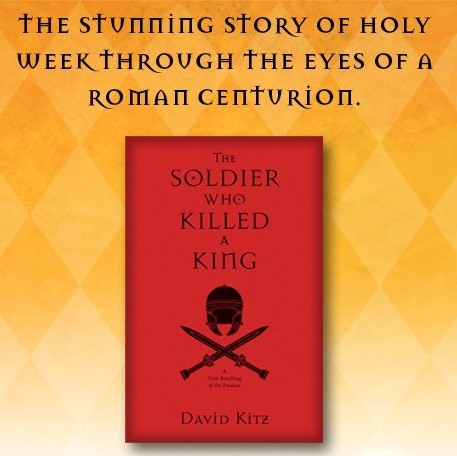
For book purchases of The Soldier Who Killed a King try Amazon or christianbook.com.

To download a free study guide for this high-impact, 288-page, bible-based novel visit: https://www.davidkitz.ca/centurion.php/free study guide PDF

Here’s a journey to the cross and the open tomb you will never forget.

Our Redeemer

08 Wednesday Jan 2020

Posted by davidkitz in Devotionals, Psalm 136, Psalms

≈ 4 Comments

Tags

blood of Christ, Passover, Passover Lamb, Redeemer, redemption

Reading: Psalm 136
(Verses 10-16)
to him who struck down the firstborn of Egypt
His love endures forever.
and brought Israel out from among them
His love endures forever.
with a mighty hand and outstretched arm;
His love endures forever.
to him who divided the Red Sea asunder
His love endures forever.
and brought Israel through the midst of it,
His love endures forever.
but swept Pharaoh and his army into the Red Sea;
His love endures forever.
to him who led his people through the wilderness;
His love endures forever (NIV).

christ the redeemer brazil

Photo by 4FLY RJ on Pexels.com

Reflection
Because of the responsive pattern employed by the psalmist, today’s reading from Psalm 136 begins as an incomplete sentence. When combined with yesterday’s reading, the full sentence reads: Give thanks to the Lord of lords, to him who struck down the firstborn of Egypt, and brought Israel out from among them with a mighty hand and outstretched arm.

Whereas yesterday’s reading from Psalm 136 celebrates the wonders of God’s creation, today’s reading celebrates the wonders of God’s redemption of Israel. The LORD delivered the captive souls of Israel from hard labor and slavery in Egypt. Though the eldest child of the Egyptians perished, the Hebrew children were spared from the Angel of Death, because the blood of the Passover lamb was applied to the doorposts of their home. See Exodus 12.

At a grim Passover celebration 2,000 years ago, Jesus suffered and died on the cross as our Passover Lamb. When we place our faith in his sacrificial blood, we too are spared from death. Jesus tasted death on our behalf, so that we can live eternally with him.  As believers we can rejoice and draw comfort from these words. “Where, O death, is your victory? Where, O death, is your sting?” The sting of death is sin, and the power of sin is the law. But thanks be to God! He gives us the victory through our Lord Jesus Christ (1 Corinthians 15:55-57).

Through the blood of Christ the power of Satan is broken and we are brought into the dominion of the Son of God. For he has rescued us from the dominion of darkness and brought us into the kingdom of the Son he loves, in whom we have redemption, the forgiveness of sins (Colossians 1:13-14).

Surely as redeemed children of God—children personally redeemed by the Son of God—we have this testimony: His love endures forever. 

Response: Father God, I thank you for redeeming me with the sacred blood of Jesus. I have been adopted into your family. You are my heavenly Father. I can never thank you enough. Amen.

Your Turn: Are you living in a new kingdom, under a new king—King Jesus?

Olive Shoots Around your Table

19 Thursday Dec 2019

Posted by davidkitz in Devotionals, Psalm 128, Psalms

≈ 1 Comment

Tags

blessed, blessing, children, holidays, Passover, Psalms of Ascent

Reading: Psalm 128
A song of ascents.
Blessed are all who fear the LORD,
who walk in obedience to him.
You will eat the fruit of your labor;
blessings and prosperity will be yours.
Your wife will be like a fruitful vine
within your house;
your children will be like olive shoots
around your table.
Yes, this will be the blessing
for the man who fears the L
ORD.
May the LORD bless you from Zion;
may you see the prosperity of Jerusalem
all the days of your life.
May you live to see your children’s children—
peace be on Israel
(NIV).

light sunset people water

Photo by Negative Space on Pexels.com

Reflection
I got an unexpected call from my son yesterday morning. “Can we have lunch together today?” he asked.

“Sure,” I responded without hesitation. Who can say no to such a request? We went out to a pizza place for their buffet lunch. We enjoyed a leisurely conversation. There was no urgency to our discussion. He shared a few minor work frustrations, while I did the same. This was simply a father and son enjoying each other’s company, talking a little sports and discussing whatever came to mind.

According to Psalm 128, I was appreciating one of the olive shoots around my table. Now that’s a unique way to view your son or daughter. Children are a blessing, and when adult children enjoy spending time with their parents that’s a double blessing. At a time when many adult children are estranged from their parents or separated by long distances, the opportunity to spend time together at the drop of a hat is a real blessing. As a parent you are enjoying the fruit of your labor. You are reaping the rewards from years spent pouring into the lives of your children.

This is the ninth psalm of the series of psalms known as Songs of Ascent or Psalms of Ascent. These were psalms used by pilgrims as they made the annual trek to Jerusalem for celebrations such as the Feast of Tabernacles or the Passover.

In some respects, these ancient holy days roughly correspond to our present day holidays such as Easter, Thanksgiving and Christmas. Families today often make long journeys to celebrate together what at their core are religious holidays. Family togetherness is a central feature of such events. We should not be surprised then that this entire psalm highlights the blessings of family unity.

It should be noted that the blessings of family begin with obedience and the fear of the LORD.

Response: Father God, I love my family. I am so blessed to have children who love you, Lord. Watch over them, I pray. Keep their hearts tender before you. Help them to daily hear your voice. Guide their steps. Amen.

Your Turn: Are you estranged from family members? Can you build a bridge back to that loved one?

Ash Wednesday: The Journey Begins

06 Wednesday Mar 2019

Posted by davidkitz in Books by David Kitz, Lent

≈ 1 Comment

Tags

Jerusalem, Lent, Passover, pilgrims, repentance, Son of David

A journey to the cross is a journey to repentance. It’s a journey to deep personal change. Will you take this journey with me?

Four in the afternoon, Sunday, April 2, AD 30
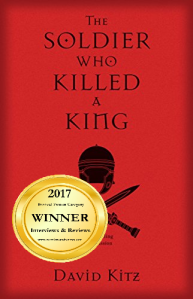
It was never like this before. biblical-fiction-award-2017_orig
I have been posted in Jerusalem for ten years now, but in all that time, I have never seen a Passover crowd like this.
It wasn’t the numbers. I had seen that before.
The Passover pilgrims always come plodding into the city in reverent caravans. Some of them chant psalms. Others are silent, looking bone-weary as they trudge, like fretful herdsmen with children in tow. Undoubtedly, many are relieved that their holy city is finally in view.
But this year it was different. There was this man—at the center of the whole procession. There had never been a central figure before. Every movement within that huge throng seemed focused on him.
Squinting in a futile attempt to get a better view, I gave Claudius a backhanded slap to the shoulder and demanded, “What are they doing?”
“They’re climbing the trees, sir.”
“I can see that!” I snapped. “But what are they doing?”
“They seem to be tearing off the palm branches, sir.”
“What is going on here?” I said it more to myself than to any of the men standing near me. An uncomfortable feeling crept into me as the procession advanced.
“They don’t usually do this?” Claudius questioned.
“No . . . They’ve never done this before.” There was worry in my voice. Claudius had been recently assigned to this place, the festering armpit of the empire, and I was at a loss to explain what was happening before us. We were standing on the wall above the gate of Jerusalem, and less than a half mile away, we could see the jubilant pilgrims surging toward us in alarming numbers.
“They’re laying the palm branches on the road in front of that man—the man on the donkey.”
Until Claudius said it, I hadn’t noticed the donkey. Its small size and the frenzy of activity round about must have obscured this detail in the picture before me. What an odd way for this man to come. I could make no sense of it.
“They’re throwing down their cloaks before him.”
The sweat- glistened bodies of several men were clearly visible. Outer garments were being cast down before this man as a sign of homage. At the same time the rhythmic chanting of their voices became more distinct.
What were they singing? Could I pick up the words?
     “Hosanna to the Son of David!”
     “Blessed is he who comes in the name of the Lord!”
     “Hosanna in the highest heaven!”
That’s when it hit me like a barbarian’s club. I realized what I was witnessing. It was a triumphal entry—the entry of a king.
It was the words. The words they were now boisterously shouting. He was their Messiah. The Son of David! The one they were waiting for! The one who would rid them of the Romans. He would set up his glorious Jewish kingdom, here, in Jerusalem! This is what I had been warned about since the day I first set foot on this cursed Judean soil. And we, I and my men and the garrison in the city, were all that stood in their way.

To download a free study guide for this high-impact, bible-based novel visit: https://www.davidkitz.ca/centurion.php/free study guide PDF
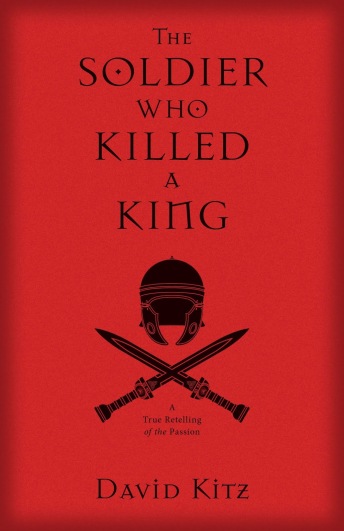
For book purchases of The Soldier Who Killed a King try Amazon or https://www.christianbook.com

The Wonders of God’s Redemption

15 Wednesday Aug 2018

Posted by davidkitz in Bible, Devotionals, Psalm 136, Psalms

≈ 2 Comments

Tags

enduring love, Israel, Passover, Passover Lamb, Red Sea, redemption

Reading: Psalm 136
(Verses 10-16)
to him who struck down the firstborn of Egypt
His love endures forever.
and brought Israel out from among them
His love endures forever.
with a mighty hand and outstretched arm;
His love endures forever.
to him who divided the Red Sea asunder
His love endures forever.
and brought Israel through the midst of it,
His love endures forever.
but swept Pharaoh and his army into the Red Sea;
His love endures forever.
to him who led his people through the wilderness;
His love endures forever (NIV).

IMG_20180806_0927132

Wild hosta-like plants in bloom — photo by David Kitz

Reflection
Because of the responsive pattern employed by the psalmist, today’s reading from Psalm 136 begins as an incomplete sentence. When combined with yesterday’s reading, the full sentence reads: Give thanks to the Lord of lords, to him who struck down the firstborn of Egypt, and brought Israel out from among them with a mighty hand and outstretched arm. 

Whereas yesterday’s reading from Psalm 136 celebrates the wonders of God’s creation, today’s reading celebrates the wonders of God’s redemption of Israel. The LORD delivered the captive souls of Israel from hard labor and slavery in Egypt. Though the eldest child of the Egyptians perished, the Hebrew children were spared from the Angel of Death, because the blood of the Passover lamb was applied to the doorposts of their home. See Exodus 12.

At a grim Passover celebration 2,000 years ago, Jesus suffered and died on the cross as our Passover Lamb. When we place our faith in his sacrificial blood, we too are spared from death. Jesus tasted death on our behalf, so that we can live eternally with him.  As believers we can rejoice and draw comfort from these words. “Where, O death, is your victory? Where, O death, is your sting?” The sting of death is sin, and the power of sin is the law. But thanks be to God! He gives us the victory through our Lord Jesus Christ (1 Corinthians 15:55-57).

Through the blood of Christ the power of Satan is broken and we are brought into the dominion of the Son of God. For he has rescued us from the dominion of darkness and brought us into the kingdom of the Son he loves, in whom we have redemption, the forgiveness of sins (Colossians 1:13-14).

Surely as redeemed children of God—children personally redeemed by the Son of God—we have this testimony: His love endures forever. 

Response: Father God, I thank you for redeeming me with the sacred blood of Jesus. I have been adopted into your family. You are my heavenly Father. I can never thank you enough. Amen.

Your Turn: Are you living in a new kingdom, under a new king—King Jesus?

Excerpt 16 for Lent from The Soldier Who Killed a King

12 Monday Mar 2018

Posted by davidkitz in Books by David Kitz, Christ's Passion, Lent, Monday Meditation

≈ 2 Comments

Tags

Caiaphas, centurion, crucified, David Kitz, Jesus, Passion Week, Passover, Pharisees, Pilate, Roman, The Soldier Who Killed a King

A journey to the cross is a journey to repentance. It’s a journey to deep personal change. Will you take this journey with me?

In today’s reading, Marcus is in a discussion with his friend and fellow centurion, Renaldo. They are at the Roman bathhouse at the end of a long day. Date: Wednesday, April 5th, 30 A.D. 

I sat down again beside the pool and let my feet dangle in the tepid water. Renaldo put his hand on my shoulder as he eased himself down into a similar position.
“So what do you mean by that? How do you think this will end?” he asked.
“This Galilean prophet’s days may be numbered. He’s stirred up a hornet’s nest by kicking those merchants and money changers out of the temple. He’s offended and humiliated the high priest and his clan. He’s cut off a major source of their temple revenue. He called the Pharisees a brood of vipers. And if that’s not enough, he predicted that their power, their kingdom as he calls it, will be taken from them and then given to others.”
4485 TWITTER
I paused and kicked my right foot out straight, scattering a shower of drops onto the flat surface of the water. “You don’t say and do those kinds of things without creating some enemies. I’d say he’s sealed his own fate.”
With a furrowed brow, Renaldo asked, “Where’d you get this information?”
“Claudius. Claudius told me. Yesterday I had him sit in on one of the prophet’s teaching sessions. It was quite an eye- opener. Jesus doesn’t just heal the poor; he takes a skewer to the bloated rich. He’s publicly opposed the rich and powerful in this town, and his opposition has been right to their face. If nothing else, the man’s got courage.”
I drummed my fingers on the poolside tiles and then continued. “I tell you, Renaldo, they won’t stand for it. They’re probably hatching some plot to do away with him right now, as we’re sitting here talking.”
“Yeah, but he healed all those kids,” he said. “Doesn’t that show that the God of heaven is working through him?”
“The God of heaven? Do you honestly think that matters to them? This is all about money and power. That’s their real god. Jesus is a threat to their money and their positions of power. Healing a few poor kids, the offspring of the unclean—that isn’t going to mean a thing to them. You’re right. You hit the nail on the head. They’re puffed- up swine that care only about themselves. There isn’t a drop of mercy in them.” Then with scathing irony I added, “But they’re right. They’re always right. Right to the letter of the law.”
“So what do you think they’ll do?”
“I’m not sure. But I know what they won’t do. They won’t arrest him with that crowd around him. They know better than that. They’d have a bloody riot on their hands. There’s no doubt about that.”
Thought after thought came racing in as I considered the implications of my own words. “They might wait till after Passover when the crowds leave, but then Jesus would probably leave with the crowds and head right back to Galilee. Then he’d be out of their hands. No.” I hesitated and then briskly snapped my fingers. “I think they’ll try to act now, if they can. He’s humiliated them in front of the people. They won’t stand for that. Caiaphas won’t stand for it. Jesus has co- opted the high priest’s authority right within the temple courts. Blood will flow because of it. Mark my words. It will flow.”
“But what could they do to him? What crime has he committed?” Renaldo reasoned. “You know the Jews can’t condemn a man to death. They can’t have him crucified. They would have to bring him before Pilate.”
“Yes,” I said, “but accidents happen in the dark of the night. And Renaldo, I think you underestimate the old Weasel. If anyone can twist the law to his own liking, Caiaphas can. That Weasel can kill his prey in more than one way. The big question is, can he get his hands on the prophet?”
“So you really think there’ll be a confrontation?”
“Absolutely. From what I saw on Monday, the confrontation has already started. ItCentur Rep started when Jesus kicked out the merchants. Later, when I was there, the high priest’s men questioned him, but he wouldn’t back down. Then yesterday, according to Claudius, he humiliated Caiaphas and his delegation right in front of the crowd. Like I said, he called the Pharisees and the teachers of the law a pack of hypocrites and a brood of vipers. I’d call that a confrontation. And he didn’t do it out in the desert; he did it right in front of them, in front of the pilgrims, and right in their holy place. I tell you, the man’s got guts.”
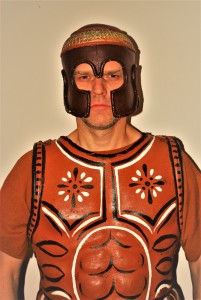
“But”—I paused to emphasize my point—“I’m just waiting for the other side to strike back. And they will.”
I made a long, sweeping motion with a pointed index finger and then stabbed down spear-like into my friend’s bare ribs. “I’m sure they will.” Instinctively Renaldo recoiled, shrugged off my antics, and then said,
“But you don’t think he’s a threat to Rome?”
“Not from what I’ve seen or heard. But he is a threat to Caiaphas. Right now he’s their problem. And that’s where I want to leave him. If blood’s going to flow, I don’t want it getting on these hands.”

American readers click this link to purchase The Soldier Who Killed a King.

Canadian readers click this link to purchase The Soldier Who Killed a King directly from the author.


Excerpt 3 for Lent from “The Soldier Who Killed a King”

21 Wednesday Feb 2018

Posted by davidkitz in Books by David Kitz, Lent

≈ 4 Comments

Tags

centurion, David Kitz, Jesus of Nazareth, Jewish prophet, Lent, Marcus, Messiah, Passover, repentance, Roman centurion, The Soldier Who Killed a King

A journey to the cross is a journey to repentance. It’s a journey to deep personal change. Will you take this journey with me?

In today’s reading, Marcus the centurion, meets with his fellow centurion, Renaldo, to discuss their response to what they see as the threat of a Jewish uprising led by a messianic prophet from Galilee.

      “We have to do something. This Jewish prophet is too dangerous.”
“That’s why I came over. I have a plan. It came to me last night.”
“What about Flavio?” Renaldo resumed stroking Keeper. The dog’s silky ears twitched beneath his gentle hand.

DSC_0060

A Roman centurion — Andrew Nicholls

“Forget Flavio. He’ll be drunk for the rest of the week. Herod’s coming down about midweek. There’ll be a big wine- swilling bash for the upper crust. He’ll sober up just long enough so he can bow and scrape for Pilate at the right moment. Forget him. We have to save our own hides.”
“All right. So what’s this plan?”
“It’s not some great master scheme, but I do have a few ideas.”
“Yes, get on with it,” he said with obvious interest.
“Well, the way I see it, we have way too little information about whatever is going on here. If there’s some Passover plot being hatched, we need to be the first to know about it. Not like yesterday. I don’t like surprises. Especially Jewish Messiah surprises.”
Renaldo scowled in agreement. “So why the trunk?” he asked.
I had set it down after our greeting, and now it was Keeper, sniffing about it, that brought it to Renaldo’s attention.
“This is one way I can get some information.”
I opened the trunk and pulled out several items of clothing, among them a Jewish prayer shawl and several phylacteries. Holding one of the fringed garments to myself, I announced, “Today I am Benjamin. Benjamin from Alexandria, and I’ve come to celebrate the Passover here, in the holy city, Jerusalem.”
All this was done with a thick Aramaic accent and a mock reverence that left Renaldo slapping his thigh in laughter.
“Marcus, Marcus! Only you could pull this off!” Then he added in a more thoughtful tone, “I could look in on some of our usual sources. They’re bound to know a thing or two about this donkey man.”
“Now you’re thinking.” With a glance to the eastern sky, I added, “Look, we don’t have much time. The sun’s almost up. All my men know their assigned duties, so if you could just look in on them at the barracks, that would be great. I should be back in uniform by noon, and I could meet you there to discuss what we’ve found.”
“No problem . . . Benjamin!” he said, shaking his head and grinning, no doubt contemplating the sight of me in religious garb.
I began to place the clothing back in the trunk, and then I turned to my friend. “Oh,Soldier book by the way, Renaldo, could you check in on Claudius at the Golden Gate? I expect our visiting prophet will be coming back into town by the same way today. Claudius might need a hand.”
“No problem, Marcus.” And then he added in a more serious tone, “Now, you be careful.”
“Yes, well,” I said, sighing, “I think we’ve all got to be careful.”
I swung the trunk up under my arm. With a quick wave of my free hand, I said, “I’m off for an appointment with Jesus of Nazareth.”


Excerpts for Lent from “The Soldier Who Killed a King”

19 Monday Feb 2018

Posted by davidkitz in Books by David Kitz, Christ's Passion, Lent

≈ Leave a comment

Tags

David Kitz, Hosanna, Jerusalem, Messiah, Palm Sunday, Passion Week, Passover, pilgrims, Roman soldiers, soldier, Son of David, The Soldier Who Killed a King, triumphal entry

A journey to the cross is a journey to repentance. It’s a journey to deep personal change. Will you take this journey with me?

Four in the afternoon, Sunday, April 2, AD 30
It was never like this before. biblical-fiction-award-2017_orig
I had been posted in Jerusalem for ten years now, but in all that time, I had never seen a Passover crowd like this.
It wasn’t the numbers. I had seen that before.
The Passover pilgrims always come plodding into the city in reverent caravans. Some of them chant psalms. Others are silent, looking bone-weary as they trudge, like fretful herdsmen with children in tow. Undoubtedly, many are relieved that their holy city is finally in view.
But this year it was different. There was this man—at the center of the whole procession. There had never been a central figure before. Every movement within that huge throng seemed focused on him.
Squinting in a futile attempt to get a better view, I gave Claudius a backhanded slap to the shoulder and demanded, “What are they doing?”
“They’re climbing the trees, sir.”
“I can see that!” I snapped. “But what are they doing?”
“They seem to be tearing off the palm branches, sir.”
“What is going on here?” I said it more to myself than to any of the men standing near me. An uncomfortable feeling crept into me as the procession advanced.
“They don’t usually do this?” Claudius questioned.
“No . . . They’ve never done this before.” There was worry in my voice. Claudius had been recently assigned to this place, the festering armpit of the empire, and I was at a loss to explain what was happening before us. We were standing on the wall above the gate of Jerusalem, and less than a half mile away, we could see the jubilant pilgrims surging toward us in alarming numbers.
“They’re laying the palm branches on the road in front of that man—the man on the donkey.”
Until Claudius said it, I hadn’t noticed the donkey. Its small size and the frenzy of activity round about must have obscured this detail in the picture before me. What an odd way for this man to come. I could make no sense of it.
“They’re throwing down their cloaks before him.”
The sweat- glistened bodies of several men were clearly visible. Outer garments were being cast down before this man as a sign of homage. At the same time the rhythmic chanting of their voices became more distinct.
What were they singing? Could I pick up the words?
     “Hosanna to the Son of David!”
     “Blessed is he who comes in the name of the Lord!”
     “Hosanna in the highest heaven!”
That’s when it hit me like a barbarian’s club. I realized what I was witnessing. It was a triumphal entry—the entry of a king.
It was the words. The words they were now boisterously shouting. He was their Messiah. The Son of David! The one they were waiting for! The one who would rid them of the Romans. He would set up his glorious Jewish kingdom, here, in Jerusalem! This is what I had been warned about since the day I first set foot on this cursed Judean soil. And we, I and my men and the garrison in the city, were all that stood in their way.

A Book Review by Glynis Belec

21 Thursday Sep 2017

Posted by davidkitz in book review, Books by David Kitz

≈ 2 Comments

Tags

centurion, crucifixion, David Kitz, Donkey King, Passover, resurrection, soldier, Son of God, The Soldier Who Killed a King

The Soldier Who Killed a King is not a light read that fills me with superficiality andSoldier book indifference about something that happened in history. Instead I am transported to a place filled with conflict, violence, emotional turmoil, restlessness and intrigue via the powerful character of Marcus Longinus, the Centurion in charge of keeping law and order during a tumultuous time.

David Kitz has created a character in Marcus Longinus that helps me consider the internal battle the Centurion faces and what stirs in his heart to make the declaration that the Donkey King really is the Son of God.

The minor characters are relate-able in emotion, too, and I especially appreciate the insight Kitz gives about the tenderness of Marcus Longinus as is presented beautifully in his interaction with family. The Soldier Who Killed a King kept me riveted and even though I tried to put the book down (one has to sleep) I found myself having to turn just one more page.

Confrontation after confrontation; from the Passover crowd to the nail-scarred hands of the Man who was to change the course of history—I was fascinated, compelled to read it and moved sometimes, to tears. This is a book that doesn’t hold back, yet it is not gory nor does it contain gratuitous violence.

Even though this is a work of fiction, it contains accuracy as outlined in the Gospels. I appreciate the timeline and the steady pace of The Soldier Who Killed a King. I would recommend this book highly for it approaches the week of Christ’s suffering and resurrection from a unique and genuine viewpoint and offers a fresh look at forgiveness and Divine love unleashed.

4485 TWITTER

Read a Chapter

08 Thursday Jun 2017

Posted by davidkitz in Books by David Kitz, Psalms

≈ Leave a comment

Tags

centurion, Christ's Passion, David Kitz, donkey, historic novel, Hosanna, Jerusalem, Jesus of Nazareth, Kregel, palm branches, Passion Week, Passover, Roman centurion, Son of David

Four in the afternoon, Sunday, April 2, AD 30

It was never like this before.

I have been posted here, in Jerusalem for ten years now, but in all that time I had never seen a Passover crowd like this. It was not the numbers. I had seen that before.

What made the big difference was the person at the center of it all. You see there had never been a central figure before. The Passover pilgrims just came plodding into the city in reverent caravans. Some of them would be chanting psalms. Others were silent; looking bone weary as they trudged, like fretful herdsmen with children in tow. Undoubtedly many were relieved that their holy city was finally in view.

Soldier bookBut, this year it was different. There was this man – at the center of the whole procession. Every movement within that huge throng seemed focused on him.

Squinting in a futile attempt to get a better view, I gave Claudius a backhanded slap to the shoulder and demanded, “What are they doing?”

“They’re climbing the trees, sir.”

“I can see that!” I snapped impatiently, “But what are they doing?”

“They seem to be tearing off the palm branches, sir.”

“What is going on here?” I said it more to myself than to any of the men standing near me. An uncomfortable feeling crept into me as the procession advanced.

“They don’t usually do this?” Claudius questioned.

“No.  . . .  They’ve never done this before.” There was worry in my voice.

Claudius had been recently assigned to this place, the festering armpit of the Empire, and I was at a loss to explain what was happening before us. We were standing on the wall above the gate of Jerusalem, and there less than a half mile ahead of us, we could see the jubilant pilgrims surging toward us, in numbers that were alarming.

“They’re laying the palm branches on the road in front of that man – the man on the donkey.”

Until Claudius said it, I had not noticed the donkey. Its small size, and the frenzy of activity round about, must have obscured this detail in the picture before me. What an odd way for this man to come? I could make no sense of it.

“They’re throwing down their cloaks before him.”

The sweat-glistened bodies of several men were clearly visible. Outer garments were being cast down as a sign of homage before this man. At the same time the rhythmic chanting of their voices became more distinct.

What were they singing? Could I pick up the words?

“Hosanna to the Son of David!
Blessed is he who comes in the name of the Lord!
Hosanna in the highest!”[i]

That’s when it hit me like a barbarian’s club. I realized what I was witnessing. It was a triumphal entry – the entry of a king.

It was the words.  The words they were now boisterously shouting. He was their Messiah. The son of David! The one they were waiting for! The one who would rid them of the Romans. He would set up his glorious Jewish kingdom, here, in Jerusalem! This is what I had been warned about since the day I first set foot on this cursed Judean soil.

And we, I and my men, and the garrison in the city, were all that stood in their way.

This crowd of thousands was sweeping down the Mount of Olives into the Kidron Valley and then on toward us. They advanced like a huge human wave about to collide with the rock hewn palisades on which we stood.

Would they sweep us away?

My initial curiosity had grown into worry. Now in an instant my worry turned to alarm. Instinctively, everything within me shouted, “Stand! Resist! Be a Roman!”

We had soldiers posted all about the city, especially along the pilgrim route. My own hundred men were among the first to be deployed. During Jewish feasts like this we made certain we were highly visible. I dreaded what might happen if this crowd ran wild. Rioting could erupt, and with an impassioned throng such as this riots have a way of quickly turning deadly.

For several moments a debate raged in my mind. Should I order the gate closed to keep this rabble with their pretender king out of the city? Or, should I let everything proceed – let it proceed as though somehow, we had not taken note of what was going on?

“Stand! Ready for orders!” I shouted above the swelling din. The sentinels on the wall snapped to attention.

I hastily scanned the crowd for any sign of weapons, any hint of armed treachery. To my surprise I saw none. They were paying no attention to us. Everyone was caught up with hailing this man, the man on the donkey.

The front edges of the crowd had now reached the first platoon of eight men that I had positioned by the roadside about four hundred yards before the gate. But they ignored them, sweeping past the clump of soldiers, without so much as creating a ripple, like a round stone in a swift flowing stream.

At that moment I knew it made no sense to lower the gate. It would only enrage this crowd that was already fully aroused and moving as one.

Let them come. We’ll handle them and their king inside the city.

Their king. On a donkey. I could only shake my head in disbelief.

I had watched many a triumphal entry, while growing up in Rome, and the conquering hero always rode a gallant war horse. And as a boy, I too had  dreams of personal glory. But a donkey? It could only happen here, I thought with an incredulous grin.

I could see him clearly now. Donkey or not, he had the look of a man who knew exactly what he was doing. Those about him might not know, or understand, but he knew. He had a destination in mind, a purpose. You could see it on his face.

“Hosanna to the Son of David!
Blessed is he who comes in the name of the Lord!”
Hosanna in the highest!”

There was something else that was different about him. At the time I did not know what it was. I could not put it into words for a long time. I think I noticed it because I had watched all those other men come into Rome in their triumphal processionals. They were conquerors, but still they were hollow men, feeding off of the adulation of the crowd, thirsting but never satisfied. You could see them vainly drink it in, hoping it would somehow fill the empty soul.

He was not drinking from the crowd. I somehow sensed he was full already, and what he had within, must have come from a different source.

“Hosanna in the highest!
Hosanna to the Son of David!
Blessed is he who comes in the name of the Lord!”

Just at that moment a strange feeling seemed to rise within me. Maybe it was the joy of the crowd. I had expected anger. Maybe it was the children waving the palm branches, or the spontaneity of the singing? I don’t know. For one moment it all seemed to come together. It seemed right somehow. Like heaven and earth had finally, for a moment, come into agreement – an agreement that had never been achieved before.

“Hosanna in the highest!”
He was much closer now.
“Hosanna to the Son of David!”
He was now within the shadow of the gate.
“Blessed is he who comes in the name of the Lord!”

At that moment he looked up. For an instant our eyes met. Then I heard a voice – clearly heard a voice say, “I have a future for you.”

I was confused.

I turned to Claudius and said, “What did you mean by that?”

“What did I mean by what?” He had a blank look on his face.

“By what you said about – about the future?”

“I didn’t say anything about the future, Sir. I didn’t say anything.”

Now I was totally baffled. Was I hearing voices? This whole thing was making no sense, no sense at all. Passover pilgrims are not supposed to come into the city this way. We’ve got a revolutionary on the loose – riding a donkey. And now I’m hearing things?

I rubbed the sweat from my forehead, hoping for some clarity to emerge out of all this.

I had a hundred men whose lives were in danger from this Jewish messiah, and his horde of followers. That’s what mattered now.

By this time the donkey man had passed under the gate and was heading in the direction of the temple in the heart of the city.

I signaled for Claudius to follow, as I raced down the stairs of the gatehouse. As I emerged onto the street, I grabbed the first two-legged bit of Jewish scum I saw. Pressing him against the stone wall I demanded, “Who is that man?” At the same time I pointed at the retreating figure on the donkey.

The poor wretch was in shock and seemed quite unable to get out a word.
Claudius reached for his sword.

“Je – Jesus of Nazareth!” He stammered and then quickly added, “The prophet from Nazareth in Galilee.”

I loosened my grip. Then in a voice loud enough for all near to hear I announced, “Well there is one thing I do know. We’re going to have to keep an eye on that man.”

  • For the month of June The Soldier Who Killed a King is available for preorder from Kregel Publishing for the early bird price of $10.99. The worldwide release date is July 25th.
  • Place your order today: http://www.kregel.com/fiction/the-soldier-who-killed-a-king/
← Older posts
Newer posts →

Psalms 365: Develop a Life of Worship and Prayer

Psalms 365 Volume II

Psalms 365 vol 3
— Psalms 365 Volume III

Psalms

Recent posts

  • Finishing Well and Growing in Fruitfulness  January 11, 2026
  • I Call to You for Help January 10, 2026
  • Above All Gods January 9, 2026
  • The Need for a Place of Refuge January 9, 2026
  • David Dances before the LORD January 8, 2026
  • The God of Turn-Arounds January 8, 2026
  • The LORD Who Heals You January 7, 2026

Calendar

January 2026
M T W T F S S
 1234
567891011
12131415161718
19202122232425
262728293031  
« Dec    

Blog Posts

Comments

  • davidkitz on Above All Gods
  • davidkitz on Above All Gods
  • davidkitz on David Dances before the LORD

Blog at WordPress.com.

Privacy & Cookies: This site uses cookies. By continuing to use this website, you agree to their use.
To find out more, including how to control cookies, see here: Cookie Policy
  • Subscribe Subscribed
    • I love the Psalms
    • Join 1,381 other subscribers
    • Already have a WordPress.com account? Log in now.
    • I love the Psalms
    • Subscribe Subscribed
    • Sign up
    • Log in
    • Report this content
    • View site in Reader
    • Manage subscriptions
    • Collapse this bar
 

Loading Comments...