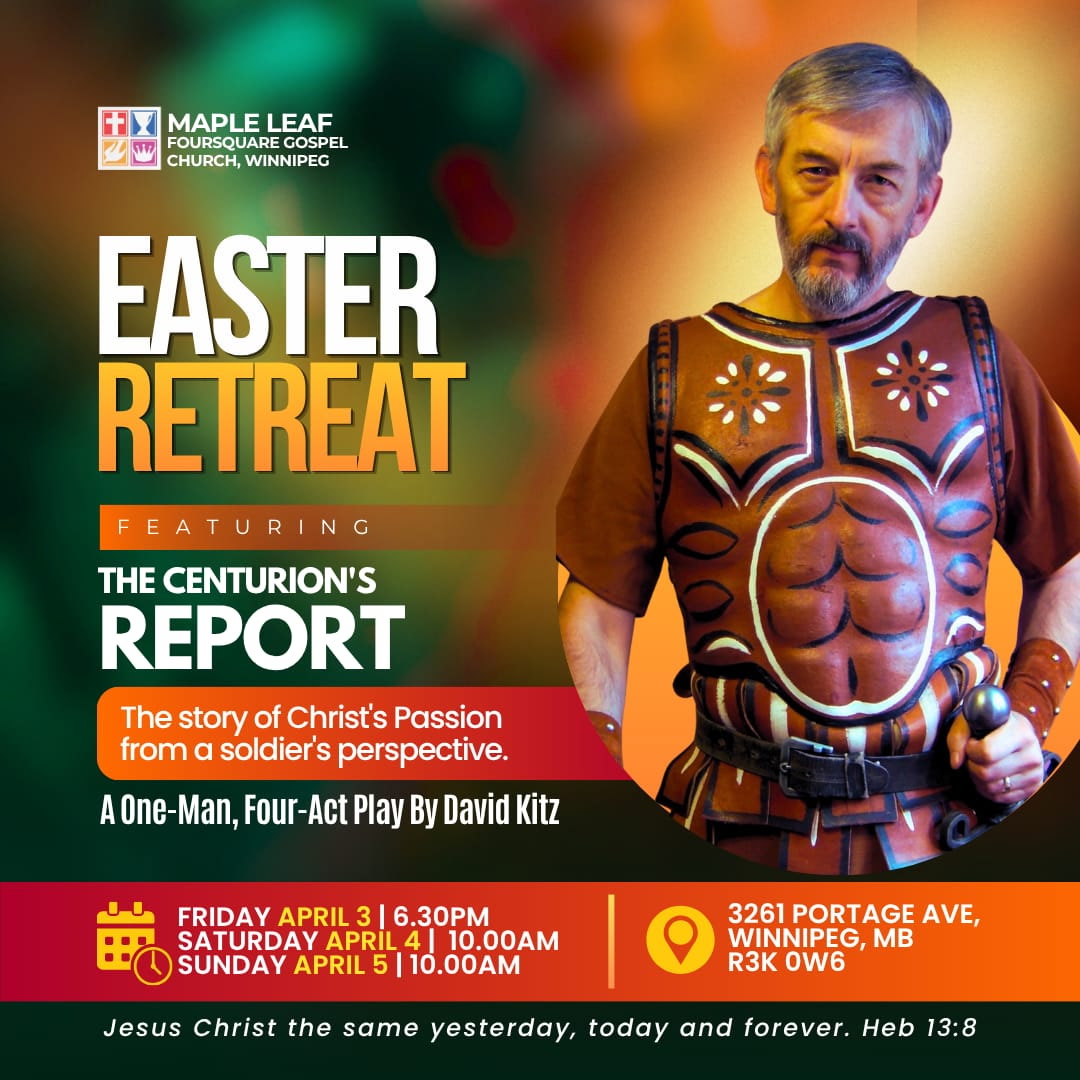
This Easter morning, I will be doing a live dramatization of the crucifixion and resurrection before a congregation in Winnipeg, Manitoba, Canada. I have done this Holy Week drama dressed in Roman armor during the Lent/Easter for about thirty years in various locations in Canada and United States. But this is the first time I have done this “Centurion’s Report” presentation in Winnipeg.
Easter Sunday is an ideal time to view this one-man drama since Act 4 concludes with a portrayal of Jesus’ resurrection, and the turmoil and amazement it caused among the Roman soldiers and their centurion commander. See Matthew 27:62-66 and Matthew 28:1-1-15. This is the same centurion who in Act 3 of this drama confesses at the foot of the cross that Jesus is “the Son of God.” See Matthew 27:54.
To learn more about my dramatization of “The Centurion’s Report” click here.
“The Centurion’s Report” drama became the springboard for my award-winning biblical novel The Soldier Who Killed a King.
This Easter wherever you are take a journey to the cross and the empty tomb.
Marvel and rejoice. Jesus is alive!
Watch the triumphal entry of the donkey-riding king through the eyes of Marcus Longinus, the centurion charged with keeping the streets from erupting into open rebellion.
Look behind the scenes at the political plotting of King Herod, known as the scheming Fox for his ruthless shrewdness.
Get a front-row seat to the confrontation between the Jewish high priest Caiaphas and the Roman governor Pontius Pilate.
Understand as never before the horror of the decision to save a brutal terrorist in order to condemn the peaceful Jew to death.
If you’ve heard the story of Passion Week so often it’s become stale, now is the time to rediscover the terrible events leading from Jesus’s humble ride into the city to his crucifixion. The Soldier Who Killed a King will stun you afresh with how completely Christ’s resurrection changed history, one life at a time.
LORD God, I thank you that Jesus,
my Redeemer, lives!
I put my trust in you,
now and for eternity.
I rest in the hope that a new day will dawn
when the dead in Christ will rise.
Amen.
— — — —
Lent Reading:
Peter’s Denial
Meanwhile,
Simon Peter was still standing there warming himself.
So they asked him,
“You aren’t one of his disciples too, are you?”
“He denied it, saying, “I am not.”
One of the high priest’s servants,
a relative of the man whose ear Peter had cut off,
challenged him,
“Didn’t I see you with him in the garden?” Again Peter denied it,
and at that moment a rooster began to crow. (John 18:25-27).
* * *
This is love:
not that we lovedGod,
but that he loved us and sent his Son
as an atoning sacrifice for our sins.
(1 John 4:10 NIV)
Pray for peace in Israel, Iran and the Middle East and continue to pray for peace to return to Ukraine and Russia!
Volume I of Psalms 365: Develop a Life of Worship and Prayer won the Best Book of the Year Award from The Word Guild and Volume II has won the Best Devotional of the Year Award. For those who love God’s word, this three-book series is an ideal way to daily meet with the Lord. To purchase or for a closer look click here.
Ideal for the Season of Lent
Watch the triumphal entry of the donkey-riding king through the eyes of Marcus Longinus, the centurion charged with keeping the streets from erupting into open rebellion.
Look behind the scenes at the political plotting of King Herod, known as the scheming Fox for his ruthless shrewdness.
Get a front-row seat to the confrontation between the Jewish high priest Caiaphas and the Roman governor Pontius Pilate.
Understand as never before the horror of the decision to save a brutal terrorist in order to condemn the peaceful Jew to death.
If you’ve heard the story of Passion Week so often it’s become stale, now is the time to rediscover the terrible events leading from Jesus’s humble ride into the city to his crucifixion. The Soldier Who Killed a King will stun you afresh with how completely Christ’s resurrection changed history, one life at a time.
This is the fate of those who trust in themselves, and of their followers, who approve their sayings. They are like sheep and are destined to die; death will be their shepherd (but the upright will prevail over them in the morning). Their forms will decay in the grave, far from their princely mansions. But God will redeem me from the realm of the dead; he will surely take me to himself. Do not be overawed when others grow rich, when the splendor of their houses increases; for they will take nothing with them when they die, their splendor will not descend with them. Though while they live they count themselves blessed— and people praise you when you prosper— they will join those who have gone before them, who will never again see the light of life. People who have wealth but lack understanding are like the beasts that perish. (NIV)*
Reflection Throughout Psalm 49 the psalmist is establishing a contrast between those who trust in themselves and the wealth they have accumulated, and those who put their trust in God. Death is the fate of all, rich and poor, wise, and foolish. The grave spares no one. This is the fate of those who trust in themselves, and of their followers, who approve their sayings. They are like sheep and are destined to die; death will be their shepherd (but the upright will prevail over them in the morning) vs. 13-14.
I find great hope between the parentheses in the passage above. But the upright will prevail over them in the morning. A new day is coming—a day of resurrection—a day where justice will prevail at last. We can rest in hope that wrongs will be righted, truth will triumph over lies, and joy will snuff out sorrow. Yes, a new morning will dawn. A Redeemer is coming. Along with suffering Job believers can say, “I know that my redeemer lives, and that in the end he will stand on the earth. And after my skin has been destroyed, yet in my flesh I will see God” (Job 19:25-26).
The psalmist boldly declares where he has placed his faith: But God will redeem me from the realm of the dead; he will surely take me to himself (v. 15).
Is that where you have placed your faith? Do you put your trust in Jesus, the Redeemer, who purchased your redemption with his shed blood? Death is a certainty, but so is redemption for those who put their trust in the One who died and rose again.
Response LORD God, I thank you that Jesus, my Redeemer, lives! I put my trust in you, now and for eternity. I rest in the hope that a new day will dawn when the dead in Christ will rise. Amen.
Your Turn Is your heart ready for that glorious day? Have you bowed before your Redeemer? How will you respond to him when he takes you home to glory?
Pray for peace in Israel, Iran and the Middle East and continue to pray for peace to return to Ukraine and Russia!
Volume I of Psalms 365: Develop a Life of Worship and Prayer won the Best Book of the Year Award from The Word Guild and Volume II has won the Best Devotional of the Year Award. For those who love God’s word, this three-book series is an ideal way to daily meet with the Lord. To purchase or for a closer look click here.
Ideal for the Season of Lent
A stunning story of Holy Week through the eyes of a Roman centurion. Watch the triumphal entry of the donkey-riding king through the eyes of Marcus Longinus, the centurion charged with keeping the streets from erupting into open rebellion.
Look behind the scenes at the political plotting of King Herod, known as the scheming Fox for his ruthless shrewdness.
Get a front-row seat to the confrontation between the Jewish high priest Caiaphas and the Roman governor Pontius Pilate.
Understand as never before the horror of the decision to save a brutal terrorist in order to condemn the peaceful Jew to death.
If you’ve heard the story of Passion Week so often it’s become stale, now is the time to rediscover the terrible events leading from Jesus’s humble ride into the city to his crucifixion. The Soldier Who Killed a King will stun you afresh with how completely Christ’s resurrection changed history, one life at a time.
Hear this, all you peoples; listen, all who live in this world, both low and high, rich and poor alike: My mouth will speak words of wisdom; the meditation of my heart will give you understanding. I will turn my ear to a proverb; with the harp I will expound my riddle: Why should I fear when evil days come, when wicked deceivers surround me— those who trust in their wealth and boast of their great riches? No one can redeem the life of another or give to God a ransom for them— the ransom for a life is costly, no payment is ever enough— so that they should live on forever and not see decay. For all can see that the wise die, that the foolish and the senseless also perish, leaving their wealth to others. Their tombs will remain their houses forever, their dwellings for endless generations, though they had named lands after themselves. People, despite their wealth, do not endure; they are like the beasts that perish. (NIV)*
Reflection This opening portion of Psalm 49 reminds me of that old maxim: There are only two certainties in this life: death and taxes. The same fate awaits us all; no one is spared. The Grim Reaper cuts down all without exception. The psalmist asserts the obvious: For all can see that the wise die, that the foolish and the senseless also perish, leaving their wealth to others (v. 10).
But the psalmist is not entirely correct. He makes a sweeping statement that fails to account for a most unusual exception. The psalmist states: No one can redeem the life of another or give to God a ransom for them—the ransom for a life is costly, no payment is ever enough—so that they should live on forever and not see decay (vs. 7-9).
Jesus Christ is that unusual exception. He proves the psalmist wrong. Jesus paid my ransom. He redeemed my life. He went to the cross on my behalf and there he poured out his life blood so I can live forever. Then to prove Jesus’ sacrifice was accepted, God the Father raised Him from the dead. Death no longer has dominion over Him. Better still, those who put their trust in Jesus Christ will be raised to life on the last day. Praise be to God, who breaks the bonds of death.
Response LORD God, I thank you for the victory of Jesus! The tomb is empty. By faith I will live and reign through Him. Amen.
Your Turn Jesus faced death and overcame. How can you be an overcomer too, through him?
Pray for peace in Israel, Iran and the Middle East and continue to pray for peace to return to Ukraine and Russia!
Volume I of Psalms 365: Develop a Life of Worship and Prayer won the Best Book of the Year Award from The Word Guild and Volume II has won the Best Devotional of the Year Award. For those who love God’s word, this three-book series is an ideal way to daily meet with the Lord. To purchase or for a closer look click here.
Ideal for the Season of Lent
A stunning story of Holy Week through the eyes of a Roman centurion. Watch the triumphal entry of the donkey-riding king through the eyes of Marcus Longinus, the centurion charged with keeping the streets from erupting into open rebellion.
Look behind the scenes at the political plotting of King Herod, known as the scheming Fox for his ruthless shrewdness.
Get a front-row seat to the confrontation between the Jewish high priest Caiaphas and the Roman governor Pontius Pilate.
Understand as never before the horror of the decision to save a brutal terrorist in order to condemn the peaceful Jew to death.
If you’ve heard the story of Passion Week so often it’s become stale, now is the time to rediscover the terrible events leading from Jesus’s humble ride into the city to his crucifixion. The Soldier Who Killed a King will stun you afresh with how completely Christ’s resurrection changed history, one life at a time.
Clap your hands, all you nations; shout to God with cries of joy. For the LORD Most High is awesome, the great King over all the earth. He subdued nations under us, peoples under our feet. He chose our inheritance for us, the pride of Jacob, whom he loved. God has ascended amid shouts of joy, the LORD amid the sounding of trumpets. Sing praises to God, sing praises; sing praises to our King, sing praises. For God is the King of all the earth; sing to him a psalm of praise. God reigns over the nations; God is seated on his holy throne. The nobles of the nations assemble as the people of the God of Abraham, for the kings of the earth belong to God; he is greatly exalted. (NIV)*
Reflection I appreciate God’s timing; it brings a smile to my face. Yesterday’s psalm reading seemed particularly appropriate as we reflected on the events of Good Friday. Today’s psalm posting is fitting as we rejoice in the triumph of the resurrection. I can’t help but think of the risen Christ as I read these words: God has ascended amid shouts of joy, the LORD amid the sounding of trumpets.
Psalm 47 calls forth a spontaneous joy. It is a song of celebration to the LORD for the victories of the LORD. He has conquered! What has He conquered? The LORD has conquered the nations. Sing praises to God, sing praises; sing praises to our King, sing praises. For God is the King of all the earth; sing to him a psalm of praise. God reigns over the nations; God is seated on his holy throne.
In its original context, Psalm 47 celebrated the victory of Israel over the surrounding nations. But that is a feeble victory compared to Christ the King’s triumph over death, hell, and the power of the grave. Hallelujah! The King is alive. He arose from the dead. The power of sin and Satan are defeated, and because Jesus lives and reigns, we too will live and reign with Him through eternity. For if, while we were God’s enemies, we were reconciled to him through the death of his Son, how much more, having been reconciled, shall we be saved through his life! (Romans 5:10).
In the resurrection of Jesus, we have the ultimate cause for celebration. Shout to God with cries of joy!
Response LORD God, I put my trust in you. In times of trouble, you have been my help and my strength. I turn to you in confidence because you are with me. You are my Savior and my God. Amen.
Your Turn Has your confidence been shaken recently? Where have you turned for help?
Pray for peace in Israel, Iran and the Middle East and continue to pray for peace to return to Ukraine and Russia!
Volume I of Psalms 365: Develop a Life of Worship and Prayer won the Best Book of the Year Award from The Word Guild and Volume II has won the Best Devotional of the Year Award. For those who love God’s word, this three-book series is an ideal way to daily meet with the Lord. To purchase or for a closer look click here.
Ideal for the Season of Lent
A stunning story of Holy Week through the eyes of a Roman centurion. Watch the triumphal entry of the donkey-riding king through the eyes of Marcus Longinus, the centurion charged with keeping the streets from erupting into open rebellion.
Look behind the scenes at the political plotting of King Herod, known as the scheming Fox for his ruthless shrewdness.
Get a front-row seat to the confrontation between the Jewish high priest Caiaphas and the Roman governor Pontius Pilate.
Understand as never before the horror of the decision to save a brutal terrorist in order to condemn the peaceful Jew to death.
If you’ve heard the story of Passion Week so often it’s become stale, now is the time to rediscover the terrible events leading from Jesus’s humble ride into the city to his crucifixion. The Soldier Who Killed a King will stun you afresh with how completely Christ’s resurrection changed history, one life at a time.
Since they hid their net for me without cause and without cause dug a pit for me, may ruin overtake them by surprise— may the net they hid entangle them, may they fall into the pit, to their ruin. Then my soul will rejoice in the LORD and delight in his salvation. My whole being will exclaim, “Who is like you, LORD? You rescue the poor from those too strong for them, the poor and needy from those who rob them.” (NIV)*
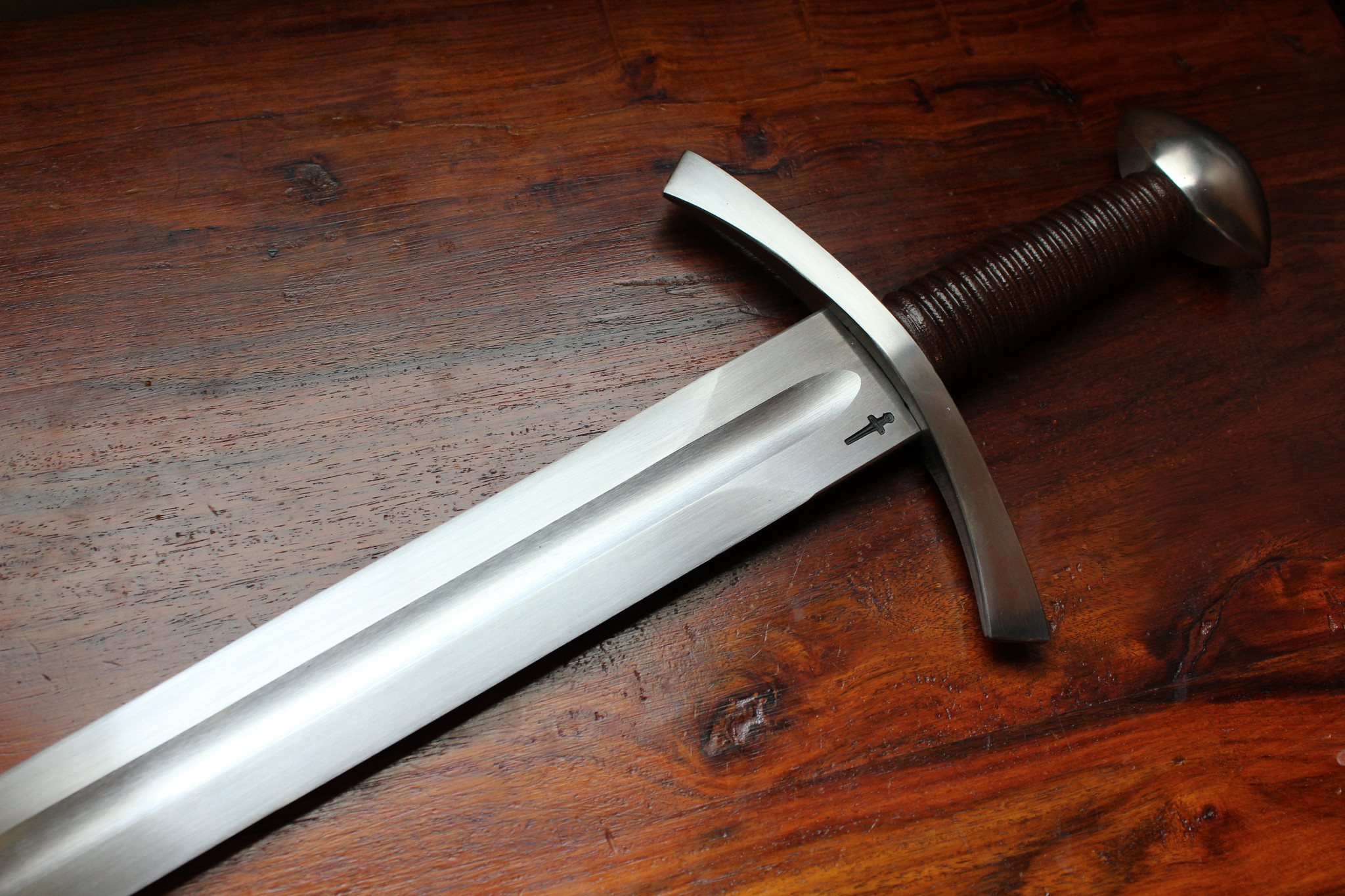
Lutel early medieval sword (courtesy of “One lucky guy”/Flickr)
Reflection Paul the apostle reminds us that as believers in the Lord Jesus Christ, we are engaged in spiritual warfare. Put on the full armor of God, so that you can take your stand against the devil’s schemes. For our struggle is not against flesh and blood, but against the rulers, against the authorities, against the powers of this dark world and against the spiritual forces of evil in the heavenly realms. Therefore put on the full armor of God, so that when the day of evil comes, you may be able to stand your ground, and after you have done everything, to stand (Ephesians 6:11-13).
The conflicts that David experienced in the Old Testament, reflected in the words of this portion of Psalm 35, are mirrored in the spiritual warfare experienced by New Testament believers. Make no mistake—the devil and his cohorts have dug a pit to trap you; they spread their nets to ensnare you in sin and degradation. But as was true for David, the LORD has also provided a way of escape for you and me. Once again Paul reminds us of this: No temptation has overtaken you except what is common to mankind. And God is faithful; he will not let you be tempted beyond what you can bear. But when you are tempted, he will also provide a way out so that you can endure it (1 Corinthians 10:13).
The LORD has equipped us with the armor of God and He has provided a way of escape, so then with David we can rejoice in the victory the LORD will bring.
Then my soul will rejoice in the LORD and delight in his salvation. My whole being will exclaim, “Who is like you, LORD? You rescue the poor from those too strong for them, the poor and needy from those who rob them” (v. 9-10).
Satan is a thief and a robber, who robs us of victory, peace, and joy. But like David and Paul we can overcome. Victory is possible because the victory has already been won for us at the cross, and it was confirmed on resurrection morning at the empty tomb. “Thanks be to God, who delivers me through Jesus Christ our Lord!” (Romans 7:25).
Response Heavenly Father, I thank you that you have provided armor so I can stand against the wiles of the devil. I praise you for the power of your holy word. I have victory through your blood, Lord Jesus. Amen.
Your Turn In your battle against sin are you using “the sword of the Spirit, which is the word of God?” (Ephesians 6:17)
Please pray for peace to return to Israel, Gaza, Russia and Ukraine!
Volume I of Psalms 365: Develop a Life of Worship and Prayer won the Best Book of the Year Award from The Word Guild and Volume II has won the Best Devotional of the Year Award. For those who love God’s word, this three-book series is an ideal way to daily meet with the Lord. To purchase or for a closer look click here.
New from David Kitz
James—the brother of Jesus—who was this man? What evidence do we have that this “brother of our Lord” even existed?
David Kitz digs deep into archeology, family dynamics, church history, and the biblical texts. What emerges from his research is a portrait of a decisive, pivotal leader who embodied the will and character of Jesus Christ.
But how did James—James the unbeliever—transform to become a leader who changed the course of world history? In these pages you will uncover the answer and rediscover for yourself the life-changing power of the gospel.
To view further details or purchase directly from the author click here.
LORD God,
help me to grasp
the full extent of the victory
I have in you.
Now I ask you to hear my prayer, “Save your people and bless your inheritance;
be their shepherd and carry them forever.”
Amen.
— — — —
The promise of resurrection — photo by David Kitz
The Resurrection Body
Listen, I tell you a mystery:
We will not all sleep,
but we will all be changed— in a flash, in the twinkling of an eye,
at the last trumpet.
For the trumpet will sound,
the dead will be raised imperishable,
and we will be changed. For the perishable must clothe itself
with the imperishable,
and the mortal with immortality. When the perishable has been clothed
with the imperishable,
and the mortal with immortality,
then the saying that is written will come true:
“Death has been swallowed up in victory.”
“Where, O death, is your victory? Where, O death, is your sting?”
The sting of death is sin,
and the power of sin is the law. But thanks be to God!
He gives us the victory
through our Lord Jesus Christ. (1 Corinthians 15:51-57 NIV)*
Pray for enduring peace in Israel and Gaza, and continue to pray for peace to return to Ukraine and Russia!
Volume I of Psalms 365: Develop a Life of Worship and Prayer won the Best Book of the Year Award from The Word Guild and Volume II has won the Best Devotional of the Year Award. For those who love God’s word, this three-book series is an ideal way to daily meet with the Lord. To purchase or for a closer look click here.
Also available from David KitzIs a return-to-Jesus revival possible in our time?
This book points the way forward.
For details click here.
All the ends of the earth will remember and turn to the LORD, and all the families of the nations will bow down before him, for dominion belongs to the LORD and he rules over the nations. All the rich of the earth will feast and worship; all who go down to the dust will kneel before him— those who cannot keep themselves alive. Posterity will serve him; future generations will be told about the Lord. They will proclaim his righteousness, declaring to a people yet unborn: He has done it! (NIV)*
Reflection This final portion of Psalm 22 signals the ultimate triumph of the Lord Jesus Christ. In the first half of this psalm Christ’s humiliation, suffering and death by crucifixion are vividly portrayed. With stunning accuracy and detail, David depicts these events from Christ’s perspective. Only God-breathed prophetic insight could reveal such truth through a human vessel. For prophecy never had its origin in the human will, but prophets, though human, spoke from God as they were carried along by the Holy Spirit (2 Peter 1:21).
With today’s reading we discover the worldwide impact of Christ’s redemptive death and resurrection. All the ends of the earth will remember and turn to the LORD, and all the families of the nations will bow down before him, for dominion belongs to the LORD and he rules over the nations (v. 27-28).
Christ’s gospel—the good news of the Kingdom—has been voiced abroad. Death, hell and the grave have been conquered. Jesus Christ is Lord over all! Keep in mind this turning to the LORD by all the families of the nations was an alien concept to the people of Israel during David’s time. Yet again, David spoke prophetically of the time when the gospel message would burst forth from its Jewish cocoon and be declared and received by ready hearts all over the world. Our Savior’s commission will be fulfilled. “Therefore go and make disciples of all nations, baptizing them in the name of the Father and of the Son and of the Holy Spirit, and teaching them to obey everything I have commanded you. And surely I am with you always, to the very end of the age” (Matthew 28:19-20).
We have the promise of the world-wide spread of the gospel from generation to generation. Posterity will serve him; future generations will be told about the Lord. They will proclaim his righteousness, declaring to a people yet unborn: He has done it! (v. 30-31)
Response: Father, thank you for the good news of the gospel. Jesus is alive and reigns forever. Help me to do my part in bringing the message of your love and redemption to the world. I want to see people from all nations turning to you in repentance and faith. Amen.
Your Turn: How can we spread the good news? What are you doing to tell His story?
Please pray for peace to return to Israel, Gaza, Russia and Ukraine!
Volume I of Psalms 365: Develop a Life of Worship and Prayer won the Best Book of the Year Award from The Word Guild and Volume II has won the Best Devotional of the Year Award. For those who love God’s word, this three-book series is an ideal way to daily meet with the Lord. To purchase or for a closer look click here.
Volume I of Psalms 365: Develop a Life of Worship and Prayer won the Best Book of the Year Award from The Word Guild and Volume II has won the Best Devotional of the Year Award. For those who love God’s word, this three-book series is an ideal way to daily meet with the Lord. To purchase or for a closer look click here.
New from David Kitz
James—the brother of Jesus—who was this man? What evidence do we have that this “brother of our Lord” even existed?
David Kitz digs deep into archeology, family dynamics, church history, and the biblical texts. What emerges from his research is a portrait of a decisive, pivotal leader who embodied the will and character of Jesus Christ.
But how did James—James the unbeliever—transform to become a leader who changed the course of world history? In these pages you will uncover the answer and rediscover for yourself the life-changing power of the gospel.
To view further details or purchase directly from the author click here.
I will declare your name to my people; in the assembly I will praise you. You who fear the LORD, praise him! All you descendants of Jacob, honor him! Revere him, all you descendants of Israel! For he has not despised or scorned the suffering of the afflicted one; he has not hidden his face from him but has listened to his cry for help. From you comes the theme of my praise in the great assembly; before those who fear you I will fulfill my vows. The poor will eat and be satisfied; those who seek the LORD will praise him— may your hearts live forever! (NIV)*
Photo by L. Foster
Reflection In this ongoing discussion of Psalm 22 we hit a critical turning point with yesterday’s scripture reading. The humiliated, pierced, and tortured Christ prays, “But you, LORD, do not be far from me. You are my strength; come quickly to help me. Deliver me from the sword, my precious life from the power of the dogs. Rescue me from the mouth of the lions; save me from the horns of the wild oxen” (Psalm 22:19-21).
God the Father answered the prayer of his suffering Son, not immediately, but three days later Jesus arose from the dead. Now he reigns triumphant over death, hell, and the grave. The opening words recorded here are the resurrected Christ’s song of triumph: I will declare your name to my people; in the assembly I will praise you. You who fear the LORD, praise him! All you descendants of Jacob, honor him! Revere him, all you descendants of Israel! (v. 22-23)
And why should we praise the LORD? Here is the answer: For he has not despised or scorned the suffering of the afflicted one; he has not hidden his face from him but has listened to his cry for help (v. 24).
In the context of this psalm, Christ is the afflict one. The prophet Isaiah declares, “He was pierced for our transgressions, he was crushed for our iniquities; the punishment that brought us peace was on him, and by his wounds we are healed” (Isaiah 53:5).
Yes, praise Him! We have a Savior who can fully identify with every aspect of our humanity because he was fully human. He suffered just as we suffer, and in his body, he experienced severe loss, pain, and death. God incarnate knows all about the human condition because He lived as a human. But in all this Jesus is the victor. May your hearts live forever because of Jesus Christ who conquered death and lives now and forever.
Response: Father, thank you for victory over death, hell and the grave through your Son Jesus. By faith his victory becomes my victory. Hallelujah! I praise you my Lord and Savior. Amen.
Your Turn: How does the knowledge of Christ’s suffering help you in times of personal pain or loss?
Please pray for peace to return to Israel, Gaza, Russia and Ukraine!
Volume I of Psalms 365: Develop a Life of Worship and Prayer won the Best Book of the Year Award from The Word Guild and Volume II has won the Best Devotional of the Year Award. For those who love God’s word, this three-book series is an ideal way to daily meet with the Lord. To purchase or for a closer look click here.
Volume I of Psalms 365: Develop a Life of Worship and Prayer won the Best Book of the Year Award from The Word Guild and Volume II has won the Best Devotional of the Year Award. For those who love God’s word, this three-book series is an ideal way to daily meet with the Lord. To purchase or for a closer look click here.
New from David Kitz
James—the brother of Jesus—who was this man? What evidence do we have that this “brother of our Lord” even existed?
David Kitz digs deep into archeology, family dynamics, church history, and the biblical texts. What emerges from his research is a portrait of a decisive, pivotal leader who embodied the will and character of Jesus Christ.
But how did James—James the unbeliever—transform to become a leader who changed the course of world history? In these pages you will uncover the answer and rediscover for yourself the life-changing power of the gospel.
To view further details or purchase directly from the author click here.
The LORD lives! Praise be to my Rock!
Exalted be God my Savior!
He is the God who avenges me,
who subdues nations under me,
who saves me from my enemies.
You exalted me above my foes;
from a violent man you rescued me.
Therefore I will praise you, LORD, among the nations;
I will sing the praises of your nam
He gives his king great victories;
he shows unfailing love to his anointed
to David and to his descendants forever (NIV). *
Reflection: The joyful exuberance of the opening lines of this final reading from Psalm 18 is well worth reflecting upon. David exults, “The LORD lives! Praise be to my Rock! Exalted be God my Savior!” (v. 46)
To my thinking, there’s nothing quite as dead as a rock. But here in the same breath, David praises the living LORD, his Rock, and his Savior. Living rock seems to be a contradiction in terms, but our God is very much alive. He was alive and active in David’s life, and He is alive and active in your life as well—as active and alive as you allow Him to be.
But the LORD also wants to be the Rock of stability in your life—the solid foundation from which you draw strength. A life anchored in God can withstand the storms of adversity and the test of time. The LORD is that stalwart mainstay that actively trains us for eternity.
Most importantly, our LORD saves. He saved David from all his troubles. It was God’s intervention in David’s life that brought him the victory time after time. God was not content to sit in heaven and cheer from the sidelines. The LORD got involved in David’s life. He responded repeatedly to David’s cries for mercy and help.
If David had ample reasons to praise God and be thankful, we who live on this side of the cross, under the new covenant, have far more grounds for praise. God intervened directly for us. We have a Savior in Jesus, who left his throne in glory. He put His own skin in the game. The Father sent His one and only Son to live as a man and then suffer and die on our behalf. And Jesus did not remain dead. God the Father raised him from the dead. Now with David we can say, “The LORD lives! Praise be to my Rock! Exalted be God my Savior!”
Response: Heavenly Father, thank you for sending Jesus. Thank you for his life, his death, and his resurrection. I love you, Lord Jesus. You are the living Rock on which I can build my life. Through you I am more than a conqueror. Holy Spirit help me live this day in praise of my Savior. Amen.
Your Turn: Is the LORD your living Rock? How has He been your help? Has Jesus become your Savior? How will you honor Him today?
Please pray for peace to return to Israel, Gaza, Russia and Ukraine!
Volume I of Psalms 365: Develop a Life of Worship and Prayer won the Best Book of the Year Award from The Word Guild and Volume II has won the Best Devotional of the Year Award. For those who love God’s word, this three-book series is an ideal way to daily meet with the Lord. To purchase or for a closer look click here.
Volume I of Psalms 365: Develop a Life of Worship and Prayer won the Best Book of the Year Award from The Word Guild and Volume II has won the Best Devotional of the Year Award. For those who love God’s word, this three-book series is an ideal way to daily meet with the Lord. To purchase or for a closer look click here.
New from David Kitz
James—the brother of Jesus—who was this man? What evidence do we have that this “brother of our Lord” even existed?
David Kitz digs deep into archeology, family dynamics, church history, and the biblical texts. What emerges from his research is a portrait of a decisive, pivotal leader who embodied the will and character of Jesus Christ.
But how did James—James the unbeliever—transform to become a leader who changed the course of world history? In these pages you will uncover the answer and rediscover for yourself the life-changing power of the gospel.
To view further details or purchase directly from the author click here.











 I love the Psalms