
• Home
  • About
  • DavidKitz.ca
  • Youtube Videos
  • Books by David
  • Books on Amazon.com

I love the Psalms

~ Connecting daily with God through the Psalms

I love the Psalms

Tag Archives: resurrection

Our Living Rock

28 Wednesday Jun 2017

Posted by davidkitz in Devotionals, Psalm 18, Psalms

≈ 7 Comments

Tags

David, God, Holy Spirit, Hopewell Rocks, intervention, Jesus, resurrection, Rock, Savior, the LORD

Reading:                                      Psalm 18

Verses 46-50

The LORD lives! Praise be to my Rock!
Exalted be God my Savior!
He is the God who avenges me,
who subdues nations under me,
who saves me from my enemies.
You exalted me above my foes;
from a violent man you rescued me.
Therefore I will praise you, L
ORD, among the nations;
I will sing the praises of your name.
He gives his king great victories;
he shows unfailing love to his anointed,
to David and to his descendants forever
(NIV).

Reflection
The joyful exuberance of the opening lines of this final reading from Psalm 18 is well worth reflecting upon. David exults, “The LORD lives! Praise be to my Rock! Exalted be God my Savior!”

cape breton 027

Hopewell Rocks, NB — photo by David Kitz


To my thinking, there’s nothing quite as dead as a rock. But here in the same breath, David praises the living LORD, his Rock and his Savior. Living rock seems to be a contradiction in terms, but our God is very much alive. He was alive and active in David’s life, and He is alive and active in your life as well—as active and alive as you allow Him to be. But the LORD also wants to be the Rock of stability in your life—the solid foundation from which you draw strength. A life anchored in God can withstand the storms of adversity and the test of time. The LORD is that stalwart mainstay that actively trains us for eternity.

Most importantly, our LORD saves. He saved David from all of his troubles. It was God’s intervention in David’s life that brought him the victory time after time. God was not content to sit in heaven and cheer from the sidelines. The LORD got involved in David’s life. He responded repeatedly to David’s cries for mercy and help.

If David had ample reasons to praise God and be thankful, we who live on this side of the cross, under the new covenant, have far more grounds for praise. God intervened directly for us. We have a Savior in Jesus, who left his throne in glory. He put His own skin in the game. The Father sent His one and only Son to live as a man, and then suffer and die on our behalf. And Jesus did not remain dead. God the Father raised him from the dead. Now with David we can say, “The LORD lives! Praise be to my Rock! Exalted be God my Savior!”

Response: Heavenly Father, thank you for sending Jesus. Thank you for his life, his death and his resurrection. I love you, Lord Jesus. You are the living Rock on which I can build my life. Through you I am more than a conqueror. Holy Spirit help me live this day in praise of my Savior. Amen.

Your Turn: Is the LORD your living Rock? Has He been your help? Has Jesus become your Savior? How will you honor Him today?
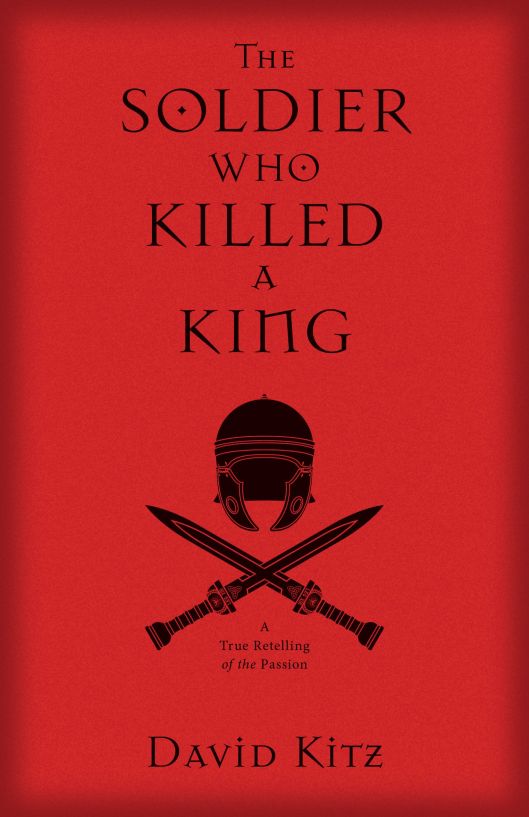
The Soldier Who Killed a King

01 Thursday Jun 2017

Posted by davidkitz in Books by David Kitz, Psalms

≈ 5 Comments

Tags

Canadian Bible Society, Christ, Christ's Passion, crucifixion, David Kitz, donkey-riding King, historic novel, Jesus, Kregel, Navigator Church Ministries, novel, Officers’ Christian Fellowship, One Way Ministries, resurrection, the cross

It’s very gratifying to have reputable people say good things about a book you have written. The following endorsements mean a lot to me:

“The best book I have read in years. A compelling read—I couldn’t put it down.” Doug Sprunt, One Way Ministries

“The most gripping account of the crucifixion I have ever read.” Wilf Wight, eastern Ontario district director, Canadian Bible Society

Soldier 800kb

New from David Kitz and Kregel Publishing — now available for preorder

“I was at the foot of the cross. I stepped inside the empty tomb. This book took me there.” Robert DuBroy, cofounder of CHRI-FM, Ottawa, Ontario

“An awesome read: captivating, spellbinding, inspiring! Through the author’s masterful writing, the centurion stood out as a real and personable individual. . . . The book also helped me visualize Jesus, my Savior, and his person and work for the forgiveness of my sins, for my daily walk, and for the eternal life he has in store for all who believe.” Cliff Kentel, Prince of Peace Lutheran Church, Regina, Saskatchewan

“A readable and accurate novel about Jesus Christ’s last week on earth. David Kitz’s portrayal of the collision between pagan Rome and temple Judaism is completely plausible. And as a perfect antidote to the faux expertise of Dan Brown’s The Da Vinci Code, Kitz provides over a hundred endnotes and a handful of thumbnail biographies at the end of his book.” Joe Woodard, Calgary Herald

“Story has a way of capturing our attention and enabling truth to move from head to heart. David Kitz creatively unpacks the events of Passion Week as seen through a Roman centurion’s eyes. Through vivid word pictures, we see the whip-sliced back of our Savior and hear the pounding of each nail that affixed him to the cross. We walk these last steps of Jesus’s earthly ministry, leading to his death, burial, and triumphant resurrection from the dead. Kitz better helps us to do as the apostle John encourages: ‘See what great love the Father has lavished on us, that we should be called children of God!’ (1 John 3:1).” Dean Ridings, author of The Pray! Prayer Journal and communications director of Navigator Church Ministries

“This engaging, hard-hitting narrative is a distillation of Kitz’s study and prayer over fifty years as a pastor and educator, steeped in the wonder of this story. As a novelist, he reveals profound respect for the historical record through his characterization of Marcus Longinus, a Roman centurion who is unwillingly caught in the power struggles of the day. In contrast to the stench of these political machinations, the donkey-riding King emerges in the Roman world offering an entirely new way for humankind to be reborn. The Roman centurion is like us, caught between worlds. Who is king? Why? The Son of God shows unlimited compassion through healing the sick and feeding the hungry, and his purity catches the attention of the masses in a drama that still shakes the world, one aching, open, humble heart at a time.” Dr. Darlene L. Witte-Townsend, former professor of education, Johnson State College

“One of the most exceptional biblical fiction books I have ever read. I was struck by the everyday events and people affected by the dramatic climax of the cross, which Kitz presents on an equal level with Mel Gibson’s The Passion of the Christ. Extremely well documented historically and biblically, the narrative transports you back in time and evokes both grief and thanksgiving as you follow the soldier’s own emotional turmoil in grappling with the dramatic events of the darkest day in history. Like him you will be led to cry out in both despair and trust, ‘Surely this was the Son of God!’” Heather Goodwin, former manager of the Baptist Bookroom, New Brunswick

“David Kitz has written an intriguing book. Taking the point of view of the centurion who crucified Christ is new and fresh and gives the reader much to contemplate. Even though I knew the story, I felt compelled to read on to see how Kitz would unfold the drama. Excellently done!” Tami Waring, Officers’ Christian Fellowship, Maxwell-Gunter Air Force Base

For the month of June The Soldier Who Killed a King is available for preorder from Kregel Publishing for the early bird price of $10.99. The worldwide release date is July 25th.

Place your order today: http://www.kregel.com/fiction/the-soldier-who-killed-a-king/


Everything That Has Breath

19 Friday May 2017

Posted by davidkitz in Psalm 150, Psalms

≈ 7 Comments

Tags

breath, breath of God, breath of life, cymbals, dancing, hallelujah, Holy Spirit, Jesus, praise, Psalm, resurrection, the LORD

Reading:                                        Psalm 150

Praise the LORD.
Praise God in his sanctuary;
praise him in his mighty heavens.
Praise him for his acts of power;
praise him for his surpassing greatness.
Praise him with the sounding of the trumpet,
praise him with the harp and lyre,
praise him with timbrel and dancing,
praise him with the strings and pipe,
praise him with the clash of cymbals,
praise him with resounding cymbals.
Let everything that has breath praise the LORD.
Praise the LORD (NIV).

Reflection

We have reached the crescendo—the conclusion and the high point of the Book of Psalms. Hallelujah and praise the LORD!

img_20161004_132712_hdr

Petrie Island, Orleans, ON — photo by David Kitz

The word praise appears thirteen times in this final psalm. The number thirteen is suggestive of Jesus and his apostles. He is at the core—the very center of God ordained worship.

Eight forms or instruments of praise are listed in this psalm. Eight is the number of new beginnings. Seven suggests completeness, so we see that God rested on the seventh day. But eight signals a new start. In the same way, these eight means or instruments of praise do not represent a complete list. They simply suggest the varied ways in which we can express our praise to the LORD. We have only just begun to discover and explore the many ways in which we can show our gratitude to our Creator.

No one—no living being—is excluded from this call to praise. Let everything that has breath praise the LORD.

This call for all the breathing to praise the LORD is truly fitting. We received our original breath from the LORD. Then the LORD God formed a man from the dust of the ground and breathed into his nostrils the breath of life, and the man became a living being (Genesis 2:7). Now with our breath—our God-given breath—let us praise our Maker.

In the same way after his resurrection Jesus breathed on his disciples.  Again Jesus said, “Peace be with you! As the Father has sent me, I am sending you.” And with that he breathed on them and said, “Receive the Holy Spirit” (John 20:21-22).

We need the breath of God in us—the breath of the Holy Spirit in us to live—to truly live in the overcoming power and joy of the psalms. For the Holy Spirit’s presence I will praise the LORD!

Response: LORD God, I praise you. You are my strength and my song. Help me to discover new ways to praise you because you are good. Let my entire life reflect your redemptive presence in me. Amen.

Your Turn: Why are you breathing? Is praising God an integral part of your purpose?

I Miss Hallelujah!

16 Tuesday May 2017

Posted by davidkitz in Psalm 148, Psalms

≈ 2 Comments

Tags

Bible translations, Christmas, hallelujah, Hallelujah Chorus, Handel's Messiah, Jehovah, Jesus, praise, resurrection, the LORD, victory, Yahweh

Reading:                                         Psalm 148

(Verses 13-14)
Let them praise the name of the LORD,
for his name alone is exalted;
his splendor is above the earth and the heavens.
And he has raised up for his people a horn,
the praise of all his faithful servants,
of Israel, the people close to his heart.
Praise the LORD (NIV).

Reflection

Broadly speaking I like modern translations of the Bible over the traditional King James Version, but… But sometimes the old King James just sounds better, or more familiar. Here at the close of Psalm 148 we have a case in point.

IMG_20170506_131109

Orleans woods in spring — photo by David Kitz

The New International Version ends the psalm with these words: Praise the LORD. The King James Version ends the psalm with Praise ye the LORD. But a more literal translation or transliteration of this final phrase is Hallelujah! The footnotes to the New American Standard Bible point out that Hallelu means praise, while JAH is the abbreviated Hebrew name for God, which is often translated Jehovah or more accurately Yahweh.

Whenever you see the phrase praise the LORD, you are actually looking at a translation of the Hebrew word hallelujah!

Hallelujah is entirely absent from the New International Version of the Bible. It has also been scrubbed from most of the other modern translations. To put it bluntly, I miss hallelujah. It has an uplifting ring to it. Hallelujah skips off the tongue like a shooting star. It bursts forth from a thankful heart like fireworks on a summer night. 

For the Christian believer Christmas is the great Hallelujah! God has come to the earth and been born as a baby like you and me. This is the beginning of the great redemption story.

The resurrection is the second great Hallelujah! The Son of God was vindicated. His death was not in vain. He conquered death, our greatest foe, and now Jesus reigns on high forever. That calls for a hallelujah! And for good measure, let’s add praise the LORD too!

The one who at his birth was laid in a manger is the King of kings and the Lord of lords. As Handel’s Messiah proclaims, “He shall reign forever and ever. Hallelujah!” Let the hallelujahs resound from the earth to the heavens as we join in the song of the angels—the song of the ages.

Let them praise the name of the LORD, for his name alone is exalted; his splendor is above the earth and the heavens.

Response: LORD God, I praise you for sending Jesus. I praise you for your great plan of redemption. Jesus, I thank you for carrying my sins to Calvary. I rejoice in your resurrection victory. Hallelujah! Amen.

Your Turn: Do you enjoy Handel’s Hallelujah Chorus? What is your favorite expression of praise to God?

Why are you crying?

16 Sunday Apr 2017

Posted by davidkitz in Easter Sunday, Psalms

≈ 3 Comments

Tags

angels, crying, gardener, God, Jesus, Lord, Mary, resurrection, tomb

I will praise Him!

IMG_20161114_074737 (2)

The Son has risen! ― photo by David Kitz

 Now Mary stood outside the tomb crying. As she wept, she bent over to look into the tomb and saw two angels in white, seated where Jesus’ body had been, one at the head and the other at the foot.

They asked her, “Woman, why are you crying?”

“They have taken my Lord away,” she said, “and I don’t know where they have put him.” At this, she turned around and saw Jesus standing there, but she did not realize that it was Jesus.

He asked her, “Woman, why are you crying? Who is it you are looking for?”

Thinking he was the gardener, she said, “Sir, if you have carried him away, tell me where you have put him, and I will get him.”

Jesus said to her, “Mary.”

She turned toward him and cried out in Aramaic, “Rabboni!” (which means “Teacher”).

Jesus said, “Do not hold on to me, for I have not yet ascended to the Father. Go instead to my brothers and tell them, ‘I am ascending to my Father and your Father, to my God and your God.’”

(John 20:11-17, NIV)

Why Did the Sea Flee?

07 Wednesday Dec 2016

Posted by davidkitz in Psalm 114, Psalms

≈ 1 Comment

Tags

Almighty, death and resurrection, Jesus, oppression, power, power of God, promised land, rescue, resurrection, salvation, tyranny

Reading:                                       Psalm 114

When Israel came out of Egypt,
Jacob from a people of foreign tongue,
 Judah became God’s sanctuary,
Israel his dominion.

The sea looked and fled,
the Jordan turned back;
the mountains leaped like rams,
the hills like lambs.

Why was it, sea, that you fled?
Why, Jordan, did you turn back?
Why, mountains, did you leap like rams,
you hills, like lambs?

Tremble, earth, at the presence of the Lord,
at the presence of the God of Jacob,
who turned the rock into a pool,
the hard rock into springs of water
(NIV).

Reflection

“Why?” A four-year-old’s favourite question is, “Why?” Here in Psalm 114, the psalmist has some why questions as well. “Why did the sea flee? Why did the Jordan River turn back? Why did those mountains and hills seem to skip and dance? Why?”

img_20160921_134332

The Thousand Islands near Gananoque, ON — photo by David Kitz

The answer of course is because of the jaw-dropping, eye-popping, heart-stopping power of God. God caused the sea to flee. He caused the Jordan to turn back. He caused mountains and hills to skip about and frolic like yearling lambs set free from the stall. What an awesome display! What an awesome God!

Psalm 114 is all about the overwhelming power of God. It is a grand portrayal of the pivotal event in the Old Testament Scriptures. Here within a few short verses we catch a panoramic view of God’s might on display, starting with Israel’s escape from Egypt, to their arrival in the Promised Land.

Why did the miracle-working LORD make the sea flee? Was it simply to display His awe-inducing power? Was it simply to create excitement among the million or more mortals, who were eyewitnesses to this divine wonder? In the Exodus account, the reason for this miraculous intervention is stated clearly: That day the LORD saved Israel from the hand of the Egyptians, and Israel saw the Egyptians lying dead on the shore. And when the Israelites saw the great power of the LORD displayed against the Egyptians, the people feared the LORD and put their trust in him and in Moses his servant (Exodus 14:30-31).

This power display had one primary purpose. That purpose was salvation. The LORD wanted to save people—His covenant people—from the vicious clutches of oppression and a tyranny. In short, the LORD works wonders so that He can save people—so He can bring them into His Kingdom—so they can escape the sin systems of this world, and come under His loving rule.

Response: Father God, thank you for going all out to save me through the death and resurrection of your Son, Jesus. What a display of your love and power! Help me to love, fear and trust you. Amen.

Your Turn: Why did God save you? Is there a reason for His mercy?

He Sent His Word

17 Thursday Nov 2016

Posted by davidkitz in Psalm 107, Psalms

≈ 1 Comment

Tags

God's word, healing, Jesus Christ, power of words, resurrection, words

Reading:                                        Psalm 107                                                                 

 (Verses 17-22)

Some became fools through their rebellious ways
and suffered affliction because of their iniquities.
They loathed all food
and drew near the gates of death.
Then they cried to the L
ORD in their trouble,
and he saved them from their distress.
He sent out his word and healed them;
he rescued them from the grave.
Let them give thanks to the L
ORD for his unfailing love
and his wonderful deeds for mankind.
Let them sacrifice thank offerings
and tell of his works with songs of joy
(NIV).

Reflection

There is a verse in Psalm 107 that holds deep significance for all eternity—past, present and future. Here is the verse: He sent out his word and healed them; he rescued them from the grave (Psalm 107:20).

img_20160425_143343

Raised to new life — spring photo by David Kitz — in Victoria, BC

I was introduced to this wonderful verse at the funeral of my maternal grandfather. Psalm 107:20 was the sermon text. This Bible verse might seem like an odd choice for use at a funeral. After all, in the end the deceased was not healed. In the case of my grandfather, he made it to the ripe old age 92 years, but death triumphed in the end. Or did it?

The pastor pointed out that throughout his life, on countless occasions, God sent out his word and healed my grandfather, and God who is faithful would do it again. But on the next occasion the LORD would raise my grandfather from the dead.

This is the great hope of all who believe in Jesus Christ. He is our forerunner. He suffered death on our behalf, but he also experienced resurrection.

The God who in eons past spoke galaxies into existence can send His word and resurrect my grandfather, and all who have put their faith in the resurrected Savior. With each passing day that awesome moment draws nearer. That’s the ultimate healing and it happens through the power of God’s word.

For the Lord himself will come down from heaven, with a loud command, with the voice of the archangel and with the trumpet call of God, and the dead in Christ will rise first. After that, we who are still alive and are left will be caught up together with them in the clouds to meet the Lord in the air. And so we will be with the Lord forever (1 Thessalonians 4:16-17).

Response: Father God, send your word. Send your word and heal those who are sick. Send your word and save and transform those who are hostile to you. Send your word and resurrect those who are spiritually dead in their trespasses and sins. LORD God, send your word. Amen.

Your Turn: Who springs to mind when you pray for God to send His word?

Marking the Seasons

28 Friday Oct 2016

Posted by davidkitz in Psalm 104, Psalms

≈ 2 Comments

Tags

Christ, creation, Creator, eternity, God, renewal, rest, resurrection, seasons, transitions

Reading:                                         Psalm 104                                                                  

 (Verses 19-26)

He made the moon to mark the seasons,
and the sun knows when to go down.
You bring darkness, it becomes night,
and all the beasts of the forest prowl.
The lions roar for their prey
and seek their food from God.
The sun rises, and they steal away;
they return and lie down in their dens.
Then people go out to their work,
to their labor until evening.

How many are your works, LORD!
In wisdom you made them all;
the earth is full of your creatures.
There is the sea, vast and spacious,
teeming with creatures beyond number—
living things both large and small.
There the ships go to and fro,
and Leviathan, which you formed to frolic there
(NIV).

Reflection

There is something to be said for routine and regularity. By that I mean the whole vast rhythm of life. Today’s reading from Psalm 104 eloquently reflects the rhythm of life from sunrise to sunset and the return to sunrise once again.

img_20161024_095102-1

End of season pickings — photo by David Kitz

Yesterday, my wife and I collected the last of the tomatoes from our garden and pulled out the vines. A hard frost is on the way. Later this morning we will be digging out the potatoes and root vegetables and putting them into storage. The seasons are changing. All we can do is prepare for the transition; we can’t prevent it from happening.

In reality, transitions are about rest and renewal. The setting sun lets us know that it’s time to stop our labor and get the rest that is essential for our well-being. In the same way as winter approaches trees and vegetation go dormant, but after a season of rest the great spring renewal will surely come. It always has, and so it will continue until the end of time.

In the same way there is a renewal promised to us at the end this life. Resurrection happens every spring and it will happen to this old clod of earth as well. That’s the great hope we have because of Christ. The word of God has been planted in our hearts and it will bear fruit now and in eternity, which has been promised to those who believe. Do you believe? Do you have faith in the changing seasons? Do you have faith in the One who created the seasons?

Response: Father God, thank you for designing the days, months and seasons. I want to draw near to you in every season of life. How many are your works, LORD! You are worthy of all praise. Amen.

Your Turn: What is your favorite season? Why?

The Salvation of our God

04 Tuesday Oct 2016

Posted by davidkitz in Psalm 98, Psalms

≈ 1 Comment

Tags

blood, God, Jesus, Petrie Island, Psalm, resurrection, salvation, Savior, sing, the cross

Reading:                                         Psalm 98

A psalm.

Verses 1-6

Sing to the LORD a new song,
for he has done marvelous things;
his right hand and his holy arm
have worked salvation for him.
The L
ORD has made his salvation known
and revealed his righteousness to the nations.
He has remembered his love
and his faithfulness to Israel;
all the ends of the earth have seen
the salvation of our God.

Shout for joy to the LORD, all the earth,
burst into jubilant song with music;

 make music to the LORD with the harp,
with the harp and the sound of singing,
with trumpets and the blast of the ram’s horn—
shout for joy before the L
ORD, the King (NIV).

Reflection

Once again in Psalm 98 the psalmist calls us to break forth with a new song of praise to our God. This call to worship is a frequent theme in many psalms. In this case the cause for worship is well worth noting. We are to worship in music and song because of the salvation of our God. The LORD has made his salvation known and revealed his righteousness to the nations. He has remembered his love and his faithfulness to Israel; all the ends of the earth have seen the salvation of our God.

img_20160928_182728_hdr

Petrie Island sunset — photo by David Kitz

To some extent these words trouble me. What salvation is the psalmist talking about? Is he referring to the miraculous redemption and rescue of Israel from slavery in Egypt? That’s the most significant act of national salvation in the Old Testament. On the other hand, the psalmist could be referring to the restoration of the Jewish nation after the destruction of the temple and the Babylonian captivity. Again this is a very significant event that was witnessed by the surrounding nations. Since we do not have a timeline or date for when this psalm was written, we are left guessing the answer.

For the New Testament believer we see the fulfillment of this psalm in the salvation that was won for us by Christ at the cross. There the ancient powers of sin, hell and the grave were defeated. Death itself was vanquished through the resurrection of Jesus. In reality, the true enemies of the people of God are not foreigners or foreign nations. Our enemies are spiritual; they lurk within—within us. Salvation from those enemies was purchased at the cross with the precious blood of Jesus.

Now here is a bizarre twist. Salvation arrives when we stop fighting. It arrives with our surrender. It arrives when we surrender our lives to our Savior and kneel before our King on a cross. That’s a salvation worth singing about!

Response: LORD God, I am so grateful for the salvation you purchased for me through the blood of Jesus. I want all the ends of the earth to know about that great salvation. Thank you, Jesus. Amen.

Your Turn: Have you knelt before the King on a cross? Take some time to do that now.

Your Anointed One

09 Friday Sep 2016

Posted by davidkitz in Psalm 89, Psalms

≈ 4 Comments

Tags

anointed, Christ, death, Jesus, Jesus Christ, Messiah, resurrection

Reading:                                          Psalm 89

Verses 46-52

How long, LORD? Will you hide yourself forever?
How long will your wrath burn like fire?

 Remember how fleeting is my life.
For what futility you have created all humanity!
Who can live and not see death,
or who can escape the power of the grave?
Lord, where is your former great love,
which in your faithfulness you swore to David?
Remember, Lord, how your servant has been mocked,
how I bear in my heart the taunts of all the nations,
the taunts with which your enemies, L
ORD, have mocked,
with which they have mocked every step of your anointed one.

Praise be to the LORD forever!
Amen and Amen
(NIV).

Reflection

Many people believe that Christ is Jesus’ last name. That is not the case. The Bible does not tell us Jesus’ family name. Often he is identified by the town that he is from—Jesus of Nazareth. So what then is the significance of the word Christ or Khristos in the Greek? Christ is a title. One might even call it a job description. It means the anointed one, the one who is designated by God to rule and reign over his people. The Greek word Khristos or Christ corresponds to the Hebrew word Mashiach or Messiah. The anointed one or Christ was and is the son of David who rules over the house of Jacob and the Israel of God.

IMG_20140606_165353

The wide Ottawa River with Quebec on the opposite shore — photo by David Kitz

When we read Psalm 89 with the understanding that the anointed one is also the Christ, the psalm takes on a whole new layer of meaning. Yes, during the fall of Jerusalem to the Babylonians, the anointed one was mocked. But this is also true of Jesus, the anointed Son of David, who was led off to be crucified outside the city gate. These words were fulfilled in Christ: Remember, Lord, how your servant has been mocked, how I bear in my heart the taunts of all the nations, the taunts with which your enemies, LORD, have mocked, with which they have mocked every step of your anointed one.

But there is a significant difference between the Old Testament, anointed one, and our New Testament Christ. The psalmist asks this question: Who can live and not see death, or who can escape the power of the grave?

The implicit answer is that no one can escape death and the grave. But… but there is One—One, who tasted death on our behalf—One, who escaped the power of the grave. His name is Jesus. He is the Christ, the anointed One, and our Messiah. He is the One who by virtue of the resurrection is King now and forevermore.

Response: LORD God, I thank you for Jesus, the Christ, the anointed One. Thank you for your death, burial and resurrection. I join with the psalmist in saying, “Praise be to the LORD forever! Amen and Amen.”

Your Turn: In what way is Christ a job description? What job has he done and is he doing for you?

← Older posts
Newer posts →

Psalms 365: Develop a Life of Worship & Prayer

Psalms 365 Volume II

Psalms 365 vol 3
— Psalms 365 Volume III

Now available:

Psalms

Recent posts

  • Yoked to Idols October 12, 2026
  • A Devotional Journey through the Epistle of James October 11, 2026
  • Who Can Fully Declare His Praise? October 10, 2026
  • The Greatest Commandment October 9, 2026
  • Lest We Forget October 9, 2026
  • Marriage at the Resurrection October 8, 2026
  •  A Growing List of Transgressions October 8, 2026

Calendar

October 2026
M T W T F S S
 1234
567891011
12131415161718
19202122232425
262728293031  
« Sep    

Blog Posts

Comments

  • The Greatest Commandment – GospelChats.Com on The Greatest Commandment
  • Eileen Guyadeen on Divorce
  • davidkitz on Divorce

Blog at WordPress.com.

Privacy & Cookies: This site uses cookies. By continuing to use this website, you agree to their use.
To find out more, including how to control cookies, see here: Cookie Policy
  • Subscribe Subscribed
    I love the Psalms
    Join 1,369 other subscribers

    Have a WordPress.com account? Log in now.

  • I love the Psalms
    View site in Reader
    Manage subscriptionsSign upLog in
    Report this content
    Collapse this bar
Loading Comments...