Tags
Almighty, dwelling place, God, hunger for God, lovely, praise, the LORD
I will praise Him!

The leafy Courts of the LORD — photo by David Kitz

10 Saturday Jun 2017
Tags
Almighty, dwelling place, God, hunger for God, lovely, praise, the LORD
The leafy Courts of the LORD — photo by David Kitz
08 Thursday Jun 2017
Tags
armor of God, attack, Bible, David, David and Goliath, faith, foundation, God, Goliath, memory bank, myths, ridicule, righteous, the LORD
Reading: Psalm 11
For the director of music. Of David.
In the LORD I take refuge.
How then can you say to me:
“Flee like a bird to your mountain.
For look, the wicked bend their bows;
they set their arrows against the strings
to shoot from the shadows at the upright in heart.
When the foundations are being destroyed,
what can the righteous do?”
The LORD is in his holy temple; the LORD is on his heavenly throne.
He observes everyone on earth; his eyes examine them.
The LORD examines the righteous,
but the wicked, those who love violence,
he hates with a passion.
On the wicked he will rain fiery coals and burning sulfur;
a scorching wind will be their lot.
For the LORD is righteous, he loves justice;
the upright will see his face (NIV).
Reflection
Do you feel like your faith is under attack? It seems that everywhere there are people who are mocking those who have faith in God. Believers are openly ridiculed. We are blamed for every war since time immemorial. We are told that science has rock-solid evidence, while God followers rely on concocted myths handed down by unscrupulous manipulators.

Backyard iris — photo by David Kitz
The enemy is firing arrows of accusation, doubt and distrust from the shadows at the upright in heart. The very foundation of our faith, the word of God—the Bible—is being attacked as outdated, unreliable and historically inaccurate. Along with David we ask, “When the foundations are being destroyed,
what can the righteous do?”
The righteous can do what David does in the first line of this psalm. David says, “In the LORD I take refuge.” For David, God was not a mystical concept. God was a rock solid reality. David had a memory bank full of experiences with the LORD. The LORD was David’s helper, healer and deliverer. In the tough times of life, God was there—was present in David’s life. The LORD brought victory for David over Goliath and over every enemy that exalted itself above God.
The same can be true for you. Put on the full armor of God, so that you can take your stand against the devil’s schemes (Ephesians 6:11). Remember the LORD is on his heavenly throne. Nothing takes Him by surprise. The LORD is with you and He is watching your response. We need not be intimidated; we need not flee. We need to stand our ground like David and like Paul the apostle. The LORD is with us.
Response: LORD, you are my refuge. Help me to stand my ground when my faith is under attack, and help other believers to do the same by the grace of Jesus. Amen.
Your Turn: Do you have a memory bank full of experiences with the LORD that you can draw on?
07 Wednesday Jun 2017
Tags
absent fathers, economic, fatherless, fathers, gender, God, prisons, public school teacher, social, the LORD, well-fathered child
Reading: Psalm 10
Verses 12-18
Arise, LORD! Lift up your hand, O God.
Do not forget the helpless.
Why does the wicked man revile God?
Why does he say to himself,
“He won’t call me to account?”
But you, God, see the trouble of the afflicted;
you consider their grief and take it in hand.
The victims commit themselves to you;
you are the helper of the fatherless.
Break the arm of the wicked man;
call the evildoer to account for his wickedness
that would not otherwise be found out.
The LORD is King forever and ever;
the nations will perish from his land.
You, LORD, hear the desire of the afflicted;
you encourage them, and you listen to their cry,
defending the fatherless and the oppressed,
so that mere earthly mortals will never again strike terror (NIV).
Reflection
From the beginning, it has always been so. At the start of life there is a father. Without a father there is no life. Ponder those words for a moment.
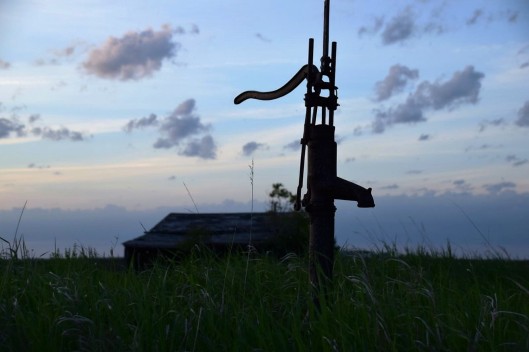
Old hand pump near MacNutt, SK — photo by Donald Adam
Of course those words are true of a mother as well. But today’s psalm focusses on fathers. To be more accurate, the psalmist calls attention to the fatherless. Apparently, fathers aren’t just needed at the beginning of life; they are needed throughout life.
There are voices in our society that question the need for fathers. Life can go on without them. In some cases, life is better without them. But I would argue that that’s not life as life should be—as life was designed to be from the beginning. Our prisons are filled with fatherless men. A huge chunk of the misery, distress and degradation in this world is caused by the absence of fathers—men who fail to assume their role as fathers.
A good father—an active, involved father—makes a world of difference in the life of a child. As a public school teacher I saw the truth of this every day. The well-fathered child of either gender has advantages beyond compare on every social, economic and intellectual scale. We need fathers. I need a father—a perfect Father.
That’s why we can draw comfort and encouragement from this psalm. Twice the LORD promises to be a helper and defender of the fatherless. Jesus came to introduce us to our Father—a Father who cares.
Response: LORD God, father me. Thank you for caring. Help me become the father I need to be. Amen.
Your Turn: Has your father made a difference in your life for good or bad? Are you being Fathered?
06 Tuesday Jun 2017
Tags
Bethlehem, Christ's birth, Christmas, Jesus, magi, Savior, seeking God, the LORD, wicked
Reading: Psalm 10
Verses 1-4
Why, LORD, do you stand far off?
Why do you hide yourself in times of trouble?
In his arrogance the wicked man hunts down the weak,
who are caught in the schemes he devises.
He boasts about the cravings of his heart;
he blesses the greedy and reviles the LORD.
In his pride the wicked man does not seek him;
in all his thoughts there is no room for God (NIV).
Reflection
As I write these thoughts on Psalm 10, we are a long way from Christmas. But there is a line in today’s reading that has me thinking about the Christmas season.

Take time to seek God — photo by David Kitz
The author of this psalm is describing the heart of those who are far from God. “In his pride the wicked man does not seek him; in all his thoughts there is no room for God.”
For many the celebration of Christ’s birth has become nothing more than a commercial bonanza completely devoid of any spiritual meaning. For them it is nothing more than a buying and selling frenzy—a pursuit of trinkets signifying nothing—nothing of eternal value.
No matter the season, we too can fall into a trap. Rather than seeking the LORD, we can find ourselves boasting about the cravings of our heart. As the psalmist says, we bless the greedy and in so doing, we revile the LORD.
No room for God… in today’s world? In a perverse way it seems rather appropriate. There was no room for God in Bethlehem on the night Jesus was born. No room for God… no room for the Maker and Savior of the universe! That sounds insane, but then it seems we live in a world gone mad.
For you and me, it doesn’t have to be that way. While there was no room for God incarnate in Bethlehem, the magi were busy seeking Him. Regardless of the season, you and I can set our hearts to be God seekers.
Response: Jesus, I seek after you. Open my eyes to see you at work today. Show up in my world today. I wait expectantly for you. Amen.
Your Turn: Have you seen Jesus in others? How can you seek God this week?
05 Monday Jun 2017
Tags
affliction, Blame, David, enemies, God's goodness, hope, justice, needy, persecution, praise, the LORD, trouble
Reading: Psalm 9
Verses 11-20
Sing the praises of the LORD, enthroned in Zion;
proclaim among the nations what he has done.
For he who avenges blood remembers;
he does not ignore the cries of the afflicted.
LORD, see how my enemies persecute me!
Have mercy and lift me up from the gates of death,
that I may declare your praises in the gates of Daughter Zion,
and there rejoice in your salvation.
The nations have fallen into the pit they have dug;
their feet are caught in the net they have hidden.
The LORD is known by his acts of justice;
the wicked are ensnared by the work of their hands.
The wicked go down to the realm of the dead, all the nations that forget God.
But God will never forget the needy; the hope of the afflicted will never perish.
Arise, LORD, do not let mortals triumph;
let the nations be judged in your presence.
Strike them with terror, LORD;
let the nations know they are only mortal (NIV).
Reflection
If only life was easy; if only life was just and fair! But it isn’t. Life is filled with struggles and difficulties. I’m not always treated fairly, nor are you. Here in this psalm David cries out, “LORD, see how my enemies persecute me!” You can sense the frustration in his voice. Though these words are not recorded, in the midst of his troubles he might have added, “This isn’t fair, LORD. You aren’t being fair!”

Sing the praises of the LORD — photo by David Kitz
But David doesn’t say that. He assigns blame where blame is due. He blames his troubles on his enemies—his human oppressors—not on the LORD. By way of contrast, David has nothing but praise for the LORD. He declares, “Sing the praises of the LORD, enthroned in Zion; proclaim among the nations what he has done.”
If the source of your affliction is human, why are you blaming God for it? We need to always keep this statement in mind. The LORD is known by his acts of justice. In this life we may not always see His justice prevail, but rest assured on that great final Day, He will prevail. Ultimately, His justice will be seen and known by all.
In times of trouble God is our source of help and strength. Human help may fail us. Friends may let us down. We can wrongly blame the LORD for our troubles, or we can run to Him for help. In all our troubles, we must keep this promise in mind: God will never forget the needy; the hope of the afflicted will never perish.
Response: LORD, in times of trouble, you are my help. I lay my troubles and my requests before you. I wait expectantly for you. I praise you for your goodness to me even in difficult times. Amen.
Your Turn: Have you been blaming God rather than thanking Him? Take some time to praise Him.
03 Saturday Jun 2017
Tags
David Kitz, enemies, foes, honey, Ottawa River, punishment, Rock, satisfaction, the LORD, wheat

Ottawa River backwaters — photo by David Kitz
02 Friday Jun 2017
Tags
conquest, David, David and Goliath, Goliath, Israel, King David, Philistine, the LORD, trust in God, violence, warfare, warrior
Reading: Psalm 9
For the director of music. To the tune of “The Death of the Son.” A psalm of David.
Verses 1-10
I will give thanks to you, LORD, with all my heart;
I will tell of all your wonderful deeds.
I will be glad and rejoice in you;
I will sing the praises of your name, O Most High.
My enemies turn back; they stumble and perish before you.
For you have upheld my right and my cause,
sitting enthroned as the righteous judge.
You have rebuked the nations and destroyed the wicked;
you have blotted out their name forever and ever.
Endless ruin has overtaken my enemies, you have uprooted their cities;
even the memory of them has perished.
The LORD reigns forever; he has established his throne for judgment.
He rules the world in righteousness and judges the peoples with equity.
The LORD is a refuge for the oppressed, a stronghold in times of trouble.
Those who know your name trust in you,
for you, LORD, have never forsaken those who seek you (NIV).
Reflection
Without question David was a man of war. After all, this was the man who as a strapping young teenager slew Goliath, the gigantic champion of the Philistines. Later he led King Saul’s army as they went out to do battle with the enemies of Israel. Eventually when David became King, he secured Israel’s borders and greatly expanded its territory through conquest. David knew a few things about bloodshed and war, and he had more than a few enemies.

Wisteria, Victoria, BC — photo by David Kitz
It should not surprise us then that the language of warfare and talk of enemies and destruction should appear in the psalms that he wrote. David wrote, sang and spoke of the things he knew and experienced. He was personally involved in life and death struggles. Consequently, he was a man of violence, who lived and survived through violent times.
But he loved God. Sometimes it’s hard to reconcile the slay-my-enemies David with the LORD-is-my-shepherd David. It’s as though two contradictory Davids are living in one body. But then I look at myself—deep within myself. Am I any different? There are more than a few contradictory elements at work within me. The real warfare is within the human spirit. Will I yield to the Spirit of God, or to the foul spirit of this world, or my own selfish pride?
Like David I simply need God. I need to praise and exalt Him over all else. When I do that I gain perspective—the right perspective. With David I can say, “Those who know your name trust in you, for you, LORD, have never forsaken those who seek you.”
Response: I praise you, LORD and I seek you. Along with David I can say you have upheld me in difficult times. Be the master within me. I will be glad and rejoice in you; I will sing the praises of your name, O Most High. Amen.
Your Turn: Have you yielded to the LORD? Is He winning the warfare within?
31 Wednesday May 2017
Tags
accuser, attitudes, attitudes of the heart, David, falsely accused, Heart, mind, self-examination, the LORD, transparent before God, vengeance
Reading: Psalm 7
A shiggaion of David, which he sang to the LORD concerning Cush, a Benjamite.
Verses 1-9
LORD my God, I take refuge in you;
save and deliver me from all who pursue me,
or they will tear me apart like a lion
and rip me to pieces with no one to rescue me.
LORD my God, if I have done this and there is guilt on my hands—
if I have repaid my ally with evil or without cause have robbed my foe—
then let my enemy pursue and overtake me;
let him trample my life to the ground and make me sleep in the dust.
Arise, LORD, in your anger; rise up against the rage of my enemies.
Awake, my God; decree justice.
Let the assembled peoples gather around you,
while you sit enthroned over them on high.
Let the LORD judge the peoples.
Vindicate me, LORD, according to my righteousness,
according to my integrity, O Most High.
Bring to an end the violence of the wicked and make the righteous secure—
you, the righteous God who probes minds and hearts. (NIV)
Reflection
Have you ever been falsely accused? Have you been accused of wrong doing by someone you consider a friend? That can be a deeply hurtful experience. In the context of this psalm, that’s the situation that David finds himself in. He stands accused of repaying his ally with evil.

Lilac blossoms — photo by David Kitz
How did David respond? Did he strike down his accuser? Remember. David is the king. It is within his power to act – to unleash his vengeance. Is that his just and righteous response? No, he takes his case before the LORD. In prayer he declares, “Let the LORD judge the peoples.” He invites God to judge him. He presents his case before the righteous God who probes minds and hearts.
That takes some courage; that takes some integrity. That takes a level of faith and transparency that we often see lacking in men of position and power. Are you willing to let God probe your heart and your mind? What might He find hidden away in there?
The writer of the Book of Hebrews reminds us about the power of God’s word, “For the word of God is alive and active. Sharper than any double-edged sword, it penetrates even to dividing soul and spirit, joints and marrow; it judges the thoughts and attitudes of the heart” (Hebrews 4:12).
David was a man of God. He submitted his heart and mind to the all-seeing eye of God. He wanted the sin source cut off within him. Righteous judgment begins when God and His word gain entry to your heart.
Response: LORD, I open my heart and my mind to your probing. Help me repent where needed. Amen.
Your Turn: Are you transparent before God? Why do we think we can hide something from God?
30 Tuesday May 2017
Tags
agony, anguish, broken, constipation, David, groaning, hardship, hurt, Prayer, Psalms of David, sorrow, tears, the LORD, the will of God, weeping
Reading: Psalm 6
For the director of music. With stringed instruments. According to sheminith. A psalm of David.
LORD, do not rebuke me in your anger or discipline me in your wrath.
Have mercy on me, LORD, for I am faint;
heal me, LORD, for my bones are in agony.
My soul is in deep anguish.
How long, LORD, how long?
Turn, LORD, and deliver me; save me because of your unfailing love.
Among the dead no one proclaims your name.
Who praises you from the grave?
I am worn out from my groaning.
All night long I flood my bed with weeping and drench my couch with tears.
My eyes grow weak with sorrow; they fail because of all my foes.
Away from me, all you who do evil, for the LORD has heard my weeping.
The LORD has heard my cry for mercy; the LORD accepts my prayer.
All my enemies will be overwhelmed with shame and anguish;
they will turn back and suddenly be put to shame. (NIV).
Reflection
The life of a God-follower isn’t all happy days and sunny skies, as some preachers might have you believe. On the contrary, hard times and grief may frequent our way. Does that mean we are out of the will of God? Has God abandoned us during these times of inner turmoil, struggle and hardship?

Bilberry Creek cycling bridge, Orleans, ON — photo by David Kitz
Judging by the life and experience of David as expressed through the psalms, the answer is a resounding, “No.” God has not abandoned you.
David met with God during these times of difficulty. He poured out his complaint before the LORD. He pleaded with God; he held nothing back. Take a look at some of the keywords in this psalm: agony, anguish, groaning, weeping, tears, and sorrow. David experienced all these emotions. He didn’t bottle them up. He poured them out before the LORD in prayer.
Many believers suffer from a form of spiritual constipation. They are filled with anger, hurt and bitter disappointment. Life has been hard, but they are afraid to take their anguish before God. They put on a brave face for the world and the church, but inwardly they are dying. They need a massive dose of the Psalms of David—psalms of self-emptying.
Fear not; God can handle your anguish and anger. He won’t smite you dead for being honest about your feelings. Here is some sound advice. Are you hurt or feeling broken? Take it to the Lord in prayer. Then take heart from what David says in the conclusion to this psalm, “The LORD has heard my cry for mercy; the LORD accepts my prayer.“
Response: Dear God, I pour out my problems, hurts and struggles before you. Hear my prayer. I know you are a God of mercy. I open myself to you. Amen.
Your Turn: Do some Christians suffer from spiritual constipation? Does heartfelt prayer bring relief? Are you bottling up things that should released to the Lord?
29 Monday May 2017
Tags
20/20 vision, ambush, blind, David, enemies, eye exam, eyesight, glasses, Grey Nuns Park, lens replacement surgery, lies, pride, Psalm, selfish ambition, the LORD
Reading: Psalm 5
(Verses 8-12)
Lead me, LORD, in your righteousness
because of my enemies—
make your way straight before me.
Not a word from their mouth can be trusted;
their heart is filled with malice.
Their throat is an open grave;
with their tongues they tell lies.
Declare them guilty, O God!
Let their intrigues be their downfall.
Banish them for their many sins,
for they have rebelled against you.
But let all who take refuge in you be glad;
let them ever sing for joy.
Spread your protection over them,
that those who love your name may rejoice in you (NIV).
Reflection
How good is your eyesight? Is it 20/20? Tomorrow I am going for an eye exam so that question has some personal relevance. I recently had elective lens replacement surgery. I simply got tired of wearing glasses. They were the bane of my childhood. I was an active lad and in those early years I can’t begin to count the number of times I broke or damaged the frames.
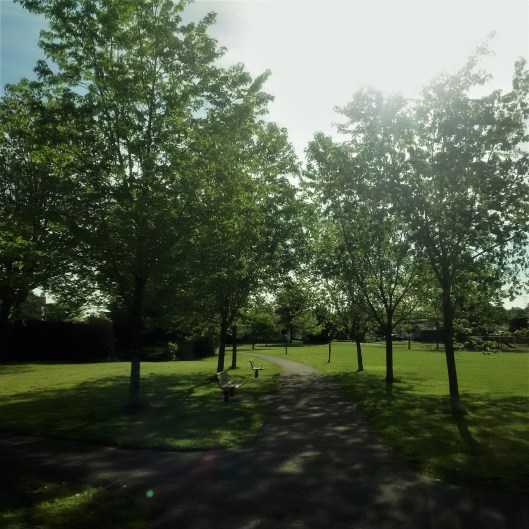
Morning shade, Grey Nuns Park, Orleans, ON — photo by David Kitz
Going without glasses was not an option. I was practically blind without them; everything was a blur.
Today’s reading from Psalm 5 begins with David making this request: Lead me, LORD, in your righteousness because of my enemies—make your way straight before me.
Trust me on this point. If you can’t see clearly, you may need someone to lead you. David recognized his need. Because of his enemies, he needed the LORD to lead him. He knew his enemies were waiting to ambush him at any moment. But where were they? Enemies in hiding are not easily spotted. That’s why like David, we need the LORD. He sees everything.
My greatest enemies are not parading around out in the open. They are lurking within. Pride and selfish ambition come dressed up in various disguises. It’s easy to justify that lingering eye or that wayward glance. Somehow we have 20/20 vision for that sort of thing.
The truth is I too need the LORD to lead me because of the enemies of my soul. How about you? Now here is the outcome we want: But let all who take refuge in you be glad; let them ever sing for joy. Spread your protection over them that those who love your name may rejoice in you.
Response: LORD God, lead me. I can’t see the dangers ahead. Often I am unaware of the enemies that are trying to undermine my life and my love for you. Go before me. Show me the way, Lord Jesus, because you are the way. Amen.
Your Turn: How is your spiritual vision? Can you see the enemies that derail your progress?

