I will praise Him!
-

Skaters on the Rideau Canal beneath the Highway 417 bridge, Ottawa, ON, 02-18-2017, photo by David Kitz

24 Friday Feb 2017
Posted in Friday's Focus, Psalms
Skaters on the Rideau Canal beneath the Highway 417 bridge, Ottawa, ON, 02-18-2017, photo by David Kitz
22 Wednesday Feb 2017
Tags
Creator, identity, Jesus, Ottawa ON, pilgrim, pilgrimage, pilgrims, praise, Rideau Canal, Rideau Canal Skateway, the LORD, worship
Reading: Psalm 134
A song of ascents.
Praise the LORD, all you servants of the LORD
who minister by night in the house of the LORD.
Lift up your hands in the sanctuary
and praise the LORD.
May the LORD bless you from Zion,
he who is the Maker of heaven and earth (NIV).
Reflection
This is the fifteenth and final psalm in the Songs of Ascent series. In reality, this psalm is the pilgrims’ farewell offering of worship to the LORD. After a week or more in Jerusalem, the time has arrived for the pilgrims to return to their homes. But on the evening before they set out on the return journey, they make one last visit to Mount Zion and the great Temple of the LORD. There they lift their hands in praise to the God of Israel. Early next morning, they will begin the arduous journey back home. But for now, it’s time to bless the LORD and offer thanks.

Skaters on the Rideau Canal, Ottawa, ON — photo by David Kitz
It is likely that the twelve-year-old Jesus sang this psalm with his parents on the final evening of their Passover pilgrimage to Jerusalem. On the following day the family departed for Nazareth where Joseph would resume his trade as a carpenter. When they left the next morning, they assumed Jesus was traveling with them in the large company of other pilgrims from their hometown. See Luke 2:41-52.
Typically, we read this account of the lost twelve-year-old Jesus from the viewpoint of a parent. We identify with the stress of losing a child in a big city. We would title this story, “Mary and Joseph find lost Jesus.” But the story reads quite differently, when we view it from the perspective of a child trying to discover who he really is. Viewed from Jesus’ perspective the title of the story might well be, “Lost Boy finds Himself” or “Lost Boy Discovers His Divinity.”
How did Jesus discover he was the son of God? Some believers might well reason that the answer is obvious. Jesus is God; therefore, he is omniscient. The all-knowing Jesus would surely know that he was God’s son. But many theologians would beg to differ. They view the humanity of Christ as all pervasive. Jesus was 100% human and as such he needed to learn and discover his identity even as any child does.
If through the incarnation Jesus fully took on humanity, then the boy Jesus needed to discover his divine identity. It may have been written into every fibre of his being, but he still needed to discover it, just as any young musical prodigy needs to explore and discover his or her gift. All divine gifts must be discovered and developed to reach their maximum potential.
How do we discover our true identity? From the account in Luke, it would appear that the boy Jesus discovered his true identity in the House of God. Perhaps it began as he lifted his hands in worship. We cannot fully discover who we are until we discover who God is. We must know our Creator to know ourselves. Self-understanding begins with knowing whose we are. You and I belong to the Father.
Response: Father God, I thank you for loving me and inviting me into your family. Lord Jesus, thank you for purchasing my redemption. Holy Spirit, I thank you for the confirmation that I am your child. Amen.
Your Turn: Do you know who you are? How is God the Father shaping your identity?
20 Monday Feb 2017
Tags
covenant, David, descendants, God, king, King David, obey, promise, the LORD, Zion
Reading: Psalm 132
(Verses 11-18)
The LORD swore an oath to David,
a sure oath he will not revoke:
“One of your own descendants
I will place on your throne.
If your sons keep my covenant
and the statutes I teach them,
then their sons will sit on your throne for ever and ever.”
For the LORD has chosen Zion,
he has desired it for his dwelling, saying,
“This is my resting place for ever and ever;
here I will sit enthroned, for I have desired it.
I will bless her with abundant provisions;
her poor I will satisfy with food.
I will clothe her priests with salvation,
and her faithful people will ever sing for joy.
“Here I will make a horn grow for David
and set up a lamp for my anointed one.
I will clothe his enemies with shame,
but his head will be adorned with a radiant crown” (NIV).
Reflection
I am an armchair student of history. I enjoy reading history books, particularly books about war and great epic battles. In recent years, several books have appeared on the market, which examine alternate scenarios in history. The authors of these books imagine what might have happened if historic events had unfolded differently. For instance what might have happened if Lee Harvey Oswald’s gun had jammed as he attempted to shoot President Kennedy? How would the Kennedy presidency have unfolded? Or what would the world look like today, if cooler heads had prevailed and the great blood bath known as World War I had been avoided? These are fascinating questions.

Statue of King David, Jerusalem — photo by Lois Morrow
I call these “What if…” books. They imagine history unfolding differently. Today’s reading from Psalm 132 leaves me in a “What if…” frame of mind.
The LORD made this promise to King David: “One of your own descendants I will place on your throne. If your sons keep my covenant and the statutes I teach them, then their sons will sit on your throne for ever and ever.”
God promised that history would unfold in a certain way. A descendant of David would sit on the throne of Israel in perpetuity. But there was a condition attached to that promise. God’s promise would be fulfilled, if the sons of David kept the covenant and the statutes. Unfortunately, that did not happen. The descendants of David disobeyed and succumbed to idolatry. But what if those sons had obeyed…
How will history be different if I wholeheartedly obey the LORD?
Response: Father God, I thank you for your son, Jesus. He is the descendant of King David who fulfilled your covenant and now he reigns forever. King Jesus, I am your servant. Reign in my life today. Amen.
Your Turn: Is Jesus your king? How are you serving him?
17 Friday Feb 2017
Tags
Ark of the Covenant, clothed, David, God, priest, priesthood, Psalms of Ascent, Righteousness, the LORD, worship, Zion
Reading: Psalm 132
(Verses 6-10)
We heard it in Ephrathah,
we came upon it in the fields of Jaar:
“Let us go to his dwelling place,
let us worship at his footstool, saying,
‘Arise, LORD, and come to your resting place,
you and the ark of your might.
May your priests be clothed with your righteousness;
may your faithful people sing for joy.’”
For the sake of your servant David,
do not reject your anointed one (NIV).
Reflection
David’s commitment and zeal for the presence of the LORD drew others to worship God. That’s what the opening lines of today’s reading are saying: We heard it in Ephrathah, we came upon it in the fields of Jaar: “Let us go to his dwelling place, let us worship at his footstool…”
We should never underestimate the power of our personal witness for Christ. Our zeal for God and love for His house can act as a magnet to draw others to worship Him. David’s self-denial in pursuit of God resulted in others discovering the power and grace of the LORD. By bringing the Ark of the Covenant to Zion, the City of David, David was declaring that he wanted the LORD in his home. He wanted Him close at hand—at the center of the government he was establishing over the land. See 2 Samuel 6.
Do we want God in our home? Is the LORD at the command center of your life and your daily affairs? Genuine worship brings God to the center. It removes the distance between us and God.

Clothed in righteousness — Grey Nuns Park, Ottawa, ON
The psalmist goes on to offer this prayer. “‘May your priests be clothed with your righteousness; may your faithful people sing for joy.’”
How are you dressed as you approach God? Apparently, clothing matters. It matters because as a redeemed child of God you are serving as a priest of the Most High. The apostle, Peter reminds us of our corporate calling and responsibility. But you are a chosen people, a royal priesthood, a holy nation, God’s special possession, that you may declare the praises of him who called you out of darkness into his wonderful light (1 Peter 2:9).
So then as priests offering sacrifices of praise, we have an opportunity to approach God. But how should we be clothed, you ask? St. Paul provides the answer. So in Christ Jesus you are all children of God through faith, for all of you who were baptized into Christ have clothed yourselves with Christ (Galatians 3:26-27). As a blood-bought believer you are clothed with the righteousness of Christ.
Response: Father God, I thank you for covering me with a garment of righteousness. It’s the supreme righteousness of Jesus. Help me to serve and worship you daily with a grateful heart. Amen.
Your Turn: Are you drawing near to God? Do you see yourself as part of a royal priesthood?
16 Thursday Feb 2017
Tags
David, Grey Nuns Park, Jesus, Mount Zion, Ottawa, pray, Prayer, Psalms of Ascent, self-denial, Songs of Ascent, stronholds, surrender, the LORD, Zion
Reading: Psalm 132
A song of ascents.
(Verses 1-5)
LORD, remember David
and all his self-denial.
He swore an oath to the LORD,
he made a vow to the Mighty One of Jacob:
“I will not enter my house or go to my bed,
I will allow no sleep to my eyes
or slumber to my eyelids,
till I find a place for the LORD,
a dwelling for the Mighty One of Jacob” (NIV).
Reflection
This is the thirteenth psalm in the Songs of Ascent series. With this psalm, the author returns to a familiar theme—the glory of God’s presence in Zion. It is what has drawn the pilgrims to this holy place. They have come to worship and meet with God.

Icy sunset, Grey Nuns Park, Ottawa, ON — photo by David Kitz
But this psalm has a different approach. It recounts the history of Zion and how this particular place was chosen as the site for Israel to worship God. It all began with David. At the prompting of the LORD, David chose Mount Zion to set up the Tabernacle of the LORD. But before Mount Zion could become a place of worship the stronghold of Zion had to be conquered. It was in enemy hands. Nevertheless, David captured the fortress of Zion—which is the City of David (2 Samuel 5:7).
In this psalm we hear of David’s vow. “I will not enter my house or go to my bed, I will allow no sleep to my eyes or slumber to my eyelids, till I find a place for the LORD, a dwelling for the Mighty One of Jacob”
In David’s case, finding a place for the LORD required self-denial. It involved a physical battle. There is a spiritual battle that we too need to fight so the LORD can occupy His rightful place in our lives. The enemy does not leave the strongholds in our mind without a fight. We must take action to evict him.
We live in a world where self-denial is rare, and often frowned upon. Our society pushes the easy life—the comfortable life—the path of least resistance. Self-denial in pursuit of a relationship with God is a foreign concept. In many churches fasting and prayer is a lost discipline.
Jesus encountered the same problem with his own disciples. While he was praying fervently in the Garden of Gethsemane, his disciples were fast asleep. “Simon,” he said to Peter, “are you asleep? Couldn’t you keep watch for one hour?” See Mark 14:32-42.
This inability to pray for an hour is an indicator that at our core we have not surrendered fully to God. Other things are more important. There is no self-denial. That TV show is more important. The game is more important. Perhaps our Zion is still occupied by the enemy and the LORD is not enthroned there.
Response: LORD God, help me to change. I want to put you first in my life. Come and occupy the throne of my life. I want my thoughts, words and actions to be governed by you, Lord Jesus. Amen.
Your Turn: Do you find self-denial difficult? Do you practice a variety of spiritual disciplines?
14 Tuesday Feb 2017
Tags
Israel, Jesus, Messiah, Prayer, prophetic, redeem, Redeemer, redemption, Savior, the LORD, waiting, waiting on God
Reading: Psalm 130
(Verses 5-8)
I wait for the LORD, my whole being waits,
and in his word I put my hope.
I wait for the LORD
more than watchmen wait for the morning,
more than watchmen wait for the morning.
Israel, put your hope in the LORD,
for with the LORD is unfailing love
and with him is full redemption.
He himself will redeem Israel
from all their sins (NIV).
Reflection
Psalm 130 can be divided into three distinct sections: the confessional approach, the wait, and the LORD’s response. In yesterday’s reading, we looked at the confessional approach. The psalmist came before his God and poured out his heart. In desperation he pleaded for mercy and forgiveness. At the same time he acknowledged the extreme mercy of God. He knows full well that this God forgives the undeserving.

Joy comes in the morning — photo by David Kitz
Now, the psalmist waits: “I wait for the LORD, my soul waits, and in his word I put my hope. My soul waits for the LORD more than watchmen wait for the morning, more than watchmen wait for the morning.”
This is the step that is most frequently missing in our communion with God. We cannot wait; we rush on. We have things to do, people to see, a life to live. We have no time to wait for the LORD’s response. But without waiting, we cannot hear the LORD speaking to our hearts. The rush of life takes over. We do not hear our Savior speak the words of divine pardon. Prayer is reduced to one way communication. We speak into the silence, and allow no time for the God of silence to answer back.
But in his time of silence, the psalmist heard from God. In this third section of the psalm, the author is no longer addressing the LORD in prayer. Now he is addresses us. The wait is over. God has spoken, and now the psalmist rises to his feet. He has a message from the LORD for us—the Israel of God.
Israel, put your hope in the LORD, for with the LORD is unfailing love and with him is full redemption.
For Israel, there was a long wait. The promised Messiah was a long time in coming. The centuries slipped by. Generation after generation passed on, but the word of the LORD stood firm. A Redeemer was coming. With an uncanny accuracy the Old Testament prophets foretold the coming of the Christ. Many of those prophetic words are found in the Psalms. The Lord Jesus is our fount of hope—our Redeemer. He is love and the source of unfailing love. It is he who with his blood redeemed us, body, soul and spirit. In the person of Jesus, God took on human flesh. On the cross he fulfilled these words. “He himself will redeem Israel from all their sins.”
Now that’s a heaven sent valentine!
Response: Father God, I thank you for your prophetic word because it points to Jesus. Lord Jesus, thank you for laying down your life to redeem me, and all those who bow before you in repentance. Amen.
Your Turn: Are you taking time to listen for the voice of God in prayer?
13 Monday Feb 2017
Tags
communion, depths, forgiveness, God, Lake of the Praries, mercy, Psalms of Ascent, sin, the LORD, transgressions
Reading: Psalm 130
A song of ascents.
(Verses 1-4)
Out of the depths I cry to you, LORD;
LORD, hear my voice.
Let your ears be attentive
to my cry for mercy.
If you, LORD, kept a record of sins,
LORD, who could stand?
But with you there is forgiveness,
so that we can, with reverence, serve you (NIV).
Reflection
Psalm 130 is a perfect example of a psalm that brings us into the private inner sanctum of communion with God. Here is a portrait of a fallen man—a man on his knees before his Maker, the eternal One. Hear him now as he agonizes in prayer, “Out of the depths I cry out to you, O LORD; O LORD, hear my voice. Let your ears be attentive to my cry for mercy.”

Sunrise over Lake of the Prairies, MB — photo courtesy of Donald Adam
The opening lines of this psalm leave little doubt as to what has transpired. The psalmist has failed; he has missed the mark. He has transgressed, yet again. There is an abject poverty of spirit reflected in these words—a poverty that almost makes us cringe.
We do not know what sin, or list of sins has brought the psalmist to this wretched state. The transgression is left unstated. Was it anger, malice, or unbridled lust? Was it pride, greed or wilful dishonesty? Was this a transgression of the mind, of the tongue, of action or inaction? God knows.
I am always somewhat skeptical of those who claim they could never commit this or that sin. I think we rarely comprehend the depravity of our own hearts. Pushed into wrong circumstances, in the wrong environment, with the wrong peer group, who can plumb the depths to which a man or woman may sink? I can identify with the psalmist. I have added my own pile of dung to this world’s heap of moral filth. I too have found myself in the psalmist’s position, sobbing out these words, “Out of the depths I cry out to you, O LORD; O LORD, hear my voice. Let your ears be attentive to my cry for mercy.“
But despite my failings, despite my moral poverty, this great God—this God of holiness—is approachable. He is a God of mercy. The psalmist reminds himself and the LORD of His merciful nature with these words: If you, LORD, kept a record of sins, LORD, who could stand? But with you there is forgiveness, so that we can, with reverence, serve you.
I need daily reminders of God’s forgiveness and mercy. God the moral accountant is also the LORD of forgiveness. No one does forgiveness better than God. When we confess our sins, He destroys the record. What accountant does that?
Response: Father God, I thank you for forgiveness. I have failed you many times, but you are rich in mercy. You are a patient God. Thank you for destroying the record of my sins. Amen.
Your Turn: Have you been guilty of digging up the record of your sins—sins that have been forgiven?
12 Sunday Feb 2017
Posted in Psalms, Sunday's Psalm
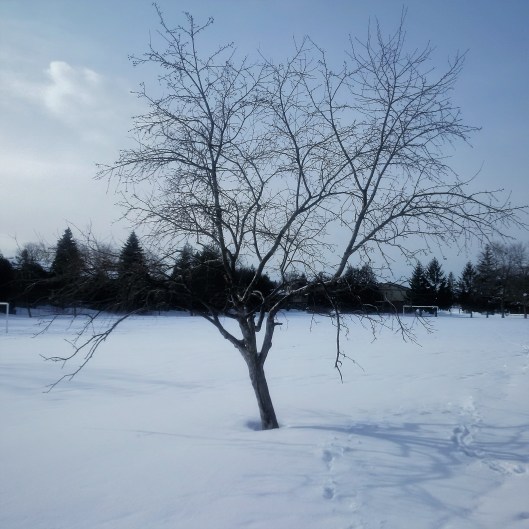
Waiting for spring — photo by David Kitz
07 Tuesday Feb 2017
Tags
Babylonian captivity, fortunes, harvest, Holy Spirit, joy, Lord, MacNutt, restoration, restore, seed planting, tears, the LORD
Reading: Psalm 126
A song of ascents.
When the LORD restored the fortunes of Zion,
we were like those who dreamed.
Our mouths were filled with laughter,
our tongues with songs of joy.
Then it was said among the nations,
“The LORD has done great things for them.”
The LORD has done great things for us,
and we are filled with joy.
Restore our fortunes, LORD,
like streams in the Negev.
Those who sow with tears
will reap with songs of joy.
Those who go out weeping,
carrying seed to sow,
will return with songs of joy,
carrying sheaves with them (NIV).
Reflection
This is a psalm that has two parts—two sharply contrasting perspectives. It begins with jubilation, but it transitions to sober reflection and a prayer for restoration.
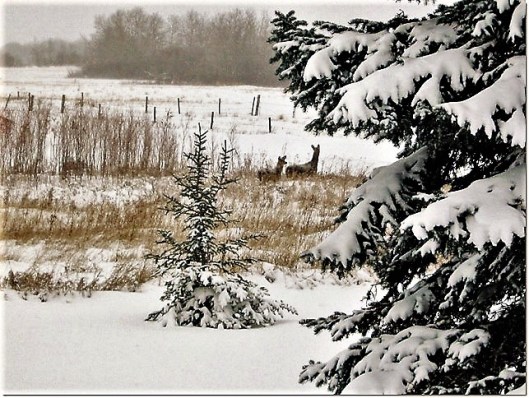
Deer on a snowy day near MacNutt, SK, photo by Char Kitz
The historical context of this psalm is readily identifiable. The psalmist is commenting on the joyous return of the exiles following the seventy-year Babylonian captivity—an event that occurred in the sixth century before the birth of Christ. When the LORD restored the fortunes of Zion, we were like those who dreamed. Our mouths were filled with laughter, our tongues with songs of joy.
The LORD had brought back the people of Israel and they were filled with joy. Have you experienced the glorious liberating power of God in your life? Have you experienced the pure joy of the Lord as you realized your sins are forgiven? And oh joy—this God you serve is as near as your next breath!
I remember a time like that—a time when I was filled with the Holy Spirit. The joy I experienced was so all encompassing that I remember waking in the morning with my face muscles aching because of the smile that had been permanently etched there.
But alas, we can’t live on that mountaintop high forever. In our pilgrimage with God, we eventually reach this line in Psalm 126: Restore our fortunes, LORD, like streams in the Negev. The Negev is the parched desert region to the south of the land of Judah. Streams in the Negev are intermittent. A raging torrent one day becomes a mere trickle on the next day, and then nothing on the third day. The boisterous river of joy turns into a blank line on the desert floor. Then we join with the psalmist and pray. Restore our fortunes, LORD. Our prayer becomes a plea for a return to the joy of harvest.
Response: Father God, I thank you for times of great joy, when we experience your salvation and your felt presence. Help me to sow the seeds of your gospel message today. Amen.
Your Turn: What season are you in? What season is your church in? Is it seed planting time or harvest?
06 Monday Feb 2017
Tags
Hopewell Rocks, immovable, Mount Zion, mountains, peace, permanence, Psalms of Ascent, Songs of Ascent, steadfast, surrounded, the LORD, trust, trust in God
Reading: Psalm 125
A song of ascents.
Those who trust in the LORD are like Mount Zion,
which cannot be shaken but endures forever.
As the mountains surround Jerusalem,
so the LORD surrounds his people
both now and forevermore.
The scepter of the wicked will not remain
over the land allotted to the righteous,
for then the righteous might use
their hands to do evil.
LORD, do good to those who are good,
to those who are upright in heart.
But those who turn to crooked ways
the LORD will banish with the evildoers.
Peace be on Israel (NIV).
Reflection
If someone compared you to a mountain, would you take it as a compliment, or would you be offended? Your answer to that question may depend on your gender. I suspect very few women would like being compared to a mountain. Though I am a male, becoming a mountain of a man has never been one of my ambitions. Nevertheless, Psalm 125 begins by comparing those who trust in the LORD to Mount Zion. Those who trust in the LORD are like Mount Zion, which cannot be shaken but endures forever.

Hopewell Rocks, New Brunswick — photo by David Kitz
This is the sixth psalm in the Songs of Ascent series, and clearly the psalmist is inspired by his surroundings. He beholds the beauty of Jerusalem, its citadels and the mountains around it. There is something reassuring about a mountain. Mountains have stood the test of time. They have endured when human endeavors have come and gone. In a world of transition, the mountains remain; they stand firm.
Are you like a mountain—solid and immovable? You ask—how can I be? Without the LORD, this is truly impossible. But the psalmist provides us with this assurance: As the mountains surround Jerusalem, so the LORD surrounds his people both now and forevermore.
We only have permanence because of the LORD. He has you surrounded. Are you going through hell and high water? He has you surrounded. Are you facing opposition? He has you surrounded. Is there trouble on every side? He has you surrounded. As the mountains surround Jerusalem, so the LORD surrounds his people both now and forevermore.
Again this psalm reassures us that the LORD is on our side. He is working on our behalf. The scepter of the wicked will not remain over the land allotted to the righteous, for then the righteous might use their hands to do evil.
Response: Father God, I trust in you. I trust that you are working on my behalf. Help me to become steadfast, immovable, always abounding in the work of the Lord (1 Corinthians 15:58, NKJV). Amen.
Your Turn: Are you becoming steadfast? Do you have enduring faith?
 I love the Psalms