
Tags
blasphemy, Caesar, crucifixion, James, James the brother of Jesus, Jesus, Jesus' family, Messiah, Paul's epistles, Pilate, proof of the resurrection, resurrection, Scripture, scriptures, the cross, treason
James: the Lynchpin of Our Faith — Chapter 8
The cataclysmic events of Good Friday left a shattered, fragmented family in its wake. On one level James must have felt vindicated. He had rightly assessed the pitfalls and dangers in his elder brother’s radical messianic mission. At times, he may have felt a kind of ‘I-told-you-so’ triumphalism. But there was no joy in it. How could there be? His brother was dead, the family lay in ruins, and the family reputation among the elite of Jewish society was in tatters—totally beyond redemption.
Family reputation meant a great deal to James. Saving face and maintaining family honour has always been of primary significance in Middle Eastern culture. How could James show his face back in Nazareth, knowing that his brother had been crucified for blasphemy and treason?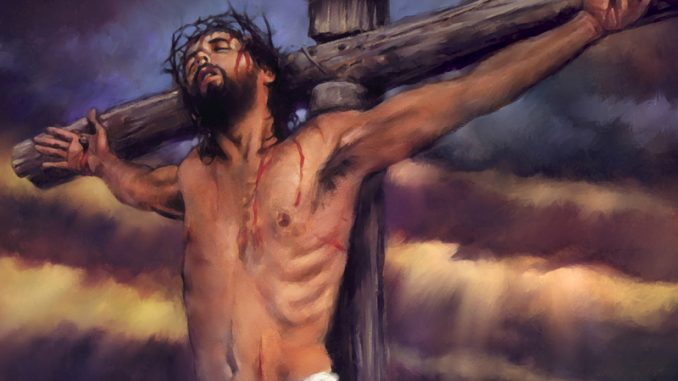
After all, the Sanhedrin had found Jesus guilty of blasphemy. (See Mark 14:61b–64.) From the outset of his ministry Jesus had dared to preach about the emergent kingdom of God (Mark 1:14–15). For the folly of this message he would die. Jesus and his message challenged the authority of Rome. A crown of thorns was Rome’s answer for such audacity. John’s gospel account gives us the clearest picture of how this charge of treason played itself out:
From then on, Pilate tried to set Jesus free, but the Jewish leaders kept shouting, “If you let this man go, you are no friend of Caesar. Anyone who claims to be a king opposes Caesar.”
When Pilate heard this, he brought Jesus out and sat down on the judge’s seat at a place known as the Stone Pavement (which in Aramaic is Gabbatha). It was the day of Preparation of the Passover; it was about noon.
“Here is your king,” Pilate said to the Jews.
But they shouted, “Take him away! Take him away! Crucify him!”
“Shall I crucify your king?” Pilate asked.
“We have no king but Caesar,” the chief priests answered.
Finally Pilate handed him over to them to be crucified. (John 19:12–16)
During the trial Pontius Pilate played his cards shrewdly. In exchange for a guilty verdict, he extracted what he had long wanted from the chief priests: a pledge of fidelity to Rome.

Jesus before Pilate
The humiliation and disgrace of the cross stained a family’s reputation immeasurably. Present day readers may easily underestimate the significance of this humiliation. Crosses adorn churches and are hung on gold chains around our necks. The cross is commonly used as jewelry. For us it has lost its horror. It is a symbol of faith and hope. Not so for the first century citizen of the Roman Empire. For the people of that day, it was viewed with revulsion. They saw it for what it was: a heinous instrument of death.
As the family head, James bore the shame of the cross. His errant bastard brother had brought shame to the family name. Jesus was stripped naked and pinned to a cross along the Roman road into the city. His crime was posted above his head: The King of the Jews. There he hung for all to see—a public spectacle—a living, dying billboard displaying his arrogance and the error of his ways.
It was more than James could bear. Some might understand or sympathize with someone charged with treason against Rome, but blasphemy against God was another matter. It was beyond the pale—an affront to the faith—an affront to the family’s Jewish identity. James could not countenance the thought.
To protect himself and his younger brothers, James took the drastic measure of disowning his mother. The elders in the community of Nazareth already recognized that Mary had conceived Jesus in sin. With Jesus’ trial and crucifixion, the rumours of old gained fresh currency. This child was conceived out of wedlock. He was not the son of Joseph. No son of Joseph would drag the family name through such a slough of infamy. Bad seed brings forth a bad harvest. And this outcome—this public crucifixion—was the ultimate in a bad harvest.
During Jesus’ ministry years, James had done what he could to distance himself from his older brother. Now that Jesus’ renown had turned into shame, he cut the final cord. He repudiated his mother. Surely the synagogue elders in Nazareth would approve of his actions. What else could he do to expunge this stain from the family record?
Three years earlier, after a hostile reception in his hometown, Jesus spoke these words, “A prophet is not without honor except in his own country, among his own relatives, and in his own house” (Mark 6:4, NKJV). Jesus the prophet spoke the truth. His own household rejected him.
As he hung dying, he cried out, “‘Eloi, Eloi, lama sabachthani?’ which is translated, ‘My God, My God, why have You forsaken Me?’” (Mark 15:34b, NKJV)
In his moment of greatest anguish, Jesus was rejected by his earthly family, his disciples had scattered in fear, and apparently even his heavenly Father had abandoned him. The physical torment of the cross was coupled with the torment of utter rejection on every level.

Photo by Pixabay on Pexels.com
James turned his back on his brother—so much for brotherly love. Surely, this was the low point. Between them, things could sink no lower. Does hell have a basement?
And yet… And yet the story does not end there. If we read through the remainder of the New Testament, we discover that James—this same James, the brother of Jesus—becomes a prominent leader in the early church. In fact, he authored a much quoted, canonical book that bears his name. How could this be?
The short answer is because of the resurrection. The resurrection changed everything, including the trajectory of James’ life.
There are certain stories in the New Testament that get a lot of play. By that I mean they are well known. The writer or writers provide the reader with a lot of information. The narrative is rich in detail, and in several instances, particularly in the gospels, we hear the account from various perspectives. The story of Paul’s conversion is told twice in the Book of Acts, for example, and snippets of it can be found in Paul’s epistles.
The conversion of James is not like that. We would know nothing of it except for a cursory mention that appears in Paul’s first letter to the Corinthians. Most casual readers pay little attention to this passing reference. But in accounting for the change in the life of James, this passage has enormous significance.
In Paul’s great defence of the resurrection, he makes this statement:
For what I received I passed on to you as of first importance: that Christ died for our sins according to the Scriptures, that he was buried, that he was raised on the third day according to the Scriptures, and that he appeared to Cephas [Peter], and then to the Twelve. After that, he appeared to more than five hundred of the brothers and sisters at the same time, most of whom are still living, though some have fallen asleep. Then he appeared to James, then to all the apostles, and last of all he appeared to me also, as to one abnormally
born. (1 Corinthians 15:3–7)
The resurrected Christ appeared to James! What an astonishing experience that must have been! It most certainly changed his life—altered his belief system—rattled his cage to the core. James had an encounter with his resurrected brother. For an unbeliever—more than that, an enemy of the gospel message—this can only be a trauma of the highest magnitude.
Imagine the scene for a moment. James is back in Nazareth in his carpentry shop working on some project. Perhaps his head is down, focussed on his work. He looks up and to his astonishment Jesus is there. The brother he believes is dead is standing before him.
Presumably, words are exchanged. What did Jesus say? How did James respond? This side of eternity we will never know the answer, but surely this was the most pivotal event in the life of James. Without question, it was also a pivotal event in the life of the early church.
Did Jesus show James the nail scars in his hands and feet? Did James require visible and tactile proof, as was the case with the apostle Thomas? (See John 20:24–29.) No one knows for sure; the biblical record is silent. What we do know with certainty is that from that moment on James was totally transformed. He was now firmly in the camp of the believers.
In a single encounter, the enmity that tore the family apart was reversed. It takes a miracle to restore a severed relationship. It took a miracle in the order of magnitude of the resurrection to re-establish this poisoned brotherly relationship.
The significance of this turning point should not be underestimated. There is ample evidence to support the concept that the conversion of James shaped not only the history of the early church, but the entire world.
New from David Kitz
James—the brother of Jesus—who was this man? What evidence do we have that this “brother of our Lord” even existed?
David Kitz digs deep into archeology, family dynamics, church history, and the biblical texts. What emerges from his research is a portrait of a decisive, pivotal leader who embodied the will and character of Jesus Christ.
But how did James—James the unbeliever—transform to become a leader who changed the course of world history? In these pages you will uncover the answer and rediscover for yourself the life-changing power of the gospel.
To view further details or purchase directly from the author click here.
 I love the Psalms