Tags
Almighty, dwelling place, God, hunger for God, lovely, praise, the LORD
I will praise Him!
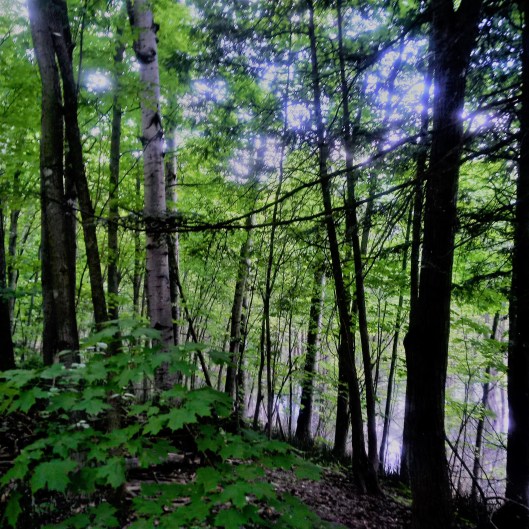
The leafy Courts of the LORD — photo by David Kitz

10 Saturday Jun 2017
Tags
Almighty, dwelling place, God, hunger for God, lovely, praise, the LORD
The leafy Courts of the LORD — photo by David Kitz
09 Friday Jun 2017
Tags
bank executives, caring, corporate titans, God, golden parachutes, political leaders, power brokers, profits, prophet, Psalm, the needy, the poor
Reading: Psalm 12
For the director of music. According to sheminith. A psalm of David.
Help, LORD, for no one is faithful anymore;
those who are loyal have vanished from the human race.
Everyone lies to their neighbor;
they flatter with their lips
but harbor deception in their hearts.
May the LORD silence all flattering lips and every boastful tongue—
those who say,
“By our tongues we will prevail;
our own lips will defend us—who is lord over us?”
“Because the poor are plundered and the needy groan,
I will now arise,” says the LORD.
“I will protect them from those who malign them.”
And the words of the LORD are flawless,
like silver purified in a crucible,
like gold refined seven times.
You, LORD, will keep the needy safe and will protect us forever from the wicked,
who freely strut about when what is vile is honored by the human race (NIV).
Reflection
Who cares for the needy? The corporate titans and bank executives don’t. It seems they are far too busy lining their pockets and preparing their golden parachutes to give a thought or a dollar to low paid employees or the poor. The relentless pursuit of profit trumps all other concerns.

Pine tree path, Orleans, ON — photo by David Kitz
Who cares for the poor? The political leaders and power brokers don’t. When called upon, they mouth meaningless platitudes and profess concern. But policy is dictated by those with fat bank accounts and the right connections. They ensure that very little trickles down to those in need. In their hearts these are those who say, “By our tongues we will prevail; our own lips will defend us—who is lord over us?”
Who cares for the poor and needy? According to the words of this psalm the LORD does. “Because the poor are plundered and the needy groan, I will now arise,” says the LORD. “I will protect them from those who malign them.”
God has always demonstrated concern for the poor. The prophet Amos declared the LORD’s severe judgment on Israel because of their mistreatment of the poor. “For three sins of Israel, even for four, I will not relent. They sell the innocent for silver, and the needy for a pair of sandals. They trample on the heads of the poor as on the dust of the ground and deny justice to the oppressed” (Amos 2:6-7).
Will God judge us for how we treat the poor? Absolutely. God has not changed. He defends the poor and He remains true to His word. The word of the LORD is tried, tested and true. You can count on it.
Response: LORD God, give me a caring heart for those who are poor and oppressed. Help me to demonstrate that care not just in thought but in practical ways. Amen.
Your Turn: What can you do today for someone who is needy or suffering? Let your actions speak.
08 Thursday Jun 2017
Posted in Books by David Kitz, Psalms
Tags
centurion, Christ's Passion, David Kitz, donkey, historic novel, Hosanna, Jerusalem, Jesus of Nazareth, Kregel, palm branches, Passion Week, Passover, Roman centurion, Son of David
It was never like this before.
I have been posted here, in Jerusalem for ten years now, but in all that time I had never seen a Passover crowd like this. It was not the numbers. I had seen that before.
What made the big difference was the person at the center of it all. You see there had never been a central figure before. The Passover pilgrims just came plodding into the city in reverent caravans. Some of them would be chanting psalms. Others were silent; looking bone weary as they trudged, like fretful herdsmen with children in tow. Undoubtedly many were relieved that their holy city was finally in view.
 But, this year it was different. There was this man – at the center of the whole procession. Every movement within that huge throng seemed focused on him.
Squinting in a futile attempt to get a better view, I gave Claudius a backhanded slap to the shoulder and demanded, “What are they doing?”
“They’re climbing the trees, sir.”
“I can see that!” I snapped impatiently, “But what are they doing?”
“They seem to be tearing off the palm branches, sir.”
“What is going on here?” I said it more to myself than to any of the men standing near me. An uncomfortable feeling crept into me as the procession advanced.
“They don’t usually do this?” Claudius questioned.
“No. . . . They’ve never done this before.” There was worry in my voice.
Claudius had been recently assigned to this place, the festering armpit of the Empire, and I was at a loss to explain what was happening before us. We were standing on the wall above the gate of Jerusalem, and there less than a half mile ahead of us, we could see the jubilant pilgrims surging toward us, in numbers that were alarming.
“They’re laying the palm branches on the road in front of that man – the man on the donkey.”
Until Claudius said it, I had not noticed the donkey. Its small size, and the frenzy of activity round about, must have obscured this detail in the picture before me. What an odd way for this man to come? I could make no sense of it.
“They’re throwing down their cloaks before him.”
The sweat-glistened bodies of several men were clearly visible. Outer garments were being cast down as a sign of homage before this man. At the same time the rhythmic chanting of their voices became more distinct.
What were they singing? Could I pick up the words?
“Hosanna to the Son of David!
Blessed is he who comes in the name of the Lord!
Hosanna in the highest!”[i]
That’s when it hit me like a barbarian’s club. I realized what I was witnessing. It was a triumphal entry – the entry of a king.
It was the words. The words they were now boisterously shouting. He was their Messiah. The son of David! The one they were waiting for! The one who would rid them of the Romans. He would set up his glorious Jewish kingdom, here, in Jerusalem! This is what I had been warned about since the day I first set foot on this cursed Judean soil.
And we, I and my men, and the garrison in the city, were all that stood in their way.
This crowd of thousands was sweeping down the Mount of Olives into the Kidron Valley and then on toward us. They advanced like a huge human wave about to collide with the rock hewn palisades on which we stood.
Would they sweep us away?
My initial curiosity had grown into worry. Now in an instant my worry turned to alarm. Instinctively, everything within me shouted, “Stand! Resist! Be a Roman!”
We had soldiers posted all about the city, especially along the pilgrim route. My own hundred men were among the first to be deployed. During Jewish feasts like this we made certain we were highly visible. I dreaded what might happen if this crowd ran wild. Rioting could erupt, and with an impassioned throng such as this riots have a way of quickly turning deadly.
For several moments a debate raged in my mind. Should I order the gate closed to keep this rabble with their pretender king out of the city? Or, should I let everything proceed – let it proceed as though somehow, we had not taken note of what was going on?
“Stand! Ready for orders!” I shouted above the swelling din. The sentinels on the wall snapped to attention.
I hastily scanned the crowd for any sign of weapons, any hint of armed treachery. To my surprise I saw none. They were paying no attention to us. Everyone was caught up with hailing this man, the man on the donkey.
The front edges of the crowd had now reached the first platoon of eight men that I had positioned by the roadside about four hundred yards before the gate. But they ignored them, sweeping past the clump of soldiers, without so much as creating a ripple, like a round stone in a swift flowing stream.
At that moment I knew it made no sense to lower the gate. It would only enrage this crowd that was already fully aroused and moving as one.
Let them come. We’ll handle them and their king inside the city.
Their king. On a donkey. I could only shake my head in disbelief.
I had watched many a triumphal entry, while growing up in Rome, and the conquering hero always rode a gallant war horse. And as a boy, I too had dreams of personal glory. But a donkey? It could only happen here, I thought with an incredulous grin.
I could see him clearly now. Donkey or not, he had the look of a man who knew exactly what he was doing. Those about him might not know, or understand, but he knew. He had a destination in mind, a purpose. You could see it on his face.
“Hosanna to the Son of David!
Blessed is he who comes in the name of the Lord!”
Hosanna in the highest!”
There was something else that was different about him. At the time I did not know what it was. I could not put it into words for a long time. I think I noticed it because I had watched all those other men come into Rome in their triumphal processionals. They were conquerors, but still they were hollow men, feeding off of the adulation of the crowd, thirsting but never satisfied. You could see them vainly drink it in, hoping it would somehow fill the empty soul.
He was not drinking from the crowd. I somehow sensed he was full already, and what he had within, must have come from a different source.
“Hosanna in the highest!
Hosanna to the Son of David!
Blessed is he who comes in the name of the Lord!”
Just at that moment a strange feeling seemed to rise within me. Maybe it was the joy of the crowd. I had expected anger. Maybe it was the children waving the palm branches, or the spontaneity of the singing? I don’t know. For one moment it all seemed to come together. It seemed right somehow. Like heaven and earth had finally, for a moment, come into agreement – an agreement that had never been achieved before.
“Hosanna in the highest!”
He was much closer now.
“Hosanna to the Son of David!”
He was now within the shadow of the gate.
“Blessed is he who comes in the name of the Lord!”
At that moment he looked up. For an instant our eyes met. Then I heard a voice – clearly heard a voice say, “I have a future for you.”
I was confused.
I turned to Claudius and said, “What did you mean by that?”
“What did I mean by what?” He had a blank look on his face.
“By what you said about – about the future?”
“I didn’t say anything about the future, Sir. I didn’t say anything.”
Now I was totally baffled. Was I hearing voices? This whole thing was making no sense, no sense at all. Passover pilgrims are not supposed to come into the city this way. We’ve got a revolutionary on the loose – riding a donkey. And now I’m hearing things?
I rubbed the sweat from my forehead, hoping for some clarity to emerge out of all this.
I had a hundred men whose lives were in danger from this Jewish messiah, and his horde of followers. That’s what mattered now.
By this time the donkey man had passed under the gate and was heading in the direction of the temple in the heart of the city.
I signaled for Claudius to follow, as I raced down the stairs of the gatehouse. As I emerged onto the street, I grabbed the first two-legged bit of Jewish scum I saw. Pressing him against the stone wall I demanded, “Who is that man?” At the same time I pointed at the retreating figure on the donkey.
The poor wretch was in shock and seemed quite unable to get out a word.
Claudius reached for his sword.
“Je – Jesus of Nazareth!” He stammered and then quickly added, “The prophet from Nazareth in Galilee.”
I loosened my grip. Then in a voice loud enough for all near to hear I announced, “Well there is one thing I do know. We’re going to have to keep an eye on that man.”
08 Thursday Jun 2017
Tags
armor of God, attack, Bible, David, David and Goliath, faith, foundation, God, Goliath, memory bank, myths, ridicule, righteous, the LORD
Reading: Psalm 11
For the director of music. Of David.
In the LORD I take refuge.
How then can you say to me:
“Flee like a bird to your mountain.
For look, the wicked bend their bows;
they set their arrows against the strings
to shoot from the shadows at the upright in heart.
When the foundations are being destroyed,
what can the righteous do?”
The LORD is in his holy temple; the LORD is on his heavenly throne.
He observes everyone on earth; his eyes examine them.
The LORD examines the righteous,
but the wicked, those who love violence,
he hates with a passion.
On the wicked he will rain fiery coals and burning sulfur;
a scorching wind will be their lot.
For the LORD is righteous, he loves justice;
the upright will see his face (NIV).
Reflection
Do you feel like your faith is under attack? It seems that everywhere there are people who are mocking those who have faith in God. Believers are openly ridiculed. We are blamed for every war since time immemorial. We are told that science has rock-solid evidence, while God followers rely on concocted myths handed down by unscrupulous manipulators.

Backyard iris — photo by David Kitz
The enemy is firing arrows of accusation, doubt and distrust from the shadows at the upright in heart. The very foundation of our faith, the word of God—the Bible—is being attacked as outdated, unreliable and historically inaccurate. Along with David we ask, “When the foundations are being destroyed,
what can the righteous do?”
The righteous can do what David does in the first line of this psalm. David says, “In the LORD I take refuge.” For David, God was not a mystical concept. God was a rock solid reality. David had a memory bank full of experiences with the LORD. The LORD was David’s helper, healer and deliverer. In the tough times of life, God was there—was present in David’s life. The LORD brought victory for David over Goliath and over every enemy that exalted itself above God.
The same can be true for you. Put on the full armor of God, so that you can take your stand against the devil’s schemes (Ephesians 6:11). Remember the LORD is on his heavenly throne. Nothing takes Him by surprise. The LORD is with you and He is watching your response. We need not be intimidated; we need not flee. We need to stand our ground like David and like Paul the apostle. The LORD is with us.
Response: LORD, you are my refuge. Help me to stand my ground when my faith is under attack, and help other believers to do the same by the grace of Jesus. Amen.
Your Turn: Do you have a memory bank full of experiences with the LORD that you can draw on?
07 Wednesday Jun 2017
Tags
absent fathers, economic, fatherless, fathers, gender, God, prisons, public school teacher, social, the LORD, well-fathered child
Reading: Psalm 10
Verses 12-18
Arise, LORD! Lift up your hand, O God.
Do not forget the helpless.
Why does the wicked man revile God?
Why does he say to himself,
“He won’t call me to account?”
But you, God, see the trouble of the afflicted;
you consider their grief and take it in hand.
The victims commit themselves to you;
you are the helper of the fatherless.
Break the arm of the wicked man;
call the evildoer to account for his wickedness
that would not otherwise be found out.
The LORD is King forever and ever;
the nations will perish from his land.
You, LORD, hear the desire of the afflicted;
you encourage them, and you listen to their cry,
defending the fatherless and the oppressed,
so that mere earthly mortals will never again strike terror (NIV).
Reflection
From the beginning, it has always been so. At the start of life there is a father. Without a father there is no life. Ponder those words for a moment.
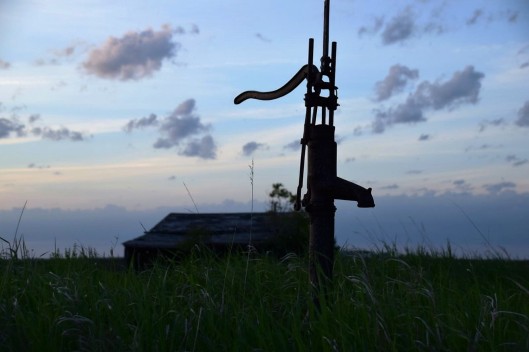
Old hand pump near MacNutt, SK — photo by Donald Adam
Of course those words are true of a mother as well. But today’s psalm focusses on fathers. To be more accurate, the psalmist calls attention to the fatherless. Apparently, fathers aren’t just needed at the beginning of life; they are needed throughout life.
There are voices in our society that question the need for fathers. Life can go on without them. In some cases, life is better without them. But I would argue that that’s not life as life should be—as life was designed to be from the beginning. Our prisons are filled with fatherless men. A huge chunk of the misery, distress and degradation in this world is caused by the absence of fathers—men who fail to assume their role as fathers.
A good father—an active, involved father—makes a world of difference in the life of a child. As a public school teacher I saw the truth of this every day. The well-fathered child of either gender has advantages beyond compare on every social, economic and intellectual scale. We need fathers. I need a father—a perfect Father.
That’s why we can draw comfort and encouragement from this psalm. Twice the LORD promises to be a helper and defender of the fatherless. Jesus came to introduce us to our Father—a Father who cares.
Response: LORD God, father me. Thank you for caring. Help me become the father I need to be. Amen.
Your Turn: Has your father made a difference in your life for good or bad? Are you being Fathered?
06 Tuesday Jun 2017
Posted in Books by David Kitz, Psalms
Tags
Barry Buzza, David Kitz, donkey, eyewitness, Foursquare Church, geopolitical center, kingdom, pagan, religious bigots, Roman centurion, Roman tyranny, soldier, tyranny
What would it have been like to live in the geopolitical center of the first-century world, when donkeys and camels were the cars and trucks, conversations over goblets of wine were the social media, and religious conflict influenced every facet of life? What would it have been like to live under the pagan, political domination of Roman tyranny, while also under the oppressive ritualistic control of hypocritical religious bigots? What would it have been like to live in the very week that this dark, confused world was invaded by heaven—a week when history shifted from BC to AD?
 This gripping story offers its readers a front-row seat from which we can view the action. It’s a hidden camera on the helmet of a primary witness of the history-altering drama when the Sovereign of the Universe, quietly riding a lowly donkey, overthrew the pomp and dominion of the most powerful kingdom this world had ever known. More than that, it’s a look into the mind and heart of a man, not unlike you or me, who wrestled with the meaning and purpose of life.
As you read the thoughtful eyewitness account of Marcus Longinus, the Roman centurion, the soldier who killed a king, you’ll feel his anxiety and anguish as well as exult in his ultimate answers because—despite the differences of time and culture—his story is our story.
Dr. Barry Buzza
President Emeritus
Foursquare Gospel Church of Canada
For the month of June The Soldier Who Killed a King is available for preorder from Kregel Publishing for the early bird price of $10.99. The worldwide release date is July 25th.
Place your order today: http://www.kregel.com/fiction/the-soldier-who-killed-a-king/
06 Tuesday Jun 2017
Tags
Bethlehem, Christ's birth, Christmas, Jesus, magi, Savior, seeking God, the LORD, wicked
Reading: Psalm 10
Verses 1-4
Why, LORD, do you stand far off?
Why do you hide yourself in times of trouble?
In his arrogance the wicked man hunts down the weak,
who are caught in the schemes he devises.
He boasts about the cravings of his heart;
he blesses the greedy and reviles the LORD.
In his pride the wicked man does not seek him;
in all his thoughts there is no room for God (NIV).
Reflection
As I write these thoughts on Psalm 10, we are a long way from Christmas. But there is a line in today’s reading that has me thinking about the Christmas season.

Take time to seek God — photo by David Kitz
The author of this psalm is describing the heart of those who are far from God. “In his pride the wicked man does not seek him; in all his thoughts there is no room for God.”
For many the celebration of Christ’s birth has become nothing more than a commercial bonanza completely devoid of any spiritual meaning. For them it is nothing more than a buying and selling frenzy—a pursuit of trinkets signifying nothing—nothing of eternal value.
No matter the season, we too can fall into a trap. Rather than seeking the LORD, we can find ourselves boasting about the cravings of our heart. As the psalmist says, we bless the greedy and in so doing, we revile the LORD.
No room for God… in today’s world? In a perverse way it seems rather appropriate. There was no room for God in Bethlehem on the night Jesus was born. No room for God… no room for the Maker and Savior of the universe! That sounds insane, but then it seems we live in a world gone mad.
For you and me, it doesn’t have to be that way. While there was no room for God incarnate in Bethlehem, the magi were busy seeking Him. Regardless of the season, you and I can set our hearts to be God seekers.
Response: Jesus, I seek after you. Open my eyes to see you at work today. Show up in my world today. I wait expectantly for you. Amen.
Your Turn: Have you seen Jesus in others? How can you seek God this week?
05 Monday Jun 2017
Tags
affliction, Blame, David, enemies, God's goodness, hope, justice, needy, persecution, praise, the LORD, trouble
Reading: Psalm 9
Verses 11-20
Sing the praises of the LORD, enthroned in Zion;
proclaim among the nations what he has done.
For he who avenges blood remembers;
he does not ignore the cries of the afflicted.
LORD, see how my enemies persecute me!
Have mercy and lift me up from the gates of death,
that I may declare your praises in the gates of Daughter Zion,
and there rejoice in your salvation.
The nations have fallen into the pit they have dug;
their feet are caught in the net they have hidden.
The LORD is known by his acts of justice;
the wicked are ensnared by the work of their hands.
The wicked go down to the realm of the dead, all the nations that forget God.
But God will never forget the needy; the hope of the afflicted will never perish.
Arise, LORD, do not let mortals triumph;
let the nations be judged in your presence.
Strike them with terror, LORD;
let the nations know they are only mortal (NIV).
Reflection
If only life was easy; if only life was just and fair! But it isn’t. Life is filled with struggles and difficulties. I’m not always treated fairly, nor are you. Here in this psalm David cries out, “LORD, see how my enemies persecute me!” You can sense the frustration in his voice. Though these words are not recorded, in the midst of his troubles he might have added, “This isn’t fair, LORD. You aren’t being fair!”
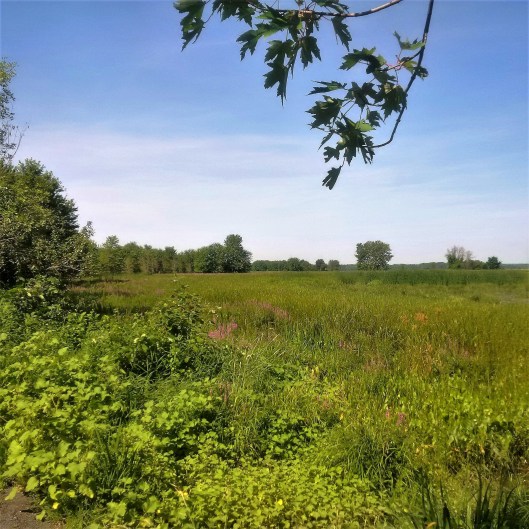
Sing the praises of the LORD — photo by David Kitz
But David doesn’t say that. He assigns blame where blame is due. He blames his troubles on his enemies—his human oppressors—not on the LORD. By way of contrast, David has nothing but praise for the LORD. He declares, “Sing the praises of the LORD, enthroned in Zion; proclaim among the nations what he has done.”
If the source of your affliction is human, why are you blaming God for it? We need to always keep this statement in mind. The LORD is known by his acts of justice. In this life we may not always see His justice prevail, but rest assured on that great final Day, He will prevail. Ultimately, His justice will be seen and known by all.
In times of trouble God is our source of help and strength. Human help may fail us. Friends may let us down. We can wrongly blame the LORD for our troubles, or we can run to Him for help. In all our troubles, we must keep this promise in mind: God will never forget the needy; the hope of the afflicted will never perish.
Response: LORD, in times of trouble, you are my help. I lay my troubles and my requests before you. I wait expectantly for you. I praise you for your goodness to me even in difficult times. Amen.
Your Turn: Have you been blaming God rather than thanking Him? Take some time to praise Him.
04 Sunday Jun 2017
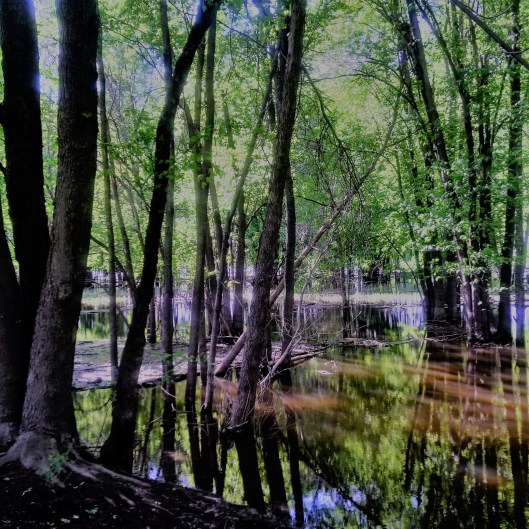
Still water, reflected glory, Ottawa River flood plain, Orleans, ON — photo by David Kitz
03 Saturday Jun 2017
Tags
David Kitz, enemies, foes, honey, Ottawa River, punishment, Rock, satisfaction, the LORD, wheat

Ottawa River backwaters — photo by David Kitz
 I love the Psalms