• Home
  • About
  • DavidKitz.ca
  • Youtube Videos
  • Books by David
  • Books on Amazon.com

I love the Psalms

~ Connecting daily with God through the Psalms

I love the Psalms

Category Archives: Devotionals

Why did the Mountains Leap?

23 Wednesday Oct 2019

Posted by davidkitz in Devotionals, Psalm 114, Psalms

≈ Leave a comment

Tags

Egypt, Israel, kingdom, salvation

Reading: Psalm 114
When Israel came out of Egypt,
Jacob from a people of foreign tongue,
 Judah became God’s sanctuary,
Israel his dominion.
The sea looked and fled,
the Jordan turned back;
the mountains leaped like rams,
the hills like lambs.
Why was it, sea, that you fled?
Why, Jordan, did you turn back?
Why, mountains, did you leap like rams,
you hills, like lambs?
Tremble, earth, at the presence of the Lord,
at the presence of the God of Jacob,
who turned the rock into a pool,
the hard rock into springs of water
(NIV).

img_20191003_1227248

Northern Ontario marsh and woodlands — photo by David Kitz

Reflection
“Why?” A four-year-old’s favourite question is, “Why?” Here in Psalm 114, the psalmist has some why questions as well. “Why did the sea flee? Why did the Jordan River turn back? Why did those mountains and hills seem to skip and dance? Why?”

The answer of course is because of the jaw-dropping, eye-popping, heart-stopping power of God. God caused the sea to flee. He caused the Jordan to turn back. He caused mountains and hills to skip about and frolic like yearling lambs set free from the stall. What an awesome display! What an awesome God!

Psalm 114 is all about the overwhelming power of God. It is a grand portrayal of the pivotal event in the Old Testament Scriptures. Here within a few short verses we catch a panoramic view of God’s might on display, starting with Israel’s escape from Egypt, to their arrival in the Promised Land. 

Why did the miracle-working LORD make the sea flee? Was it simply to display His awe-inducing power? Was it simply to create excitement among the million or more mortals, who were eyewitnesses to this divine wonder? In the Exodus account, the reason for this miraculous intervention is stated clearly: That day the LORD saved Israel from the hand of the Egyptians, and Israel saw the Egyptians lying dead on the shore. And when the Israelites saw the great power of the LORD displayed against the Egyptians, the people feared the LORD and put their trust in him and in Moses his servant (Exodus 14:30-31).

This power display had one primary purpose. That purpose was salvation. The LORD wanted to save people—His covenant people—from the vicious clutches of oppression and a tyranny. In short, the LORD works wonders so that He can save people—so He can bring them into His Kingdom—so they can escape the sin systems of this world, and come under His loving rule. 

Response: Father God, thank you for going all out to save me through the death and resurrection of your Son, Jesus. What a display of your love and power! Help me to love, fear and trust you. Amen.

Your Turn: Why did God save you? Is there a reason for His mercy?

Stooping Down

22 Tuesday Oct 2019

Posted by davidkitz in Devotionals, Psalm 113, Psalms

≈ 2 Comments

Tags

disobedience, Psalm, the needy, the poor

Reading: Psalm 113
Praise the LORD.
Praise the LORD, you his servants;
praise the name of the L
ORD.
Let the name of the L
ORD be praised,
both now and forevermore.
 From the rising of the sun to the place where it sets,
the name of the L
ORD is to be praised.
The LORD is exalted over all the nations,
his glory above the heavens.
Who is like the L
ORD our God,
the One who sits enthroned on high,
who stoops down to look on the heavens and the earth?
He raises the poor from the dust
and lifts the needy from the ash heap;
he seats them with princes, with the princes of his people.
He settles the childless woman in her home
as a happy mother of children.
Praise the LORD (NIV).

effects-1

From the rising of the sun — photo by David Kitz

Reflection
In today’s reading the psalmist has a question for you and here it is: Who is like the LORD our God, the One who sits enthroned on high, who stoops down to look on the heavens and the earth?

Who indeed? Why would the exalted One, the enthroned One, stoop down? How undignified! Doesn’t the LORD know that kings and potentates don’t bend over or stoop down? They certainly don’t do that sort of thing in public—not where they can be seen by others. Rulers rule from the seat of authority. They sit; they don’t stoop down. But our God stoops down. If the truth be told, it’s even worse than that.

The LORD gets His hands dirty. Actually, He has been getting His hands dirty from the very beginning. The LORD God formed a man from the dust of the ground and breathed into his nostrils the breath of life, and the man became a living being (Genesis 2:7). Now that was a failed experiment, if there ever was one. Those living, breathing dust bags showed no gratitude. They disobeyed God at the first opportunity and down through the generations, humanity has continued that pattern of disobedience. 

Now in this psalm we read this: He raises the poor from the dust and lifts the needy from the ash heap. Why would God show such affection for fallen humanity—humans who keep plunging deeper into the mire? There is no greater mystery. Our God keeps finding treasures in the trash—the human trash.

Still I keep wondering why anyone would stoop so low. Why would the One, who sits enthroned on high, stoop so low to rescue a deeply flawed human like me?

Response: Father God, your love is beyond comprehension. Thank you for stooping down and involving yourself in my life. When I reach out to you, Father God, you lift me up. I praise you, LORD, for your undeserved love. Amen.

Your Turn: Has the LORD lifted you from the ash heap? How did that make you feel?

In Darkness Light Dawns for the Upright

21 Monday Oct 2019

Posted by davidkitz in Devotionals, Psalm 112, Psalms

≈ Leave a comment

Tags

blessed, blessings, fearing God, generous

Reading: Psalm 112
Praise the LORD.
Blessed are those who fear the LORD,
who find great delight in his commands.
Their children will be mighty in the land;
the generation of the upright will be blessed.
Wealth and riches are in their houses,
and their righteousness endures forever.
Even in darkness light dawns for the upright,
for those who are gracious and compassionate and righteous.
Good will come to those who are generous and lend freely,
who conduct their affairs with justice.
Surely the righteous will never be shaken; they will be remembered forever.
They will have no fear of bad news;
their hearts are steadfast, trusting in the L
ORD.
Their hearts are secure, they will have no fear;
in the end they will look in triumph on their foes.
They have freely scattered their gifts to the poor,
their righteousness endures forever;
their horn will be lifted high in honor.
The wicked will see and be vexed,
they will gnash their teeth and waste away;
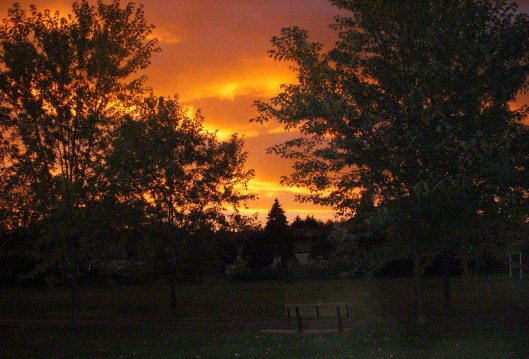
the longings of the wicked will come to nothing
(NIV).

553

Even in darkness light dawns for the upright — photo by David Kitz

Reflection
Is there a blessing to be had for those who fear the LORD? Absolutely yes, according to Psalm 112! When we put the LORD first in our lives and honor Him in all we say and do, He takes note. Blessings come from the LORD. Those blessings can come in various forms.

The psalmist begins by speaking of the blessing that flows to our children. A home where the love of God reigns is blessed indeed. Children grow up in a secure environment with loving role models and that sets the stage for their advancement as adults in society. The psalmist asserts the generation of the upright will be blessed. 

Are you finding great delight in the LORD’s commands? There are consequences for that. You may be blessed with wealth and riches as a result. Fearing God brings a reward, but that reward must be used wisely in the service of God and others. Good will come to those who are generous and lend freely, who conduct their affairs with justice.

But this psalm does not promise us a trouble-free life. Though bad news may come, those who fear God will trust in Him and overcome adversity. Even in darkness light dawns for the upright. Their hearts are secure, they will have no fear; in the end they will look in triumph on their foes. 

Response: Father God, I thank you for every blessing that comes from fearing you and living uprightly. When my way seems dark, shine your light on me. Lead me forward in the way of Christ. Amen.

Your Turn: Have you experienced God’s blessing? Which blessings do you value most?

The Starting Point for Wisdom

18 Friday Oct 2019

Posted by davidkitz in Devotionals, Psalm 111, Psalms

≈ 1 Comment

Tags

fear of God, fearing God, love for God, wisdom

Reading: Psalm 111
Praise the LORD!
I will give thanks to the L
ORD with my whole heart,
in the company of the upright, in the congregation.
Great are the works of the L
ORD, studied by all who delight in them.
Full of honor and majesty is his work,
and his righteousness endures forever.
He has gained renown by his wonderful deeds;
the L
ORD is gracious and merciful.
He provides food for those who fear him; he is ever mindful of his covenant.
He has shown his people the power of his works,
in giving them the heritage of the nations.
The works of his hands are faithful and just; all his precepts are trustworthy.
They are established forever and ever,
to be performed with faithfulness and uprightness.
He sent redemption to his people; he has commanded his covenant forever.
Holy and awesome is his name.
The fear of the L
ORD is the beginning of wisdom;
all those who practice it have a good understanding.
His praise endures forever
(NIV).

img_20181014_1242127

Rockcliffe Park, Ottawa, ON — photo by David Kitz

Reflection
If the beginning of wisdom is the fear of the LORD, what is the end point or objective of this inducement to wisdom? I have often heard it argued that the fear of the LORD, which is frequently extolled in the Old Testament, has little to do with the common meaning for fear. We are to reverence or be in awe of the LORD, not be afraid of Him. To an extent this is true; however, I suspect that we often push this fearless approach to God too far. The Lion of the Tribe of Judah is not toothless. He has fangs and claws.

A healthy dose of godly fear can prevent a massive case of sin enslavement and heartache.

The reaction of God’s people when the Ten Commandments were given at Mount Sinai is well worth noting. When the people saw the thunder and lightning and heard the trumpet and saw the mountain in smoke, they trembled with fear. They stayed at a distance and said to Moses, “Speak to us yourself and we will listen. But do not have God speak to us or we will die” (Exodus 22:18-19).

The very human fear expressed in this Exodus passage went well beyond a sense of awe and wonder. This was knee-buckling, heart-racing fear—the kind of fear that makes us dread doing anything that might offend this all-knowing, all-seeing, holy God. That’s a healthy fear—a fear that helps us to live and walk straight. Why would God want to induce this kind of fear?

God wants us to fear Him because He loves us. He wants to spare us from the agony of the terrible consequences of sin. A healthy fear of God leads us to an awe-induced love for Him. Now that’s wisdom.

Response: Father God, help me see your love for me in your commandments. In love, you correct me when I stray. Grant me understanding that comes through a healthy fear and love for you. Amen.

Your Turn: What does fearing God mean to you? Is God your chum, your friend or your master?

My Messiah

17 Thursday Oct 2019

Posted by davidkitz in Devotionals, Psalm 110, Psalms

≈ Leave a comment

Tags

Lord, Messiah, messianic psalm, Yahweh

Reading: Psalm 110
Of David. A psalm.
The LORD says to my Lord:
“Sit at my right hand until I make your enemies a footstool for your feet.”
The LORD will extend your mighty scepter from Zion, saying,
“Rule in the midst of your enemies!”
Your troops will be willing on your day of battle.
Arrayed in holy splendor,
your young men will come to you
like dew from the morning’s womb.
The LORD has sworn and will not change his mind:
“You are a priest forever, in the order of Melchizedek.”
The Lord is at your right hand;
he will crush kings on the day of his wrath.
He will judge the nations, heaping up the dead
and crushing the rulers of the whole earth.
He will drink from a brook along the way,
and so he will lift his head high
(NIV).

img_20181023_1153130

Grey Nuns Park, Orleans. ON — photo by David Kitz

Reflection
Psalm 110 is perhaps the most messianic psalm in the entire psalter. Jesus made a direct reference to the opening line of this psalm in a discussion he had with the Pharisees in the temple courts during the week of his crucifixion. See Matthew 22:41-46 and Luke 20:41-44.

Jesus asks, “What do you think about the Messiah? Whose son is he?” In response the Pharisees answer, “The son of David.”

But Jesus refutes their answer by quoting from Psalm 110. His answer does not carry the same punch in the English language quote we see in Matthew, because we fail to see the distinction between the first ‘LORD’ and the second ‘Lord’. We see these words as synonymous, but in the original Hebrew they most certainly are not. The first LORD is Yahweh (Jehovah), but the second Lord is Adonai, the Messiah.

Speaking prophetically by the Spirit, David was referring to his Adonai—his Messiah. By quoting this scripture Jesus was affirming his designation by God as the Messiah that the Jewish nation had longed to see. The long wait was over. Jesus the Messiah was standing directly in front of Pharisees who were blind to his presence and his deity.

This Lord or Adonai is also the divinely designated priest who will present his own body as a sacrifice on the cross. The LORD has sworn and will not change his mind: “You are a priest forever, in the order of Melchizedek.” The writer of the Book of Hebrews has a great deal to say about the priesthood of Melchizedek. See Hebrews chapters 6-8. Jesus is our heaven-sent, born-in-a-stable prophet, priest and king.   

Response: Father God, thank you for sending Jesus into the world to be my personal Messiah. Jesus, you suffered and died for me. Now extend your reign as conquering king over me and through me. Amen.

Your Turn: Have you bowed your knee before the Messiah King?

The Wounded Warrior

16 Wednesday Oct 2019

Posted by davidkitz in Devotionals, Psalm 109, Psalms

≈ 1 Comment

Tags

confession, Prayer, PTSD, warrior, wounded

Reading: Psalm 109  
(Verses 21-31)
But you, Sovereign LORD, help me for your name’s sake;
    out of the goodness of your love, deliver me.
For I am poor and needy, and my heart is wounded within me.
 I fade away like an evening shadow;
    I am shaken off like a locust.
My knees give way from fasting; my body is thin and gaunt.
I am an object of scorn to my accusers;
    when they see me, they shake their heads.
Help me, LORD my God; save me according to your unfailing love.
Let them know that it is your hand, that you, LORD, have done it.
While they curse, may you bless;
    may those who attack me be put to shame,
    but may your servant rejoice.
May my accusers be clothed with disgrace
    and wrapped in shame as in a cloak.
With my mouth I will greatly extol the LORD;
    in the great throng of worshipers I will praise him.
For he stands at the right hand of the needy,
to save their lives from those who would condemn them (NIV).

img_20190927_1249048

Étienne Brûlé Lookout, Gatineau Park, QC — photo by David Kitz

Reflection
Post-traumatic stress disorder—PTSD—its effects are real. Soldiers are returning from theaters of war looking fit and healthy, but in reality they are deeply wounded by what they have seen or participated in. Of course one does not need to go to the battle field to experience the devastating effects of PTSD. First responders and witnesses to horrific events here at home can also become wounded and scarred.

In this concluding portion of Psalm 109, David makes this confession: I am poor and needy, and my heart is wounded within me. 

Our world is full of wounded people. Keep this in mind the next time you see someone in a fit of rage or self-medicating with a bottle of booze or pills or a hypodermic needle. The wounds are real. The way back to social and emotional health is often long, difficult and fraught with pain. Set backs are not uncommon.

David, the wounded warrior, does two things that are vital for anyone who wants to recover from PTSD or any form of spiritual wounding. He admits his need. Rather than remain silent and tough it out, he confesses that he is in a desperate state. I am poor and needy, and my heart is wounded within me.

Secondly, David called out to the LORD. Help me, LORD my God; save me according to your unfailing love. The LORD’s ears are always open to that kind of prayer—the prayer of the wounded. 

Response: LORD, I confess events in my life have left me wounded. Heal me on the inside. Today I turn to you. I can’t do this by myself. Help me, LORD my God; save me according to your unfailing love. Amen.

Your Turn: Are there wounded people in your life? Have you been wounded?

Tightfisted or Generous

15 Tuesday Oct 2019

Posted by davidkitz in Devotionals, Psalm 109, Psalms

≈ 2 Comments

Tags

blessing, cursing, generosity, generous, giving

Reading: Psalm 109
(Verses 16-20)
For he never thought of doing a kindness,
but hounded to death the poor
and the needy and the brokenhearted.
He loved to pronounce a curse—
may it come back on him.
He found no pleasure in blessing—
may it be far from him.
He wore cursing as his garment;
it entered into his body like water,
into his bones like oil.
May it be like a cloak wrapped about him,
like a belt tied forever around him.
May this be the LORD’s payment to my accusers,
to those who speak evil of me
(NIV).

img_20190927_1218154

Champlain Lookout toward the Ottawa River — photo by David Kitz

Reflection
In just a few months we will be entered the giving season. I am of course referring to the pre-Christmas shopping binge, when gifts are purchased, wrapped and hidden away for the big celebration. Many rail against this tradition, but in reality the scriptures are filled with admonitions that encourage us to be generous and bless others. Christmas and year-end provide us with wonderful opportunities to do just that. A generous person will prosper; whoever refreshes others will be refreshed (Proverbs 11:25).

If we find no pleasure in giving, we may be suffering from more than a simple case of Scrooge-like stinginess. Soul sucking self-centeredness destroys us from within. It defaces the image of God that is stamped upon us from birth. God our heavenly Father is the picture of generosity. He gave His only Son for us. In light of this sacrifice, there’s something terribly wrong if we can’t spare a dime or a kind word for the less fortunate. Generosity is never out of season.

Today’s reading provides us with a negative contrast to the generosity of God. The individual being described withheld his blessing. He loved to pronounce a curse—may it come back on him. He found no pleasure in blessing—may it be far from him. 

How generous am I with words of blessing? How generous am I with this world’s goods that have been lavished on me by a gracious Father? Now and in pre-Christmas season I need to check my heart and my bank account, but above all my heart. Remember this: Whoever sows sparingly will also reap sparingly, and whoever sows generously will also reap generously (2 Corinthians 9:6).

Am I generous with words of praise and thanks for those around me—with the clerk at the shopping mall or the life partner who shares my bed? Am I reflecting or defacing the image of God? 

Response: Father God, today I want to be a blessing and pronounce a blessing on those around me. Over the years others have blessed me. I am thankful for them, and the generosity of your love, forgiveness and grace. It’s far more than I deserve. Amen.

Your Turn: Are you too tightfisted or too lavish with your giving?

What is an Imprecatory Psalm?

14 Monday Oct 2019

Posted by davidkitz in Devotionals, Psalm 109, Psalms

≈ 7 Comments

Tags

compassion, curses, cursing, wisdom

Reading: Psalm 109
(Verses 6-15)
Appoint someone evil to oppose my enemy;
let an accuser stand at his right hand.
When he is tried, let him be found guilty,
and may his prayers condemn him.
May his days be few;
may another take his place of leadership.
May his children be fatherless and his wife a widow.
May his children be wandering beggars;
may they be driven from their ruined homes.
May a creditor seize all he has;
may strangers plunder the fruits of his labor.
May no one extend kindness to him
or take pity on his fatherless children.
May his descendants be cut off,
their names blotted out from the next generation.
May the iniquity of his fathers be remembered before the L
ORD;
may the sin of his mother never be blotted out.
May their sins always remain before the L
ORD,
that he may blot out their name from the earth
(NIV).

effects-6

The view from the Champlain lookout — photo by David Kitz

Reflection
This portion of Psalm 109 contains fourteen mays of condemnation. After reading this long list of curses spoken against this unnamed individual, it becomes abundantly clear that David, the author of this psalm, was not affectionately inclined toward this man of treachery. This man, who earlier was identified as a friend, had turned against David. In the verse just prior to today’s reading, David laments, “They repay me evil for good, and hatred for my friendship” (Psalm 109:5).

Psalm 109 is called an imprecatory psalm. The word imprecatory simply is a fancy term for cursing. I am sure many Christians are unaware that there is cursing in the Bible—cursing coming from the man who penned Psalm 23—the LORD is my shepherd.

Many find the imprecatory psalms deeply troubling. I include myself in that number. Does God condone calling down curses on our enemies? What about the words of Jesus? “You have heard that it was said, ‘Love your neighbor and hate your enemy.’ But I tell you, love your enemies and pray for those who persecute you, that you may be children of your Father in heaven. He causes his sun to rise on the evil and the good, and sends rain on the righteous and the unrighteous. If you love those who love you, what reward will you get? Are not even the tax collectors doing that?” (Matthew 5:43-46).

I remain convinced that Jesus calls us to live on a higher plane—the plane where he dwells.

Response: Father God, I need your help. I find it easy to lash out at those who have hurt me. When I want to go for the jugular help me reach out for the wisdom and compassion of Jesus instead. I want to be more like you, Jesus. Amen.

Your Turn: Is there a place for the imprecatory psalms in the Bible? What purpose might they serve?

Happy Thanksgiving Day to all my Canadian readers!

Give thanks to the LORD, for he is good;
    his love endures forever.
(Psalm 107:1, NIV)


The Bible and Bullying

11 Friday Oct 2019

Posted by davidkitz in Devotionals, Psalm 109, Psalms

≈ Leave a comment

Tags

betrayal, bullying, social media, teacher

Reading: Psalm 109
For the director of music. Of David. A psalm.
(Verses 1-5)
My God, whom I praise,
do not remain silent,
for people who are wicked and deceitful
have opened their mouths against me;
they have spoken against me with lying tongues.
With words of hatred they surround me;
they attack me without cause.
In return for my friendship they accuse me,
but I am a man of prayer.
They repay me evil for good,
and hatred for my friendship
(NIV).

IMG_20180815_1137341-EFFECTS

Georgian Bay memories — photo by David Kitz

Reflection
Words have enormous power. The tongue has the power of life and death, and those who love it will eat its fruit (Proverbs 18:21).

Words of hatred can be devastating. This is especially true when those words come from those we believe to be our friends. This is the situation the psalmist finds himself in. Hear the psalmist’s lament: With words of hatred they surround me; they attack me without cause. In return for my friendship they accuse me, but I am a man of prayer. They repay me evil for good, and hatred for my friendship.

There is a deep sense of betrayal in the psalmist’s words. The beginning of this psalm smacks of the Judas kiss. Jesus suffered the hatred and attacks described here. But millions of others have experienced betrayal, false accusations and words of hatred. Daily, children and teens are bullied and harassed at school and online. All too often Tweets and Facebook comments are nothing more than fountains of hate. Mob mentality rules as attacks and insults pile high.

All this reminds me of farm life and the behavior of chickens. Chickens are highly social creatures and early on in their young lives, these birds establish a pecking order. I’m not speaking figuratively. This really happens. The lead bird pecks first at their food and will aggressively exclude others. Those who transgress the established order will find themselves under vicious attack by the leader and other members of the flock. This means exclusion from the food source, but in the worst instances the aggressive chicks will peck the victim to death. Only human intervention can save them.

It’s truly remarkable how human behavior so closely resembles the behavior of chickens. Our classrooms are full of chickens—aggressive chickens establishing their pecking order—and God help the poor child who falls out of favor! As a teacher I have often been a front-seat witness to the bullying that goes on. Intervention is essential or in the worst cases death may result.

Response: Father God, today I pray for all those who are on the receiving end of personal betrayal and words of hatred. Show them your love, protection, comfort and mercy. Let compassion reign. Help me to be an instrument of help and encouragement. Amen.

Your Turn: Have you been a victim of bullying? How did you overcome?

Divided, Despondent and in Disarray?

10 Thursday Oct 2019

Posted by davidkitz in Devotionals, Psalm 108, Psalms

≈ Leave a comment

Tags

church, David, King Saul, leader, leadership, Psalm

Reading: Psalm 108
(Verses 6-13)
Save us and help us with your right hand,
that those you love may be delivered.
God has spoken from his sanctuary:
“In triumph I will parcel out Shechem
and measure off the Valley of Sukkoth.
Gilead is mine, Manasseh is mine;
Ephraim is my helmet, Judah is my scepter.
Moab is my washbasin,
on Edom I toss my sandal;
over Philistia I shout in triumph.”
Who will bring me to the fortified city?
Who will lead me to Edom?
Is it not you, God, you who have rejected us
and no longer go out with our armies?
Give us aid against the enemy,
for human help is worthless.
With God we will gain the victory,
and he will trample down our enemies
(NIV).

Tomb of David Entrance (1)

Statue of King David, Jerusalem — photo by Lois Morrow

Reflection
In today’s reading from Psalm 108, we get into the meat of David’s request or petition. He makes his plea before God: Save us and help us with your right hand that those you love may be delivered.

It’s difficult to pinpoint exactly when David penned this Psalm, but it likely came early in his reign as king over Judah or Israel. When David assumed the leadership of Judah, Israel was in dire straits. The nation had been weakened by division under King Saul. The Philistines won a major battle which resulted in the death of King Saul and his heir apparent, Prince Jonathan. The nation was divided, despondent and in disarray. Meanwhile, enemies on every side were seizing the moment to press their advantage.

In many respects Christendom and the church world finds itself in a similar position today—divided, despondent and in disarray. We need a David or a number of Davids to arise and rally God’s people against spiritual foes and machinations too numerous to mention. Where are the Davids? Are you one of them? Over a number of years through a series of battles the David of the Bible turned things around.

But we need to always keep this in mind. Though God calls various people to leadership roles, He is the One who brings victory and He is the One who deserves the credit. David clearly expressed this truth in his prayer. Give us aid against the enemy, for human help is worthless. With God we will gain the victory, and he will trample down our enemies.

We look to the LORD for victory and deliverance. David did, and so must we.

Response: Father God, I want to play my part in turning things around in your church. Today let your Kingdom come and your will be done through the power of your Holy Spirit. Amen.

Your Turn: Are you a present-day David? What has God called you to do?

← Older posts
Newer posts →

Psalms 365: Develop a Life of Worship and Prayer

Psalms 365 Volume II

Psalms 365 vol 3
— Psalms 365 Volume III

Psalms

Recent posts

  • Overflowing Hope February 23, 2026
  • What’s Your Intention? February 23, 2026
  • The LORD Loves the Just February 22, 2026
  • A Not So Immaculate Conception February 22, 2026
  • Silence February 21, 2026
  • Commit Your Way to the LORD February 21, 2026
  • Generosity Is Never out of Season February 20, 2026

Calendar

February 2026
M T W T F S S
 1
2345678
9101112131415
16171819202122
232425262728  
« Jan    

Blog Posts

Enter your email address to follow this blog and receive notifications of new posts by email.

Comments

  • davidkitz on A Not So Immaculate Conception
  • davidkitz on Commit Your Way to the LORD
  • Commit Your Way to the LORD – QuietMomentsWithGod on Commit Your Way to the LORD

Blog at WordPress.com.

Privacy & Cookies: This site uses cookies. By continuing to use this website, you agree to their use.
To find out more, including how to control cookies, see here: Cookie Policy
  • Subscribe Subscribed
    • I love the Psalms
    • Join 1,385 other subscribers
    • Already have a WordPress.com account? Log in now.
    • I love the Psalms
    • Subscribe Subscribed
    • Sign up
    • Log in
    • Report this content
    • View site in Reader
    • Manage subscriptions
    • Collapse this bar
 

Loading Comments...