• Home
  • About
  • DavidKitz.ca
  • Youtube Videos
  • Books by David
  • Books on Amazon.com

I love the Psalms

~ Connecting daily with God through the Psalms

I love the Psalms

Category Archives: Psalms Alive!

Full Redemption

31 Sunday Aug 2025

Posted by davidkitz in Psalms, Psalms Alive!

≈ Leave a comment

Tags

forgiveness of sins, God, Jesus, mercy of God, Prayer, Psalm 130, Psalms, redemption, the LORD

Psalm 130

A Song of Ascents

Out of the depths I cry out to you, O LORD;
O Lord, hear my voice.
Let your ears be attentive to my cry for mercy.
If you, O LORD, kept a record of sins,
O Lord, who could stand?
But with you there is forgiveness;
therefore you are feared.

I wait for the LORD, my soul waits,
and in his word I put my hope.
My soul waits for the Lord
more than watchmen wait for the morning,
more than watchmen wait for the morning.

O Israel, put your hope in the LORD,
for with the LORD is unfailing love
and with him is full redemption.
He himself will redeem Israel
from all their sins. (NIV)

I have a secret to share. One of the reasons I love the psalms so much is because by reading them I can become a spiritual voyeur. The psalms let me see what most people hide. They take me gently by the hand and lead me into the inner sanctum of the human soul. Here I see men in travail with their God. Here I see the ecstasy of worship—joyous and unrestrained. Here I see everything laid bare before the One who sees all. Here I discover what it means to know God and be fully known by Him.

I come away saying, “So this is what loving God looks like. So, this is what it means to be in a soul-bonding relationship with the Maker of the universe.”

In the psalms we catch a glimpse of these intimate times with God, and we discover how these times can become our own. This is the Bible’s explicit, How-to-Manual for Intimacy with God.

Psalm 130 is a perfect example of a psalm that brings us into the private inner sanctum of communion with God. Here is a portrait of a fallen man—a man on his knees before his Maker, the eternal One. Hear him now as he agonizes in prayer, “Out of the depths I cry out to you, O LORD; O Lord, hear my voice. Let your ears be attentive to my cry for mercy.”

Photo by cottonbro on Pexels.com

The opening lines of this psalm leave little doubt as to what has transpired. The psalmist has failed; he has missed the mark. He has transgressed, yet again. There is an abject poverty of spirit reflected in these words—a poverty that almost makes us cringe.

We do not know what sin, or list of sins has brought the psalmist to this wretched state. The transgression is left unstated. Was it anger, malice, or unbridled lust? Was it pride, greed or wilful dishonesty? Was this a transgression of the mind, of the tongue, of action or inaction? Or was it some combination or permutation of all of these? God knows. We are left guessing.

But a forthright appraisal of my own soul leaves ample latitude for the scope and the severity of sin. I am always somewhat skeptical of those who sanctimoniously claim they could never commit this or that sin. I think we rarely comprehend the depravity of our own hearts. Pushed into wrong circumstances, in the wrong environment, with the wrong peer group, who can plumb the depths to which a man or woman may sink?

I am human, tainted by the fall, by the original transgression. I can identify with the psalmist. I have added my own pile of dung to this world’s heap of moral filth. I too have found myself in the psalmist’s position, sobbing out these words, “Out of the depths I cry out to you, O LORD; O Lord, hear my voice. Let your ears be attentive to my cry for mercy.”   

But … despite my failings, despite my moral poverty, this great God—this God of holiness—is approachable. He is a God of mercy. The psalmist reminds himself and the LORD of His merciful nature.

            “If you, O LORD, kept a record of sins, O Lord, who could stand? But with you there is forgiveness; therefore you are feared.”

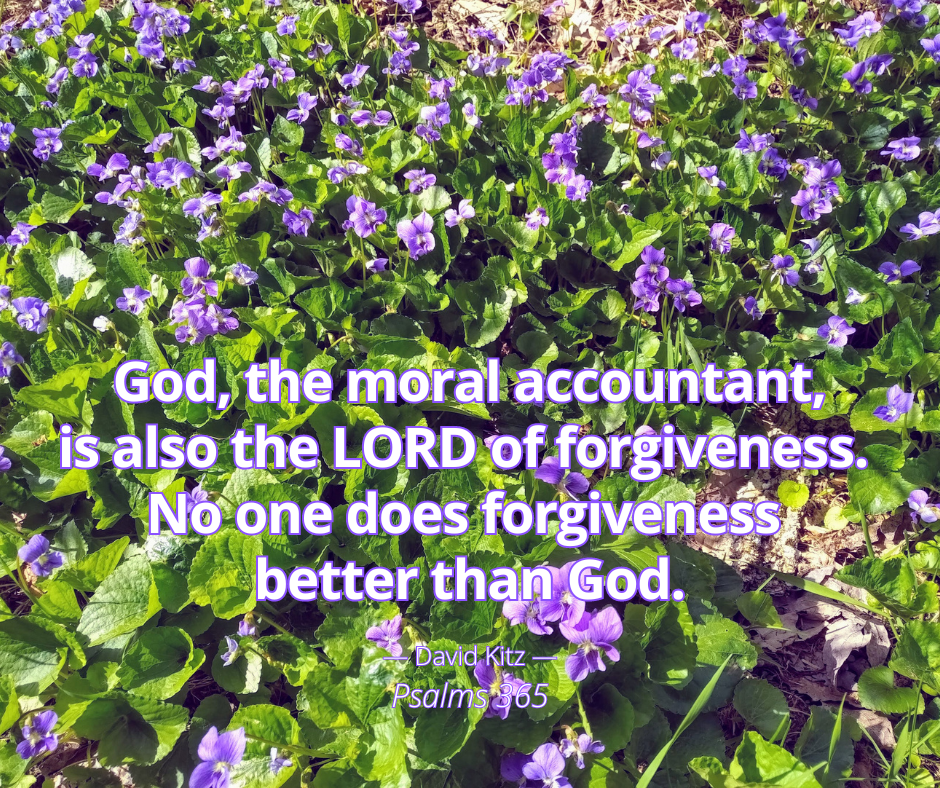
I need daily reminders of the mercy of God. God the moral accountant is also the Lord of forgiveness. No one does forgiveness better than God. He destroys the record. What accountant does that?

It is income tax time right now, as I complete this manuscript. So, I find myself caught between completing this book and completing my tax return. My accountant always insists that I keep all my receipts, all my records, and every slip of paper. He warns that at some point in the future the revenue department may decide to do an audit of my tax account.

But with God there is no future audit. Every sin I have brought to Him has been erased. It’s been destroyed. The LORD has no record of it. He can’t find it, and He’s not even looking for it. It’s gone. Gone forever! 

Wow! What an amazing God! He makes sins disappear. He keeps no records. He is a forgiving God; hence He is feared. The psalmist clearly states, “But with you there is forgiveness; therefore you are feared.”

Now that is a rather curious statement. The forgiveness of God produces in us a reverent fear of the Great Forgiver. We respect, honor, and worship the LORD because He forgives—not because He mocks us for our errors, and slams us into the jail cell of guilt. No, just the opposite is true. God forgives, not once or twice, but repeatedly. He forgives on day one thousand just as freely as He did on day one. He has no remembrance of our first offence. He has no record of it. A purposeful, divine senility has set in. Yet the Ancient of Days is still omniscient; He knows everything. He chooses to forgive me, and to see me as faultless. I have an unblemished record, because there is no record of my wrongs.

Because He forgives, I love Him. Because He forgives, I fear Him, and I will serve Him all the days of my life. He is a shelter for the fallen. He is help for the failing. He is an anchor for the wayward. When I cry out from the depths, He hears. The LORD is there.
And He is here now. He listens. He is listening to your thoughts. His Holy Spirit convicts us of sin and then wrenches us into alignment with the Almighty. Yes, the gentle Holy Spirit forces us into soul-altering repentance. By forcing us, I mean the Spirit works on our stubborn, hell-bent will until we yield to the will of God. This is the soul-wrenching experience of every God-encountering believer, and we are witnessing such an encounter here within this psalm.    

Psalm 130 can be divided into three distinct sections: the confessional approach, the wait, and the LORD’s response. Thus far, we have been looking at the confessional approach. The psalmist comes before his God and pours out his heart. In desperation he pleads for mercy and forgiveness. At the same time, he acknowledges the extreme mercy of God. He knows full well that this God forgives the undeserving.

Now, the psalmist waits.

            “I wait for the LORD, my soul waits, and in his word I put my hope. My soul waits for the Lord more than watchmen wait for the morning, more than watchmen wait for the morning.”

This is the step that is most frequently missing in our communion with God. We cannot wait. We rush on. We have things to do, people to see, a life to live. We have no time to wait for the LORD’s response.

But without waiting, we cannot hear the LORD speaking to our hearts. The rush of life takes over. We do not hear Him speak the words of divine pardon. We do not hear the voice of our Saviour. Prayer is reduced to one way communication. We speak into the silence and allow no time for the God of silence to answer back. By our actions we insist that God must respect our timetable.

How many times has the LORD tried to call you and all that He has heard from your end of the line is an annoying busy signal? Will our merciful God continue to call?

What a different response we see from the psalmist. “I wait for the LORD, my soul waits, and in his word I put my hope. My soul waits for the Lord more than watchmen wait for the morning, more than watchmen wait for the morning.”

Misty morning sunrise — Orleans, ON — photo by David Kitz

The repetition of that last line adds a certain gravity to every word. There is resolute determination in these words. I can hear the psalmist saying to himself, “I’m not going anywhere until the LORD answers. I need to hear His voice for myself. I need to hear the pardon from His lips.”

In this time of waiting, the psalmist turns to the written word of God. He states, “In his word I put my hope.”

Where do you turn as you wait for God to answer your prayers?

Turn to God’s word. Read it. Meditate on it. Let it fill your soul. From the pages of His word, God speaks. Put your hope in God’s enduring word.

Now in Psalm 130, we encounter the third transition within the poetic structure of this psalm. There is a one-line break and then the psalmist continues.  There is a dramatic change from this point on. Here is the third section—the LORD’s response. The psalmist is no longer addressing the LORD in humble prayer. Now he is addressing us. It is as though the psalmist has heard from God within that blank line on the page. The waiting is over. God has spoken, and now the psalmist rises to his feet. He has a message from the LORD for us—the Israel of God.

            “O Israel, put your hope in the LORD, for with the LORD is unfailing love and with him is full redemption.”

For Israel, there was a long wait. The promised Messiah was a long time in coming. The centuries slipped by. Generation after generation passed on, but the word of the LORD stood firm. A redeemer was coming. The ongoing question remained, “Will he come in my day? Will I see his face?”

With an uncanny accuracy the Old Testament prophets foretold the coming of the Christ. Many of those prophesies are found within the Book of Psalms. In Psalm 22, with agonizing detail, David portrayed Christ’s suffering on the cross. Jesus himself drew attention to this prophetic link, as he cried out from the cross, “My God, my God, why have you forsaken me?” (Psalm 22:1; Matthew 27:46).  

Now speaking with personal assurance that his sins are forgiven, the psalmist declares, “O Israel, put your hope in the LORD, for with the LORD is unfailing love and with him is full redemption.”

The LORD is our fount of hope. He is love and the source of unfailing love. It is He who will redeem us, body, soul and spirit.

            “He himself will redeem Israel from all their sins.”

This is not a job for sacrificial lambs and goats, or the ashes of a heifer. The LORD “himself will redeem Israel from all their sins.”
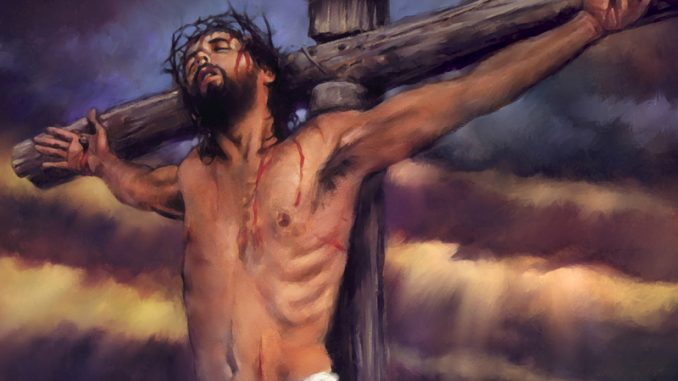
What a revelation! Redemption in the old covenant involved the shedding of blood. From the time of the first Passover, the firstborn of Israel belonged to the LORD. They were to be redeemed by an animal sacrifice. But here through the voice of the psalmist the LORD makes clear that the old sacrificial system will be superseded. “He himself will redeem Israel from all their sins.”

The God of heaven will come in person—He Himself. He will come in human form and stretch out His hands to draw all humanity to Himself—every infant, every girl and boy, every woman and man—all are included. He will Himself redeem us from our sins. He will take the spikes on our behalf, in our stead. He will bleed for us. The remedy for sin will be found at the foot of the cross.

The psalmist closing words echo Abraham’s words on the way to Mount Moriah, the hill of sacrifice. Abraham told Isaac, “God himself will provide the lamb for the burnt offering, my son” (Genesis 22:8).

God Himself will provide. He will provide Himself. He will provide “the Lamb of God, who takes away the sin of the world” (John 1:29).

Photo by Kat Jayne on Pexels.com

So through the psalms, this spiritual voyeur is brought from beneath the starry hosts to the most intimate place—the place of the cross. There water and blood flowing mingling down. Filthy and naked I come, and there I am washed clean—clean by the blood of the Lamb. 

Bringing Life to the Psalms

  1. In what respect are the psalms a How-to-Manual for Intimacy with God? Do you agree or disagree with this description?
  2. Take time to consider the three sections of this psalm, the confessional approach, the wait, and the LORD’s response. Can this become a pattern for your own times of prayer?
  3. There is a prophetic element to this psalm. Where does that prophetic element come from? Does it come from waiting on God? Read Psalm 22 and reflect on the revelation given to David in that psalm.
  4. Take time to read Genesis 22. Read it from a father’s perspective. Then read it from Isaac’s perspective. Finally try to view this account from our heavenly Father’s perspective. What do you believe was God’s intent in all of this?
  5. Rejoice. The LORD Himself has stretched out His hands and redeemed you from all your sins. 

Today’s post is Chapter 26, the last chapter from the book Psalms Alive! Connecting Heaven & Earth by David Kitz. To find out more or purchase click here.
 

I Will Not Neglect Your Word

03 Sunday Aug 2025

Posted by davidkitz in Psalm 119, Psalms, Psalms Alive!

≈ 2 Comments

Tags

Bible, faith in God, God's word, Jesus, meditating on God's word, meditation, memorization, praise, Psalm 119, Righteousness, the LORD, word of God

Psalm 119:12-16

Praise be to you, O LORD;
Teach me your decrees.
With my lips I recount
all the laws that come from your mouth.
I rejoice in following your statutes
as one rejoices in great riches.
I meditate on your precepts
and consider your ways.
I delight in your decrees;
I will not neglect your word.

Psalm 119 is the longest psalm in the Bible. It is also an acrostic poem, which in this case means each stanza of this poetic psalm begins with a different letter of the Hebrew alphabet. The section above for instance, begins with the letter Beth, which roughly corresponds to our letter B. Also, within each alphabetic stanza are eight verses, which all begin with the same Hebrew letter. In this way the psalm’s composer works his way through the entire twenty-two letters of the Hebrew alphabet. This psalm is in fact a remarkable literary composition, which was originally structured to be memorized, like the alphabet. Unfortunately, for the English reader, much of the elaborate, intricate beauty of this psalm is lost the moment it is translated from its original tongue.

The theme of this psalm is consistent throughout. It is a poetic testimony in praise of God’s holy, unchanging word. Here we find the alpha and omega of the psalms—a literary tribute to the A to Z wonder of God’s word. Every letter trumpets the salutary goodness of God’s written word. Charles Spurgeon, the nineteenth century theologian, has called Psalm 119, “A pearl island, or better still, a garden of sweet flowers.”[1]

Here in Psalm 119, we find these immortal words of comfort and encouragement, “Your word is a lamp to my feet and a light for my path” (Psalm 119:105).

Throughout the ages the saints of God have found that light for the journey comes streaming through the written pages of the word of God. Where can we turn in times of despair? How can we scale mountains of fear? How can we cross an ocean of worry? In this sin-darkened world, the word of God stands secure. It sends out a beam of radiant truth to light the traveller’s path. Is it any wonder then that the psalmist declares, “I have put my hope in your word” (Psalm 119:147b).

The light of your presence, LORD — photo by David Kitz

While Psalm 119 shouts out the eternal praises of God’s word, it does so, from a kneeling position. There is an unmistakable posture to this psalm. It rings most true, when it is spoken by a worshipper on his knees. This is a psalm filled with humble supplication. It is humble supplication that kneels and bows low before the Holy One of Israel.

There is an earnest pleading in this psalm that springs from the realization that apart from God and His Holy Word, personal holiness and salvation are impossible. Hence, we have the opening question that frames this stanza, “How can a young man keep his way pure?” 

But in His mercy the LORD has provided a response: “Praise be to you, O LORD; teach me your decrees.”

Unless God teaches me His decrees, I stumble through life lost, without direction, meaning or purpose. In reality, the eat, drink and be merry philosophy that governs the actions of so many in this world, simply springs naturally from their lost state. Hedonism is after all a rather logical response, if life has no meaning or purpose, or if our souls have no eternal destiny.

But to the soul that has heard God’s whisper in the wind or caught a glimpse of His unfading glory in the setting sun, hedonism has lost much of its allure. The soul that takes the long view—that sees beyond the grave—lives life in a different light. We are called to live on a higher plain—a plain that is sustained and nourished by God’s life-giving, life-invigorating Word.

So, in humility with the psalmist, we cry out to the LORD, “Teach me your decrees.”

Now, aware of our fallen position—from a position of need—we cry out to the LORD, “Teach me your decrees.”

The arrogant and self-satisfied are unfamiliar with this prayer. It has no resonance within them. This is the prayer of the hungry and the thirsty. It is Jesus, the word incarnate, who takes it upon himself to personally answer this prayer. Through the beatitudes he answers the cry of our heart, “Blessed are those who hunger and thirst for righteousness, for they will be filled” (Matthew 5:6).

There is a righteousness that does not spring from our performance or our merit. It does not come from observing the law. It comes directly from the crucified and risen Christ, the one who knew no sin. This righteousness—the righteousness of Christ—is credited to our account by faith.  So then as the apostle Paul asserts, “we have believed in Jesus Christ, that we might be justified by faith in Christ and not by the works of the law; for by the works of the law no flesh shall be justified” (Galatians 2:16 NKJV).

Did the writer of Psalm 119 understand the true source of holiness, or was he simply trying to achieve holiness through his own human effort? Is the psalmist’s focus on the law of the LORD and His commands and decrees, just a misdirected reflection of legalistic Old Testament thinking? For today’s believers, who look back in history from this side of the cross, this is a valid question.

On this point, the psalmist’s prayer in later in Psalm 119 is truly insightful. Notice both his choice of words and his posture in supplication, “May your unfailing love come to me, O LORD, your salvation according to your promise; then I will answer the one who taunts me, for I trust in your word” (Psalm 119:41).

Clearly the psalmist saw his need for salvation—salvation that comes freely from a God of grace and unfailing love. Secondly, in the same way as New Testament believers find salvation, the psalmist puts his trust in the word of God and the LORD’s sure promises—promises that include the coming of a Saviour-Redeemer. Satan’s taunts are no match for the believer who has put his faith in the LORD and His word.

Bridge across the Assiniboine River — photo courtesy of Donald Adam

Biblical revelation is progressive through time. The full revelation of God’s way of redemption was not revealed to the Old Testament prophets. They saw in part and prophesied in part concerning the coming of our Lord and Saviour, Jesus Christ. But the partial nature of their revelation does not invalidate their testimony or the authority of their words. Even as the above passage reveals, they saw the way of salvation with an uncanny accuracy—an accuracy that was Holy Spirit breathed.

In fact, the apostle Peter validates the ministry of the Old Testament writers by declaring of these men that they “spoke from God as they were carried along by the Holy Spirit” (2 Peter 1:21).

Again, Peter confirms the authority of the Old Testament scriptures by quoting the words of Isaiah, “All men are like grass and their glory is like the flowers of the field; the grass withers and the flowers fall, but the word of the Lord stands forever” (1 Peter 1:24- 25).

If the word of the LORD stands forever, why do so many Christians discount the Old Testament scriptures? They maybe scriptures, but we discount them. They have been dumped into the half-off bin at the back of our scriptural storehouse. They’re in the front of the Bible, but for many of us, they are in that unused, unread portion. Mentally, we have moved them to the back forty. They have become the back forty-four—out of sight and out of mind. 

But the words of Psalm 119 break into our mind. Here we have some radical thinking—a radical all out devotion to God’s word.

“With my lips I recount all the laws that come from your mouth. I rejoice in following your statutes as one rejoices in great riches.”

In my mind, recounting something with my lips sounds a lot like a rehearsal. Have you rehearsed God’s laws? Doing a rehearsal with my lips sounds a lot like recitation. Have you recited God’s laws? And how can anyone recite something without memorizing it? Have you committed portions of God’s word to memory?

Photo by Thirdman on Pexels.com

Memorization is a skill that has fallen by the wayside. At one time it was routinely taught and practised at our schools. Alas, in many classes, at many schools, those days are long gone. For many years the church was the last bastion of memorization. But in many churches, here too, this skill has fallen by the wayside. As a result, God’s word has fallen by the wayside. 

In recent years the birds of the air have had plenty to devour, because God’s people have forgotten how to hide the word of the LORD in their hearts. But Satan’s emissaries have been busy doing double duty. Not only have they been snatching away the word of God, they also have been filling the empty spots in our minds. They have been planting illicit images where God’s word should be growing.

Is it any wonder then that the church is anaemic? The Spirit-infused bread of life has not been digested and incorporated into the church, the earthbound corpus Christi.  

Memorization is hard work; it takes discipline. A disciple embraces discipline. Are you a disciple in the body of Christ? Then you will discover there is a joy that comes through incorporating God’s word more fully into your mind and into your life.   

The psalmist found a wellspring of joy in the word of God. Hear his words, “I rejoice in following your statutes as one rejoices in great riches.”

Light shines on the righteous and joy on the upright in heart — photo by David Kitz

Memorization very naturally leads to incorporation. The word becomes part of us, just as the food we eat. God’s word is lived out—expressed daily through our lives. We follow the written word—the statutes—and in so doing we are following Christ. After all, it was Jesus who told his disciples, “If you love me, you will obey what I command” (John 14:15).

When we obey, the word becomes fully alive in us. As it was at Christ’s conception, once again, the word becomes incarnate. But this time, God’s word is alive in us—alive in our earthen vessels.

Are you rich with this world’s wealth? Or are you rich in God’s word? Are you finding joy in following Jesus’ commands? If you are discovering that joy, a wonderful promise awaits you. Jesus said, “If anyone loves me, he will obey my teaching. My Father will love him, and we will come to him and make our home with him” (John 14:23).

The empty spot in the garden of our heart will be filled. Jesus will live there through the power of His Word. Your heart will become His dwelling place.

Meditating on God’s word makes room for Jesus in our mind. The psalmist did not only know the secret of a clean mind, he also knew how to keep his mind occupied, healthy and active. Hear him again, “I meditate on your precepts and consider your ways.”

Unlike mind emptying transcendental meditation, biblical meditation fills the mind with God’s holy word. Our mind becomes a garden of life—a garden of sweet flowers—bringing glory to God our Creator.

Autumn sunflowers, Churchbridge, SK — photo by David Kitz

By meditating on God’s word and His ways, we put into practice the apostle Paul’s, advice to us, “Whatever is true, whatever is noble, whatever is right, whatever is pure, whatever is lovely, whatever is admirable—if anything is excellent or praiseworthy—think about such things” (Philippians 4:8).

As we meditate on these things and put them into practice, the God of all peace will be with us. He resides in His Word. His presence in us will manifest itself through an ever-increasing measure of spiritual power, when we open our hearts and our minds to meditate on His word. Then we will find joy coming to us through God’s word. The psalmist’s confession will become our own. “I delight in your decrees.”

“I will not neglect your word.”

For me, these words have become a daily challenge, and a personal commitment. I will not neglect God’s word. When I am walking in His garden, Jesus finds me there.

[1] The Treasury of David, Psalms 111-150 (Classic Reflections on the Wisdom of the Psalms, Volume 3) by Charles H. Spurgeon, Henderson Publishing, 2005.

Bringing Life to the Psalms

  1. Memorization and meditation are sisters. Both practices bury God’s word more deeply in our minds. The buried seed of God’s word germinates, grows and bears fruit. Why not commit yourself to memorize God’s word? Psalm 119 Beth is a wonderful place to begin this life changing practice.
  2. When the word of God takes root in our hearts, we become living epistles—letters from God to a lost generation. You are the only Bible many in this world will ever read. Take a moment to read 2 Corinthians 3:1-3. What do those around you see when they read your life?
  3. Is the Old Testament in your scriptural deep-discount bin? What relevance does it have for your life today? Have there been instances when an Old Testament passage or story significantly impacted your life? What steps can be taken to honor the whole of God’s word more fully in our churches today?
  4. Take time to read all of Psalm 119. Highlight those verses that particularly speak to your heart. Review these same passages later in the day or the week. Take time to think on these things. By doing so, you are meditating on God’s word.

Today’s post is Chapter 23 from the book Psalms Alive! Connecting Heaven & Earth by David Kitz. To find out more or purchase click here.


Pure by Your Word

27 Sunday Jul 2025

Posted by davidkitz in Psalms, Psalms Alive!

≈ Leave a comment

Tags

Bible, blood of Christ, faith, God's word, Jesus, meditating on God's word, moral purity, path of purity, Psalms, pure, the cross, the LORD

Psalm 119:9-11

Beth

How can a young man keep his way pure?
By living according to your word.
I seek you with all my heart;
Do not let me stray from your commands.
I have hidden your word in my heart
that I might not sin against you.

I kept asking myself, “What could possibly be so interesting about that tattered old book? Why would this frail old woman get up every morning at 5:30 and read it? And when she finally finished reading through this massive volume, why did she go right back to the first page and start reading it all over again?”

These were some of the questions I was pondering when I was ten years old. The frail old woman was my paternal grandmother, who lived with us on our farm. And the tattered old book was an ancient German Bible, written in a gothic script that was completely indecipherable to me. There were no pictures in that old Bible. Yet, this mysterious book continually held my grandmother’s interest. What secrets did those pages contain?

One day I asked her, “Grandma, how many times have you read through that old Bible?”

The Word of God — photo by David Kitz

“Thirteen times,” she said with a smile, and then she added, “I’m onto the fourteenth time now. I hope to finish it again before I die.”

Grandma talked about dying quite often. She addressed the topic with an enthusiasm that I found quite disturbing. She looked forward to leaving this world for what she said was a far better place. I thought she was a bit selfish in this regard. She didn’t seem to care about how sad we would feel about her departure.

She was a curious old woman, or so I thought. But, she was always more than kind in everything she said and did, and I loved her dearly. Maybe that tattered old book had some influence on her personality and the warm affirmative life she lived before us all.

At age ten, it was pure curiosity that sent me on a grand quest to discover what was written in that ancient book. Without prompting from anyone, I began reading the Bible. Actually, it wasn’t grandma’s German Bible that I read, but rather, an enormous King James family Bible, which my parent’s had recently purchased.

Yes, there were some indecipherable parts, but I soon mastered the thee’s and thou’s. After a bit of mental gymnastics I was able to hath, doth and saith right along with the seventeenth century translators.

Though it was curiosity that brought me to the Bible, it was the Holy Spirit that brought the Bible to life. I quickly cruised through all four Gospels. I picked up speed as with wide-eyed interest I read the Book of Acts. Then, I tackled the Epistles and the Book of Revelation head on. In a relatively short time I read all of the New Testament. Instead of watching television I was devouring the Bible. After doing my family chores and homework, I would head straight for that huge family Bible. The Old Testament was next on my list, and one by one, the books of the Pentateuch went into my mental hopper. Next I churned through the Old Testament historical books. Job, Psalms, Proverbs, and Ecclesiastes, were a bit tough on the circuits in my literary processor, but I conquered them.  Finally I reached the major and minor prophets; I read them all.

At age ten, in the space of about three months, I read the entire Bible. It was a remarkable feat—one that I have repeated several times over the years—but never since then, have I done it in such a short time. There was a divine hunger inside me for God’s word. It was hunger stoked by curiosity, and fanned by the wind of the Holy Spirit.

“How can a young man keep his way pure?”

When I reached my teen years, this question rose up to haunt me. Suddenly a whole new set of temptations came slithering down the path of life. Many of those temptations were very attractive. The psalmist’s question came echoing across the ages. It’s a question that is as relevant now, as when it was penned almost three thousand years ago. Is it possible for a young man to live a pure life? The Psalmist’s question reminds me of Jeremiah’s question, “Can a leopard remove its spots?” (Jeremiah 13:23).

The simple, straightforward answer to both questions is, no. Leopards by their very nature are spotted. Young men by their very nature are sinful, sex obsessed and brim full of testosterone drenched bravado. Young men and purity do not easily fit in the same sentence. They clash like lions among lambs—like lacy pink frills on a boar in a mud wallow.

“How can a young man keep his way pure?” Why attempt the impossible? Why even set such a goal? Why try to reverse the course of human nature? The human soul is a sin spotted soul. Can this manly leopard remove his spots?

Why would a young man want to keep his way pure? Why not chase every pretty skirt in town? Why not have some fun? Why not eat, drink and be merry? We only pass through this life once. Why not live it up?

But if the God of the universe has called men into relationship with Him, then purity and holiness are at the very core of that relationship. If we are called to be with God—to dwell in harmony with Him—then we must embrace holiness. To embrace God is to embrace holiness. Those sin spots have got to go. If we are to walk with God, we must willingly walk away from soul-fouling sin.

Why would a young man want to keep his way pure? So he can walk with God. So he can hear His voice. So he can know the love of the Father. That’s some of the reason why. If we fix our eyes on the one who calls us to walk out of our sin spotted skin, then there is hope for the way. There is a reward for that take up the purity challenge. As my grandma knew so very well, the pure way—the way of holiness—has its rewards in both this life and the next.

The writer of the Book of Hebrews urges on the young faith runners with these words:

Let us throw off everything that hinders and the sin that so easily entangles, and let us run with perseverance the race marked out for us. Let us fix our eyes on Jesus, the author and perfecter of our faith, who for the joy set before him endured the cross, scorning its shame, and sat down at the right hand of the throne of God (Hebrews 12:1-2).

Young men need to fix their eyes. Young men have wandering eyes. Purity requires fixed eyes—eyes that are fixed solely on Jesus.

In a world awash in pornography, we all need fixed eyes—eyes fixed on Jesus—eyes that see the cross—eyes that see the blood drenched cross. Purity comes at a price. It cost the heavenly Father the life of his very own Son.

He was pierced for our transgressions.

A young man named Jesus—in flesh like my own—in skin like my own—poured out his life’s blood to make me pure.

Fix your eyes on Him!

There is a spot remover. It’s called the blood of Christ. At the foot of the cross this manly leopard can remove his spots. Jesus can make me pure; he can make you pure.

“How can a young man keep his way pure? By living according to your word.”

After this blood-based spot remover has been applied, there is still a life to live. Now with your sins forgiven, with your sin spots removed, live according to God’s word. Pray for God’s word to come alive and walk off the pages of your Bible. Make the following words your confession and your prayer:

“I seek you with all my heart; do not let me stray from your commands.”

You may ask, “How do I go about seeking God with all my heart?”

You simply start by looking for God. Watch for Him. He is at work in your life. He will not abandon the one He has redeemed at the cost of His own dear Son. He’s not a deadbeat dad. This heavenly Father cares about the sons and daughters He has brought into this new life. Daily watch for His guiding hand. He is not far away. The LORD has given us His promise on that. “The LORD is near to all who call on him, to all who call on him in truth (Psalm 145:18).

God arranges your circumstances. Whatever your age, you are His man or woman now. Expect to meet Him around the next corner, and He will show up. When you need Him most, God is there. When you least expect Him, the LORD will take you by surprise. You are His son or daughter now, and His presence in your life is more certain than the next sunrise.

Manitoba sunrise — photo by David Kitz

Obedience to God’s commands does not always come easily. Our old nature rebels. Ask for the LORD’s help. Speak out your prayer, “Do not let me stray from your commands.”

If you seek after God, soon this will become your faith profession, “I have hidden your word in my heart that I might not sin against you.”

Now here is one of the deepest secrets to be found in my grandma’s tattered old book. Hiding God’s word is a rather curious metaphor. How do I hide God’s word in my heart? The answers may seem obvious. Hear it. Read it. Study it. Meditate on it. Apply it to life. Commit it to memory.

All of these methods will get God’s word into my heart. Right?

Wrong.

Simply hearing God’s word will not get it into your heart. Hell is filled with hearers of God’s word. Perhaps you don’t believe me? Let’s check in on Jesus’ teaching regarding this topic. Jesus’ story of the rich man and Lazarus the beggar is a perfect illustration of this point. See Luke 16:19-31. The rich man and his brothers were regular hearers of the word of God, but it made no difference to the eternal destiny of their souls. The word of God lay lifeless on the surface of their hearts.

Jesus’ parable of the sower and the seed sheds some real light on this metaphor of hiding God’s word in our heart. Hearing is a shallow experience. All too often, the heard word has no depth. To get depth we need understanding. Most often understanding springs out of application, not out of hearing. I can hear a particular truth a thousand times but it isn’t really mine until I apply it to my own life. Applied truth bears fruit. It yields results. The applied truth of God’s word is self-validating. It has the life of the Spirit within it. Only when we apply the word, are we living according to it.

But heard truth lies on the surface—a tasty morsel ready for the devil to snatch away. The heard word has all the potential of the applied word, but none of the yield, because it has not penetrated the heart.

We need to become pregnant with God’s word. Pregnancy is never achieved through the ear. Young men need a deeper experience. We all need hearts that are warmed by the love of God and wide open to His Holy Word—His seed—His eternal life producing Word.

Yes, hide God’s word in your heart. Hear God’s holy word. Read it. Study it. Meditate on it. Commit it to memory. And above all apply it to your life that you might not sin against Him! In that way the written word will be transformed into Spirit-born words that will live in your heart.

This is after all, all about Him. This is all about being close to Him! This is about loving “the LORD your God with all your heart and with all your soul and with all your mind” (Matthew 22:37).

You have not come to a truth. You have come to the Truth, the Life and the Way. You have come to Christ the spotless One—the One whose way is pure. You have not come to just a tattered book. You have come to the Word that became flesh and dwelt among us. This living Word “was with God in the beginning.  Through him all things were made; without him nothing was made that has been made. In him was life, and that life was the light of men” (John 1:2-4).

His life was the light of men—even young men—even ten-year-old boys.

Oh yes, and grandmas too.

Bringing Life to the Psalms

  1. What are you doing to hide God’s word in your heart? What routines have you established that bring you into daily contact with God’s word?
  2. Preaching is most often the focal point of any church service. It is a format that produces hearers of the word, but does it produce disciples? Jesus commanded us to make disciples not merely hearers of the word. What can you or your church do to help facilitate the heart changing application of God’s word?
  3. What special challenges do young men face as they try to live a pure life? Have you personally taken up the purity challenge? Jesus worked with young men whose faith grew as they lived with him in fellowship. These men changed the world. Are you part of a network of men who are in heart opening fellowship with Christ?
  4. Take a moment to read Jesus’ story of the rich man and Lazarus as found in Luke 16:19-31. What application may this account have on how you hear God’s word?
  5. The applied truth of God’s word is self-validating. What does that statement mean? Have you experienced an instance when God’s word proved itself true when you applied it to your particular life circumstance?

Today’s post is Chapter 22 from the book Psalms Alive! Connecting Heaven & Earth by David Kitz. To find out more or purchase click here.


The Miraculous Conundrum

20 Sunday Jul 2025

Posted by davidkitz in Psalms, Psalms Alive!

≈ Leave a comment

Tags

Bible, deliverance, Egyptians, Exodus, Israel, Jesus, miracles, miraculous powers, Moses, Psalms, salvation, the LORD, wonders

Psalm 114:5-8

Why was it, O sea, that you fled,
O Jordan, that you turned back,
you mountains, that you skipped like rams,
you hills like lambs?
Tremble, O earth, at the presence of the LORD,
at the presence of the God of Jacob,
who turned the rock into a pool,
the hard rock into springs of water.

“Why, Daddy? Why?” A four-year-old’s favourite question is, “Why?”

And why wouldn’t it be? A four-year-old is living in the age of discovery. Everything is new; everything is calling out to be discovered. Exploration is the activity of the day. And always the question asked is, “Why?”

“Why is the sky blue? Why do girls wear dresses? Why did that egg break? Why?”

Photo by Emma Bauso on Pexels.com

Here in Psalm 114, the psalmist has some why questions as well. “Why did the sea flee? Why did the Jordan River turn back? Why did those mountains and hills seem to skip and dance? Why?”

Why, indeed?

The answer of course is because of the jaw-dropping, eye-popping, heart-stopping power of God. God caused the sea to flee. He caused the Jordan to turn back. He caused mountains and hills to skip about and frolic like yearling lambs set free from the stall. What an awesome display!

What an awesome God!

Psalm 114 is all about the overwhelming power of God. It is a grand portrayal of the pivotal event in the Old Testament Scriptures. Here within a few short verses, we catch a panoramic view of God’s might on display, starting with Israel’s escape from Egypt to their arrival in the Promised Land. Our miracle-working God puts on a magnificent show. What an exhibition!

In the preview to this main event, the LORD, the God of Jacob, humiliated the gods of Egypt. The ten plagues devastated the land. The Nile turned to blood. The source of life for the nation became a stench—a source of death. Every plague crippled the pride of Egypt. Each one struck down a ruler of darkness from the nation’s demonic pantheon. The plagues left no doubt as to who was in charge—who was the Lord over Egypt. The LORD God was Lord. Pharaoh and his wizards were powerless before this wonder-working God of Israel.

But the LORD was not finished with the ten plagues. This was only the preliminary round—the warm-up. The main event was still to come.

With Pharaoh’s army in hot pursuit, Moses stretched out his staff, and the sea fled. A path was opened through the deep, and the children of Israel made good their escape. When the army of Pharaoh continued the chase across the seabed, the LORD threw them into confusion.

The water flowed back and covered the chariots and horsemen—the entire army   of Pharaoh that had followed the Israelites into the sea. Not one of them survived. But the Israelites went through the sea on dry ground, with a wall of water on their right and on their left. (Exodus 14:28-29)

Photo by Pixabay on Pexels.com

What an awesome display of power! Aside from the miracle of creation, this Old Testament miracle is viewed as the measuring rod—the gold standard—by which all other supernatural events are compared. In the Hebrew Scriptures, this event has no comparison; it is unparalleled. The whole nation saw this. They experienced this supernatural phenomenon. God confounded nature. Water formed a wall. The Almighty suspended what we call normal.

Why was it, O sea, that you fled?

 The immediate answer to this question is simple, yet profound. The sea fled because of the power of God. In exultation Moses boasts,

“Your right hand, O LORD, was majestic in power. Your right hand, O LORD, shattered the enemy. By the blast of your nostrils the waters piled up. The surging waters stood firm like a wall; the deep waters congealed in the heart of the sea. Who among the gods is like you, O LORD? Who is like you—majestic in holiness, awesome in glory, working wonders?” (Exodus 15:6, 8, 11).

But why did the miracle-working LORD make the sea flee? Was it simply to display His awe-inspiring power? Was it simply to create a bit of excitement among the million or more mortals, who were eyewitnesses to this divine wonder?

In the Exodus account, the reason for this miraculous intervention is stated very clearly. Here then is the reason for this display of raw power:

That day the LORD saved Israel from the hand of the Egyptians, and Israel saw the Egyptians lying dead on the shore. And when the Israelites saw the great power of the LORD displayed against the Egyptians, the people feared the LORD and put their trust in him and in Moses his servant. (Exodus 14:30-31)

My Lighthouse in the Storm – photo by Eric E. Wright

This power display had one primary purpose. That purpose was salvation. The LORD wanted to save people—His covenant people—from the vicious clutches of oppression and a tyranny. In short, the LORD works wonders so that He can save people—so He can bring them into His Kingdom—so they can escape the sin systems of this world and come under His loving rule.

So why did the sea flee? The LORD sent the sea fleeing so that He could save people.

But from the above passage in Exodus, we can see that this miraculous intervention had two secondary effects. It caused people to stand in awe of the LORD, and it prompted them to put their trust in Him and His servant Moses. Suddenly, the LORD had everyone’s attention. It was impossible to deny the existence of this wonder-working God. Everyone in Israel saw and experienced this fear-prompting miracle. Furthermore, for every Israelite, the message in the miracle was crystal clear. God is all-powerful. And this awe-evoking God truly cares about me. The LORD cares so much that for a brief time, He suspended the laws of nature so that I could walk free.

What an awesome God! What a loving God! Is it any wonder then that the people put their trust in the LORD? They saw His divine character displayed. They were not just witnesses to His power. They were recipients of His love and mercy. God intervened into the affairs of a nation, Egypt, the ancient superpower, to bring them to the point of freedom. Then God intervened into the course of nature. He parted the sea to bring them to full liberty. What a deliverance! What a wonderful God!

“Why was it, O sea, that you fled, O Jordan, that you turned back, you mountains, that you skipped like rams, you hills like lambs?”

On the day of their deliverance, for the common Hebrew the answer to this question would read something like this. “God worked wonders to save me. He made the sea flee just for me. That’s why all this happened!”

That was the testimony of every slave who walked out of Egypt. And that same God works wonders today for the same reason—to save people and to bring them “out of darkness into his marvellous light” (1 Peter 2:9).

Photo by Hernan Pauccara on Pexels.com

God works wonders; He works wonders today. But for me, there was a time when this miracle-working power of God was a huge stumbling block. For some people faith seems to come easily or naturally. They read God’s word and readily believe it; they hear the preacher and believe the message he brings. But as a young person, for me just the opposite was true. I was born with the mind of a sceptic. Reading Biblical accounts of miracles did not inspire faith. These stories raised all kinds of questions and doubts. If there was one disciple I could identify with, it was Thomas. We had a similar world view.

So, you say God works miracles. Don’t tell me. Show me. That was my attitude. Though I had read the entire Bible by age eleven, I had a difficult time believing it. It simply did not align with the world as I saw and experienced it. Miracles did not occur in my world. Why should I believe they happened two thousand years ago? That was my line of reasoning in my teen years, and even now I see this as a perfectly logical position for an unbeliever to take.

When I talked to adults or church leaders about this question of miracles, they would brush off my doubts with a blithe remark about how miracles happened back then, in Bible times, but they did not happen anymore. This did nothing to set my sceptic’s mind at ease. If miracles happened then, why didn’t they happen now? If God never changes and if “Jesus Christ is the same yesterday, today and forever” (Hebrews 13:8), then it logically follows that the supernatural should be happening today, unless of course, the biblical miracles never happened in the first place.

I found myself in a miraculous conundrum. Did they happen, or did they not? Should I believe the Bible or not? I wavered on this question for quite some time. In the end I resolved to believe, not because of evidence, but because of love. I found the love of Christ as displayed on the cross too compelling. It was too overwhelming to walk away from. I decided to believe because I loved the story of His great love. He gripped me at the cross. With nail-pinned hands, he took hold of me. I decided to believe.

In my teen years, the decision was finally made. I would follow Him, but the miraculous conundrum remained. The dispensational position on miracles made no sense to me. Why would miracles take place back then, but not now? Why? Why indeed?

We settle on second best, if our faith rests solely on a decision. Decisions can change. Doubts can assail. The human mind is fickle, easily swayed by this or that argument. Inwardly I longed for a firmer foundation, one based on hard evidence and a rock-solid conviction. There is a substantial difference between believing and knowing. I longed to know God, not just believe in His existence.

Fortunately, we serve a living God, who responds to the cry of our heart. If we seek after Him, He will respond. We have the sure promise of His word on that point.

“‘You will seek me and find me when you seek me with all your heart. I will be found by you,’ declares the LORD.” (Jeremiah 29:13-14)

And when we find the LORD, we find the God of power. The LORD responded to Jeremiah’s questioning mind with this statement, “I am the LORD, the God of all mankind. Is anything too hard for me?” (Jeremiah 32:27)

Of course, nothing is too hard for the LORD. He can send the sea fleeing. If you are earnest in seeking Him, and you want evidence of his existence, He will supply it. If in humility you seek a demonstration of His power, He is not weak. He will answer. In fact, he longs to fill His disciples with power—power that will strengthen our witness and bring others to salvation. Again, we have Jesus sure promise on that point.

“But you will receive power when the Holy Spirit comes on you; and you will be my witnesses in Jerusalem, and all Judea and Samaria, and to the ends of the earth.” (Acts 1:8)

The miracle working power of God resides in the Holy Spirit, and when as a young man I experienced a personal Pentecost, something very transformational happened inside me. In an instant I moved from believing in God to knowing God. For me the evidence was in, and a rock-solid conviction stood where my uncertain faith had formerly rested. I knew Jesus was alive. He sent His Spirit to affirm my faith.

Photo by Vlad Cheu021ban on Pexels.com

The wonder-working power of God will do that. Doubters are silenced when God shows up. And yes, miracles have followed. On several occasions, I have experienced divine healing, supernatural guidance, and best of all I have been empowered to be His witness. The miracle of salvation has come to others. And this miracle-working God is not finished yet. What He began in Egypt, He will complete in the Promised Land. As He turned back the Jordan for Israel, He will turn back the Jordan for me as well. He welcomes his people home. He is my provision and my provider for the journey, even as He was for Israel, and He will be for your provision and your provider as well.

Tremble, O earth, at the presence of the LORD, at the presence of the God of Jacob, who turned the rock into a pool, the hard rock into springs of water.

Over the years this bit of earth in human skin has had many occasions to tremble before the presence of the LORD. He is my provision for the journey even when the way is hard. By His Holy Spirit, He turns the barren rock into pools of refreshing. In the desert He is my spring of living water.

Even today Jesus calls out, “‘If a man is thirsty, let him come to me and drink. Whoever believes in me, as the Scripture has said, streams of living water will flow from him.’ By this he meant the Spirit, whom those who believed in him would later receive.” (John 7:37-39)

Jesus, the miracle worker, calls us to the source of power. Now what about you? What sea lies before you, blocking your way? Does your God still work miracles? Let’s watch that sea flee.

Bringing Life to the Psalms

  1. God affirms our faith in Him with signs following. Read Mark 16:14-20. Have you experienced God’s miracle working power in your life? Have you seen it in others? Many believers have a strong faith without experiencing sign and wonders. Yet others will not believe in God unless the miraculous occurs. How do you account for this difference?
  2. “Now to each one the manifestation of the Spirit is given for the common good” (1 Corinthians 12:7). How has God manifested the Holy Spirit’s presence in your life?
  3. Is your faith decision-based or conviction-based? Are you convinced in your faith, or do you still experience doubts? Remember God loves skeptics too. Have you experienced a transition from believing to knowing? Is this a valid way to look at the faith journey?
  4. Reread Psalm 114. What is God saying to you by His Spirit through this psalm?

Today’s post is Chapter 21 from the book Psalms Alive! Connecting Heaven & Earth by David Kitz. To find out more or purchase click here.

 

The Timing of God

13 Sunday Jul 2025

Posted by davidkitz in Psalms, Psalms Alive!

≈ Leave a comment

Tags

baptized, burning bush, dead men, Egypt, Egyptians, God, Moses, perfect timing, Peter, Psalms, Red Sea, the LORD, timing

Psalm 114:1-4

When Israel came out of Egypt,
the house of Jacob from a people of foreign tongue,
Judah became God’s sanctuary,
Israel his dominion.
The sea looked and fled,
the Jordan turned back;
The mountains skipped like rams,
the hills like lambs.

All day, I just wanted to get out. The park across the street beckoned. On sunny days it only seems natural to want to get outside—at least for part of the day. In January sunny warm days are a rarity in Ottawa, and this particular day was a real gem. There was no snow on the ground—an unheard-of phenomenon for this part of the country—at what is normally the coldest time of year. The thermometer was on the plus side of the ledger, and from dawn onward, warm sunshine was pouring down. Best of all, this January gem had landed on the weekend.

But a variety of chores and obligations kept me indoors. Finally at three thirty in the afternoon I was able to escape the confines of our home. But it was too late. Only moments before I stepped outside, the sun disappeared behind a thick cloud. Within an hour it sank below the horizon. My much-anticipated sunlit stroll through the park never happened. Actually, the stroll took place, but it transpired in an ever-deepening midwinter gloom.

Time works that way; it always works that way. If we don’t seize the moment, the moment escapes, never to be recaptured. We can try to make amends, or rearrange our schedule, but time is an unforgiving tyrant. It marches on, the sun sets. We will never have that day, hour, minute or moment again. We seize it or lose it. We catch the sun’s rays, when it shines, or we reap the gathering gloom.

Furthermore, events that occur in time can affect all of eternity. Catch the right moment and you change the course of the world. Seize the apex moment with God, and all of human history will be transformed. That familiar old maxim is true. Timing is everything

Here in Psalm 114 we find an apex moment. Moses seized that apex moment—the ideal instant in time—and as a consequence a nation was set free. Israel, the nation, was born in that apex moment.

“When Israel came out of Egypt, the house of Jacob from a people of foreign tongue, Judah became God’s sanctuary, Israel his dominion.”

Moses was first summoned by God at the burning bush, and despite his hesitance, he responded to the LORD’s call. His full obedience to that call resulted in his people’s deliverance from the yoke of cruel oppression. There was a perfect timing—a divine timing—in all this. Deliverance did not come a moment too soon or arrive a moment too late. The LORD is always right on time.

We are the ones who are impatient, who miss the moment, who come too early or show up too late. Young Moses suffered from this problem too. His timing was off. He harboured ambitions of delivering his people. He wanted to rescue them. And why not? He saw their desperate need. He wanted to help. He was both a son of Pharaoh’s daughter, and a son of Israel. Moses bridged these two communities. Surely, as a man of position and influence raised in Pharaoh’s household, he could use that influence to bring about change. But unfettered ambition can be impetuous. After murdering an Egyptian taskmaster, Moses fled in fear for his life.

The burning bush, Regina, SK — photo by David Kitz

Moses had jumped the gun. On his own strength, he had raced ahead of God. He was fuelled by good intentions, but his ill-conceived attempt at helping his people ended in disaster and disgrace. For forty years he lived as a guilt-ridden fugitive in the Desert of Sinai. His self-generated efforts were out of sync with God. Forty years is a long time. Sometimes it takes a long time to get right timing—to get into God’s timing.

Finally, when the time was right, it was God who got Moses. Now that is a strange reversal. Typically, we see a need, and we then go and enlist God to help us rectify the situation. But here it was God who initiated the project. This rescue mission was the LORD’s idea, and it would be done His way, on His timetable, under His leadership. The LORD made this perfectly clear in his introductory remarks to Moses at the burning bush. Speaking of the suffering Israelites He says, “I have come down to rescue them from the hand of the Egyptians and to bring them up and out of that land into a good land, a land flowing with milk and honey” (Exodus 3:8).

Unlike Moses’ earlier clumsy attempt at national deliverance, this time, this was solely the LORD’s rescue mission; it was His project. Moses was invited to join the operation, or he could sit on the sidelines.

The formerly eager Moses almost chose the sidelines.

Take a moment to consider this. How many needs do you see? How many well-intentioned projects do you take on? And now ask yourself, how many of these projects are first conceived in the heart of God? How many are initiated by Him? There is a vast difference between what is self-initiated and that which is God-initiated. Has the LORD summoned you to the burning bush? Or are you busy trying to enlist Him to your well-intentioned causes?

There is no room for personal ambition at the burning bush. Perhaps that was the reason for Moses’ reluctance to sign on for this divine rescue mission. He had already tried and failed to bring deliverance, and now the LORD wanted him to take up the cause again. But this time Moses would not be in charge. The LORD would be calling all the plays. Personal pride would need to be sent to the sidelines.

I doubt that among the descendants of Israel, the LORD could have found a more reluctant leader than Moses. Moses spent a full chapter and a half in the Book of Exodus trying to wheedle his way out of this divine assignment. Finally, in Exodus 4:13 we read: “Moses begged, ‘LORD, please send someone else to do it'” (CEV).

If I was Moses and the LORD had tapped me for this assignment, I too may have been reluctant. I might have had a few choice questions for the LORD. I think the first question would have been, “Where have you been for the last eighty years? It’s nice for you to show up now, LORD, but this suffering has been going on for a very long time. My people have been whipped and mistreated, and their babies have been tossed in the Nile. Where have you been, LORD? I think your timing is off.

And where were you, LORD, when I tried to get something going forty years ago? I could have used your help back then. Now you show up forty years after the fact. Suddenly you’re a convert to the cause—a late comer. Welcome on board. But aside from your heavenly status, I am not sure why you should be the one in charge of this Hebrew rescue mission?”

They were all baptized into Moses in the cloud and in the sea (1 Corinthians 10:2). Photo by David Kitz

These questions may be crudely put, but I suspect that below the surface they were percolating in Moses’ mind. Fortunately for the Hebrews, I was not living in Moses’ skin, or they might still be stuck in the slime pits of Egypt.

But this was a different Moses, than the rash young man, who fled to the Sinai Desert forty years earlier. Perhaps it was time spent in the wilderness that liberated Moses from the tyranny of self. His personal agenda now lay buried under the shifting sands of time. Youthful self-assurance yielded at last to the Master’s plan. When this hard earthen vessel finally removed his shoes in submission, the LORD could use him. The old Moses was dead—dead and buried. The new Moses—the Moses of the burning bush—was at last pliable in the Master’s hands. 

Forty years earlier Moses had buried the Egyptian taskmaster beneath the sands of Egypt. Now the self-confident, I’ll-do-it-myself Moses, the do-it-my-way Moses was finally laid to rest beneath the desert sands of Sinai. 

God is accustomed to using dead men. In fact, it can be argued that they are His preferred instruments to accomplish His purpose in the world. Dead men don’t take credit for the sovereign work of God. They don’t swell with pride. Dead men don’t argue with the Master over His chosen course of action. Dead men don’t frighten easily. They don’t shrink back when they are asked to do the impossible. Dead men don’t give up when the going gets tough. Only dead men are fully in sync with God’s timing.

God can use dead men. He did not use Abraham to become the father of the faithful until the apex moment—until Abraham was “as good as dead … so from this one man … came descendants as numerous as the stars in the sky and as countless as the sand on the seashore (Hebrews 11:12).

Figuratively, Isaac the son of promise needed to die on the hill of sacrifice. Out of death came life—life in harmony with God. Jacob’s grasping ambition died at Peniel. Joseph’s dreams of glory died a thousand deaths before Israel and his sons bowed before the master of all of Egypt. When at last the strong arm of the flesh is dead and buried, there is room for the life of God to spring forth.

Headstrong, impetuous Peter needed to hear the third crow from the rooster before his heart broke. Only then was he fully ready to yield to the master’s touch. All his self-deceiving, self-aggrandising ambition needed to die. His rancid sinful nature was a stench in the very nostrils of God. The old man—the old egotistical Peter—was finally buried in the tomb right along with the body of Jesus. The old man was dead.

Future Site of a Mass Resurrection, Landestreu Cemetery, Landestreu, SK — photo by Donald Adam

A new life awaited. The resurrected Jesus raised a new Peter to a new life—a life infused with the Spirit of God—a new life moving in God’s perfect timing.

The grave is the best place for our bloated sinful nature. It is always out of sync with God. It loves to dictate to God. The sinful nature, by its very nature, always feels it knows best. Like the pre-Pentecost Peter, our fleshly nature always believes it lives and moves in God’s timing. But the only god it serves is the god of self.

No one understood this truth better than Paul the apostle. The old Paul—Saul of Tarsus—died on the road to Damascus. So, it was this new man—the new Paul—who wrote, “I have been crucified with Christ and I no longer live, but Christ lives in me. The life I live in the body, I live by faith in the Son of God, who loved me and gave himself for me” (Galatians 2:20).

When Moses died to himself and his worldly ambitions, God could use him for His eternal purpose. He became a vessel of honor, fit for the master’s use. The new Moses was infused with life and power from on high. It was the new Moses who led Israel out of Egypt.

“When Israel came out of Egypt, the house of Jacob from a people of foreign tongue, Judah became God’s sanctuary, Israel his dominion.”


Have you come out of Egypt? Have you left the world and its enticements behind?
Or are you still under pharaoh’s jurisdiction, within Satan’s domain? Are you a slave to the same old taskmasters? Have you crossed the Red Sea? In 1 Corinthians 10, Paul likens this passing through the sea to Christian baptism.

Or don’t you know that all of us who were baptized into Christ Jesus were baptized into his death? We were therefore buried with him through baptism into death in order that, just as Christ was raised from the dead through the glory of the Father, we too may live a new life (Romans 6:3-4).

When we come out of Egypt, God can come in. When the old man is dead and buried, the new life of Christ can be formed within us. When we have crossed the sea, our hearts become God’s sanctuary, His habitation. We have renounced the world and its ways; we are now citizens in His dominion. When God comes in, everything changes.

“When … Judah became God’s sanctuary, Israel his dominion … the sea looked and fled, the Jordan turned back; the mountains skipped like rams, the hills like lambs.”


When God is present, He changes everything.
When our time is aligned with God’s time, we are in the apex moment. Anything is possible. The seas flee—the sea of worry, the sea of doubt, the sea of guilt. They all flee away at the presence of the LORD. Mountains of heartache and trouble begin to skip away. They skip right out of sight. The God of the impossible casts them into the heart of the sea.

When God is present my needs are met; God’s purpose is accomplished. There is joy. I am God’s dwelling place—His sanctuary. He has dominion here. The old, rancid, sinful man is dead—dead and buried. Christ has arisen in me. I am in God’s timing. It is as Jesus says, “Everything is possible for him who believes” (Mark 9:23).

Resurrection Sunrise, Durham, ON –David Kitz

The Son is shining. The LORD is here.

Bringing Life to the Psalms

  1. Have there been instances in your life where you have caught the apex moment with God? Reflect on those times. Were there preconditions of the heart or your attitude that brought you into right timing with God? What is the role of God’s sovereign grace during such times?
  2. Many believers have not been baptized. Have you buried the old man—your sinful nature—through baptism? Have you been resurrected with Christ to a new life? Are you still struggling with sin? Baptism can act as a clear break with the old life. Take time to read Romans 6:1-14. New life begins on the other side of the sea.
  3. Are you trying to enlist God to your well-intentioned causes? Have you taken on tasks without hearing from God first? Examine your life in the light of God’s calling. Weed out what has not been planted by God. We are all called to fulfill God’s purpose for our lives. Remember, if the LORD is giving you an assignment, He will direct and empower you. It may be your assignment, but it will always be His project—His mission. Be sure to do it His way.

Today’s post is Chapter 20 from the book Psalms Alive! Connecting Heaven & Earth by David Kitz. To find out more or purchase click here.


The God who Stoops Down

06 Sunday Jul 2025

Posted by davidkitz in Psalms, Psalms Alive!

≈ 3 Comments

Tags

angels, David, enthroned, Jesus, love of God, mud and mire, obsession, praise, sculpture, Son of God, the cross, the LORD, the needy

Psalm 113:4-9

The LORD is exalted over all the nations,
his glory above the heavens.
Who is like the LORD our God,
the One who sits enthroned on high,
who stoops down to look on the heavens and the earth?
He raises the poor from the dust
and lifts the needy from the ash heap;
He seats them with princes,
with the princes of their people.
He settles the barren woman in her home
as the happy mother of children.
Praise the LORD!

You might have a picture of yourself like this. You know the kind. It’s less than flattering. It provides a great view of your backside as you are bent over. Or better yet, someone has caught you in the classic plumber position, with your head under the sink and your opposite end in full view.

I know what to do with photos like that. I toss them in the garbage. I erase them from my hard drive. If I can wrestle the mobile-phone camera from the photographer, I’ll hit the delete button faster than the shutter speed for that priceless Kodak moment.

Who wants to embarrass himself and then keep the evidence for posterity? Apparently, God does. In fact, the LORD has been doing it since time began. The proof for this assertion can be found right here in Psalm 113.

The LORD is exalted over all the nations, his glory above the heavens. Who is like the LORD our God, the One who sits enthroned on high, who stoops down to look on the heavens and the earth?

Who indeed? Why would the exalted One, the enthroned One, stoop down? How undignified! Doesn’t the LORD know that kings and potentates don’t bend over or stoop down? They certainly don’t do that sort of thing in public—not where they can be seen by others. Rulers rule from the seat of authority. They sit; they don’t stoop down.

But our God stoops down. If the truth be told, it’s even worse than that.

The LORD doesn’t just stoop down; He plays in the mud. He has been playing in the mud for years now, ever since he shaped us from the dust of the earth. I would go so far as to say that this behavior—this playing in the mud—has become an obsession with him. It’s a divine obsession. He just keeps right on doing it.

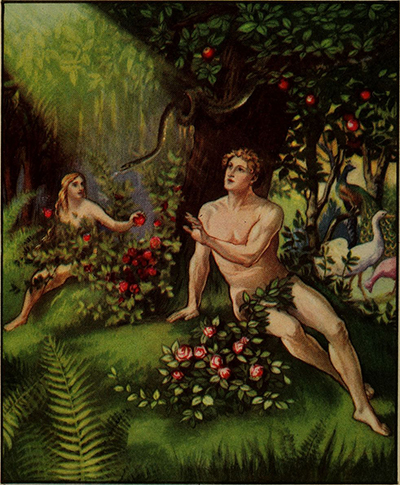
Art by Hult –www.biblicalarchaeology.org

I’m not sure how the LORD justifies his behavior. From a perfectly logical point of view, it simply doesn’t make sense. After all, I would hardly call the LORD’s first experience with mud sculpture a glowing success. Sure, Adam looked handsome enough, and Eve was pretty sweet, but that breath of life idea was a complete disaster.

And what thanks did God get for his efforts? Well, the dear little mud clods disobeyed him. They disobeyed their Maker at the first opportunity, or so I’ve read. What a show of gratitude! But then, I suppose that’s what you get for stooping down and playing in the mud. It goes to show what you can expect from quickened mud clods.

After that experience—that catastrophe run amuck—you would think, the LORD would know better. He should know better by now. But no, not the LORD! He keeps right on going back to the mud holes. He insists on stooping down and rescuing these little, living, breathing, dirt bags.

Let’s take David for example. Let’s call him exhibit, “A.” But rather than listen to me go on about the LORD’s absurd behavior, why not hear David’s own testimony:

I waited patiently for the LORD; he turned to me and heard my cry. He lifted me out of the slimy pit, out of the mud and the mire; he set my feet on a rock and gave me a place to stand. He put a new song in my mouth, a hymn of praise to our God. Many will see and fear and put their trust in the LORD (Psalm 40:1-3).

Well David, this is all fine and good for you to say. But remember, you’re the one that got yourself into that mess—that mud and mire—in the first place. Have you given even a moment’s thought to the LORD’s dignity? I think not. He has a whole universe to rule, and there you are interrupting him with your pathetic pleas. The LORD has to leave his contemplations, get off his kingly throne and rescue you—rescue you from a mud hole! I am sure God has better things to do than to chase after the likes of you.

And David, this new song of yours—this hymn of praise—let me give you some advice. Pull the plug on it. Why would you want to broadcast your own failings? Why would you want the world to see how dependent you are on the LORD? It’s time to grow up. Learn to stand on your own two feet.  This running to the LORD for everything has got to stop. Don’t you realize He has a whole world to run?

Samuel anoints David

Worst of all David, if you go ahead with this new song, it will turn out just as you say. Many will see how the LORD has rescued you. They will put their trust in the LORD. And what will happen then? Well, I’ll tell you what will happen. Next thing you know, the LORD won’t have a moments rest. Every slime ball on the planet will be calling out to him.

And exactly how will the LORD respond? Well, if past performance is any indicator, He’ll be right out there, big time. He’ll be pulling slime balls out of mud holes all over the world. Like I said earlier, it’s an obsession—a divine obsession.

Take this psalm, Psalm 113, for an example. Have a look at this quote. Let’s call it exhibit, “B.”

He raises the poor from the dust and lifts the needy from the ash heap; he seats them with princes, with the princes of their people. He settles the barren woman in her home as the happy mother of children. Praise the LORD! (Psalm 113:7-9, NIV)

Why doesn’t He stay seated? Why doesn’t the LORD just stay on the throne? Why does He insist on stooping down and getting his hands dirty? You can’t possibly lift people out of dust and ashes without getting your hands dirty.

And why does the LORD keep elevating people? Doesn’t He know that they are the source of all the problems in the world? If He must interact with humanity, He should at the very least pick his contacts more carefully. Why associate yourself with the poor—the scum of the earth? Go for the cream of the crop. If the LORD is so high and mighty, why doesn’t He stick with the high and mighty? He keeps diving below his rank—well below his rank.

To be honest with you, the LORD seems to be completely out of touch with how this messed up world operates. When it comes to the LORD, it’s like we’re dealing with some kind of heavenly dumpster diver. He keeps finding treasures in the trash.

But what I find most disturbing about this passage is the statement about the barren woman. Help the woman, if you must, LORD. But turning her into the happy mother of children is a terrible mistake. I’m not sure we need more of these snivelling, whining, God-needing, God-dependent creatures. Things will only get worse with more of them around. The LORD will never have a moment’s rest—not with them bawling around for help. I can see it all now—even more stooping, more bending over mud holes. He’ll spend even more time saving the incompetent from themselves.

Photo by Laura Garcia on Pexels.com

This obsession with creatures of dust, and extracting them from mud holes, has gone totally out of control. It has completely taken over the mind of the LORD. That’s what obsessions do. How else can you explain what happened next?

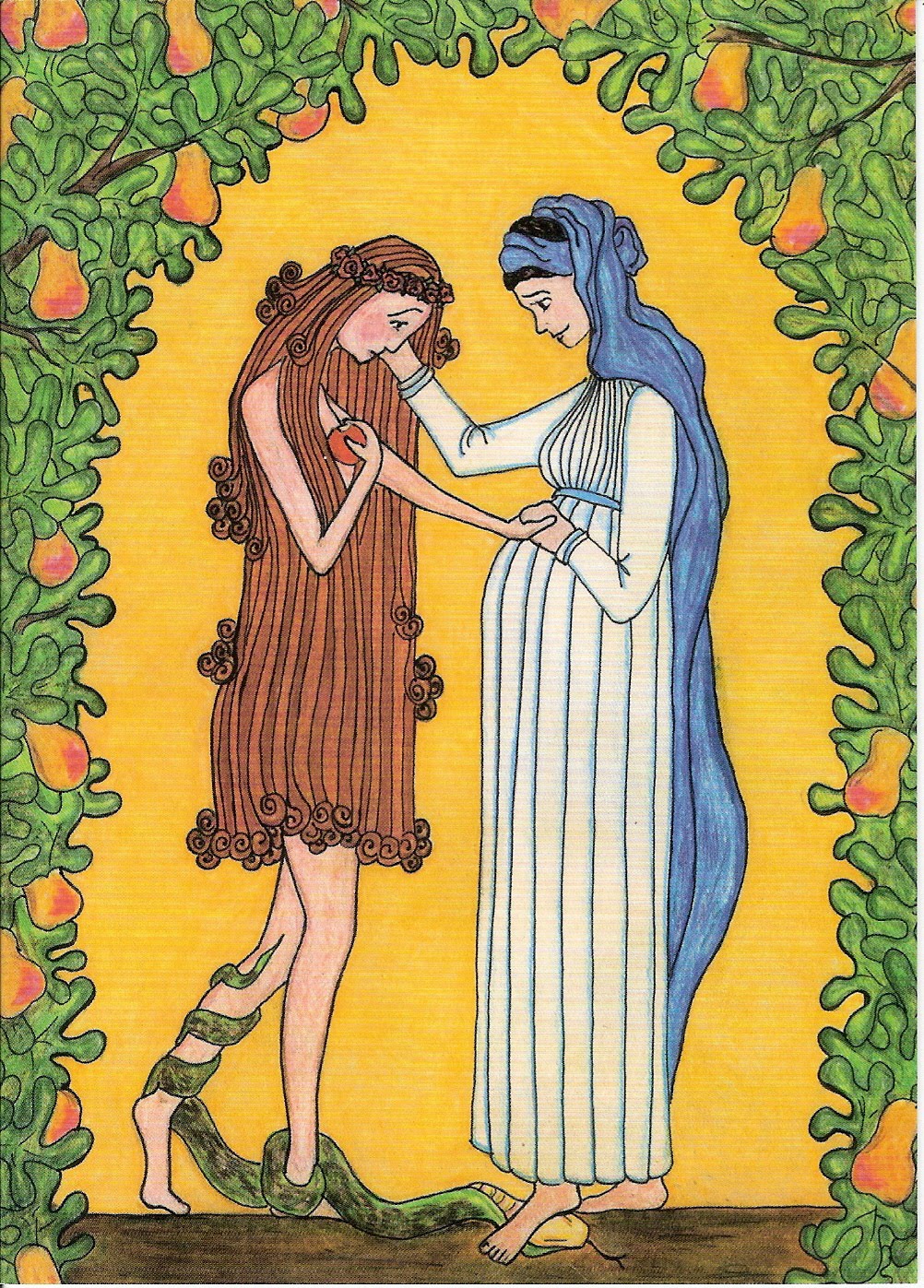
He decided to have a Son by one of these daughters of earth. You might even say the LORD decided to become one of them. I know it’s incredible, absolutely incredible. I call it a case of divine insanity.

And the poor woman He had this child by, what a mess He left her in! First of all, you think that the LORD, who “is exalted over all the nations, who sits enthroned on high” would choose a partner of noble birth, but not the LORD. No, He chooses some poor humble servant girl, at the bottom rung of society. Granted Mary comes from royal stock, but this lineage of David that you read about, meant absolutely nothing in practical terms. It didn’t put food on the table, or clothes on her back, or boost her social status.

Yes, you heard right. Mary is from the thousand-year-old line of David—the same David that the LORD pulled out of the mud and the mire, way back then. Not exactly a proud legacy, in my opinion.

So, the LORD “who sits enthroned on high” got Mary pregnant, and then He left her. He left her high and dry—stranded. He didn’t even hang around to explain himself. He let Mary do the talking. He let her explain this whole mess to Joseph, her fiancé.

Mary Comforts Eve

“Who is like the LORD our God?” Who indeed?

Then to top off this public relations fiasco, this descent from the heavenly realm, we have the actual birth of the Son of God. What a botched, low budget affair that was! Unbelievable! Born in a stable. The Son of God placed in a manger—a feeding trough for slobbering cows! Incredible.

When the LORD stoops down, He really stoops down!

The lack of coordination in this whole event simply defies description. Was any thought put into this at all? Why this last-minute rush? Why have the baby born in Bethlehem? Why not Jerusalem, the holy city, the capital?

And then there’s that disaster with the angels. As far as I’m concerned, they showed up in the wrong place entirely. Why announce the Savior’s birth to a few, poor, lowlife shepherds? They have no influence—no means to spread the news beyond a small circle. I can only assume the lead angel somehow got his coordinates mixed up and landed in the wrong location.

The heavenly choir was a nice touch. Here at last was some pomp and ceremony—some razzle dazzle and celestial fireworks, befitting the birth of a heaven-sent king. But it was all wasted on those shepherds. Like I said, it happened in the wrong place. The LORD would have had far more bang for his buck, if the angels had put on their show over Jerusalem.

Then, there are the Magi. Nice try wise guys. Too bad you arrived almost two years after the fact, and your blundering ineptitude almost got the Son of God killed.

No, this whole experiment in cross-cultural communication—heaven to earth communication—did not start well. Is it any wonder that things went quickly downhill from there?

As for the Son of God, well he’s just like his Father—the very image of Him! He has the same character too. He’s always hanging around with the bottom end of society, with the harlots, the tax collectors, the sinners. He does a lot of stooping down too, and He plays in the mud. He spit on the ground and made some mud once. He used it to heal a man born blind (John 9:1-12). And then, there’s that time he pardoned the adulteress. On that occasion, He stooped down and did a lot of writing in the dirt (John 8:1-11).

Does any of this sound familiar? Well, they are familiar all right. As I said, the Son is just like the Father, and the Father is just like the Son. (See Colossians 1:15.) As for this divine obsession with creatures of dust—this divine insanity—what did it lead to? It led straight to the cross—the Son’s death on the cross.

He was pierced for our transgressions.

As I said, you can’t possibly lift people out of dust and ashes without getting your hands dirty. Well Jesus, God’s Son, couldn’t lift people out of dust and ashes without getting his hands bloody. He got his hands pierced. I guess that’s what the LORD gets for stooping down and playing in the dirt.

How do you explain all this? There are some things we will never fully understand. I am sure that this is one of those things. We cannot fathom this—not in a million years.

They say love is an obsession—a case of temporary insanity. That is the only explanation that I can think of for this outcome. He has a bad case of love; the LORD has a terminal case of love. And in His case, it never has stopped; He has never gotten over it. He fell in love with us from the first time He saw us—from the moment He formed us. “For God so loved the world that he gave his one and only Son (John 3:16).

Still, I keep wondering why anyone would stoop so low? Why would the One, who sits enthroned on high, stoop so low for me?


Bringing Life to the Psalms

  1. Jesus’ earthly family members were not numbered among the rich and famous of the land. Read James 5:1-6. Our LORD’s brother has some strong words for the rich and powerful. In the struggles of life, who do you identify yourself with, the wealthy or the poor?
  2. Do you stoop down? Plan an activity that aims to help the poor or the disadvantaged. What are you doing to help the orphan or the widow, whether next door or on the other side of the globe?
  3. Read the account of Jesus healing the man born blind in John 9:1-12. Note the similarities with the creation of Adam as recorded in Genesis 2:4-7.
  4. Simply take some time to thank the LORD for his incomparable love. Verbalize your thanks to him.

Today’s post is Chapter 19 from the book Psalms Alive! Connecting Heaven & Earth by David Kitz. To find out more or purchase click here.


The Name of the LORD

29 Sunday Jun 2025

Posted by davidkitz in Psalms, Psalms Alive!

≈ Leave a comment

Tags

Bible, Jesus, Lord of lords, praise, praise the LORD, Prayer, Psalms, silence, Son of God, the LORD, the name of the LORD, worship

Psalm 113:1-3

Praise, O servants of the LORD,
praise the name of the LORD.
Let the name of the LORD be praised,
both now and forever more.
From the rising of the sun to the place where it sets,
the name of the LORD is to be praised.

At the time of this writing another Christmas has come and gone. I am sitting across from our family Christmas tree as I write this chapter. Snow is gently falling outside my living room window. It’s that relaxing time of year, the festive interlude between Christmas Day and New Year’s Day. It’s a time to get your spiritual battery recharged, before the onslaught of the work routine returns along with the coming of a new year. As long as I can avoid big box stores and shopping malls, it’s a peaceful time. I can spend extra time with the LORD and with family.

Praise the LORD!

Yes, praise the LORD for those relaxing times, when the pace of life slows down. We live in a rushed world, where quiet times and silent moments get crowded to the margins of our existence.

Silence? Silence is a rare experience in our rapid fire, entertainment-hyped world. I wonder if Silent Night is such a popular carol, because silence is a commodity we rarely experience, but inwardly we long for it.

The people of the ancient world knew silence. It surrounded them like a huge comforting blanket. They did not awaken to the blare of the radio or the din of urban traffic. But even so, they purposefully set apart times to get away and seek the LORD. Even the Son of God needed those times. After feeding the five thousand, Jesus did not throw a party with his disciples to celebrate his miracle. No, we read that “he went up on a mountainside by himself to pray (Matthew 14:23).

Jesus longed to commune with his Father. He needed silent nights for that. He needed alone times.

How about you? If Jesus needed those quiet times—alone with God times—I know I most certainly do. And the starting point for any meaningful time with the LORD is the point of praise. We are to “enter his gates with thanksgiving and his courts with praise; give thanks and praise his name” (Psalm 100:4).

That is precisely how Psalm 113 begins. It starts with praise:

Praise the LORD! Praise, O servants of the LORD, praise the name of the LORD. Let the name of the LORD be praised, both now and forever more. From the rising of the sun to the place where it sets, the name of the LORD is to be praised.

And who precisely are we to praise? Both in Psalm 100 and Psalm 113 the admonition is crystal clear. We are to praise the name of the LORD. Shout to the LORD, all the earth. Worship the LORD with gladness; come before him with joyful songs (Psalm 100:1-2).

Now it must be noted that the psalmist did not instruct us to praise the name of the Lord. He instructed us to praise the name of the LORD. Did you catch the distinction? There is a huge difference between the words, Lord and LORD that we can easily skip over or dismiss.  

With enough money and influence, almost anyone can become a lord—a British lord. Conrad Black, the newspaper baron, renounced his Canadian citizenship in order to become Lord Black of Crossharbour. Along with the title of lord, comes a seat in the House of Lords in the British Parliament.

In this world there are many lords, and would-be lords, but there is only one LORD. The LORD is the Lord of both the heavens and the earth. His kingdom reign has no beginning or end; it is eternal. His dominion knows no bounds. The LORD is truly Lord of all, including Crossharbour. His seat, the throne of the universe, lies beyond the highest heavens. His glory never ceases. It is never tarnished by scandal, never debouched by sin. He is without peer. He is the LORD of lords.

In most Bible translations the word LORD is actually a kind of acronym. The capitalized letters of the word LORD stand for the Divine Name, the Hebrew language “Tetragrammaton.” The Hebrews considered the Name too sacred to be spoken—a practice which is still followed among worshipping Jews today. An exact transliteration of the Hebrew word for LORD into English would yield YHWH. Biblical scholars and experts in linguistics agree that with the addition of Hebrew vowel markers, this word would most likely be pronounced Yahweh. However, instead of speaking out the word Yahweh, Hebrew speakers would substitute the word Adonai, which means Lord. The name Yahweh was deemed too holy to be spoken by human lips. In deference to this tradition, and in honor of the sacred Name, modern translators have substituted the capitalized word LORD for YHWH.

Accordingly, the opening verses of Psalm 113 could also be rendered thus:

Praise YHWH! Praise, O servants of YHWH, praise the name of YHWH. Let the name of YHWH be praised, both now and forever more. From the rising of the sun to the place where it sets, the name of YHWH is to be praised.

How sacred is the name of the LORD to you? Does it roll off your tongue with little meaning, or in your mind and heart is it truly linked to the LORD of Lords? Do you reverence His Name as his chosen people do? His glory and his character are resident within his Name, the sacred name of the LORD. Do you speak his Name thoughtlessly?

This is after all, the LORD, whose name means I AM. He is the self-existent One, without beginning or end. He is the One, who when asked, declared his identity to Moses. God said to Moses, “I AM WHO I AM. This is what you are to say to the Israelites: ‘I AM has sent me to you'” (Genesis 3:14).

It was this same Moses who came down Mount Sinai with the Ten Commandments etched on tables of stone. One of those commands reads as follows:

You shall not misuse the name of the LORD your God, for the LORD will not hold anyone guiltless who misuses his name (Exodus 20:7).

In the spirit realm invocation is a power laden term. To invoke someone’s name simply means to give voice to that name. If you call out my name in a public gathering, you will quickly get my attention. Our ears are always tuned to hear our own name. I may be surrounded by indecipherable babble but toss my name into the midst of that babble, and I’ll pick up my ears every time—not only that—I’ll come right over to find out what is being said about me. That is the power of invocation.

The same is true in the spirit realm. We even have a common saying to express this truth, “Speak of the Devil, and he’ll show up.”

If the power of invocation works with me, and it works with the Devil, who is not omnipresent, then you can be certain that it works with the name of the LORD. Speak his Name, and He will show up. In Psalm 35, David declares, “The eyes of the LORD are on the righteous and his ears are attentive to their cry.” And David goes on to assert, “The righteous cry out, and the LORD hears them; he delivers them from all their troubles” (Psalm 34:15, 17).

The prophet Joel takes this truth one step further, while speaking of the troubled times before the LORD’s return, he states, “And everyone who calls on the name of the LORD will be saved” (Joel 2:32).

Amid this world’s babble, the LORD will always hear his name. He will show up. He will eavesdrop on every conversation, when his name is mentioned. He will hear every whispered prayer. He will stop by every meal, where grace is spoken. He is there, by your side, even when death comes knocking. Just speak his name.

This is the power of invocation; it is the power resident in his name—the name of the LORD. Therefore, it behoves us to use his name aright, not flippantly or as swear word. That is the Devil’s game, and we play on his side when we besmirch or desecrate the holy Name. I have no time or respect for those who misuse my name. Why would we expect the LORD Almighty to be any different?

But my ears are always open to praise. It puts a smile on my face. Would it be any different with the LORD? When we gather to praise the LORD, He will be present at the mention of his name. A variant reading of Psalm 22:3 declares, “Yet you are holy, enthroned on the praises of Israel.”

I rather like the thought of making a place for the LORD among us. As we praise his name, He comes to be with us. He pulls up a chair and sits with us for a time. He is enthroned on our praise. Through our praise we make room for Him in our lives. Our praises, whether spoken or sung, form an open invitation to Him. It is as though we are saying, “LORD, come sit with us for a while. Come be enthroned among us.”

The Lord is on his heavenly throne — photo by David Kitz

So let his praise resound. Let the name of the LORD be praised, both now and forever more.

 Our praises join with others to form a continuum of praise for the LORD. It is a continuum that stretches back to the dawn of time. Can you imagine Adam waking on that first morning to a beautiful dawn in the Garden of Eden? He stretches, and then in thanksgiving he raises his hands and his voice in praise to his Creator. We join our voices with Adam and Eve, our first parents, when we too praise our Creator. We join our voices in praise with Abraham, the father of all who are justified by faith. We join with David, who danced before the LORD with all his might in celebration of the mercy of God. We blend our praise with the prophet Isaiah, who saw the LORD high and exalted, with six-winged seraphs calling out, “Holy, holy, holy is the LORD Almighty; the whole earth is full of his glory” (Isaiah 6:3).

 This eternal praise continuum extends back to include all the heavenly hosts from before the earth took form. It encompasses all of creation, both past and present, the birds, the animals and the sea creatures. It draws all of life into worship. Let everything that has breath praise the LORD (Psalm 150:6).

It includes the women, who Jesus met on the best morning since creation—resurrection morning. Jesus greeted them, and then these women “came to him, clasped his feet and worshipped him (Matthew 28:9).

Oh, what a moment of praise! It still resounds. It will resound throughout history. We are united in our praise with Thomas, who touched the wounds of the living Christ. Then overwhelmed, he exclaimed in humble worship, “My Lord and my God!” (John 20:28).

Our praise for the LORD unites with the praises of the martyrs throughout the ages. It echoes from the catacombs and the arches of the Roman Coliseum, through the Middle Ages and the Reformation, right onto the back pages of today’s newspaper. We bow our knees in unison with all these who suffer for his Name. We bow with them in worship. We bow to the King of kings and the LORD of lords.

In praise to the LORD, we join with Handel to declare that our Messiah has come and his Kingdom reign will never cease. Praise the LORD! Strike up the chorus. Hallelujah! He is our Ode to Joy.

Purple stars bring backyard joy — photo by David Kitz

The glory of his name is not bound by the confines of time and place. It supersedes national boundaries. The LORD, who parted the Red Sea, also parted the Iron Curtain. He took his own special sledgehammer to the Berlin Wall. He is LORD of the nations, whether they acknowledge him or not.

In the face of Christ, we see the LORD. In his name we have redemption. The apostle Paul declares, “God exalted him to the highest place and gave him the name that is above every name, that at the name of Jesus every knee should bow, in heaven and on earth and under the earth, and every tongue confess that Jesus Christ is Lord, to the glory of God the Father” (Philippians 2:9-11).

Now we join with the psalmist and declare, “From the rising of the sun to the place where it sets, the name of the LORD is to be praised.”

Yes, praise the LORD! Praise his name. Praise Deity clothed in humanity, who in the temple courts confessed his name, “I tell you the truth… before Abraham was born, I AM!” (John 8:58).

On bended knee we confess, “Jesus Christ is Lord.”

Yes, He is LORD!

Bringing Life to the Psalms

  1. Were you aware of the distinction between the words, LORD and Lord, before you read this chapter? Does this knowledge affect your use of the name of the LORD?
  2. The great, “I am,” statements of Christ recorded in John’s Gospel are a direct link to Yahweh, who is the Great I AM. John’s Gospel most clearly portrays the deity of Christ. Take a moment to read Jesus’ bold confession of his deity in John 8:48-59.
  3. We are instructed to pray in Jesus’ name. Take a moment to read those instructions afresh as found in John 14:5-14.
  1. Are you aware of the power of invocation? Be assured the LORD has ears to hear and He will show up. He will honor his name.

Today’s post is Chapter 18 from the book Psalms Alive! Connecting Heaven & Earth by David Kitz. To find out more or purchase click here.



The LORD Rules over All

22 Sunday Jun 2025

Posted by davidkitz in Psalms, Psalms Alive!

≈ Leave a comment

Tags

Bible, circumstances, constancy of God, David, God, Jesus, Martin Rinkart, praise, praise the LORD, Prayer, Psalms, sacrifice of praise, sing praise, worship, worship amid suffering

Psalm 103:19-22

The LORD has established his throne in the heavens,
and his kingdom rules over all.
Praise the LORD you his angels,
you mighty ones who do his bidding,
who obey his word.
Praise the LORD all his heavenly hosts,
you his servants who do his will.
Praise the L
ORD, all his works everywhere in his dominion.
Praise the LORD, O my soul.

Psalm 103 is a sandwich, or if you prefer, a big beefy hamburger. By that I mean this psalm begins with a personal call to praise the LORD, and it ends, as we see from the passage above, with what amounts to a universal call to praise the LORD. Between these calls to worship, we find a great big helping of God’s goodness. In between we discover the why—the reasons why—we should be overflowing with praise to the LORD.

David experienced God’s saving grace, goodness, love and forgiveness over and over again. Consequently, his heart was full to bursting with praise. Herein is the why of praise; the reason for praise rests in God, not in us, or our circumstances.

But Psalm 103 is not just a beefy hamburger. It is also an express train—a big steam locomotive. There is a distinct momentum to this psalm, which can be missed by breaking it into sections. It begins with David addressing his soul. It would appear, at the start, to be a sluggish soul that is somewhat reluctant to praise God. But this reluctance begins to melt away as David recounts the LORD’s great goodness. One by one David declares the character qualities of the LORD. As each attribute is portrayed, David’s sense of awe and his desire to praise God picks up momentum. By the end of this psalm, David’s praise has become an express train, loaded with divine purpose and headed full speed for glory!

Shinkansen (bullet train) photo by David Kitz

His final call to worship in the above stanza is a great cry for all to get aboard this express train of praise. Now with a full head of steam, in exultant praise, I can hear him shouting, “Hop on board, one and all. Praise the LORD! We are heaven bound!”

Many see praise and worship as a purely cathartic response to the manifest goodness of God. Something good happens to us. Unexpectedly, we get a thousand-dollar payment in the mail. Quite naturally our response is praise to God.

For many people, praise to God never progresses beyond this natural, cathartic level. If God does not bless, no praise is forthcoming. Our praise for the LORD becomes or simply remains circumstance dependent. But that was not the case with David. His praise extended beyond simple catharsis. He taught his soul to praise the LORD in all circumstances. True biblical praise and worship is after all a spiritual exercise, a discipline we grow in, just as we grow in the discipline of prayer.

The LORD, the object of our praise, does not change with our circumstances. He is forever the same. Jesus Christ is the same yesterday and today and forever (Hebrews 13:8). He is constant, hence our praise and worship of him should be constant, unaffected by weather conditions, world events, the gyrations of the stock market, our swings of mood or our personal situation.

Of course, this constancy in praise is something the natural man simply rebels against. Our world needs to be right in order for us to praise God aright, or so we reason. The only problem with this logic is that the world has never been right since the Fall. Death, disease, war and misery have been raining down on the children of Adam, since wilful disobedience to God first took root among us. And this is one weather forecast, for all humanity, that is not about to change—not until Christ returns.

If we are waiting for a perfect world before we lift our voice in praise to God, we will never praise Him. In fact, if our eyes are on the world, or on ourselves, there will always be grounds to withhold our praise. But then, the whole purpose of praise and worship is to lift up our eyes. We desperately need to get our eyes off ourselves, off the world, and onto God our Maker.

Photo by Thirdman on Pexels.com

Martin Rinkart was a man who could be forgiven for cursing God. But rather than cursing his Creator, or withholding worship, he composed the ageless hymn of praise, Now Thank we all our God. Pastor Rinkart (1586-1649) was caught up in the horrors of the Thirty Years’ War. For a full year his hometown, Eilenburg in Saxony, was besieged as war raged round about. The triple scourge of war, disease and famine ravaged the community. Death was everywhere. The walled city was swamped by destitute refugees. Three times it was overrun by pillaging armies. As the crisis worsened, Rinkart’s pastoral colleagues succumbed to the plague; only he was left to conduct the funerals. In that horrific year, 1637, he conducted more than 4,000 funerals, as many as fifty in a single day. One of those funerals was for his own dear wife.

Yet it was this man, Martin Rinkart, who composed these words of praise:

            Now thank we all our God
            With heart and hands and voices
            Who wondrous things hath done
            In whom this world rejoices;
            Who from our mothers’ arms
            Hath blessed us on the way
            With countless gifts of love
            And still is ours today.

Martin Rinkart did not live in a perfect world. But his eyes saw beyond the death and destruction that lay before him. He lifted his eyes above the world, and beyond himself. And when he did, he beheld God. He saw Him as LORD over all, and a God to be thanked and praised for countless gifts of love. Amid the most desperate situation imaginable, Pastor Rinkart fixed his gaze on the LORD his Maker. Then this humble pastor did a most remarkable thing—a Spirit-directed thing. He raised his voice in praise to God.

In a world run amok, the first casualty all too often is our faith in God. The chaos of disaster leads us to question the very existence of God. The god of order and control would not—should not—unleash tsunamis of war and disease on this world. We reason, “What kind of god is this? Why would an all-powerful god permit this? Why would he not spare those dear to me?”

Photo by Pixabay on Pexels.com

But Martin Rinkart the hymnist, and David the psalmist, knew the true God, a god who exists beyond our narrow definitions of order and control. Both these men knew the LORD of all the earth. Here in Psalm 103, David declared, “The LORD has established his throne in the heavens, and his kingdom rules over all.”

That divine rule, and that eternal kingdom, truly encompasses all, including disasters. Yes, He is LORD over disasters too, over war, over hurricanes, over floods and droughts, over both feasts and famines, joys and sorrows. He is LORD of all.

This declaration of God’s kingdom rule collides head on with my own preconceived notions of how the world should be. In my world death should never steal a friend away. In my world abundance should be a preordained right. In my world sickness should have no foothold, cancer should hold no sway. In my world all stories should have happy endings.

I want an ideal world like that. I want the real world to conform to my desired ends. And when God does not meekly comply, by granting me my ideal vision of the world, I stamp my foot and shake my fist at Him. In reality, when I do that, I am announcing that I want to be God. I want to be LORD. A refusal to bow in worship before God, is a declaration of my desire to be the sole ruler of my life, and the Creator my own world apart from God.

In a world run amok, Martin Rinkart did not stamp his foot and shake his fist at God; he lifted his voice in praise. Praise to God in the midst of tragedy aligns us afresh with the LORD of the universe. It re-establishes and reasserts his direct rule over us. Along with David we declared, “The LORD has established his throne in the heavens, and his kingdom rules over all.”

God in His wisdom has not given me my ideal world. He has given me His world—the real world—where sorrow mingles with joy, where the curse and the blessing of Eden coexist, where life and death dance nimbly together.

Man praying to God.

Prayer is my attempt before God to change this present world. And this world is in desperate need of change. God and I are in agreement on that point. That’s why He sent His Son. The world can be changed by God through prayer. What an astonishing truth! My prayers can change the world. God can as a consequence of my prayers, intervene and stunningly alter the natural course of events. I have seen Him do astonishing miracles. He is after all, who says He is. He is LORD.

But if God does not intervene, if my prayers are not answered, if no miracle comes, He is still LORD. He is still to be praised. This inalterable fact remains, “The LORD has established his throne in the heavens, and his kingdom rules over all.”

After 4,000 funerals, after his hopes and dreams lay buried, for Martin Rinkart, God was still God. He was still LORD over all. He was still worthy of all praise and so he wrote:

            O may this bounteous God 
            Through all our life be near us,
            With ever joyful hearts
            And blessed peace to cheer us;
            And keep us in his grace,
            And guide us when perplexed,
            And free us from all ills
            In this world and the next.[1]

How shallow is your praise? Do you believe your world needs to be right before you praise God? Lift up your eyes for a moment. Lift them to the One, who was lifted up for you. Lift your eyes to the Father, who did not spare His Son, but sent him into a messed-up world to die upon a cross. Fix your eyes on Him, the bloodied fount of redemption. Fix your eyes on the one who said, “I am the way, the truth and the life” (John 14:6).

Then, lift your voice in praise to God.

How shallow is your praise? Do you believe you need to feel right in order to praise right? After all, wouldn’t we be hypocritical if we were outwardly exuberant in praise to God, but our heart was not in it? Now in this instance, when we are speaking of our heart, we really mean our feelings. But if we see praise as a biblical command, our feelings are inconsequential. We are to praise God regardless of our feelings. Feelings come and go, but the goodness of God stands secure and unchanging. 

As residents of North America, we are a pampered lot. We live in affluence, materially rich, but mired in deep spiritual poverty. Gratification must be instant. Personal comfort trumps all other considerations. What do we know of hardship? In this sheltered atmosphere, praise for God grows like a spindly hothouse plant. Untested by hardship or the cold winds of adversity, our faith lacks depth. Our worship remains shallow.

If the music isn’t right on Sunday, we are incapable of praise. What an outrageous affront to God! True worship is so much more than a lip-synced ditty. It goes deeper. It flows higher. It breaks through our emotional indifference and reaches the heart of God.

The deepest praise is sacrificial. It floats heavenward on a sea of suffering. It confounds all logic and rises above whim or emotion.

Through Jesus, therefore, let us continually offer to God a sacrifice of praise—the fruit of lips that confess his name (Hebrews 13:15).

True worship is born of the Spirit. Along with David, it invites all of heaven—all of creation to join in the chorus of praise.

Praise the LORD you his angels, you mighty ones who do his bidding, who obey his word. Praise the LORD all his heavenly hosts, you his servants who do his will. Praise the LORD, all his works everywhere in his dominion. Praise the LORD, O my soul!  

Bringing Life to the Psalms

  1. What does it mean to offer a sacrifice of praise? Have you faced times of hardship when you found it difficult to praise God? Were you able to offer praise?
  2. Read a biographical portrait of Martin Rinkart. There are several internet sites that provide a closer look at this man who knew how to praise God through adversity.
  3. Read or sing Rinkart’s great hymn, Now Thank we all our God. It’s a wonderful way to set free the wellspring of praise within you.
  1. Reread Psalm 103. Is it a hamburger, an express train, or both? Can you think of another metaphor that helps our minds to capture the magnificence of this psalm? What is God saying to you as you read this psalm?

[1] Now Thank We All Our God, words by Martin Rinkart (1586-1649), 1636. Translated by Catherine Winkworth (1827-1878), 1858 MIDI: Nun danket alle Gott (later form of melody by Johann Cruger, (1598-1662).


Today’s post is Chapter 17 from the book Psalms A
live! Connecting Heaven & Earth by David Kitz. To find out more or purchase click here.


Our God, the Extremist

15 Sunday Jun 2025

Posted by davidkitz in Psalms, Psalms Alive!

≈ Leave a comment

Tags

conquer, David, David and Goliath, forgiveness of sins, Jesus, knowing God, leaving a legacy, Prayer, Righteousness, stages of life, the LORD

Psalm 103:6-18

The LORD works righteousness
    and justice for all the oppressed.

He made known his ways to Moses,
    his deeds to the people of Israel:
The LORD is compassionate and gracious,
    slow to anger, abounding in love.
He will not always accuse,
    nor will he harbor his anger forever;
he does not treat us as our sins deserve
    or repay us according to our iniquities.
For as high as the heavens are above the earth,
    so great is his love for those who fear him;
as far as the east is from the west,
    so far has he removed our transgressions from us.

As a father has compassion on his children,
so the LORD has compassion on those who fear him;
for he knows how we are formed,
he remembers that we are dust.
The life of mortals is like grass,
they flourish like a flower of the field;
the wind blows over it and it is gone,
and its place remembers it no more.
But from everlasting to everlasting
the LORD’s love is with those who fear him,
and his righteousness with their children’s children—
with those who keep his covenant
and remember to obey his precepts.

It is well worth noting that Psalm 103 was written by David. David was a man of extremes; he lived life to the full. Never one to rest on his laurels—he was always up for a challenge, and if no challenge existed, he would create one for himself. He was a man’s kind of man, not easily discouraged or deterred, ready to throw himself headlong into the fray. Undoubtedly, others saw and admired these qualities in him. That’s why they gathered around him, and stuck with him through the extremes, the highs and lows of a life lived fully and unreservedly for God.

Sometimes I wonder what David would be like if we met him today—if he lived in today’s world. Into what endeavour would he throw his boundless energy? Who are the extreme men, the Davids of our time? Who are the men—or the women for that matter—who take on the Goliaths of our present world?

This gutsy determination was evident throughout David’s long and eventful life. As a young teenager, a mere scamp, David had the in-your-face audacity to take on Goliath, the towering, undefeated, Philistine champion. And this battle was no game of tiddlywinks, no computer simulation—this was mortal combat—the real thing, winner takes all, including your severed head (1 Samuel 17).

Do we have any young Davids—any teens—who with God on their side, will step out from the crowd, and risk all in the defence of faith and truth?

Later as a young man, we find David at Ziklag. After a meteoric start to his career, he has plummeted from favour. He has persevered through round after round of downward spiralling misfortune. Now at his lowest point, with his own men about to stone him, he rises above an embittered throng of naysayers and doubters. With his very life in the balance, he finds strength in the LORD his God. Then by the extraordinary grace of his God, this indefatigable David pursues his enemies. He seizes victory by the sandal straps and refuses—absolutely refuses—to let it escape over the next hill (1 Samuel 30).

Do we have any never-give-up, never-say-die Davids like that today? Or do we give up at the first sign of opposition? It takes young men of extreme faith to persevere in the face of an unrelenting foe. Have you seen a David lately?

A middle-aged David faced betrayal and heartbreak as his own son, Absalom, sought to kill him and wrench the kingdom from his faltering hands. As this grand tragedy unfolds, David humbles himself before God and his people. He flees Jerusalem barefoot, weeping and with his head covered as a sign of deep contrition (2 Samuel 15:30). The God of all mercy hears his prayers and restores the fallen king—the repentant king—to the throne. Sometimes humility takes far more courage than a strutting cocksure leader can muster. But King David—the man at the top—still knew how to humble himself. He knew how to repent.

What a stark contrast to the middle-aged barons of business, who in recent years have been hauled before the courts in disgrace. All we hear from them is deny, deny, and lie follows lie. Men are a strange lot. Once the great ego puffs itself up, it seems to be incapable of self-deflation. We cannot prick our own balloon.

Do we have any top-of-their-game Davids, who know how to humble themselves before God, and before the public, and openly repent? Upper echelon Davids like that are in extremely short supply, perhaps even extinct. Have you caught a glimpse of one?

In his old age David looked ahead. With a prophet’s eye he saw the future and he planned for a nation without him. He installed his son Solomon on the throne, but he placed the LORD at the helm of Israel, even as the LORD had always been at the helm of David’s entire life. Now in his last days, the House of God became David’s prime concern. He was not permitted to build the temple of the LORD (1 Chronicles 17). But, he made extensive preparations for it. Upon David’s death the House of God would rise. How like another descendant of David? Upon Jesus’ death, by the power of the Spirit, the Church of God would arise.

In his instructions to his son Solomon, David says,

“I have taken great pains to provide for the temple of the LORD a hundred thousand talents of gold, a million talents of silver, quantities of bronze and iron too great to be weighed, and wood and stone” (1Chronicles 22:14).

Do we have any end-of-life Davids like that today? Will you leave behind a visible legacy to the LORD’s great goodness? What preparations are you making that will honor God for generations yet to come? Remember a life lived for God never ends, and its influence never ceases.

Consider this. David is still influencing lives today—far more lives in fact, than he did three thousand years ago. And though Solomon’s temple no longer stands, David’s words—his psalms of praise to God—resound in every nation under heaven. Now that’s a legacy of faith—extreme faith!

The world needs far more faithful-to-the-LORD Davids. We need them at every stage of life. And if biblical Davids like that are in short supply in today’s world, why not decide to become one yourself? Never underestimate what God can do through a life that is wholly yielded to him. When complacency is replaced by extreme, in-touch-with-God faith, anything is possible.

Now verse by verse, let’s look at what David wrote in Psalm 103 about the wonderful God he served throughout his life. David declares, “The LORD works righteousness and justice for all the oppressed” (v. 6).

When David was oppressed by Saul, he did not give up, nor did he take vengeance into his own hands. He entrusted his fate to the LORD. And the LORD saw; he took note of his servant David. Saul falsely accused David of rebellion, but David was a faithful servant both to King Saul and to the LORD, the highest king. David waited on God and ultimately, he saw the LORD work righteousness and justice on his behalf. Saul was defeated by the Philistines and in due course, faithful David ascended to the throne.

He made known his ways to Moses, his deeds to the people of Israel (v. 7). There is a curious phraseology to this statement. It is well worth noting. Revelation is always based on relationship. My wife knows my bank account number; she has free access to my account at any time. That access is based on our relationship. Moses was shown the ways of God, but the people of Israel only saw his deeds. Moses had access to the LORD’s inner sanctum. He met regularly with God in the Tent of Meeting. He was privy to the counsel of the LORD. That relationship resulted in a far greater revelation of God’s plans and purposes.

Do you want a greater revelation of God’s plan and purpose for your life? Seek to know God better. Spend time with him. David brought the Ark of the Covenant to Jerusalem for that very reason. He wanted to be close to God, to spend time with him daily, and to praise and worship him freely. Relationship is always the wellspring of all revelation. It is while we are in God’s presence that we discover the mind of Christ. 

David certainly discovered the very nature of God. He discovered that “the LORD is compassionate and gracious, slow to anger, abounding in love” (v. 8). No sentence in the entire Bible captures the pure essence of God quite as fully as this one. It should be indelibly written on our hearts and minds. David could pen these words because he experienced them. He experienced God’s boundless grace; he was an object of the LORD’s great compassion.  

When you live life in the extreme, as David did, you are capable of both extreme failure and extreme success. You can bring down Goliath to the glory of God, and you can bring down an innocent man, Uriah the Hittite, to satisfy your selfish fleshly cravings. We are capable of both. The same testosterone fuelled spirit of conquest under girds both endeavors. One is inspired by God, the other reeks of hell’s sulphur.

Men are divinely engineered to conquer. We despise wimps. The real test is whether our conquests are directed by the Spirit of God, or by Satan working through our base desires. In God’s eyes, David was both an extreme success and an extreme failure. That’s why David needed an extreme God—extremely loving, extremely patient, and above all extremely forgiving. The LORD is an extremist.

The amazing thing about David is that he clung to God in both extremes, when he succeeded beyond his wildest dreams and when he failed spectacularly. In his success David tapped into the amazing grace of God—the supernatural enablement of the LORD. In his moral failure David found the extreme love and mercy of God.   

So it is that David could pen these words about the LORD: “He will not always accuse, nor will he harbour his anger forever; he does not treat us as our sins deserve or repay us according to our iniquities” (v. 9-10).

David, the adulterer and murderer, penned those words. The extreme sinner found the God of extreme mercy. David’s adultery with Bathsheba, and his premeditated murder of Uriah, meant that David deserved death. The Law of the LORD prescribed it. But instead, he received mercy, extreme mercy from an extreme God. He did not deserve God’s goodness; we never do. A cross on a hill makes that abundantly clear.

“For as high as the heavens are above the earth, so great is his love for those that fear him; as far as the east is from the west, so far has he removed our transgressions from us” (v. 11-12).

David, the spectacular failure, found the LORD to be spectacularly loving. And this extreme sinner needed an extremely loving and forgiving God.

How far has God removed your sins from you? In the infinity of space, east never meets west. The cleansing is complete. The sin is gone. Forgiven. Forever gone in time, space and eternity. Gone.

Totally forgiven means just that. What an extreme God!

As a father has compassion on his children, so the LORD has compassion on those who fear him; for he knows how we are formed, he remembers that we are dust. As for man, his days are like grass. He flourishes like a flower of the field; the wind blows over it and it is gone, and its place remembers it no more (v. 13-16).

There is a humble humanity to these words, a certain taste of Jesus in them. Jesus taught us to pray, “Our Father… “

Did Jesus have these words of David in mind as he taught his disciples about his heavenly Father? Did David grasp the finite nature of his own earthly life as he contemplated the magnificent infinite One? We certainly catch a glimpse of eternity in his words that follow: 

But from everlasting to everlasting the LORD’s love is with those that fear him and his righteousness with their children’s children—with those who keep his covenant and remember to obey his precepts (v. 17-18).

It is striking to note that the extreme forgiveness of the LORD does not produce a flippant nonchalant attitude toward sin. It didn’t in David, and shouldn’t in us. Just the opposite is true. The extreme love of God for humanity gives birth within us to a hunger for righteousness. On the contrary, the loved and forgiven yearn to obey the LORD of mercy.

Who would not fear and love such an extreme God? Who would not want to transfer the knowledge of this extreme LORD to the generations yet to come? I long to see my children’s children loving and obeying this extremist God.

After all, I am forgiven.

Praise the LORD!

Bringing Life to the Psalms

  1. Are you aware of any present-day Davids? Who are they? What can we learn from them?
  2. David had a life of ups and downs, but throughout he was faithful to the LORD, and he finished well. Take time to read about the close of David’s life in 1 Chronicles 28 & 29. What can you learn about finishing well from this biblical account?
  3. Psalm 103 is filled with superlatives regarding the love of God. In many ways it has its New Testament parallel in Paul’s prayer for the Ephesians. Take a moment now to read that prayer in Ephesians 3:14-21
  4. Do you want a greater revelation of God’s plan and purpose for your life? Seek to know God better. Spend time with him this week. Be purposeful in prayer, praise and worship; David was.
  5. Jesus came to announce and establish the Kingdom of God. In the first century, it burst upon the Roman world with power. Has it now turned into the Wimpdom of God? Has the church become effeminate? What can you do to make your church a place where men become Kingdom builders and true disciples of Christ?

    Today’s post is Chapter 16 from the book Psalms Alive! Connecting Heaven & Earth by David Kitz. To find out more or purchase click here.

    Happy Father’s Day!


The Best Day

01 Sunday Jun 2025

Posted by davidkitz in Psalms, Psalms Alive!

≈ Leave a comment

Tags

birthday, blameless, bride of Christ, falling in love, God's love, hunger for God, Jesus, love and faithfulness, Psalms, the LORD, worship

Psalm 84:10-12

Better is one day in your courts than a thousand elsewhere;
I would rather be a doorkeeper in the house of my God
than to dwell in the tents of the wicked.
For the LORD God is a sun and a shield;
The LORD bestows favour and honor;
No good thing does he withhold
from those whose walk is blameless.

O LORD Almighty, blessed is the man
who trusts in you.


Yesterday was my wife’s birthday. But what a day it was! After a quick read through my morning devotions, and a hasty breakfast, I rushed off to my teaching job on the other side of the city. The teaching day was particularly demanding. Not all teenagers are intellectual sponges, eager to soak up wisdom from the fount of learning. Instead, many minds are locked behind cold steel doors. Reaching them is a challenge; teaching them is nigh impossible unless you find the unique key, for their particular mental door. And sometimes students change the locks in the middle of the night, so what worked yesterday, will not work today. That’s all part of the challenge of teaching young teens.    

After a full day of doing mental acrobatics and verbal jousting before a hundred and twenty young minds, it was time to sit down and write report card comments for the parents of these same children. For two and a half hours, I made a substantive start on this onerous task. At last, in the mid November dark, I got into my car for the long commute home. Heavy rain, a stalled car in my lane, and bumper to bumper freeway traffic reduced my progress to a crawl.

Photo by RODNAE Productions on Pexels.com

But I had a stop to make before reaching home—the flower store. As I stood inside the flower cooler, a dozen autumn-yellow roses caught my eye. They put a spark into my wife’s eyes as well, when I presented them just before dinner. Actually, my wife and son had already started dinner. They had given up waiting for me. Fortunately, the oven-baked frozen pizza was still warm. It tasted good, mostly because I was hungry at the end of a long day.

In the rush of life, some days are better than others. A special day like a birthday is meant to be a better day—a special day above the norm. It should be marked by moments of warmth and friendship. But too often, that’s all there is—a brief moment. The day plunges forward with demanding routines that rob us of intimacy. Instead of something special, we are left with all the relational warmth of a cold, dry, pizza crust.

On a personal level, I think my wife’s birthday should be declared a national holiday! Then as a family, we could celebrate the day together in a manner more in keeping with her worth, and her importance to the well-being of us all. But alas, the chances of this happening are remote indeed. Though I believe she is worthy of the honor, I am not sure the prime minister and his cabinet could be persuaded to my point of view.   

But putting all levity aside, we do need special days. They are essential to the maintenance of any healthy relationship. Despite my stress filled day, my wife’s birthday actually did go largely according to plan. Because of my hectic schedule, we decided in advance to hold off on our celebrations until the weekend. On Saturday, at a more leisurely pace, we went out to her favourite restaurant. We followed that up with a trip to see a friend who is a custom jewellery designer. I bought her a rare agate pin that will always remind her of our love, of good times spent with friends and family, and a special day in her honor that we spent together.

Semi-precious stones — photo by David Kitz

Really all of Psalm 84 is written in praise of a special day—a day spent in God’s presence. Throughout this Psalm there is a longing to be with God—a desire to be close to him. So we hear the Psalmist declare, “Better is one day in your courts than a thousand elsewhere.“

If you were to plan for the best day in your life, what would that day include? What would it look like? How and where would you spend your best day? Would the LORD be at the center of it all?

Love is at the core of every special day. Think back to some of the best days of your life—days marked by joy and excitement. If you scratch beneath the surface of those days, you will find love at the core.

We are in fact love starved people. We need it as much as the air we breathe. Experiments have shown that the unloved, un-caressed, unspoken to baby will die, even though all its physical needs are met. So, when love comes to us, we celebrate it, frolic in it, and throw a party to announce it.

Some of the best days of my life were falling-in-love days. To think someone loved me, simply wanted to be with me, well, it put a real bounce in my step. To be more accurate, it fried all my circuits. Thinking of her made me dreadfully forgetful. I would routinely forget what I was doing mid-task. I was noted for being calm and sedate. Now suddenly, I was doing outrageous, crazy things. Love has a special way of breaking down barriers and freeing us from inhibitions. Real love is never rational; it doesn’t make sense.

We need love. We need to receive it. We need to give it.

The light of His presence — Landestreu Church, Landestreu, SK, Canada

It was love that brought the psalmist to the House of God. It drew him like a magnet, pulled at his heart, tugged at his sleeve, and finally ushered him through the door. Love set him on this pilgrimage. It kept his weary feet moving mile after dreary mile. When he finally reached his goal—the object of his love—in wonder, we hear him exclaim, “How lovely is your dwelling place, O LORD Almighty! My soul yearns, even faints, for the courts of the LORD; my heart and flesh cry out for the living God” (v. 1-2)

In reality, Psalm 84 is a love poem. It’s all about the psalmist’s quest for love. These opening lines express it best. The psalmist is thirsting for a drink from heaven’s Eternal Fount of Love. He yearns, faints and cries out for the living God. He expresses all this in what any poet would call the language of love. Here we see the psalmist as the love-starved lover in search of the Divine Love of his soul.

This hunger and thirst for love, is in fact, a recurring theme throughout the Psalms, and indeed, all of Holy Scripture. Psalm 42 begins with these words. As the deer longs for streams of water, so my soul pants for you, O God. My soul thirsts for God, for the living God. When can I go and meet with God? (Psalm 42:1-2).

Curious deer on my brother’s farm — David Kitz

Best days are days spent in pursuit of love, with the one we love. We yearn for such times. This pursuit of love is what drives the sales of a thousand romance novel titles. It is the wellspring for a million songs. It powers a large part of the movie industry. It turns Valentine’s Day into a global celebration.

The psalmist was pursuing love with the one he loved—the LORD Almighty. Have you spent time pursuing him lately? Is a day spent with him, something you yearn for? Or, are you embarrassed by the blatant language of love that the psalmist uses here? Do hymns of praise and worship choruses bore you?

All true worship is an act of love. It extols the virtues of the one we love, and it delights in simply being together. It unites the worshipped with the worshipper.

            Better is one day in your courts than a thousand elsewhere; I would rather be a doorkeeper in the house of my God than to dwell in the tents of the wicked (v. 10).

There is no better place than with the one you love. If I know the love of God, I can bask in that love, relax in it, and dance to it. Why would I want to be anywhere else? I am satisfied in his arms of love—arms that reach out to me. There is no temptation for the fully satisfied. The tents of the wicked hold no allure.

The best place is the place of the greatest love. And when the LORD Almighty is our lover, we can rest assured that there is no shortage of love. He did not spare his Son in his pursuit of love but rather offered him up for us. He let nothing come between us, not even our filthy load of sin. By the death of his Son, he removed it. Forever! Oh, what a Lover!

Why would I want to be with him? The answer is obvious. I am safe and affirmed with the one I love. He treats me well. For the LORD God is a sun and a shield; the LORD bestows favour and honor.

The LORD God brightens my day. He puts a spring in my step and a glint in my eye. Love has a way of doing that.

Young pups no longer

The LORD God surrounds and covers me with his shield. I am protected by him. He is my pillar of fire by night. No marauder can invade this hallowed sanctum and steal me away. After all, I am my beloved’s and he is mine. And his banner over me is love (Song of Solomon 6:3, 2:4 KJV).

The LORD bestows favour and honor. A lover will do that, and this Divine lover certainly does. He showers me with blessings. There are countless blessings, and they are so undeserved, and sometimes they are so unexpected. So often, he takes me completely by surprise. Lovers do that sort of thing. I know he must delight in seeing the look of surprise on my face, as he blesses me in some new, phenomenal way. 

The LORD’s love is extravagant. How extravagant, you ask? Well, we have this promise—this assertion—here in this psalm. No good thing does he withhold from those whose walk is blameless.

There is a huge extravagance in that assertion. I can think of plenty of things that are good: friendship, health, prosperity and fruitful days, to name just a few. This lover of my soul withholds none of these from me. His hand of blessing is always held open wide to me. The good God I serve only does good things, and in this respect, he has proven himself to me over and over again. I can trust him. Only one condition applies, and that is that my walk be blameless.

Now, may my prayer ever be for a blameless walk, for a life lived in pleasing him.

It is the extravagance of God’s love that should motivate each of us to live a blameless life. The apostle Paul reminds us of this when he states, He who did not spare his own Son, but gave him up for us all—how will he not also, along with him, graciously give us all things? (Romans 8:32).

There he goes again—promising me the world. Lovers are a bit crazy that way, quite irrational. Here in the above passage, God is promising with Christ to “graciously give us all things.”

Now, that’s a bit rich. Except this lover of mine really is rich—rich beyond measure. Bill Gates is a lowly pauper before him. If my Lover promises the world, he can deliver. And he will deliver. The one who formed the world will turn it over to us—to my Lover and me. That’s his promise.

You see the day will come, when I’m going to reign with him. I have his word on it. Actually, I am reigning in life right now, through him. Again, his word assures me that “those who receive God’s abundant provision of grace and the gift of righteousness reign in life through the one man, Jesus Christ” (Romans 5:17).

But the big day—the best day is still coming—the day of consummation. The wedding feast of the lamb will be the best day of all. No other day can match it. Then, we will see him face to face. I don’t know about you, but I have had enough of this long-distance loving.

Lead me in your path, Lord — photo by David Kitz

Someday soon, he is coming.

Someday soon, I’m going with him. Someday soon …

The bride of Christ, perfected through suffering, will be caught up to meet him in the air. This Lover will literally sweep you off your feet. He will sweep you off your feet and take you home to his house. Someday soon …

The best day? It’s still coming. It’s coming soon.

As in eager anticipation, I await that day—the best day—may these words be my constant testimony, “O LORD Almighty, blessed is the man who trusts in you!”

Bringing Life to the Psalms

  1. If you were to plan for the best day in your life, what would that day include? Why not plan to spend a day—a special day—with the LORD? This may involve getting away to a retreat center, where you can focus in on the Lover of your soul. Consider what things you might do together to make this, a special day—a best day—spent with him.
  2. Is there a hymn or worship chorus that you love that ushers you into God’s throne room? Sing it to him. Sing it over and over. Let it be your love song for the day, or for however long it resonates between you and the One you love.
  3. A sense of place can be important. Is there a physical place where you feel closer to God? It could be at church, at home, or somewhere out in nature. Spend some intimate moments there. We can’t always make the grand pilgrimage, but lovers find time—they make time to be together.
  4. The psalmist exclaims, “O LORD Almighty, blessed is the man who trusts in you!” Do you find your trust in God growing day by day? Trust is relaxed, never agitated. It grows best in a sunny place. Plan some Son time this week.
  5. Reread all of Psalm 84. What is God saying to you by His Spirit?

Today’s post is Chapter 14 from the book Psalms Alive! Connecting Heaven & Earth by David Kitz. To find out more or purchase click here.


← Older posts

Psalms 365: Develop a Life of Worship and Prayer

Psalms 365 Volume II

Psalms 365 vol 3
— Psalms 365 Volume III

Psalms

Recent posts

  • Ready for the King of Glory December 19, 2025
  • My Spirit Rejoices in God My Savior December 18, 2025
  • Joining the Generation That Seeks God December 18, 2025
  • Why Am I So Favored December 17, 2025
  • How Can You Find the Good Life? December 17, 2025
  • The Power of the Most High December 16, 2025
  •  The Earth Turns to the LORD December 16, 2025

Calendar

December 2025
M T W T F S S
1234567
891011121314
15161718192021
22232425262728
293031  
« Nov    

Blog Posts

Enter your email address to follow this blog and receive notifications of new posts by email.

Comments

  • davidkitz on Joining the Generation That Seeks God
  • cjsmissionaryminister on God Sent His Son
  • cjsmissionaryminister on The God of the Broken

Blog at WordPress.com.

Privacy & Cookies: This site uses cookies. By continuing to use this website, you agree to their use.
To find out more, including how to control cookies, see here: Cookie Policy
  • Subscribe Subscribed
    • I love the Psalms
    • Join 1,378 other subscribers
    • Already have a WordPress.com account? Log in now.
    • I love the Psalms
    • Subscribe Subscribed
    • Sign up
    • Log in
    • Report this content
    • View site in Reader
    • Manage subscriptions
    • Collapse this bar
 

Loading Comments...