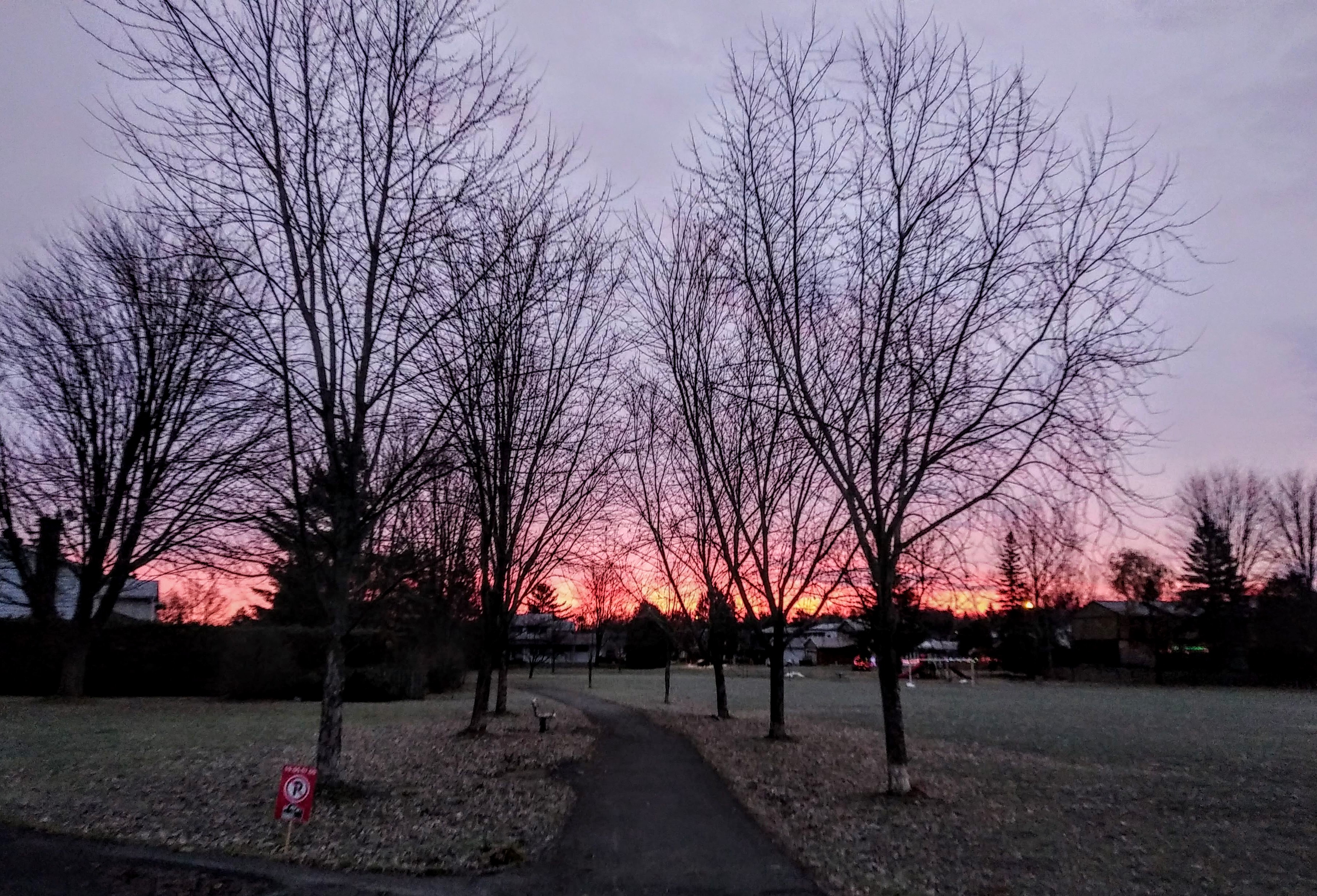
Where Does my Help Come From?

Tags

, , ,

Reading: Psalm 121
A song of ascents.
I lift up my eyes to the mountains—
where does my help come from?
My help comes from the L
ORD,
the Maker of heaven and earth.
He will not let your foot slip—
he who watches over you will not slumber;
indeed, he who watches over Israel
will neither slumber nor sleep.
The LORD watches over you—
the L
ORD is your shade at your right hand;
 the sun will not harm you by day, nor the moon by night.
The LORD will keep you from all harm—
he will watch over your life;
the L
ORD will watch over your coming and going
both now and forevermore
(NIV).

2018-05-16

I lift up my eyes to the mountains — Banff National Park — photo by David Kitz

Reflection
Psalm 121 is the second Song of Ascents, and as such it was a psalm, which was intended for use by pilgrims as they journeyed to Jerusalem. This particular psalm was most often sung or chanted as the pilgrims set out from Jericho. As they lifted up their eyes, the sharply rising hill country of Judah stretched off into the distance. Hill after hill rose up before them. Jesus often made this journey. His final Passover pilgrimage brought him to the cross.

This last portion of the journey was truly an ascent. From the Dead Sea plain the road to Jerusalem climbs nearly five thousand feet—1600 meters. This is truly an ascent—an ascent from the Dead Sea plain, the lowest point on earth’s surface, to the heights of Mount Zion.

For the bone-weary pilgrims, who had already walked more than one hundred kilometers (60 miles) from Galilee, the sight of those distant hills must have brought a measure of aching discouragement. Here was a looming challenge. Could they make this final ascent? The opening question of this psalm was not a matter of poetic whimsy. It was spoken in earnest. I lift up my eyes to the mountains—where does my help come from?

The weary pilgrim may well be asking, “Having come this far, can I complete this journey? Do I have enough energy—enough stamina to climb those hills? Will I be able to reach Zion? I am exhausted now—before I even start the ascent. I can’t do this on my own. Where does my help come from?

The psalmist’s answer resounds off those ancient hills. Even today, it echoes down through the ages and reverberates through the chambers of the heart. My help comes from the LORD, the Maker of heaven and earth.

Response: Father God, I am on a lifelong journey—a pilgrimage to the heavenly Jerusalem. When I become weary, give me strength.  I know my strength comes from you, LORD. Amen.

Your Turn: Do you need strength? Have you become weary at times in serving the Lord?

True Peace in the Arms of God

Tags

, , ,

Reading: Psalm 120
A song of ascents.
I call on the LORD in my distress,
and he answers me.
Save me, L
ORD, from lying lips
and from deceitful tongues.
What will he do to you,
and what more besides,
you deceitful tongue?
He will punish you with a warrior’s sharp arrows,
with burning coals of the broom bush.
Woe to me that I dwell in Meshek,
that I live among the tents of Kedar!
Too long have I lived
among those who hate peace.
I am for peace;
but when I speak, they are for war
(NIV).

black and white guy kneeling man

Photo by Pixabay on Pexels.com

Reflection
Psalm 120 is the first in a series of fifteen psalms that are called Songs of Ascent. Each psalm begins with this statement or title: A Song of Ascents. Some of the psalms also add this phrase: Of David.

Of course, this title begs the question, what are the Songs of Ascent? And furthermore, to what are we ascending? This compilation of fourteen psalms was composed for the use of pilgrims who were making their way to worship at the temple in Jerusalem. These are psalms of pilgrimage. They are called Songs of Ascent, or Psalms of Ascent, because Jerusalem is built on a high point in the land of Israel. Specifically, the temple compound was constructed at the summit of Mount Zion, so pilgrims were literally and figuratively ascending to worship at the House of God.

This first psalm in the series is really a lament. The psalmist is living in a distant place—a place far from God. All of us begin our pilgrimage—our journey to God—from a distant place. Just like the prodigal we find ourselves in a distant land, a land where there is no peace. Sin has its fleeting pleasures, but it brings no lasting peace, no deep contentment. We have wandered far from the Father’s warm embrace. The psalmist laments, Woe to me that I dwell in Meshek, that I live among the tents of Kedar!”

The Songs of Ascent are all about drawing near to God. They are about going to the heart of worship and finding peace—true peace in the arms of God. But first we must recognize where we are. We are dwelling in Meshek—in a world far from the LORD. We need to acknowledge our true condition. Change happens when we recognize the truth about ourselves and our need for a Savior. Only then can we begin our journey toward peace.

Have faith in this promise. I call on the LORD in my distress, and he answers me.

Response: Father God, today I am continuing my journey toward you. Lord Jesus, I need you as my Savior. Help me set aside those things that hinder my journey to intimacy with you. Amen.

Your Turn: Are you living in Meshek? Have you begun your pilgrimage to arms of the Father?

You Heard my Cry 

Tags

, , ,

I will praise the LORD!

img_20191127_0701025

For the director of music. A psalm of David.

Praise be to the LORD,
    for he showed me the wonders of his love
    when I was in a city under siege.
In my alarm I said,
    “I am cut off from your sight!”
Yet you heard my cry for mercy
    when I called to you for help.

Love the LORD, all his faithful people!
    The LORD preserves those who are true to him,
    but the proud he pays back in full.
Be strong and take heart,
    all you who hope in the LORD.

  (Psalm 31:21-24, NIV)

How Abundant Are the Good Things!

Tags

, , ,

I will praise the LORD!

img_20191126_1521307-effects

For the director of music. A psalm of David.

How abundant are the good things
    that you have stored up for those who fear you,
that you bestow in the sight of all,
    on those who take refuge in you.
In the shelter of your presence you hide them
    from all human intrigues;
you keep them safe in your dwelling
    from accusing tongues.

  (Psalm 31:18-20, NIV)

Like a Lost Sheep

Tags

, , , , ,

Reading: Psalm 119
ת Taw
(Verses 169-176)
May my cry come before you, LORD;
give me understanding according to your word.
May my supplication come before you;
deliver me according to your promise.
May my lips overflow with praise,
for you teach me your decrees.
May my tongue sing of your word,
for all your commands are righteous.
May your hand be ready to help me,
for I have chosen your precepts.
I long for your salvation, L
ORD,
and your law gives me delight.
Let me live that I may praise you,
and may your laws sustain me.
 I have strayed like a lost sheep.
Seek your servant,
for I have not forgotten your commands
(NIV).

shallow focus photography of white sheep on green grass

Photo by Kat Jayne on Pexels.com

Reflection
This is the final reading from Psalm 119. Today’s reading features Taw, the final letter in the Hebrew alphabet. Day by day we have been making our way through this acrostic poem—reading as it were from A to Z in the Hebrew language. All of it is written in praise of God’s word and His promises. It is difficult to fully appreciate the structural beauty of this lengthy poem, when it is translated into English.

This line from today’s reading is typical of the psalmist’s praise for the word of God: May my tongue sing of your word, for all your commands are righteous.

At times the psalmist appears to be proud, even boastful of his obedience to God’s word, but here at the conclusion of this magnificent poem, he takes on a more humble stance. I have strayed like a lost sheep. Seek your servant, for I have not forgotten your commands.

There is something very human about this prayer—about this ending. We are very prone to stray. The prophet Isaiah reflects on this human characteristic. We all, like sheep, have gone astray, each of us has turned to our own way; and the LORD has laid on him [Jesus] the iniquity of us all (Isaiah 53:6).

Jesus is our carrier—our iniquity carrier. He carried our sins to the cross where he suffered and died, so that his blood could cover those sins—my sins—your sins. But our sin carrier is also our Good Shepherd, who goes out to find those who are lost. He is the answer to the psalmist’s prayer. This is the purpose for his coming. “For the Son of Man came to seek and to save the lost” (Luke 19:10).

Response: Father God, I confess I am prone to stray. Help me to stay to the straight and narrow way that leads to life. I thank you, Jesus, for seeking me and saving me by your shed blood. Amen.

Your Turn: Are you a wandering sheep? Have you been found by the Good Shepherd?

What’s so Great About Peace?

Tags

, , , , ,

Reading: Psalm 119
ש Sin and Shin
(Verses 161-168)
Rulers persecute me without cause,
but my heart trembles at your word.
I rejoice in your promise
like one who finds great spoil.
I hate and detest falsehood
but I love your law.
Seven times a day I praise you
for your righteous laws.
Great peace have those who love your law,
and nothing can make them stumble.
I wait for your salvation, L
ORD,
and I follow your commands.
I obey your statutes,
for I love them greatly.
 I obey your precepts and your statutes,
for all my ways are known to you
(NIV).

img_20190915_0748231

Petrie Island reflections — photo by David Kitz

Reflection
We live in troubled times—times of domestic and foreign conflict. Turmoil abounds. If you follow world events, it seems we are sitting on a ticking time bomb. Problems and conflicts abound, and those conflicts spill across borders as people desperately seek a better life.

Into this world of uncertainty, the psalmist speaks these words. Great peace have those who love your law, and nothing can make them stumble.

If we are looking for peace in this world, we are sure to be disappointed. The ways of the world lead directly to conflict, as human greed and pride compete for dominance. This should not surprise us since the world and the systems of the world are controlled by our adversary, the prince of darkness.

Again the psalmist reminds us. Great peace have those who love your law, and nothing can make them stumble.

Our peace is not found in the world; it is found in loving your law, which is the word of God. The good news is that this word of God did not simply remain as pages in a book. It became flesh to live with us. The Word became flesh and made his dwelling among us. We have seen his glory, the glory of the one and only Son, who came from the Father, full of grace and truth (John 1:14).

Furthermore, Jesus, the living word, gives us this promise, Peace I leave with you; my peace I give you. I do not give to you as the world gives. Do not let your hearts be troubled and do not be afraid” (John 14:27).

Response: Father God, grant me your peace. Now by faith I receive the promise of your everlasting peace. And the peace of God, which transcends all understanding, will guard your hearts and your minds in Christ Jesus (Philippians 4:7). Thank you, Lord Jesus. My sins are forgiven. Amen.

Your Turn: What brings you peace? Do you need the peace of Christ?

Posture and Prayer

Tags

, , , ,

Reading: Psalm 119
ר Resh
(Verses 153-160)
Look on my suffering and deliver me,
for I have not forgotten your law.
Defend my cause and redeem me;
preserve my life according to your promise.
Salvation is far from the wicked,
for they do not seek out your decrees.
Your compassion, LORD, is great;
preserve my life according to your laws.
Many are the foes who persecute me,
but I have not turned from your statutes.
I look on the faithless with loathing,
for they do not obey your word.
See how I love your precepts;
preserve my life, LORD, in accordance with your love.
All your words are true;
all your righteous laws are eternal (NIV).

img_20190722_1928546-effects

Ottawa River — photo by David Kitz

Reflection
As we draw near to the end of Psalm 119, I have a confession to make. Though in general, I love the Book of Psalms, Psalm 119 did not rank high in my affections. Though my views have changed, please bear with me now as I attempt to describe why at first I disliked this Psalm.

In my opinion the author of this psalm spends too much time posturing. He continually reminds God how good he is and how disgusting others are. Statements like this one set my teeth on edge: I look on the faithless with loathing, for they do not obey your word. See how I love your precepts; preserve my life, LORD, in accordance with your love. 

Words like these remind me of the Pharisee bragging in the temple while the tax collector humbly calls out to God for mercy. Jesus concludes that the tax collector “went home justified before God. For all those who exalt themselves will be humbled, and those who humble themselves will be exalted” (Luke 18:14). I’m left wondering, how did the author of Psalm 119 return home? Was his prayer heard and accepted by the LORD?

The answer must be a resounding yes. Psalm 119 would not be in our Bible’s if it was not the divinely inspired word of God. So this question remains. How does the psalmist get away with using the sort of comparison that drew Jesus condemnation in his description of the Pharisee and the tax collector?

I believe the answer lies in posture. Psalm 119 is best prayed from a kneeling position. The psalmist is humbly—even desperately—calling out to God. The posture we assume influences the prayers we pray.

Response: Father God, teach me how to pray with a humble heart. Any righteousness or goodness I have comes from you. I will brag about your goodness and unfailing love for me. You are true. Amen.

Your Turn: What posture do you assume when you pray? How does your posture reflect your heart?

I Meditate on Your Promises

Tags

, , , ,

Reading: Psalm 119
ק Qoph
(Verses 145-152)
I call with all my heart; answer me, LORD,
and I will obey your decrees.
I call out to you; save me
and I will keep your statutes.
 I rise before dawn and cry for help;
I have put my hope in your word.
My eyes stay open through the watches of the night,
that I may meditate on your promises.
 Hear my voice in accordance with your love;
preserve my life, L
ORD, according to your laws.
Those who devise wicked schemes are near,
but they are far from your law.
 Yet you are near, L
ORD,
and all your commands are true.
 Long ago I learned from your statutes
that you established them to last forever
(NIV).

img_20190420_2007333

I rise before dawn and cry for help — photo by David Kitz

Reflection
Meditation. It seems everyone is doing it. Have you taken up meditation? Even the Bible encourages us to meditate.

Ah, but there are some fundamental differences between transcendental meditation and the meditation that is described in the Bible. Eastern meditation, which springs from the Hindu religion, calls on the practitioner to relax and empty his or her mind.

Biblical meditation is not an emptying of the mind, or a disengagement with the thought process. Instead, it is active, concentrated thought on a topic, word or Bible verse. On an intellectual level, it has been compared to rumination—a cow chewing her cud. It involves getting the most out of what God has said—digesting His word—so it is fully incorporated into the life of the believer.

Today’s reading sheds light on the psalmist’s practice of biblical meditation: I rise before dawn and cry for help; I have put my hope in your word. My eyes stay open through the watches of the night, that I may meditate on your promises.

The psalmist is thoroughly engaged with God. He is crying out to Him. He is focused on the word of God and His promises: I have put my hope in your word.

In the rush of life, do we stop and meditate on God’s word? Is Bible reading just a box to check off as we speed through our day? It’s the LORD who calls us aside to spend time with Him.

Response: LORD God, with all the distractions around me, I want to get in the habit of meditating on your word. Help me to focus my attention and thoughts on your promises. You are good to me. Amen.

Your Turn: Are you easily distracted from God’s word? Do you take it with you through the day?

Road Tested Promises

Tags

, , , ,

Reading: Psalm 119
צ Tsadhe
(Verses 137-144)
You are righteous, LORD,
and your laws are right.
The statutes you have laid down are righteous;
they are fully trustworthy.
 My zeal wears me out,
for my enemies ignore your words.
 Your promises have been thoroughly tested,
and your servant loves them.
Though I am lowly and despised,
I do not forget your precepts.
Your righteousness is everlasting
and your law is true.
Trouble and distress have come upon me,
but your commands give me delight.
Your statutes are always righteous;
give me understanding that I may live
(NIV).

2019-02-18

On the Saskota Flyway through the Qu’Appelle River Valley — photo by David Kitz

Reflection
In the spring of 2015 my son bought his first new car. He was understandably proud of his purchase. The vehicle boasted great handling, exceptional fuel economy and almost zero harmful emissions. What’s not to like about a diesel-powered car like that? Volkswagen engineering was ranked among the best in the world.

Less than a year later, the illusion of zero harmful emissions came crashing down. Volkswagen had installed specially designed software to make sure its vehicles passed emissions tests, but real world, on-the-road results were totally different. The thorough testing that consumers rely on had been subverted.

Fortunately, God’s laws cannot be subverted. Humans may try, but the judge of all the earth knows all; He sees all. We can never pull a fast one on God. Today’s reading from Psalm 119 makes that perfectly clear. You are righteous, LORD, and your laws are right. The statutes you have laid down are righteous; they are fully trustworthy. The psalmist then goes on to make this assertion:  Your promises have been thoroughly tested, and your servant loves them.

God’s word and His promises have been road tested by us, His people. They stand up in real life situations. The Bible—God’s word is designed to be applied. It doesn’t just work in the test lab. It works in the laboratory of life—day-to-day life, where it really counts. That’s why spending time in God’s word is so important. It becomes the road-map for life—an abundant life—the life Jesus promised to his followers.

Response: Father God, your word and your promises stand true for all eternity. Help me to believe and live each day through the wise application of your word. Give me understanding that I may live. Amen.

Your Turn: Have you tested God’s word? Did it work for you in real life situations?

Let your Face Shine on your Servant

Tags

, , ,

I will praise Him!

img_20190621_1936466-effects

All the nations are your inheritance — photo by David Kitz

For the director of music. A psalm of David.

But I trust in you, LORD;
    I say, “You are my God.”
My times are in your hands;
    deliver me from the hands of my enemies,
    from those who pursue me.
Let your face shine on your servant;
    save me in your unfailing love.
Let me not be put to shame, LORD,
    for I have cried out to you;

  (Psalm 31:14-17a, NIV)