
Our Need for a Double-Edged Sword.

Tags

, , , ,

Reading: Psalm 149
(Verses 6-9)
May the praise of God be in their mouths
and a double-edged sword in their hands,
to inflict vengeance on the nations
and punishment on the peoples,
to bind their kings with fetters,
their nobles with shackles of iron,
to carry out the sentence written against them—
this is the glory of all his faithful people.
Praise the LORD (NIV).*

IMG_20180326_073412[3121]

Frosty sunrise east of Regina, SK — photo by David Kitz

Reflection
In society today there are moves afoot to rewrite history. Old monuments are being torn down or neglected. Places and buildings are being renamed because past victories or policies are now seen as oppressive or unjust. Many of the heroes of the past have lost their luster. In many cases there is sound reasoning that goes into justifying this change. Let’s face it; not every conquest was undertaken with pure motives. Not every government policy in the past was without racial or gender bias.

But are we wise when we judge people from a different era with the moral positions and perspectives of today? Do we carry our own set of biases that color our view of history? Of course we do.

We encounter the same issues when we look back at Old Testament history. It’s difficult for New Testament believers to justify Old Testament vengeance, genocide and slaughter. And yes, there’s plenty of that recorded in our Bibles. Today’s reading from Psalm 149 touches on this very point. The psalmist urges the infliction of vengeance on the nations and punishment on the peoples, to bind their kings with fetters, their nobles with shackles of iron. As followers of a gentle Jesus, who taught us to love our enemies, how are we to interpret and apply this call to action?

First, let’s realize that we are living under a new and better covenant with Jesus as our Lord and Savior. When he was arrested, Jesus told Peter to put away his sword. We do well when we heed that advice. The eager warmongers among us often need to take a chill pill. Jesus showed no tendencies to war, or armed revolt against the oppression of the Roman Empire.

But we do have a battle to fight, and we urgently need a double-edged sword. St. Paul calls it the sword of the Spirit, which is the word of God (Ephesians 6:17b). How effective are you in handling the word of God? How effective are you in battling the spiritual forces and daily temptations that are arrayed against you? With the praises of God in your mouth, and the sword of the Spirit in your hand, are you propelling your way to victory in the daily grind of life? Are the joy and peace of God reigning in your life?

Blessed is the one who perseveres under trial because, having stood the test, that person will receive the crown of life that the Lord has promised to those who love him (James 1:12).

Response: LORD God, I want to grow in my love for your word. Help me to use it wisely and deftly to the advance of your Kingdom. Lord Jesus, help me gain victory over spiritual forces that oppose me. Amen.

Your Turn: Are you developing competence in using the sword of the Spirit, which is the word of God?

*New International Version, Copyright © 1973, 1978, 1984, 2011 by Biblica.

This post by award-winning author David Kitz will be published in book format later in 2020 by Elk Lake Publishing under the title 365 through the Psalms.
 

This Week’s Discovery

Tags

, , ,

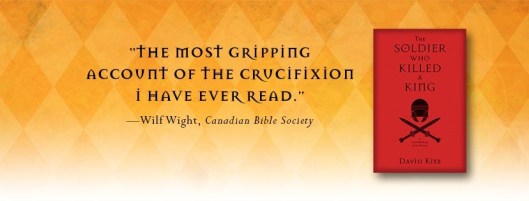
The following Amazon book review took me by surprise:

Best ‘Historical Fiction’ Book Ever!
‘The Soldier Who Killed A King‘ is one of the very best books we’ve ever had the privilege to read! Insightful, captivating, inspiring, historically accurate, so very satisfying and engaging… A heartfelt ‘thank you’ to David Kitz for having written this most incredible account of the crucifixion of Christ… A great read for this time of the year as we approach Easter!  — Don & Jan

High praise indeed.

4485 FACEBOOK-1

Rejoice in Your Maker

Tags

, , ,

Reading: Psalm 149
(Verses 1-5)
Praise the LORD.
Sing to the LORD a new song,
his praise in the assembly of his faithful people.
Let Israel rejoice in their Maker;
let the people of Zion be glad in their King.
Let them praise his name with dancing
and make music to him with timbrel and harp.
For the LORD takes delight in his people;
he crowns the humble with victory.
Let his faithful people rejoice in this honor
and sing for joy on their beds (NIV).*

IMG_20190222_1429121

Landestreu Church — photo by David Kitz

Reflection
I previously wrote that as we draw to the end of the Book of Psalms, we are slowly building to a crescendo of praise to the LORD. Today’s reading from Psalm 149 expands and amps up the level of praise.

For some praise to the LORD is one dimensional. It involves singing a hymn or worship chorus to the LORD in a place of worship at a designated time. Usually this simply means in church on a Sunday morning. But praise that is birthed by the Spirit of God can be much more than just that. Psalm 149 calls for a wide range of praise. It begins by calling for a new song. Sing to the LORD a new song, his praise in the assembly of his faithful people.

It would seem that the Creator would like to hear something fresh and creative. That’s so much like Him. After all, His mercies are new every morning. See Lamentations 3:22-23. Now don’t get me wrong. There is a place for the tried and true, and the old and familiar. But genuine praise is like fresh homemade bread. It’s best served warm from the oven. Stale worship invigorates no one.

Secondly, our praise for the LORD can take a variety of forms. Let Israel rejoice in their Maker; let the people of Zion be glad in their King. Let them praise his name with dancing and make music to him with timbrel and harp. 

Just yesterday I watched a couple do a beautiful dance to a popular worship chorus. The words, the music, and their expressive movements, added heartfelt meaning to their praise. God was glorified in their dance. We were created to move and our posture and movements can reflect an expressive exuberance for God.

Finally, Spirit initiated praise knows no bounds. It refuses to be confined to a church building. It is after all an outward expression of a thankful heart. There is a place for praise, wherever we find ourselves, whether it’s on a park bench, a subway car, or as we stroll down the grocery aisle. Praise the LORD!

Response: LORD God, renew in me a heart of praise. I want to lose my self-consciousness as I praise you. This is all about you. True worship is not about me. I want to praise you with my whole being. Amen.

Your Turn: Is it possible to be God focused when we are self-focused or self-conscious?

*New International Version, Copyright © 1973, 1978, 1984, 2011 by Biblica.

This post by award-winning author David Kitz will be published in book format later in 2020 by Elk Lake Publishing under the title 365 through the Psalms.

The Great Hallelujah!

Tags

, , , ,

Reading: Psalm 148
(Verses 13-14)
Let them praise the name of the LORD,
for his name alone is exalted;
his splendor is above the earth and the heavens.
And he has raised up for his people a horn,
the praise of all his faithful servants,
of Israel, the people close to his heart.
Praise the LORD (NIV).*

img_20190218_1401586

Qu’Appelle River Valley, Saskatchewan — photo by David Kitz

Reflection
Broadly speaking I like modern translations of the Bible over the traditional King James Version, but… But sometimes the old King James just sounds better, or more familiar. Here at the close of Psalm 148 we have a case in point.

The New International Version ends the psalm with these words: Praise the LORD. The King James Version ends the psalm with Praise ye the LORD. But a more literal translation or transliteration of this final phrase is Hallelujah! The footnotes to the New American Standard Bible point out that Hallelu means praise, while JAH is the abbreviated Hebrew name for God, which is often translated Jehovah or more accurately Yahweh.

Whenever you see the phrase praise the LORD, you are actually looking at a translation of the Hebrew word hallelujah!

Hallelujah is entirely absent from the New International Version of the Bible. It has also been scrubbed from most of the other modern translations. To put it bluntly, I miss hallelujah. It has an uplifting ring to it. Hallelujah skips off the tongue like a shooting star. It bursts forth from a thankful heart like fireworks on a summer night. 

For the Christian believer Christmas is the great Hallelujah! God has come to the earth and been born as a baby like you and me. This is the beginning of the great redemption story.

The resurrection is the second great Hallelujah! The Son of God was vindicated. His death was not in vain. He conquered death, our greatest foe, and now Jesus reigns on high forever. That calls for a hallelujah! And for good measure, let’s add praise the LORD too!

The one who at his birth was laid in a manger is the King of kings and the Lord of lords. As Handel’s Messiah proclaims, “He shall reign forever and ever. Hallelujah!” Let the hallelujahs resound from the earth to the heavens as we join in the song of the angels—the song of the ages.

Let them praise the name of the LORD, for his name alone is exalted; his splendor is above the earth and the heavens.

Response: LORD God, I praise you for sending Jesus. I praise you for your great plan of redemption. Jesus, I thank you for carrying my sins to Calvary. I rejoice in your resurrection victory. Hallelujah! Amen.

Your Turn: Do you enjoy Handel’s Hallelujah Chorus? What is your favorite expression of praise to God?

*New International Version, Copyright © 1973, 1978, 1984, 2011 by Biblica.

This post by award-winning author David Kitz will be published in book format later in 2020 by Elk Lake Publishing under the title 365 through the Psalms.

Come Quickly to Help me

Tags

, , ,

I will praise the LORD!

img_20190628_1137093-effects

Wild irises, Petrie Island, Orleans, ON — photo by David Kitz

I confess my iniquity;
    I am troubled by my sin.
Many have become my enemies without cause;
    those who hate me without reason are numerous.
Those who repay my good with evil
    lodge accusations against me,
    though I seek only to do what is good.

LORD, do not forsake me;
    do not be far from me, my God.
Come quickly to help me,
    my Lord and my Savior.

  (Psalm 38:18-22, NIV)*

* Copyright ©1973, 1978, 1984, 2011 by Biblica

Our Salvation Comes from the LORD

Tags

, , ,

I will praise the LORD!

2018-03-31

Big sky country in the Red Deer River Valley, Alberta — photo by David Kitz

Consider the blameless, observe the upright;
    a future awaits those who seek peace.
But all sinners will be destroyed;
    there will be no future for the wicked.

The salvation of the righteous comes from the LORD;
    he is their stronghold in time of trouble.
The LORD helps them and delivers them;
    he delivers them from the wicked and saves them,
    because they take refuge in him.

  (Psalm 37:37-40, NIV)*

* Copyright ©1973, 1978, 1984, 2011 by Biblica

Praise from the Earth

Tags

, , , ,

Reading: Psalm 148
(Verses 7-12)
Praise the LORD from the earth,
you great sea creatures and all ocean depths,
lightning and hail, snow and clouds,
stormy winds that do his bidding,
you mountains and all hills,
fruit trees and all cedars,
wild animals and all cattle,
small creatures and flying birds,
kings of the earth and all nations,
 you princes and all rulers on earth,
young men and women,
old men and children (NIV).*

img_20190927_1249048

Etienne Brule Lookout, Gatineau Park, QB — photo by David Kitz

Reflection
Psalm 148 began with a call for praise for the LORD from the angels, who are heaven’s messengers, from the heavenly hosts and all the heavenly bodies. In today’s reading, the psalmist expands this call for praise to all the creatures of the earth, the elements of nature, wind, cloud and ocean depths, and finally to all humanity.

There is a logical progression in this call for thunderous praise. The call begins with what is distant, the galaxies and the heavenly beings, and then it descends to the earth, and finally it touches humanity. It becomes personal. We are called to praise God. Will you join the swelling chorus?

John, the beloved, gives us a picture of what heaven’s praise party looks like.

Then I looked and heard the voice of many angels, numbering thousands upon thousands, and ten thousand times ten thousand. They encircled the throne and the living creatures and the elders. In a loud voice they were saying: “Worthy is the Lamb, who was slain, to receive power and wealth and wisdom and strength and honor and glory and praise!” (Revelation 5:11-12).

Our Lord taught us to pray, “Our Father in heaven, hallowed be your name, your kingdom come, your will be done, on earth as it is in heaven” (Matthew 6:9b-10).

Surely, it is the will of God that He be praised and worshiped on earth just as He is around His throne in heaven. The purpose of God’s Kingdom—the Kingdom that Jesus came to establish—is to bring heaven to earth. God did not remain distant. In the person of Jesus, He came to dwell among us. He brought and is presently bringing the will of God to the earth through the Holy Spirit. For that Jesus is to be praised. Let all of creation praise Him—praise Him from the earth, because from it we were formed. As we reflect on his first coming let the praise for our Lord ascend from you and me.

Response: LORD God, let your Holy Spirit be active among us. Help us to love and serve you and those around us. Help me to bring a little bit of heaven—a little bit of your will to the earth today. Amen.

Your Turn: How do you picture heaven? What does a little bit of heaven on earth look like to you?

*New International Version, Copyright © 1973, 1978, 1984, 2011 by Biblica.

This post by award-winning author David Kitz will be published in book format later in 2020 by Elk Lake Publishing under the title 365 through the Psalms.

A Rising Crescendo of Praise

Tags

, , , ,

Reading: Psalm 148
(Verses 1-6)
Praise the LORD.
Praise the LORD from the heavens;
praise him in the heights above.
Praise him, all his angels;
praise him, all his heavenly hosts.
Praise him, sun and moon;
praise him, all you shining stars.
Praise him, you highest heavens
and you waters above the skies.
Let them praise the name of the LORD,
 for at his command they were created,
and he established them for ever and ever—
he issued a decree that will never pass away (NIV).*

img_20190803_2004488-effects

Praise him, sun and moon — photo by David Kitz

Reflection
As we draw to the end of the Book of Psalms, we are slowly building to a crescendo. It’s a crescendo of praise for the LORD. Today’s reading from Psalm 148 represents another stepping stone in that rising crescendo of praise.

The word praise appears nine times in this six-verse portion of the psalm. The psalmist repeatedly calls for all of creation to praise the LORD—to praise him. In today’s reading the call to praise is focused on the heavenly realm. You would think that the angels and the heavenly hosts would need no reminder to praise the LORD, but nevertheless the psalmist calls on them to praise their Creator. Praise him, all his angels; praise him, all his heavenly hosts. Praise him, sun and moon; praise him, all you shining stars. 

If the angels need a praise prompter, then I know that I certainly do. There are days when I have a greater tendency to complain than to praise. If I am feeling a bit out of sorts or experiencing discomfort, it doesn’t take much to trip me into full-blown, grumble mode with a side order of self-pity tacked on for good measure. Praise for the LORD is a distant thought or a faint memory.

But has God changed? Has His mercy been diminished because I have a grumbly tummy or a kink in my neck? Of course not. The LORD is constantly worthy of praise—even in hard times—especially in hard times. In hard times I need to change my focus. I need to lift up my eyes to the heavens. I need to see the big picture rather than be caught up in the trifling details of my life. God is still on His throne even if I burn the toast or spill that glass of milk. Praise has greater significance at such times because it springs from a troubled heart that has shifted to become a thankful overcoming heart.

In the midst of his great suffering, Job made this declaration about his faithfulness to the LORD, “Though he slay me, yet will I hope in him” (Job 13:15a). Will that be your testimony? In all these things, the LORD, our great Creator, remains steadfast and worthy of praise.

Response: LORD God, give me a heart that is eager to praise you—even in hard times—especially in hard times. Your constant care for us does not change. Let my praise for you be just as constant. Amen.

Your Turn: Do you have a greater tendency to grumble or praise? Can you change that tendency?

*New International Version, Copyright © 1973, 1978, 1984, 2011 by Biblica.

Elk Lake Logo This post by award-winning author David Kitz will be published in book format later in 2020 by Elk Lake Publishing under the title 365 through the Psalms.

His Revealed Word

Tags

, , , ,

Reading: Psalm 147
(Verses 19-20)
He has revealed his word to Jacob,
his laws and decrees to Israel.
He has done this for no other nation;
they do not know his laws.
Praise the LORD (NIV).*

img_20200101_2001568

Night vision — photo by David Kitz

Reflection
Have you ever asked yourself this question: Where is God?

It’s a valid question. But when we ask that question, it may indicate a lack of faith or at least a level of doubt. When disaster strikes it’s not unusual to wonder, where is God in all this?

There are several theologically correct answers to that question. One could reply that God is in heaven, where He always has been. Or we could say God is everywhere because the Bible teaches that the LORD is omnipresent. See Psalm 139:7-10. Still others may say that the Lord is in their heart. St. Paul reminds us of this truth with this admonition: Do you not know that your bodies are temples of the Holy Spirit, who is in you, whom you have received from God? You are not your own; you were bought at a price. Therefore honor God with your bodies (1 Corinthians 6:19-20).

The simple truth is God needs to reveal Himself to us. The most obvious way that God does this is through His written word. Today’s reading from Psalm 147 speaks of the importance of that revelation. He has revealed his word to Jacob, his laws and decrees to Israel. He has done this for no other nation; they do not know his laws.

But the written word of God can be nothing but dead words on a page to us unless those words are activated—made alive by the Spirit of God. We need the intervention of God—a revelation from God. When that happens, the written words dance off the page and into our hearts. The writer of Hebrews expresses it this way. For the word of God is alive and active. Sharper than any double-edged sword, it penetrates even to dividing soul and spirit, joints and marrow; it judges the thoughts and attitudes of the heart (Hebrews 4:12).

Just as God revealed His word to Jacob, we need God to speak to us today. He does that through His written word, but He also does that through the direct prompting of the Holy Spirit. God still speaks to people today. Are your ears open to hear His voice?

The greatest revelation of God came through the person of Jesus Christ. He is the word incarnate—the logos of God who came to dwell among us.

Where is God? He is in the person of Jesus. Jesus, come and dwell in my heart.

Response: LORD God, I need a greater revelation of you. When you show yourself to me, I am changed. Come, Lord Jesus. Invigorate my life. Help me to know you better. Speak deeply to my heart.  Amen.

Your Turn: How does God speak to your heart? Has He reveal Himself to you in a variety of ways?

*New International Version, Copyright © 1973, 1978, 1984, 2011 by Biblica.

As Lent Approaches…

Tags

, , ,

Imagine my surprise and gratitude when I saw the following Facebook post from my friend Andrew:

“As Lent approaches I made the decision to read this excellent book by my friend David Kitz for I think it will be the 3rd or 4th time. I am curious if anyone would like to join me for a Lent book study of this amazing book? If so message me.”

I have encountered a number of people who tell me they reread “The Soldier Who Killed a King” every year as Easter approaches. But it’s great to see that fact posted on social media.

A journey to the cross and the empty tomb is valid at any time of the year. This year why not take that journey as seen through the eyes of Roman centurion, Marcus Longinus?

A free seven week discussion guide is also available for personal or group use. Click for the link.

4485 FACEBOOK-1